
Banarasi vs Kanjeevaram: Which Silk Saree Is Right for You?
They are the crown jewels of Indian silk — the Banarasi of the north and the Kanjeevaram of the south. Both are heirloom-worthy, both are seeing a real revival in 2026, and both deserve a place in a considered wardrobe. But they're quite different beasts. Here's how to tell them apart and choose the one that's right for you.

The Banarasi: Mughal Grandeur
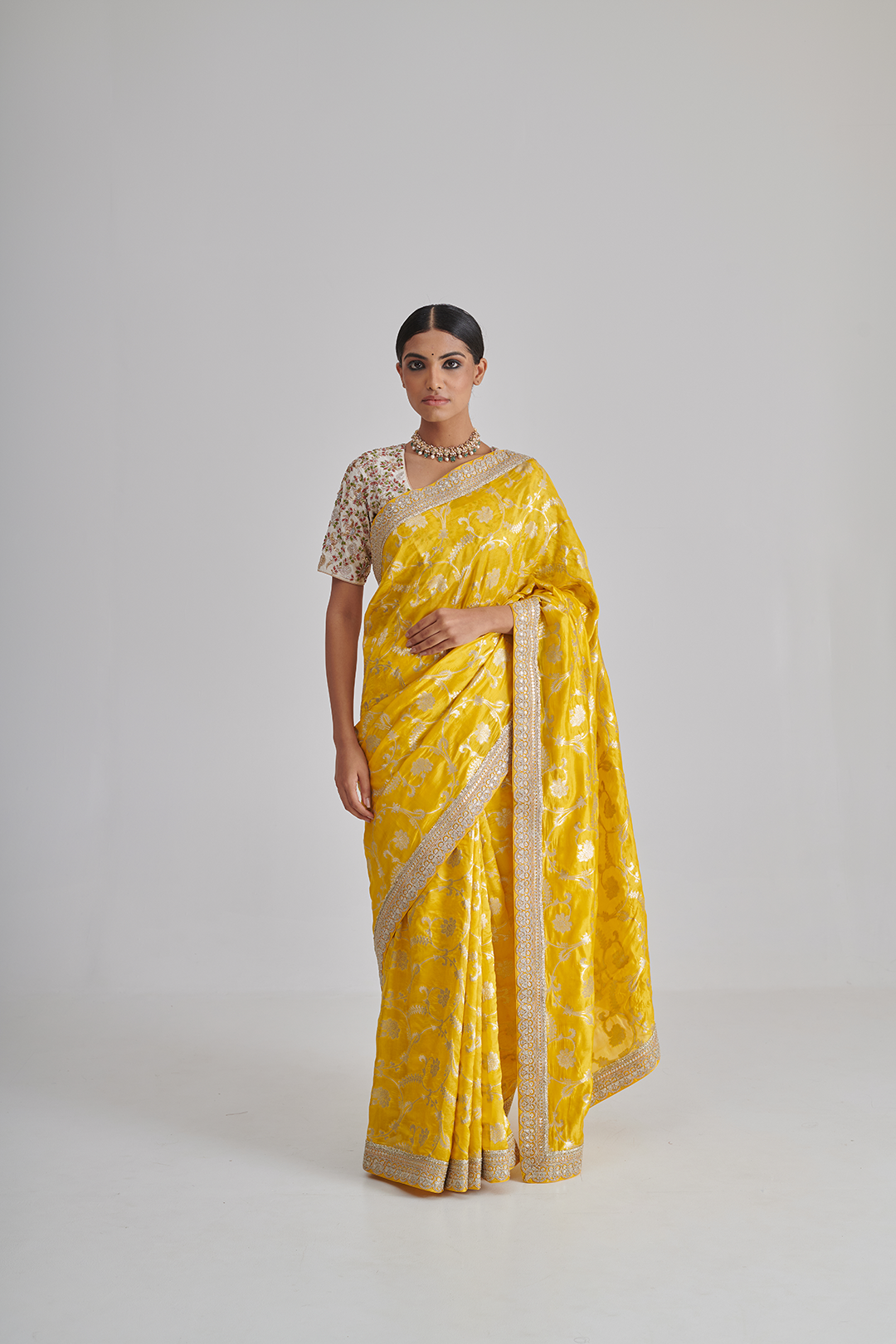
Woven in Varanasi, the Banarasi is defined by its fine silk and intricate gold and silver zari work, with motifs drawn from Mughal art — florals, jaal (lattice) patterns, vines, and butis. It tends to be lighter and more fluid than a Kanjeevaram, with an opulent, ornate character. The Phalgun yellow Banarasi, Rahi fuchsia Banarasi, and Zariya mint Banarasi all carry that signature woven detail.


The Kanjeevaram: Temple Majesty
Woven in Kanchipuram, Tamil Nadu, the Kanjeevaram is famous for its heavier, more substantial silk and its bold, contrasting borders — often in a different colour to the body, joined by the distinctive korvai technique. Its motifs lean toward temple, peacock, and check designs, and the silk is prized for its durability and lustre. It's the grander, weightier of the two.
Side by Side
| Banarasi | Kanjeevaram | |
|---|---|---|
| Origin | Varanasi (north) | Kanchipuram (south) |
| Weight | Lighter, fluid | Heavier, substantial |
| Motifs | Mughal florals, jaal, vines | Temple, peacock, checks |
| Borders | Ornate, often tonal | Bold contrast (korvai) |
| Feel | Opulent, delicate | Regal, durable |
Which Should You Choose?
- Want lighter, easier to drape? Banarasi — fluid and more forgiving to carry through a long day.
- Want grandeur and heft? Kanjeevaram — substantial, structured, and built to last generations.
- Love intricate all-over detail? Banarasi's woven zari is unmatched.
- Love a bold contrast border? The Kanjeevaram's signature is hard to beat.
- First heirloom silk? Either is a worthy forever piece — choose by the feel and motifs you're drawn to.
Caring for Your Silk
Both deserve the same loving care: wrap in soft muslin (never plastic), store in a cool dark place, refold periodically to avoid creasing the zari, and dry-clean rather than wash. Treated well, either will outlive trends and become a piece you pass down.
Explore Our Banarasi Silks
Our saree collection features fine handwoven Banarasi silks in a spectrum of tones — each hand-finished, with blouses made to your measurements. Find your heirloom drape.
Shop SareesFrequently Asked Questions
What is the difference between a Banarasi and a Kanjeevaram saree?
A Banarasi is woven in Varanasi from finer, lighter silk with intricate gold and silver zari in Mughal-inspired florals, jaal, and vine motifs. A Kanjeevaram is woven in Kanchipuram from heavier, more durable silk, known for bold contrasting borders (the korvai technique) and temple, peacock, and check motifs. Banarasi feels opulent and fluid; Kanjeevaram feels regal and substantial.
Which is better for a first heirloom silk saree?
Both are worthy heirloom pieces, so choose by feel and occasion. A Banarasi is lighter and easier to drape for long days and is unmatched for intricate all-over woven detail; a Kanjeevaram offers grandeur, heft, and a striking contrast border. Pick the one whose weight and motifs you're naturally drawn to — either will last for generations with proper care.
Made to order in 4–5 weeks
Have an event date? We’ll tell you exactly when to order by.
We take a limited number of orders each month — secure your slot early.
Not sure where to start?
Tell us what you're dressing for and we'll help you choose — fabric, fit, colour, and timeline — over WhatsApp.
Your Cart
Pieces from this story
All pieces →
Keep reading
The journal →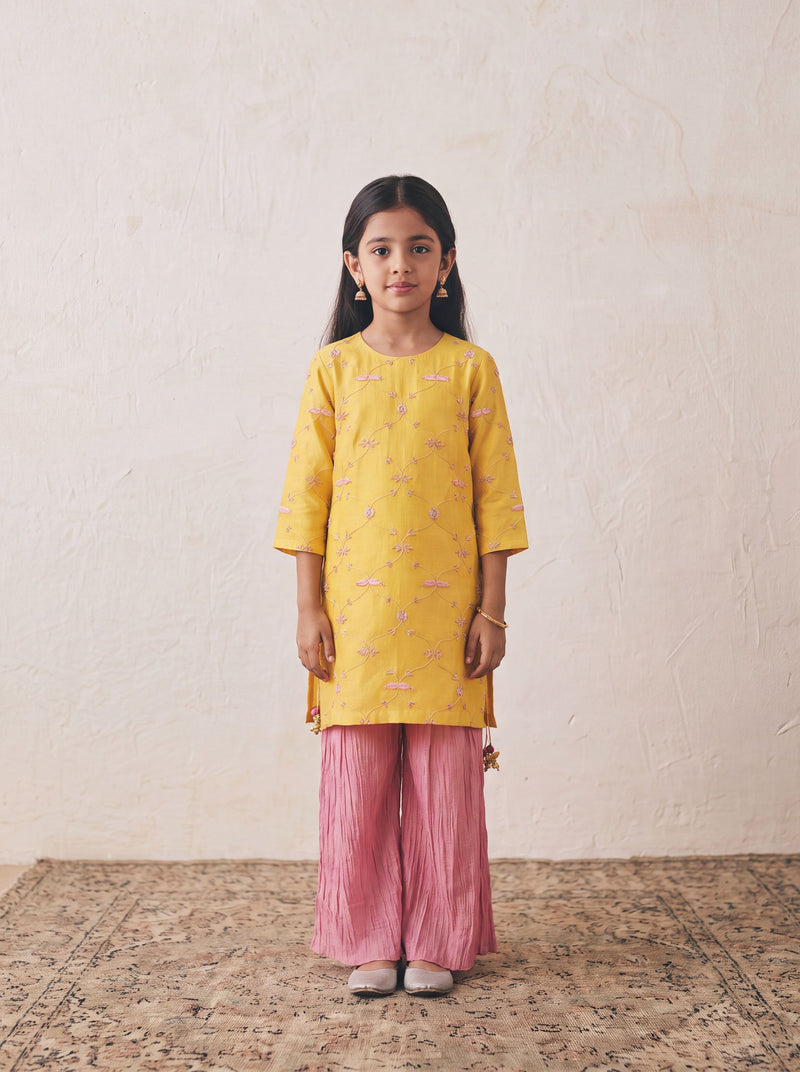
Kids' Lohri & Makar Sankranti Outfit Ideas: Bonfires, Kites and Warm Layers
Handmade by karigars Made to your measurements Fit guarantee Ships worldwide As seen in GraziaElle Graduat...
5 September 2026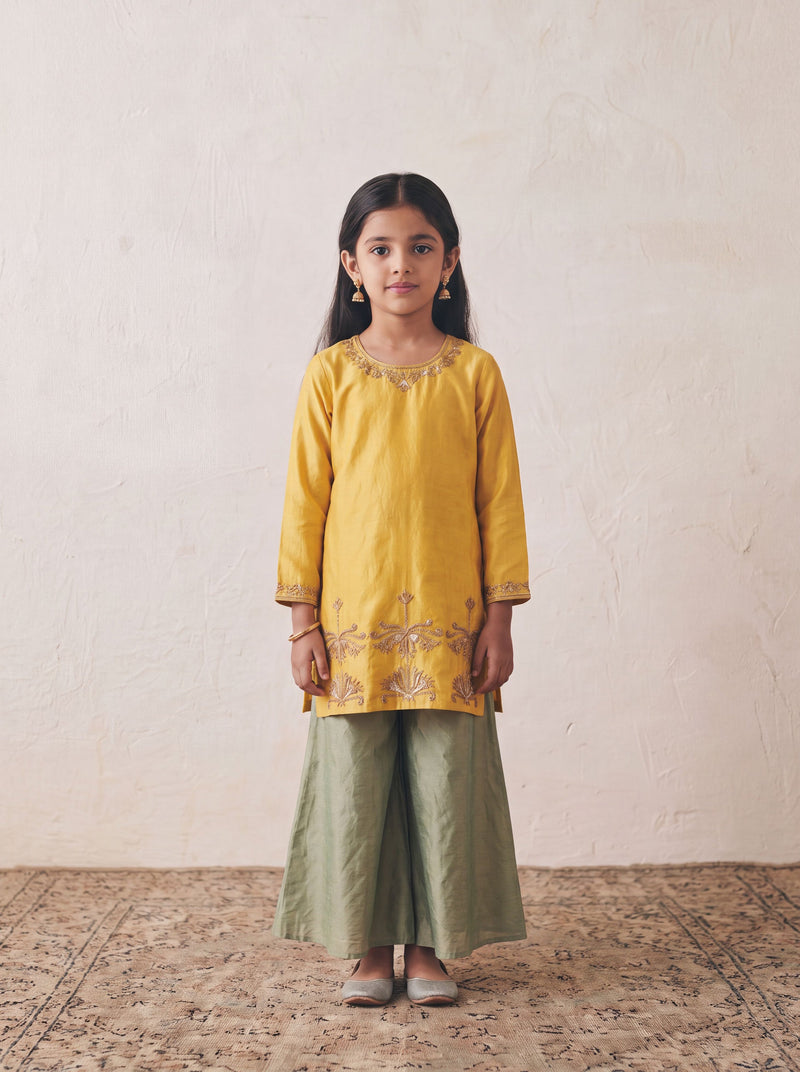
What Should Kids Wear to a School Annual Day or Function?
Handmade by karigars Made to your measurements Fit guarantee Ships worldwide As seen in GraziaElle Graduat...
5 September 2026
What to Wear to a Hyderabadi Wedding: A Guest's Guide
Handmade by karigars Made to your measurements Fit guarantee Ships worldwide As seen in GraziaElle Graduat...
5 September 2026