
7 Dupatta Draping Styles That Instantly Elevate Any Outfit
A beautiful dupatta can make or break an Indian outfit — but it's not just about the dupatta itself. How you drape it changes the entire silhouette, vibe, and formality of your look. The same organza dupatta can look casual draped over one shoulder, or wedding-ready pinned as a structured pallu.
Here are seven dupatta draping styles — from everyday to occasion wear — and which outfits they work best with.
1. The Classic One-Shoulder Drape
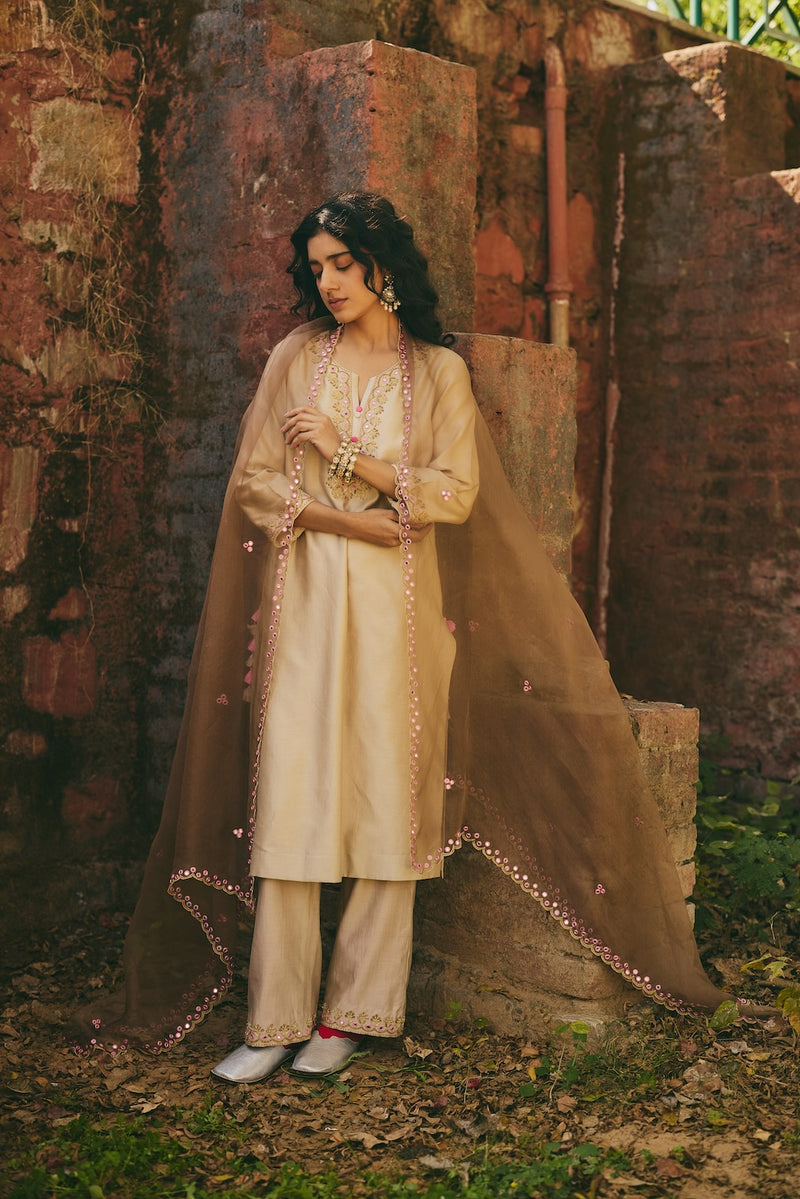
The most common and effortless style. Simply drape the dupatta over one shoulder, letting it fall naturally down the front and back. Pin it at the shoulder if you want it to stay in place.
Best for: Kurta sets, anarkalis, everyday wear
Dupatta type: Any — works with cotton, chanderi, organza, silk
This is where a dupatta like the Zarveen in soft sage green chanderi works perfectly — lightweight, fluid, and effortless. The delicate zari border adds just enough detail without being heavy.

2. The Front Double Drape
Place the centre of the dupatta at the back of your neck, bring both ends forward over your shoulders, and let them hang in front. This frames the face beautifully and shows off the full dupatta.
Best for: Simple kurtas that need dressing up, photo-ready looks
Dupatta type: Embroidered dupattas, dupattas with detailed borders on both ends
The Naisha peach organza dupatta is ideal for this drape — the gold zari embroidery and scalloped borders on both sides are fully visible when brought forward.
3. The Lehenga Pallu Style
Tuck one end of the dupatta into your lehenga or skirt waist at the front, bring it across the body, drape it over the opposite shoulder, and let the end fall down the back. This is the traditional pallu drape you see at weddings.
Best for: Lehengas, sharara sets, formal occasions
Dupatta type: Heavy, embroidered dupattas that hold their shape
For this drape, you want a dupatta with weight and presence. The Naira in sheer organza with all-over hand-embroidered floral motifs creates a stunning pallu because the embroidery shows across the entire draped surface.

4. The Cape Drape
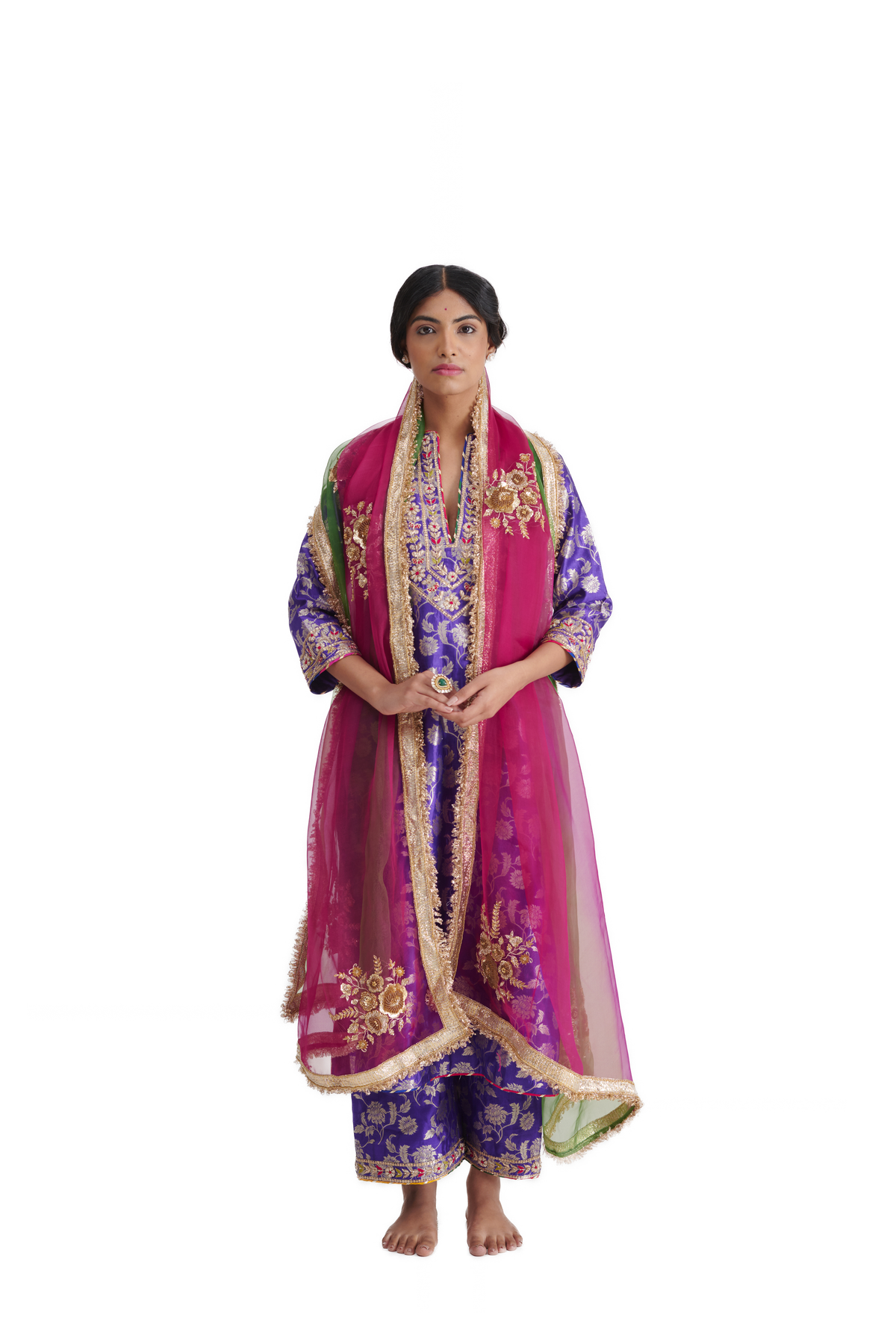
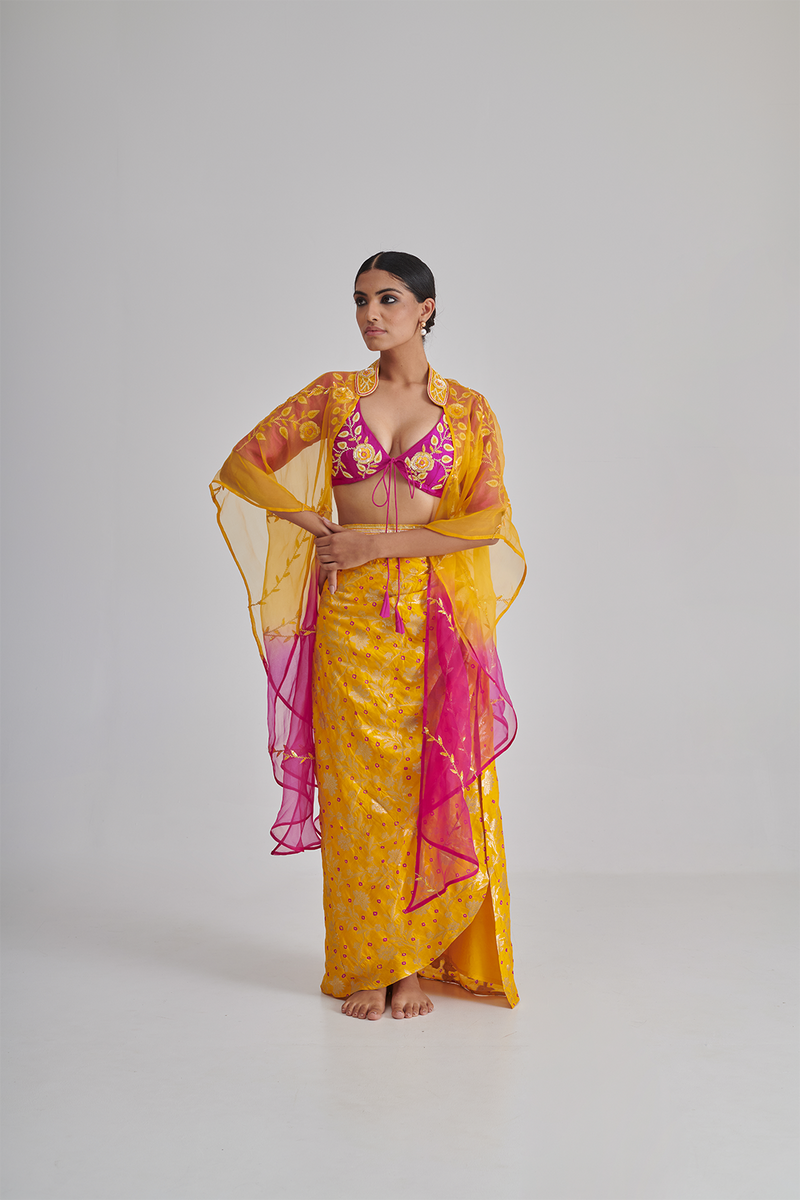
Open the dupatta wide and drape it across both shoulders like a shawl or cape, letting it hang open in front. You can pin it at both shoulders for a structured look or leave it loose and flowing.
Best for: Sleeveless or short-sleeve outfits, evening events, adding warmth
Dupatta type: Wide dupattas, organza or tissue with border embroidery


The Lila pink and green shaded organza dupatta looks spectacular as a cape — the ombre effect creates a colour gradient across your shoulders. The Sanam peach organza with scattered sequins catches light beautifully in this open, flowing drape.
5. The Pinned-at-Head Drape
Place the dupatta over your head with one end pinned at the crown or secured with a maang tikka, then let the fabric fall over one shoulder. This is the traditional bridal or religious ceremony drape.
Free Download
Get Our Measurement Guide
Step-by-step instructions with photos for perfect custom fit.
Download Free GuideBest for: Wedding ceremonies, puja, formal traditional events
Dupatta type: Lightweight but opaque — organza with dense embroidery, tissue, or silk
For this drape, the Aadya red organza dupatta with its gold zari grid pattern is ideal — the embroidery has enough weight to keep it in place on the head while the gold kiran lace frames the face.

6. The Belted Drape
Drape the dupatta over both shoulders and secure it at the waist with a statement belt or kamarband. This creates a structured, contemporary silhouette — almost like an attached jacket.
Best for: Indo-western styling, cocktail events, making a plain outfit look designer
Dupatta type: Sheer dupattas — organza or tissue that look good cinched
This works especially well with a sheer, textured piece like the Meeka — a fiery orange organza silk dupatta with gota patti and marodi embroidery at the corners. Belted, it becomes a statement layer.
7. The Side Sweep
Pin the dupatta at one shoulder and sweep the entire length across your body to the opposite hip. The fabric cascades diagonally, creating an elegant asymmetric look.
Best for: Sarees (as a pallu alternative), anarkalis, evening occasions
Dupatta type: Long dupattas with beautiful end panels or borders


The Mornii with its intricate peacock motifs and the Inaayat with circular floral patterns both look stunning in a side sweep — the embroidery is visible along the full diagonal line.
Tips for Getting Your Drape Right
Pin strategically. Small safety pins at the shoulder or behind the pallu keep the drape in place without showing. For heavy dupattas, use two pins instead of one.
Match the drape to the occasion. Casual brunches call for a loose one-shoulder or cape drape. Weddings and formal events deserve a pallu or head drape.
Consider the embroidery placement. Before draping, check where the heaviest embroidery is — that section should be the most visible part of your drape.
Iron or steam beforehand. A wrinkled dupatta ruins any drape style. Steam it gently on the reverse side for a clean, flowing drape.
Frequently Asked Questions
How do I keep a dupatta from slipping off my shoulder?
Use fashion tape (double-sided clothing tape) along the shoulder seam. It's invisible and holds the fabric securely. Alternatively, a small brooch or pin works well and adds to the look.
What dupatta size works for all draping styles?
A standard 2.5-metre dupatta works for most drapes. For the lehenga pallu and belted styles, you may want a longer (3-metre) piece for more fabric to work with.
Can I drape a heavy dupatta over a light kurta?
Yes, but the key is balance. A heavily embroidered dupatta over a plain or minimally embroidered kurta creates a beautiful contrast. If both are heavy, it can look overdone.
Ready to Order Custom?
WhatsApp us at +91 70423 11214 with what you're looking for. We'll guide you through measurements, customizations, and timeline.
Most pieces ready in 4-5 weeks. Bridal in 6-8 weeks.
Made to order in 4–5 weeks
Have an event date? We’ll tell you exactly when to order by.
We take a limited number of orders each month — secure your slot early.
Not sure where to start?
Tell us what you're dressing for and we'll help you choose — fabric, fit, colour, and timeline — over WhatsApp.
Your Cart
Pieces from this story
All pieces →
Keep reading
The journal →
Dholki Night Outfit Ideas: What to Wear to the Ladies' Dhol
Handmade by karigars Made to your measurements Fit guarantee Ships worldwide As seen in GraziaElle Graduat...
27 July 2026
Mayra & Bhaat Outfit Ideas: Dressing for the Maternal Gift Ceremony
Handmade by karigars Made to your measurements Fit guarantee Ships worldwide As seen in GraziaElle Graduat...
27 July 2026
Pag Phera Outfit Ideas: What to Wear for the Bride's Homecoming
Handmade by karigars Made to your measurements Fit guarantee Ships worldwide As seen in GraziaElle Graduat...
27 July 2026