
Indian Fashion Through the Decades: A Brief History
Indian fashion didn't emerge from nowhere. The silhouettes we wear today — the anarkalis, the lehengas, the modern saree drapes — carry centuries of history, shaped by empires, independence movements, Bollywood, and globalisation. Understanding this history helps us appreciate what we're wearing and why.
Ancient Foundations (Pre-1500s)
The earliest Indian garments were unstitched — draped fabric that wrapped around the body. The dhoti, the uttariya (upper cloth), and early versions of the saree existed in various forms across the subcontinent.
Key principles from this era that persist today:
- Draping over cutting. Fabric was too valuable to cut; draping was an art.
- Regional variation. Each region developed distinct draping styles.
- Natural fabrics. Cotton, silk, and wool, dyed with natural colours.
Mughal Influence (1526-1857)
The Mughal Empire transformed Indian fashion. Persian aesthetics merged with Indian craftsmanship, creating many elements we now consider "traditional Indian":
- The anarkali — Named after the legendary courtesan, the flowing silhouette emerged from Mughal court fashion
- Zardozi embroidery — Heavy metallic threadwork became a sign of royal patronage
- The churidar — Fitted trousers with gathered ankles
- Jewel tones and gold — The Mughal colour palette still dominates bridal wear
- The sherwani — Men's formal wear with Mughal origins
Many "traditional" embroidery techniques — zardozi, chikankari, gota patti — flourished under Mughal patronage.
Colonial Period (1857-1947)
British colonialism brought complex changes to Indian fashion:
The sewing machine arrived. Suddenly, stitched garments became more accessible. The blouse (as we know it) developed during this period — earlier, women often wore only the saree.
Victorian prudishness influenced draping. The "Nivi" saree drape (pallu over the shoulder) became standard, partly due to colonial expectations of coverage.
The khadi movement. Gandhi's promotion of homespun cloth made fabric itself political. Khadi became a symbol of independence, and handloom gained cultural significance that persists today.
Post-Independence (1947-1970s)
After independence, Indian fashion navigated identity:
The "good Indian woman" look. Simple cotton sarees, minimal ornamentation, understated elegance became the respectable ideal.
Bollywood begins shaping fashion. Actresses like Madhubala and Nutan influenced everyday dressing. Film costumes became fashion goals.
The salwar kameez spreads. Originally Punjabi, it became pan-Indian — more practical than sarees for working women.
Disco Era and Synthetic Revolution (1970s-1980s)
Synthetic fabrics arrive. Nylon, polyester, and synthetic blends made "silk-like" fabrics affordable. Quality varied dramatically.
Bold colours and prints. The disco era influenced Indian fashion with shimmer, metallics, and statement looks.
The designer emerges. Rohit Khosla, Ritu Kumar, and others began creating "designer" Indian wear — fashion as art, not just clothing.
The 1990s: Bollywood Goes Global
This decade transformed Indian fashion:
Free Download
Get Our Measurement Guide
Step-by-step instructions with photos for perfect custom fit.
Download Free GuideHum Aapke Hain Koun (1994) single-handedly revived interest in traditional wear. Madhuri Dixit's lehengas became the standard bridal look.
NRI influence. Indians abroad began demanding Indian fashion, creating new markets.
Designer Week begins (1999). Lakme India Fashion Week institutionalised Indian design.
Fusion emerges. Indo-Western clothing became a category — salwar with jackets, sarees with corsets.
2000s: The Wedding Industry Explodes
The "Big Fat Indian Wedding" becomes a thing. Multi-day weddings created demand for multiple outfits — mehendi, sangeet, reception each needed distinct looks.
Designer lehengas become aspirational. Sabyasachi, Manish Malhotra, and others became celebrity names. Bridal budgets expanded.
Embroidery maximalism. More zardozi, more crystals, more everything. Weight became a proxy for value.
2010s: Instagram Changes Everything
Social media democratises fashion. Trends spread instantly. Regional designers gained national audiences. Customer feedback became immediate.
The pastel revolution. After decades of jewel tones, lighter colours became fashionable. Blush, mint, powder blue entered bridal conversations.
The sharara returns. Silhouettes rotated — anarkalis faded slightly as shararas and straight cuts gained popularity.
Sustainable fashion conversations begin. Slow fashion, handloom revival, craft preservation entered mainstream discourse.
2020s: Where We Are Now
Current trends reflect multiple influences:
Made-to-order becomes standard. The pandemic accelerated direct-to-consumer models. Waiting for custom pieces is normalised.

Pieces like the Ruhaniyat & Amber represent this model — custom-made, direct from designer to wearer.
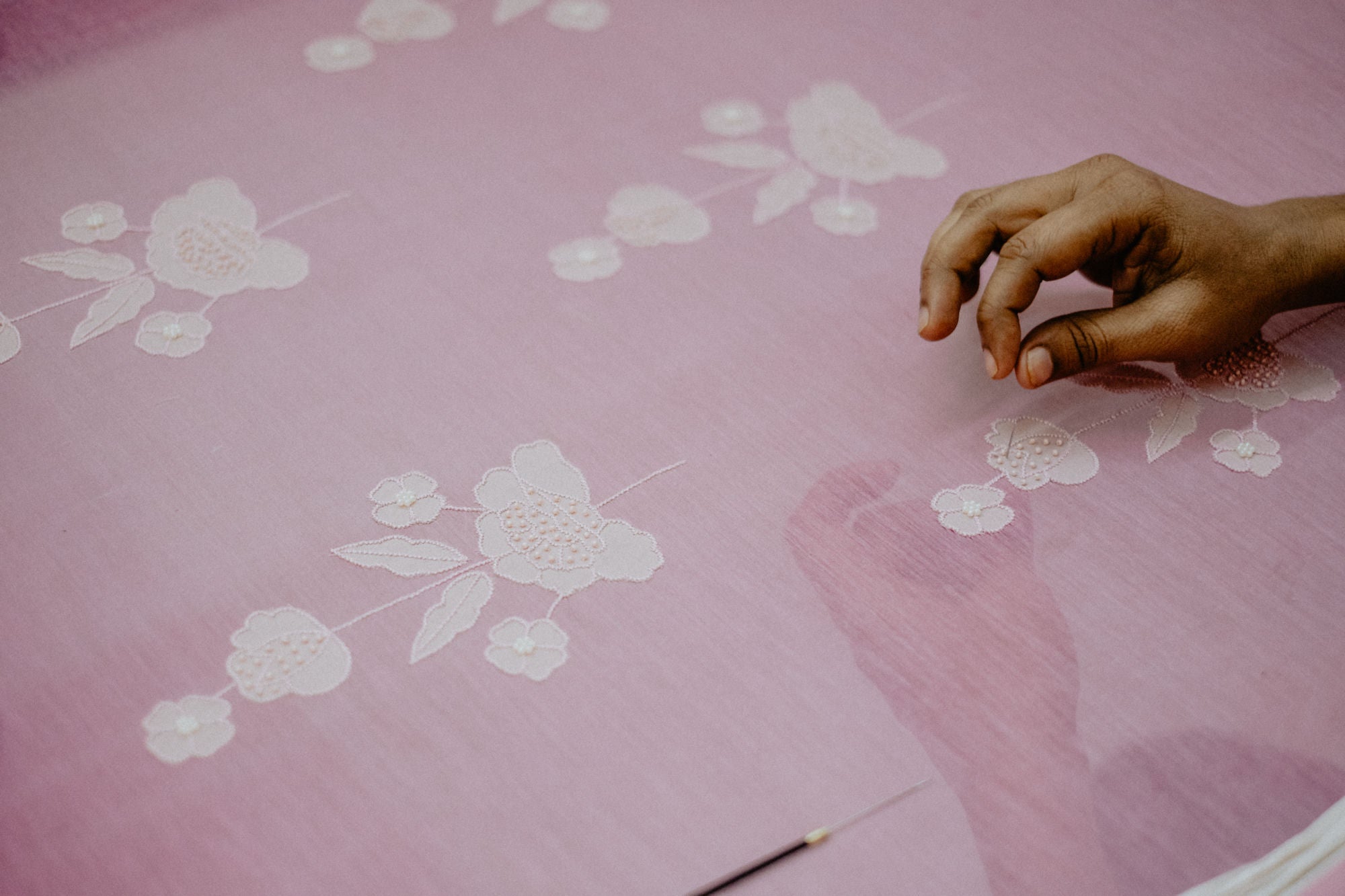
Tone-on-tone embroidery. Subtle, sophisticated, a rejection of maximalist excess.


Craft consciousness. Consumers want to know who made their clothes. Karigar stories matter. Handmade commands respect.
Silhouette diversity. No single silhouette dominates. Sarees, lehengas, shararas, anarkalis, kurta sets all coexist as equally valid choices.


Colour expansion. Colours once considered "non-traditional" — black, pastels, forest green — are fully accepted, even for brides.
What History Teaches Us
Looking at Indian fashion history reveals several truths:
- Nothing is purely "traditional." Today's traditions were yesterday's innovations. The saree drape you consider classic was once new.
- Change is constant. Silhouettes, colours, and techniques always evolve. What seems permanent will shift.
- Craft persists. Through every era, handcraft remains valued. Techniques outlast trends.
- Context shapes everything. Fashion responds to politics, economics, technology, and culture. What we wear reflects when we live.
The clothes we wear today carry all this history. Understanding where they came from helps us appreciate what we're putting on.
Explore: Shop All | Ruhaniyat Collection | Ishq Collection
Ready to Order Custom?
WhatsApp us at +91 70423 11214 with what you're looking for. We'll guide you through measurements, customizations, and timeline.
Most pieces ready in 4-5 weeks. Bridal in 6-8 weeks.
Made to order in 4–5 weeks
Have an event date? We’ll tell you exactly when to order by.
We take a limited number of orders each month — secure your slot early.
WhatsApp me my order-by date + a shortlistNot sure where to start?
Tell us what you're dressing for and we'll help you choose — fabric, fit, colour, and timeline — over WhatsApp or on a video call.
Your Cart
Pieces from this story
All pieces →Not sure which piece, or need it by a date? Book a video consultation Ask us on WhatsApp



Keep reading
The journal →
Kids' Ethnic Wear Under ₹20,000: 18 Hand-Embroidered Sets by Price and Occasion
18 hand-embroidered kids' kurta sets, a sharara and a lehenga from ₹12,500 to ₹19,500, by price band and occasion. Si...
7 October 2026
The Outfit Trial Checklist: How to Run a Fitting for a Lehenga, Blouse, Sharara or Anarkali
How to run a trial of a made-to-measure lehenga, blouse, sharara or anarkali: when to schedule it, what to wear and b...
7 October 2026
Wedding Guest Outfits Under ₹50,000: Lehengas, Sarees, Shararas & Anarkalis by Function
The best wedding guest outfits under ₹50,000: lehengas, sarees, shararas, anarkalis and kurta sets by budget and by f...
7 October 2026