
Sharara Suit Styling Guide: History, Cuts & How to Wear One
The sharara suit is one of Indian fashion's most romantic silhouettes — a garment born in the Mughal courts and worn by royalty as a symbol of grace and grandeur. Today, it remains one of the most striking choices for weddings, festive celebrations, and any occasion that calls for movement and drama.
But the sharara is often confused with the gharara and the palazzo, and many women are unsure how to style one or choose the right cut. This guide covers history, cuts, occasion styling, fabrics, dupatta draping, and body type tips.
What Is a Sharara Suit? A Brief History
A sharara suit is a three-piece ensemble: a kurta or short top, a pair of wide-legged flared trousers (the sharara), and a dupatta. The trousers are fitted at the waist and flare dramatically from the knee or mid-thigh, creating a flowing, skirt-like silhouette.
The sharara originated in the Mughal courts during the 15th and 16th centuries as a staple of Lucknowi Nawabi culture. Women of the royal household wore it for everyday elegance and court celebrations — the flared silhouette allowed ease of movement and cross-legged seating while maintaining modesty and grace.
Over the centuries, the sharara evolved into a beloved choice for weddings, nikaahs, and festive celebrations. Its revival in contemporary fashion has brought new cuts and fabrics while retaining the romance of the original silhouette.

Sharara vs Gharara vs Palazzo: What Is the Difference?
These three silhouettes are frequently confused:
Sharara: Fitted at the waist and hips, flaring gradually from the knee or mid-thigh. The smooth, trumpet-like shape looks like a flowing skirt from a distance but is actually a pair of trousers.
Gharara: Fitted to the knee, then flaring sharply below with a ruched or gathered knee seam. This creates a more structured, segmented silhouette traditionally associated with Lucknowi bridal wear.
Palazzo: Wide-legged trousers that fall loose and straight from the waist — no fitted section, no flare. A more casual, contemporary choice.
In short: a sharara flows, a gharara gathers, and a palazzo hangs.
Types of Sharara Cuts
Not all shararas are cut the same way. The flare determines how the garment moves, how formal it feels, and which body types it flatters.
Full Flared Sharara
The most traditional cut. The flare begins at the mid-thigh or knee and opens into a wide, circular sweep. The MASTANI, LEYLA & NALINI set in emerald cheniya bandhani jacquard silk exemplifies this full, flowing flare. Best for weddings and grand celebrations.
Mermaid Sharara
Fitted through the hips and thighs, flaring only at or below the knee. This creates a body-conscious, modern silhouette that works beautifully at evening events and receptions.
A-Line Sharara
A gentle flare from the waist that widens gradually to the hem. Less dramatic than the full flare, the A-line sharara is versatile, flattering on most body types, and works well for festive daywear and intimate gatherings.
Layered or Tiered Sharara
Multiple tiers of fabric create dimension and texture. This cut works particularly well in lightweight fabrics like organza and georgette, where the layers float and catch light.

How to Style a Sharara for Different Events
Mehendi Ceremony
Mehendi is the most playful wedding function — the styling should match. Choose vibrant colours: sunshine yellow, parrot green, hot pink, or tangerine. The ROSHNI & NAZREEN sharara set captures this festive, daytime energy.
- Jewellery: Floral jewellery, colourful lac bangles, or lightweight kundan
- Footwear: Embroidered juttis or kolhapuris
- Dupatta: Loosely over one shoulder or skip it
- Hair: A loose braid with fresh flowers or a messy bun
Sangeet Night
The sharara was made for dancing — the flared legs create dramatic movement on the dance floor. Choose fabrics that flow and catch light. Sequin, gota, and zari embroidery come alive under sangeet lighting.
- Jewellery: Statement chandbali earrings or jhumkas. Skip the necklace.
- Footwear: Block heels or wedges for stability while dancing
- Dupatta: Cape it for your entrance, then set it aside for dancing
- Hair: Down and flowing — let it move with the flare
Wedding Ceremony
A sharara in rich silk with heavy embroidery creates an impact that rivals a lehenga. The ZEHAN & AABHA in majestic purple silk with dense Gota applique delivers wedding-level grandeur.
- Jewellery: Full polki or kundan set — necklace, earrings, maang tikka, stacked bangles
- Footwear: Embellished heels or wedges
- Dupatta: Pinned at both shoulders trailing behind, or draped over the head
- Hair: A structured updo with fresh flowers or gajra


Festive Celebrations — Diwali, Eid, Navratri
A sharara is an excellent alternative to a kurta set or anarkali for festive celebrations. The CHANBELI & BADLI in soft ivory satin with hand-embroidered floral jaal feels special without being overdone.
- Jewellery: A choker or statement earrings — not both competing
- Footwear: Embroidered juttis or low block heels
- Dupatta: Arm-cradle drape (loosely carried in both elbows) for relaxed elegance
Dupatta Draping Styles with a Sharara Suit
The dupatta transforms the mood of your sharara set. For more techniques, see our dupatta styling guide.
Free Download
Get Our Measurement Guide
Step-by-step instructions with photos for perfect custom fit.
Download Free Guide- Single shoulder drape: Pin the dupatta at one shoulder and let it fall to the back. This shows off the kurta's embroidery while keeping the dupatta present. A beautifully embroidered dupatta like the INAAYAT elevates any sharara set.
- Over-the-head drape: Traditional and regal — ideal for nikaah ceremonies, religious functions, and formal wedding events.
- Cape drape: Pin at both shoulders, letting it fall behind like a cape. Dramatic and modern — perfect for sangeet and reception entrances.
- Arm drape: Carry loosely over both forearms in a U-shape. Relaxed and glamorous for festive dinners.
- No dupatta: For heavily embroidered sets or dance-heavy occasions, skipping the dupatta is a confident, contemporary choice.

Best Fabrics for Sharara Suits
- Silk: The most opulent choice. Silk holds the sharara's shape, creating a rich, defined flare ideal for weddings. The LAALSA & RAVAYA sharara in vermilion red silk demonstrates how beautifully silk carries this silhouette.
- Organza: Lightweight and ethereal. Creates a soft, floating flare that is dreamy for sangeets and evening events.
- Georgette: Fluid and forgiving. Drapes softly and is comfortable in warm weather — an excellent choice for festive daywear.
- Velvet: Rich and textured, perfect for winter weddings. Creates a heavier, structured sharara. Best reserved for cooler months.
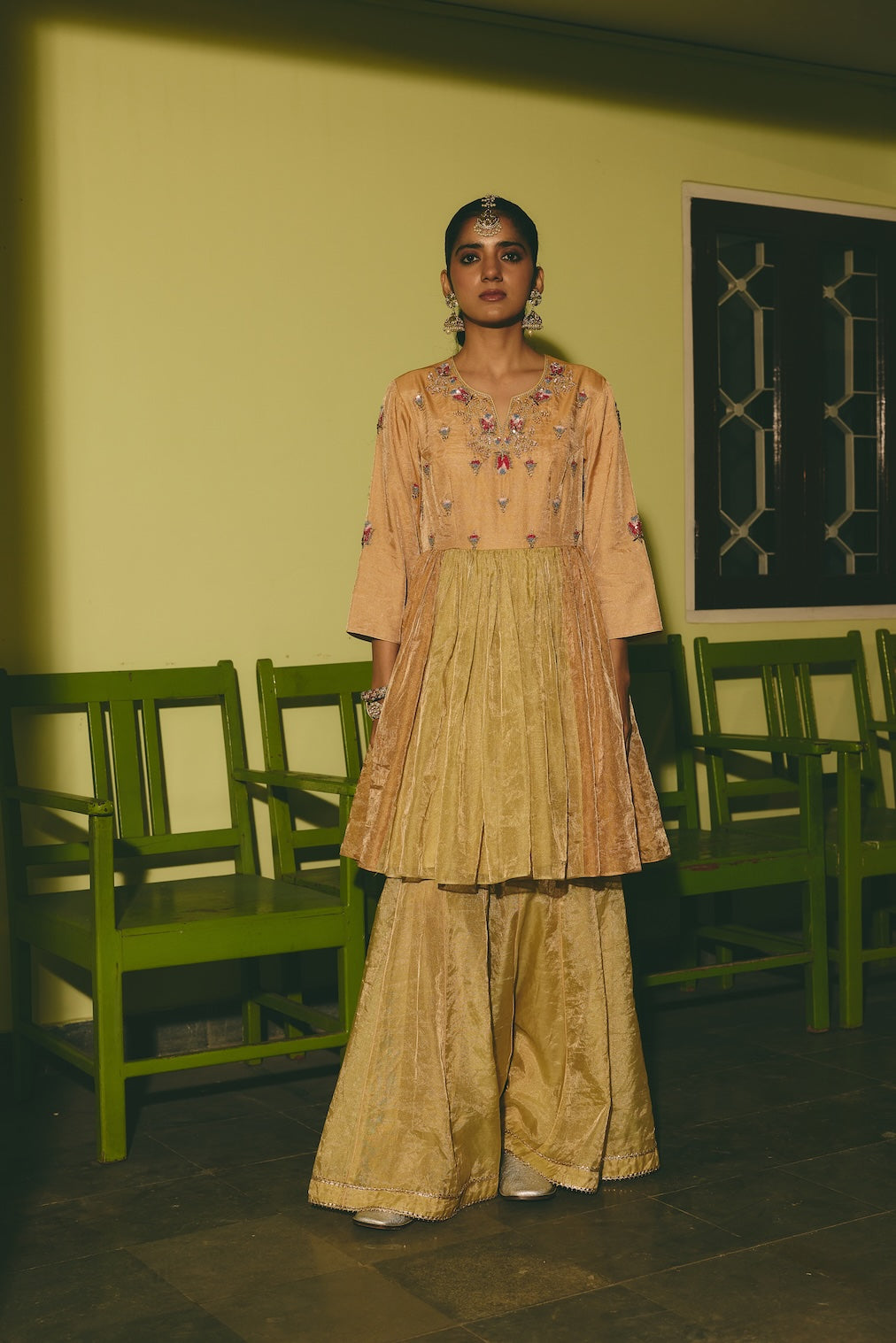
- Tissue: Known for its luminous sheen. The ANANYA & TAVISHI sharara in tissue with antique gold and muted green tones shows how this fabric catches light with every step.
Sharara Suits for Different Body Types
The sharara flatters a wide range of body types. For detailed recommendations, visit our body type guide.
- Petite frames: Choose a higher flare point (from the thigh) and pair with heels. A shorter kurta creates the illusion of length.
- Tall frames: Any sharara cut works — floor-sweeping lengths and wide flares look proportional on taller frames.
- Pear-shaped figures: The fitted waist defines your narrowest point while the flare balances wider hips. A kurta ending just above the flare point draws the eye upward.
- Apple-shaped figures: Pair with longer kurtas that skim the midsection. A-line shararas create balance without adding volume at the waist.
- Hourglass figures: A fitted sharara that follows your curves before flaring at the knee highlights the hourglass shape. Add a belt or kamarband to accentuate the waist.
Our colour guide offers further advice on choosing hues that complement your skin tone.


Frequently Asked Questions
What is the difference between a sharara and a gharara?
The sharara flares gradually from the mid-thigh or knee in a smooth, continuous line. The gharara is fitted to the knee and then flares sharply with a gathered seam at the knee joint — a more structured, segmented look compared to the sharara's flowing silhouette.
Can I wear a sharara suit to a wedding as a guest?
Absolutely. A sharara in rich fabric with embroidery offers the grandeur of a lehenga with the comfort of trousers. Choose jewel tones or deep colours, and style with full jewellery and an embroidered dupatta.
How do I keep my sharara from dragging on the floor?
Have your sharara hemmed to the correct length for your preferred footwear — the hem should just graze the floor in your chosen shoes. If the sharara is already stitched, heels can lift the hem. Avoid wearing a sharara designed for heels with flat footwear.
What type of kurta works best with a sharara?
Short kurtas (ending at the hip or just above the thigh) work best — they allow the flare to be visible and create a balanced silhouette. Longer anarkali-style kurtas can obscure the sharara. Peplum tops, crop tops, and structured jackets are also excellent pairings.
Is a sharara suit comfortable for long events?
Yes — unlike a lehenga, which requires managing a heavy skirt and waistband, the sharara sits at your natural waist and flows freely. You can walk, sit, and dance comfortably. The wide-leg cut allows airflow, making it suitable even for summer events. Choose georgette or tissue for all-day comfort.
Can I style a sharara set without a dupatta?
Yes. For sangeets and cocktail events, a sharara set looks polished without a dupatta — especially if the kurta has detailed embroidery. For religious ceremonies, a dupatta is generally expected. See our anarkali suit guide and kurta set styling guide for more dupatta ideas.
Ready to Order Custom?
WhatsApp us at +91 70423 11214 with what you're looking for. We'll guide you through measurements, customizations, and timeline.
Most pieces ready in 4-5 weeks. Bridal in 6-8 weeks.
Made to order in 4–5 weeks
Have an event date? We’ll tell you exactly when to order by.
We take a limited number of orders each month — secure your slot early.
WhatsApp me my order-by date + a shortlistNot sure where to start?
Tell us what you're dressing for and we'll help you choose — fabric, fit, colour, and timeline — over WhatsApp or on a video call.
Your Cart
Pieces from this story
All pieces →Not sure which piece, or need it by a date? Book a video consultation Ask us on WhatsApp


Keep reading
The journal →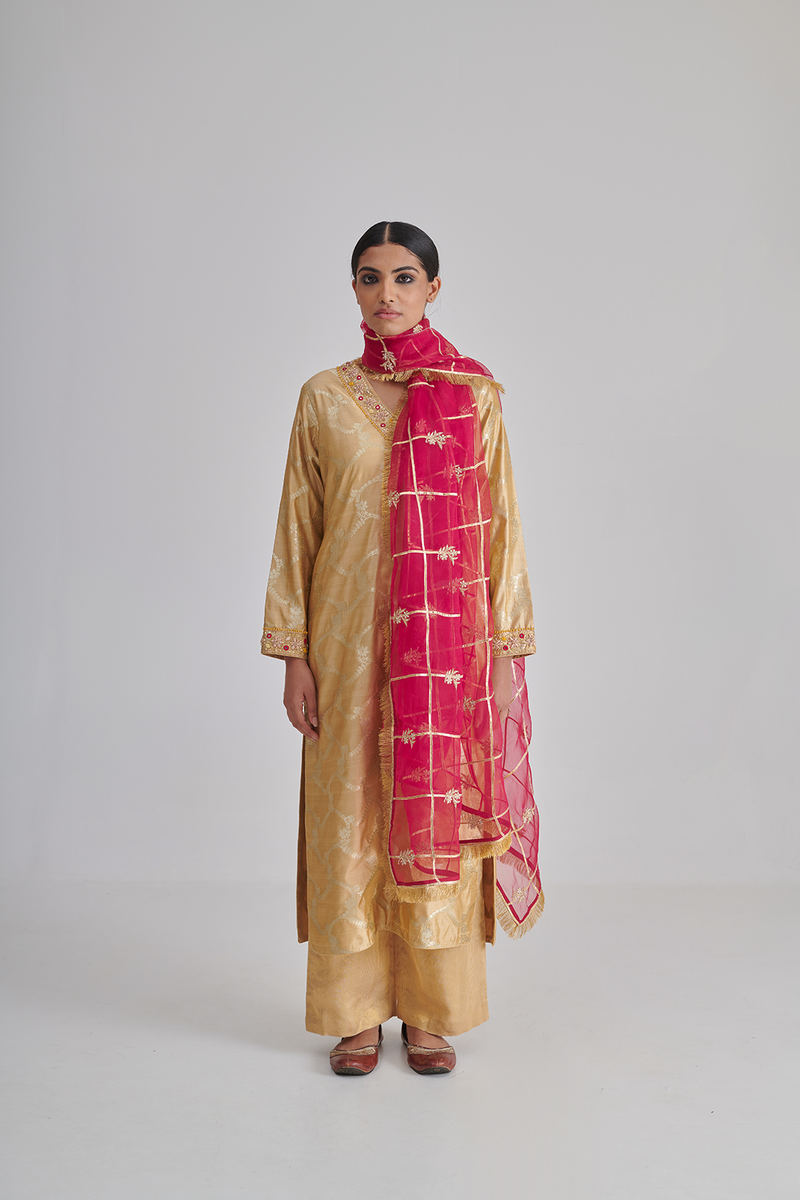
10 Dupatta Styling Ideas That Elevate Any Outfit
A dupatta can make or break your Indian outfit. Draped well, it adds elegance and movement. Ignored, it becomes that ...
29 May 2026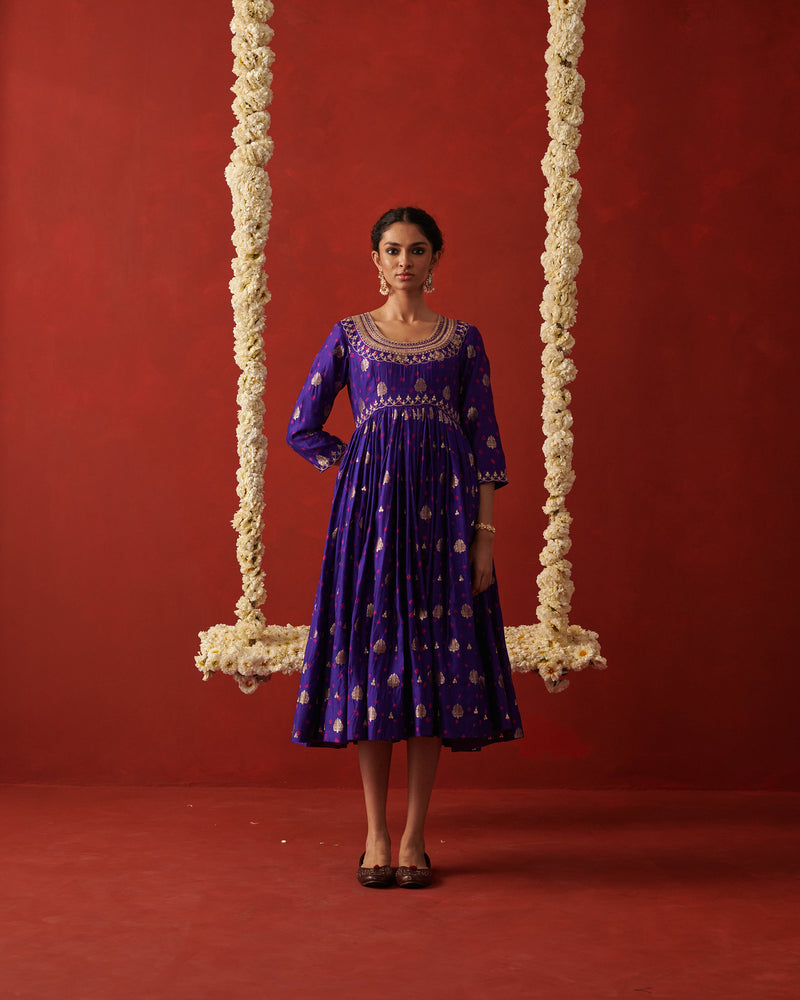
Anarkali Suit: History, Types & How to Style for Every Occasion
Everything about anarkali suits — history, types, fabrics, and how to style them for weddings, festivals, and parties...
4 March 2026
How to Style a Kurta Set for Every Occasion: Office, Wedding, Casual, and Festive
How to style one kurta set for office, casual outings, weddings, and festive events. Dupatta, jewellery, and footwear...
22 March 2026