
Anarkali Suit: History, Types & How to Style for Every Occasion
Few Indian garments carry the romance and grandeur of an anarkali. Named after the legendary court dancer of Mughal emperor Akbar's time, the anarkali silhouette — with its fitted bodice flowing into a sweeping, floor-length skirt — has captivated women for centuries. It is simultaneously regal and effortless, dramatic yet comfortable, and one of the most versatile silhouettes in Indian fashion.
Whether you are attending a wedding, celebrating Diwali, or simply want to make a statement at a dinner party, an anarkali adapts to the occasion. This guide covers the history, types, and styling of this iconic garment.
The History of Anarkali: From Mughal Courts to Modern Runways
The anarkali draws its name from Anarkali — a legendary figure said to have been a dancer or courtesan in Emperor Akbar's court in 16th-century Lahore. While historians debate the details of her story, her name has become immortalised in this garment style that evokes the flowing, graceful costumes of the Mughal era.
The silhouette draws from the angrakha and peshwaz — Mughal-era garments characterised by a fitted upper body and a dramatically flared lower half. The modern anarkali as we know it emerged in Bollywood in the 1960s with the film Mughal-e-Azam, where Madhubala's portrayal of Anarkali in a swirling white outfit became one of Indian cinema's most iconic images.
Since then, the anarkali has remained a staple of Indian occasion wear — evolving in fabric, embellishment, and silhouette while retaining the core design of a fitted bodice and sweeping flare.
Types of Anarkali Suits
1. Floor-Length Anarkali
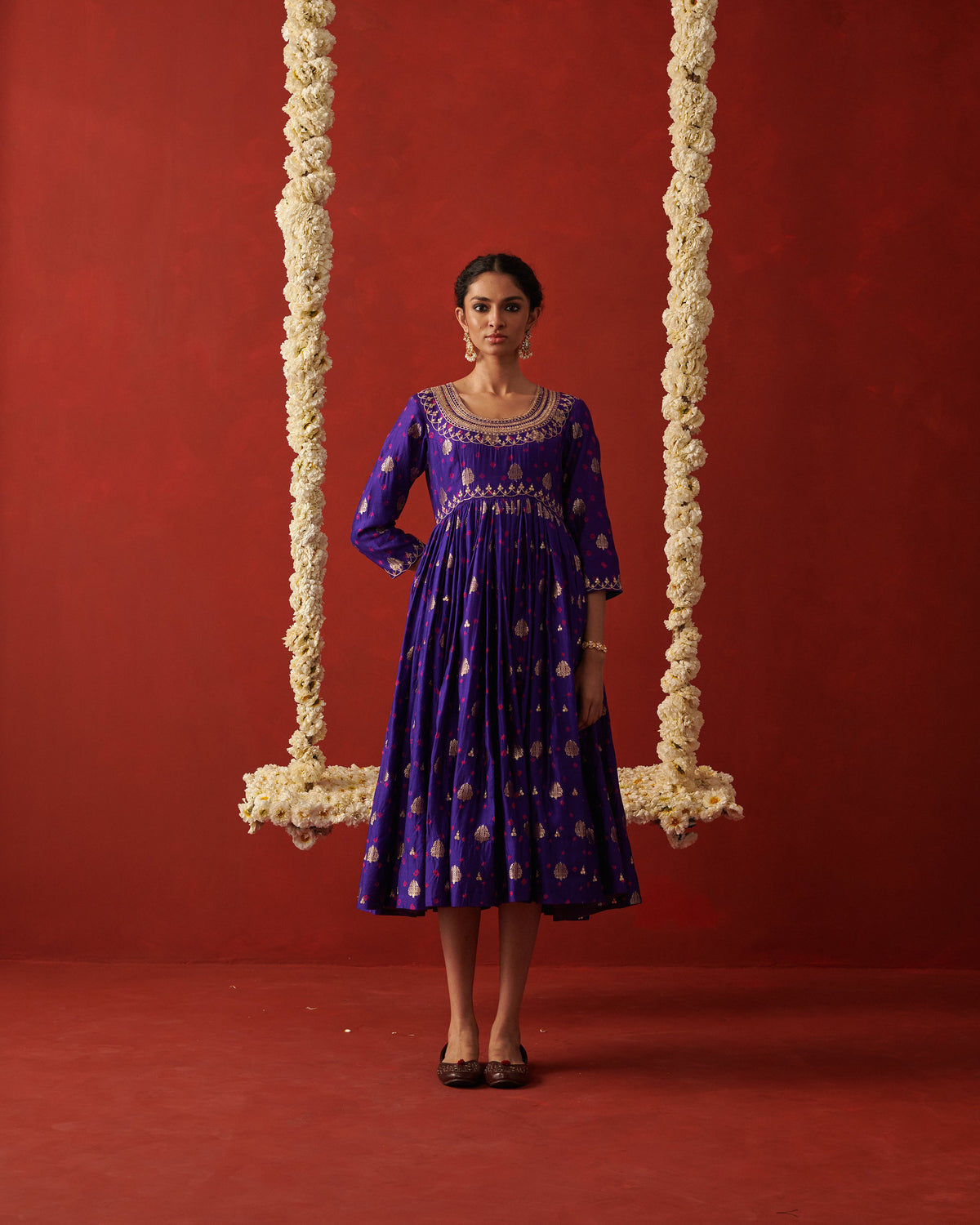
The classic — a fitted bodice with a skirt that flows to the floor. This creates maximum drama and is the most formal option, ideal for weddings and grand celebrations. The SUROOR anarkali, crafted in Bandhej Banarasi silk with woven gold bootis and hand-embroidered sequin work, is a stunning example of this silhouette at its most regal.

2. Straight-Cut Anarkali
A more modern, streamlined interpretation with less flare. The silhouette falls straight from the bust or waist, creating a column effect that is both elegant and slimming. This works beautifully for semi-formal events and dinner parties.
3. Short Anarkali / Anarkali Kurta
Knee-length or mid-calf anarkalis that offer the charm of the flared silhouette in a more relaxed format. Perfect for festive daywear, poojas, and family gatherings when a floor-length piece feels like too much.
4. Jacket-Style Anarkali
A front-open anarkali layered over a contrasting inner, creating a dramatic cape-like effect. This contemporary variation allows for interesting colour and texture combinations.
5. Cape Anarkali
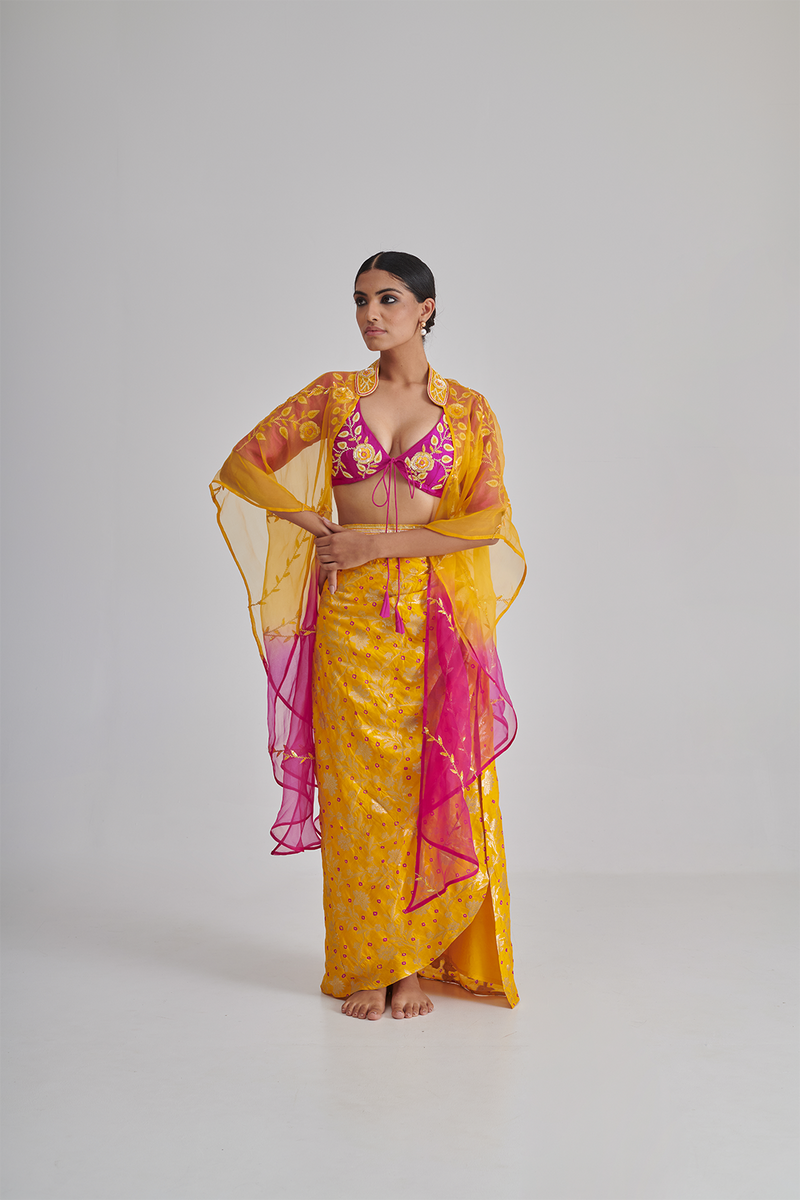
A fusion of the anarkali with a cape overlay. The SAADGI, ARZOO & NAAZ set illustrates this beautifully — the 'Saadgi' cape in sheer black organza with hand-embroidered sequins and beadwork is layered over the gathered 'Naaz' blouse with a halter neckline, paired with the voluminous 'Arzoo' sharara.

Best Fabrics for Anarkali Suits
The fabric defines how an anarkali drapes, moves, and feels. Here are the most popular choices:
- Banarasi Silk — Rich, heavy, and perfect for winter weddings. The woven brocade patterns add texture and opulence without additional embroidery. The SUROOR in Bandhej Banarasi silk exemplifies this.
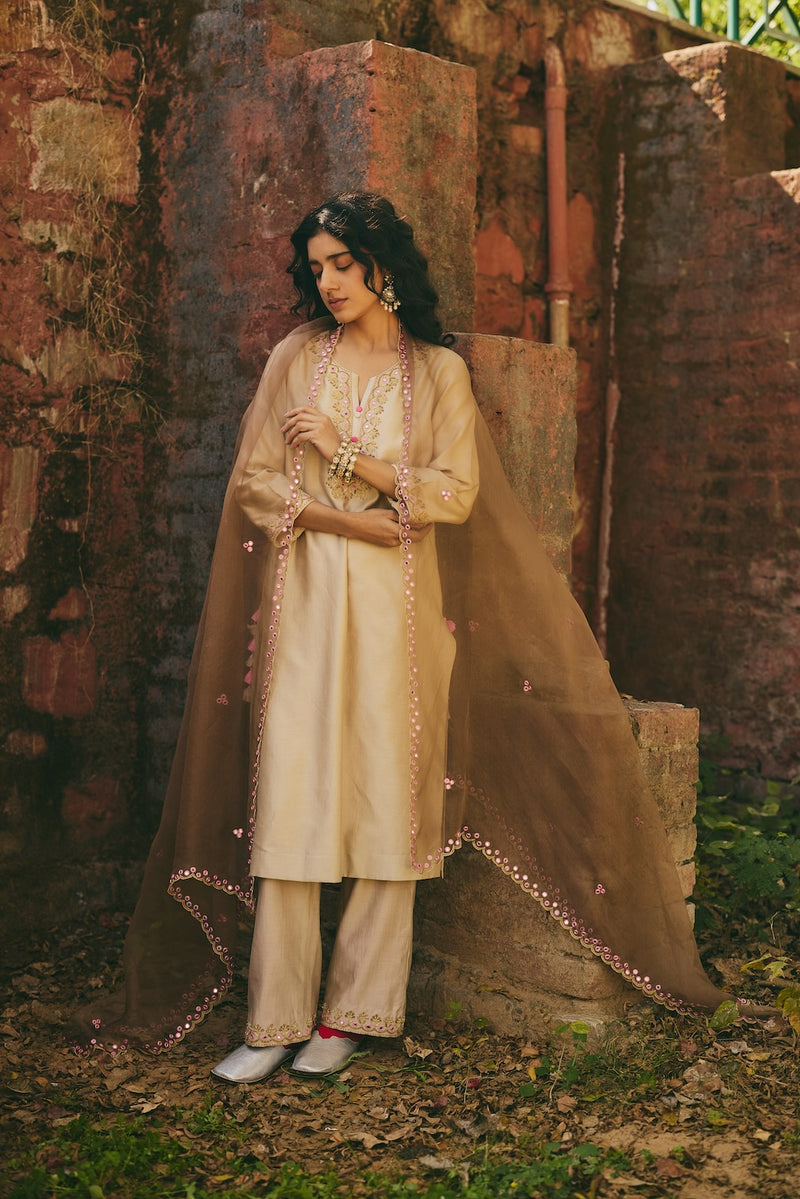
- Chanderi — Lightweight with a soft sheen, ideal for year-round wear. The HEERIYE & REVA in cinnamon-brown chanderi with resham, cutdana, and sequin embroidery shows how beautifully chanderi carries the anarkali silhouette.
- Organza — Crisp and structured, creating a more sculpted flare. Best for evening occasions where you want the fabric to hold its shape.
- Georgette and Chiffon — Flowing and feminine, these fabrics create a softer, more fluid anarkali. Ideal for cocktail events and reception wear.
- Silk — The versatile middle ground. Pure silk offers lustre, body, and drape in equal measure. It photographs beautifully and works across seasons.


How to Style an Anarkali for Different Occasions
For a Wedding Ceremony
A floor-length anarkali in rich silk or Banarasi with dense embroidery is one of the most elegant outfits a wedding guest can wear. Pair with heavy jhumkas, stacked bangles, and an embellished clutch. A potli bag in a matching hue completes the traditional look.
Free Download
Get Our Measurement Guide
Step-by-step instructions with photos for perfect custom fit.
Download Free GuideThe ivory Mukesh-work anarkalis like the BHAYLI & AHANA — featuring gold hand-embroidered motifs, delicate sequin detailing, and a rich gold and silver border — are particularly suited to wedding ceremonies where understated opulence is the goal.
For a Sangeet or Cocktail Night
This is where you can go bold with colour and embellishment. The FEROZAAN & GULRAAZ in vibrant fuchsia chanderi with intricate hand-embroidered motifs inspired by vintage Persian tapestries is the kind of piece that commands a room. Pair with statement earrings and stilettos.
For Festival Celebrations
A lighter anarkali in chanderi or cotton silk works beautifully for Diwali, Navratri, and other festivals. Keep the accessories traditional — temple jewellery, a bindi, and juttis — and let the garment's flare and embroidery do the talking.
For an Engagement or Formal Dinner
Choose a mid-calf or ankle-length anarkali in a solid colour with selective embroidery. This is more refined than a floor-length version and works well for events where you are seated at a table for much of the evening.
Anarkali Styling Tips
- Choose the right length for your height — Floor-length anarkalis look most dramatic on taller frames. If you are petite, a mid-calf length or pairing with heels ensures the garment does not overwhelm your frame.
- Dupatta draping matters — Drape your dupatta over one shoulder for a traditional look, or carry it loosely in the crook of your arms for a more relaxed, modern feel. For a dramatic entrance, pin it at both shoulders and let it trail behind.
- Let the anarkali be the star — With a heavily embroidered anarkali, keep jewellery minimal. A single pair of statement earrings often suffices. With a simpler anarkali, you can layer necklaces and bangles.
- Undergarment matters — Wear a well-fitted churidar or slim pants underneath for a clean silhouette. Avoid bulky bottoms that add unnecessary volume under the flare.
- Hair and makeup — Anarkalis pair beautifully with pulled-back hair (a sleek bun or low ponytail) that showcases the neckline and earrings. For a more romantic look, soft waves complement the flowing silhouette.
Anarkali vs Lehenga: Which Should You Choose?
Both are statement garments, but they serve different needs:
- Ease of wearing — An anarkali is a single garment (plus dupatta), making it far easier to drape and wear than a lehenga, which requires a separate blouse, skirt, and dupatta.
- Comfort — Anarkalis win on comfort. The one-piece construction means no waistband digging in, no skirt slipping, and no blouse adjustments.
- Formality — Lehengas are generally considered more formal and bridal. An anarkali is the smarter choice for events where you want to look regal without looking like you are competing with the bride.
- Movement — Both allow free movement, but anarkalis are particularly easy to dance in — their flare moves beautifully without requiring adjustment.
Browse our complete anarkali collection and lehenga collection to see which silhouette speaks to you.
Frequently Asked Questions
Can an anarkali be worn to a wedding?
Absolutely. A well-chosen anarkali is one of the most elegant outfits for a wedding guest. Opt for rich fabrics (silk, Banarasi, tissue) with hand-embroidery for the main ceremony, and lighter fabrics for pre-wedding events.
What body type does an anarkali suit best?
The anarkali is one of the most universally flattering Indian silhouettes. The fitted bodice defines the upper body while the flared skirt skims over the hips and thighs. It works particularly well for pear-shaped and hourglass figures, but the key is choosing the right neckline and length for your proportions.
Can I wear an anarkali without a dupatta?
Yes. Many modern anarkali styles — especially heavily embroidered ones — look stunning without a dupatta. This is a popular choice for cocktail events and receptions where the dupatta can feel cumbersome. For religious ceremonies, however, a dupatta is recommended as a sign of respect.
How is an anarkali different from a gown?
While both are floor-length garments, an anarkali has a distinctly Indian construction — typically with a visible waist seam, a dramatically flared lower half (using kalis or panels), and traditional embroidery techniques. A gown tends to have a more Western construction with a continuous silhouette. The anarkali is also traditionally paired with a churidar and dupatta.
Ready to Order Custom?
WhatsApp us at +91 70423 11214 with what you're looking for. We'll guide you through measurements, customizations, and timeline.
Most pieces ready in 4-5 weeks. Bridal in 6-8 weeks.
Made to order in 4–5 weeks
Have an event date? We’ll tell you exactly when to order by.
We take a limited number of orders each month — secure your slot early.
Not sure where to start?
Tell us what you're dressing for and we'll help you choose — fabric, fit, colour, and timeline — over WhatsApp.
Your Cart
Pieces from this story
All pieces →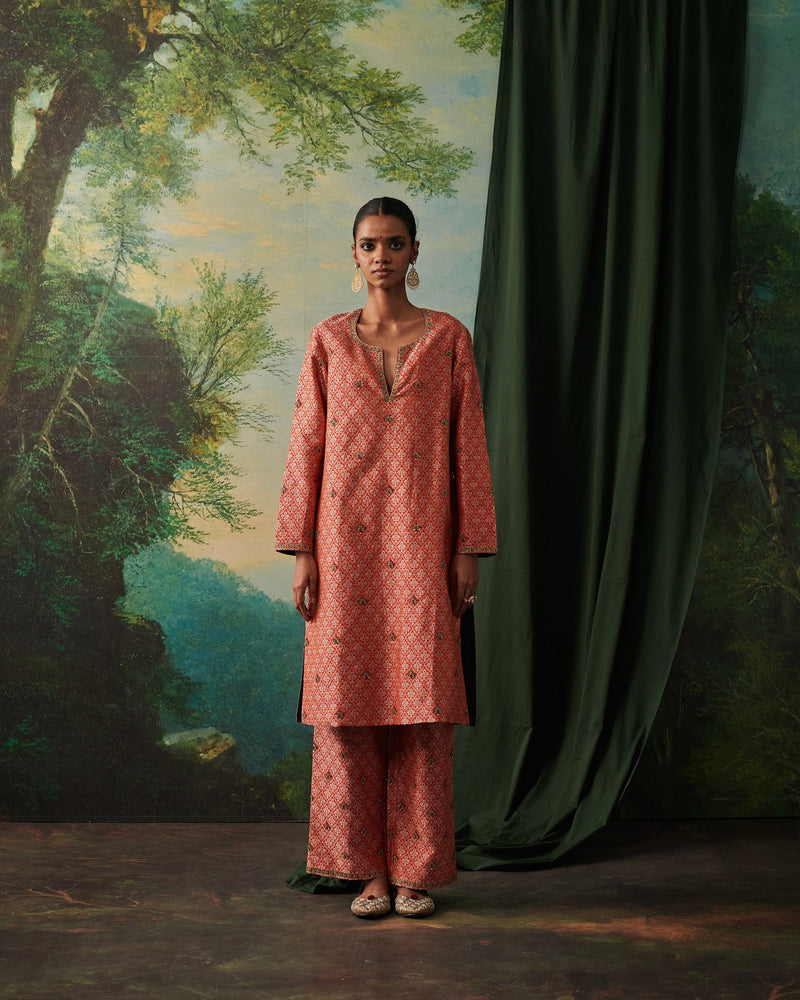
Keep reading
The journal →
Dholki Night Outfit Ideas: What to Wear to the Ladies' Dhol
Handmade by karigars Made to your measurements Fit guarantee Ships worldwide As seen in GraziaElle Graduat...
27 July 2026
Mayra & Bhaat Outfit Ideas: Dressing for the Maternal Gift Ceremony
Handmade by karigars Made to your measurements Fit guarantee Ships worldwide As seen in GraziaElle Graduat...
27 July 2026
Pag Phera Outfit Ideas: What to Wear for the Bride's Homecoming
Handmade by karigars Made to your measurements Fit guarantee Ships worldwide As seen in GraziaElle Graduat...
27 July 2026