
The One-Hero-Piece Rule: How Statement Earrings Are Replacing Heavy Necklaces in 2026
There's a quiet revolution happening in Indian wedding jewellery. Brides and wedding guests are abandoning the more-is-more approach — stacking necklaces, bangles, maang tikka, nath, haath phool, everything at once — in favour of a simpler philosophy: pick one hero piece and let it shine.
And in 2026, that hero piece is almost always the earrings.
The Shift: From Layered to Focused
For decades, the formula was clear: heavy polki or kundan necklace + matching earrings + maang tikka + bangles + ring. The jewellery was meant to be a coordinated set, worn together, making a collective impact.
The 2026 approach is different. Instead of distributing visual weight across five pieces, women are concentrating it into one dramatic focal point — oversized chandbalis, sculptural jhumkas, or contemporary ear cuffs — and keeping everything else deliberately minimal or absent entirely.
The result? The face becomes the focal point. The earrings frame it. And the outfit gets room to breathe.
Why Earrings Won the Hero Piece Battle
They frame the face in photos. In an era of close-up selfies and video reels, earrings are the jewellery piece most consistently visible. A necklace can be hidden by a dupatta or neckline. Earrings are always in frame.
They work with every neckline. High neck, V-neck, sweetheart, off-shoulder, boat neck, collared — earrings complement all of them. Necklaces fight with certain necklines and get lost in others.
They're the most versatile investment. A pair of statement chandbalis works with a saree, a lehenga, a kurta set, and a western outfit. A heavy bridal necklace sits in a locker 360 days a year.
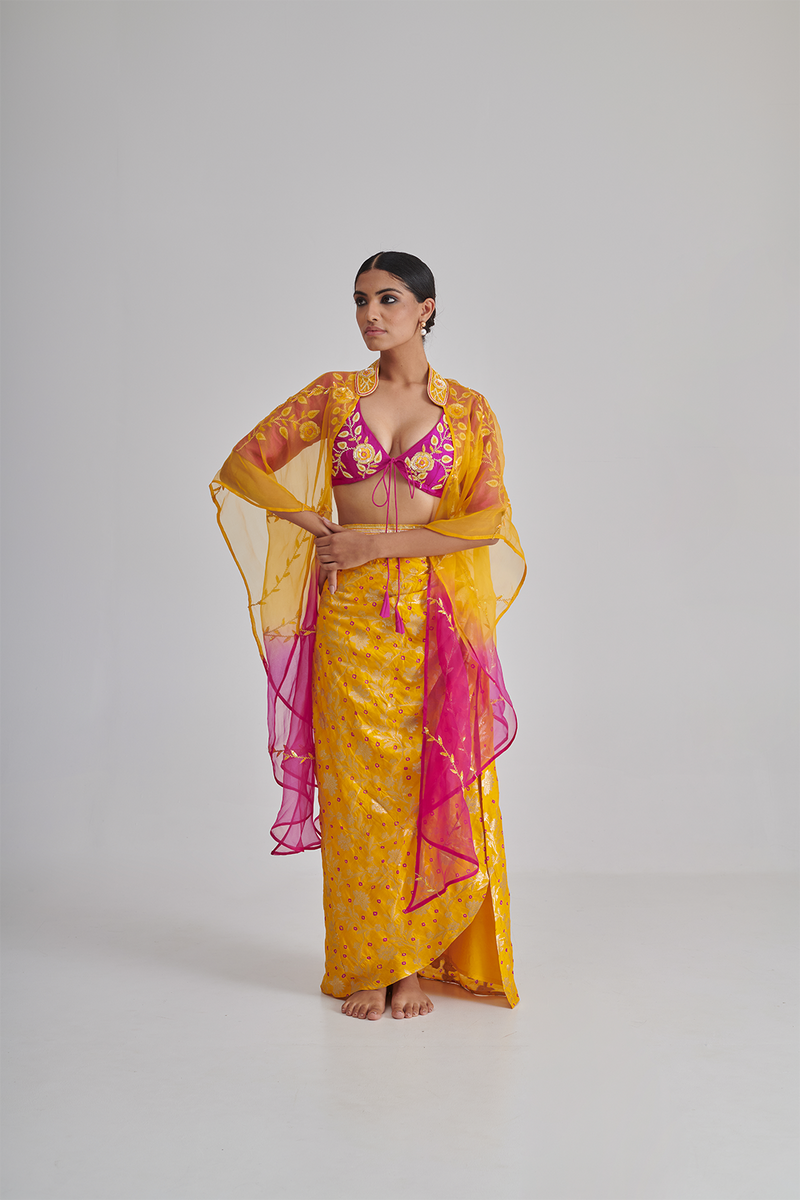
Modern blouse designs demand it. The corset blouse trend of 2026 — with clean, structured necklines and detailed embroidery around the bodice — looks best without a heavy necklace competing for attention. Statement earrings complete the look without cluttering it.
The Earring Styles Dominating 2026
Oversized chandbalis: The classic crescent-shaped earring, but bigger and more sculptural than traditional versions. Gold with kundan, pearls, or coloured stones. These are the single most popular wedding earring of the year.
Cascading jhumkas: Multi-tier jhumkas that create movement and catch light. Best with hair pulled back or in a side parting.
Contemporary ear cuffs: For cocktail and sangeet events — a single dramatic ear cuff that climbs the ear, no matching piece on the other side. Asymmetry is the point.
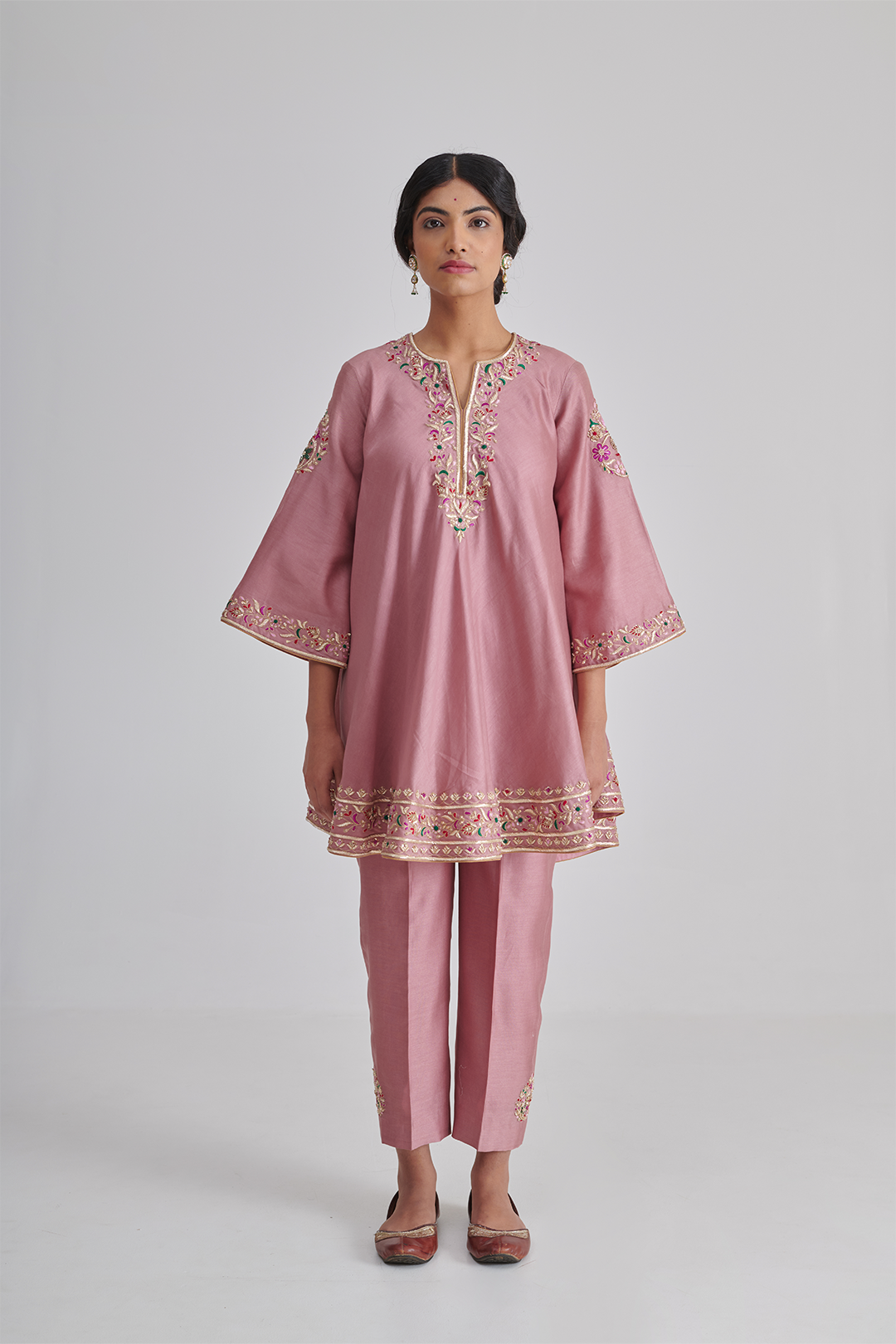
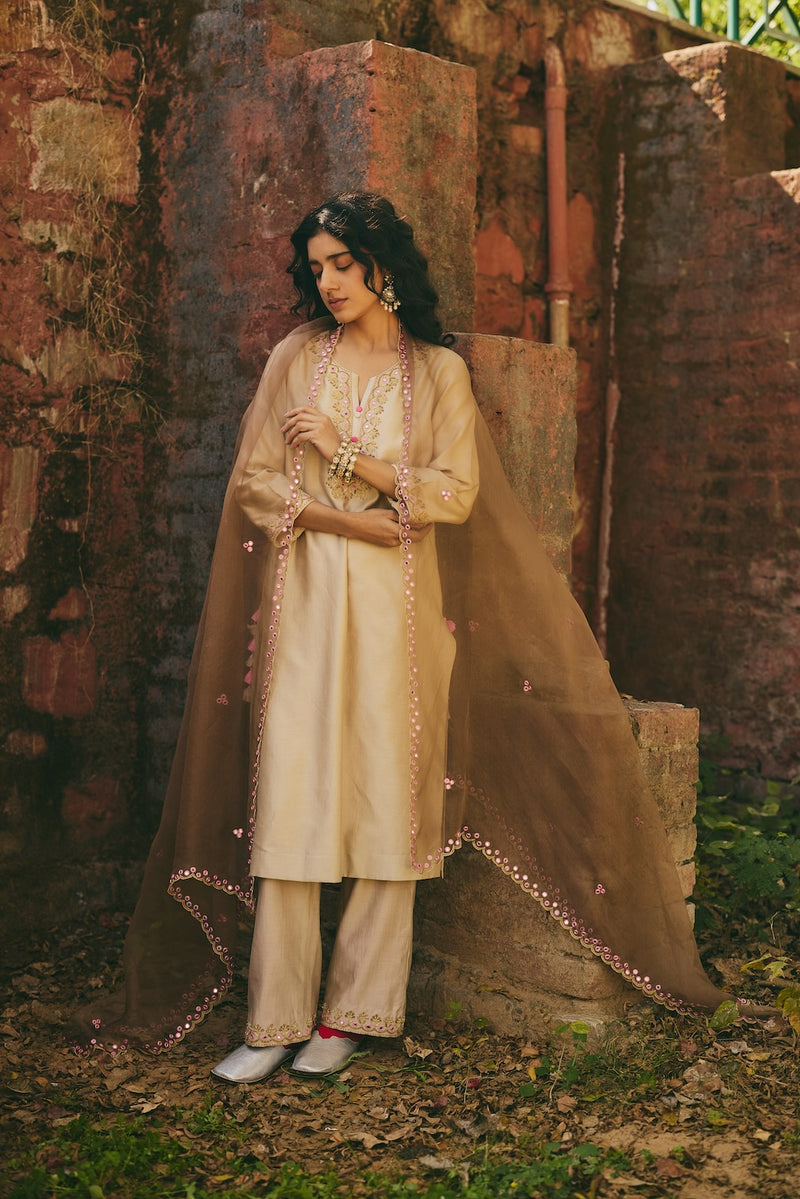
Floral and nature-inspired: Oversized lotus, leaf, and vine-shaped earrings in gold with enamel work. These pair especially well with the botanical embroidery motifs seen in many of our pieces — like the Naveli & Ruhi kurta set with its floral aari and zardozi work.

How to Apply the One-Hero-Piece Rule
For brides:
Free Download
Get Our Measurement Guide
Step-by-step instructions with photos for perfect custom fit.
Download Free Guide- Choose your statement earrings first, then decide if you need a necklace at all
- If you do want a necklace, go minimal — a delicate chain or small pendant, not a competing statement
- Skip the maang tikka if your earrings are dramatic enough — or choose a subtle, thin one
- This works especially well with tone-on-tone bridal outfits where the embroidery is already rich
For wedding guests:
- One pair of statement earrings + a cocktail ring or stack of thin bangles — that's it
- With a saree, let the drape and earrings do the talking. No necklace needed if the pallu is embroidered.
- With a kurta set, statement earrings + the outfit's own neckline embroidery is usually enough
For sangeet and cocktail:
- This is where you can be boldest — oversized geometric earrings, ear cuffs, asymmetric styles
- A dramatic pair of earrings with a clean outfit like the Rafia anarkali in black silk creates maximum impact

Pairing Hero Earrings with Indian Outfits
The key principle: the more the outfit has happening, the simpler the earrings (and vice versa).
Heavily embroidered outfit → Medium earrings, no necklace. The Ferozaan & Gulraaz anarkali with its vivid Persian tapestry embroidery already makes a statement. Simple gold jhumkas are all you need.
Minimal/tonal outfit → Oversized statement earrings. A clean kurta set like the Raha & Avni with scattered gold sequins is the perfect canvas for dramatic chandbalis.


Dupatta covering one shoulder → Earring on the exposed side gets the spotlight. If your dupatta covers your left shoulder, your right earring becomes the visual anchor. Make sure it's visible and worth seeing.
What to Do with the Sets You Already Own
You don't need to buy new jewellery. Most traditional Indian jewellery sets can be deconstructed:
- Wear the earrings from a set without the necklace
- Use the tikka from one set with earrings from another — mixing sets is very 2026
- Repurpose a heavy necklace as a maathapatti for a different look
- Layer thin bangles from different sets rather than wearing one heavy kada
The one-hero-piece rule isn't about owning less. It's about wearing less at once — and making what you wear count.
Explore: kurta sets · sarees · anarkalis · shop all
Ready to Order Custom?
WhatsApp us at +91 70423 11214 with what you're looking for. We'll guide you through measurements, customizations, and timeline.
Most pieces ready in 4-5 weeks. Bridal in 6-8 weeks.
Made to order in 4–5 weeks
Have an event date? We’ll tell you exactly when to order by.
We take a limited number of orders each month — secure your slot early.
Not sure where to start?
Tell us what you're dressing for and we'll help you choose — fabric, fit, colour, and timeline — over WhatsApp.
Your Cart
Pieces from this story
All pieces →
Keep reading
The journal →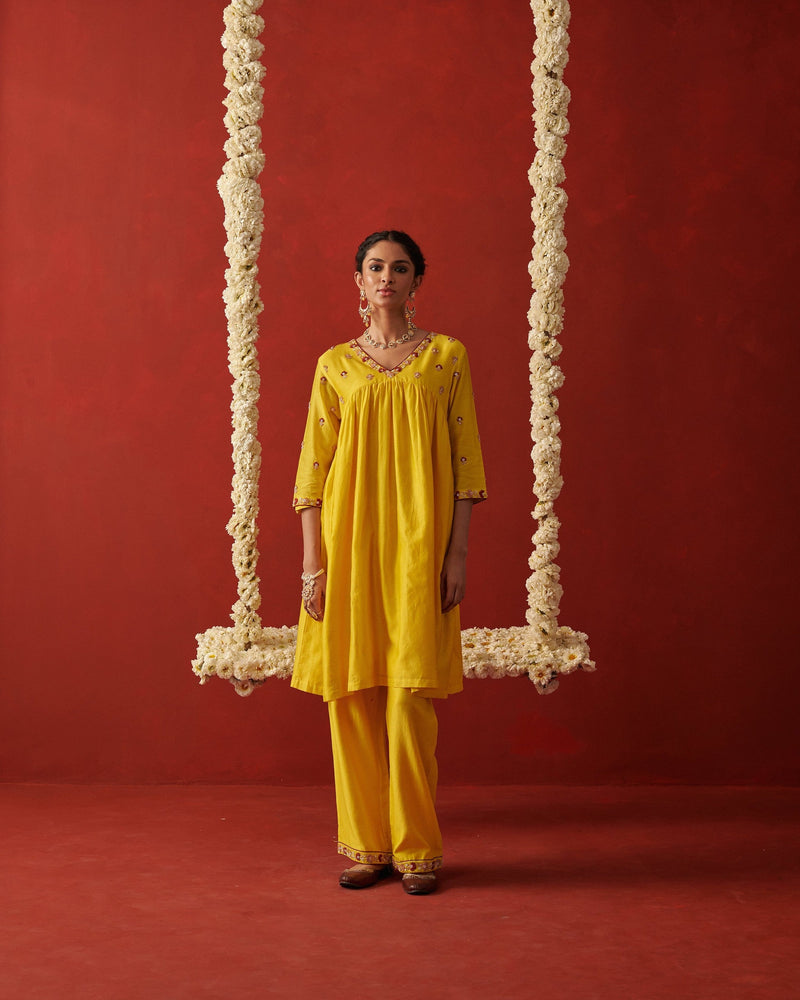
Dholki Night Outfit Ideas: What to Wear to the Ladies' Dhol
Handmade by karigars Made to your measurements Fit guarantee Ships worldwide As seen in GraziaElle Graduat...
27 July 2026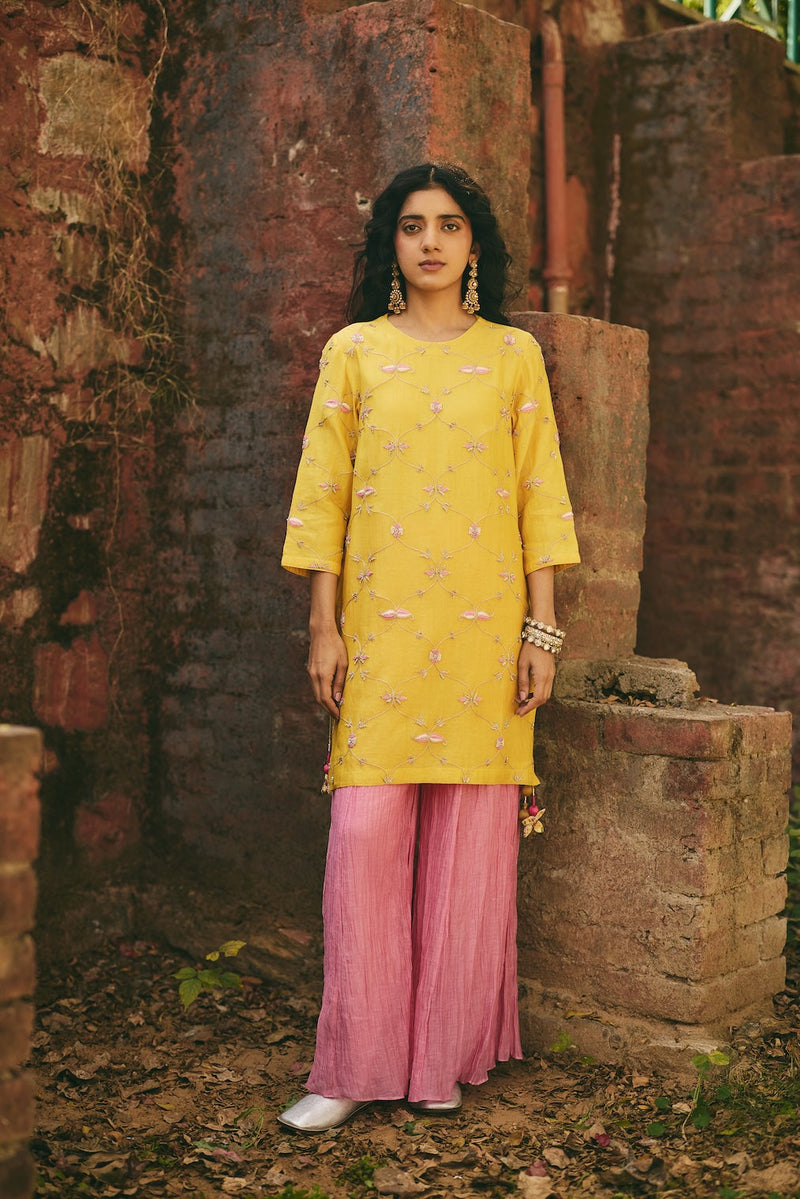
Mayra & Bhaat Outfit Ideas: Dressing for the Maternal Gift Ceremony
Handmade by karigars Made to your measurements Fit guarantee Ships worldwide As seen in GraziaElle Graduat...
27 July 2026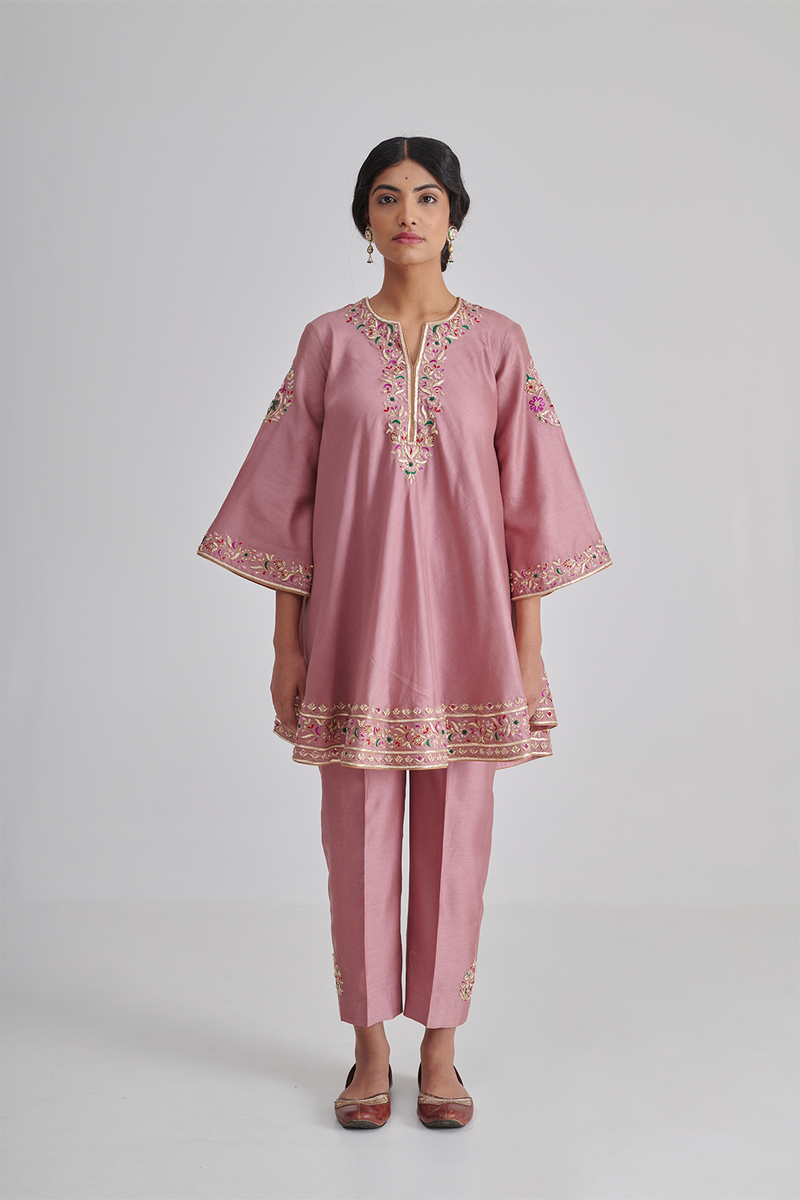
Pag Phera Outfit Ideas: What to Wear for the Bride's Homecoming
Handmade by karigars Made to your measurements Fit guarantee Ships worldwide As seen in GraziaElle Graduat...
27 July 2026