
Banarasi Silk: The Queen of Indian Fabrics
In the narrow lanes of Varanasi, where the clatter of handlooms has echoed for over four centuries, master weavers create what many consider the finest silk fabric in the world — Banarasi silk. Recognised by its opulent gold and silver brocade, Banarasi silk is not merely a textile; it is a cultural treasure that has draped queens, graced weddings, and defined Indian luxury for generations.
The Heritage of Banarasi Silk Weaving
The origins of Banarasi silk weaving are intertwined with the Mughal era, when Persian artisans brought their weaving expertise to the holy city of Varanasi (also known as Banaras or Kashi) during the 14th century. The fusion of Persian design sensibility with Indian textile traditions gave birth to a unique weaving style characterised by intricate floral and foliate motifs, elaborate borders, and the generous use of gold and silver zari.
By the 17th century, Banarasi silk had become the preferred fabric of the Mughal court. The weavers of Varanasi were commissioned to create elaborate brocades for royal garments, furnishings, and ceremonial textiles. This patronage elevated the craft to extraordinary levels of refinement — a legacy that continues to this day, with Banarasi silk receiving a Geographical Indication (GI) tag to protect its authenticity.
How Banarasi Silk Is Made
The creation of a single Banarasi silk saree is a feat of patience and precision, often taking anywhere from 15 days to 6 months depending on the complexity of the design.
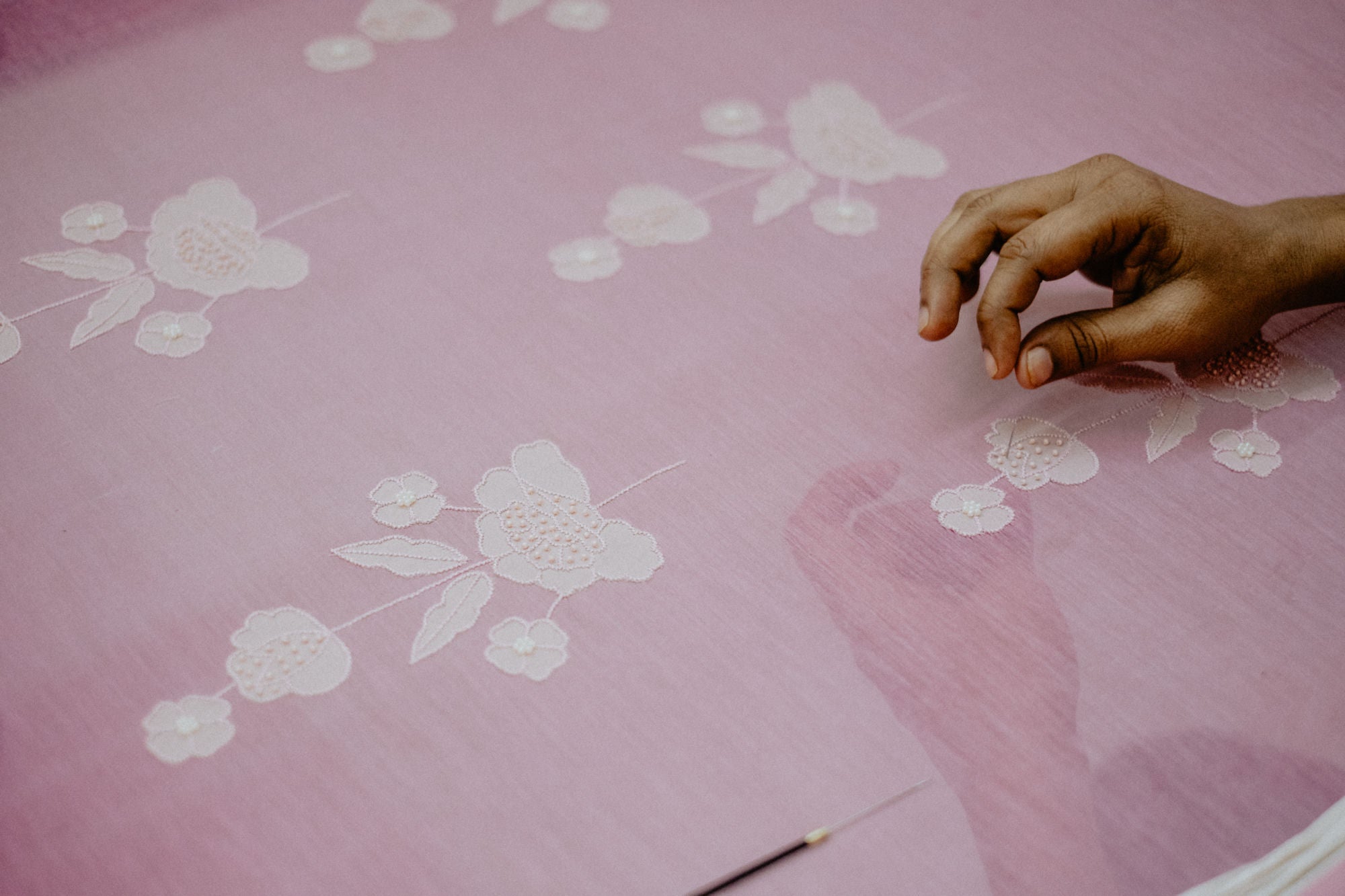
The process begins with preparing the silk yarn — degumming, dyeing, and winding it onto bobbins. The warp (lengthwise threads) is set up on the loom, while the weft (crosswise threads) and zari are prepared separately. For brocade work, a jacquard mechanism is attached to the handloom, controlled by punch cards that encode the pattern — each hole in the card determining which warp threads are raised or lowered.
The weaver works the loom with hands and feet in coordinated rhythm, passing the shuttle carrying silk and zari threads through the warp. In kadhua technique — the most intricate form — each motif is woven using individual bobbins, meaning the design appears distinct and can be cut from the fabric without unravelling. This is what distinguishes the finest Banarasi textiles from lesser weaves.

Types of Banarasi Silk
Banarasi silk comes in several distinguished varieties:
- Katan Silk: Pure silk fabric with a fine, smooth texture. The most traditional and highly valued variety, used for bridal sarees.
- Organza (Kora): A sheer, lightweight fabric with a subtle shimmer. Ideal for summer occasions and lighter draping styles.
- Georgette: A crinkled, flowing fabric that drapes beautifully. Popular for its ease of wear and contemporary appeal.
- Tanchoi: Originally a weaving technique from China, adapted by Varanasi weavers. Features a single-colour warp with multicoloured weft patterns.
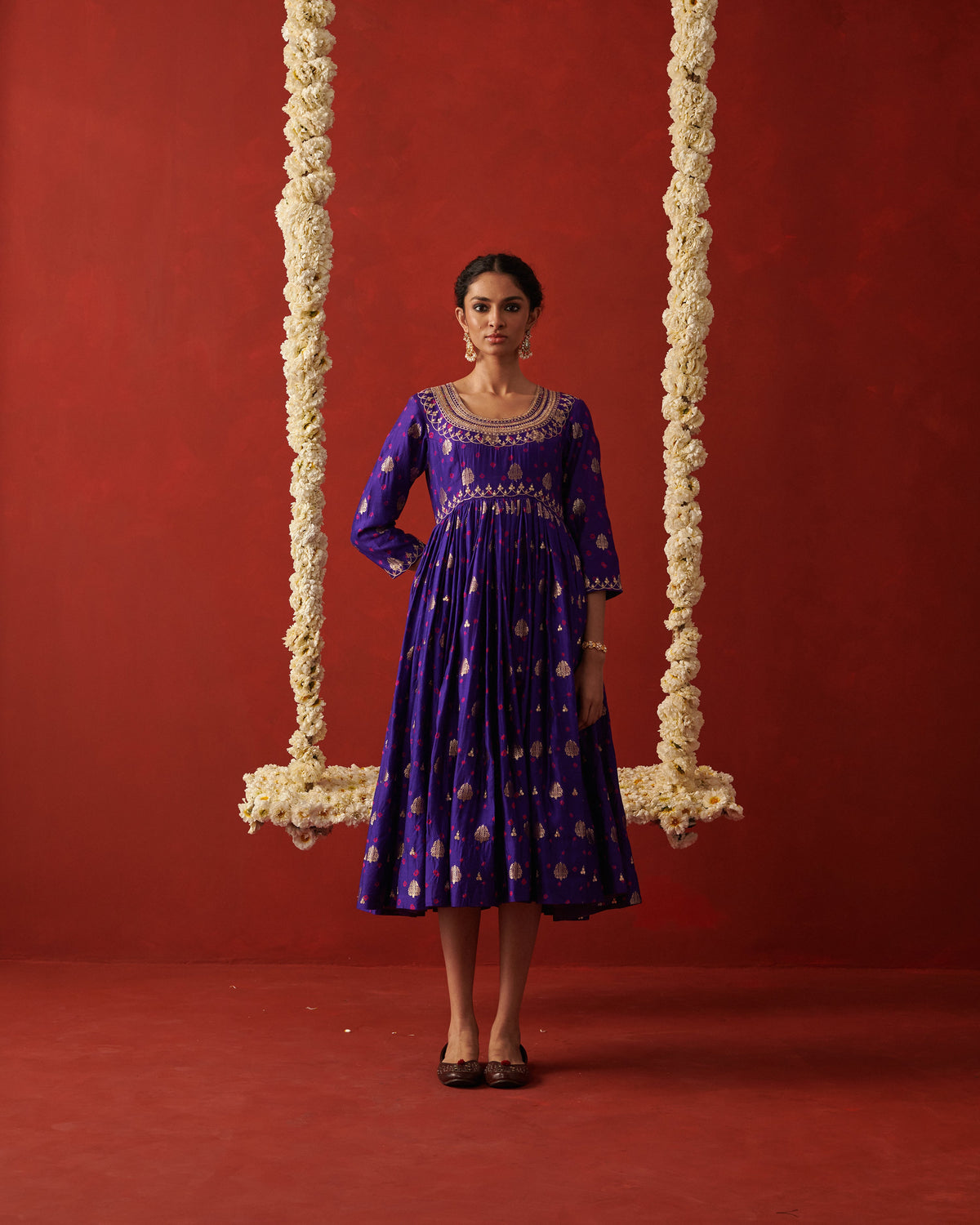
Our anarkali collection celebrates Banarasi silk beautifully. The SUROOR Anarkali, crafted in Bandhej Banarasi silk, features woven gold bootis that glimmer softly, with hand-embroidered sequin work inspired by vintage temple jewellery along the neckline and sleeves. The ROOHI & QURBAT Kurta Set, in silk jacquard with an all-over floral grid jaal, showcases how Banarasi weaving techniques create rich, textured surfaces.
Iconic Banarasi Motifs
The motifs of Banarasi silk are a visual encyclopaedia of Mughal and Indian design traditions. The jangla — a dense, all-over pattern of intertwined floral and foliate forms — creates a tapestry-like effect. The bel border features flowing vine patterns, while bootis (small floral sprigs) scatter across the body of the fabric like stars across a silk sky.
Free Download
Get Our Measurement Guide
Step-by-step instructions with photos for perfect custom fit.
Download Free GuideArchitectural motifs drawn from Mughal monuments — the dome, the arch, the jaali lattice — lend a regal quality. The peacock, the lotus, and the kalga (mango or paisley) are perennial favourites, each carrying layers of cultural and spiritual symbolism.


Styling Banarasi Silk for Modern Occasions
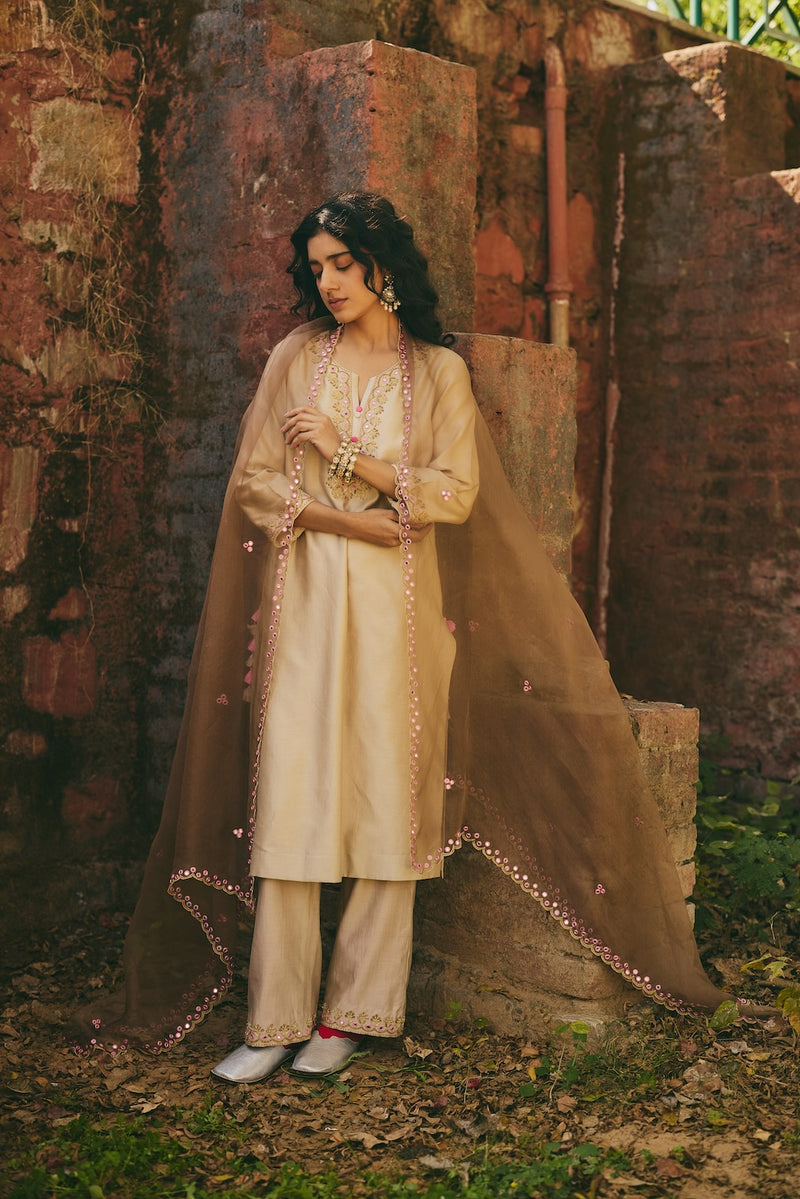
While Banarasi silk is synonymous with bridal wear, its versatility extends far beyond weddings. A Banarasi silk piece pairs beautifully with contrasting textures — try a brocade silk kurta like the RASIYA & MISRI, in coral pink mulberry brocade with gold thread floral embroidery, dressed down with simple accessories for a festive lunch.
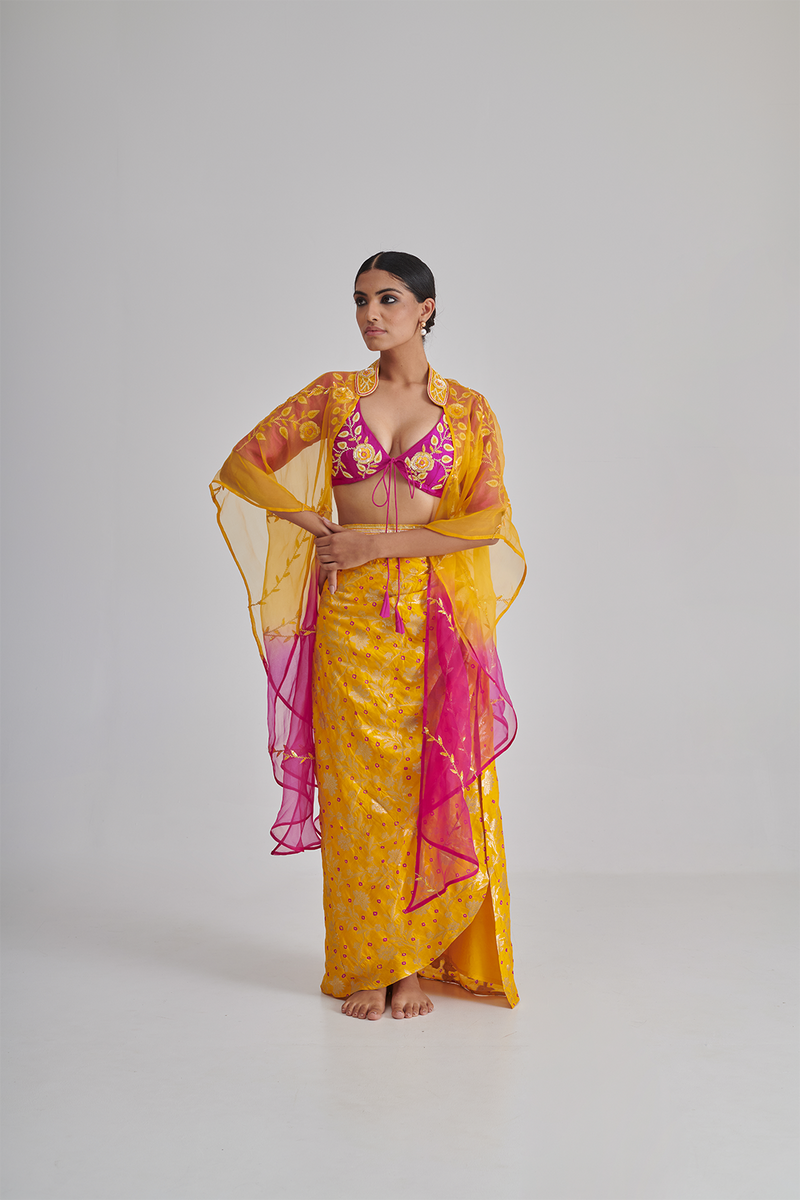
For a contemporary layered look, pair a handcrafted dupatta with a simple outfit. Our MEHERIYA Dupatta, in yellow organza with thread and cutdana work, or the ZARVEEN Dupatta, a soft sage green chanderi dupatta with a delicate zari border, add instant refinement to understated ensembles.


For festive occasions and celebrations, explore our Ruhaniyat collection, where traditional silk meets modern design sensibilities in pieces crafted for the contemporary Indian woman.
Frequently Asked Questions
How do I identify authentic Banarasi silk?
Authentic Banarasi silk has a GI tag. Look for the Silk Mark certification. Real Banarasi has a distinctive weight and drape — it holds its shape without being stiff. The reverse side of a genuine Banarasi brocade will show clean, uncut threads (in kadhua weave) or floating threads that can be gently pulled (in fekua weave).
Can Banarasi silk be worn in summer?
Banarasi organza and georgette varieties are lighter and more breathable than katan silk, making them suitable for warmer weather. These lighter-weight Banarasi fabrics maintain the characteristic sheen and motifs while offering greater comfort.
How should I store my Banarasi silk saree?
Wrap in a clean muslin or cotton cloth. Never store in plastic. Refold periodically to prevent permanent crease marks. Keep in a cool, dry place with silica gel sachets. Air out every few months to prevent moisture damage.
Ready to Order Custom?
WhatsApp us at +91 70423 11214 with what you're looking for. We'll guide you through measurements, customizations, and timeline.
Most pieces ready in 4-5 weeks. Bridal in 6-8 weeks.
Made to order in 4–5 weeks
Have an event date? We’ll tell you exactly when to order by.
We take a limited number of orders each month — secure your slot early.
Not sure where to start?
Tell us what you're dressing for and we'll help you choose — fabric, fit, colour, and timeline — over WhatsApp.
Your Cart
Pieces from this story
All pieces →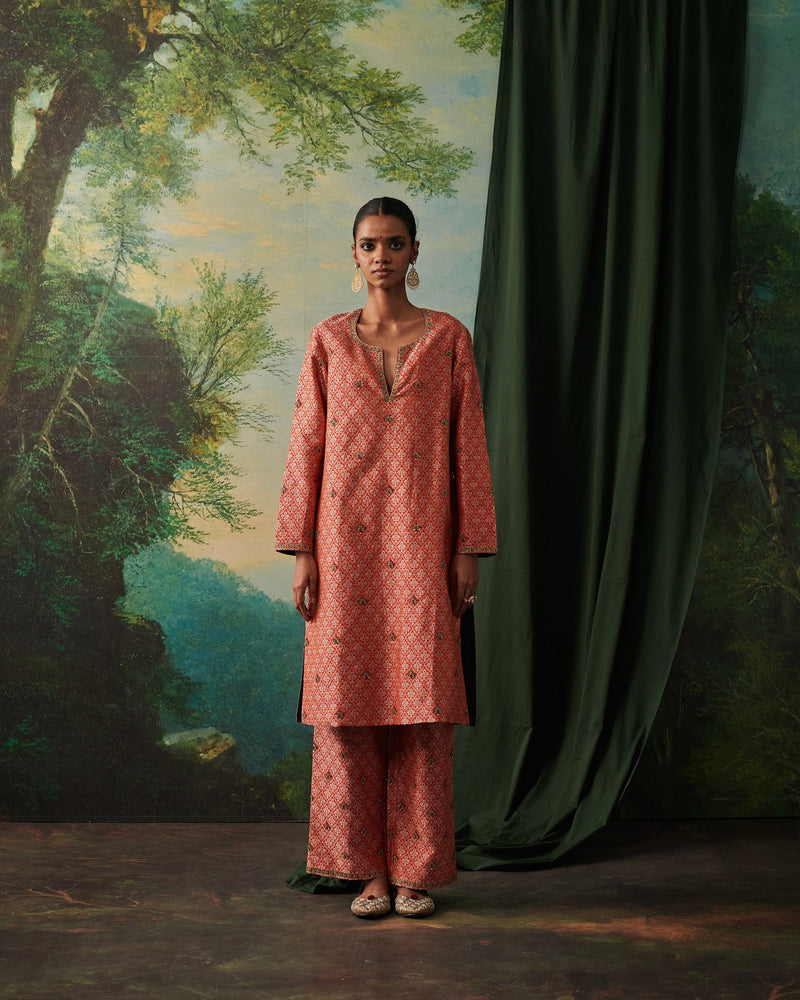
Keep reading
The journal →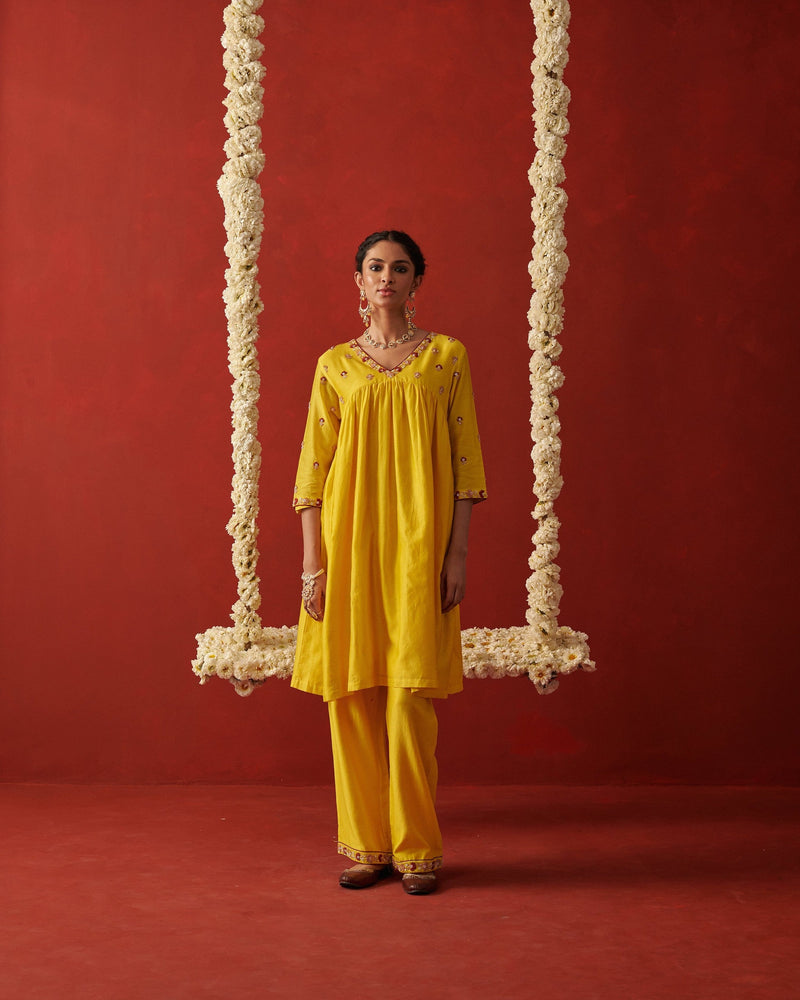
Dholki Night Outfit Ideas: What to Wear to the Ladies' Dhol
Handmade by karigars Made to your measurements Fit guarantee Ships worldwide As seen in GraziaElle Graduat...
27 July 2026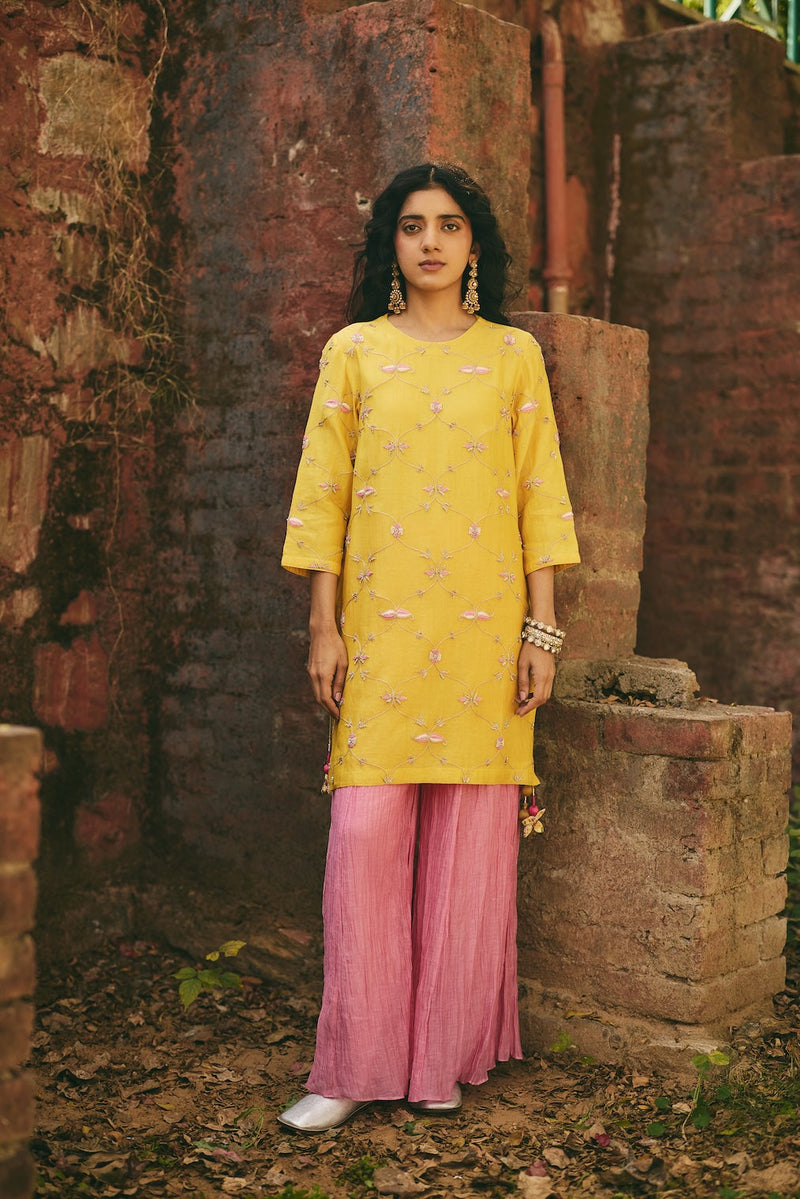
Mayra & Bhaat Outfit Ideas: Dressing for the Maternal Gift Ceremony
Handmade by karigars Made to your measurements Fit guarantee Ships worldwide As seen in GraziaElle Graduat...
27 July 2026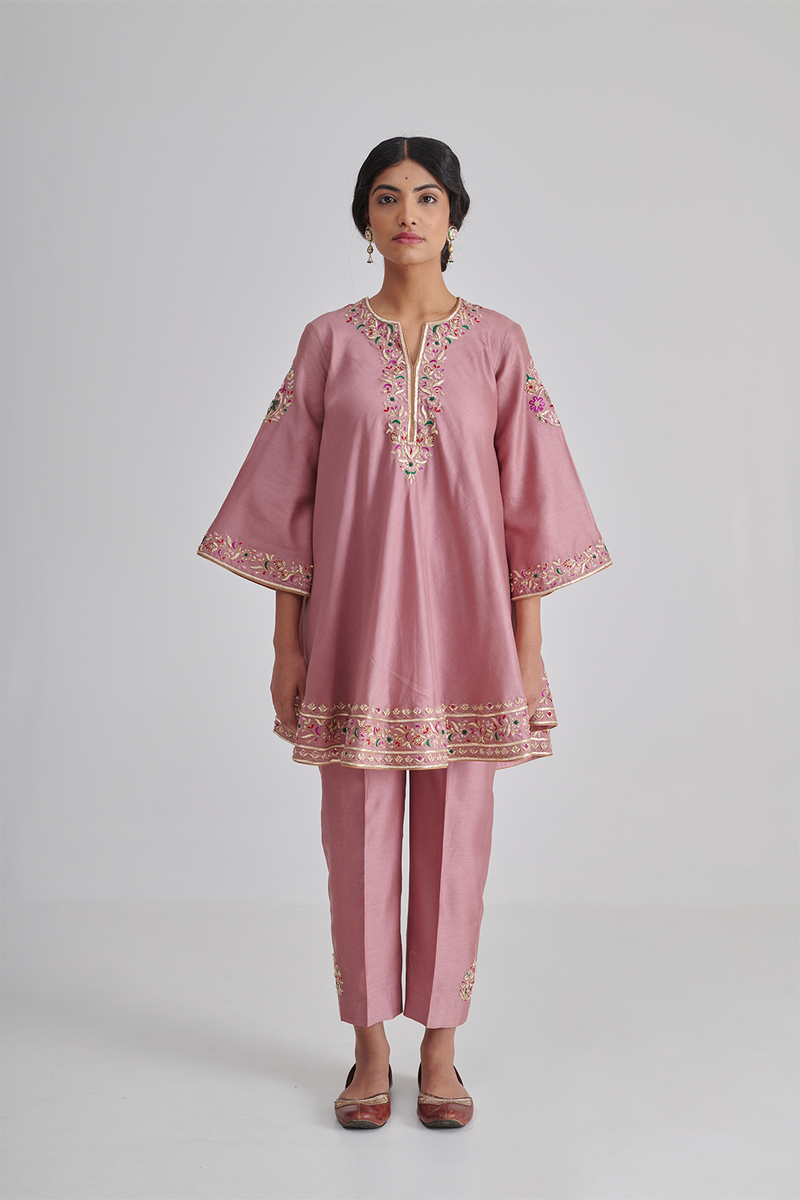
Pag Phera Outfit Ideas: What to Wear for the Bride's Homecoming
Handmade by karigars Made to your measurements Fit guarantee Ships worldwide As seen in GraziaElle Graduat...
27 July 2026