
Gota Patti Bridal Lehenga: Craft, Styles & What to Expect
There is a reason the gota patti lehenga has remained the most coveted silhouette in Indian bridal wear for centuries. The strips of gold and silver ribbon — hand-cut, hand-folded, and hand-stitched into flowers and paisleys — catch light in a way no machine embroidery can replicate. On a wedding day, under the glow of ceremony lights, gota patti does not just shine — it comes alive.
If you are considering a gota patti bridal lehenga, here is everything you need to know — from the craft itself to what shapes pricing and how to choose the right piece.
What Makes a Gota Patti Lehenga Special?
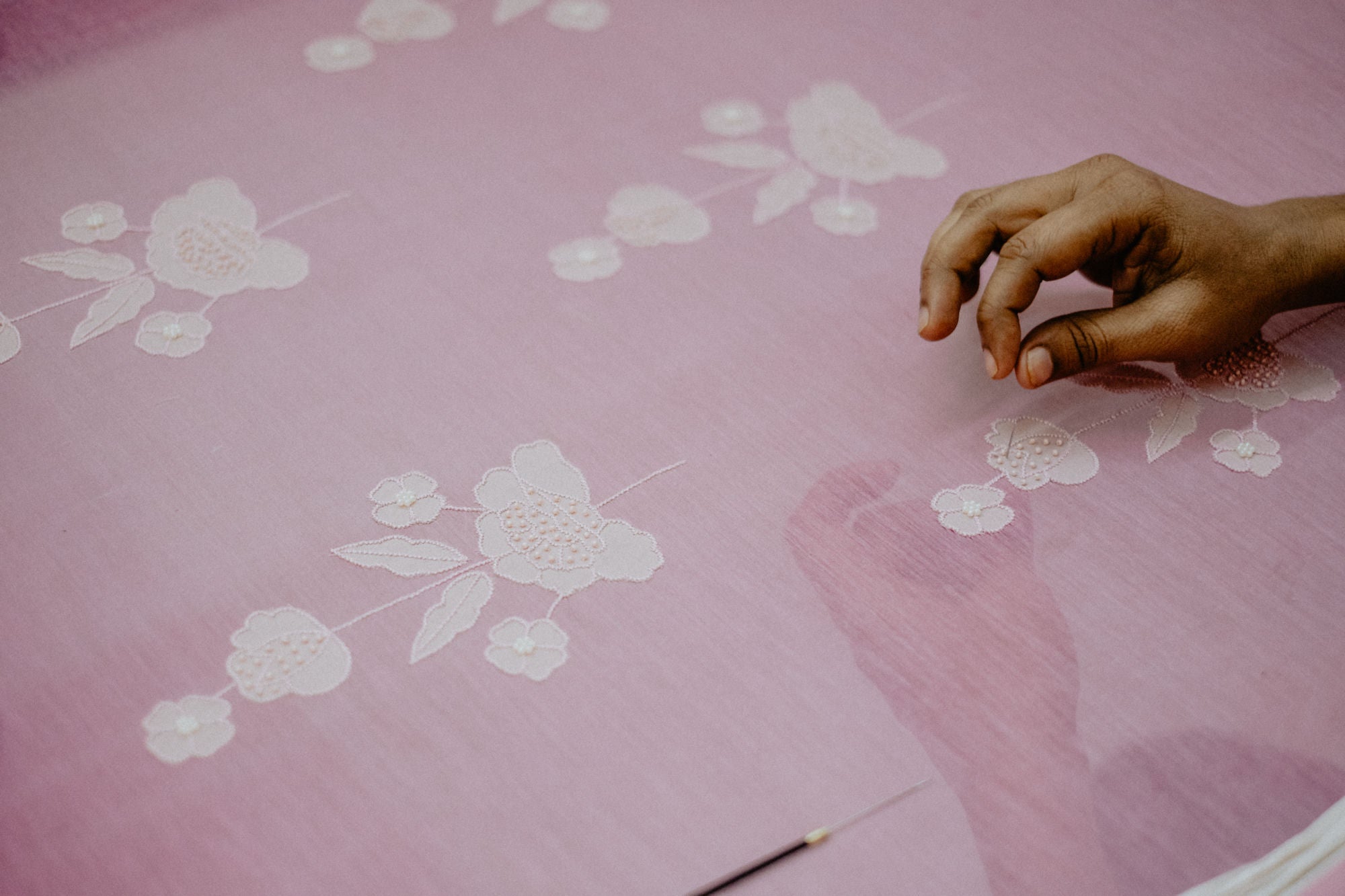
Gota patti is a traditional Rajasthani embroidery technique where thin strips of metallic ribbon (zari gota) are cut into shapes — flowers, leaves, paisleys, geometric forms — and hand-appliquéd onto fabric. Unlike flat machine embroidery, gota patti creates a raised, textured surface that interacts with light from every angle.
On a bridal lehenga, gota patti is rarely used alone. It is layered with complementary techniques — marodi work for vine patterns, zardozi for sculptural metallic embroidery, sequins and cutdana for shimmer, and resham thread for colour accents. This combination of techniques is what gives a handcrafted bridal lehenga its depth and richness.

Yellow Gota Patti Lehenga: The Rajasthani Bridal Classic
In Rajasthani wedding tradition, yellow holds deep significance — it represents prosperity, auspiciousness, and new beginnings. A yellow gota patti lehenga is not just a colour choice — it is a cultural statement rooted in centuries of bridal tradition.
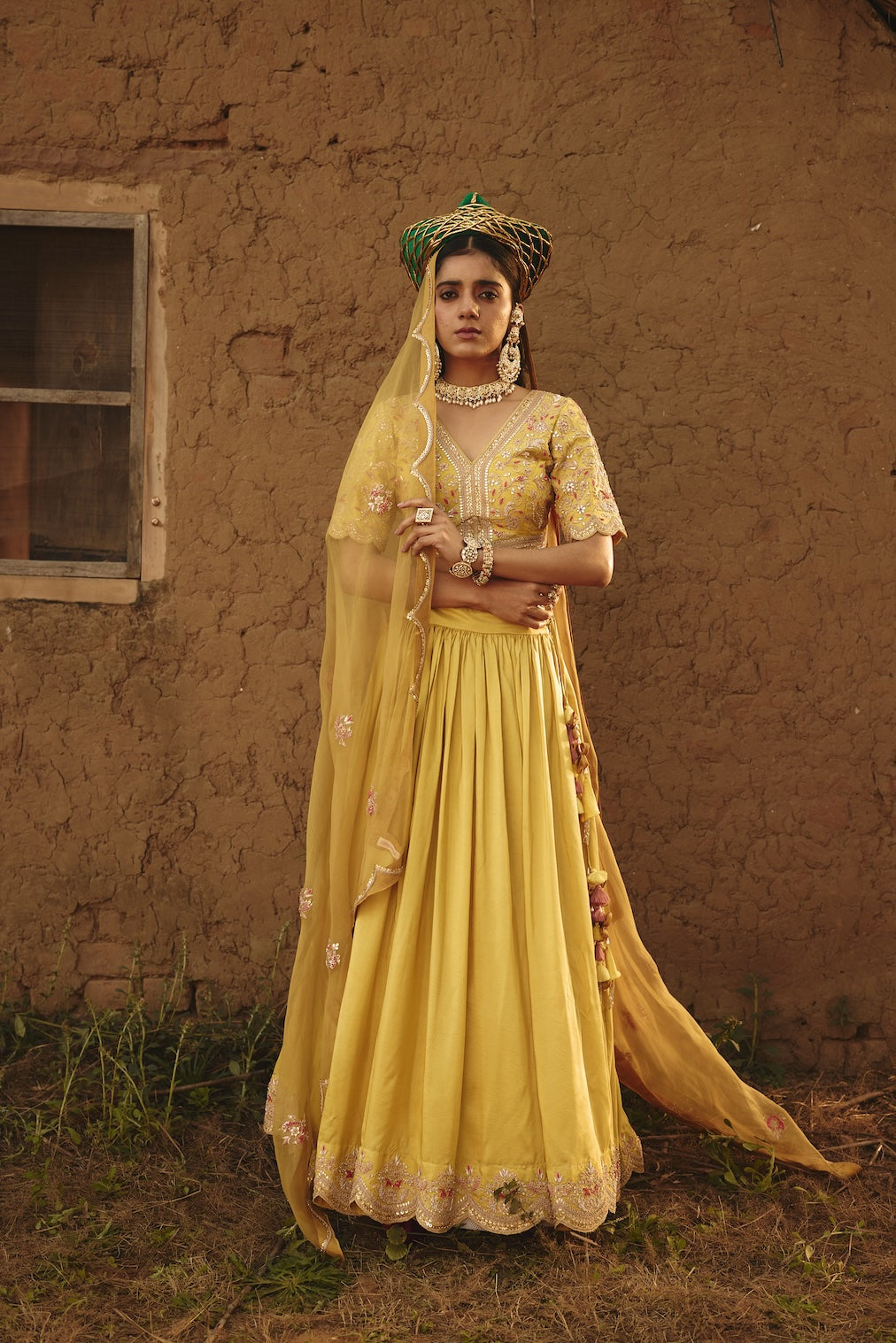
The DRITI & HESYRA is a yellow silk lehenga and blouse set that exemplifies this tradition. The blouse features a classic V-neckline with a deep rounded back and tie-up detailing, hand-embroidered all over with floral and vine motifs. The lehenga has voluminous flare with embroidery concentrated at the hemline in an ornate scalloped floral border.
What sets this piece apart is the breadth of technique — it uses seven distinct hand embroidery methods: zari, resham, marodi, gota patti, sequins, cutdana, bead, and aari work. Each technique is typically executed by a different karigar (artisan), making the finished piece a collaboration of specialised skills.
Gota Patti Bridal Lehenga in Rose and Gold
For brides who want the richness of gota patti in a softer palette, rose and gold tones offer an elegant alternative to traditional reds and yellows.
The NYASSA & ELINA lehenga set is crafted in luminous tissue fabric in a romantic rose hue. The blouse has a round neckline and cap sleeves, hand-embroidered all over with floral and vine motifs using zari, marodi, gota patti, sequins, cutdana, bead, and aari work. The lehenga features large vertically placed floral bootas using the same techniques — creating a regal yet contemporary bridal look.

Multi-Hued Gota Patti Lehenga: A Contemporary Take
Modern brides increasingly want lehengas that move beyond single-colour traditions. Multi-hued panelled lehengas bring together colour and craft in a way that feels both celebratory and personal.
The ISHQ-e-GUL & INARA lehenga is crafted in soft tissue jacquard with panels of pink, gold, peach, ivory, and green — each panel edged with fine sequin-lined gota and finished with elaborate gota patti and marodi border in gold. The blouse in warm antique-gold is hand-embroidered with sequins and resham vines in marodi work. It is a piece that reads as both traditional and distinctly contemporary.

What Affects the Price of a Gota Patti Bridal Lehenga?
Gota patti bridal lehengas vary significantly in price based on several factors. Understanding these helps you make an informed choice:
Free Download
Get Our Measurement Guide
Step-by-step instructions with photos for perfect custom fit.
Download Free GuideDensity of embroidery: A lehenga with gota patti only at the border costs less than one with all-over embroidery. The DRITI & HESYRA, for example, has an intricately embroidered blouse with concentrated border work on the lehenga — a balanced approach that maximises visual impact.
Number of techniques: A piece using only gota patti is simpler (and faster) to produce than one combining gota patti with zardozi, marodi, aari, and bead work. More techniques means more artisans, more time, and higher cost.
Fabric quality: Pure silk, tissue, and silk brocade cost significantly more than blended or synthetic fabrics. The base fabric affects both the drape and how the embroidery sits.
Production time: A handcrafted bridal lehenga takes 8 to 12 weeks — sometimes longer for heavily embroidered pieces. This is not a delay — it is the time required for multiple karigars to complete their work without cutting corners.
Authenticity of gota: Real zari gota (metallic ribbon) costs more than imitation alternatives. Genuine gota has a warmer sheen and ages gracefully, while synthetic versions tarnish quickly.
The Red Bridal Lehenga: Timeless Zari and Silk
No bridal lehenga guide is complete without red. While gota patti dominates Rajasthani bridal wear, Varanasi's zari weaving tradition offers another path to bridal grandeur.
The REHMAT & VASL lehenga and choli are crafted in Varanasi silk brocade — featuring floral motifs drawn from Rajputana and Mughal architecture. The rich red ensemble is adorned with intricate gold zari work throughout, with a broad gold border at the hem. This is the classic Indian bridal lehenga — steeped in tradition, unmistakably ceremonial.


The RAANISA & MAHIRA offers a sindoori orange alternative — crafted in woven booti silk with gota, marodi, bead, and thread work along the hem. The pleated lining under the lehenga adds volume and movement — a practical touch that enhances the ceremonial silhouette.
How to Choose Your Bridal Lehenga
Start with the ceremony: A wedding phera lehenga needs grandeur and weight — heavy embroidery, rich silk, deep colours. A reception lehenga can be lighter — tissue, softer colours, more contemporary cuts.
Consider the embroidery style: Gota patti is luminous and catches light beautifully — ideal for evening ceremonies. Zari brocade has a more structured, regal look suited to traditional settings. Many brides choose gota patti for the wedding and zari for the reception, or vice versa.
Plan for production time: Handcrafted bridal lehengas take 8 to 12 weeks. Start the process at least 4 to 5 months before your wedding date to allow time for production, delivery, and any adjustments.
Think beyond the wedding day: A well-made lehenga is an heirloom. Consider how the piece will photograph, how it will age, and whether the colours and craft will feel timeless in ten or twenty years.
Frequently Asked Questions
What is the price range for a gota patti bridal lehenga?
Handcrafted gota patti bridal lehengas from designer labels typically range from ₹50,000 to several lakhs, depending on embroidery density, number of techniques used, fabric quality, and production time. Mass-produced versions exist at lower price points but lack the dimensional quality and longevity of hand embroidery.
How long does it take to make a gota patti bridal lehenga?
A fully handcrafted bridal lehenga takes 8 to 12 weeks of production time. This includes fabric preparation, embroidery work by multiple artisans, assembly, and quality checks. Heavily embroidered pieces with multiple techniques may take longer.
Can I customise the colour of a bridal lehenga?
Most designer labels working in made-to-order formats offer customisation options. Since each piece is made from scratch, colour variations, embroidery density adjustments, and sizing are typically possible — discuss these during the ordering process.
What is the difference between gota patti and gota kinari?
Gota patti refers to appliqué work where metallic ribbon is cut into specific shapes (flowers, leaves, paisleys) and stitched onto fabric. Gota kinari refers to metallic lace or border work — continuous strips of gota used as edging. Bridal lehengas often feature both.
Ready to Order Custom?
WhatsApp us at +91 70423 11214 with what you're looking for. We'll guide you through measurements, customizations, and timeline.
Most pieces ready in 4-5 weeks. Bridal in 6-8 weeks.
Made to order in 4–5 weeks
Have an event date? We’ll tell you exactly when to order by.
We take a limited number of orders each month — secure your slot early.
WhatsApp me my order-by date + a shortlistNot sure where to start?
Tell us what you're dressing for and we'll help you choose — fabric, fit, colour, and timeline — over WhatsApp or on a video call.
Your Cart
Pieces from this story
All pieces →Not sure which piece, or need it by a date? Book a video consultation Ask us on WhatsApp


Keep reading
The journal →
The Outfit Trial Checklist: How to Run a Fitting for a Lehenga, Blouse, Sharara or Anarkali
How to run a trial of a made-to-measure lehenga, blouse, sharara or anarkali: when to schedule it, what to wear and b...
7 October 2026
Best Gota Patti Brands in India 2026: Where to Buy Real Rajasthani Gota Work
Where to buy gota patti outfits in India: designer labels, Jaipur's old bazaars and made-to-order ateliers, plus how ...
1 October 2026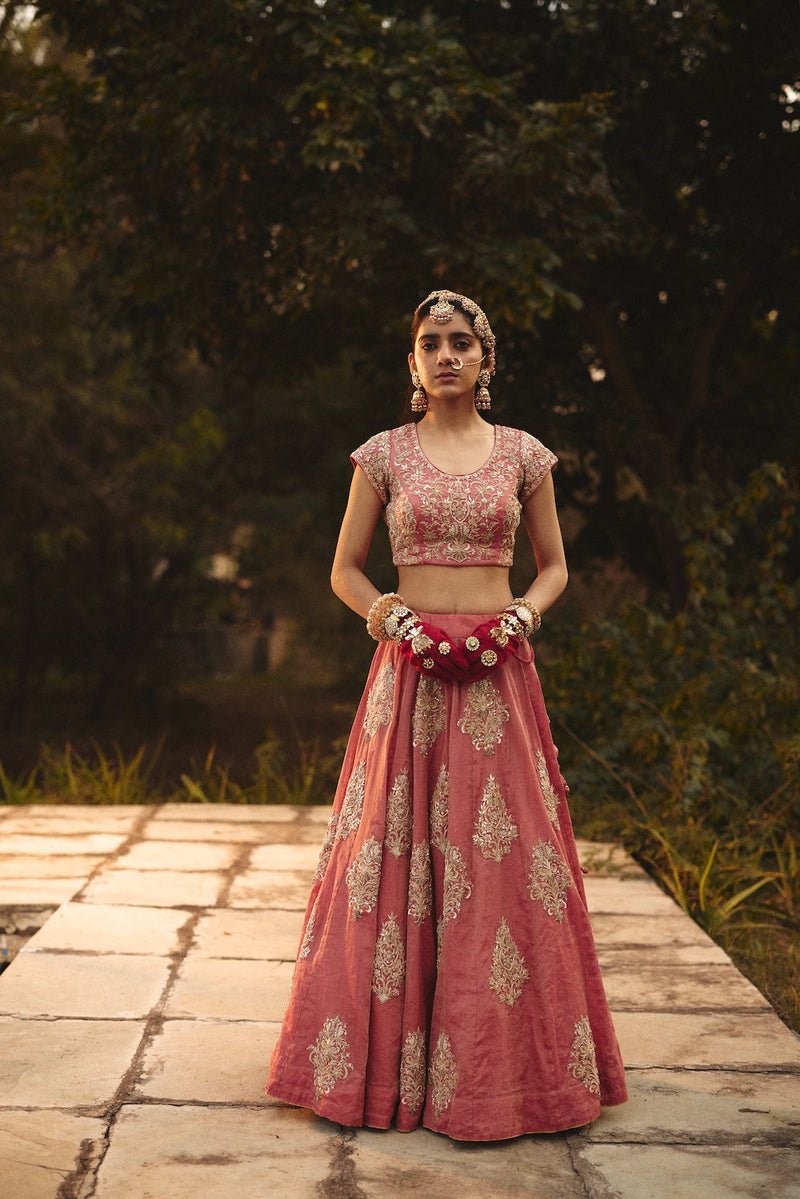
How Much Does a Bridal Lehenga Cost in India? A 2026 Price Guide
What a bridal lehenga costs in India in 2026 — price bands from ₹30,000 to ₹10 lakh+, what drives the price, the hidd...
20 September 2026