
The Art of Indian Wedding Trousseau: A Modern Bride's Guide
The trousseau — the wardrobe a bride carries into her new life — is one of India's most enduring wedding traditions. For generations, mothers and grandmothers have helped brides assemble collections of sarees, lehengas, and jewellery, each piece chosen with care and meaning. But the modern trousseau looks very different from what it was a generation ago. Today's bride wants pieces she will actually wear — not just during the wedding week, but in the months and years that follow.
This guide reimagines the Indian wedding trousseau for the contemporary bride: fewer pieces, better quality, and a clear plan for how each one fits into life after the wedding.
The Bridal Lehenga: Your Centrepiece
The bridal lehenga is the emotional heart of the trousseau — the outfit you will remember wearing for the rest of your life. Choose a piece that feels true to your personal style, in a colour that speaks to you, crafted with the kind of hand-embroidery that elevates it from an outfit to an heirloom.
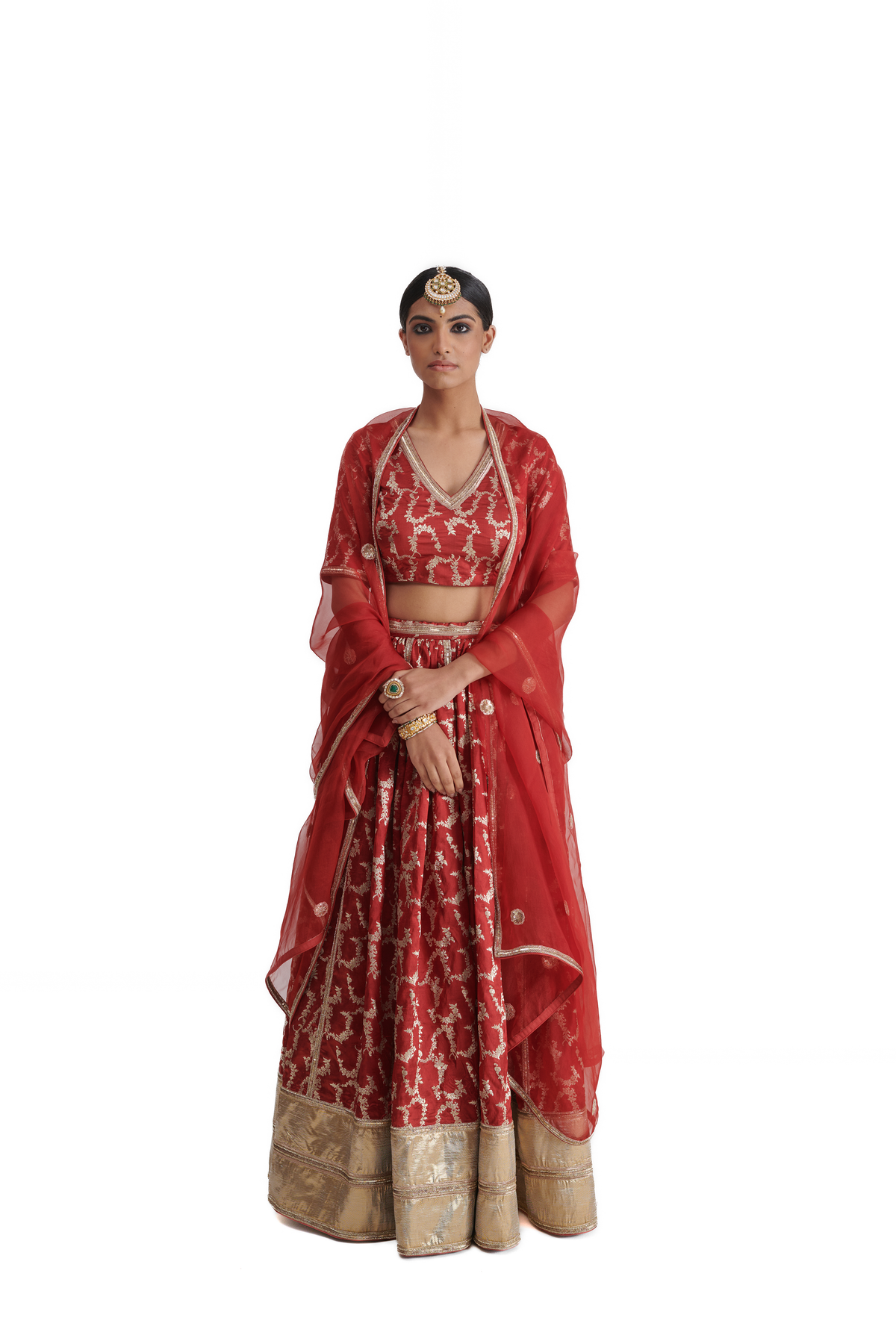
The REHMAT & VASL Lehenga in red Varanasi silk brocade with floral motifs drawn from Rajputana and Mughal inlay designs is a bridal classic. The rich red ensemble is adorned with intricate gold zari work all over, with a broad gold border at the hem — the kind of piece that carries the weight of tradition while feeling entirely modern in its silhouette.

For brides who prefer something beyond traditional red, the MEHERGUL & ABROO Lehenga in striking rani pink silk with hand-embroidered sequins, cutdana, and thread work in floral and vine motifs offers an equally regal alternative. The NYASSA & ELINA Lehenga in luminous rose-hued tissue with hand-embroidered florals in sequins, cutdana, and gota is a dream for brides drawn to softer palettes.
Trousseau Sarees: Building a Collection That Lasts
A well-planned trousseau includes three to five sarees that cover different occasions in your post-wedding life. Rather than buying ten similar sarees, think strategically about the events you will actually attend.
The wedding reception saree: The TARAAZ Saree in lustrous golden-champagne tissue with an intricate all-over pattern of golden vines embellished with blue accents commands attention with quiet sophistication — perfect for a reception night.
The first festive saree: For your first Diwali or Karva Chauth as a newlywed, the RANGREZ Saree in deep red chiffon with multicoloured hand-embroidered floral bootis in ivory, saffron, plum, and rose strikes the right balance of festive and approachable.


The formal dinner saree: The AASHIQUI Saree in deep royal blue chiffon with hand-embroidered floral motifs in sequins and cutdana is a versatile piece that works for everything from anniversary dinners to formal events.
The everyday elegant saree: A lightweight chiffon or georgette saree for smaller gatherings. The FIDA Saree in pure chiffon with a broad gold lappa lace border and scattered hand-embroidered sequins flows effortlessly and transitions from day to evening with ease.
Explore the full saree collection to build a trousseau selection that covers every occasion.
Kurta Sets and Separates: The Everyday Trousseau
This is the category most brides underestimate. After the wedding, you will reach for kurta sets far more often than sarees or lehengas. Festive dinners at your in-laws', temple visits, Raksha Bandhan celebrations, casual mehendis — a well-chosen set of kurtas carries you through all of it.


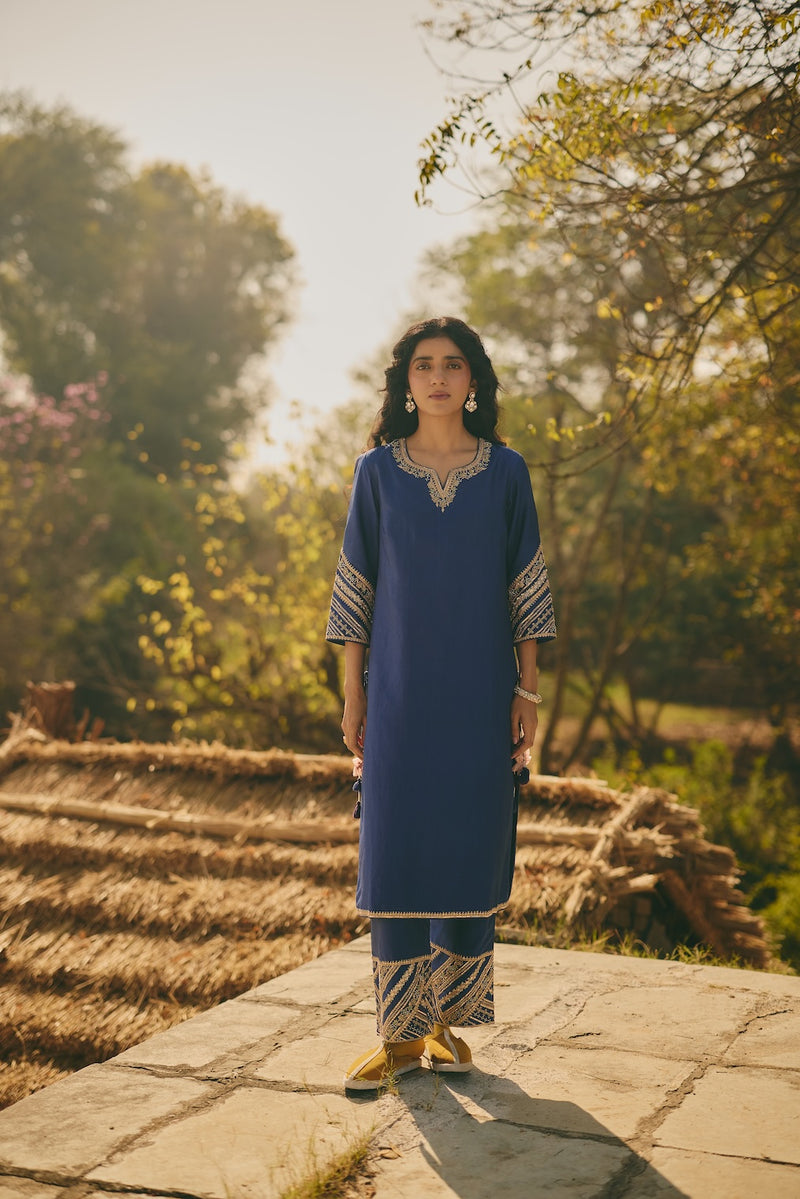
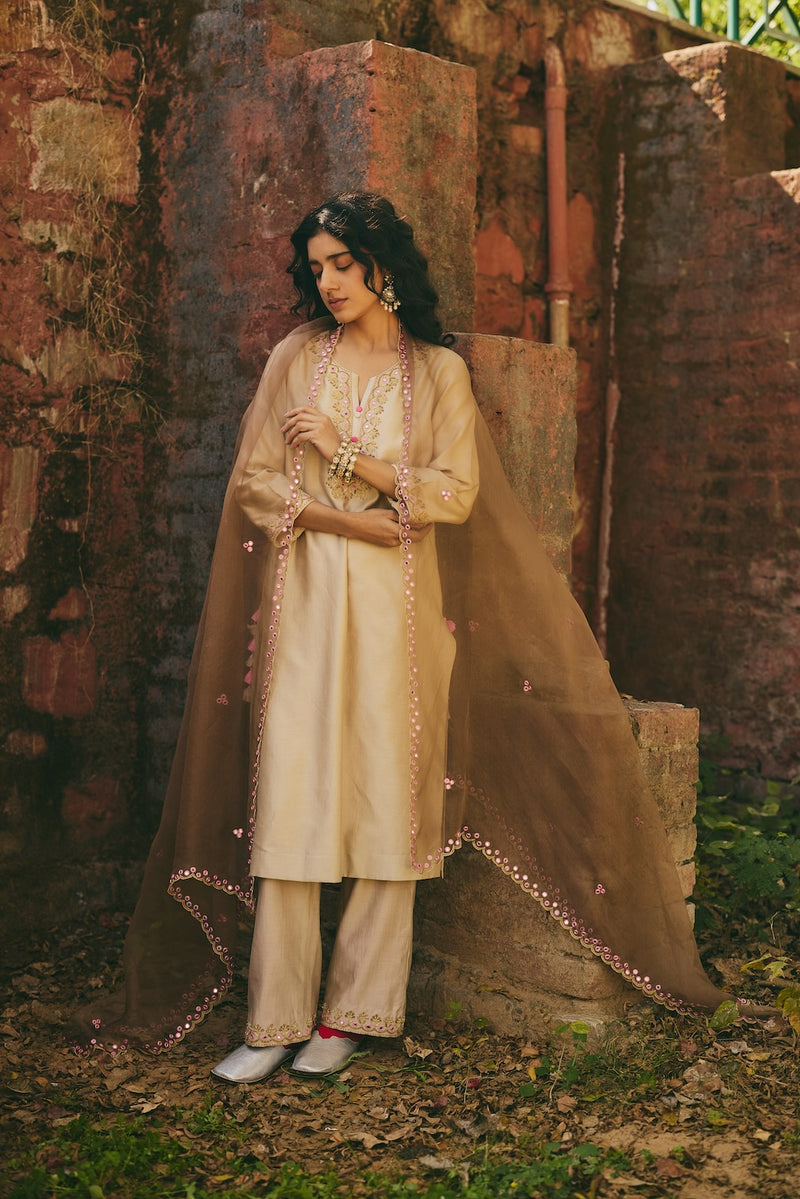
Include three to four kurta sets in your trousseau: one in a festive red or pink like the JAZABAH & SAIYAN Kurta Set in deep red silk with tonal gota patti, marodi, resham, and bead work embroidery. One in a neutral tone like the ALFIA & RUHAB Kurta Set in rich Banarasi fabric with gold floral bootis and delicate hand embroidery. One in a softer palette like the NAZMA & AHANA Kurta Set in soft blue silk with gota patti and sequin hand-embroidery paired with a honey-gold pant. And one lightweight set for summer — cotton or chanderi — that you can wear comfortably at home or to daytime gatherings.
Dupattas: The Trousseau's Secret Weapon
A handcrafted dupatta is one of the most versatile pieces in a trousseau. It transforms a plain kurta set into festive wear, adds a layer of elegance to a simple saree, and becomes a cherished accessory you reach for year after year. Include two to three statement dupattas in your trousseau.
Free Download
Get Our Measurement Guide
Step-by-step instructions with photos for perfect custom fit.
Download Free GuideThe AADYA Dupatta in red organza with gold zari hand-embroidery in a grid pattern and floral motifs with gold kiran lace edges is an essential bridal accent. For something lighter, the MEHERIYA Dupatta in yellow organza with delicate thread and cutdana work adds sunshine to everyday ensembles.

Build your dupatta collection from our dupatta range — each piece is handcrafted and designed to pair across outfits.
Modern Trousseau Planning: A Practical Framework
The modern trousseau is not about quantity — it is about intention. Here is a practical framework:
- 1 bridal lehenga — your once-in-a-lifetime piece from our lehenga collection
- 3-5 sarees — covering reception, festive, formal, and everyday occasions
- 3-4 kurta sets — one festive, one formal, one everyday, one lightweight
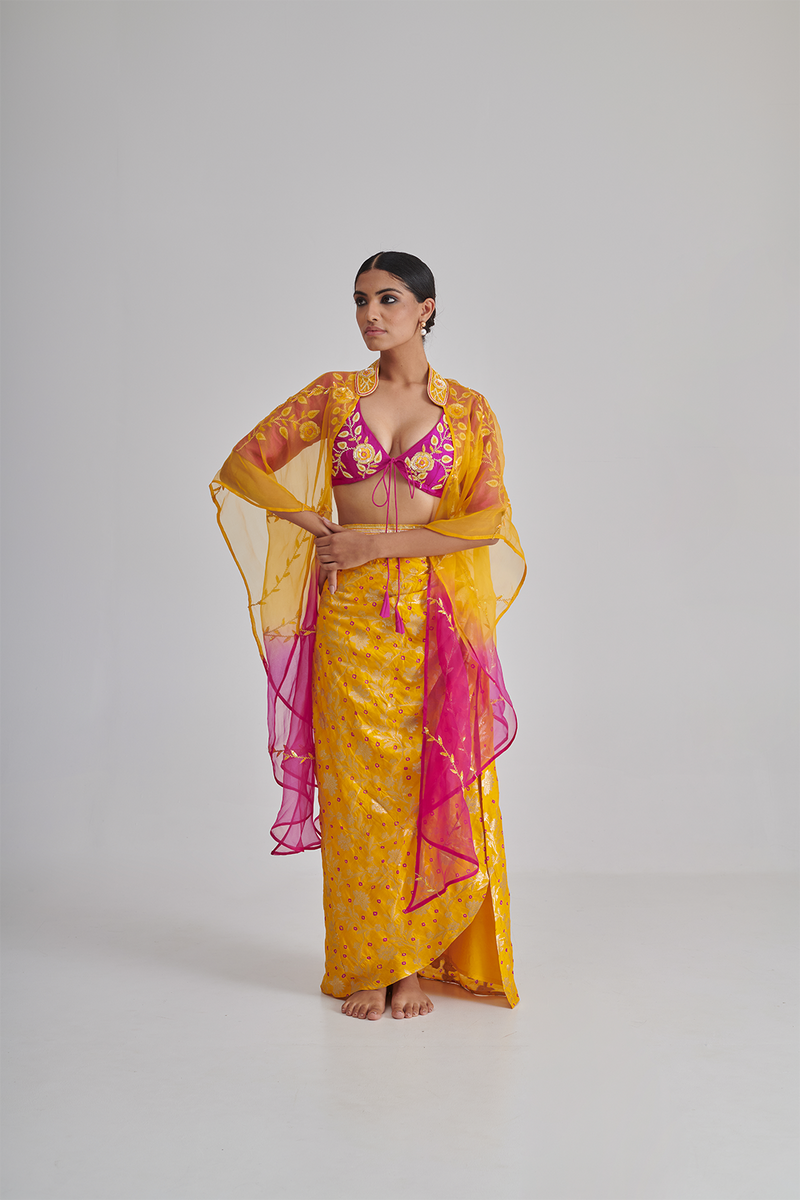
- 1 anarkali or sharara set — for sangeets and celebrations that call for drama
- 2-3 dupattas — in different colours and embroidery styles for maximum versatility
- 2-3 blouses — to restyle your sarees across occasions
This gives you roughly 12-18 pieces that cover every imaginable occasion in your first year of marriage and well beyond.
Frequently Asked Questions
When should I start trousseau shopping?
Begin four to six months before the wedding. Handcrafted pieces — especially made-to-order lehengas and kurta sets — require production time. Starting early also allows you to shop thoughtfully rather than in a last-minute rush. Many pieces from our collection are made to order with a four to five week production time.
Should I include Western wear in my trousseau?
Your trousseau should reflect your actual lifestyle. If you wear Western clothing daily, include those pieces separately. The ethnic trousseau outlined above focuses on Indian occasion wear that you will need for the specific cultural and social events that follow a wedding.
How do I store trousseau pieces to keep them in good condition?
Store hand-embroidered and silk pieces flat or rolled in breathable muslin or cotton garment bags. Avoid plastic bags, which trap moisture. Place silica gel packets inside to absorb humidity. For heavily embellished pieces like lehengas, stuff the bodice and sleeves with acid-free tissue paper to maintain shape. Air out stored garments every few months to prevent mustiness.
Ready to Order Custom?
WhatsApp us at +91 70423 11214 with what you're looking for. We'll guide you through measurements, customizations, and timeline.
Most pieces ready in 4-5 weeks. Bridal in 6-8 weeks.
Made to order in 4–5 weeks
Have an event date? We’ll tell you exactly when to order by.
We take a limited number of orders each month — secure your slot early.
Not sure where to start?
Tell us what you're dressing for and we'll help you choose — fabric, fit, colour, and timeline — over WhatsApp.
Your Cart
Pieces from this story
All pieces →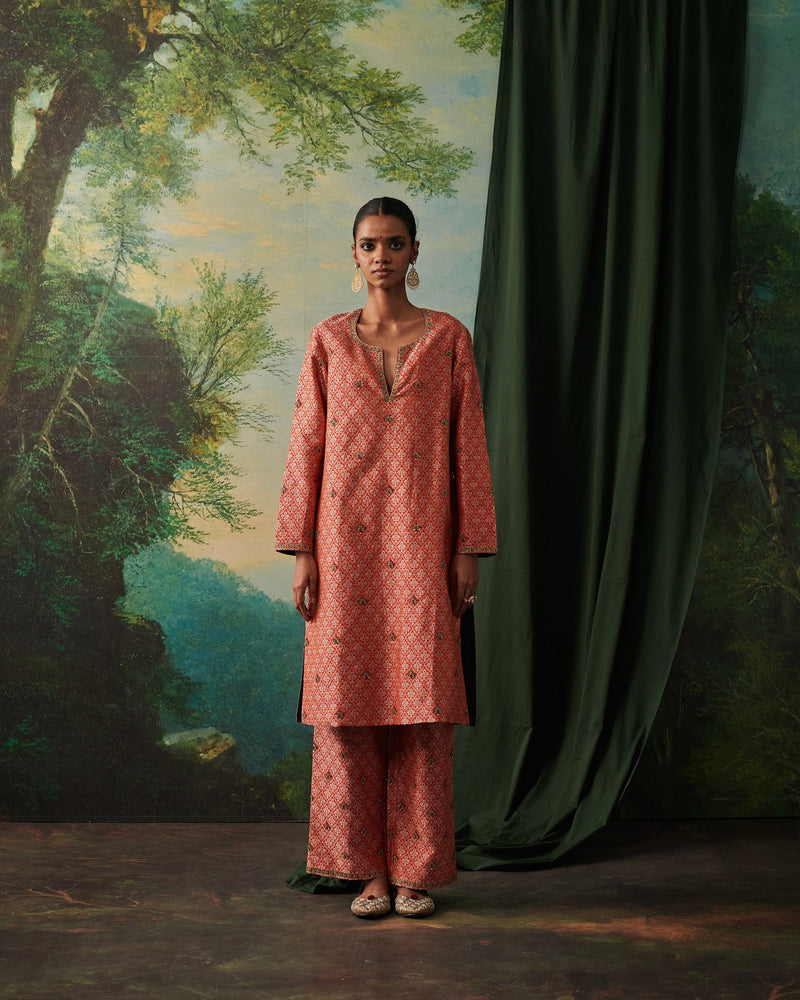
Keep reading
The journal →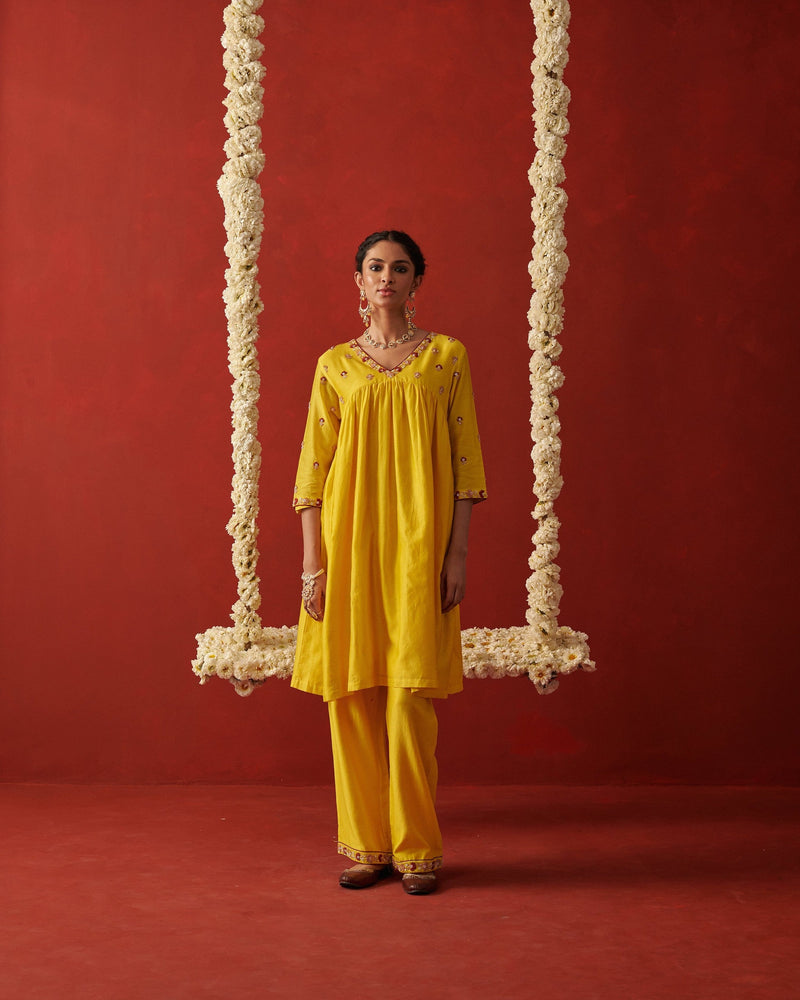
Dholki Night Outfit Ideas: What to Wear to the Ladies' Dhol
Handmade by karigars Made to your measurements Fit guarantee Ships worldwide As seen in GraziaElle Graduat...
27 July 2026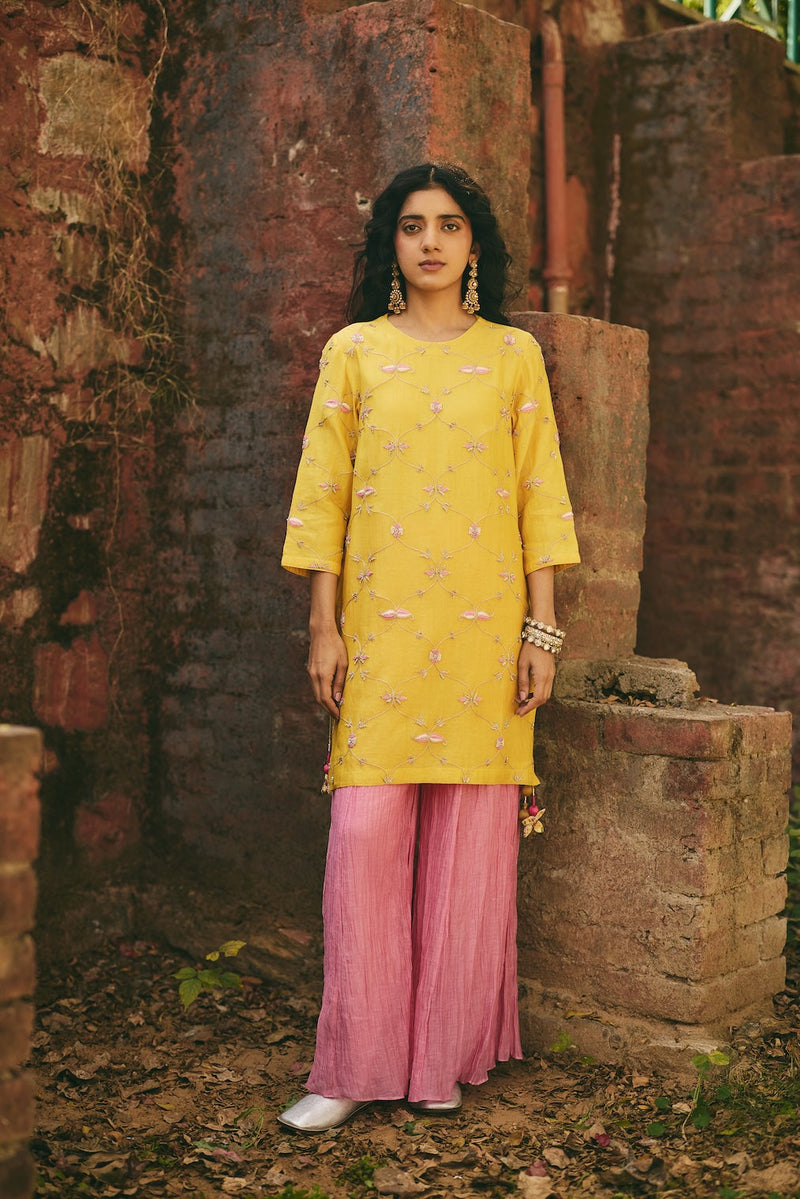
Mayra & Bhaat Outfit Ideas: Dressing for the Maternal Gift Ceremony
Handmade by karigars Made to your measurements Fit guarantee Ships worldwide As seen in GraziaElle Graduat...
27 July 2026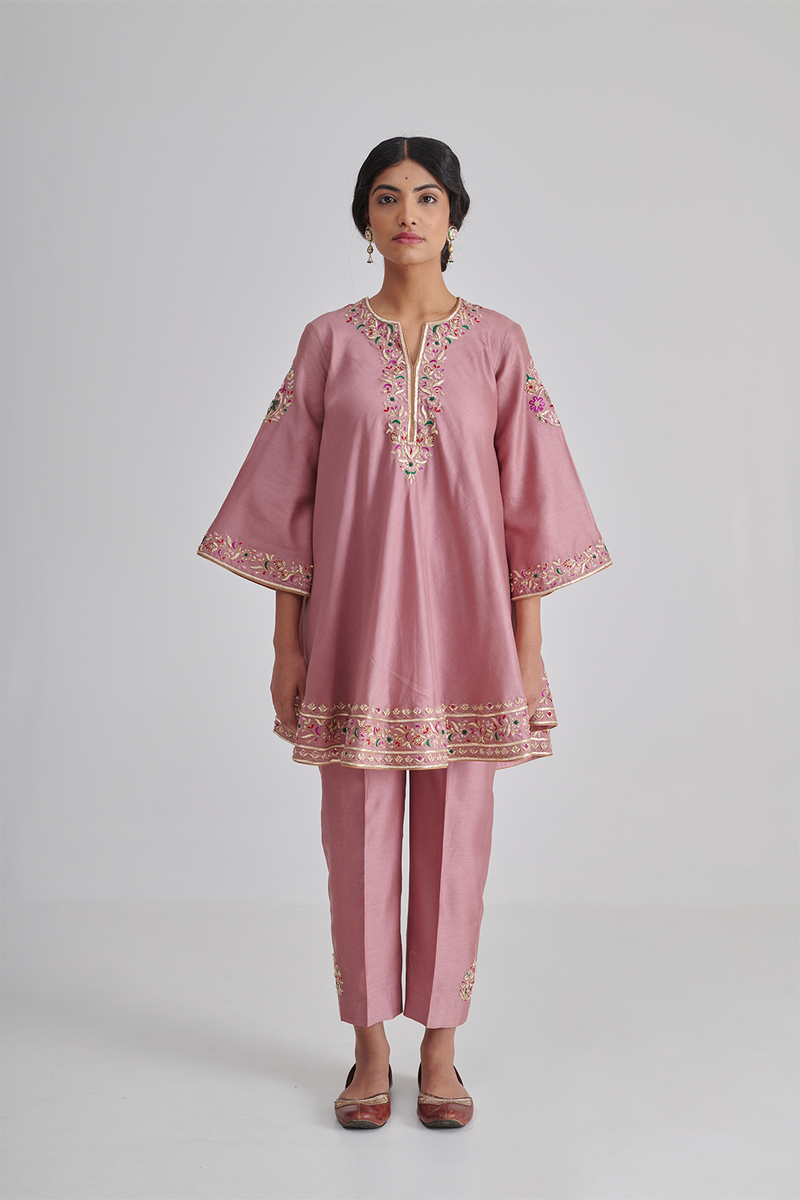
Pag Phera Outfit Ideas: What to Wear for the Bride's Homecoming
Handmade by karigars Made to your measurements Fit guarantee Ships worldwide As seen in GraziaElle Graduat...
27 July 2026