
Ombré & Colour-Blocked Indian Outfits: The 2026 Trend You Need
If there's one trend dominating Indian fashion in 2026, it's the play of colour — whether through soft ombré gradients that melt one shade into another, or bold colour-blocking that pairs unexpected hues side by side. From bridal lehengas to festive kurtas, this trend brings depth, movement, and a modern edge to traditional Indian wear.
Here's why this trend works, how to wear it, and the handcrafted pieces that do it best.
Why Ombré and Colour-Blocking Are Everywhere in 2026
Ombré lehengas have become one of the biggest bridal trends of the year. The soft, gradient effect — where one colour flows into another — is perfect for outdoor weddings and golden-hour ceremonies. It photographs beautifully, adds visual interest without heavy embellishment, and gives traditional silhouettes a contemporary twist.
Colour-blocking, meanwhile, is the bolder sibling. Instead of a gradual blend, it places contrasting colours next to each other — fuchsia against papaya orange, mustard against deep pink, emerald against gold. It's a statement that says you understand fashion and aren't afraid to experiment.
Both approaches let the fabric and craft speak in a fresh way. When the colour itself tells a story, the embroidery can stay refined rather than overwhelming.
Ombré Pieces: Where Colours Flow Into Each Other
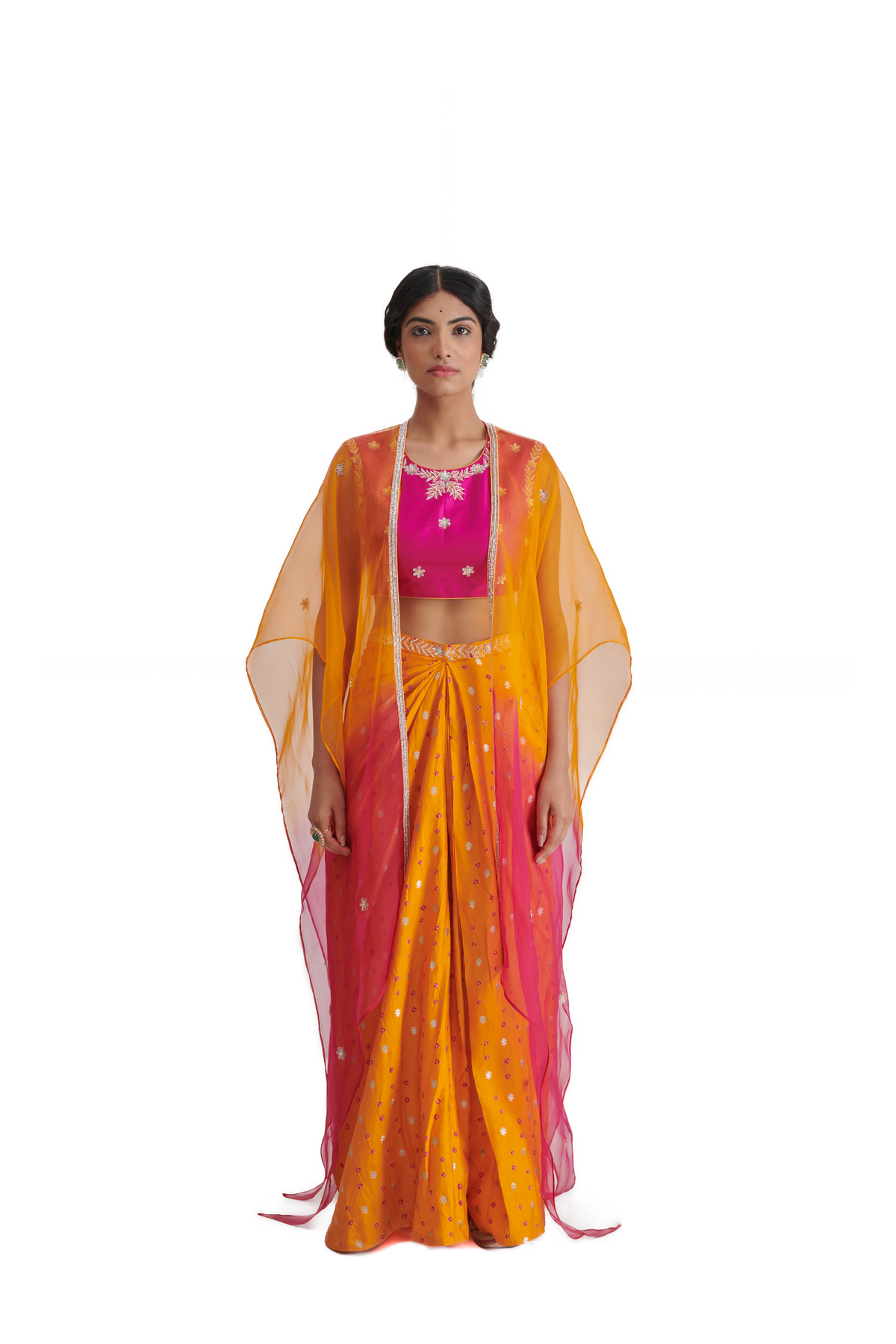
The Rumi, Akira & Vihana set is a showstopper — a rani pink dupion blouse paired with an orange ombré cheniya bandhani brocade silk draped skirt, finished with an organza cape that transitions from pink to orange in a breathtaking gradient. The aari, sequin, and bead embellishments catch light as the colours shift.

The Lila dupatta offers a subtler take — a pink and green shaded organza dupatta with gold hand-embroidery and floral motifs. The shimmer effect catches light at dusk and dawn, making it ideal for evening ceremonies.
From the Ruhaniyat collection, the Phoojhari dupatta is a striking dual-toned silk piece in rani pink and teal. The floral vine embroidery with sequins and cutdana adds texture without competing with the colour story.


Colour-Blocked Sets: Bold Pairings That Work
Colour-blocking in Indian wear isn't just about wearing two bright colours — it's about intentional contrast that creates harmony. The key is pairing warm with cool, or saturated with muted.
Free Download
Get Our Measurement Guide
Step-by-step instructions with photos for perfect custom fit.
Download Free GuideThe Jiya & Eshna set does this masterfully — a fuchsia silk kurta paired with papaya orange pants. The marodi work adds a unifying golden thread between the two bold colours, tying the look together.

For a more dramatic take, the Amora, Samaira & Amira set combines a fuchsia dupion silk blouse with a bandhani brocade cheniya silk drape skirt and a shaded sheer organza embroidered cape — multiple colours working together in one cohesive look.
Even the Sana & Ria set pairs mustard with deep pink — a combination that sounds unexpected but looks absolutely regal in handwoven silk with gota patti embroidery.
How to Style Ombré and Colour-Blocked Outfits
Keep jewellery tonal. With ombré, pick jewellery that matches one of the gradient's shades — not a third colour. Gold works universally. With colour-blocking, let the outfit do the talking and keep accessories minimal.
Match your dupatta wisely. For colour-blocked kurta sets, a dupatta in one of the two colours (rather than a third) keeps things cohesive. For ombré pieces, a solid dupatta in the lighter shade creates elegance.
Let the silhouette be simple. When colour is the hero, clean lines work best. A-line kurtas, straight-cut shararas, and classic blouse shapes let the palette shine without visual clutter.
Think about the occasion. Soft ombré in pastels (blush to ivory, sage to mint) works for daytime events — pujas, brunches, day weddings. Bold colour-blocking (fuchsia + orange, emerald + gold) is perfect for evening celebrations, sangeets, and cocktail parties.
Frequently Asked Questions
Is ombré only for lehengas?
Not at all. Ombré works beautifully on dupattas, sarees, and even capes. It's a versatile technique that adds dimension to any silhouette. Some of the most striking ombré pieces are dupattas that can transform a simple outfit.
Can I wear colour-blocking to a wedding?
Absolutely. Colour-blocked Indian wear is a modern choice for sangeets, cocktail nights, and reception parties. For the main ceremony, softer colour combinations work well, while bolder pairings are perfect for pre-wedding functions.
How do I choose between ombré and colour-blocking?
Ombré is more subtle and romantic — ideal if you want something modern but still soft. Colour-blocking is a statement — choose it when you want to stand out. Both are equally fashionable in 2026.
What embroidery works best with multi-coloured outfits?
Gold and silver embroidery work as neutral bridges between colours. Tonal embroidery (matching the fabric colour) keeps things refined. Avoid multi-coloured embroidery on already colourful outfits — let one element be the star.
Ready to Order Custom?
WhatsApp us at +91 70423 11214 with what you're looking for. We'll guide you through measurements, customizations, and timeline.
Most pieces ready in 4-5 weeks. Bridal in 6-8 weeks.
Made to order in 4–5 weeks
Have an event date? We’ll tell you exactly when to order by.
We take a limited number of orders each month — secure your slot early.
Not sure where to start?
Tell us what you're dressing for and we'll help you choose — fabric, fit, colour, and timeline — over WhatsApp.
Your Cart
Pieces from this story
All pieces →
Keep reading
The journal →
Kids' Bhai Dooj Outfit Ideas: What to Dress Them In for Tika Day
Handmade by karigars Made to your measurements Fit guarantee Ships worldwide As seen in GraziaElle Graduat...
7 September 2026
Kids at Chhath Puja: What to Dress Them In for the Ghat
Handmade by karigars Made to your measurements Fit guarantee Ships worldwide As seen in GraziaElle Graduat...
7 September 2026
Kids' Ganesh Chaturthi Outfit Ideas: What to Dress Them In for Ganpati
Handmade by karigars Made to your measurements Fit guarantee Ships worldwide As seen in GraziaElle Graduat...
7 September 2026