
The Complete Guide to Organza Fabric: Why It's the New Favourite in Indian Fashion
Walk into any festive gathering today and you will see it: the soft, sheer shimmer of organza catching the light as a dupatta sways, or the crisp fluidity of an organza saree falling in elegant folds. Organza has become one of the most sought-after fabrics in contemporary Indian fashion — and for good reason. It brings together lightness, structure, and an ethereal quality that few other textiles can match.
But what exactly is organza? How is it made, and why has it become so deeply woven into the vocabulary of Indian occasion wear? This guide covers everything you need to know.
What Is Organza Fabric? Origins and Characteristics
Organza is a thin, sheer, plain-weave fabric traditionally made from silk. The name is believed to derive from Urgench, an ancient city on the Silk Road in present-day Turkmenistan, where fine silk textiles were traded for centuries. Today, organza is produced from silk, polyester, or nylon — though silk organza remains the gold standard for luxury garments.
The defining characteristics of organza are:
- Sheerness: Organza is translucent, allowing light to pass through and creating a layered, dimensional effect when draped.
- Crispness: Unlike chiffon (which is soft and flowing), organza holds its shape. This gives it a structured drape that holds pleats, ruffles, and volume.
- Shimmer: Silk organza has a natural, subtle sheen that catches light beautifully — making it ideal for evening and festive wear.
- Lightweight: Despite its structure, organza is remarkably light, making it comfortable for long events even in warm weather.
Why Organza Has Become a Favourite for Indian Dupattas
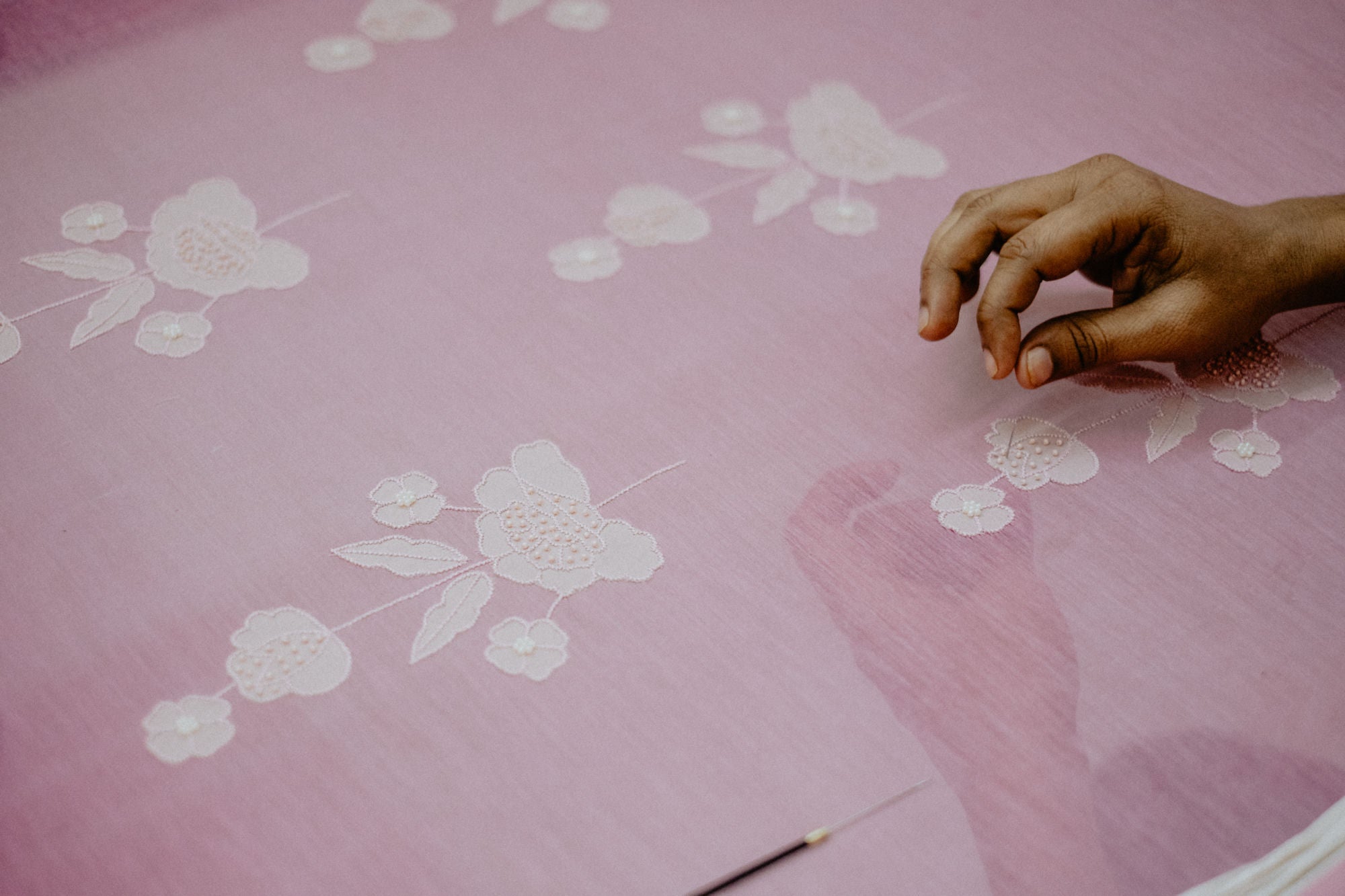
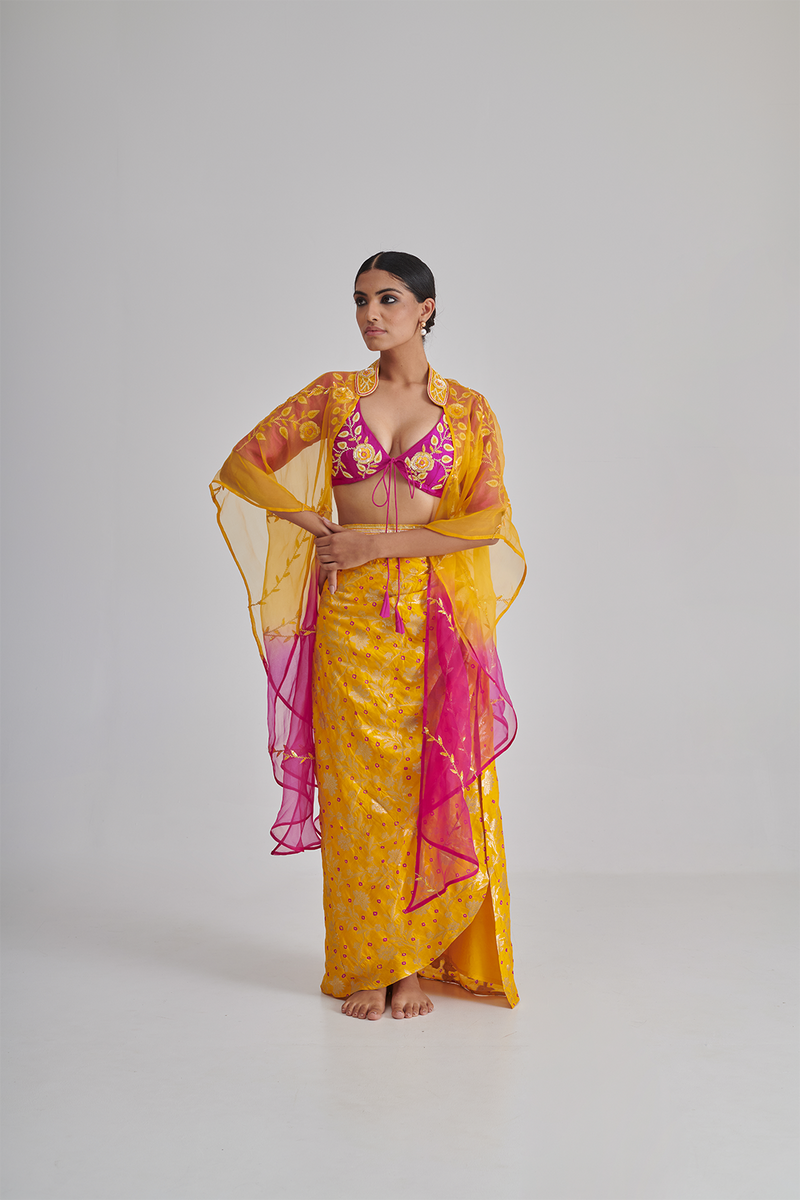
The organza dupatta has become a modern essential in Indian fashion. Its sheer, crisp texture makes it the perfect canvas for hand-embroidery — the translucency allows embroidery motifs to appear as if they are floating, creating an effect that is both delicate and dramatic.


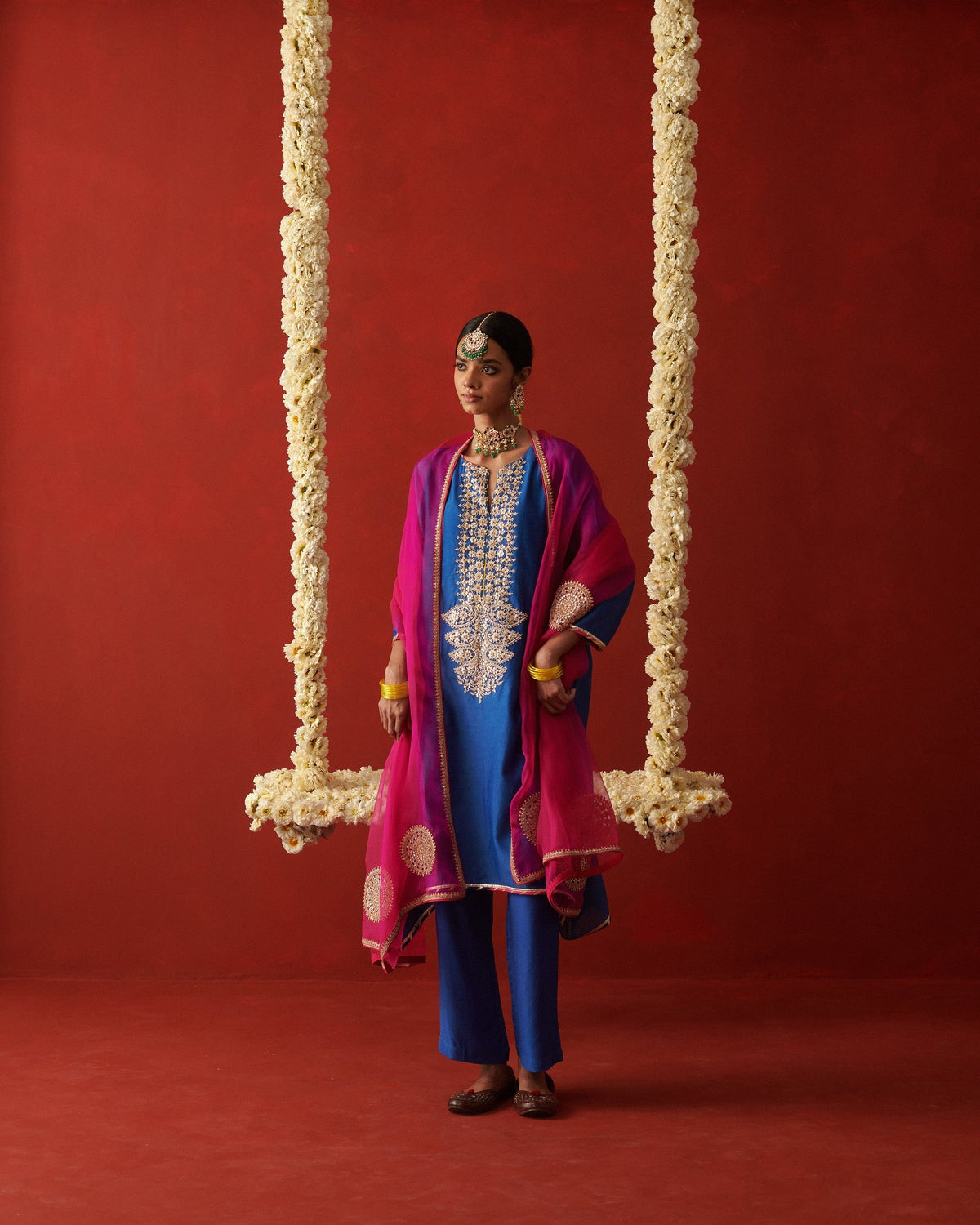
At Rashika Mittal, organza dupattas form a significant part of our dupatta collection — each one handcrafted with techniques that have been refined over generations. The KAINAAT Dupatta exemplifies this: circular medallions of gota patti, sequins, resham, and beadwork are hand-embroidered across lightweight organza, drawing from archival festive motifs once seen on traditional phool jhaal odhanis.
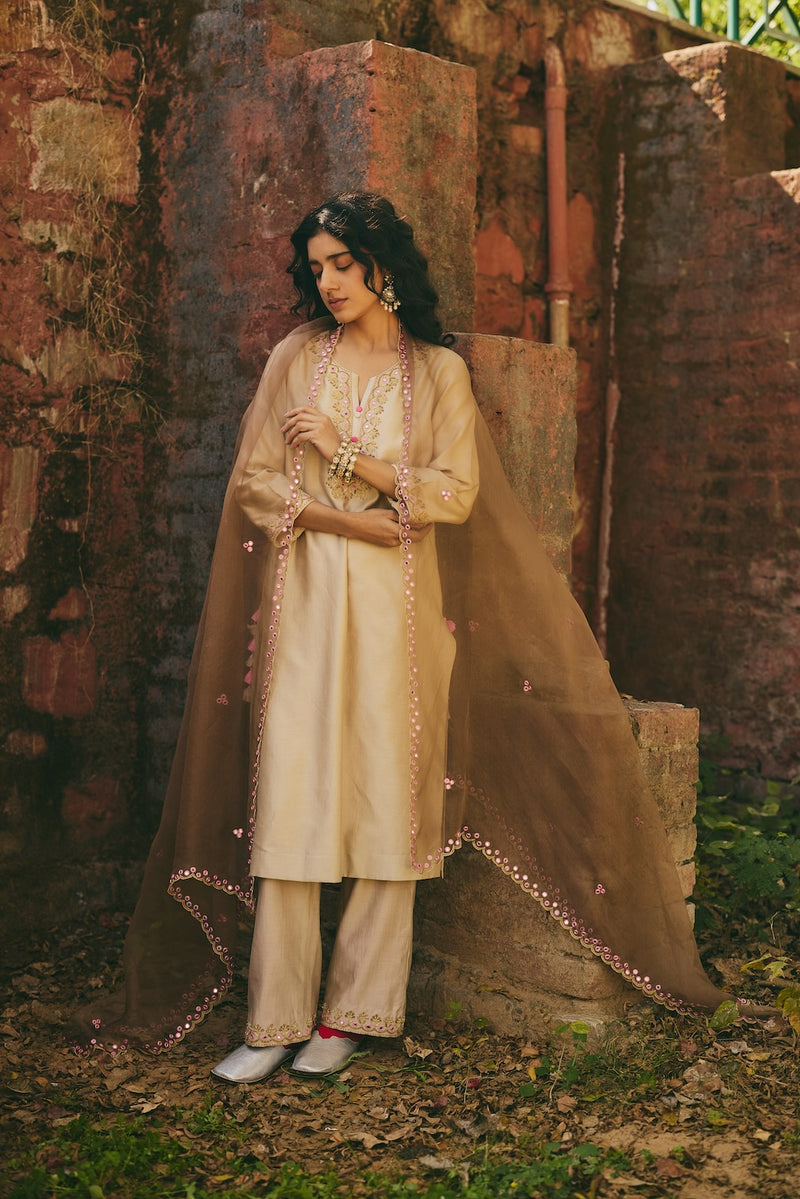
The MORNII Dupatta in pink organza with gold zari hand-embroidery and peacock motifs showcases how organza elevates traditional design. The sheer base lets the gold zari work and sequin detailing command all the attention, while the fabric itself remains featherlight.
Organza Sarees: Sheer Elegance for Modern Celebrations
Organza has also transformed the saree landscape. An organza saree offers the crispness that holds beautiful pleats and a palla that sits with structure — unlike chiffon, which tends to slip. This makes organza sarees easier to manage for women who want elegance without constant adjustments.

The LAAL ISHQ Saree in deep vermillion organza silk is embroidered with sequin vines and abstract florals that trail softly along the body, capturing light and movement in equal measure. Similarly, the SAKHI Saree in sindoori red organza features floral butis and a bold scalloped border with sequin, cutdana, and gota work — a reimagination of traditional bridal motifs with modern finesse.
For a quieter statement, the SHANVI Saree in soft ivory organza embodies ethereal beauty and timeless grace, with its sheer lightweight drape creating a crisp yet fluid silhouette.
How to Style Organza: Tips for Every Occasion
Organza's versatility means it works across a wide range of occasions — but the way you style it should shift with the event.
Free Download
Get Our Measurement Guide
Step-by-step instructions with photos for perfect custom fit.
Download Free Guide- For festive day events: Pair a vibrant organza dupatta with a kurta set. The RIMJHIM Dupatta — a breezy orange organza piece embroidered with floral clusters in cutdana, sequins, and bead work — brings colour and movement to any daytime outfit.
- For evening celebrations: Drape an organza saree with statement jewellery. The sheer fabric creates a sophisticated layered look under evening lighting.
- For weddings: Layer an embroidered organza dupatta over a lehenga for depth and dimension. The FALAK Dupatta in deep forest green organza silk with zari weave border and hand-embroidered floral bootis adds heirloom elegance to any bridal ensemble.
- For intimate gatherings: A delicate organza dupatta over a simple kurta transforms the look entirely. The SANAM Dupatta in soft peach organza with scattered sequins offers just the right amount of shimmer for a dinner or pooja.


Caring for Your Organza Garments
Organza — especially silk organza — requires gentle care to maintain its crispness and sheen:
- Dry clean only for embroidered organza pieces. The embellishments and sheer fabric do not respond well to machine washing.
- Store flat or rolled, not folded. Sharp creases in organza can become permanent. If you must fold, place acid-free tissue paper between the folds.
- Iron on low heat with a pressing cloth. Direct high heat can damage or melt the fibres, especially in blended organza.
- Avoid perfume and sprays directly on the fabric, as chemicals can stain sheer textiles.
Frequently Asked Questions
What is the difference between organza and chiffon?
Both are sheer fabrics, but they differ in texture and behaviour. Organza is crisp and holds its shape — ideal for structured drapes and ruffles. Chiffon is soft, fluid, and flowing — better for garments that need a relaxed, romantic fall. Browse our saree collection to see both fabrics in action.
Is organza suitable for summer weddings?
Yes — organza is one of the best fabric choices for warm-weather celebrations. Its lightweight, breathable nature ensures comfort even during outdoor daytime events. An organza dupatta like the AAVYA Dupatta in yellow organza with gold embroidery and sequins is particularly well-suited to summer occasions.
Can organza be worn casually or only for formal events?
While organza is most commonly associated with festive and formal wear, a simple organza dupatta over a cotton kurta can work beautifully for semi-casual gatherings, pujas, and family celebrations. The key is in the embellishment — a lightly embroidered piece transitions easily between occasion wear and everyday elegance.
Ready to Order Custom?
WhatsApp us at +91 70423 11214 with what you're looking for. We'll guide you through measurements, customizations, and timeline.
Most pieces ready in 4-5 weeks. Bridal in 6-8 weeks.
Made to order in 4–5 weeks
Have an event date? We’ll tell you exactly when to order by.
We take a limited number of orders each month — secure your slot early.
Not sure where to start?
Tell us what you're dressing for and we'll help you choose — fabric, fit, colour, and timeline — over WhatsApp.
Your Cart
Pieces from this story
All pieces →
Keep reading
The journal →
Dholki Night Outfit Ideas: What to Wear to the Ladies' Dhol
Handmade by karigars Made to your measurements Fit guarantee Ships worldwide As seen in GraziaElle Graduat...
27 July 2026
Mayra & Bhaat Outfit Ideas: Dressing for the Maternal Gift Ceremony
Handmade by karigars Made to your measurements Fit guarantee Ships worldwide As seen in GraziaElle Graduat...
27 July 2026
Pag Phera Outfit Ideas: What to Wear for the Bride's Homecoming
Handmade by karigars Made to your measurements Fit guarantee Ships worldwide As seen in GraziaElle Graduat...
27 July 2026