
Pastel Indian Outfits: Why Soft Colours Are Dominating Indian Fashion
Indian fashion has always been associated with bold colour — deep reds, vivid greens, rich blues, and bright yellows. But over the last few years, a quieter palette has been steadily taking over: pastels. Soft pinks, muted greens, dusty roses, gentle ivories, and powder blues are showing up everywhere — from wedding lehengas to everyday kurtas.
This isn't about pastels replacing bold colours. It's about a shift in how Indian fashion defines luxury — and increasingly, luxury whispers rather than shouts.
Why Pastels Work in Indian Fashion
The reason pastels look so striking in Indian wear is contrast. When you pair a soft, muted colour with intricate gold or silver embroidery, the handwork becomes the hero. On a bold red lehenga, embroidery has to fight the colour for attention. On a dusty rose or ivory base, every sequin and every thread catches the eye.
This is exactly why bridal fashion has shifted so dramatically towards pastels. A decade ago, Indian brides overwhelmingly chose red. Today, blush pink, mint green, and champagne gold are among the most requested bridal colours.
Ivory: The New Neutral
Ivory is the foundation of the pastel movement. It's not white — it has warmth, depth, and pairs seamlessly with gold embroidery. An ivory outfit with gold hand-embroidery looks timelessly elegant regardless of the trend cycle.
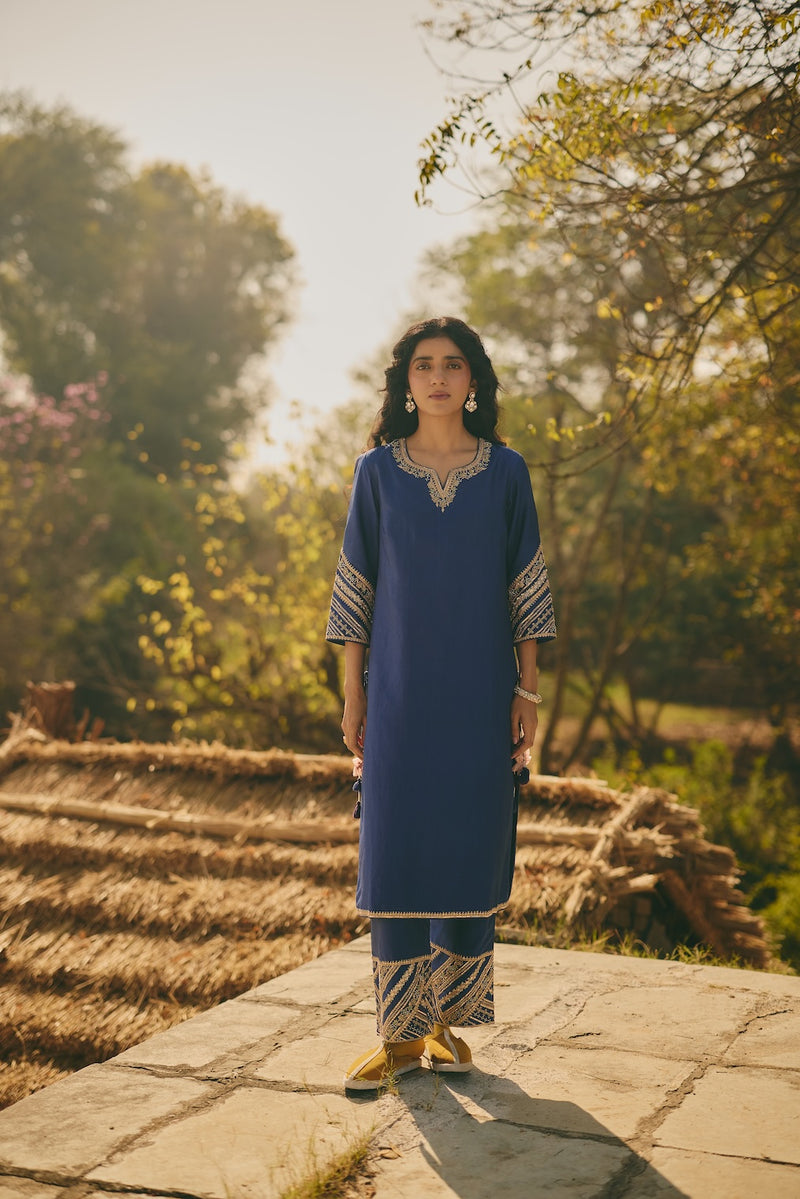
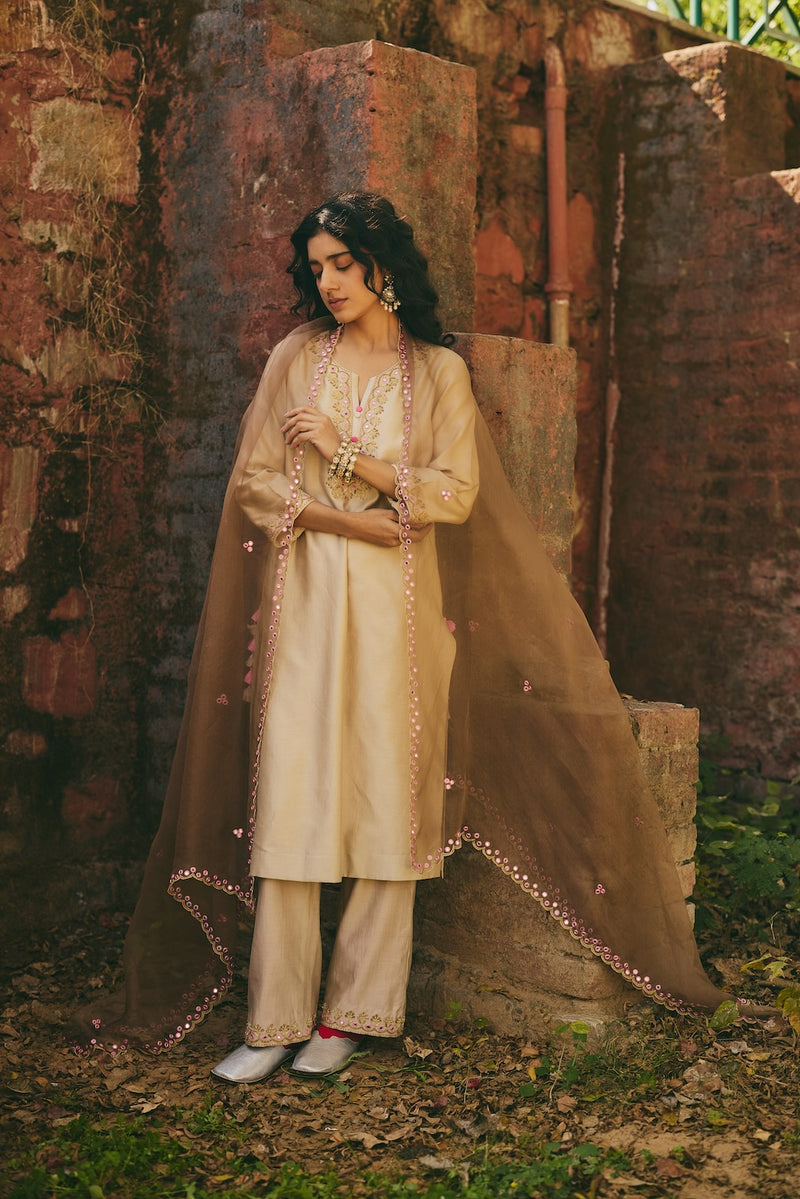
The Mirza & Raina ivory silk kurta features intricate floral and vine motifs highlighted with delicate gold and pink embroidery. The neutral base lets the handwork speak — this is a piece that will look as relevant ten years from now as it does today.

The Eila & Riya ivory and gold embroidered kurta features floral and vine motifs inspired by traditional artistry — another piece where the pale base amplifies the embroidery.


Dusty Rose & Blush Pink
Dusty rose occupies a unique space — it's feminine without being girlish, warm without being bold, and works across ages and occasions. It's the colour that flatters the widest range of skin tones in Indian fashion.
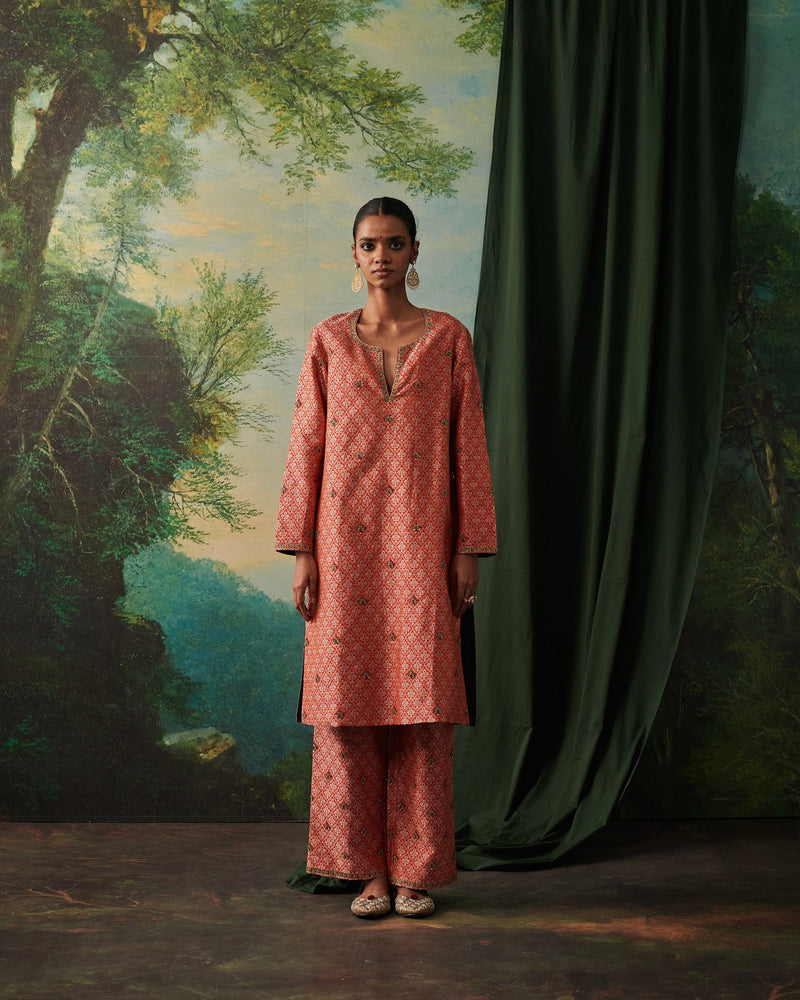
The Naveli & Ruhi dusty rose chanderi kurta with aari, zardozi, sequin, and thread work is a masterclass in how pastels elevate handcraft. The delicate colour makes the dense embroidery look richer and more detailed than it would on a darker base.

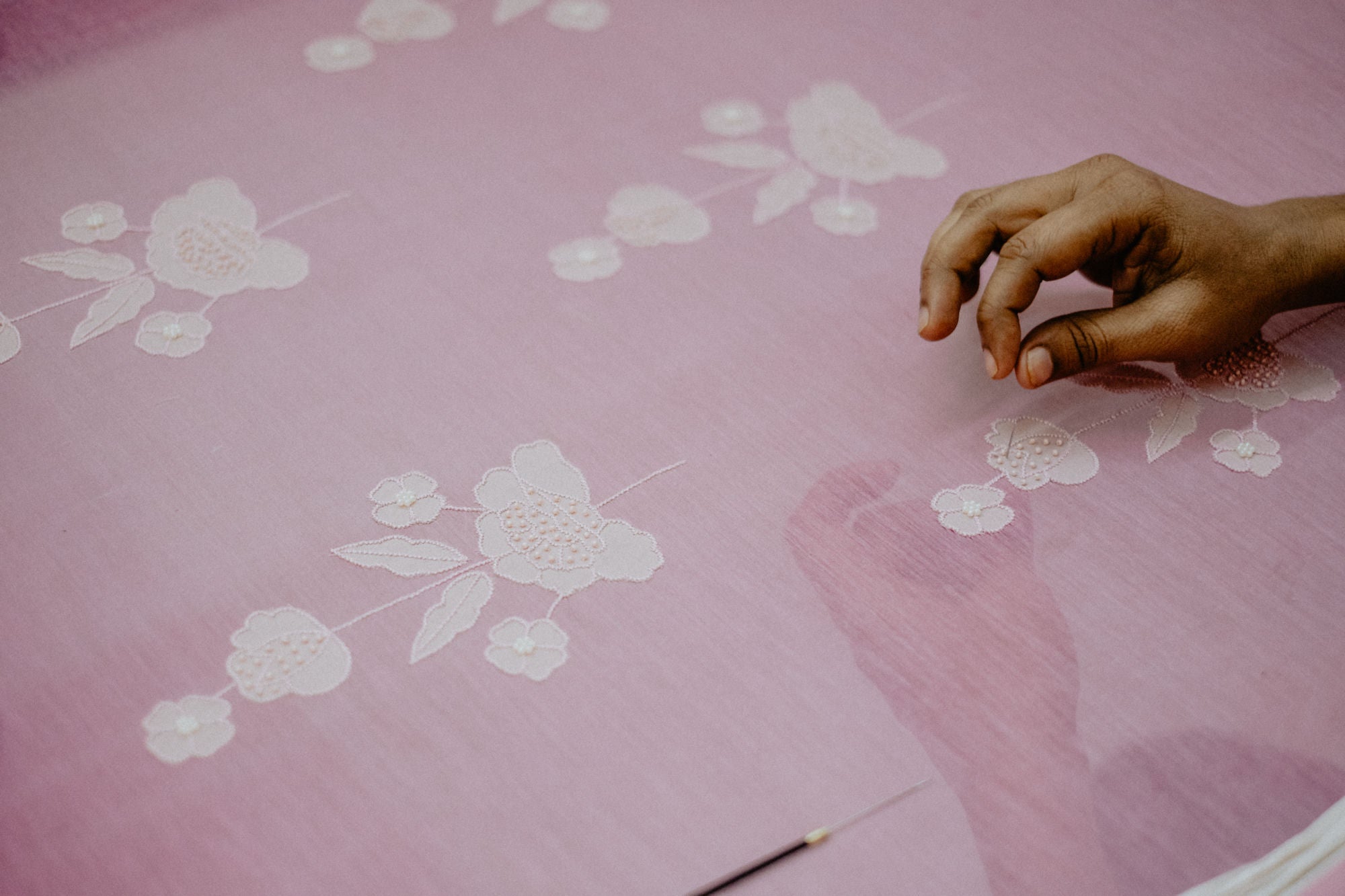
In sarees, the Sajni in blush pink chiffon features scattered hand-embroidered floral clusters with sequins, cutdana, and beads, finished with a scalloped border. The lightness of chiffon in a pastel shade creates the most fluid, ethereal drape.
Soft Green: Sage, Mint & Pistachio
Green pastels have emerged as one of the most popular colour families in Indian fashion. They feel fresh, they photograph beautifully in outdoor settings, and they offer a break from the pink-and-ivory predictability.
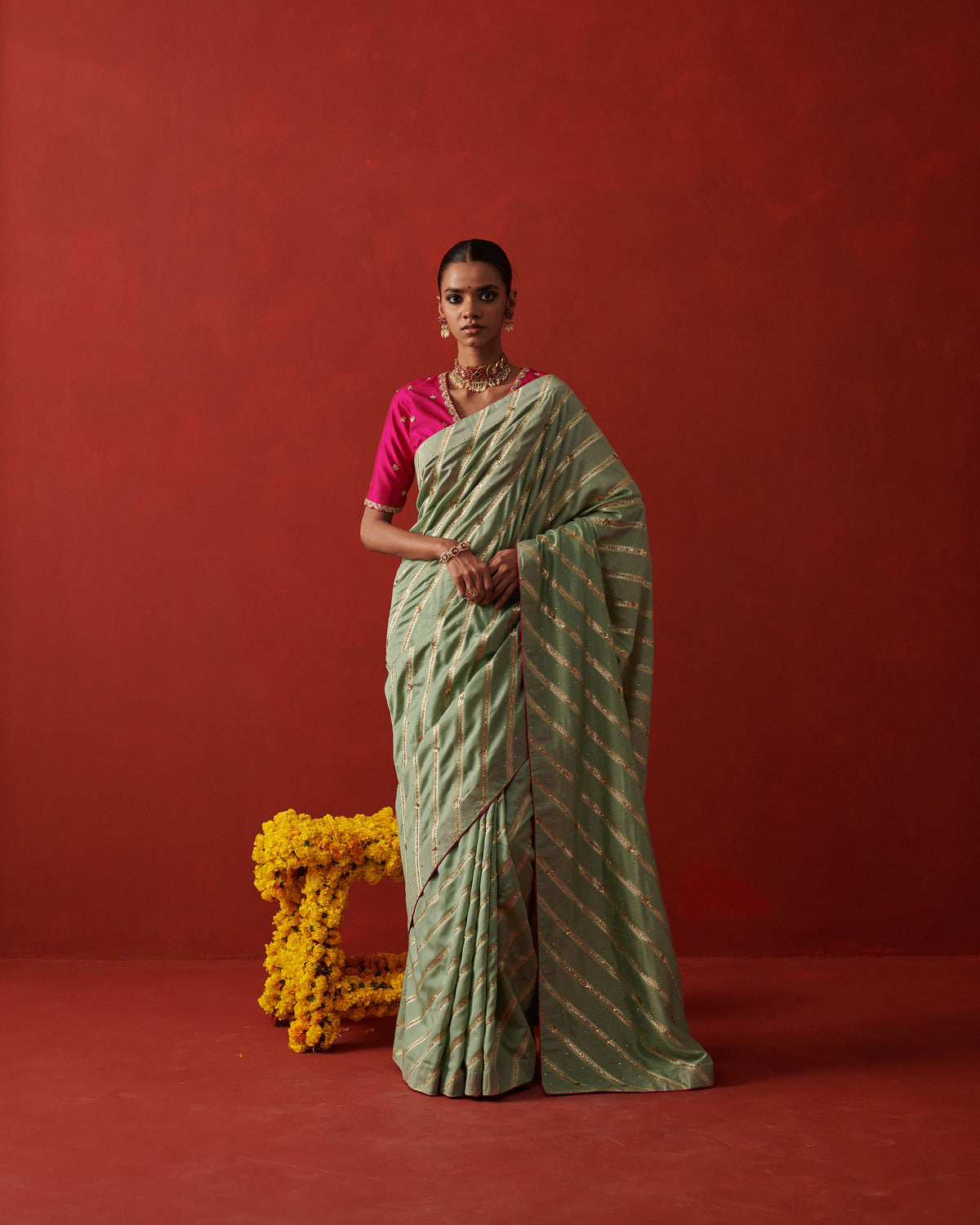
The Zariya saree in soft mint green Banarasi silk features diagonal bands of sequins and gota in antique gold — a heritage drape in a thoroughly modern colour.

The Zarveen dupatta in sage green chanderi with a delicate zari border is minimal pastel at its finest — quiet, graceful, and effortless. The Bano & Dilruba lehenga in pistachio silk tissue features a voluminous flare with an embroidered border of roses and vines — pastel doesn't have to mean understated.
Peach & Coral
Peach is one of the warmest pastels and one of the most universally flattering in Indian fashion. It catches golden hour light beautifully and pairs naturally with both gold and rose gold jewellery.
Free Download
Get Our Measurement Guide
Step-by-step instructions with photos for perfect custom fit.
Download Free Guide

The Naisha peach organza dupatta with gold zari embroidery and resham thread motifs is festival and wedding-ready. The Sanam peach organza with scattered sequins offers a more subtle take — perfect for adding a warm, glowy layer to any outfit.
Periwinkle & Lavender
Cool-toned pastels — periwinkle, lavender, soft lilac — are the newest entrants to the Indian pastel palette. They feel unexpected in a market saturated with warm pastels, and they photograph distinctively.
The Afsana dupatta in soft periwinkle organza silk with scattered bootis and delicate border work in marodi, resham, and sequins is the kind of colour that stops people. It's different enough to be memorable, soft enough to be elegant.

Gold & Champagne
Gold and champagne sit at the intersection of pastel and metallic — they're soft in tone but rich in impact. These are particularly popular for evening occasions and weddings.
The Taraana saree in antique gold tissue features fluid drape with subtle shimmer. The Ojasvi blouse in champagne gold brocade offers traditional opulence in a muted, modern colour — pair these for a tonal gold look that feels both festive and sophisticated.
How to Wear Pastels Without Looking Washed Out
Anchor with embroidery. Gold or silver embroidery on a pastel base adds the visual weight that prevents the outfit from looking faded. The embroidery grounds the colour.
Add one bold accent. A deep-coloured dupatta, a statement lip colour, or rich jewellery prevents an all-pastel look from feeling too light. Contrast is key.
Choose the right pastel for your undertone. Warm pastels (peach, dusty rose, warm ivory) suit warm undertones. Cool pastels (periwinkle, lavender, mint) suit cool undertones. If you pick the wrong family, pastels can wash you out.
Go for rich fabrics. Pastels in silk, tissue, or embroidered organza look luxurious. Pastels in matte cotton or plain polyester can look flat. The fabric's sheen and texture add the depth that a muted colour needs.
Frequently Asked Questions
Are pastels appropriate for weddings?
Absolutely. Pastel lehengas, sarees, and anarkalis are now some of the most popular choices for brides and wedding guests alike. The key is ensuring the embroidery or fabric quality is occasion-appropriate — a well-embroidered pastel piece is every bit as formal as a bold-coloured one.
Do pastels work for all seasons?
They work especially well for spring and summer events. For winter weddings, deeper pastels (dusty rose vs. baby pink, sage vs. mint) carry more warmth and feel seasonally appropriate.
Will pastels go out of style?
Pastels have been gaining ground for several years and show no signs of slowing. More importantly, a well-made pastel piece in a quality fabric is inherently timeless — ivory with gold embroidery has been elegant for centuries.
Ready to Order Custom?
WhatsApp us at +91 70423 11214 with what you're looking for. We'll guide you through measurements, customizations, and timeline.
Most pieces ready in 4-5 weeks. Bridal in 6-8 weeks.
Made to order in 4–5 weeks
Have an event date? We’ll tell you exactly when to order by.
We take a limited number of orders each month — secure your slot early.
Not sure where to start?
Tell us what you're dressing for and we'll help you choose — fabric, fit, colour, and timeline — over WhatsApp.
Your Cart
Pieces from this story
All pieces →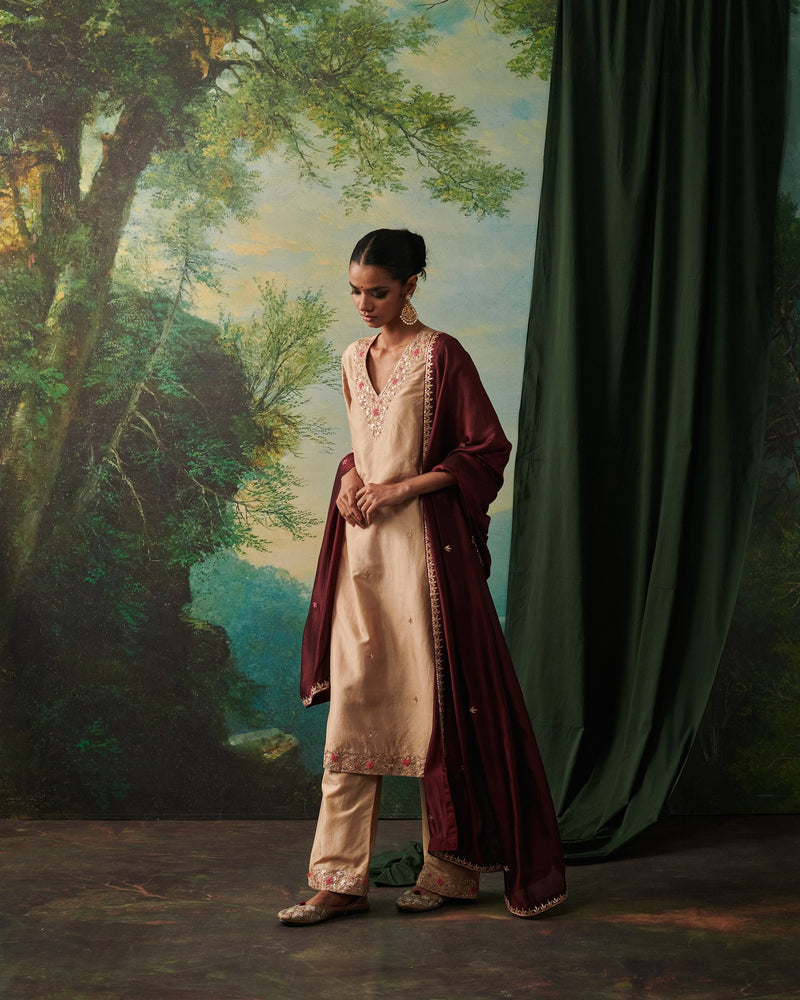
Keep reading
The journal →
Best Banarasi Saree Brands in India 2026: Where to Buy an Authentic Banarasi
Handmade by karigars Made to your measurements Fit guarantee Ships worldwide As seen in GraziaElle Graduat...
14 September 2026
Gifts for Your Wife She'll Actually Wear: Indian Outfits for Karva Chauth, Diwali & Anniversaries
Handmade by karigars Made to your measurements Fit guarantee Ships worldwide As seen in GraziaElle Graduat...
14 September 2026
Designer Lehenga for Girls: A Parent's Buying Guide to Kids' Lehengas
Handmade by karigars Made to your measurements Fit guarantee Ships worldwide As seen in GraziaElle Graduat...
14 September 2026