
Saree vs Lehenga: How to Choose for Your Next Celebration
It is the question every woman faces before a celebration: should I wear a saree or a lehenga? Both silhouettes are iconic in Indian fashion, both carry centuries of heritage, and both can make you feel extraordinary. Yet they offer distinctly different experiences in terms of draping, movement, comfort, and the kind of statement they make.
This guide breaks down the saree vs lehenga debate across every factor that matters — occasion, comfort, body type, styling, and personal preference — so you can choose with confidence.
Saree vs Lehenga: Understanding the Silhouettes
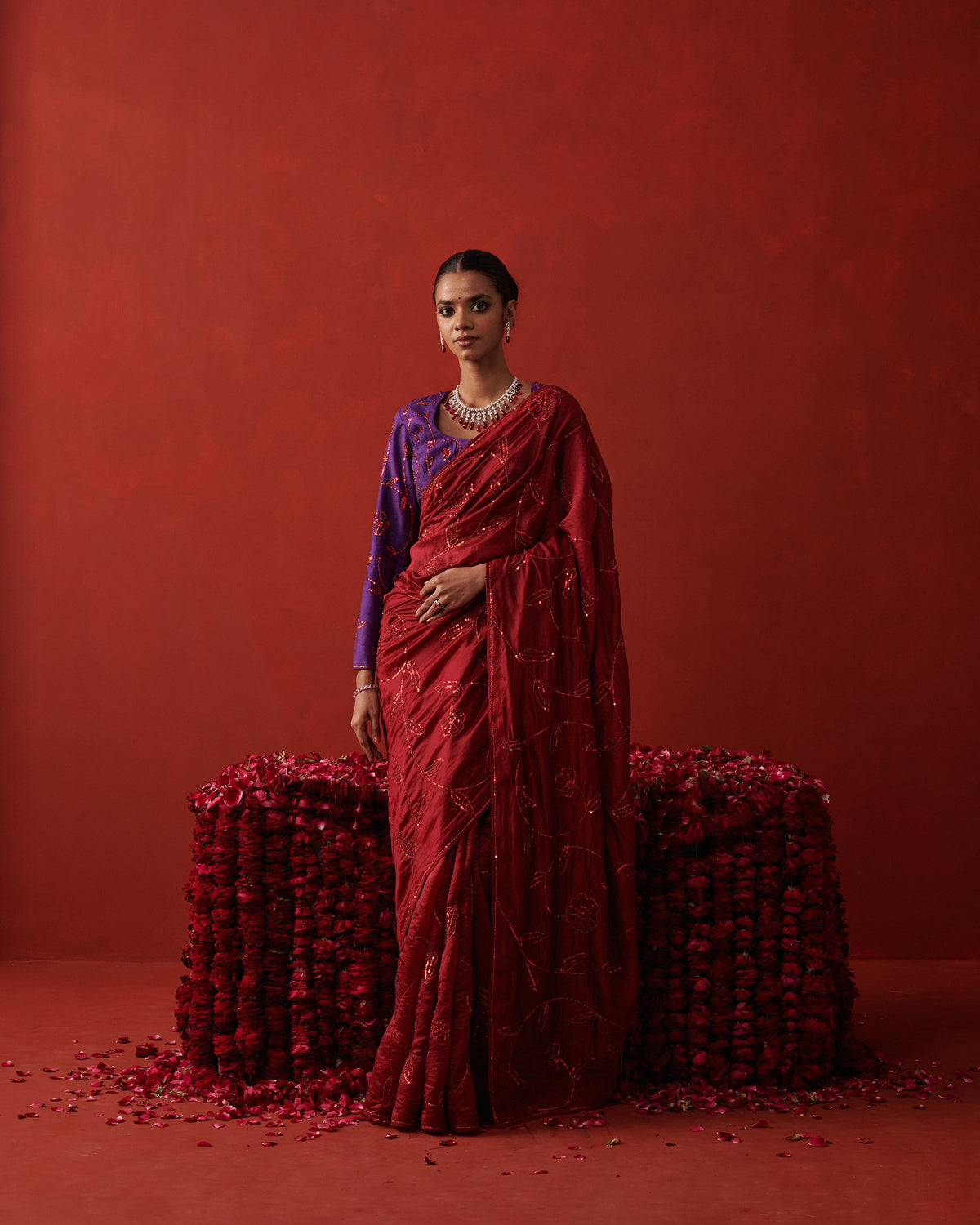
A saree is a single unstitched drape, typically five to nine yards of fabric, wrapped and pleated around the body. Its beauty lies in its fluidity — the way it traces the natural form, the elegance of the palla over the shoulder, and the infinite ways it can be draped. From the classic Nivi drape to the Bengali style, a saree adapts to the wearer.
A lehenga is a two- or three-piece outfit consisting of a flared skirt, a fitted blouse (choli), and often a dupatta. The structure is built in — the skirt provides volume, the blouse defines the silhouette, and the dupatta adds a finishing layer. It is a more 'assembled' look that offers immediate impact.


Choosing by Occasion: When to Wear a Saree vs a Lehenga
Wedding ceremonies (as a guest): Both work beautifully. A Banarasi silk saree like the HUMRAHI & FARIDAH Saree — in green silk jacquard with an all-over jaal design and densely embroidered palla — carries the gravitas a wedding demands. A lehenga like the REHMAT & VASL Lehenga in red Varanasi silk brocade with gold zari work is equally appropriate.
Sangeet and cocktail parties: Lehengas often edge ahead here because they allow easy movement for dancing. Tissue and jacquard lehengas with a modern silhouette, like the ISHQ-e-GUL & INARA Lehenga in tissue jacquard with multi-hued panels, bring effortless drama to an evening event.
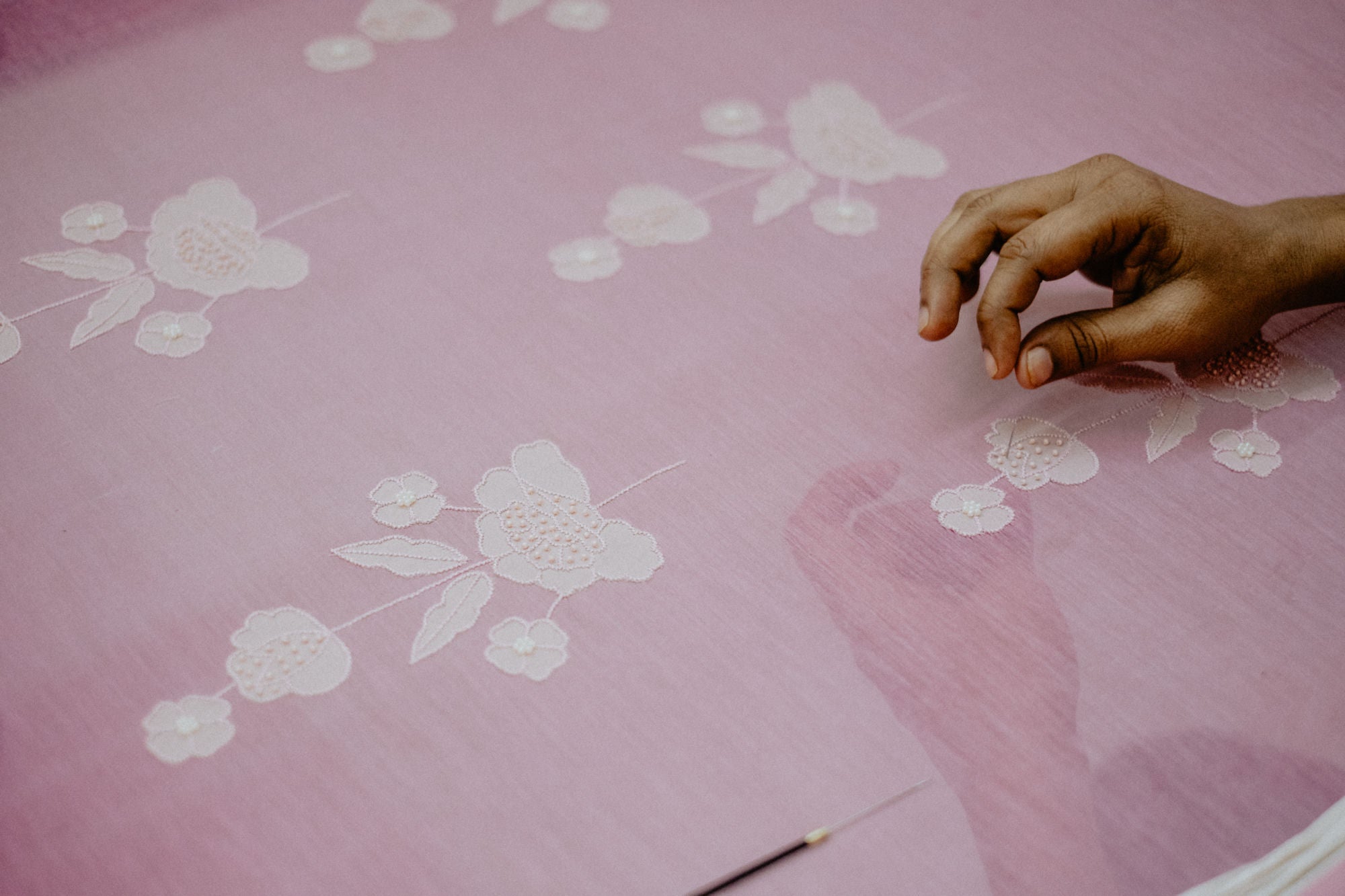
Festive gatherings and pujas: A saree is the classic choice. Lightweight drapes in chiffon or georgette — like the SAJNI Saree in blush-pink chiffon with scattered hand-embroidered floral clusters — strike the right balance of festive and understated.
Receptions and formal events: A tissue or silk saree can be remarkably sophisticated. The TARAANA Saree in luminous antique gold tissue with hand-embroidered borders commands attention without raising its voice.
Comfort and Ease: Saree Draping vs Lehenga Styling
This is where personal experience matters most. If you grew up watching your mother drape a saree in three minutes, the saree will feel like second nature. If you did not, the idea of managing six yards of fabric through an entire event can feel daunting.
Lehengas are easier to put on. You step into the skirt, put on the blouse, and drape the dupatta — done. There is no pinning, tucking, or pleating involved. For someone who does not drape sarees regularly, a lehenga offers immediate confidence.
Sarees offer more flexibility in fit. Because a saree is unstitched, it adapts to your body on the day. Weight fluctuations, post-meal comfort, and movement are all accommodated naturally. A well-draped saree in a fabric like chiffon or georgette can feel as comfortable as wearing a dress.

For maximum comfort in a lehenga, look for pieces with adjustable waists and breathable fabrics. The BANO & DILRUBA Lehenga in soft pistachio-toned silk tissue with an embroidered border of roses and vines balances volume with wearability.
Choosing by Body Type: Saree or Lehenga?
Both silhouettes are remarkably flattering, but they highlight different features:
Free Download
Get Our Measurement Guide
Step-by-step instructions with photos for perfect custom fit.
Download Free Guide- Petite frames: A saree with a slim palla and minimal pleats elongates the silhouette. Avoid heavily embroidered lehengas with very wide flares, as they can overwhelm a smaller frame.
- Tall and lean figures: Both silhouettes work wonderfully. A voluminous lehenga adds beautiful proportion, while a saree in a rich fabric like Banarasi silk — such as the PHALGUN & MYRA Saree in yellow Banarasi silk with silver thread floral motifs — drapes with stunning elegance on a tall frame.
- Curvy body types: A saree is often the most flattering choice, as it naturally cinches at the waist and flows over the hips. Fabrics like chiffon and georgette drape smoothly without adding bulk.
- Apple-shaped figures: An A-line lehenga that skims the waist and flares out balances the silhouette beautifully.
Fabric and Budget: Practical Considerations
From a practical standpoint, a saree is often a more versatile investment. You can restyle a single saree with different blouses, draping styles, and accessories to create entirely new looks. A Banarasi saree or a hand-embroidered chiffon drape from our saree collection can be worn to weddings, festivals, and formal events for years.
A lehenga, while stunning, is a more specific look — it is harder to restyle for different occasions. However, many modern lehengas are designed with separates that can be mixed and matched. A lehenga skirt from our lehenga collection can be paired with a contrasting blouse or even a kurta for a fresh take.


Frequently Asked Questions
Can I wear a lehenga if I am over 40?
Absolutely. Age has nothing to do with the silhouette you choose. A lehenga in a sophisticated colour — like the BANO & DILRUBA in pistachio silk tissue — carries quiet elegance that suits every age. Choose a blouse with sleeves and a colour palette that feels right for you.
Which is better for a destination wedding — saree or lehenga?
For destination weddings, consider the climate and logistics. A lightweight chiffon saree packs flat and is easy to manage. A lehenga takes more luggage space but photographs beautifully in outdoor settings. Many guests bring a saree for the ceremony and a lehenga or sharara set for the sangeet.
Can I wear a half-saree as a compromise?
A half-saree or lehenga-saree hybrid is a wonderful middle ground — it offers the drape of a saree with the structure of a lehenga. Our full collection includes ensembles that blend both silhouettes.
Ready to Order Custom?
WhatsApp us at +91 70423 11214 with what you're looking for. We'll guide you through measurements, customizations, and timeline.
Most pieces ready in 4-5 weeks. Bridal in 6-8 weeks.
Made to order in 4–5 weeks
Have an event date? We’ll tell you exactly when to order by.
We take a limited number of orders each month — secure your slot early.
Not sure where to start?
Tell us what you're dressing for and we'll help you choose — fabric, fit, colour, and timeline — over WhatsApp.
Your Cart
Pieces from this story
All pieces →
Keep reading
The journal →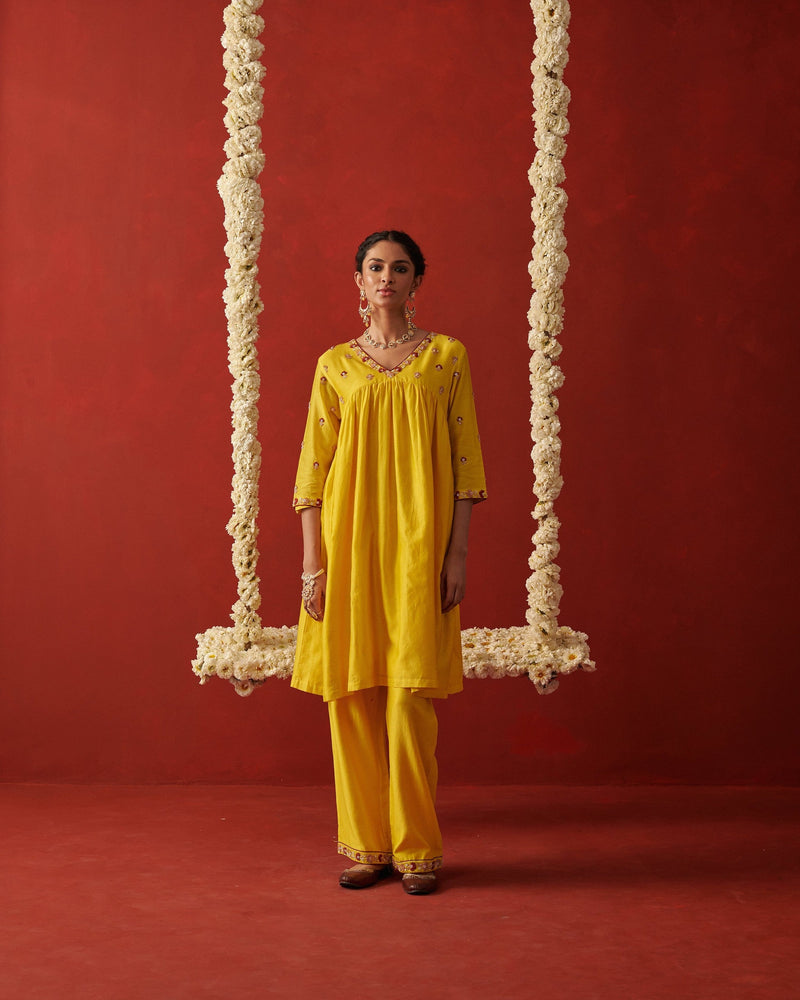
Dholki Night Outfit Ideas: What to Wear to the Ladies' Dhol
Handmade by karigars Made to your measurements Fit guarantee Ships worldwide As seen in GraziaElle Graduat...
27 July 2026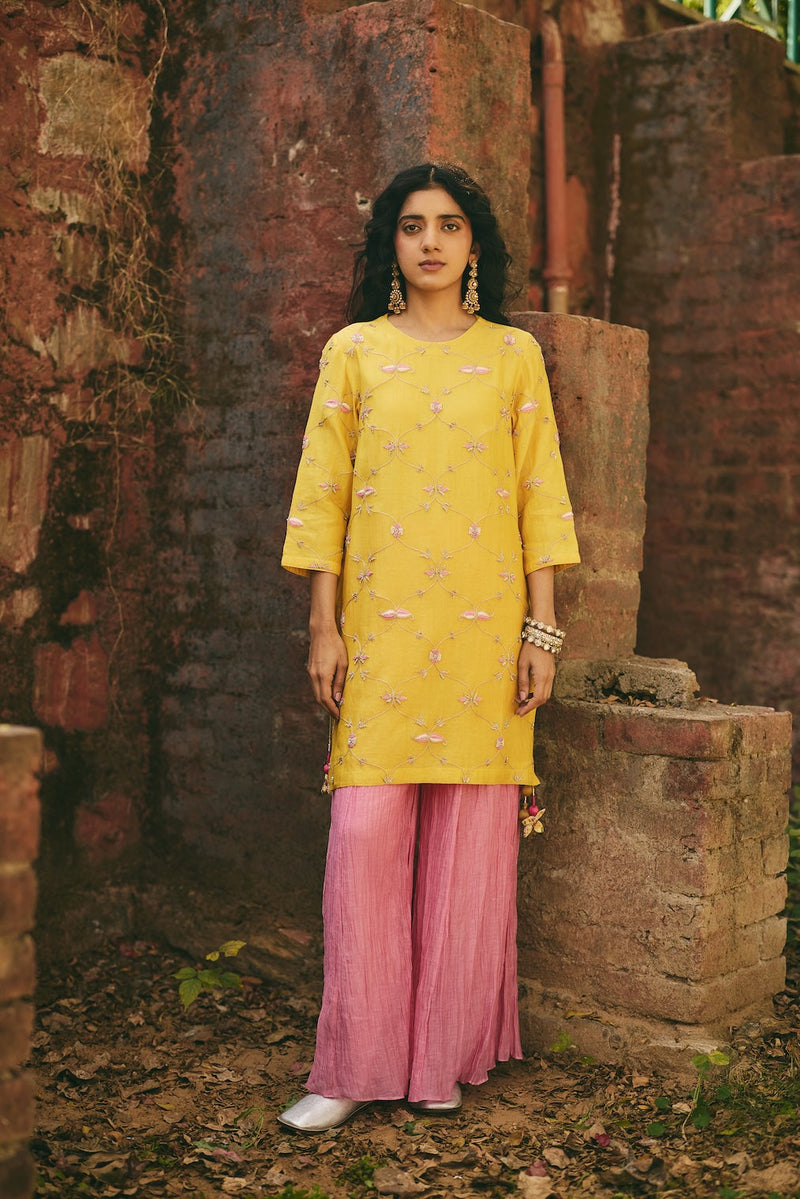
Mayra & Bhaat Outfit Ideas: Dressing for the Maternal Gift Ceremony
Handmade by karigars Made to your measurements Fit guarantee Ships worldwide As seen in GraziaElle Graduat...
27 July 2026
Pag Phera Outfit Ideas: What to Wear for the Bride's Homecoming
Handmade by karigars Made to your measurements Fit guarantee Ships worldwide As seen in GraziaElle Graduat...
27 July 2026