

Sharara vs Gharara vs Palazzo: What's the Difference and Which to Choose
Three silhouettes, three histories, three very different effects — and yet sharara, gharara, and palazzo pants are routinely confused with each other. They all fall under the broad umbrella of wide-legged Indian bottoms, but the construction, the drape, and the occasions they suit are distinct. If you've ever searched "sharara vs gharara" or wondered whether a palazzo would work as a substitute for a sharara at a wedding, this guide sorts it out clearly.
We'll break down the difference between sharara and gharara, compare both to palazzos, cover which body types each flatters, and help you decide which silhouette is right for your next occasion — whether it's a wedding, festive gathering, or a relaxed celebration.
What Is a Sharara?
A sharara is a pair of wide-legged pants that are fitted from the waist to the knee and then flare out dramatically below the knee. The flare is generous — often resembling a skirt from a distance — which is exactly the point. The silhouette creates an illusion of volume and movement at the bottom while keeping the upper leg streamlined.
Shararas trace their roots to the Mughal courts of Lucknow and Awadh, where they were part of the formal wardrobe for women of the nobility. The silhouette was designed to allow ease of movement while maintaining the grandeur expected at courtly gatherings. The flare would sweep the floor as the wearer walked, creating a dramatic, flowing effect that plain salwar or churidar simply couldn't achieve.
Today, the sharara outfit is most commonly styled as a three-piece set: a kurta or short top, the sharara pants, and a dupatta. The kurta length varies — some designs pair a cropped top with the sharara for a contemporary look, while others use a long kurta that extends past the hips, letting the sharara flare emerge below. The key identifying feature remains constant: fitted to the knee, flared below.

The Gulrukh & Leher captures the sharara silhouette beautifully. The 'Gulrukh' kurta is crafted in premium pink Chanderi with a contemporary sleeveless cut and hand-embroidery, while the 'Leher' sharara pairs a soft blossom pink with a bold, multi-hued flare — a spirited approach to the traditional sharara form.
What Is a Gharara?
Gharara pants are, at first glance, similar to shararas — and this is where most of the confusion originates. Like a sharara, a gharara is fitted from the waist to the knee and flares below it. The critical difference is in the construction at the knee: a gharara has a distinctive ruched, gathered, or stitched seam at the knee joint where the upper fitted portion meets the lower flared portion.
This gathered knee seam is not just decorative — it's structural. It creates a visible break in the silhouette, a cinched point where the fabric bunches before cascading outward. When the wearer walks, the gathered knee produces a distinctive rustling, swishing movement. In a sharara, the transition from fitted to flared is smooth and seamless; in a gharara, it's deliberately pronounced.
Ghararas also originate from Lucknow and the courts of Awadh, and they were historically even more associated with formal occasions than shararas. The gharara was traditionally the centrepiece of Lucknowi bridal wear — a heavily embroidered gharara in gold zari and gota patti, paired with a short kurti and a long, flowing dupatta, was the standard bridal ensemble for Muslim weddings in Uttar Pradesh. This tradition continues today, particularly in Lucknow, Hyderabad, and parts of Rajasthan.
The difference between sharara and gharara comes down to that knee seam: smooth transition (sharara) versus gathered/ruched joint (gharara). If you can see a visible seam or bunching at the knee where the two sections meet, it's a gharara.
What Is a Palazzo?
A palazzo takes a fundamentally different approach. Unlike both the sharara and the gharara, palazzo pants are wide-legged from the waist all the way down. There is no fitted upper section and no knee flare — the silhouette is a continuous, straight, wide column from hip to hem.
Palazzos are Western in origin, having entered mainstream fashion in the 1960s and 70s as part of the bohemian and disco movements. They were adopted into Indian fashion as a modern alternative to traditional bottoms like salwar and churidar, particularly for fusion and Indo-Western styling. Today, palazzos are a staple in Indian ethnic wear — you'll find them paired with kurtas, tunics, and even structured jackets.
The key difference between sharara vs palazzo is the fit at the thigh. A sharara is fitted from waist to knee; a palazzo is wide from waist down. This makes palazzos easier to wear casually — they don't have the same formal, structured drama of a sharara or gharara. They're also more versatile across occasions, working equally well for a day at the office with a linen kurta or for a festive dinner with an embroidered silk top.
Sharara vs Gharara vs Palazzo: Side-by-Side Comparison
| Feature | Sharara | Gharara | Palazzo |
|---|---|---|---|
| Silhouette | Fitted waist to knee, flared below | Fitted waist to knee, gathered knee seam, flared below | Wide-legged from waist to hem |
| Knee construction | Smooth, seamless transition | Ruched/gathered seam | No knee definition |
| Origin | Mughal courts, Lucknow | Mughal courts, Lucknow/Awadh | Western (1960s-70s) |
| Formality | Semi-formal to formal | Formal to bridal | Casual to semi-formal |
| Movement | Flowing, skirt-like | Swishing, rustling at knee | Straight, column-like drape |
| Best occasions | Weddings, festive events, sangeet | Nikah, walima, formal celebrations | Casual wear, day events, fusion styling |
| Typical pairing | Kurta + dupatta | Short kurti + long dupatta | Kurta, tunic, or top |
Which Body Type Does Each Silhouette Flatter?
All three silhouettes are forgiving in their own way, but they work differently depending on your proportions.
Shararas are ideal for petite and average-height women who want to create the illusion of longer legs. The fitted upper section elongates the thigh visually, while the knee-down flare adds volume at the bottom, creating a balanced A-line effect. If you have narrow hips and want to add visual width to your lower half, a sharara does this beautifully. Women with wider hips can also wear shararas well — the flare below the knee draws attention downward, away from the hip line.
Ghararas work best on taller women who can carry the volume of the gathered knee seam without it overwhelming the silhouette. The ruching at the knee adds visual bulk at the midpoint of the leg, so if you're petite, a heavily gathered gharara can make you look shorter. That said, a well-tailored gharara with moderate gathering — rather than extreme ruching — works across heights. The key is proportion: keep the kurti short and the dupatta long to lengthen the visual line.
Palazzos are the most universally flattering of the three. The continuous wide line from waist to hem suits almost every body type. They're particularly effective for women with wider hips or fuller thighs because the fabric skims rather than clings. For petite frames, a high-waisted palazzo paired with a cropped or tucked-in top creates vertical length. The only caution: very stiff fabric in a palazzo can add bulk around the midsection, so opt for fabrics with some drape — silk, crepe, or rayon.


Two approaches to the sharara silhouette: the Rohi & Zoey pairs a luminous yellow tissue silk kurta with a pale mint-green sharara featuring hand-embroidery in zardozi, sequins, cutdana, and bead work. The Ruhma & Rabaab takes a tonal route — a coral pink silk kurta with fine hand-embroidery using marodi, resham, and sequins, paired with a matching sharara for an effortless, fluid silhouette. Both demonstrate how the sharara's fitted-to-flared line works across different colour palettes and embroidery styles.
Choosing by Occasion: When to Wear Each Silhouette
Weddings (as a guest): A sharara set in silk or tissue with hand-embroidery is the sweet spot — formal enough for a wedding, but not so heavy that it competes with the bride. The flare creates movement on the dance floor (sangeet, cocktail night) while the fitted upper section keeps the look polished. For more styling ideas, read our sharara styling tips guide.
Free Download
Get Our Measurement Guide
Step-by-step instructions with photos for perfect custom fit.
Download Free GuideFormal celebrations (nikah, walima, engagement): This is where the gharara comes into its own. A traditional gharara set with heavy zari or gota patti embroidery carries the gravitas that these occasions demand. The gathered knee seam adds a sense of occasion that a plain sharara doesn't have.
Festive gatherings (Diwali, Eid, puja, Karva Chauth): Either a sharara or a palazzo works well here. A sharara in chanderi or tissue silk hits the right note of festive without being overdressed. A palazzo paired with an embroidered kurta set offers comfort for longer gatherings while still looking put-together. See our kurta set styling guide for more pairing ideas.
Day events, brunches, casual celebrations: Palazzos are the clear winner. They pair effortlessly with printed kurtas, cotton tops, and lightweight tunics. The relaxed silhouette suits daytime energy without sacrificing style.

The Ananya & Tavishi is crafted in luminous tissue fabric in an elegant interplay of antique gold and muted green tones. The 'Ananya' kurta combines two tissue hues — the bodice and sleeves in antique gold, and the gathered lower panels in soft green-toned tissue — while the 'Tavishi' sharara continues the dual-tone theme. This kind of sharara set sits right in the wedding-guest and formal-festive sweet spot.
Fabric Choices: How Material Changes the Silhouette
The fabric you choose affects how each silhouette behaves, regardless of the cut.
Silk and tissue: These give structure and a natural sheen that elevates all three silhouettes to occasion wear. A sharara in tissue silk holds its flare with a slight stiffness that creates volume. A palazzo in silk drapes beautifully in a straight, elegant column. These are your go-to fabrics for weddings and formal events.
Georgette and chiffon: Lighter and more fluid, these fabrics soften the silhouette. A sharara in georgette won't have the same dramatic flare as one in silk — it'll fall closer to the leg with a gentle, floaty quality. This makes georgette shararas suitable for less formal occasions.
Cotton and linen: Almost exclusively used for palazzos in casual settings. A cotton palazzo with a block-printed kurta is a staple of everyday Indian fashion. You rarely see cotton shararas or ghararas because the fabric doesn't hold the structured flare or knee gathering that defines those silhouettes.
Chanderi: A lightweight, semi-sheer fabric with a subtle shimmer — ideal for shararas and kurta tops in festive-but-not-heavy contexts. Chanderi shararas occupy the space between everyday palazzo comfort and full-dress silk sharara formality.


Compare two different fabric approaches: the Roshni & Nazreen is crafted in premium yellow Chanderi with a delicate all-over trellis of hand-embroidered vines using Aari embroidery and shimmer sequins — lightweight and luminous. The Mastani, Leyla & Nalini takes a different route entirely — emerald cheniya bandhani jacquard silk with intricate floral motifs woven in gold and silver thread, featuring a one-shoulder cape, strap bustier, and sharara. Same sharara silhouette at the bottom, dramatically different in weight, formality, and visual impact because of the fabric and construction choices.
Styling Tips Across All Three Silhouettes
Kurta length matters. With shararas and ghararas, keep the kurta at or above hip length — you want the knee flare to be visible. A kurta that falls below the knee defeats the purpose of a sharara because it covers the very transition that defines the silhouette. With palazzos, longer kurtas (mid-thigh to knee length) work well because the wide leg is visible from hip to floor regardless.
Footwear changes the effect. Shararas and ghararas traditionally brush the floor, so heels or wedges under the fabric add height without being visible. Palazzos can be styled with visible footwear — block heels, juttis, kolhapuris — because the straight leg reveals the shoe at the hem.
Dupatta placement. With a gharara, the traditional styling places the dupatta over both shoulders, letting it drape long in the front and back — this is the classic Lucknowi look. With a sharara, the dupatta is more flexible: draped over one shoulder, pinned at the side, or carried as an accessory. With palazzos, a dupatta is entirely optional — many modern palazzo-kurta combinations skip it altogether.
Jewellery scale. Ghararas — being the most formal of the three — pair with statement jewellery: polki sets, chandbalis, heavy bangles. Shararas work with medium-weight jewellery: jhumkas, a delicate choker, statement earrings. Palazzos pair best with minimal, modern accessories: studs, a single bangle, or a statement ring. For more on completing a festive look, read our lehenga styling tips guide — many of the jewellery and dupatta principles apply across silhouettes.
Common Mistakes to Avoid
Calling every flared pant a sharara. If it's wide from the waist down with no fitted section at the thigh, it's a palazzo. If it has a gathered seam at the knee, it's a gharara. Only pants that are fitted to the knee and flare smoothly below are shararas.
Wearing a palazzo to a formal wedding and expecting it to read the same as a sharara. Palazzos are inherently more casual. Even in silk, a palazzo set doesn't carry the same traditional weight as a sharara set with equivalent embroidery. If the event calls for traditional Indian formalwear, choose a sharara or gharara.
Over-embellishing the top when the bottom is already heavy. Shararas and ghararas with dense embroidery need simpler kurtas to balance the visual weight. If both top and bottom are heavily embellished, the outfit can look overwhelming rather than elegant.
Ignoring the knee seam in alterations. If you're getting a sharara altered, ensure the tailor maintains the smooth transition at the knee. Adding too much fabric at the knee turns a sharara into something closer to a gharara. Similarly, if you want a gharara, the knee seam needs deliberate ruching — a smooth flare at the knee is a sharara, not a gharara.
Explore Sharara Sets
If you've decided the sharara is your silhouette, explore the full sharara sets collection — each piece is fully handmade by karigars in Jaipur, with hand-embroidery techniques including zardozi, Aari, gota patti, and sequin work. All sets are made to order, so each piece is crafted specifically for you.
Frequently Asked Questions
What is the main difference between sharara and gharara?
Both are fitted from waist to knee and flare below. The difference is at the knee: a sharara transitions smoothly from fitted to flared with no visible seam, while a gharara has a distinctive gathered or ruched seam at the knee where the two sections meet. This knee seam gives the gharara its characteristic rustling movement.
Can I wear a sharara to a wedding?
Absolutely. A sharara set in silk or tissue with hand-embroidery is one of the most popular choices for Indian wedding guests. It's formal enough for the occasion while being more comfortable than a lehenga. Choose rich fabrics and embroidery for evening functions, and lighter fabrics like chanderi for daytime events.
Is a palazzo appropriate for festive occasions?
Yes, but context matters. A silk palazzo paired with an embroidered kurta works well for Diwali parties, Eid dinners, and similar celebrations. For weddings and very formal events, a sharara or gharara carries more traditional weight. Palazzos are best for semi-formal and casual festive gatherings.
Which silhouette is best for petite women?
Shararas and palazzos both work well for petite frames. A sharara's fitted upper section elongates the legs, while a high-waisted palazzo creates a long, unbroken line. Ghararas can be trickier for petite women because the gathered knee adds bulk at the midpoint — choose a gharara with moderate gathering rather than heavy ruching.
Are sharara and palazzo pants the same thing?
No. A sharara is fitted from the waist to the knee and flares below. A palazzo is wide-legged from the waist all the way down with no fitted section. The construction, origin, and occasion-appropriateness are all different.
What fabrics work best for shararas?
Silk, tissue silk, and chanderi are the most common choices for occasion-wear shararas. These fabrics hold the flare below the knee, creating the structured silhouette that defines the sharara. Georgette and chiffon produce a softer, more fluid effect suitable for less formal settings.
Can a gharara be worn casually?
Ghararas are traditionally the most formal of the three silhouettes. While a simple cotton or linen gharara can technically be dressed down, the gathered knee construction inherently reads as dressy. For casual wear, palazzos are the better choice; for semi-formal, go with a sharara.
Ready to Order Custom?
WhatsApp us at +91 70423 11214 with what you're looking for. We'll guide you through measurements, customizations, and timeline.
Most pieces ready in 4-5 weeks. Bridal in 6-8 weeks.
Made to order in 4–5 weeks
Have an event date? We’ll tell you exactly when to order by.
We take a limited number of orders each month — secure your slot early.
Not sure where to start?
Tell us what you're dressing for and we'll help you choose — fabric, fit, colour, and timeline — over WhatsApp.
Your Cart
Pieces from this story
All pieces →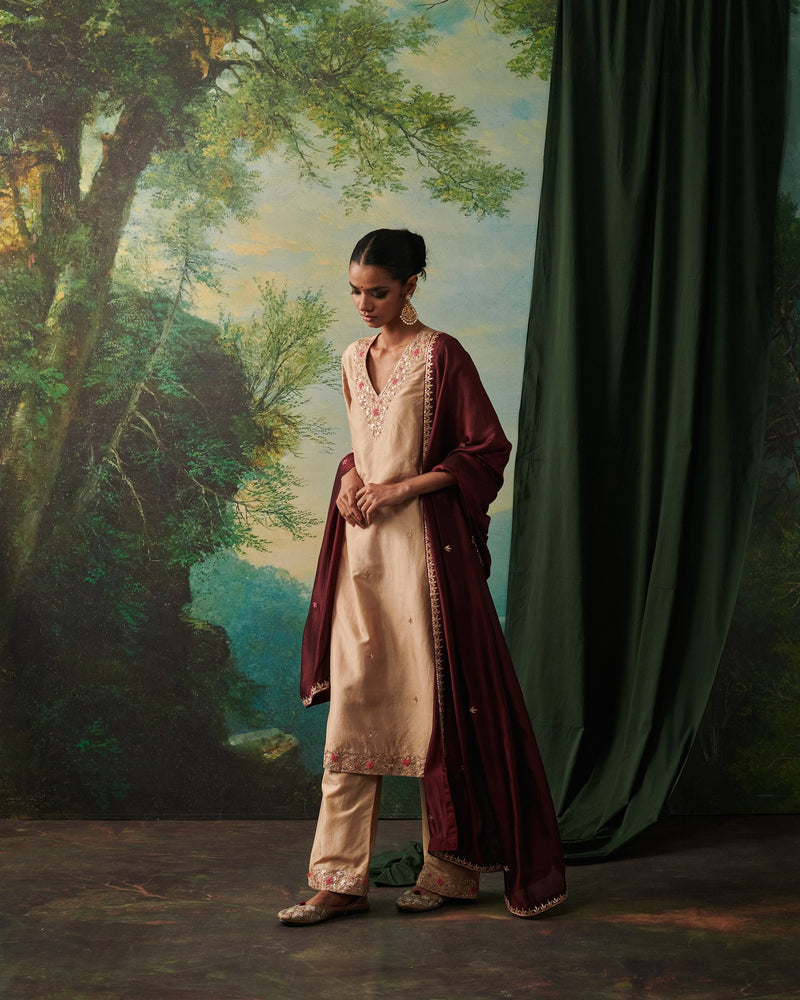
Keep reading
The journal →
Diwali Abroad: What to Wear to the Office Potluck, the Community Dinner & the House Party
Handmade by karigars Made to your measurements Fit guarantee Ships worldwide As seen in GraziaElle Graduat...
20 September 2026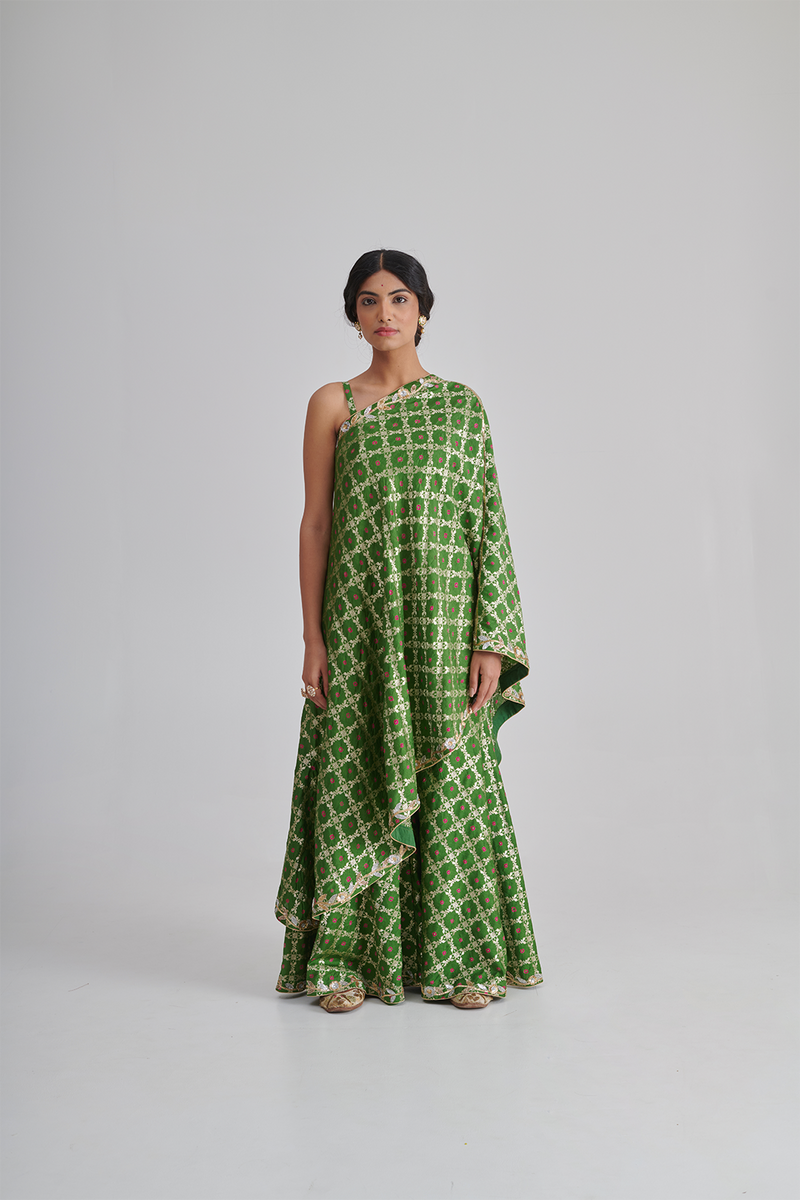
Garba Abroad: What to Wear to Navratri in the US, UK, Canada & Australia
Handmade by karigars Made to your measurements Fit guarantee Ships worldwide As seen in GraziaElle Graduat...
20 September 2026
Where to Shop for Indian Clothes in Singapore & Malaysia: A Complete Guide
Handmade by karigars Made to your measurements Fit guarantee Ships worldwide As seen in GraziaElle Graduat...
20 September 2026