
Luxe Minimalism in Indian Fashion: Why Tone-on-Tone Embroidery Is Defining 2026
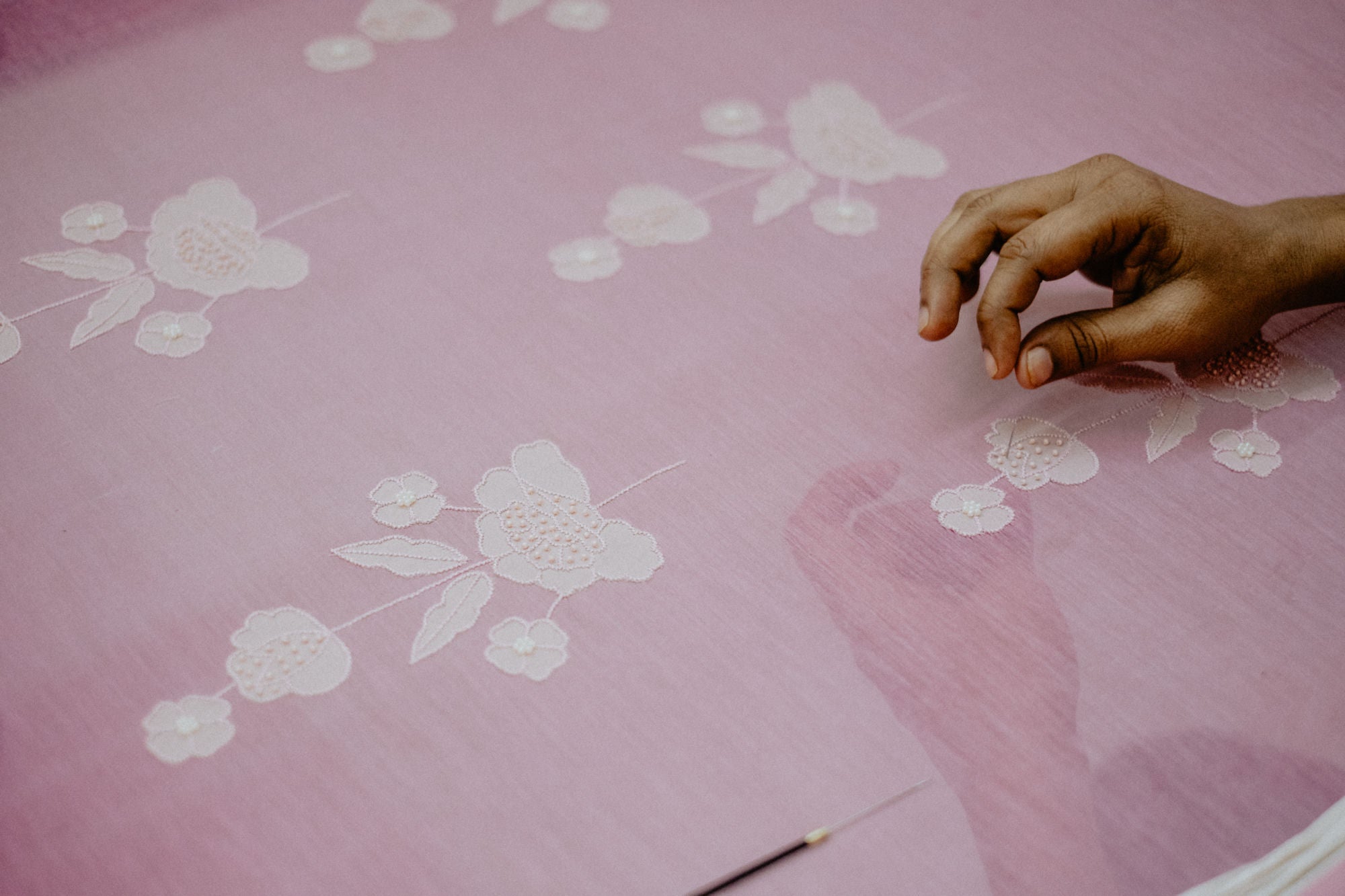
The loudest trend in Indian fashion right now is, ironically, quiet. Tone-on-tone embroidery — where thread, sequins, and zari blend into the base fabric rather than contrasting against it — has become the defining aesthetic of 2026 luxury Indian wear.
It's not about doing less. It's about doing it so well that you have to look twice to appreciate the work. And that distinction is everything.
What Is Tone-on-Tone Embroidery?
Tone-on-tone means the embroidery colour matches or closely complements the fabric base. Ivory thread on ivory silk. Gold zari on gold tissue. Blush pink sequins on blush pink organza. The motifs are there — florals, paisleys, jaals — but they reveal themselves through texture and light rather than colour contrast.
This is the opposite of traditional Indian embroidery where bright threads pop against contrasting backgrounds. Both approaches require extraordinary skill, but tone-on-tone demands a different kind of precision — the work has to be flawless because there's no colour contrast to mask imperfections.
Why It's Dominating 2026
The global minimalism movement meets Indian maximalism. Fashion globally is moving toward quiet luxury — Loro Piana, The Row, understated elegance. Indian fashion is adapting this sensibility while keeping the handcraft that defines it. The result? Garments that look simple from afar but reveal extraordinary detail up close.
Photography. Tone-on-tone embroidery photographs beautifully. In an era where every outfit is captured for social media, the play of light on tonal embroidery creates a subtle, expensive-looking shimmer that reads better on camera than heavy contrast work.
Versatility. A tone-on-tone piece works across occasions. It's understated enough for a day event, elegant enough for evening. A heavily contrasted outfit often feels locked to one context.
The Techniques That Shine in Tonal Work
Not all embroidery techniques work equally well in tone-on-tone. The ones that truly excel:
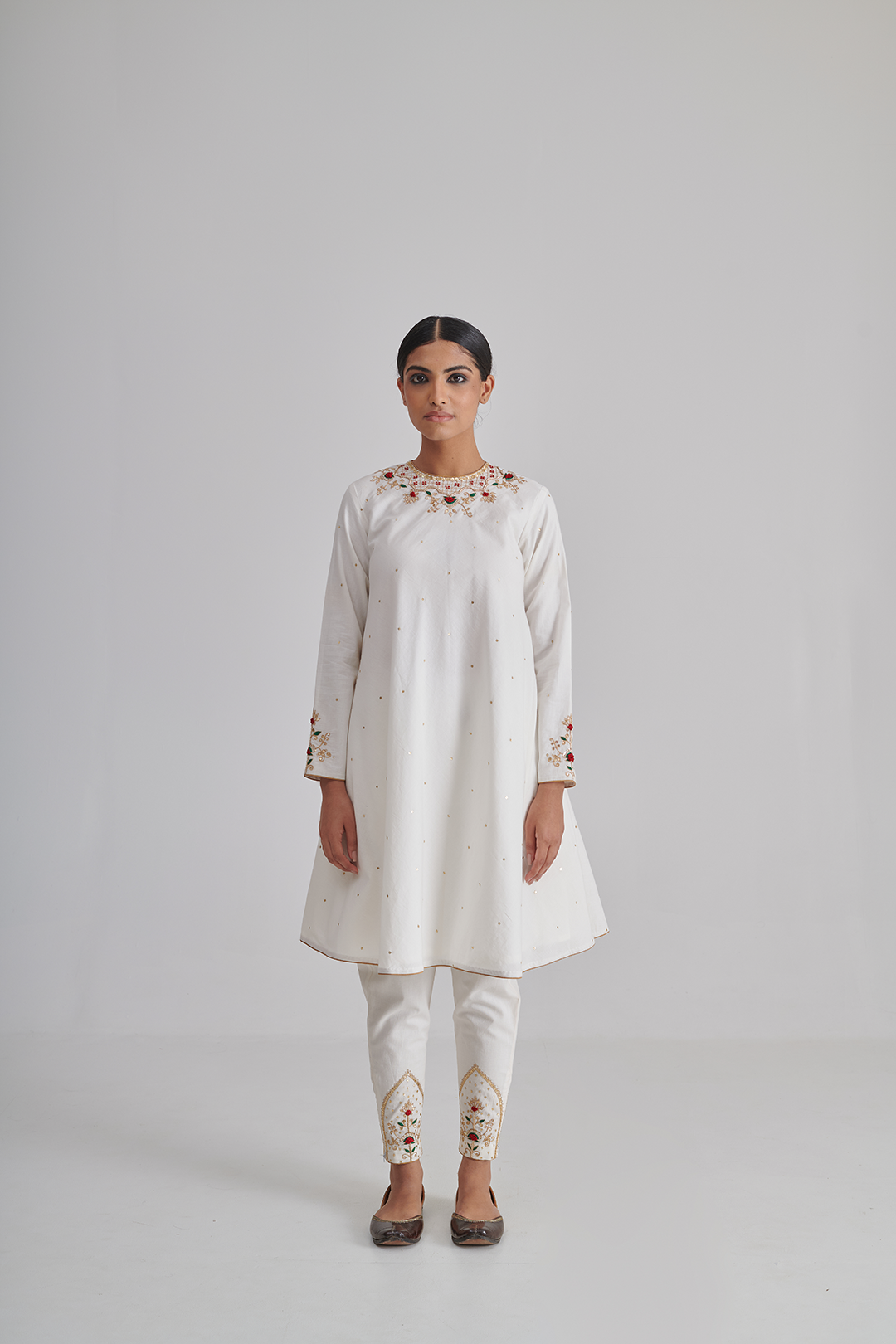
Chikankari: The original tone-on-tone. White thread on white fabric has been Lucknow's signature for centuries. The entire art form is built on the principle of texture over contrast. Our Naina & Ahalya kurta set in ivory cotton with hand-embroidered floral motifs is a perfect example of this tradition.

Sequin work (Mukesh/Badla): When clear or tonal sequins are applied to a matching base, they create a liquid shimmer effect — the fabric seems to glow from within. The Noor & Ahana anarkali in ivory with Mukesh work captures this perfectly.
Zari on gold/ivory base: Gold zari embroidery on gold silk tissue is the quintessential bridal tone-on-tone look. The Bano & Dilruba lehenga in pistachio silk tissue with tonal embroidery shows how effective this approach is.

Aari embroidery: The chain-stitch technique from Kashmir creates beautiful textural patterns. When done in matching thread colours, the surface becomes richly tactile without visual noise.
Tone-on-Tone Across Outfit Types
For brides: Ivory-on-ivory or gold-on-gold lehengas have become the most sought-after bridal silhouette of 2026. The all-tonal approach creates a regal, cohesive look that pairs effortlessly with any jewellery colour — kundan, polki, diamonds, or coloured stones all work.
Free Download
Get Our Measurement Guide
Step-by-step instructions with photos for perfect custom fit.
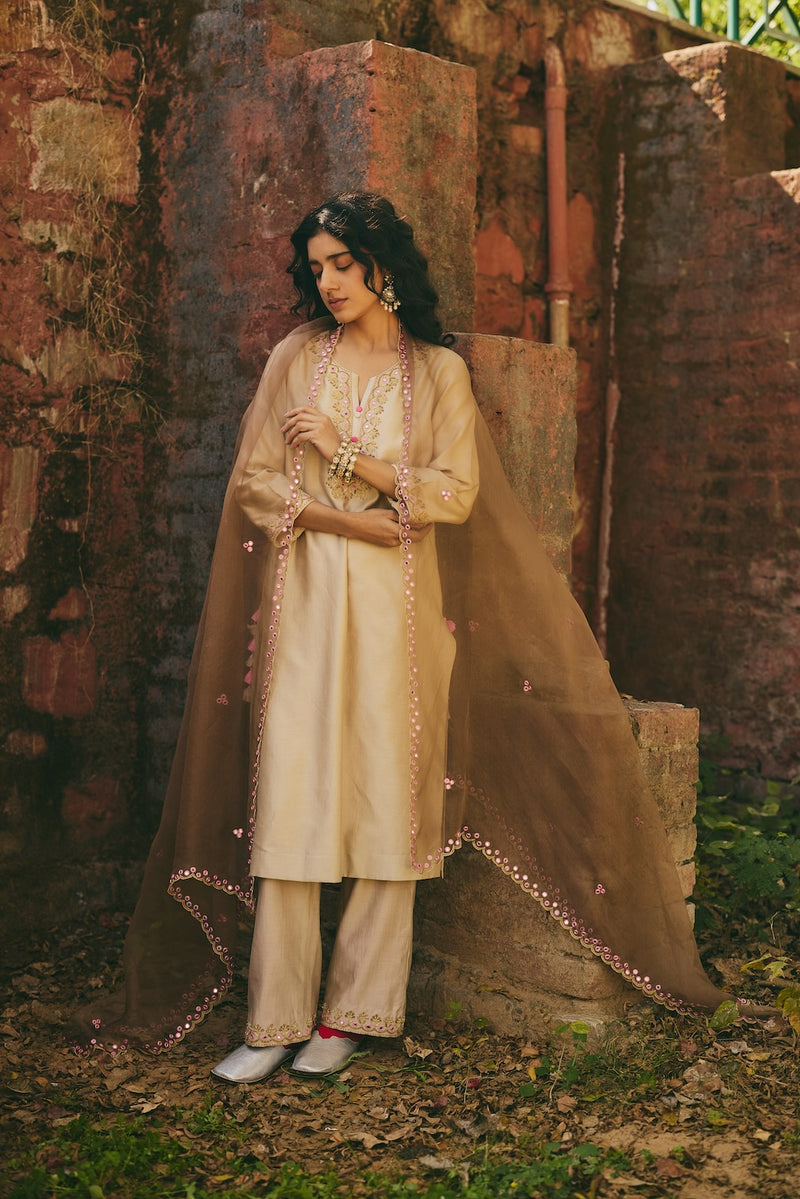
Download Free GuideFor wedding guests: A tonal kurta set is the perfect wedding guest outfit — it looks polished without competing with the bride. Consider pieces like the Raha & Avni with gold sequins on silk, or the Rani & Rana in beige with golden embroidery.


For sarees: A tonal saree — like the Sajni in blush pink chiffon with hand-embroidered motifs in matching tones — works for everything from a puja to a cocktail evening. The embroidery catches the light without demanding attention.
For festive wear: Tonal anarkalis and sharara sets in deep colours — maroon-on-maroon, emerald-on-emerald — create a rich, jewel-like effect that's festive without being loud.
How to Style Tone-on-Tone
Let the jewellery bring the contrast. Since the outfit is tonal, your accessories become the accent. A deep emerald set against an all-ivory outfit. Ruby earrings with a blush pink saree. The jewellery pops because the outfit doesn't compete.
Play with texture mixing. Pair a matte tonal kurta with a sheer tonal dupatta — same colour family, different textures. This creates visual interest without breaking the tonal harmony.
Avoid matching your dupatta too precisely. A dupatta one shade lighter or darker than your outfit creates more depth than an exact match. Think champagne dupatta with a gold kurta, or dusty rose with a pink lehenga.
The Craft Behind the Quiet
Here's what people miss about tone-on-tone: it's actually harder to execute than contrast embroidery. When colours match, every stitch is visible. Every spacing inconsistency shows. The karigar's skill is fully exposed — there's nowhere to hide.
This is why tone-on-tone pieces from skilled artisans command premium prices. You're not paying for less work — you're paying for more precise work.
Explore: kurta sets · sarees · lehengas · shop all
Ready to Order Custom?
WhatsApp us at +91 70423 11214 with what you're looking for. We'll guide you through measurements, customizations, and timeline.
Most pieces ready in 4-5 weeks. Bridal in 6-8 weeks.
Made to order in 4–5 weeks
Have an event date? We’ll tell you exactly when to order by.
We take a limited number of orders each month — secure your slot early.
Not sure where to start?
Tell us what you're dressing for and we'll help you choose — fabric, fit, colour, and timeline — over WhatsApp.
Your Cart
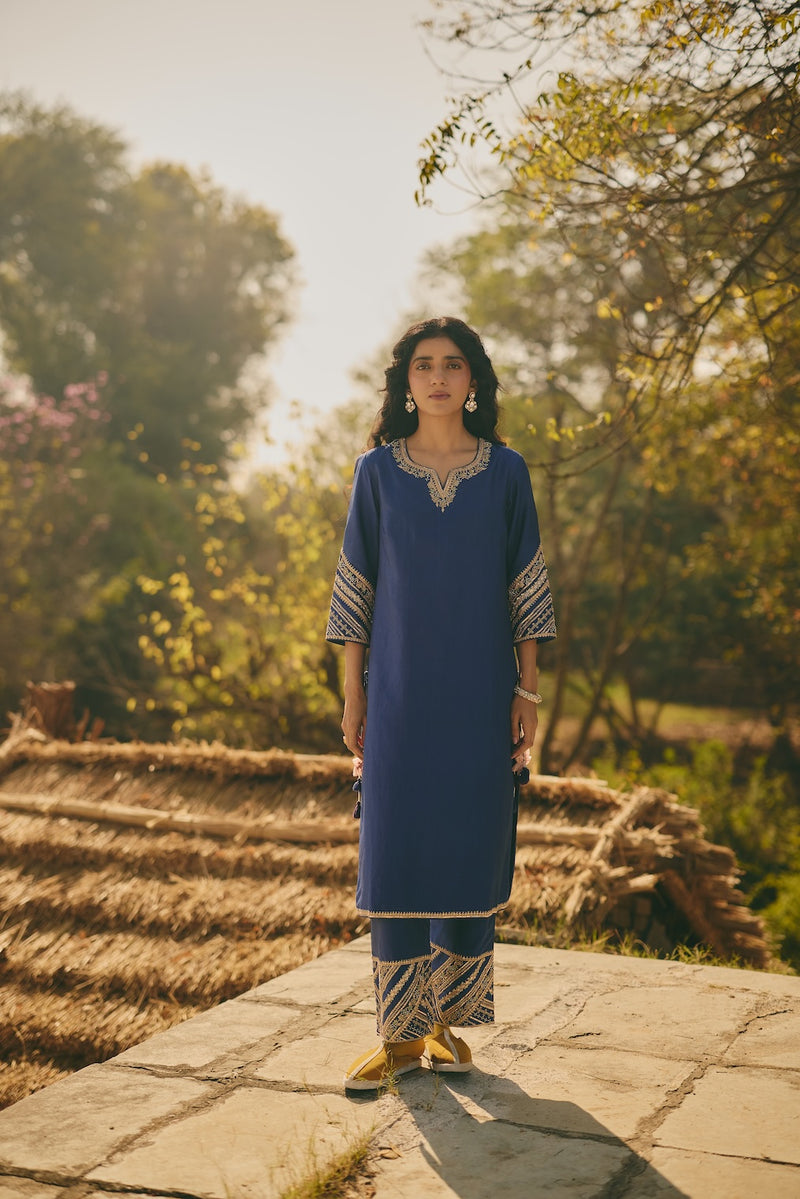
Pieces from this story
All pieces →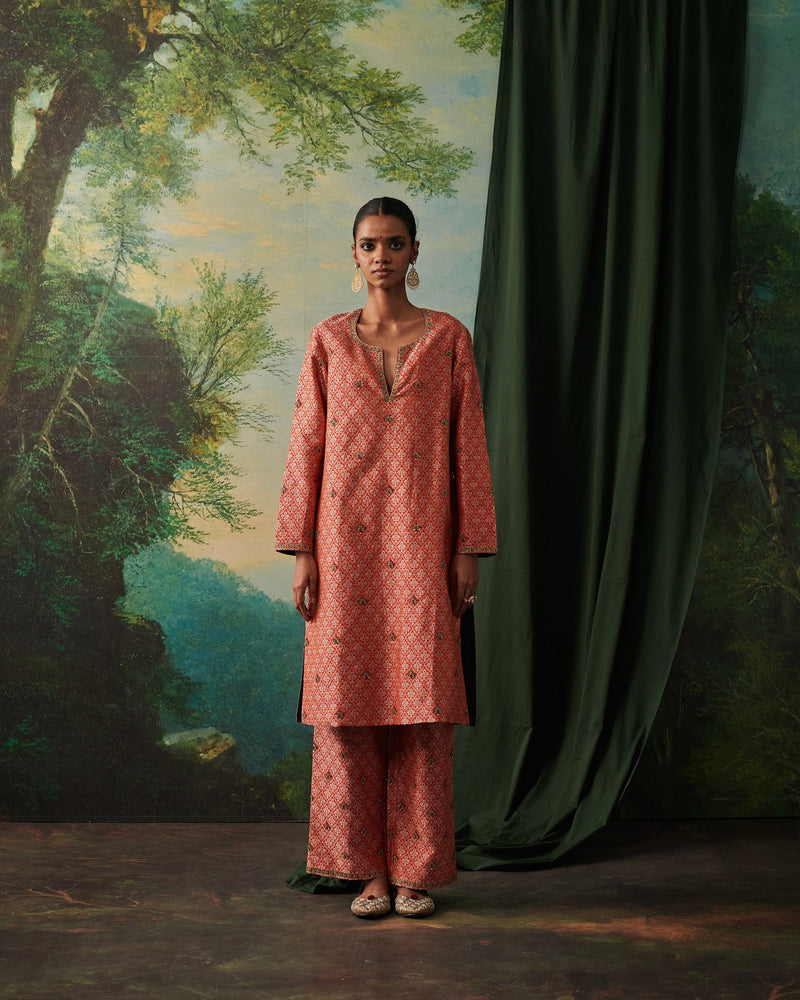
Keep reading
The journal →
Dholki Night Outfit Ideas: What to Wear to the Ladies' Dhol
Handmade by karigars Made to your measurements Fit guarantee Ships worldwide As seen in GraziaElle Graduat...
27 July 2026
Mayra & Bhaat Outfit Ideas: Dressing for the Maternal Gift Ceremony
Handmade by karigars Made to your measurements Fit guarantee Ships worldwide As seen in GraziaElle Graduat...
27 July 2026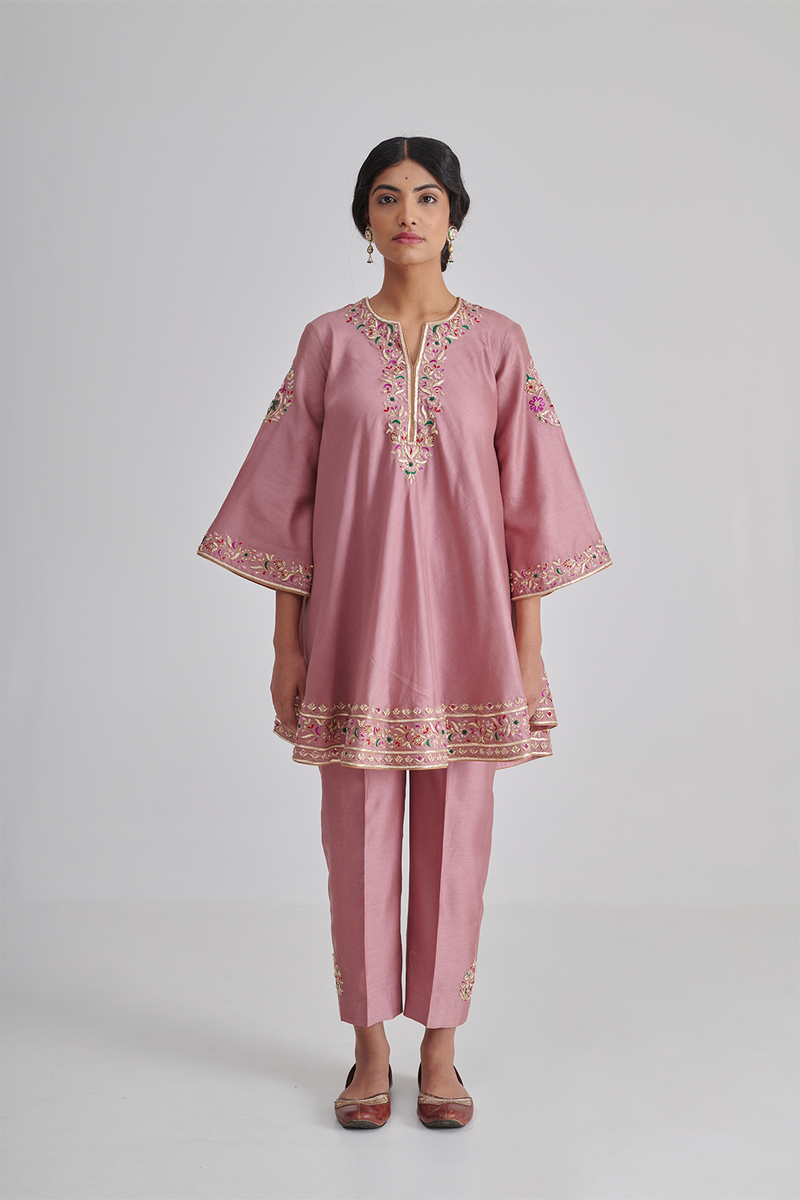
Pag Phera Outfit Ideas: What to Wear for the Bride's Homecoming
Handmade by karigars Made to your measurements Fit guarantee Ships worldwide As seen in GraziaElle Graduat...
27 July 2026