
The Women Behind Your Lehenga: Celebrating India's Karigars This Women's Day
When you admire a hand-embroidered lehenga or run your fingers over zardozi work on a saree, you're touching the work of human hands. Not machines. Not factories. Hands — often belonging to women who have spent years mastering techniques passed down through generations.
This International Women's Day, we want to celebrate the women who rarely make it to the front of fashion — the karigars, the embroiderers, the weavers, the artisans whose fingerprints are literally on every piece of luxury Indian wear you own.
The Invisible Workforce of Indian Fashion
India's handcraft sector employs over 7 million artisans, and a significant number of them are women. They work from homes and small workshops across Jaipur, Lucknow, Varanasi, and hundreds of smaller towns, creating the embroidery that defines Indian luxury fashion.
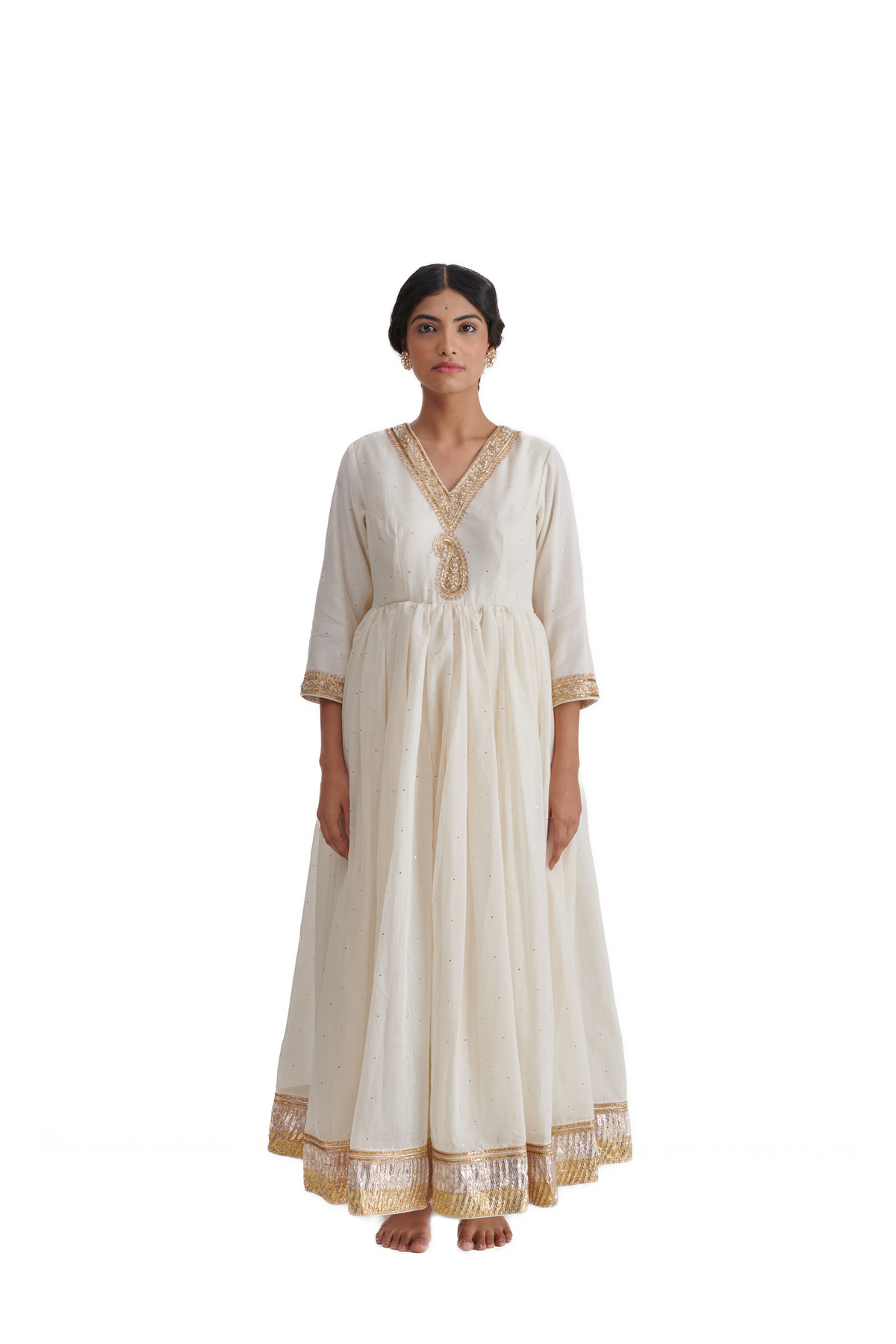
When you look at a piece like the Bhayli & Ahana anarkali, with its exquisite Mukesh work and gold hand-embroidered motifs, what you're seeing is weeks of patient, skilled labour. The Mukesh technique involves wrapping fine metal wire around the fabric — each tiny shimmer is individually placed by hand. This is typically work done by women artisans who've trained for years in this specific craft.

Different Crafts, Different Hands
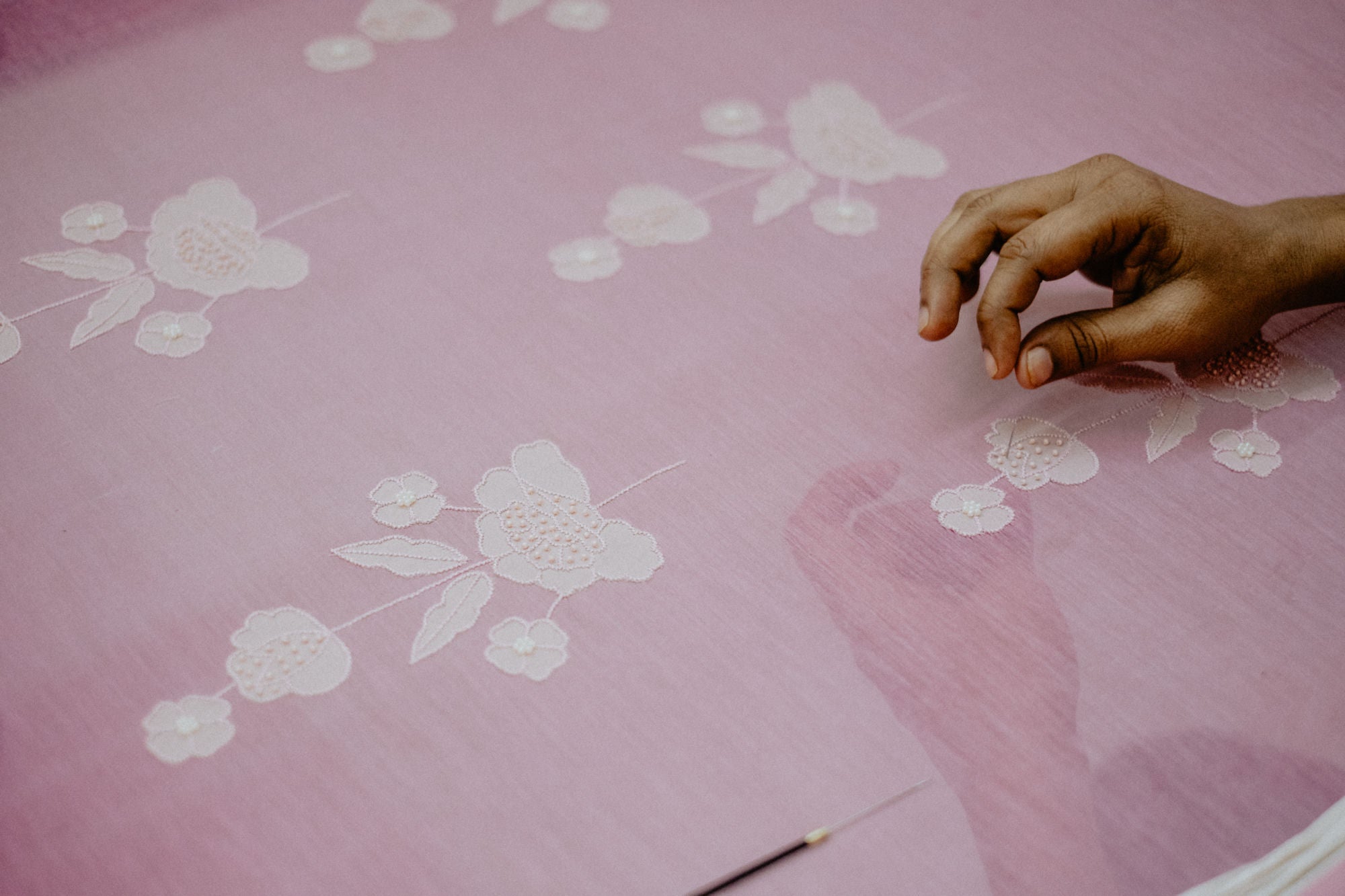
Aari work — One of the most versatile embroidery techniques, done using a hooked needle called an aari. Women artisans use this to create flowing floral patterns, vines, and elaborate borders. The Naveli & Ruhi kurta set features aari, zardozi, and sequin embroidery on dusty rose chanderi — each floral motif placed with precision by hand.
Zardozi — An ancient Persian technique using gold and silver metallic threads. Zardozi artisans, many of whom are women, use a combination of needles, thread, and metal wire to create raised, three-dimensional patterns. It's one of the most time-intensive embroidery techniques, with a single outfit sometimes taking months to complete.
Gota Patti — A Rajasthani craft where small pieces of gold or silver ribbon are applied to fabric in intricate patterns. Predominantly done by women in Jaipur and surrounding villages, gota patti work requires both artistic vision and microscopic precision.


Bandhani — The tie-dye technique native to Rajasthan and Gujarat. Women artisans tie thousands of tiny knots into the fabric before it's dyed, creating the distinctive dot patterns. A single bandhani saree can have over 10,000 hand-tied knots.
Chikankari — The delicate white-on-white embroidery from Lucknow, almost entirely done by women. Over 36 different stitches make up the chikankari vocabulary, and master artisans often specialise in just a few.
Why Handcraft Matters More Than Ever
In a world of fast fashion and machine replication, every handcrafted piece is a small act of resistance. When you choose a handmade outfit — like the Eila & Riya kurta set, with its intricate floral and vine motifs on silk cotton jacquard — you're choosing to support a system where skilled artisans are paid for their craft, not replaced by machines.

At Rashika Mittal, every single piece is fully handmade. There are no shortcuts — no machine embroidery disguised as handwork, no screen prints pretending to be hand-applied. Each outfit takes 4-5 weeks to produce because that's how long genuine handcraft takes. And behind every one of those weeks is an artisan — often a woman — whose skill and patience makes the piece possible.
What Fair Handcraft Looks Like
Supporting women artisans isn't just about buying handmade. It's about buying from brands that pay fair wages, maintain safe working conditions, and give artisans consistent work rather than seasonal bursts of labour followed by months of nothing.
Free Download
Get Our Measurement Guide
Step-by-step instructions with photos for perfect custom fit.
Download Free GuideThe Pardesi & Amaya kurta set at Rs. 9,645 represents what fair handcraft pricing looks like — a cotton kurta with hand-embroidered sequin, cutdana, and thread work. The price reflects not just materials, but the time, skill, and livelihood of the artisan who made it.
The Humrahi & Faridah saree — a green silk jacquard saree with an all-over jaal design, hand-embroidered floral butas, and a densely embroidered palla — represents the pinnacle of what these artisans can achieve. Every element of this piece, from the weaving to the embroidery, is made by human hands.


How to Support Women Artisans Beyond Women's Day
Choose handmade when you can. Every handcrafted piece you buy over a machine-made one keeps an artisan employed. It doesn't have to be expensive — even a handmade dupatta supports the craft ecosystem.
Ask brands about their artisans. A brand that genuinely works with artisans will talk about them openly — the techniques they use, the communities they come from, the time each piece takes. If a brand can't tell you who made your outfit, that's a red flag.
Value the price. When a handmade piece costs more than its machine-made alternative, that difference is someone's livelihood. The "premium" isn't profit — it's the cost of paying a skilled artisan fairly for weeks of work.
Wear what they make. The best way to honour an artisan's work is to actually wear it. Don't save it for a special occasion. Wear your handcrafted pieces often, visibly, proudly. Let people ask where you got it. Tell them about the craft.
Frequently Asked Questions
How can I tell if embroidery is handmade or machine-made?
Hand embroidery has slight variations — no two motifs are perfectly identical. Machine embroidery is uniform and identical throughout. Turn the garment inside out: hand embroidery often has visible thread trails and slight irregularities on the back. Machine embroidery is clean and uniform on both sides.
Why does handmade Indian clothing cost more?
A single hand-embroidered outfit can take 2-8 weeks of work by skilled artisans. You're paying for years of training, hours of labour, quality materials, and a living wage. Machine-made alternatives are cheaper because they take minutes, not weeks.
How many artisans work on a single outfit?
It depends on the complexity. A simple embroidered kurta might be the work of one artisan. A heavily embroidered lehenga or saree might involve multiple specialists — one for the base embroidery, another for the zardozi, another for the finishing. Complex pieces can involve 3-5 artisans working in sequence.
Ready to Order Custom?
WhatsApp us at +91 70423 11214 with what you're looking for. We'll guide you through measurements, customizations, and timeline.
Most pieces ready in 4-5 weeks. Bridal in 6-8 weeks.
Made to order in 4–5 weeks
Have an event date? We’ll tell you exactly when to order by.
We take a limited number of orders each month — secure your slot early.
WhatsApp me my order-by date + a shortlistNot sure where to start?
Tell us what you're dressing for and we'll help you choose — fabric, fit, colour, and timeline — over WhatsApp or on a video call.
Your Cart
Pieces from this story
All pieces →Not sure which piece, or need it by a date? Book a video consultation Ask us on WhatsApp


Keep reading
The journal →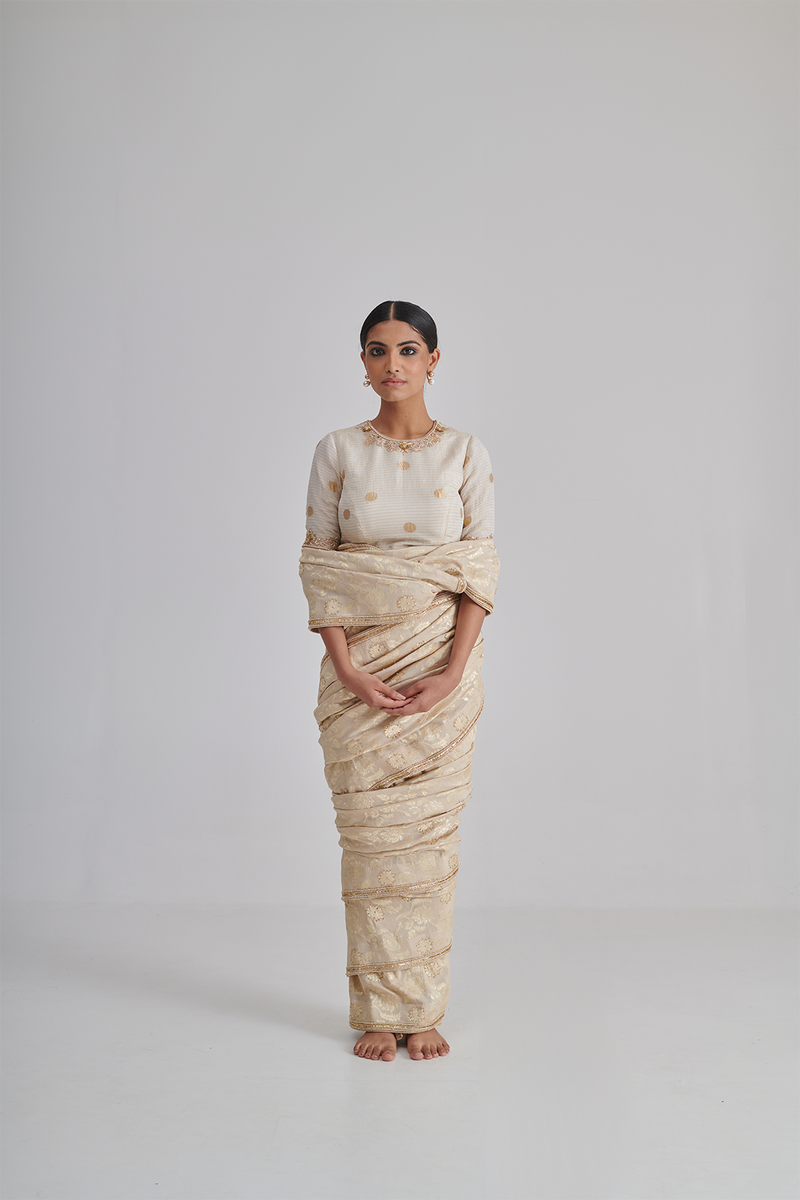
How to Tell Hand Embroidery From Machine Work: A Buyer's Guide
How to tell genuine hand embroidery from machine work — what to look for in the stitches, the back of the fabric and ...
30 June 2026
Vishwakarma Puja Outfit Ideas: What to Wear to the Workshop Puja
What to wear for Vishwakarma Puja 2026 — outfit ideas for the factory, workshop and office puja, plus what works in S...
26 August 2026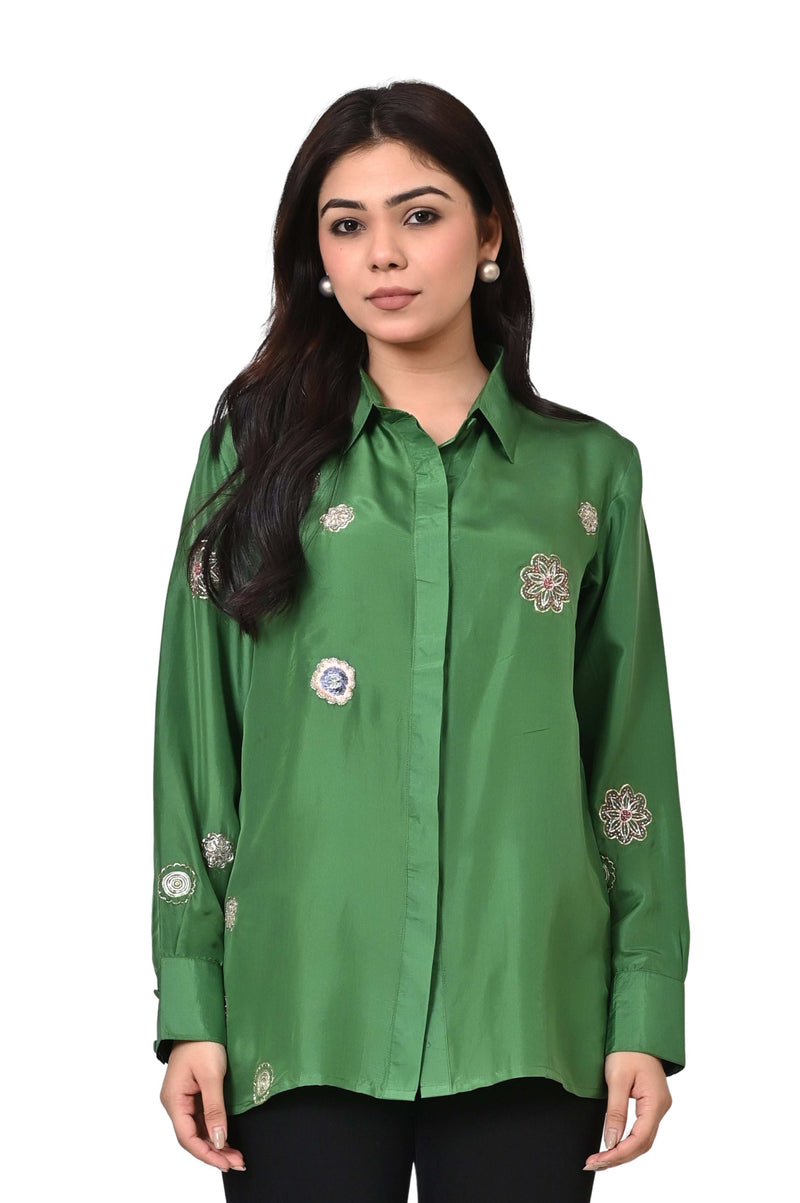
Dabka, Nakshi, Cutdana: A Glossary of Hand Embroidery Materials
What dabka, nakshi, cutdana, resham, marodi, gota and moti actually are — a plain-English glossary of the materials b...
22 August 2026