
Indian Colour Theory: How to Pick Outfit Colours That Suit Your Skin Tone
Colour is the first thing people notice about an Indian outfit — before the embroidery, the fabric, or the silhouette. The right colour makes your skin glow, your features stand out, and the outfit look like it was made for you. The wrong colour does the opposite — it washes you out, makes you look tired, or fights with your natural colouring.
Indian fashion offers one of the widest colour palettes in the world. Here's how to navigate it based on your skin's undertone.
Step 1: Find Your Undertone
Your skin tone (fair, medium, deep) matters less than your undertone — the underlying warmth or coolness beneath the surface. This is what determines which colours harmonise with your skin.
Warm undertone: Your veins appear green. Gold jewellery looks more natural than silver on you. You tan easily. Your skin has a golden, olive, or peachy cast.
Cool undertone: Your veins appear blue or purple. Silver jewellery looks more natural. You burn before tanning. Your skin has a pink, red, or bluish cast.
Neutral undertone: Your veins appear blue-green. Both gold and silver jewellery suit you. You're the rare middle ground — most colours work for you.
Colours for Warm Undertones
Warm undertones come alive in earthy, rich colours — think sunset tones, spice hues, and warm metallics. These colours echo the warmth already in your skin.
Your power colours: Red, orange, terracotta, mustard, warm pink, coral, olive green, emerald, warm ivory, gold
Colours to be cautious with: Cool grey, icy blue, stark white, silver, neon pink
The Meeka dupatta in fiery orange organza silk is a warm-undertone dream — the vibrant hue with gota patti and marodi embroidery in gold tones will make warm skin glow.

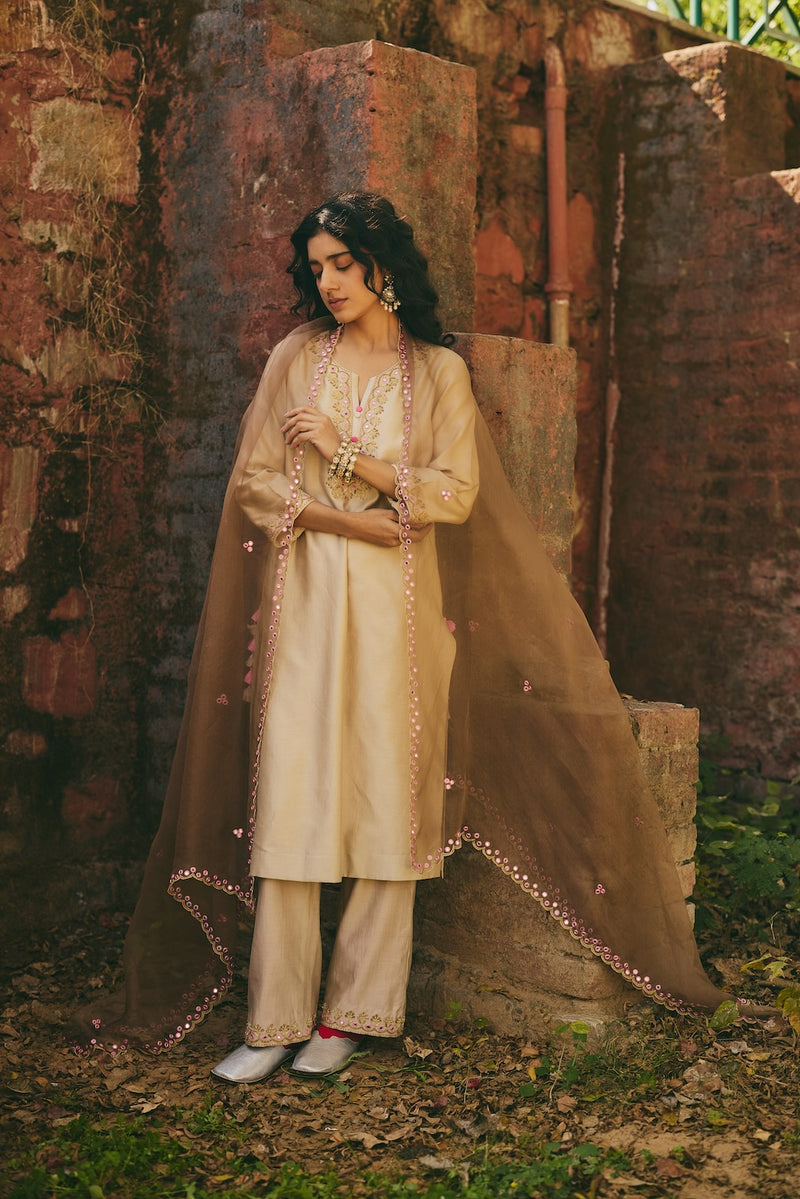
For a subtler warm tone, the Naisha peach organza dupatta with gold zari embroidery sits beautifully against warm skin — peach is one of the most universally flattering warm colours.


Colours for Cool Undertones
Cool undertones are enhanced by jewel tones, icy pastels, and silver-toned metallics. These colours complement the cool cast in your skin rather than fighting it.
Your power colours: Royal blue, emerald green, plum, magenta, periwinkle, lavender, icy pink, berry, stark white, silver
Colours to be cautious with: Orange, mustard, warm brown, rust, camel
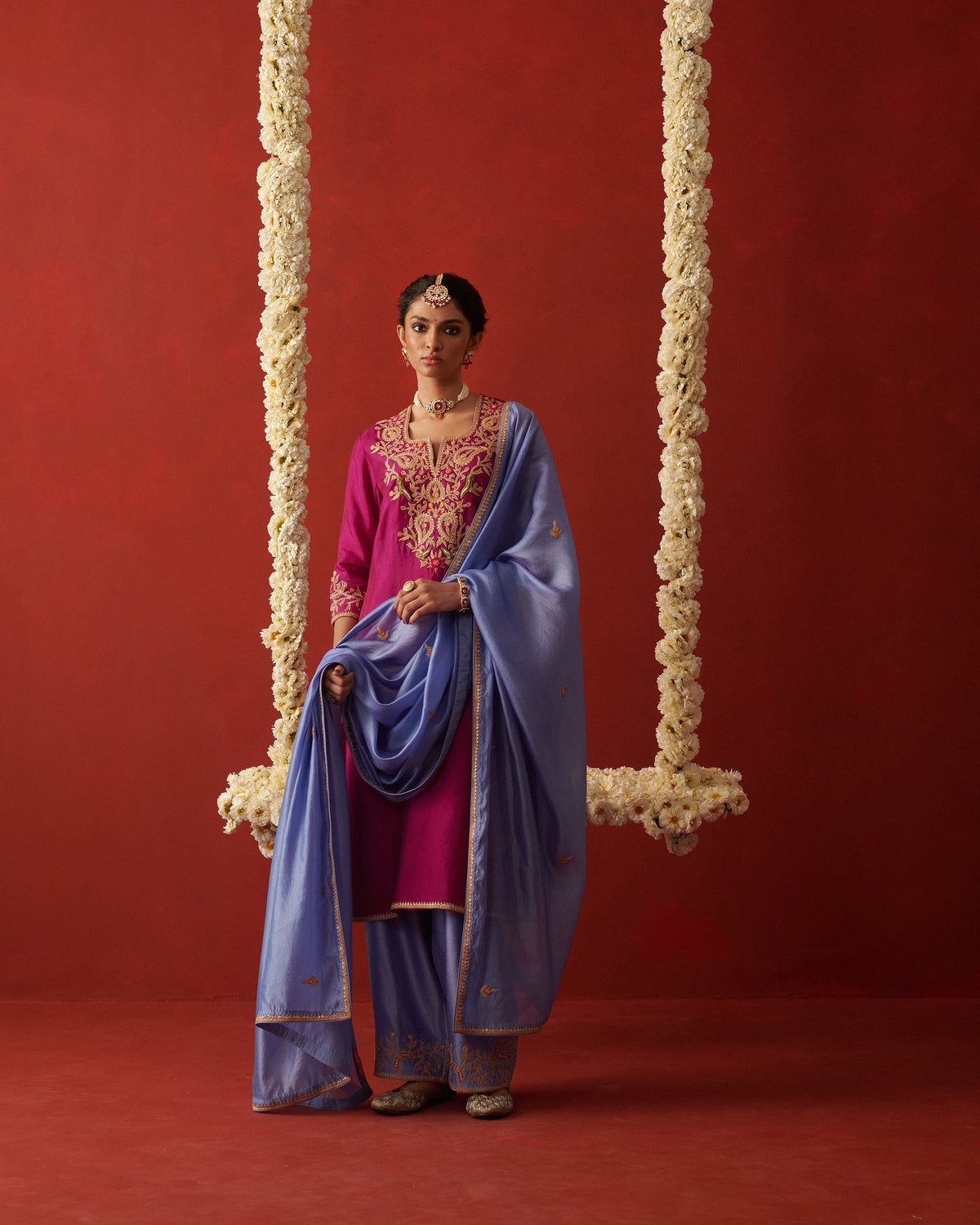
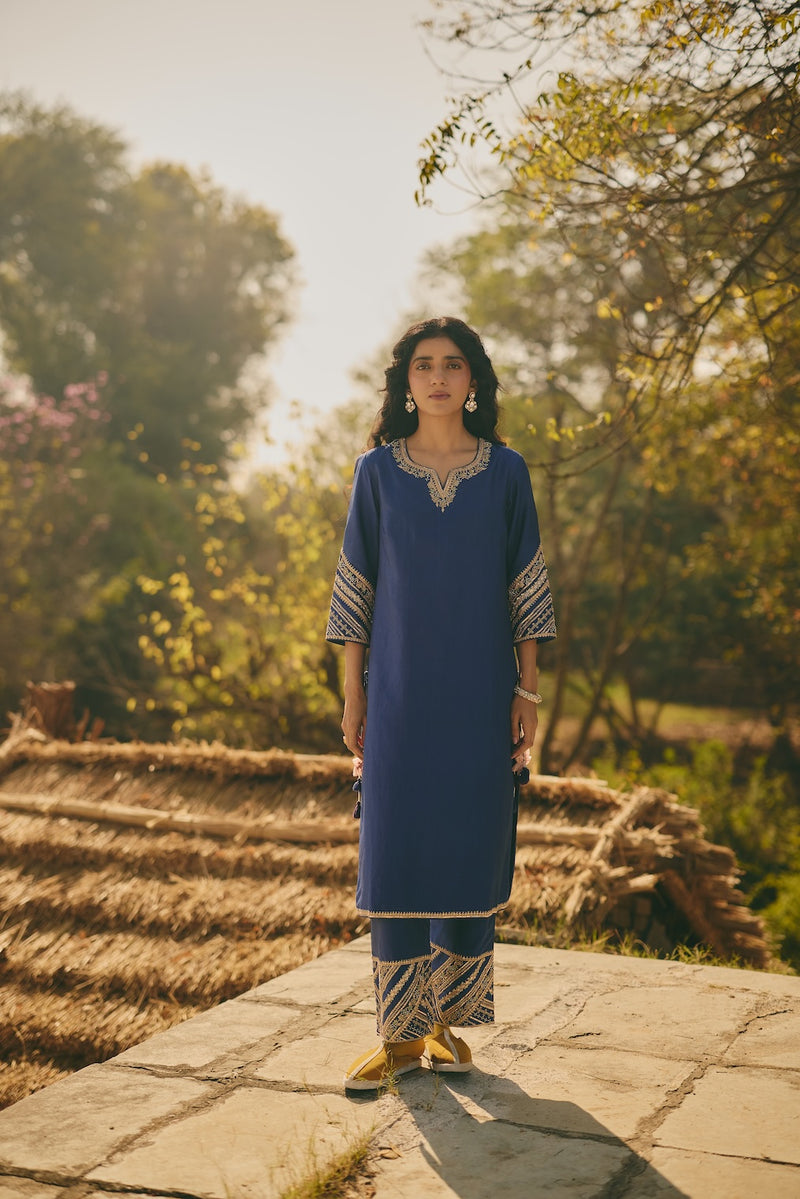
The Afsana dupatta in soft periwinkle organza silk is perfect for cool undertones — the blue-purple hue with marodi, resham, and sequin work creates a sophisticated, skin-flattering look.

For a deeper jewel tone, the Ranjha saree in plum georgette features hand-embroidered scalloped lines and floral jaals in antique gold — plum against cool skin is one of the most elegant combinations in Indian fashion.
Colours for Neutral Undertones
If you're neutral, congratulations — you have the widest range of colours available. The key for you is intensity: medium-depth colours tend to be most flattering, while extremely muted or extremely bright shades can sometimes feel off.
Your power colours: Dusty rose, sage green, teal, soft coral, medium blue, mauve, warm grey, champagne, both gold and silver
The Naveli & Ruhi in dusty rose chanderi is a quintessentially neutral-friendly colour — it's warm enough to not look cold, cool enough to not look orange, and works across a wide range of skin tones.

Colours That Work Across All Undertones
Some colours are genuinely universal — they flatter warm, cool, and neutral undertones alike. These are the safest choices when you're unsure:
Free Download
Get Our Measurement Guide
Step-by-step instructions with photos for perfect custom fit.
Download Free GuideTrue red. Not orange-red or blue-red, but a balanced, pure red. The Inaayat red organza dupatta with gold zari embroidery is this kind of balanced red — it reads as festive and vibrant on virtually everyone.
Ivory with gold embroidery. The warmth of gold embroidery against the neutrality of ivory creates a combination that works universally. The Naina & Ahalya ivory cotton kurta set with gold-toned hand-embroidered florals is a safe bet for any skin tone.
Deep emerald green. One of the few greens that suits both warm and cool undertones. The Shayra dupatta in lush green organza silk with old-rose and gold border embroidery is a universal winner.


How to Test Colours Before Buying
The natural light test. Always check a colour against your skin in natural daylight, not store lighting. Fluorescent lights add a cool cast; warm store lights add yellow. Natural light shows the true colour against your skin.
The no-makeup test. Test colours with a bare face. Makeup adjusts your apparent skin tone — you want to know how the fabric looks against your actual complexion.
The drape test. Hold the fabric near your face, not against your arm. Your face is what people see alongside the outfit — that's the pairing that matters.
The photograph test. Take a quick photo with the fabric near your face. Colours that suit you will make your skin look even and clear in photos. Colours that don't will make your skin look uneven or dull.
Breaking the Rules
Colour theory is a guide, not a law. There are ways to wear any colour you love, regardless of your undertone:
Use a dupatta as a buffer. If you love a colour that doesn't suit your face, wear it as a kurta or lehenga and choose a face-framing dupatta in a colour that does.
Add a contrasting border. A saree in a tricky colour becomes wearable if the pallu or border near your face is in a flattering shade.
Let embroidery bridge the gap. Gold embroidery warms up cool colours. Silver embroidery cools down warm colours. The right metallic can make almost any base colour work.
Frequently Asked Questions
Does skin tone change with seasons?
Yes — sun exposure in summer can shift your apparent tone warmer. This is why some colours look better on you in winter vs. summer. Your undertone stays the same, but the intensity may shift slightly.
What if I can't figure out my undertone?
Try the jewellery test first — it's the most reliable. If gold looks distinctly better, you're warm. If silver looks distinctly better, you're cool. If both look equally good, you're neutral. When in doubt, start with universally flattering colours like true red, ivory with gold, and emerald green.
Can I wear black regardless of undertone?
Black works for most people, but it can be harsh on very fair or very warm skin tones. If you find that all-black washes you out, add a colourful or embroidered dupatta near the face to break the contrast.
Ready to Order Custom?
WhatsApp us at +91 70423 11214 with what you're looking for. We'll guide you through measurements, customizations, and timeline.
Most pieces ready in 4-5 weeks. Bridal in 6-8 weeks.
Made to order in 4–5 weeks
Have an event date? We’ll tell you exactly when to order by.
We take a limited number of orders each month — secure your slot early.
Not sure where to start?
Tell us what you're dressing for and we'll help you choose — fabric, fit, colour, and timeline — over WhatsApp.
Your Cart
Pieces from this story
All pieces →
Keep reading
The journal →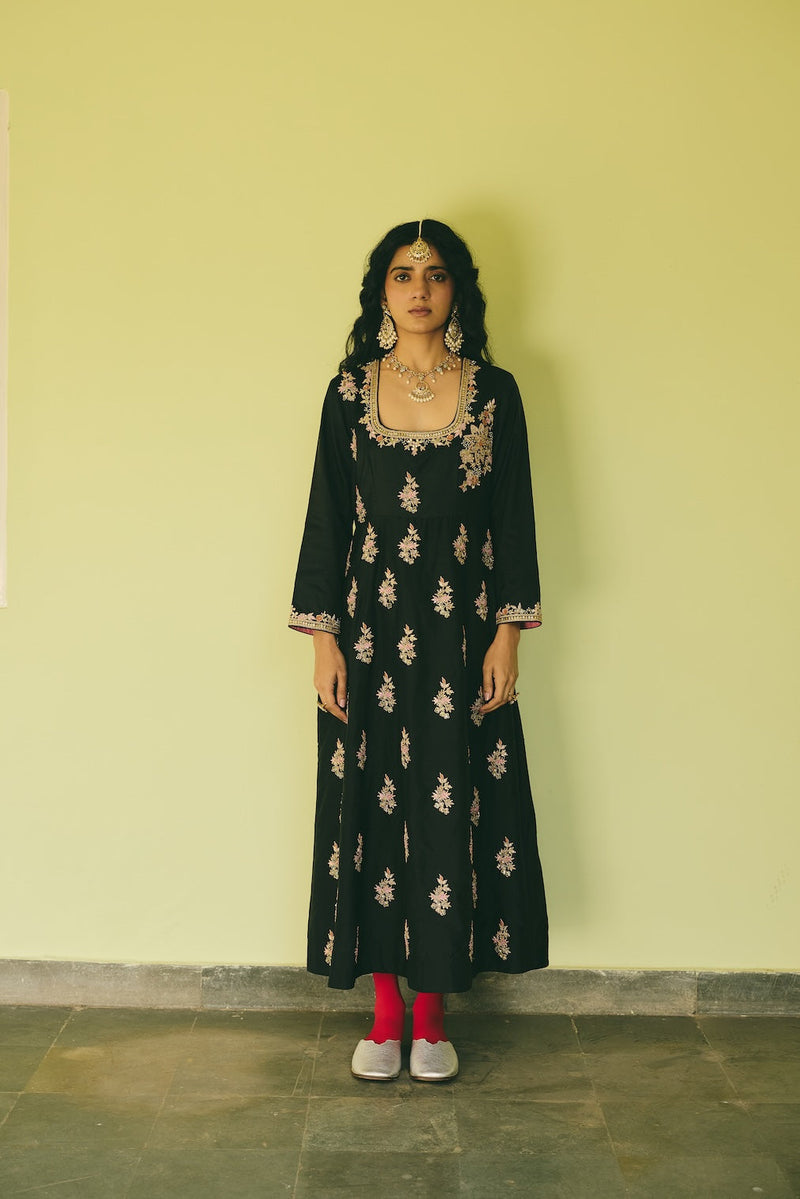
Best Plus-Size Ethnic Wear Brands in India 2026: Where to Actually Find Your Size
Handmade by karigars Made to your measurements Fit guarantee Ships worldwide As seen in GraziaElle Graduat...
17 September 2026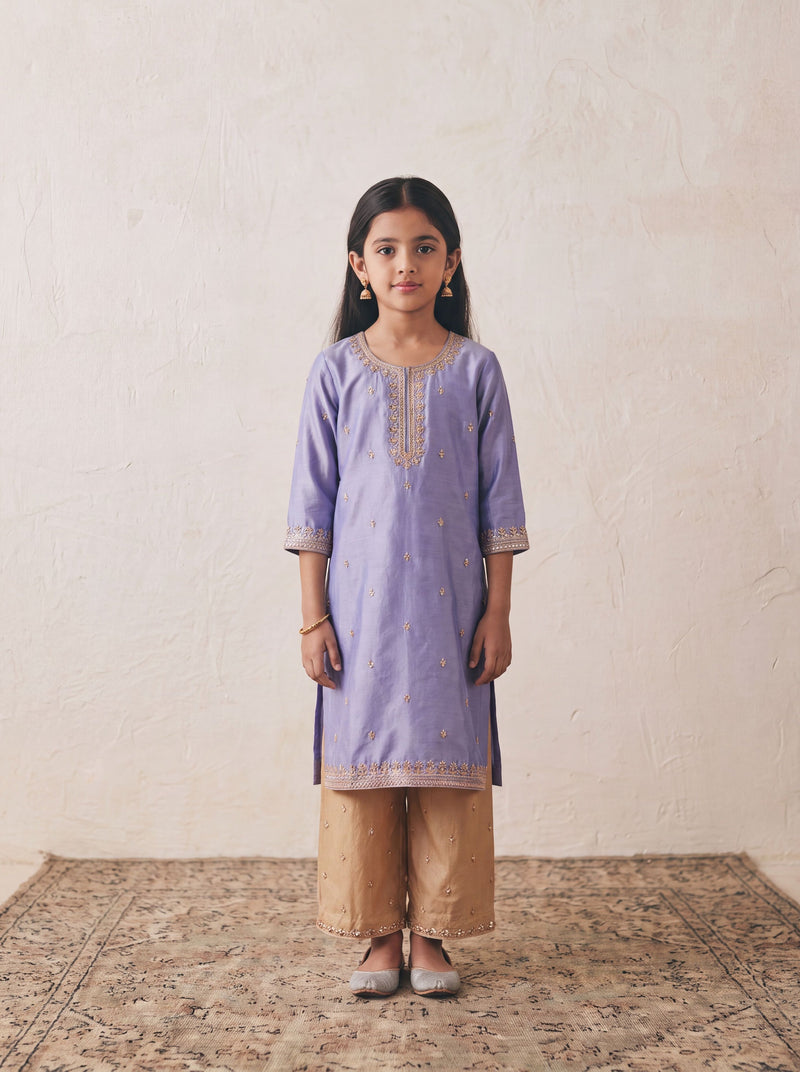
Kurta Sets for Girls: A Parent's Buying Guide to Kids' Kurta Sets
Handmade by karigars Made to your measurements Fit guarantee Ships worldwide As seen in GraziaElle Graduat...
17 September 2026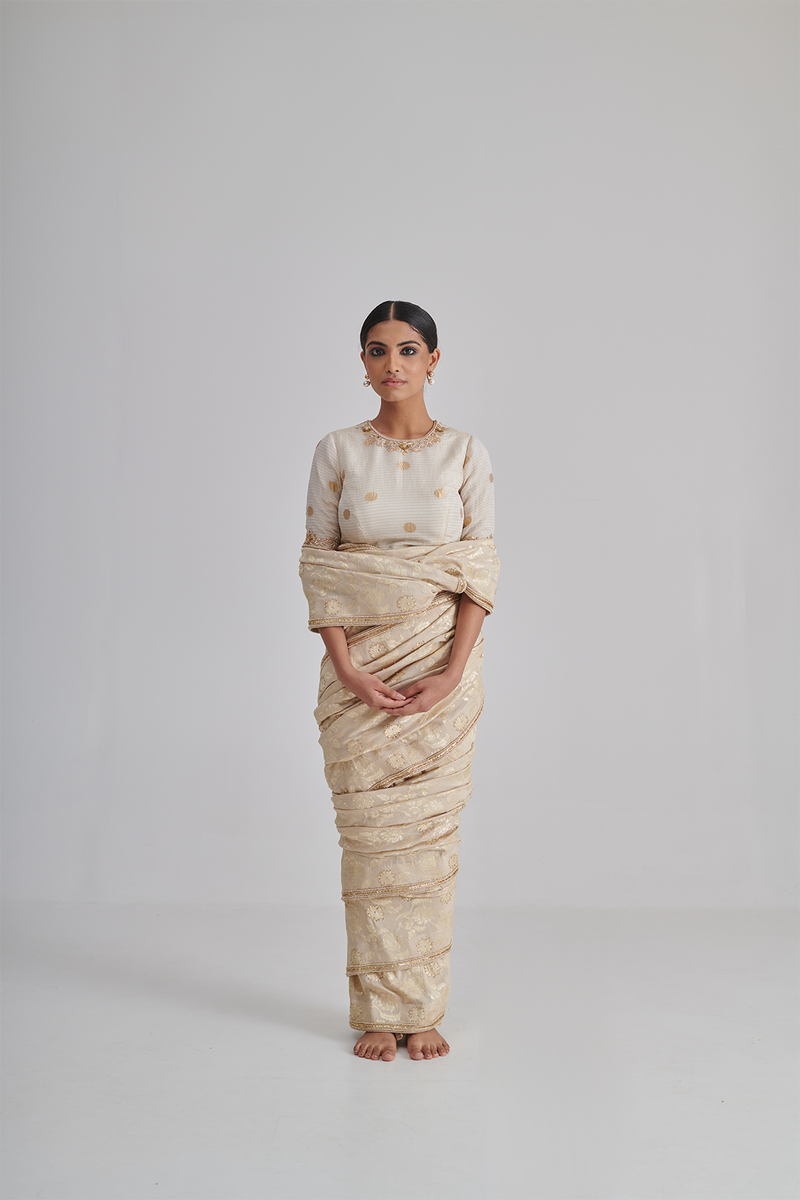
Gifts for Your Mother-in-Law: Indian Outfits That Don't Feel Like a Formality
Handmade by karigars Made to your measurements Fit guarantee Ships worldwide As seen in GraziaElle Graduat...
17 September 2026