
How to Style an Anarkali Suit: 7 Looks from Day to Night
An anarkali suit is one of those rare garments that travels effortlessly from a morning temple visit to an evening wedding reception — all it takes is a shift in accessories, footwear, and how you carry it. The fitted bodice and sweeping flare of the anarkali silhouette is inherently versatile: dramatic enough for celebrations, comfortable enough for long events, and flattering on virtually every body type.
But styling an anarkali well goes beyond just slipping it on. The right dupatta drape, the right jewellery, the right footwear — these details transform the same garment into seven entirely different looks. Here is how.
Understanding the Anarkali Silhouette
Before styling, it helps to understand what makes an anarkali work. The key elements are a fitted bodice (usually ending at or above the waist) and a flared skirt that flows from the waist to the floor. This creates a natural hourglass silhouette that elongates the body and adds grace to every movement.
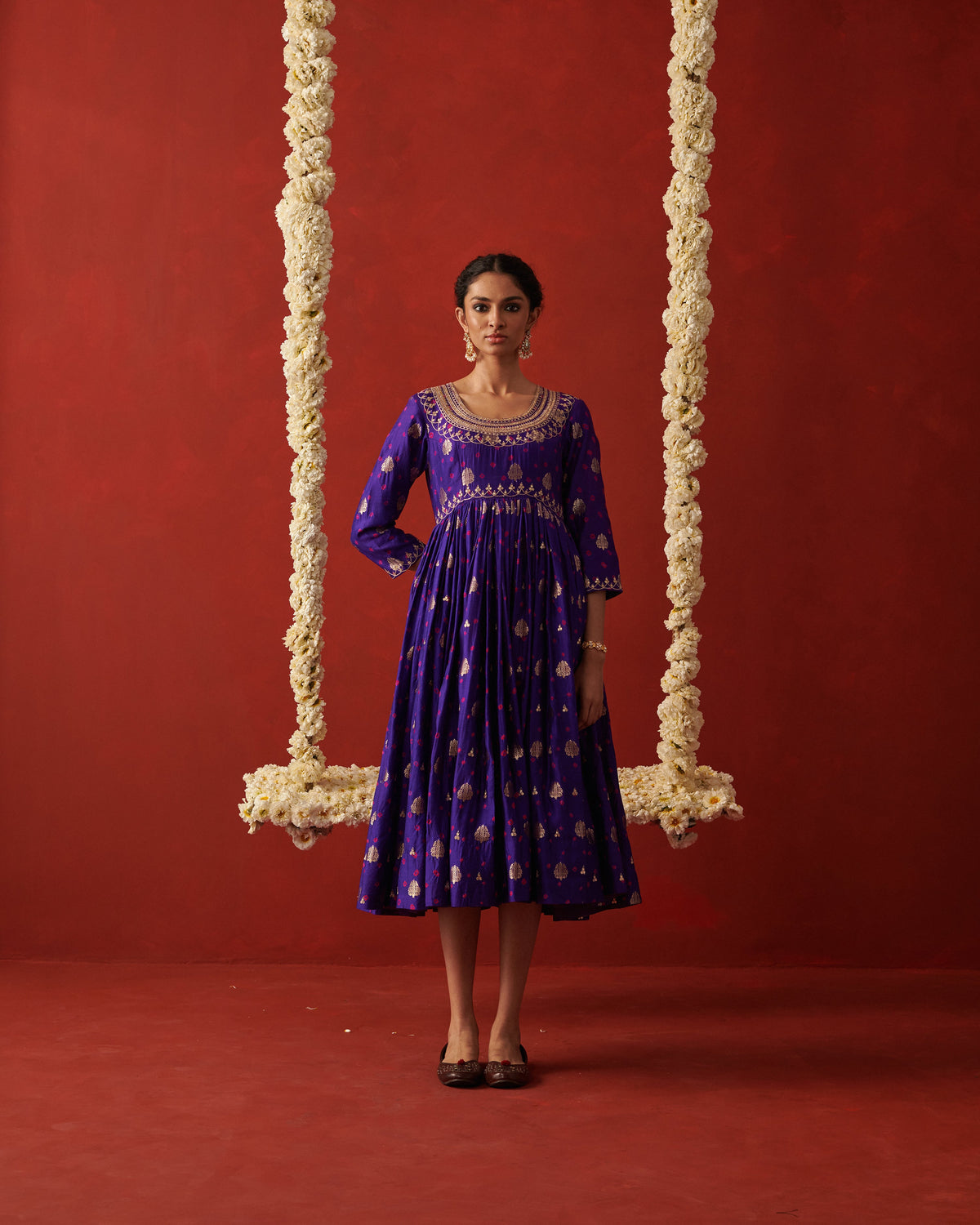
Different fabrics create different effects. The SUROOR anarkali, crafted in Bandhej Banarasi silk with woven gold bootis, creates a structured, opulent flare — the silk holds its shape and catches light with every step. The neckline and sleeves are hand-embroidered with delicate sequin work in motifs inspired by vintage temple jewellery.

In contrast, the HEERIYE & REVA anarkali set in cinnamon-brown chanderi offers a lighter, softer flare. The front and back yoke feature delicate florals rendered in resham, cutdana, and sequins, with long panel embroidery running through the flared silhouette and a striking contrast border in scarlet and ivory.
Look 1: Morning Pooja — Serene and Traditional
The occasion: A home pooja, temple visit, or morning religious ceremony
For morning occasions, let simplicity lead. Choose an anarkali in a lighter fabric — chanderi or lighter silk — in soft, auspicious colours. Keep the dupatta draped traditionally over one shoulder or lightly over the head if the occasion calls for it.
Styling details:
- Jewellery: Small gold jhumkas and a thin chain. Nothing heavy.
- Footwear: Flat juttis or kolhapuris in a matching tone
- Dupatta: Draped over both shoulders for an elegant, composed look
- Hair: A neat bun or braid — clean and traditional
- Bag: A small potli or no bag at all
The ivory Mukesh-work BHAYLI & AHANA anarkali, featuring gold hand-embroidered motifs, delicate sequin detailing, and a rich gold and silver border, captures exactly this tone — understated opulence that feels right for sacred moments.

Look 2: Festive Brunch — Relaxed Elegance
The occasion: A Diwali brunch, Navratri gathering, or festive daytime celebration
Daytime events call for colour and ease. A chanderi anarkali in a vivid hue works beautifully. The key is to keep the styling relaxed — let the garment's colour and craft do the work.
Styling details:
- Jewellery: Statement earrings — chandbalis or painted enamel jhumkas. Skip the necklace.
- Footwear: Block-heeled sandals or embroidered juttis
- Dupatta: The arm-cradle drape (loosely carried in the crook of both elbows) for a relaxed, sophisticated vibe
- Hair: Soft waves or a low ponytail
- Bag: A woven clutch or embroidered potli
The FEROZAAN & GULRAAZ in vibrant fuchsia chanderi, with intricate hand-embroidered motifs inspired by vintage Persian tapestries, is exactly the kind of anarkali that turns a casual brunch into a moment. The floor-grazing silhouette creates movement while the detailed threadwork adds visual richness.

Look 3: Wedding Ceremony — Full Grandeur
The occasion: A wedding ceremony, pheras, or formal wedding event as a guest
This is where an anarkali can truly rival a lehenga in impact. Choose rich fabrics — Banarasi silk, tissue, or heavily embroidered silk — and go bold with accessories.
Styling details:
- Jewellery: Heavy polki or kundan set — necklace, earrings, and maang tikka. Stacked bangles or a statement cuff.
- Footwear: Embellished heels or wedges (you will be standing)
- Dupatta: Pinned at both shoulders and trailing behind for a regal silhouette. Choose a contrasting dupatta from the dupatta collection to add dimension.
- Hair: A structured updo — a bun adorned with fresh flowers or a gajra
- Bag: A metal or embroidered clutch
The SUROOR in Bandhej Banarasi silk is designed precisely for these moments. The woven gold bootis and hand-embroidered sequin work create the kind of all-over richness that a wedding demands, while the anarkali silhouette remains more comfortable than a lehenga through hours of ceremony.
Look 4: Sangeet Night — Dance-Floor Ready
The occasion: A sangeet, music night, or celebratory dance event
The anarkali's greatest advantage at a sangeet: it moves. The flared silhouette spins beautifully, and unlike a lehenga, there is no skirt to adjust between dances. Go for vibrant colours and choose fabrics that flow.
Styling details:
- Jewellery: Statement earrings only — you will be dancing, so keep it light. Jhumkas or long chandeliers.
- Footwear: Block heels or wedges (you need to dance). Avoid stilettos.
- Dupatta: Skip it entirely, or drape it as a cape for your entrance and remove it before the dancing starts
- Hair: Down and flowing — let it move with the flare

Look 5: Engagement Party — Modern and Polished
The occasion: An engagement ceremony, ring ceremony, or roka
Free Download
Get Our Measurement Guide
Step-by-step instructions with photos for perfect custom fit.
Download Free GuideEngagements sit at the intersection of traditional and modern. The styling should feel polished and put-together without the full weight of bridal-event dressing. For detailed engagement outfit inspiration, see our engagement outfit guide.
Styling details:
- Jewellery: Mid-weight — a choker or layered chains, statement earrings, one statement ring. The goal is contemporary with an Indian touch.
- Footwear: Stilettos or elegant block heels
- Dupatta: Draped over one shoulder and pinned at the waist with a belt or kamarband — this creates a structured, modern line
- Hair: A sleek low bun or side-parted waves
The RAFIA anarkali in classic black silk is a sophisticated choice for an engagement. The square neckline and graceful flared silhouette feature exquisite hand-embroidery with an all-over arrangement of delicate floral sprays in soft pink and peach resham, elevated with traditional marodi work that adds a dense, textured gold finish.

Look 6: Reception or Formal Dinner — Evening Glamour
The occasion: A wedding reception, formal dinner party, or gala event
Evening events call for an anarkali that feels luxurious and dramatic. Dark colours — black, deep red, emerald, navy — create an evening-appropriate mood, and the lighting at these events makes embroidery and sequin work come alive.
Styling details:
- Jewellery: One statement piece — either earrings or a necklace, not both competing. Diamond or polki work catches evening light beautifully.
- Footwear: Embellished stilettos
- Dupatta: Carried over one arm or skipped entirely to let the anarkali's embroidery take centre stage
- Hair: A chic updo that shows off the neckline and earrings
- Bag: A metallic or embellished minaudiere
Look 7: Intimate Celebration — Understated Warmth
The occasion: A family gathering, anniversary dinner, small birthday celebration
Not every occasion demands full glamour. For intimate celebrations, an anarkali in a softer palette with lighter embellishment feels warm and appropriate without being overdone.
Styling details:
- Jewellery: Delicate — a thin gold chain, small hoops or studs, a single bangle
- Footwear: Flat sandals or juttis
- Dupatta: Loosely draped or carried — it should feel effortless, not arranged
- Hair: Natural texture — air-dried waves, a loose braid, or simply down
The NOOR & AHANA ivory woven anarkali with Mukesh work and intricate hand-embroidered floral motifs with delicate sequin detailing captures this mood perfectly. The ivory palette feels gentle, and the Mukesh work adds a quiet sparkle without overwhelming a small room.

Anarkali Styling Principles That Always Work
Regardless of the occasion, these principles will help you style any anarkali well:
- Balance the silhouette. The anarkali has volume in the lower half. Keep your upper body styling clean — fitted bodice, pulled-back hair, and earrings rather than heavy necklaces.
- Let one element be the hero. If the anarkali has heavy embroidery, keep the dupatta and jewellery minimal. If it is a simpler piece, let accessories add the statement. Visit our embroidery guide to understand what you are working with.
- Think about movement. An anarkali is designed to move. Choose dupattas that flow (not heavy ones that restrict), footwear you can walk confidently in, and hairstyles that complement rather than compete with the garment's drama.
- Choose the right undergarments. A well-fitted churidar creates a sleek line under the flare. Avoid palazzo or wide-leg pants under an anarkali — they add bulk where you want the flare to speak.
- Consider the neckline. A V-neck anarkali invites a pendant or choker. A high or square neckline — like the RAFIA — works best with earrings as the sole neck-area adornment.
Browse the complete anarkali collection to find your next day-to-night piece, and explore the dupatta collection for the perfect finishing layer. For guidance on which silhouettes best suit your frame, see our body type guide.
Frequently Asked Questions
Can I wear an anarkali without a dupatta?
Yes. A heavily embroidered or statement anarkali often looks best without a dupatta — particularly at evening events, cocktail parties, and sangeets where the dupatta can feel cumbersome. For religious ceremonies and traditional functions, a dupatta is generally expected.
What jewellery works best with an anarkali?
Earrings are the safest bet — they complement every neckline and do not compete with the silhouette. For V-neck anarkalis, a choker or pendant adds elegance. Avoid heavy necklaces with high or embroidered necklines. Stacked bangles or a statement cuff on one wrist work well at weddings.
How do I choose between a floor-length and mid-length anarkali?
Floor-length anarkalis create maximum drama and formality — best for weddings, receptions, and grand celebrations. Mid-length anarkalis are more relaxed and practical for festive daywear, brunches, and family gatherings. If you are petite, a mid-length anarkali or floor-length with heels ensures the hem does not drag.
Can I style the same anarkali differently for different events?
Absolutely — that is the premise of this guide. The same anarkali with flat juttis, minimal jewellery, and a traditional dupatta drape looks entirely different from the same anarkali with stilettos, statement earrings, and no dupatta. Invest in one beautifully crafted anarkali and let your accessories create different stories.
What is the best fabric for an anarkali I want to wear year-round?
Chanderi and lighter silks are the most versatile year-round choices. Banarasi silk is stunning but better suited to cooler months. Chanderi — like the HEERIYE & REVA in cinnamon-brown chanderi — offers the sheen and drape of silk with the lightness of cotton, making it comfortable in Indian summers.
Ready to Order Custom?
WhatsApp us at +91 70423 11214 with what you're looking for. We'll guide you through measurements, customizations, and timeline.
Most pieces ready in 4-5 weeks. Bridal in 6-8 weeks.
Made to order in 4–5 weeks
Have an event date? We’ll tell you exactly when to order by.
We take a limited number of orders each month — secure your slot early.
Not sure where to start?
Tell us what you're dressing for and we'll help you choose — fabric, fit, colour, and timeline — over WhatsApp.
Your Cart
Pieces from this story
All pieces →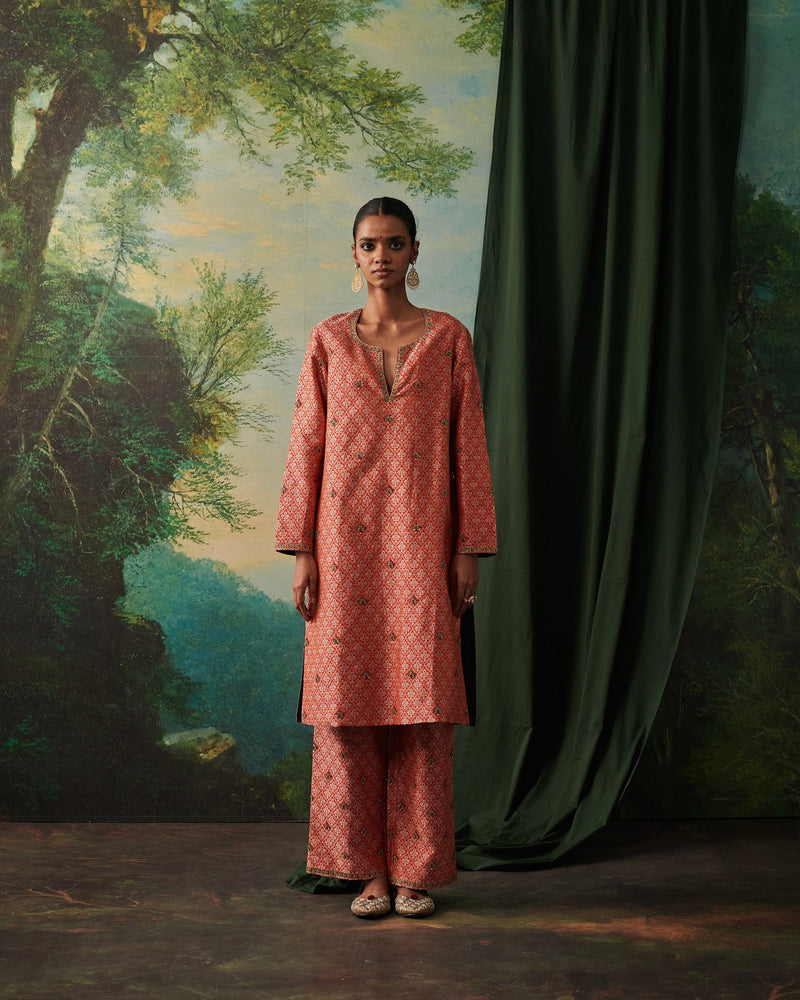
Keep reading
The journal →
Dholki Night Outfit Ideas: What to Wear to the Ladies' Dhol
Handmade by karigars Made to your measurements Fit guarantee Ships worldwide As seen in GraziaElle Graduat...
27 July 2026
Mayra & Bhaat Outfit Ideas: Dressing for the Maternal Gift Ceremony
Handmade by karigars Made to your measurements Fit guarantee Ships worldwide As seen in GraziaElle Graduat...
27 July 2026
Pag Phera Outfit Ideas: What to Wear for the Bride's Homecoming
Handmade by karigars Made to your measurements Fit guarantee Ships worldwide As seen in GraziaElle Graduat...
27 July 2026