
Nikah Outfit Ideas: What to Wear to a Nikah Ceremony
A nikah is among the most sacred and intimate ceremonies in a wedding — the moment a marriage is formalised before God and witnesses. Unlike the larger, more exuberant celebrations that may follow, the nikah is defined by its solemnity, its simplicity, and its spiritual weight. Every element of the occasion — from the setting to the dress — reflects this quiet reverence.
What you wear to a nikah, whether as the bride or as a guest, should honour that spirit. Modesty, elegance, and restraint are the guiding principles. This is not the event for heavy embellishment or bold experimentation — it is the event for pieces that are beautifully made, quietly refined, and respectful of the occasion's significance. Here is everything you need to know.
What Is a Nikah Ceremony?
The nikah is the Islamic marriage contract — the core of a Muslim wedding. It is the moment where the marriage becomes official in the eyes of God, the families, and the community. The ceremony typically takes place at a mosque, at the bride's home, or in a simple, dignified setting. An imam or qazi presides over the proceedings, the mahr (a gift from the groom to the bride) is agreed upon, and the bride and groom each give their consent — the ijab and qubool — in the presence of witnesses.
Unlike many other wedding events, the nikah is usually intimate. The guest list is small, the atmosphere is reverent, and the focus is entirely on the spiritual commitment being made. In many traditions, men and women sit separately. The entire ceremony may last under an hour, but its significance is immeasurable. This intimacy and solemnity are precisely why the nikah outfit matters — it should feel considered, graceful, and appropriate for a deeply sacred moment.
Nikah Outfit Ideas for the Bride
The nikah bride dresses with intention. Modesty is central — full sleeves or three-quarter sleeves, higher necklines, and flowing silhouettes that do not cling. The look should feel ethereal and bridal without the heavy ornamentation of a walima or reception outfit. Many nikah brides choose to cover their hair with a dupatta or hijab, which becomes a defining element of the overall silhouette.
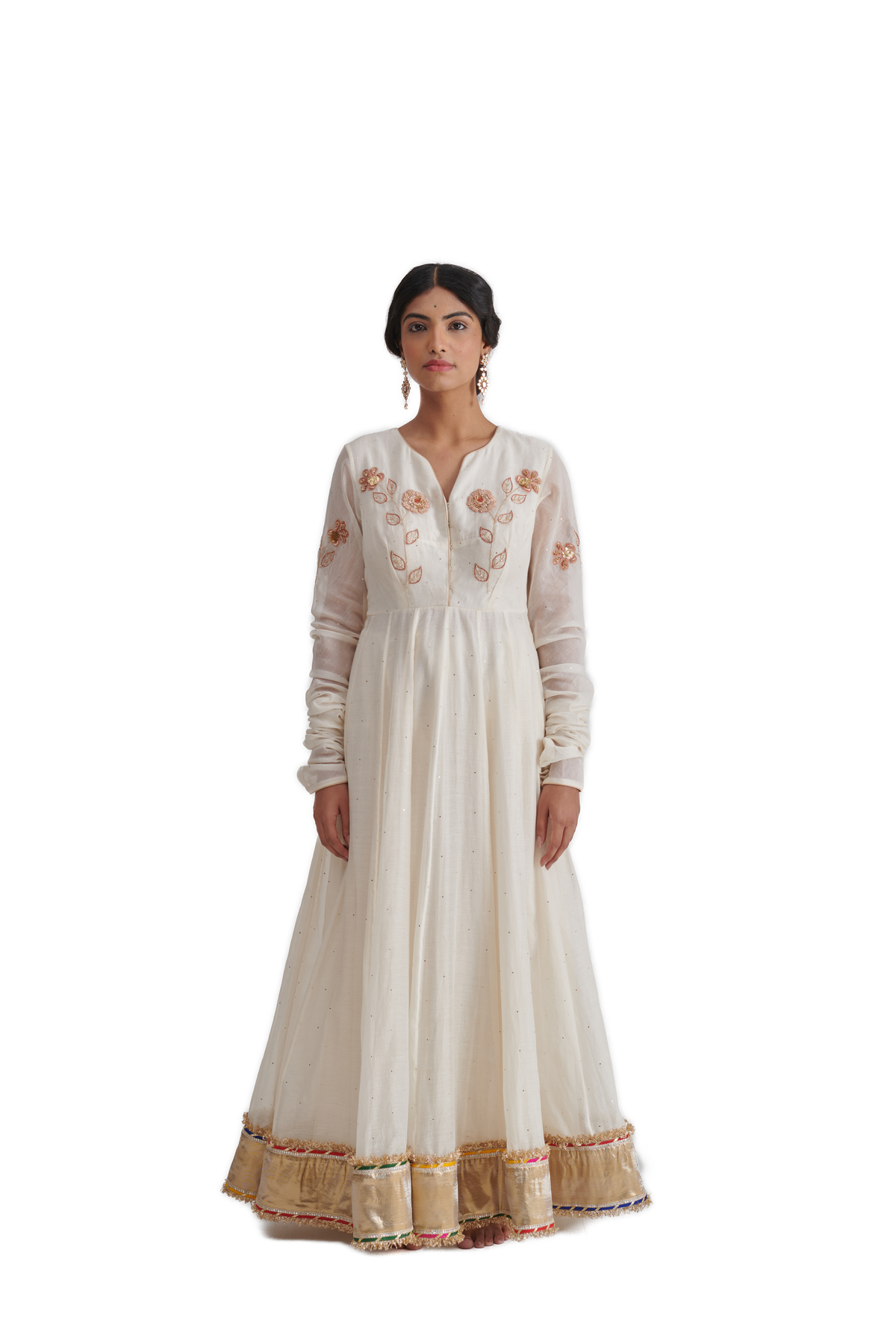
Ivory and white have long been the most popular choices for a nikah bride, symbolising purity and new beginnings. A beautifully crafted anarkali is one of the most popular nikah silhouettes — the continuous flare provides natural modesty and movement, and the flowing fabric creates an effortlessly graceful look. The NOOR & AHANA (₹34,650) — an ivory woven anarkali with Mukesh work and intricate embroidery from our Intizaar collection — is exactly the kind of piece that suits a nikah: the ivory tone is bridal, the Mukesh work catches the light with subtle brilliance, and the flowing silhouette is inherently modest.

For brides who prefer a slightly different silhouette, the BHAYLI & AHANA (₹31,950) offers a similar elegance — an ivory woven anarkali with Mukesh work and gold embroidery. Both pieces are handcrafted by karigars in Jaipur, and the Mukesh work — tiny flattened metal pieces applied by hand — creates a luminous, understated shimmer that is far more refined than heavy sequin or zardozi work.
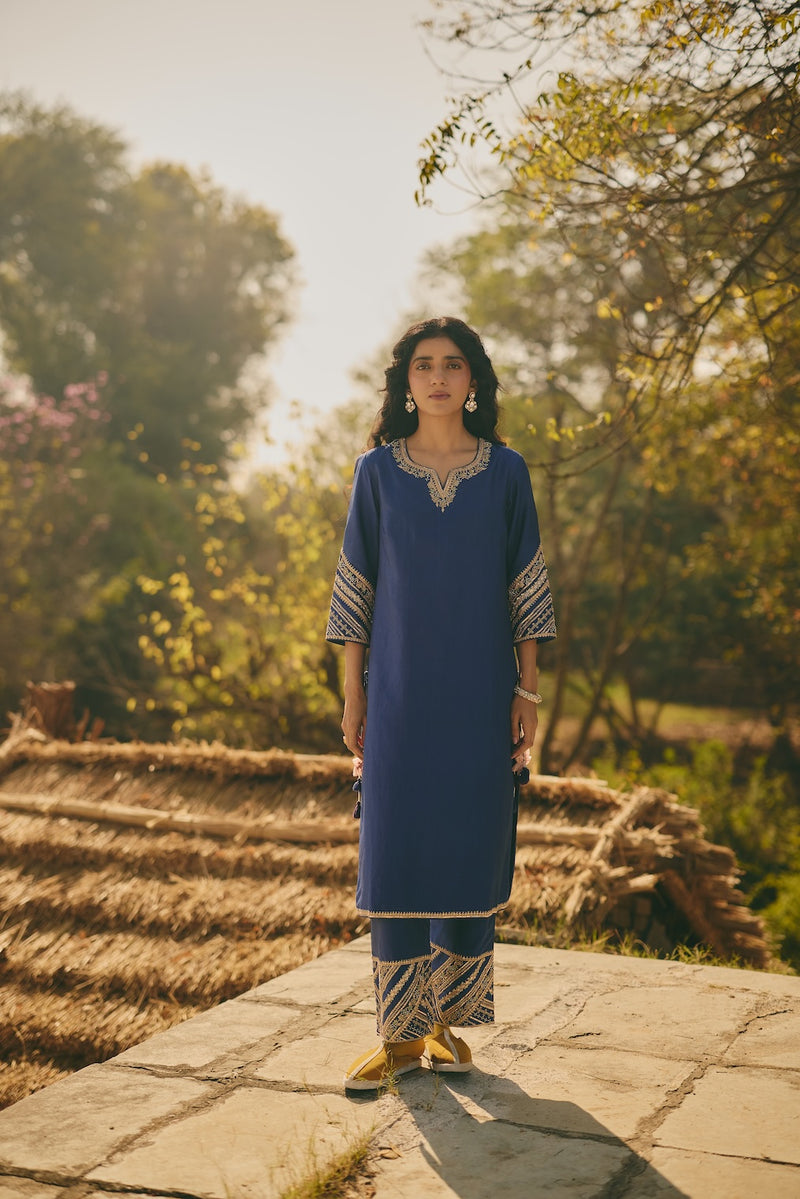
Kurta sets are equally beautiful for a nikah. The MIRZA & RAINA (₹37,350) — an ivory silk kurta with intricate floral and vine motifs — carries a quiet grandeur that suits the ceremony. Paired with a flowing dupatta draped over the head, it creates a look that is both bridal and deeply reverent. The EILA & RIYA (₹38,250) — an ivory and gold embroidered kurta with floral and vine motifs — offers a similar sensibility, with the added warmth of gold embroidery against ivory silk.


Best Colours for a Nikah
Colour at a nikah is more considered than at any other wedding event. The palette tends toward restraint and purity, with certain colours carrying deep significance.
Ivory, white, and cream: The classic nikah palette. White symbolises purity and new beginnings, and ivory carries a warmth that photographs beautifully. Most nikah brides gravitate toward this palette, and it remains the safest and most traditional choice. The HUMSAFAR & MEERA (₹38,250) — an ivory silk kurta with intricate embroidery from Intizaar — exemplifies how beautiful ivory can be when paired with skilled hand-embroidery.
Green: Green holds special significance in Islam and is considered a blessed colour. A nikah bride in soft sage, mint, or emerald makes a meaningful and distinctive choice. Green is equally appropriate for guests and family members.
Soft pastels: Blush pink, powder blue, and lavender are increasingly popular for modern nikah brides who want a hint of colour while maintaining the ceremony's understated elegance.
Gold accents: Gold embroidery on white or ivory is the quintessential nikah aesthetic — luminous, bridal, and dignified. The combination feels celebratory without being loud. The BANO & SIYA (₹67,500) — a moonga zari silk ivory saree with sequin work — is a stunning example of this combination for brides who want the traditional elegance of a saree for their nikah.
What to avoid: Very dark colours, very bright or saturated tones, and anything that feels more suited to a party than a sacred ceremony. The nikah is not the occasion for bold reds, electric blues, or heavy contrast.

Nikah Outfit Ideas for Guests
As a guest at a nikah, modesty and elegance are non-negotiable. This is a religious ceremony — dress respectfully. Cover your arms (at least to the elbows), avoid plunging necklines, and choose silhouettes that are graceful rather than attention-seeking. You are there to witness a sacred commitment, not to be the focal point.
A kurta set is the safest and most elegant choice for a nikah guest. It is inherently modest, comfortable for sitting through the ceremony, and easy to style appropriately. The NAINA & AHALYA (₹18,900) — an ivory cotton kurta with delicate hand-embroidered florals from Intizaar — is exactly the kind of piece that works: refined, understated, and respectful. The cotton fabric keeps it comfortable, while the hand-embroidery elevates it beyond everyday wear.
For guests who want a co-ord set, the FAASLE & MOGRA (₹24,750) — an ivory silk chanderi sleeveless top with hand-embroidery from Intizaar — is a beautiful option. Pair it with a dupatta for coverage during the ceremony. The ANIKA & MAHBOOB (₹36,450) — an ivory embroidered silk set with vine and floral motifs — offers a similar elegance with more intricate detailing.


If the nikah is followed by a walima or a larger celebration and you want to make more of a statement, the PHALGUN & MYRA (₹61,650) — a yellow Banarasi silk sari with floral motifs — is a striking choice for guests who want colour. Yellow is bright yet respectful, and a Banarasi silk carries inherent formality.
A note on colour for guests: Muted tones, pastels, and soft jewel tones are appropriate. Avoid wearing white or ivory to a nikah unless the family has explicitly suggested it — white is traditionally the bride's colour at a nikah. Sage green, dusty rose, powder blue, and champagne are all excellent guest choices.
Choosing the Right Silhouette
Anarkalis — for flow and modesty: The anarkali is perhaps the most naturally suited silhouette for a nikah. The continuous flare from waist to hem provides full coverage and graceful movement, while the fitted bodice maintains a polished shape. It is bridal enough for the bride and elegant enough for guests, making it the most versatile nikah silhouette. Explore our body type guide to find the anarkali silhouette that flatters you best.
Free Download
Get Our Measurement Guide
Step-by-step instructions with photos for perfect custom fit.
Download Free GuideKurta sets — for comfort and versatility: A kurta set is the practical choice — easy to wear, inherently modest, and adaptable with a dupatta for additional coverage. For a nikah, choose a kurta in silk or chanderi over cotton for a more elevated look.
Sarees — for traditional elegance: A saree draped with a pallu over the head creates one of the most beautiful nikah looks. The key is choosing the right fabric — something that drapes softly and holds in place through the ceremony without constant adjustment.
Fabric and Embroidery for a Nikah
The right fabric and embroidery make all the difference at a nikah, where the aesthetic is about quiet luxury rather than visible opulence.
Silk: Pure silk is the most popular choice for a nikah outfit — it has a natural lustre that photographs beautifully and carries inherent formality. It drapes well, holds embroidery gracefully, and feels appropriately special for a sacred occasion.
Chanderi: Lightweight, breathable, and luminous, chanderi is an excellent choice for nikah ceremonies held in warmer weather. It has a subtle translucence that pairs beautifully with hand-embroidery.
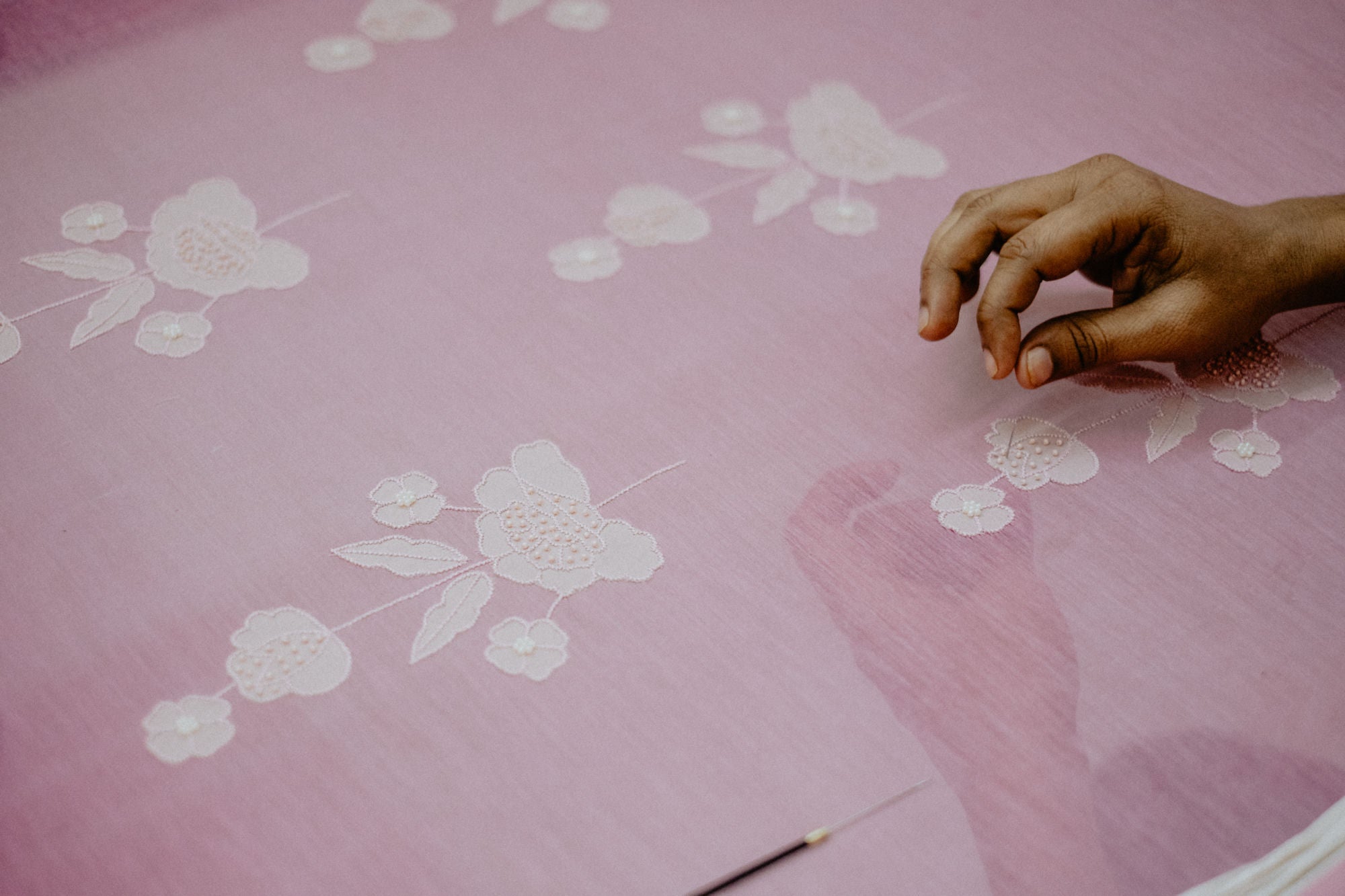
Embroidery: Mukesh work, delicate thread work, and fine zari are the most appropriate embroidery choices for a nikah. These techniques add shimmer and intricacy without the heaviness of zardozi or the density of full surface embroidery. The goal is understated brilliance — embroidery that catches the light quietly rather than demanding attention. Learn more about these techniques on our embroidery guide.
All Rashika Mittal pieces are handcrafted by karigars in Jaipur — every stitch of embroidery is done by hand, ensuring the kind of refinement and individuality that suits a nikah perfectly.
Accessory Guide for a Nikah
Accessories at a nikah should be delicate, refined, and minimal. This is not the occasion for heavy, statement-making jewellery — the aesthetic is one of quiet elegance.
- Earrings: Pearl drops, small kundan studs, or delicate jhumkas. Choose something that frames the face without overwhelming it, especially if you are wearing a dupatta or hijab.
- Necklace: A simple pendant, a delicate choker, or a fine chain. Avoid large, layered necklaces — they compete with the neckline and the overall restraint of the look.
- Bangles: A thin stack of gold or pearl bangles, or a single elegant kara. Subtle and refined — nothing that clinks loudly during the ceremony.
- Hijab pins and clips: If wearing a hijab, invest in elegant pins — pearl-tipped, crystal, or gold. They are a functional accessory that doubles as jewellery.
- Footwear: Simple embellished juttis or elegant sandals. You may need to remove footwear at the ceremony venue, so choose something easy to slip on and off.
The principle is the same as the outfit itself: one level quieter than what you would choose for a reception or walima. Let the garment, the fabric, and the craftsmanship speak.
Frequently Asked Questions
What is the dress code for a nikah ceremony?
Modest and elegant. For the bride, ivory, white, or pastels in flowing silhouettes — anarkalis, kurta sets, or sarees — with coverage on arms and neckline. For guests, the same modesty applies: choose refined pieces in soft colours and avoid anything too revealing or too bright.
Can I wear colour to a nikah?
Yes, though muted and soft tones are most appropriate. Green is especially meaningful in Islamic tradition. Pastels, sage, champagne, and dusty rose all work beautifully. Avoid very bright or saturated colours, and avoid white or ivory unless the family has indicated otherwise — those are typically reserved for the bride.
What is the difference between a nikah and a walima?
The nikah is the marriage ceremony itself — the sacred contract formalised before God and witnesses. The walima is the reception or feast that follows, usually hosted by the groom's family. The walima is typically larger, more celebratory, and more relaxed in dress code. Your nikah outfit should be more restrained; your walima outfit can be more festive.
Do I need to cover my head at a nikah?
If the nikah is at a mosque, head covering is generally expected for women — a dupatta draped over the hair is the simplest way to do this. For nikah ceremonies at homes or venues, the expectation varies by family and community. When in doubt, bring a dupatta and observe what other women are doing. It is always better to be prepared.
Can a non-Muslim guest attend a nikah?
Absolutely. A nikah is a deeply welcoming ceremony, and guests of all backgrounds are honoured. Dress modestly — a kurta set in a soft colour is the simplest choice. If the ceremony is at a mosque, be prepared to remove your shoes and cover your head. Take our outfit quiz to find a piece that suits you.
For more wedding occasion guidance, explore our Indian wedding guest guide, browse our kurta collection, anarkali collection, and sari collection, or visit our embroidery guide to understand the handcraft behind each piece.
Ready to Order Custom?
WhatsApp us at +91 70423 11214 with what you're looking for. We'll guide you through measurements, customizations, and timeline.
Most pieces ready in 4-5 weeks. Bridal in 6-8 weeks.
Made to order in 4–5 weeks
Have an event date? We’ll tell you exactly when to order by.
We take a limited number of orders each month — secure your slot early.
Not sure where to start?
Tell us what you're dressing for and we'll help you choose — fabric, fit, colour, and timeline — over WhatsApp.
Your Cart
Pieces from this story
All pieces →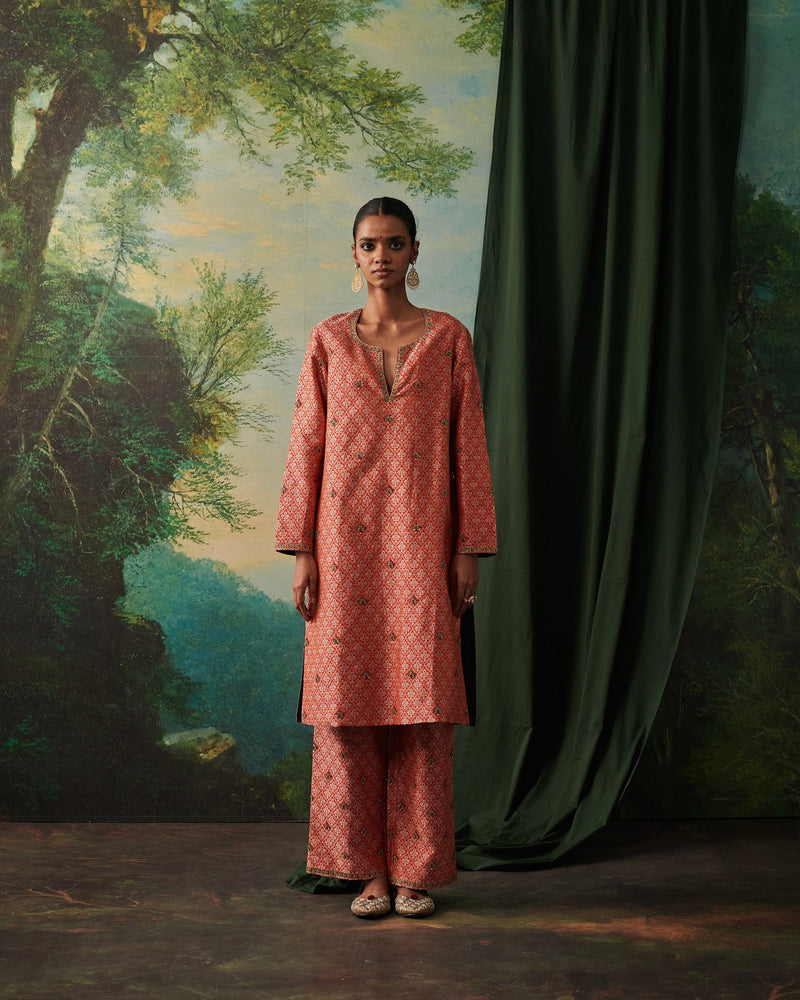
Keep reading
The journal →
Dholki Night Outfit Ideas: What to Wear to the Ladies' Dhol
Handmade by karigars Made to your measurements Fit guarantee Ships worldwide As seen in GraziaElle Graduat...
27 July 2026
Mayra & Bhaat Outfit Ideas: Dressing for the Maternal Gift Ceremony
Handmade by karigars Made to your measurements Fit guarantee Ships worldwide As seen in GraziaElle Graduat...
27 July 2026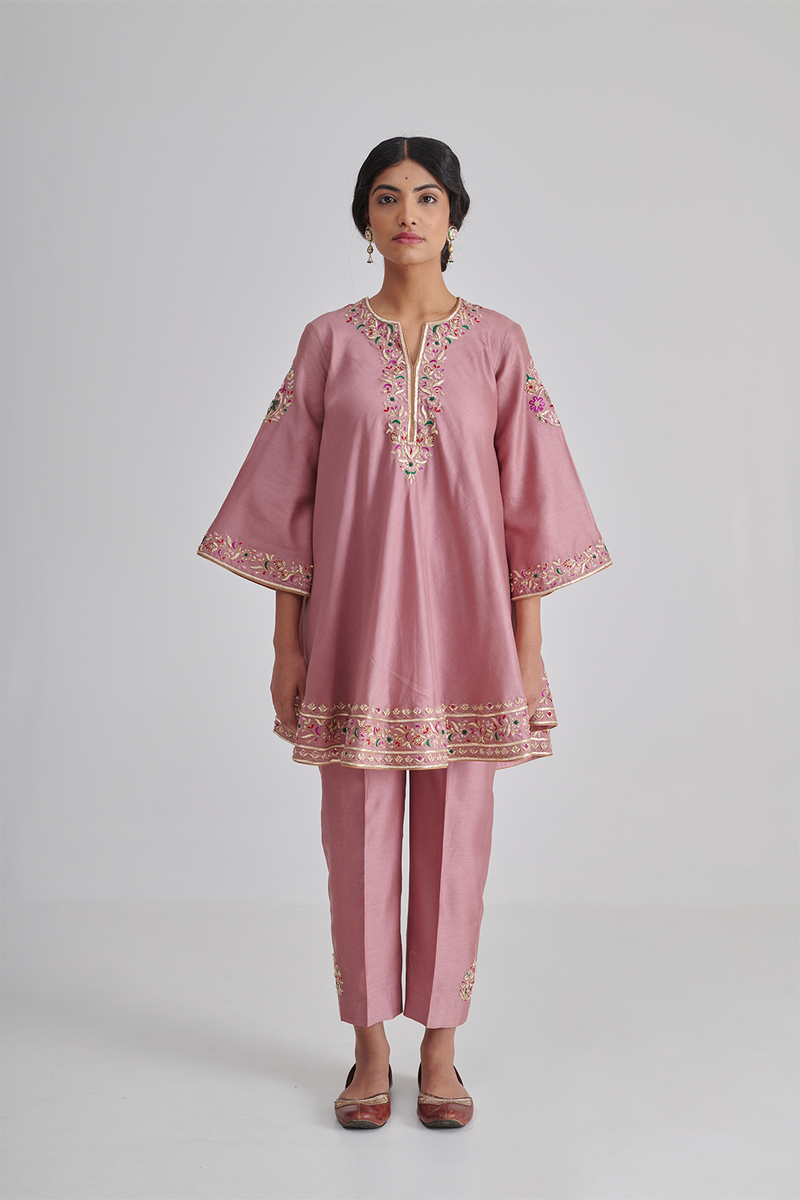
Pag Phera Outfit Ideas: What to Wear for the Bride's Homecoming
Handmade by karigars Made to your measurements Fit guarantee Ships worldwide As seen in GraziaElle Graduat...
27 July 2026