
Types of Silk in Indian Fashion: Banarasi, Chanderi, Dupion, Organza & More
Indian fashion runs on silk. From the heavy Banarasi drape a bride wears to the sheer organza dupatta thrown over a simple kurta, silk — in its many forms — is the fabric that separates occasion wear from everyday wear. But "silk" is not one thing. It's a family of fabrics, each with a different weight, texture, sheen, and purpose.
Knowing the difference between a Banarasi silk and a chanderi, or understanding why dupion behaves differently from organza, changes how you shop, how you style, and how you care for your clothes. This is a guide to the types of silk you'll encounter in Indian fashion — what they look like, where they come from, and what they're best suited for.
Banarasi Silk: The Gold Standard
Banarasi silk is woven in Varanasi (Banaras) and has been for centuries. It's characterised by its weight, its rich gold or silver zari work, and motifs that are woven directly into the fabric — not printed or embroidered on top. The most common motifs are florals, paisleys, and jaal (all-over lattice patterns). A genuine Banarasi silk has a distinctive heft and a surface that catches light because of the metallic threads running through it.
Banarasi silk is best suited for weddings, receptions, and formal celebrations. It's a fabric that demands the occasion match its weight — both literally and figuratively. A Banarasi saree can weigh anywhere from 800 grams to over a kilogram.
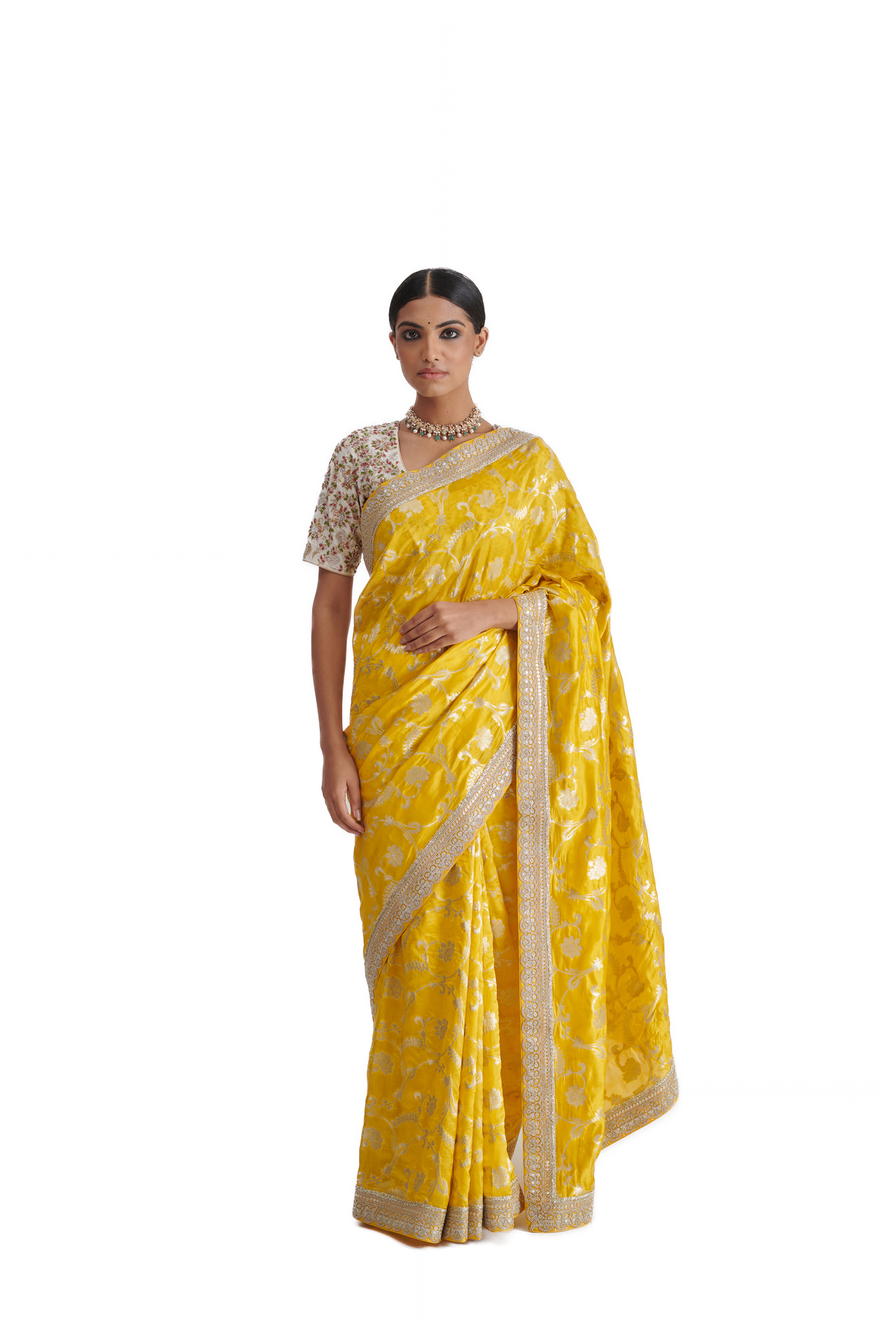
The Phalgun & Myra is a yellow Banarasi silk saree with intricate floral motifs woven in silver thread, finished with a rich lace border — classic Banarasi craftsmanship where the pattern is part of the weave itself.

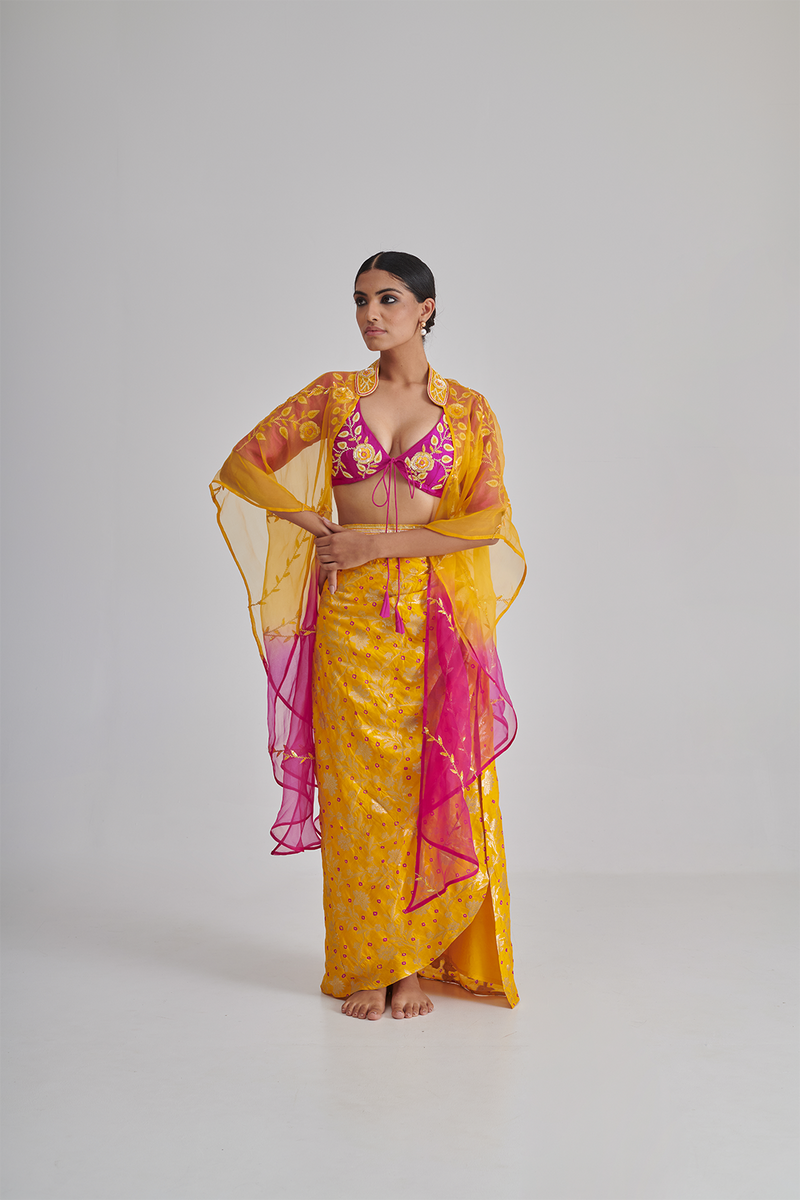
The Rahi & Amara takes the same tradition in a bolder direction — fuchsia pink Banarasi silk with floral motifs woven in gold thread and a detailed gold lace border.

Care: Dry clean only. Store flat or loosely rolled in a muslin cloth. Never hang a Banarasi saree on a hanger — the weight stretches the fabric over time. For more on Banarasi silk, read our complete Banarasi silk guide.
Chanderi Silk: Lightweight Elegance
Chanderi is woven in the town of Chanderi in Madhya Pradesh. It's a much lighter silk — often a silk-cotton blend — known for its sheer texture, subtle sheen, and delicate gold or silver bootis (small woven motifs). Where Banarasi is heavy and opulent, chanderi is airy and understated. It drapes close to the body without adding bulk.
Chanderi is ideal for day functions, festive gatherings, office celebrations, and summer weddings. It breathes better than pure silk, wrinkles less than cotton, and has just enough shimmer to feel dressed up.
The Naveli & Ruhi is a dusty rose chanderi kurta set featuring intricate floral embroidery with hand-embroidered aari, zardozi, sequin, and thread detailing — the kind of piece where a lightweight fabric carries detailed handwork without feeling heavy.

Care: Chanderi can be gently hand-washed in cold water with a mild detergent, though dry cleaning is safer for embroidered pieces. Air dry flat — never wring. Read our detailed chanderi fabric guide for more.
Dupion Silk: Textured and Structured
Dupion (also spelled dupioni) silk has a distinctive crisp texture with natural slubs — those slightly raised, uneven threads running through the fabric. These aren't flaws; they're the signature of dupion. The fabric has a stiff body and a subtle, muted lustre that's less glossy than satin silk but more refined than raw silk.
Dupion holds structure well, which makes it excellent for tailored pieces — shirts, structured kurtas, jackets, and blouses. It's a fabric that works for both festive and semi-formal settings, bridging the gap between everyday and occasion wear.
The Aarya is a dupion silk shirt featuring intricate gold vine motifs with hand-embroidered detailing throughout — the natural texture of the dupion adds depth to the gold embroidery, creating a layered visual effect that smoother silks can't replicate.

Care: Dry clean recommended. Dupion can be steamed but should never be ironed with direct heat — use a pressing cloth. The slubbed texture is permanent and won't wash out.
Organza Silk: Sheer and Light
Organza is a sheer, lightweight fabric with a slight stiffness that gives it structure despite its transparency. Silk organza has a more refined drape than polyester organza — it moves with the body rather than standing away from it. It's often used for dupattas, overlay layers, and sarees where you want movement and lightness.
Organza is perfect for dupattas, layered outfits, summer weddings, and destination events. It photographs beautifully because it catches light without being reflective, creating a soft, diffused glow.
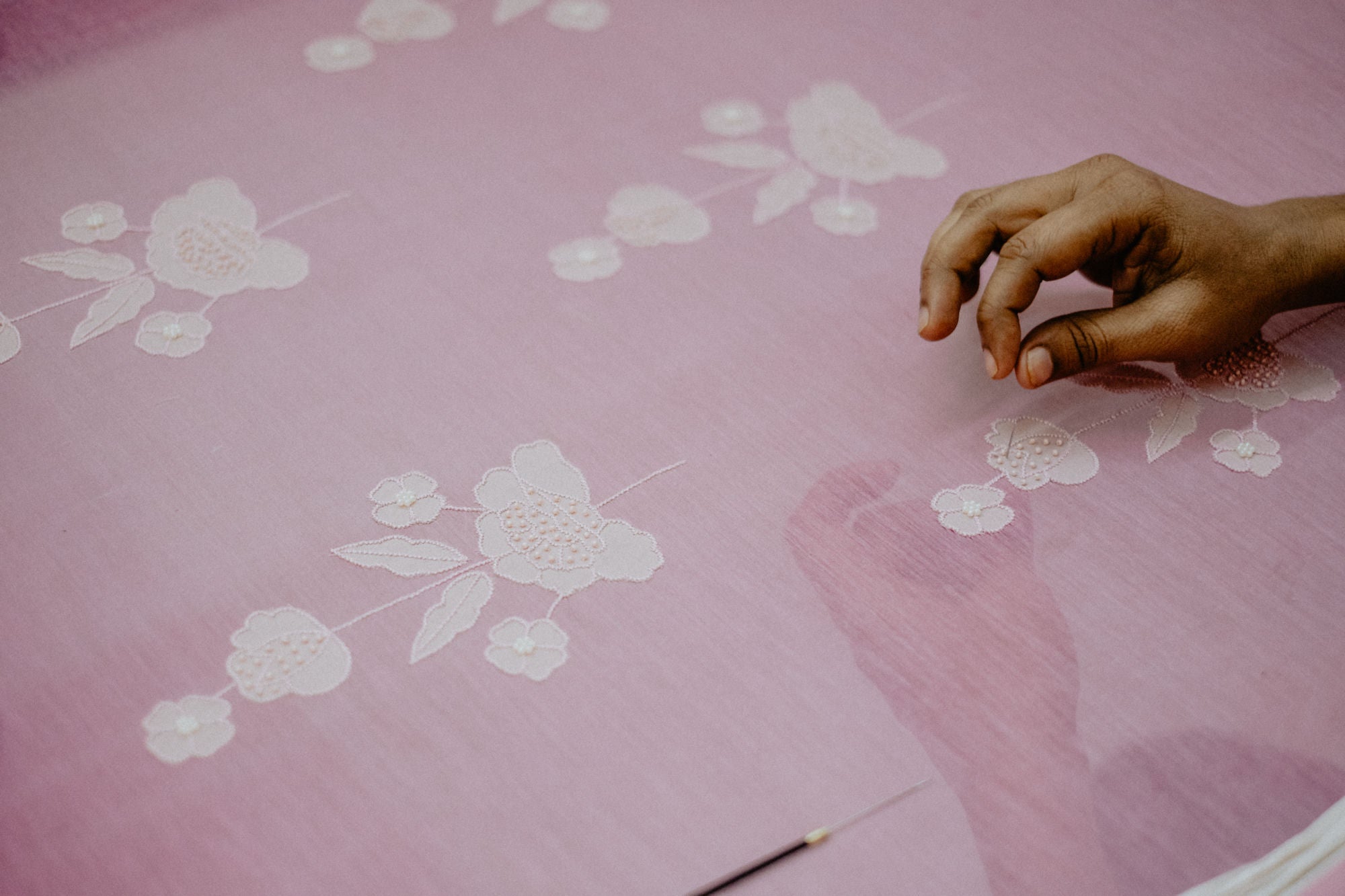
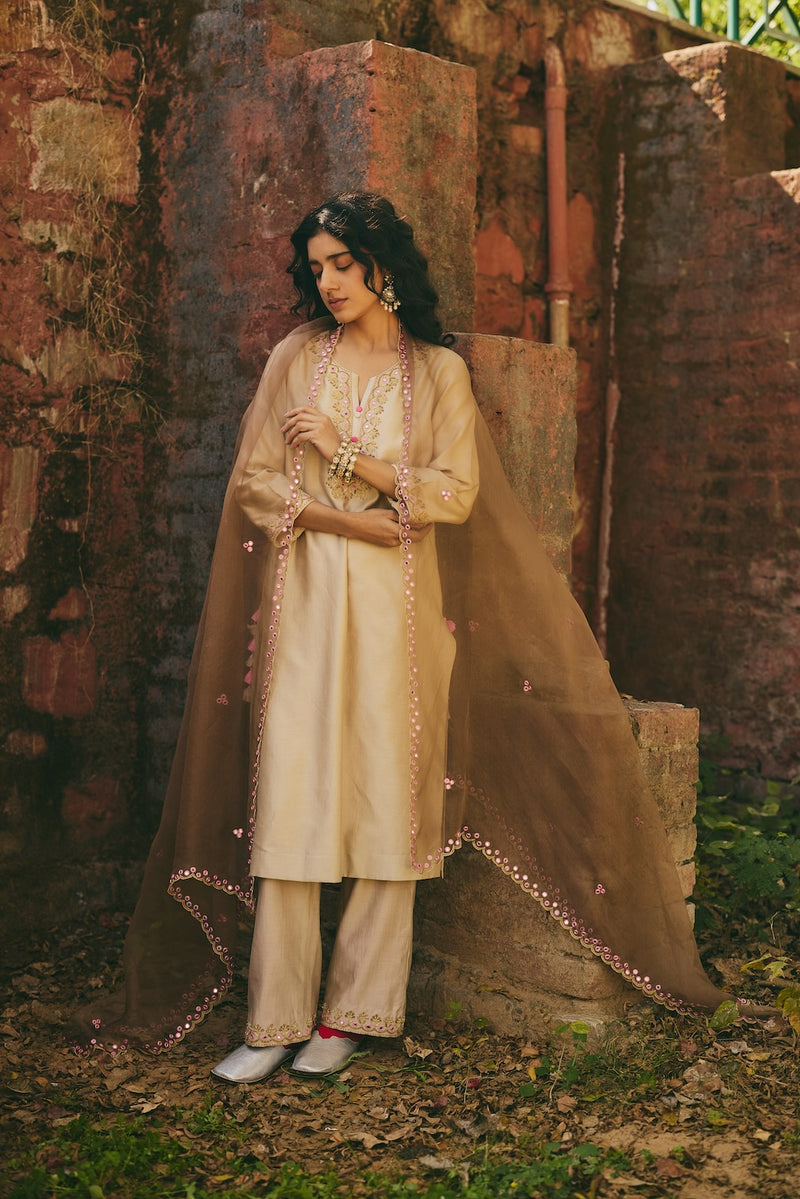
The Naira is a sheer organza dupatta with all-over hand-embroidered floral motifs and intricate border detailing — proof that organza can carry dense embroidery while remaining featherlight.

Care: Organza is delicate. Hand wash gently in cold water or dry clean. Never wring — press between towels to remove water. Iron on the lowest setting with a pressing cloth, or better yet, steam. For styling ideas and more, see our organza fabric guide.
Tissue Silk: The Shimmer Fabric
Tissue silk — sometimes called tissue fabric — is woven with metallic (gold or silver) threads that give it a distinctive all-over shimmer. It's lighter than Banarasi but more lustrous than chanderi. The fabric has a fluid drape and a glow that catches light from every angle, making it look almost liquid in motion.
Tissue works beautifully for evening events, receptions, cocktail parties, and sangeet — anywhere with warm or low lighting where its shimmer really comes alive.
The Zohra saree is made in soft tissue with a graceful shimmer that catches the light with every movement. Its borders are hand-embroidered in mirror work, cutdana, sequins, and zardozi — tracing traditional floral bel patterns seen in vintage heirloom textiles.

Care: Dry clean only. Tissue is fragile — store flat, away from direct sunlight, which can tarnish the metallic threads over time. Our tissue fabric guide covers everything from styling to storage.
Jacquard Silk: Woven Patterns
Jacquard is not a type of silk fibre but a weaving technique — patterns are woven into the fabric on a jacquard loom rather than printed or embroidered on top. The result is a fabric with a subtle, textured pattern that you can feel with your fingers. Jacquard silk has a refined, matte-to-low-sheen finish and a medium weight that sits between chanderi and Banarasi.
Free Download
Get Our Measurement Guide
Step-by-step instructions with photos for perfect custom fit.
Download Free GuideJacquard silk is versatile — suited for festive wear, formal kurtas, wedding guest outfits, and dressy separates. The woven-in pattern means the fabric has visual interest without needing heavy surface embellishment.
The Heer & Zunaira is a golden jacquard silk kurta set featuring an all-over jaal of intricate patterns with gold tissue and hand-embroidered detailing on the neckline and cuffs — the jacquard weave provides the base texture, and the embroidery elevates it further.

Care: Dry clean for embroidered jacquard pieces. Plain jacquard silk can be hand-washed carefully. Iron on low heat on the reverse side to preserve the woven texture.
Chiffon: The Everyday Silk
Silk chiffon is one of the most versatile fabrics in Indian fashion. It's extremely lightweight, has a soft matte finish, and drapes with a fluid, almost liquid quality. Unlike organza (which has stiffness), chiffon falls and clings — it follows the body's contours, creating a graceful silhouette.
Chiffon is perfect for sarees, dupattas, layered outfits, and warm-weather occasions. It's the go-to for destination weddings and outdoor events because it weighs next to nothing and rarely wrinkles badly.
Browse our saree collection and dupatta collection for chiffon options.
Care: Hand wash in cold water with mild detergent. Never twist or wring — lay flat to dry. Chiffon snags easily, so store it away from jewellery, pins, or rough surfaces.
Raw Silk: Rustic Character
Raw silk (also called tussah or tussar) is silk that hasn't been fully processed — it retains the natural texture and colour of the cocoon. The result is a fabric with a matte, slightly rough surface, visible grain, and earthy tones. It has more body than chiffon but less stiffness than dupion.
Raw silk works well for kurtas, jackets, blouses, and structured ethnic wear. Its natural, unpolished look pairs well with handcrafted embroidery and artisanal jewellery — settings where perfection isn't the point, character is.
Care: Dry clean recommended. Raw silk is prone to water spots, so avoid getting it wet. Iron on low heat on the reverse side.
Quick Comparison: Which Silk for Which Occasion?
Wedding ceremony: Banarasi silk, tissue silk
Reception / sangeet: Tissue, jacquard silk, Banarasi
Mehendi / haldi: Chanderi, chiffon
Festive / Eid / Diwali: Dupion, jacquard, chanderi
Destination wedding: Chiffon, organza, chanderi
Office celebration / formal lunch: Chanderi, dupion
Casual dressy: Raw silk, chiffon
Explore the full range — our saree collection, kurta sets, and dupattas span Banarasi, chanderi, organza, tissue, chiffon, and more.
Frequently Asked Questions
What is the most expensive type of silk in Indian fashion?
Banarasi silk is generally the most expensive, especially when woven with real gold or silver zari. The weaving process is time-intensive — a single Banarasi saree can take weeks to months to complete on a handloom. Tissue silk with zari work and hand-embroidery is also at the higher end.
Which silk is best for summer weddings?
Chanderi and chiffon are the best choices for warm-weather events. Both are lightweight and breathable. Organza is also a good option for dupattas and overlays. Avoid heavy Banarasi for outdoor summer functions — it traps heat.
How can I tell if silk is real or synthetic?
Real silk has a natural lustre that changes with the angle of light — synthetic fabrics have a flat, uniform shine. Real silk also feels cool to the touch and has a distinctive smell when burned (like burnt hair, not plastic). The simplest test is the touch test: genuine silk warms to your hand, while synthetic stays cool and slippery.
Can I wash silk at home or does it need dry cleaning?
Lighter silks like chiffon, chanderi, and plain organza can be gently hand-washed in cold water. Heavier silks like Banarasi, tissue, and anything with zari or heavy embroidery should be dry cleaned. When in doubt, dry clean — it's always the safer option.
What's the difference between dupion silk and raw silk?
Both have a textured, slubbed surface, but dupion is more refined and has a subtle sheen, while raw silk has a matte, more rustic appearance. Dupion holds structure better and is typically used for tailored garments, while raw silk has a softer drape.
Ready to Order Custom?
WhatsApp us at +91 70423 11214 with what you're looking for. We'll guide you through measurements, customizations, and timeline.
Most pieces ready in 4-5 weeks. Bridal in 6-8 weeks.
Made to order in 4–5 weeks
Have an event date? We’ll tell you exactly when to order by.
We take a limited number of orders each month — secure your slot early.
Not sure where to start?
Tell us what you're dressing for and we'll help you choose — fabric, fit, colour, and timeline — over WhatsApp.
Your Cart
Pieces from this story
All pieces →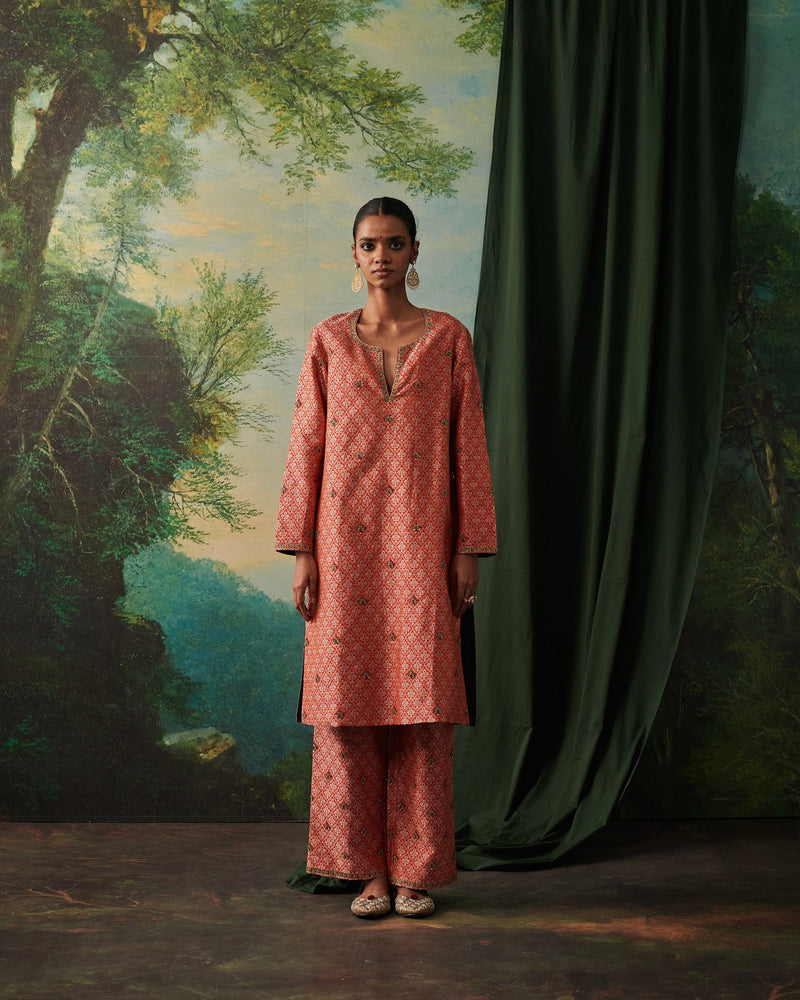
Keep reading
The journal →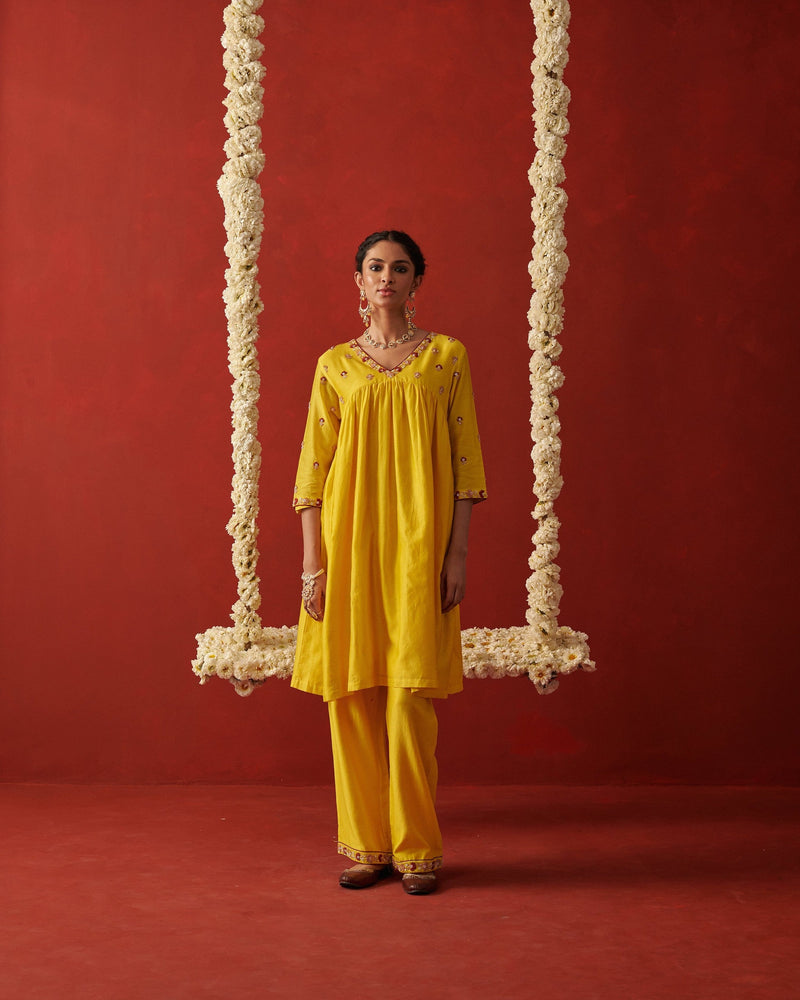
Dholki Night Outfit Ideas: What to Wear to the Ladies' Dhol
Handmade by karigars Made to your measurements Fit guarantee Ships worldwide As seen in GraziaElle Graduat...
27 July 2026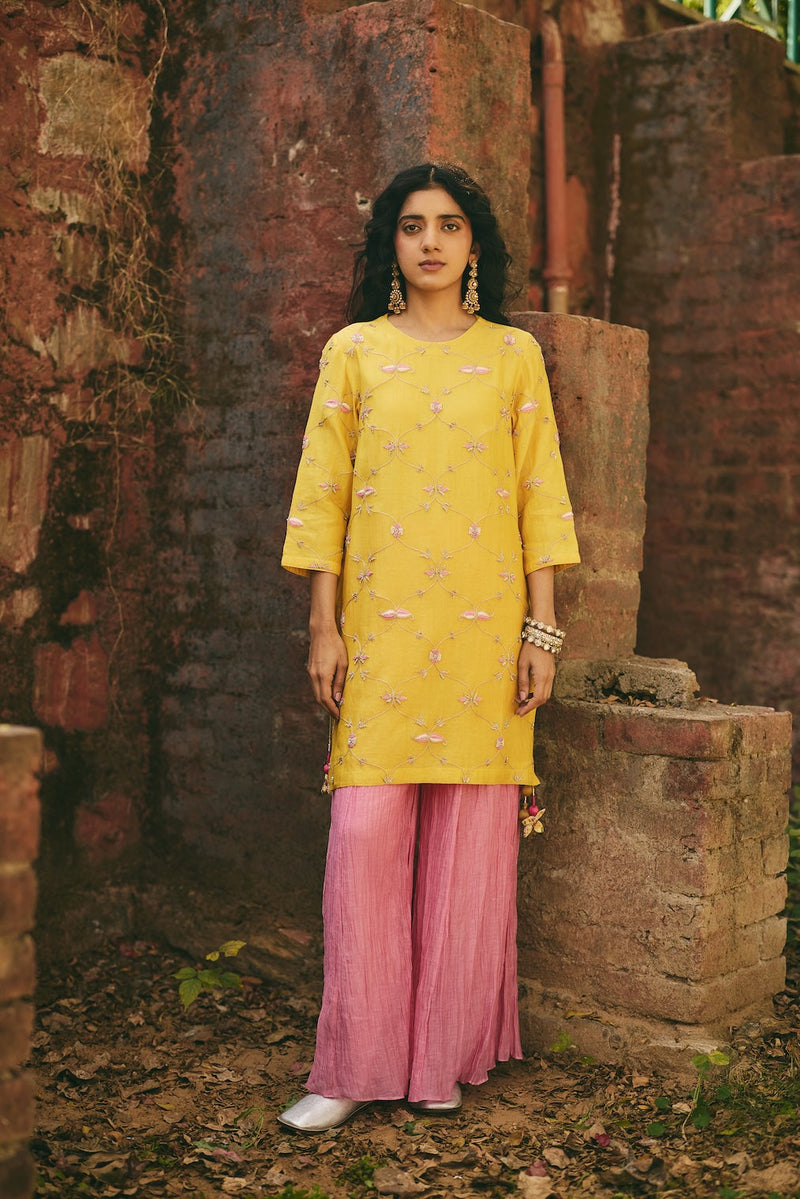
Mayra & Bhaat Outfit Ideas: Dressing for the Maternal Gift Ceremony
Handmade by karigars Made to your measurements Fit guarantee Ships worldwide As seen in GraziaElle Graduat...
27 July 2026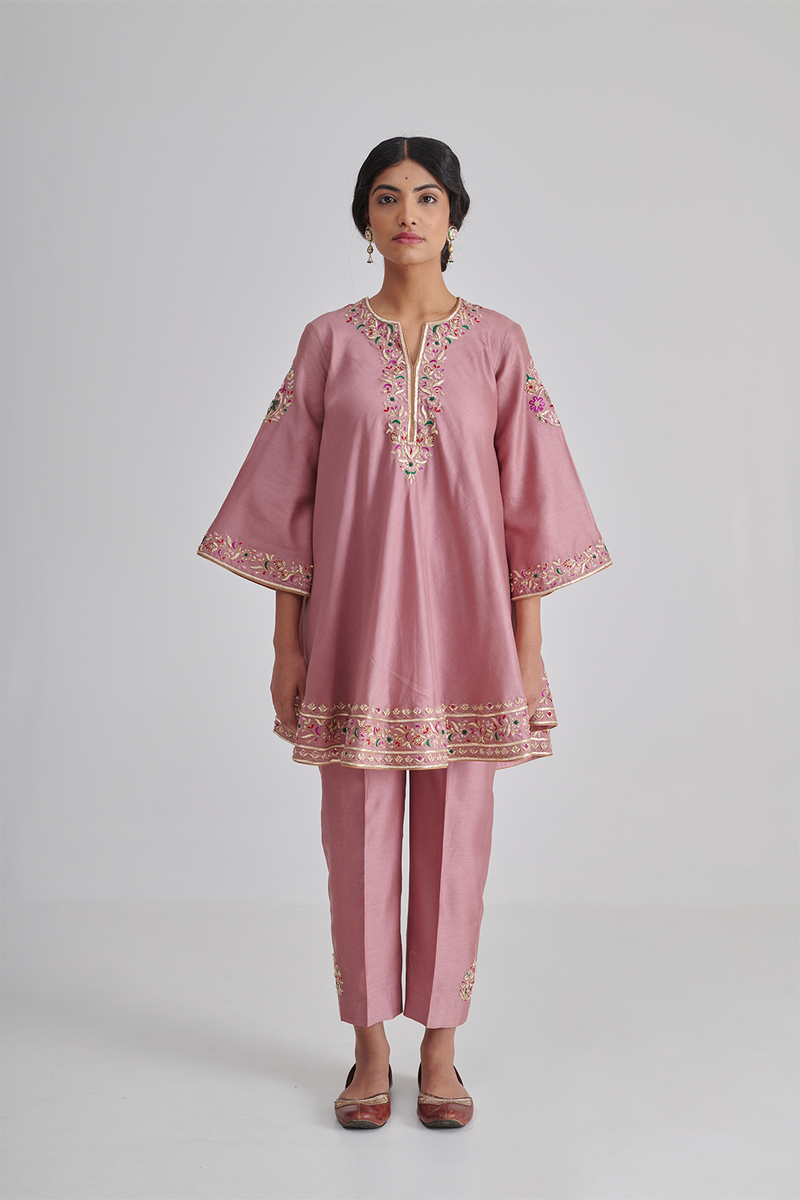
Pag Phera Outfit Ideas: What to Wear for the Bride's Homecoming
Handmade by karigars Made to your measurements Fit guarantee Ships worldwide As seen in GraziaElle Graduat...
27 July 2026