How to Care for Indian Fabrics: Washing, Storing & Ironing Guide
Indian fabrics are among the most exquisite textiles in the world, each carrying centuries of artisanal tradition in every thread. From the lustrous drape of Banarasi silk to the delicate transparency of organza, these fabrics demand a level of care that honours the craftsmanship woven into them. Whether you own hand-embroidered sarees, heirloom dupattas, or intricately worked kurta sets, knowing how to wash, dry, iron, and store your garments will ensure they remain as breathtaking as the day you first wore them.
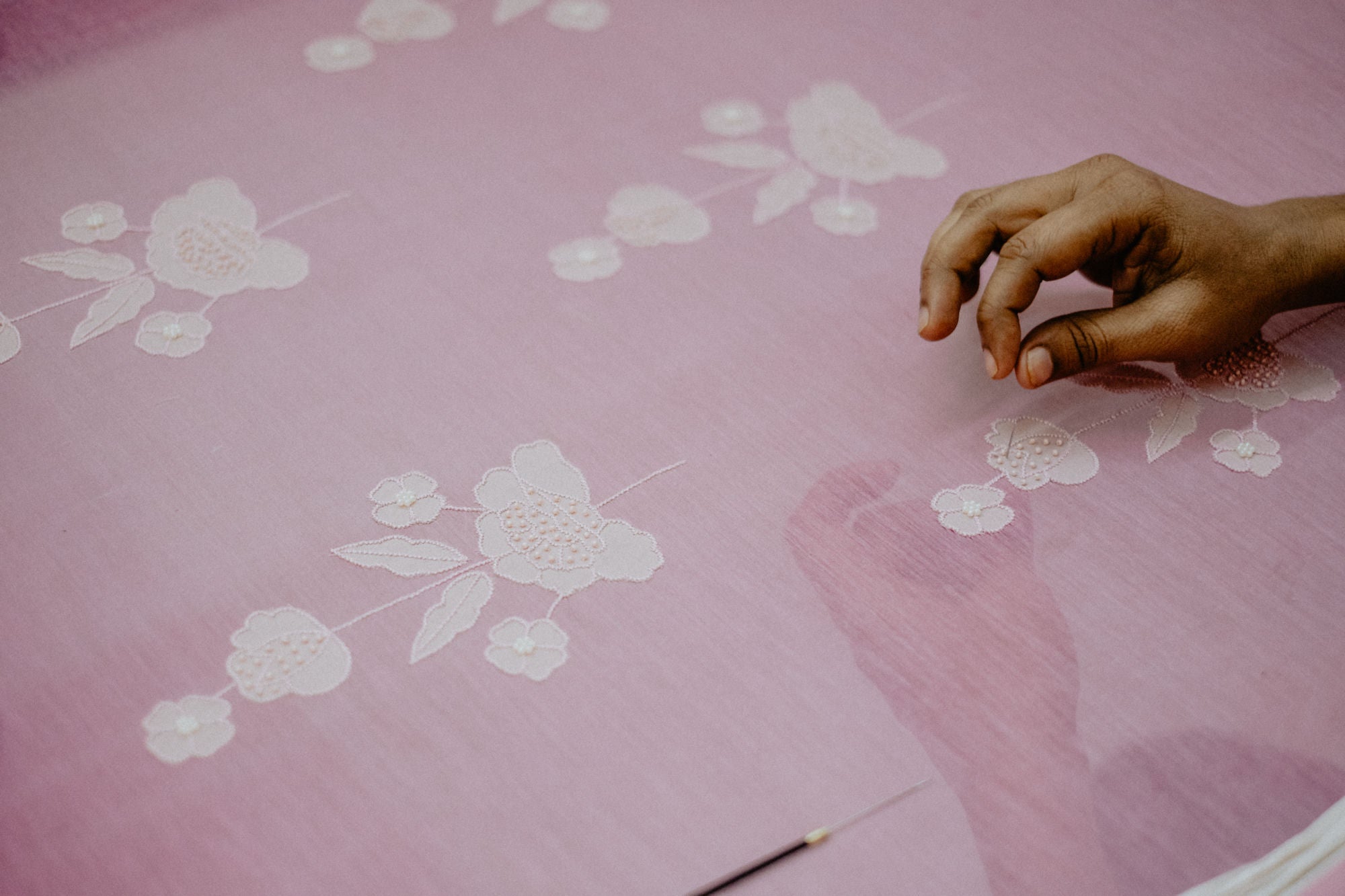
At Rashika Mittal, every piece is fully handmade by skilled karigars using techniques like zari, gota patti, zardozi, and cutdana embroidery. This guide will help you protect that artistry for years to come.
Select a Fabric
Silk Care
The queen of Indian fabrics — treat her royally
Washing
Dry clean recommended. Avoid water contact on embroidered silk. If spot cleaning is necessary, use a damp cloth with extreme care.
Drying
Never wring silk. If hand-washed (plain silk only), lay flat on a clean towel and air dry away from direct sunlight.
Ironing
Iron on the lowest heat setting with a pressing cloth between the iron and the fabric. Never iron directly on embroidery or zari work.
Storage
Wrap in a breathable muslin cloth, never in plastic. Store in a cool, dry place away from direct sunlight. Refold periodically to prevent permanent creases.
Chanderi Care
Lightweight, luminous, and worthy of gentle handling
Washing
Dry clean embroidered chanderi pieces. Plain chanderi can be hand-washed gently in cold water with a mild detergent. Never wring the fabric.
Drying
Lay flat or hang in the shade to air dry. Do not tumble dry. Avoid clothespins that may leave marks on the delicate weave.
Ironing
Iron on a low heat setting while the fabric is still slightly damp for best results. Use a pressing cloth over any embroidered areas.
Storage
Store in muslin bags in a dry, well-ventilated space. Keep away from moisture and direct sunlight. Air out every few months.
Organza Care
Ethereal and delicate — handle with the lightest touch
Washing
Always dry clean. Organza is extremely delicate and water can distort its structure, especially when combined with embroidery.
Drying
After dry cleaning, allow the garment to air out briefly before storing. Never hang organza on thin hangers that may leave marks.
Ironing
Use a handheld steamer instead of a traditional iron. If you must iron, use the absolute lowest setting with a pressing cloth. Steam from a distance for embroidered pieces.
Storage
Store flat or gently rolled — never fold directly on embroidery. Place acid-free tissue paper between layers. Handle as minimally as possible.
Chiffon Care
Flowing and graceful — care that matches its elegance
Washing
Dry clean embroidered chiffon. Plain chiffon can be hand-washed in cold water with a gentle detergent. Swirl gently — never scrub or twist.
Drying
Hang to dry in a shaded area. Never wring chiffon. Allow it to drip dry naturally to preserve the fabric's delicate texture.
Ironing
Iron on the lowest heat setting. A pressing cloth is essential. For embroidered chiffon, iron only on the reverse side to protect the work.
Storage
Store in a muslin bag or wrapped in soft cotton. Avoid hanging for long periods as chiffon can stretch. Fold gently with tissue between layers.
Banarasi Silk Care
Heirloom fabric that deserves heirloom care
Washing
Always dry clean. The intricate zari and gold thread work in Banarasi silk is too delicate for any form of water washing.
Drying
After dry cleaning, air out in a shaded area before storing. Never expose Banarasi silk to direct sunlight, which can tarnish the zari.
Ironing
Iron on the lowest setting with a muslin pressing cloth. Never iron directly on zari or gold thread work. A light steam from a distance can help remove gentle creases.
Storage
Store flat, wrapped in muslin with silica gel packets to absorb moisture. Never fold directly on zari lines. Air out periodically, and keep away from damp environments.
Tissue Fabric Care
Sheer brilliance that calls for the gentlest touch
Washing
Dry clean only. Tissue fabric is extremely delicate and should never come in contact with water. Handle as little as possible to avoid snags.
Drying
After dry cleaning, allow the piece to air briefly in a well-ventilated room. Do not expose to direct heat or sunlight.
Ironing
Use only the lowest heat setting with a pressing cloth. A steamer held at a distance is the safest option. Avoid pressing directly on any embellished areas.
Storage
Store flat with acid-free tissue paper placed between each fold. Keep in a cool, dry environment and avoid humidity at all costs. Handle minimally to prevent wear.
Georgette Care
Versatile and forgiving — but still deserves respect
Washing
Dry clean embroidered georgette pieces. Plain georgette can be hand-washed in cold water with a mild detergent. Avoid rubbing or twisting.
Drying
Air dry on a flat surface rather than hanging, as georgette can stretch when wet. Keep away from direct heat sources and sunlight.
Ironing
Iron lightly on the reverse side on a low heat setting. Always use a pressing cloth for embroidered areas. A light steaming works well too.
Storage
Store in a breathable muslin or cotton bag. Fold gently with tissue paper between layers. Georgette is relatively forgiving but should still be kept away from moisture.
Cotton & Khadi Care
The most resilient of Indian fabrics — still benefits from mindful care
Washing
Hand wash in cold water or use a gentle machine wash cycle. For embroidered cotton pieces, hand washing is always safer. Use a mild detergent.
Drying
Air dry in the shade. Cotton and khadi dry well on a clothesline. Avoid tumble drying, which can cause shrinkage and weaken hand-embroidery.
Ironing
Iron while slightly damp for the crispest finish. Cotton and khadi take well to medium heat. Use a pressing cloth over any embroidered sections.
Storage
Store in a cool, dry space. Cotton breathes well and is less fussy than silk, but should still be kept in muslin or cotton bags for longevity. Avoid plastic.
How to Care for Silk Garments
Silk is the most celebrated fabric in Indian fashion, prized for its natural sheen, luxurious drape, and unmatched elegance. Whether you own a silk saree, a silk kurta set, or a silk dupatta, proper care is essential to preserve its beauty and longevity.
Washing: Always dry clean silk garments, especially those with hand-embroidery, zari work, or gota patti embellishments. Water can cause silk fibres to weaken, and detergents may strip the fabric of its natural lustre. If you must spot clean, dampen a soft white cloth with cold water and gently blot the affected area — never rub.
Ironing: Use the lowest heat setting on your iron and always place a clean pressing cloth (muslin works beautifully) between the iron and the fabric. Never iron directly on embroidery or zari — the heat can tarnish metallic threads and flatten delicate handwork.
Storage: Wrap silk garments in breathable muslin cloth. Never store in plastic bags, which trap moisture and can cause yellowing. Keep silk away from direct sunlight, as UV rays break down silk fibres over time. Refold your silk pieces every few months to prevent permanent crease lines along the folds.
Chanderi is a traditional Indian fabric known for its sheer texture, lightweight feel, and subtle gold and silver motifs. Originating from the town of Chanderi in Madhya Pradesh, this fabric is a favourite for summer kurtas, sarees, and dupattas.
Washing: Embroidered chanderi should always be dry cleaned. Plain chanderi fabric can be gently hand-washed in cold water with a mild, pH-neutral detergent. Soak briefly, swirl gently, and rinse in cold water. Never wring chanderi — the delicate weave can distort under pressure.
Ironing: The best time to iron chanderi is when it is still slightly damp after washing. Use a low heat setting and iron on the reverse side. For embroidered pieces, a pressing cloth is non-negotiable.
Storage: Keep chanderi garments in breathable muslin bags. Avoid plastic, which traps humidity. Store in a dry, cool area and air out periodically. If you notice any stiffness, a gentle steam will restore the drape.
Organza is one of the most delicate fabrics used in Indian fashion. Its crisp, sheer quality makes it a stunning choice for dupattas and layered garments, but it demands careful handling at every stage.
Washing: Always dry clean organza. This fabric is too fragile for water washing, and its structure can become limp or distorted. Embroidered organza with gota patti, sequin, or resham work is especially vulnerable.
Ironing: Avoid traditional ironing when possible. A handheld steamer held at a safe distance is the gentlest way to remove wrinkles from organza. If you must use an iron, set it to the absolute lowest temperature and use a pressing cloth. Never press directly on embroidered or embellished sections.
Storage: Store organza flat or gently rolled around an acid-free cardboard tube. Never fold organza directly along embroidered areas, as the pressure can crack or flatten the work over time. Place acid-free tissue paper between layers, and store in a cool, dry environment.
Chiffon is beloved in Indian fashion for its fluid drape and romantic translucence. It is a popular choice for sarees, dupattas, and layered garments. While more forgiving than organza, chiffon still requires a gentle approach.
Washing: Embroidered chiffon should be dry cleaned without exception. Plain chiffon can be hand-washed in cold water with a gentle detergent. Submerge the garment, swirl softly, and rinse in fresh cold water. Never wring, scrub, or twist chiffon fabric.
Ironing: Iron on the lowest heat setting. A pressing cloth is essential, especially over embroidered areas. For the safest results, iron on the reverse side of the garment to protect any surface embellishment.
Storage: Store chiffon in breathable fabric bags. Avoid hanging chiffon garments for extended periods, as the fabric can stretch under its own weight. Fold gently with tissue paper between layers.
Banarasi silk is the crown jewel of Indian textiles. Woven with real gold and silver zari threads, these sarees are often passed down through generations as family heirlooms. The care you give a Banarasi saree directly determines how many lifetimes it will last.
Washing: Always dry clean Banarasi silk. The zari and gold thread work is too delicate and precious for any water-based cleaning method. Even a small amount of moisture can tarnish the metallic threads and weaken the silk base.
Ironing: Use the lowest heat setting with a muslin pressing cloth. Never place a hot iron directly on zari work. If creases are light, a gentle steam from a safe distance can relax the fabric without any direct heat contact.
Storage: This is where Banarasi care matters most. Store flat, never hanging, wrapped in clean muslin cloth. Place silica gel packets nearby to absorb ambient moisture. Never fold along the zari lines, as the metallic threads can crack under repeated pressure. Air out your Banarasi sarees every three to four months in a shaded, well-ventilated area. Keep them far from damp environments, perfumes, and mothballs (which can chemically react with zari).
Tissue fabric has a distinctive metallic sheen that makes it a showstopping choice for sarees and occasion wear. Its beauty, however, comes with fragility. Tissue is one of the most delicate fabrics in Indian fashion and requires the most cautious handling.
Washing: Dry clean only, without exception. Tissue fabric should never be exposed to water. Even professional handling should be minimal — choose a dry cleaner experienced with delicate Indian textiles.
Ironing: Use only the lowest heat setting, always with a pressing cloth. A steamer held at a safe distance is even better. Avoid pressing on any mirror work, cutdana, or zardozi embellishments, as direct heat can damage the attachment threads.
Storage: Store flat with acid-free tissue paper placed between every fold. Humidity is the greatest enemy of tissue fabric, so keep it in a cool, dry environment. Consider adding silica gel packets to your storage area. Handle tissue garments as infrequently as possible to minimise wear.
Georgette is one of the more versatile fabrics in Indian fashion. Its slightly textured, crinkled surface gives it a beautiful drape that works wonderfully for sarees, kurtas, and layered garments. While more resilient than organza or tissue, georgette still benefits from careful maintenance.
Washing: Embroidered georgette should be dry cleaned. Plain georgette can be hand-washed in cold water with a mild detergent. Avoid wringing or rubbing the fabric — gently swirl and rinse.
Ironing: Iron lightly on the reverse side using a low heat setting. A pressing cloth is recommended for any embroidered or embellished areas. Steaming is also an effective, fabric-friendly alternative.
Storage: Store in breathable cotton or muslin bags. Georgette is relatively forgiving compared to other delicate fabrics, but it still benefits from proper storage away from moisture and sunlight.
Cotton and khadi are the most durable and low-maintenance fabrics in Indian fashion. They breathe beautifully, soften with each wash, and are ideal for everyday wear. However, when these fabrics feature hand-embroidery, they still require mindful handling.
Washing: Hand wash in cold water with a mild detergent, or use a gentle machine wash cycle. For embroidered cotton pieces, always opt for hand washing to protect the needlework. Turn garments inside out before washing.
Ironing: Iron while the fabric is still slightly damp for the crispest, smoothest result. Cotton and khadi respond well to medium heat. Always use a pressing cloth over embroidered areas and iron on the reverse side when possible.
Storage: Store in a cool, dry space. Cotton and khadi are breathable and less fussy than silk or tissue, but they should still be kept in muslin or cotton bags rather than plastic. Fold neatly, and air out seasonally.
General Tips for Caring for Hand-Embroidered Indian Clothing
Always dry clean embroidered garments. Hand-embroidery techniques like zardozi, gota patti, cutdana, and aari work involve threads, beads, and metallic elements that can loosen or tarnish in water.
Never store Indian fabrics in plastic. Plastic traps moisture and heat, leading to yellowing, mildew, and fibre degradation. Use muslin cloth or acid-free tissue paper instead.
Refold stored garments every few months. Permanent crease lines can weaken fabric fibres over time, especially in silk and Banarasi weaves.
Keep garments away from direct sunlight. UV rays cause fading and weaken natural fibres. Store in a dark, cool, well-ventilated space.
Air out garments periodically. Even stored garments benefit from occasional airing in a shaded area to prevent mustiness.
Use a pressing cloth for all ironing. A clean muslin cloth between the iron and the garment protects embroidery, zari, and delicate fabrics.
Choose your dry cleaner carefully. Not all dry cleaners have experience with Indian textiles. Ask specifically about their handling of silk, zari, and hand-embroidered garments.
Frequently Asked Questions
Can I wash silk sarees at home?
▾
For plain silk sarees without embroidery, very careful hand washing in cold water with a silk-specific detergent is possible, but it carries risk. For embroidered silk sarees — especially those with zari, gota patti, or zardozi work — dry cleaning is strongly recommended. Water can loosen embroidery threads, tarnish metallic work, and cause the silk to lose its natural sheen. When in doubt, always choose a professional dry cleaner experienced with Indian textiles.
How to remove wrinkles from organza?
▾
The safest method is to use a handheld steamer held about 15–20 centimetres away from the fabric. Let the steam gently relax the wrinkles without direct contact. If you do not have a steamer, you can hang the organza garment in a bathroom while running a hot shower — the ambient steam will gradually ease out creases. Avoid using a traditional iron on organza unless absolutely necessary, and if you must, use the absolute lowest heat setting with a pressing cloth.
How to store Banarasi sarees long-term?
▾
For long-term storage, wrap each Banarasi saree individually in clean, breathable muslin cloth. Place silica gel packets near (not directly on) the saree to absorb moisture. Store flat in a wooden or fabric-lined drawer — never in plastic bins or bags. Avoid folding along zari lines, and change the fold pattern every three to four months to prevent permanent creases. Air out the saree in a shaded area at least twice a year. Keep the storage area dry, dark, and away from perfumes or mothballs, which can chemically react with the zari.
How often should I dry clean Indian outfits?
▾
Dry clean after every wear if the garment was worn for a full event and came into contact with sweat, food, or perfume. For garments worn briefly (such as for a photo session), you can air them out thoroughly in a shaded area and store them without dry cleaning. Over-dry-cleaning can also stress delicate fabrics and embroidery, so use your judgement. A good rule: if it smells fresh and has no visible stains, a thorough airing is sufficient.
Can hand-embroidered clothes be ironed?
▾
Yes, but with caution. Always iron on the reverse side of the garment, never directly on the embroidered surface. Use the lowest heat setting your iron offers, and place a clean pressing cloth (muslin is ideal) between the iron and the fabric. For heavily embellished pieces with raised work like zardozi, gota patti, or mirror work, steaming from a distance is a safer alternative to ironing. The goal is to smooth the base fabric without flattening or damaging the dimensional handwork.