Shop the Look: Curated Indian Outfit Styling Ideas
Style Edit
Curated outfit pairings from our ateliers in Jaipur, styled for every celebration on your calendar. Each look is built around a single statement piece, paired with handcrafted dupattas and finishing touches to help you dress with intention.
Editor's Pick
Wedding Guest · Festive
The Heritage Vermillion
Statement Set
Wedding Guest · Reception
The Emerald Empress
Reception · Cocktail · Intimate Gathering
Midnight Glamour
Mehendi & Haldi · Intimate Gathering
The Garden Soiree
Bridal Edit
Wedding Guest · Festive
The Rani Revival
Reception · Cocktail · Festive
Festive Noir
Mehendi & Haldi · Festive
The Sunshine Mehendi
Wedding Guest · Reception
Brocade Royale
Reception · Cocktail · Intimate Gathering
The Vintage Diva
Festive · Diwali · Mehendi
Bandhani Dreams
Wedding Guest · Intimate Gathering
Pistachio Elegance
Intimate Gathering · Everyday Luxe
The Sapphire Soiree
Wedding Guest · Festive
The Regal Purple
Everyday Luxe · Intimate Gathering
Everyday Ivory
Mehendi · Everyday Luxe
Jaipur Sunrise
The Art of Indian Occasion Dressing
Building a complete Indian outfit is about more than choosing a garment. It is about understanding the interplay of silhouette, fabric, embroidery, and accessories. Here are our styling principles, drawn from decades of atelier tradition.
How to Build a Complete Indian Outfit
Every Indian ensemble has three layers that work together:
- The anchor piece — your saree, lehenga, or kurta set. This defines the silhouette and colour story of your look.
- The layering piece — a dupatta, cape, or jacket. This adds dimension, movement, and often the most visible embroidery.
- The finishing details — jewellery, footwear, clutch, and hair. These elevate the outfit from "wearing clothes" to "making an entrance."
Start with the anchor and let it guide every other decision. A heavily embroidered lehenga calls for a simpler dupatta. A minimal kurta opens the door for a show-stopping organza drape.
5 Rules of Indian Occasion Dressing
- Balance the weight of embroidery. If your outfit is densely embellished, keep the dupatta and jewellery lighter. If the outfit is minimal, let the accessories do the talking.
- Respect the occasion hierarchy. Weddings call for silk and zari. Mehendis invite playful colour. Receptions welcome contemporary silhouettes. Intimate gatherings reward understated elegance.
- Consider the drape, not just the colour. Organza catches light differently than chiffon. Chanderi moves differently than silk. The fabric often matters more than the shade.
- Mix metals intentionally. Gold jewellery with warm-toned outfits (reds, corals, yellows). Silver or oxidised pieces with cool tones (blues, greens, blacks).
- Let one element be the hero. A statement necklace means simpler earrings. A bold embroidered blouse means a plainer saree. Restraint creates impact.
Mixing Embroidery Styles Like a Pro
Indian handcraft encompasses dozens of embroidery traditions. Combining them thoughtfully creates depth and richness:
- Zardozi + Gota Patti: Both use metallic elements, but zardozi adds dimensional texture while gota adds flat shimmer. Together, they create a layered luminosity.
- Aari + Sequins: The fine chain-stitch of aari work provides the structure, while sequins catch the light. A classic pairing for evening wear.
- Chikankari + Mirror Work: The delicacy of white-on-white chikankari gains a festive edge when paired with small mirrors. Beautiful for daytime celebrations.
- Bandhani + Brocade: The tie-dye texture of bandhani paired with woven brocade motifs creates a celebration of surface and pattern that is unmistakably Indian.
Jewellery Pairing Basics
The right jewellery turns a beautiful outfit into a complete look. Here is a guide by occasion:
- Weddings: Polki, kundan, or jadau sets. Think choker necklaces, chandbali earrings, and a maang tikka. Layer bangles for wrist drama.
- Mehendi & Haldi: Floral jewellery, lac bangles, or colourful kundan. Playful maang tikkas and statement jhumkas.
- Receptions & Cocktails: Diamond or pearl drops. Statement cuff bracelets. Cocktail rings. Less layering, more precision.
- Intimate Gatherings: Delicate gold chains, small studs or hoops. Pearl strings. The beauty is in the subtlety.
- Everyday Luxe: A single statement ring or earring. Minimal gold. Let the craft of the garment speak for itself.
Explore Our Guides
Deep-dive into the world of Indian handcraft and occasion dressing with our curated resource library.
Browse Collections
Frequently Asked Questions
Start by choosing a statement piece that matches the formality of the event. For a traditional Indian wedding, lehengas and sarees in rich colours like red, emerald, or gold are ideal. Pair your outfit with a complementary dupatta that adds texture without competing with the main piece. Choose kundan or polki jewellery for a classic finish, add embroidered juttis or heels, and carry a potli or minaudiere. Keep your hair elegant — a low bun with mogra flowers or soft curls draped over one shoulder both work beautifully.
The accessories you pair with a lehenga depend on the embellishment level of the outfit. For a heavily embroidered lehenga, keep jewellery minimal — a delicate maang tikka and matching studs are sufficient. For a lehenga with simpler embroidery, you can go bolder with a layered necklace, chandelier earrings, and stacked bangles. Always match metal tones: gold jewellery with warm-coloured lehengas, and silver or platinum with cool-toned ones. A structured clutch and embroidered heels complete the look.
A dupatta is more than an accessory — it is the finishing flourish of an Indian ensemble. The key principle is contrast and balance. If your kurta or lehenga has dense embroidery, opt for a sheer organza dupatta with minimal embellishment. If your outfit is plain or subtly textured, choose a dupatta with statement embroidery or zari work. For colour, you can either match the tone for a monochromatic effect or introduce a complementary shade for visual interest — for example, a coral dupatta over a mint green kurta, or a gold-embroidered piece over a deep navy saree.
Festive occasions like Diwali, Eid, or Navratri call for colour, shimmer, and a sense of celebration. Start with rich, saturated colours — deep reds, royal blues, vibrant yellows, or lush greens. Fabrics with inherent sheen, such as silk, brocade, or tissue, work beautifully under evening lighting. Layer your look with an embroidered dupatta or cape. Choose jewellery that catches the light: sequin-accented pieces, kundan sets, or pearl drops. Remember, festive dressing is joyful dressing — this is the occasion to wear your most ornate handcrafted pieces with confidence.
Mehendi and haldi celebrations are typically daytime, outdoor events that favour bright, cheerful colours. Yellows, greens, oranges, and pinks are traditional choices. Opt for lighter fabrics like chanderi, cotton silk, or organza that breathe well in warm settings. Kurta sets and anarkalis are popular silhouettes for these events. Accessorise with floral jewellery, colourful lac bangles, and mirror-work juttis. Keep hair playful — braids with fresh flowers, loose waves with a floral pin, or a messy bun. The mood is relaxed luxury, so choose comfort alongside craft.
Absolutely — in fact, mixing embroidery techniques is a hallmark of fine Indian craftsmanship. The key is ensuring the techniques share a visual language. Zardozi and gota patti both use metallic elements, making them natural companions. Aari work and sequins complement each other because the chain-stitch provides structure while sequins add sparkle. When mixing techniques, keep the colour palette cohesive and let one technique dominate while the other plays a supporting role. Many pieces in our collection intentionally blend techniques like marodi, resham, and cutdana to create layered, dimensional surfaces. Explore our Embroidery Guide to learn more.
Your Guide to Shop the Look: Indian Occasion Dressing
Indian occasion dressing is an art that balances tradition, craft, and personal expression. Whether you are attending a wedding as a guest, celebrating Diwali with family, or dressing for an intimate dinner, the right outfit tells a story before you speak a word.
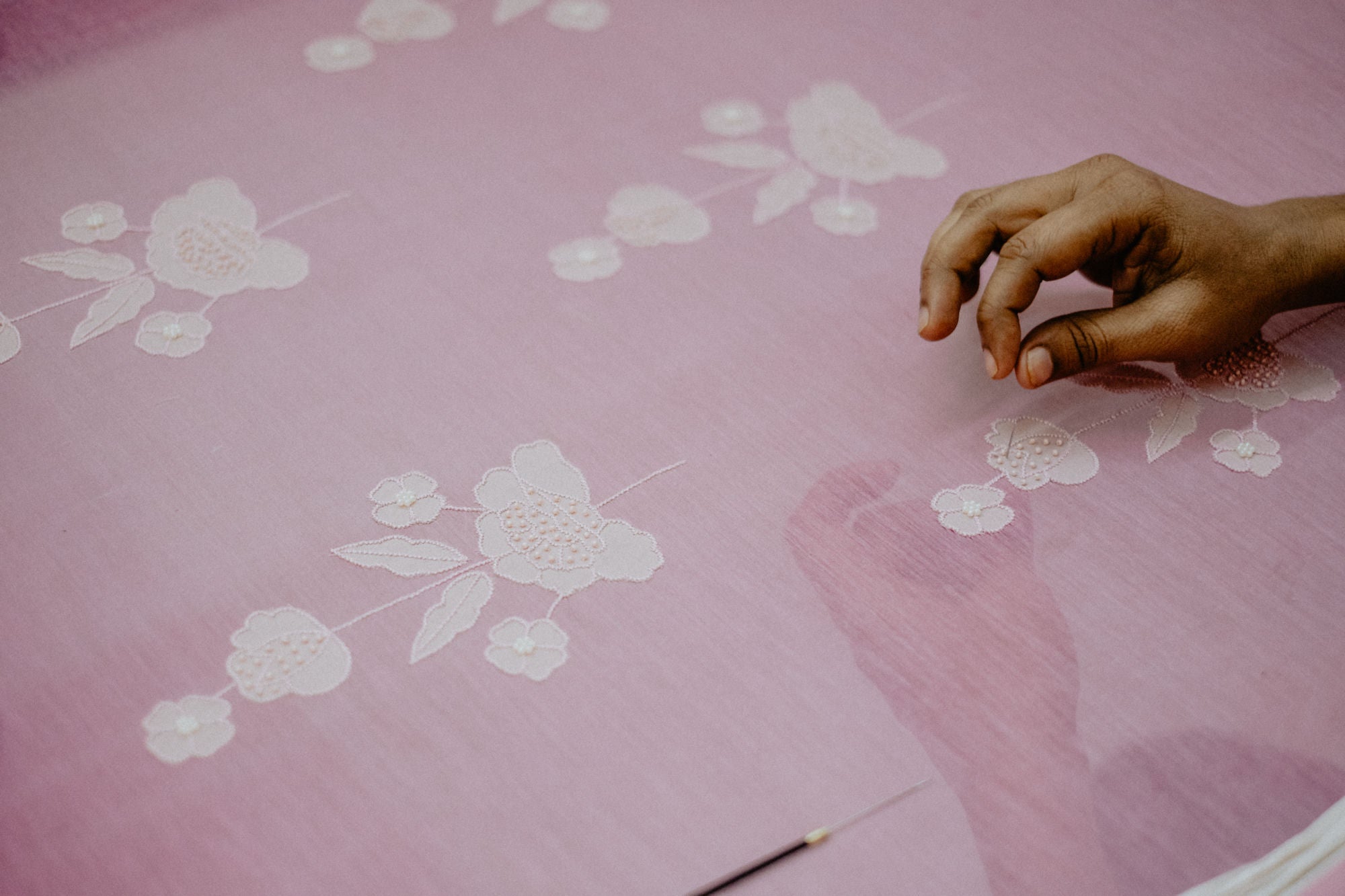
At Rashika Mittal, every garment is fully handmade by skilled karigars in our Jaipur ateliers. From the zari-embroidered borders of a Banarasi silk saree to the delicate gota patti on a chanderi kurta, each piece takes four to five weeks to create. This lookbook is designed to help you see how these pieces come together into complete, occasion-ready outfits.
We have styled each look around a hero garment — a saree, lehenga, anarkali, or kurta set — and paired it with a handcrafted dupatta where the pairing elevates both pieces. The styling notes suggest jewellery, footwear, and hair ideas that complete the vision without dictating a single way to wear it. Indian dressing has always been personal. These looks are a starting point, not a prescription.
If you are unsure which colours suit your skin tone, our Colour Guide can help. For deeper understanding of the techniques behind our embroidery, visit the Embroidery Guide. To care for your handcrafted garments after the celebration, our Fabric Care page has everything you need.