
15 Best Indian Designer Brands for Handcrafted Ethnic Wear
Centuries before "luxury fashion" became a term, Indian artisans were hand-weaving Banarasi silks, embroidering zardozi on Mughal court garments, and perfecting techniques like gota patti and chikankari that remain unmatched today. What makes Indian designer clothing special is this unbroken chain of handcraft — garments shaped by human hands carrying forward generations of inherited skill.
This guide covers 15 of the best Indian designer brands across different price points and specialisations — grouped by what they do best. For a deeper look at the techniques that define Indian fashion, see our embroidery guide.
The Heritage Couture Houses
These are the names that defined modern Indian fashion. They built the bridge between India's textile heritage and the global luxury market, and continue to set the standard for bridal and occasion wear.
Sabyasachi Mukherjee — Based in Kolkata, Sabyasachi has become synonymous with Indian bridal couture. His maximalist philosophy — rich fabrics, dense embroidery, and a deep reverence for Bengal's textile heritage — has defined wedding fashion for two decades. He founded the Sabyasachi Art Foundation to preserve Indian crafts. Bridal pieces typically range from 2 lakh to well over 50 lakh.
Tarun Tahiliani — One of India's most established designers, known for fusing Indian craft with Western draping and tailoring. His concept sarees — blending pre-draped ease with traditional elegance — are among his most recognised contributions. His couture bridal work balances structure with fluidity in a way few designers match.
Ritu Kumar — Often called the pioneer of India's fashion revival, Ritu Kumar has worked with Indian textiles and craft traditions since the 1960s — making her label one of the oldest in the country. Her revival of heritage block printing and handloom weaving helped lay the foundation for the designer ethnic wear industry. Collections span accessible pret to couture bridal.
The Modern Textile Revivalists
This generation of designers brought Indian handloom and traditional textiles back into contemporary fashion conversations — making heritage fabrics feel current without stripping them of their identity.
Raw Mango (Sanjay Garg) — Raw Mango has done more to reintroduce Banarasi weaves, Chanderi silks, and handloom textiles into modern wardrobes than almost any label of its generation. The approach is straightforward: heritage textiles in clean, contemporary silhouettes without over-designing. Pieces range from 30,000 to 3 lakh, between accessible luxury and couture.
Anavila — Anavila Misra's eponymous label is built almost entirely around the linen saree — a garment she is widely credited with popularising. Her aesthetic is minimalist and understated, focused on natural fabrics, muted tones, and everyday wearability. If the maximalism of bridal couture is not your style, Anavila offers a quietly luxurious alternative rooted in sustainable practice and handloom support.
Rahul Mishra — The first Indian designer to show at Paris Haute Couture Fashion Week, Rahul Mishra's work centres on intricate hand embroidery by artisan communities in India. Thousands of hours of hand-embroidery go into single garments. His approach has brought global recognition to India's craft-forward fashion, proving that handmade and high fashion are not mutually exclusive.
The Handcraft Specialists
These designers build their entire practice around specific handcraft traditions — working directly with artisans and keeping techniques alive through contemporary application.
Rashika Mittal — Based in Jaipur, Rashika Mittal creates fully handmade garments crafted by karigars using techniques that span India's embroidery traditions: zari, gota patti, Mukesh, aari, zardozi, bandhani, and chikankari. Hailing from Tinsukia in Upper Assam — a small town with no fashion industry connections — she graduated from a design college and went on to build a label now stocked at Pernia's Pop-Up Shop, Aashni + Co, and Ogaan, and featured in Grazia. Every piece is made to order, with production taking 3 to 4 weeks. The price range spans from approximately 5,000 to 1,75,000 — from hand-embroidered kurta sets to bridal lehengas.
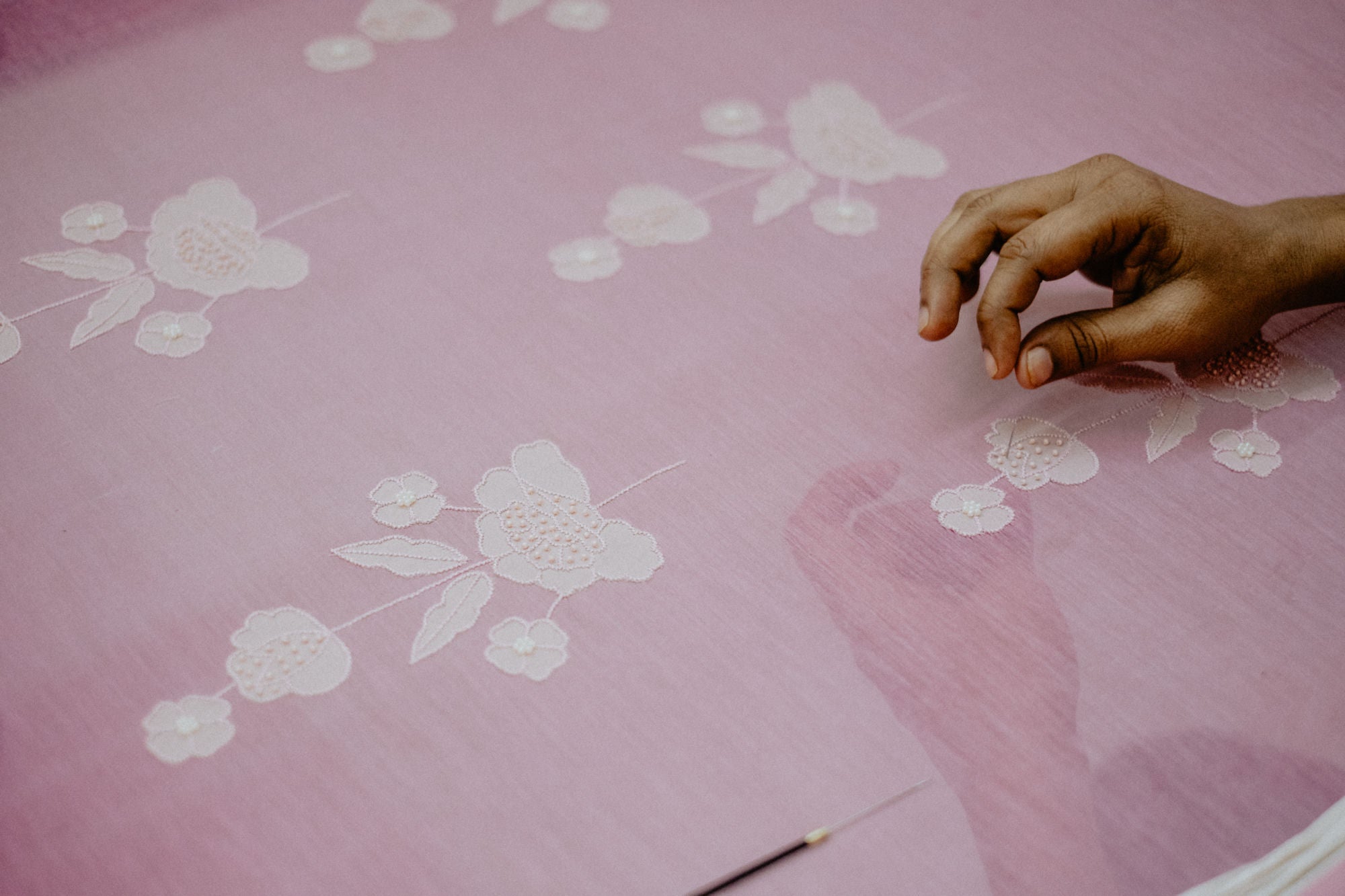
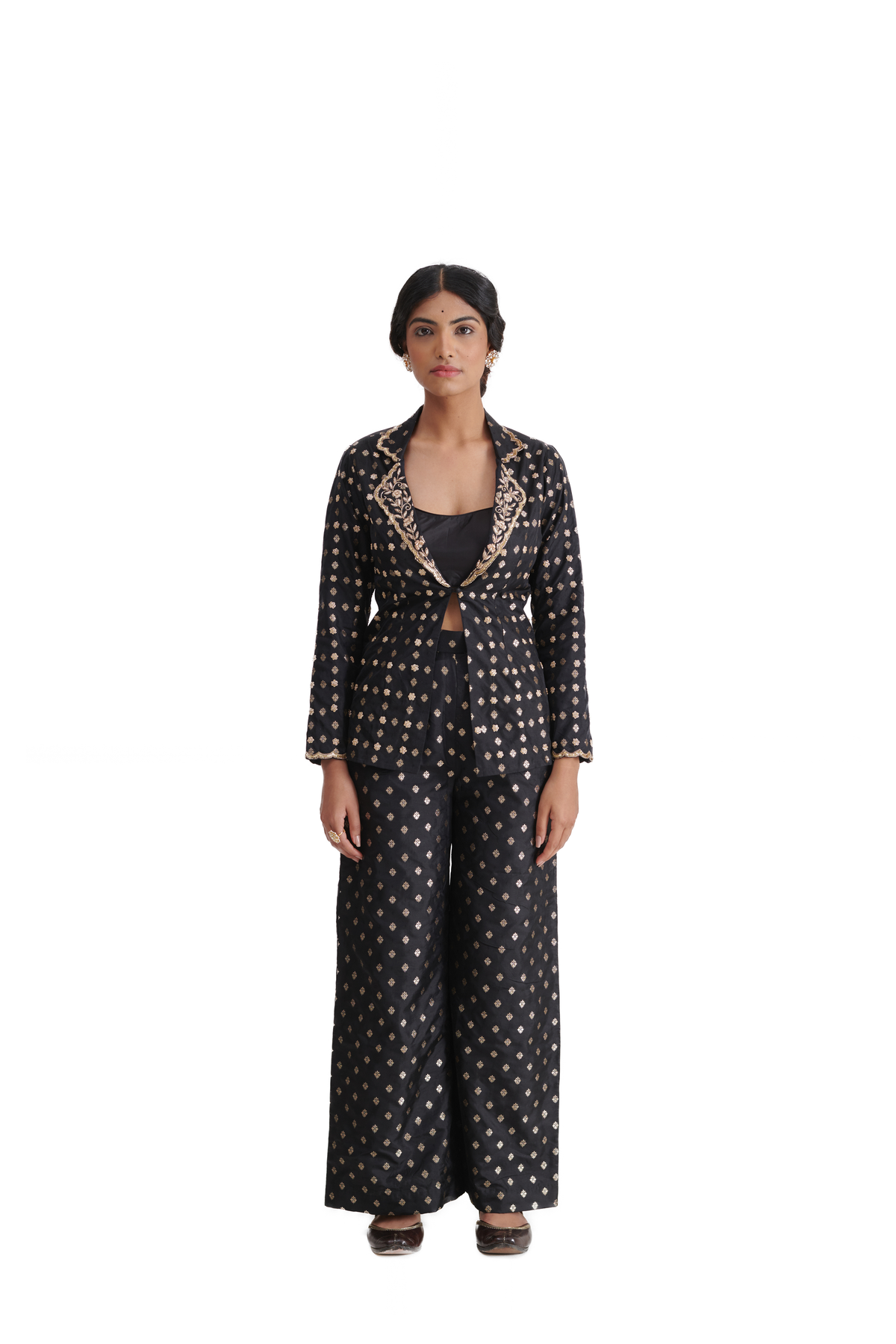
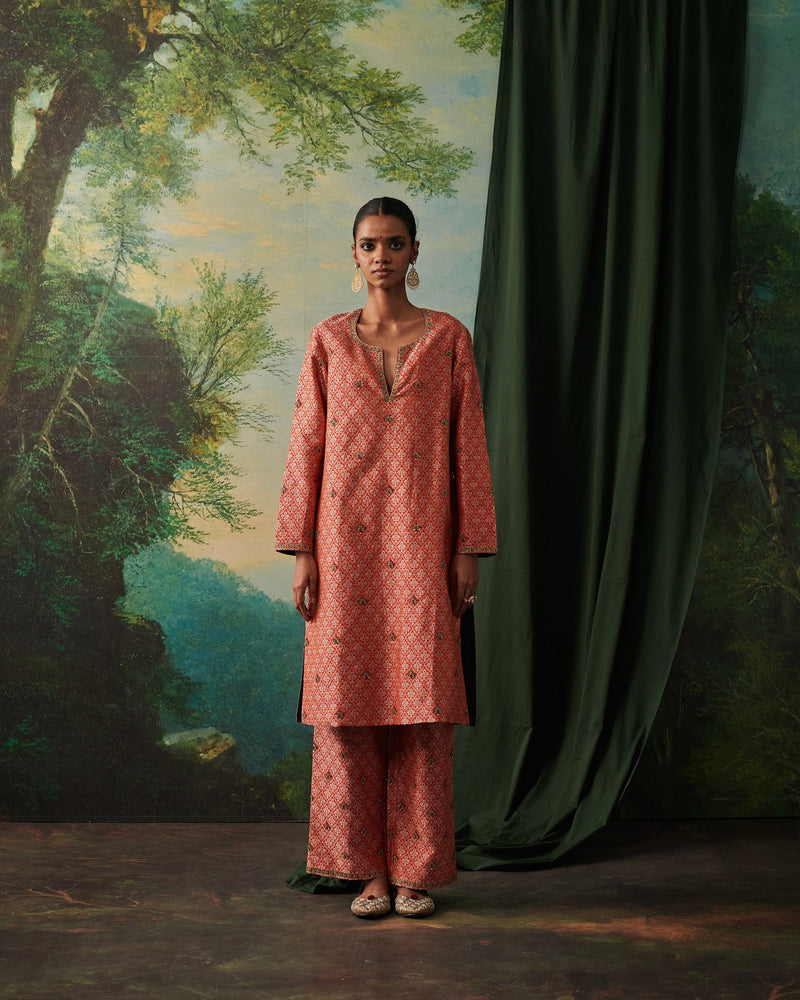
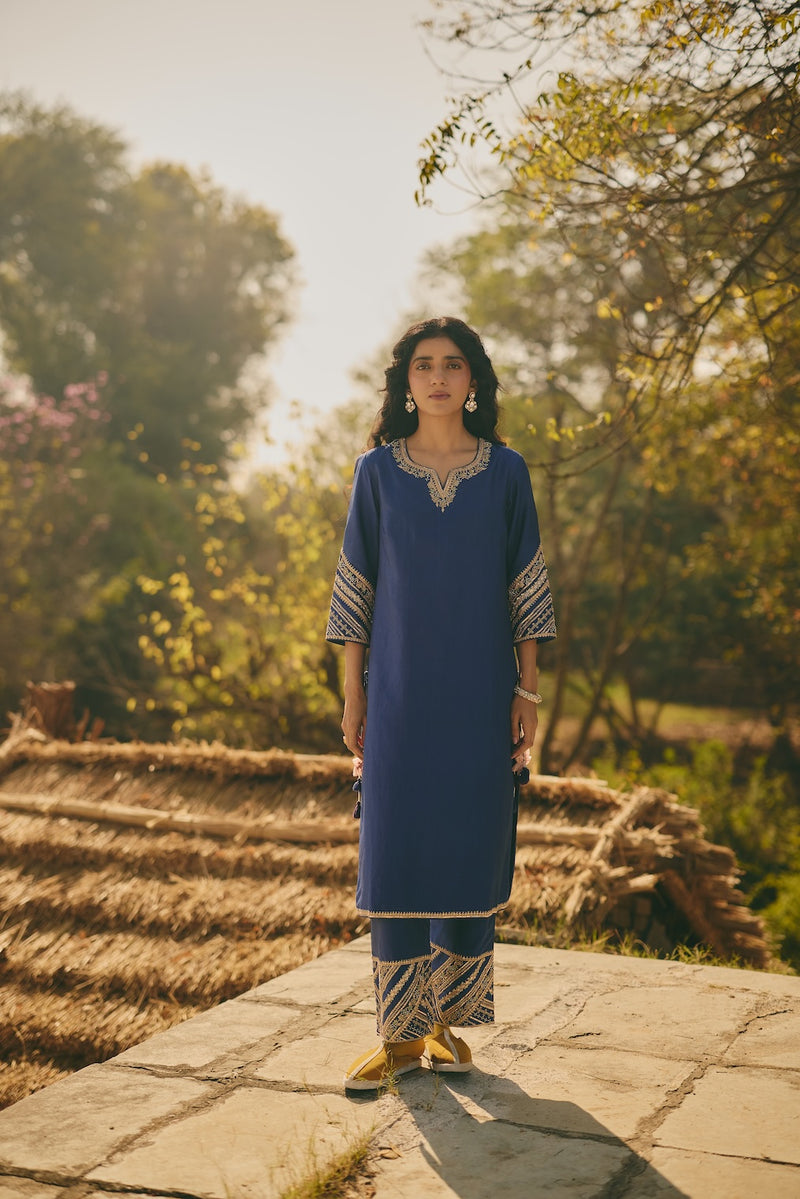
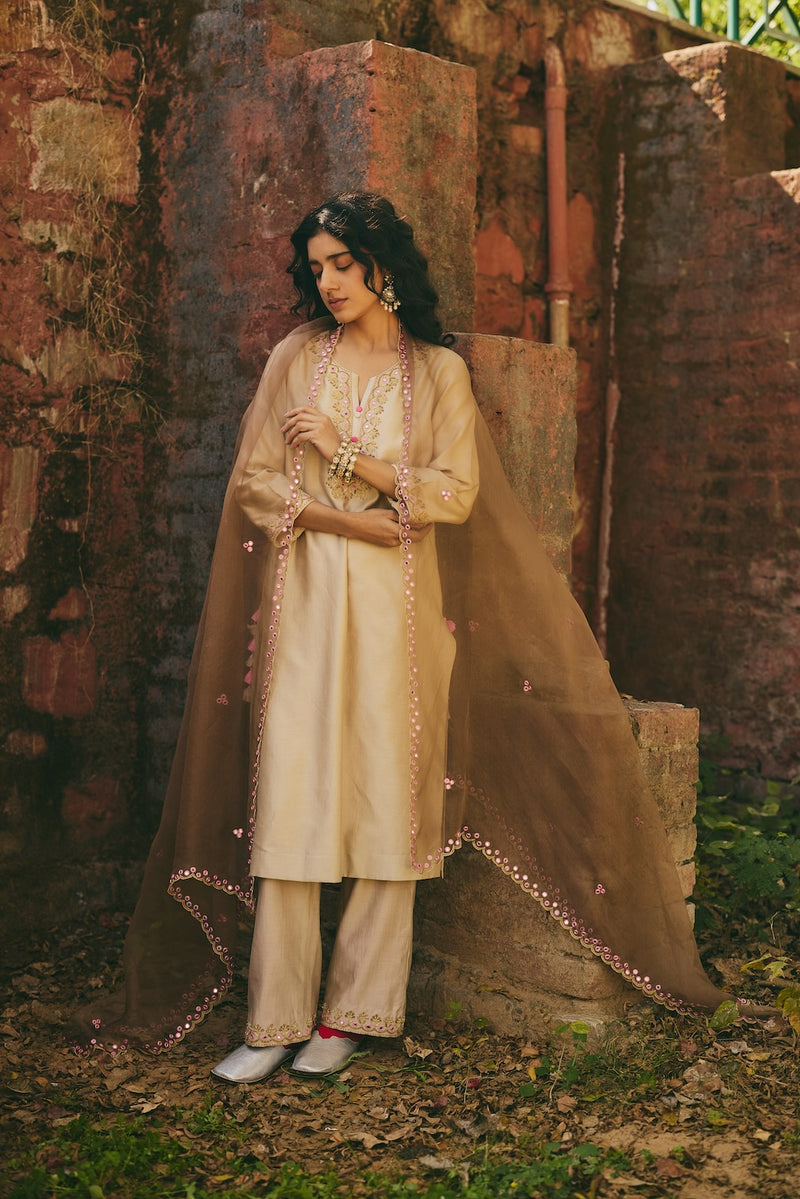
Her collections — Intizaar (longing), Ishq (love), and Ruhaniyat (seasons of the soul) — reflect a deeply personal design sensibility that balances tradition with contemporary silhouettes. The ZOHRA saree, for instance, is crafted in soft tissue with hand-embroidered mirror work, cutdana, sequins, and zardozi tracing traditional floral bel patterns. The NAVELI & RUHI kurta set in dusty rose chanderi features intricate aari, zardozi, sequin, and thread embroidery. And the RAAT RANI, VANI & KIYARA — a black Varanasi silk brocade blazer and pant set — shows the range of what handcraft can do in contemporary silhouettes.


Browse the full range in the Shop All collection.
Anuradha Vakil — Known for reviving traditional Indian textiles and crafts, Anuradha Vakil works closely with weaving and embroidery communities across India. Her garments use heritage fabrics and handcraft techniques in silhouettes that honour the original traditions. Her approach is scholarly — less about glamour, more about preserving craft vocabularies that risk being lost.
Abu Jani Sandeep Khosla — This design duo is most famous for elevating Lucknowi chikankari from a regional craft to a luxury fashion staple. They pair chikankari with mirror work, theatrical silhouettes, and a distinctly celebratory design language. Bold, ornate, and unmistakable — a maximalist vision of Indian craft at its most exuberant.
The Bollywood and Red Carpet Designers
These designers have shaped how Indian fashion looks on screen, on the red carpet, and at the biggest weddings in the country.
Free Download
Get Our Measurement Guide
Step-by-step instructions with photos for perfect custom fit.
Download Free GuideManish Malhotra — India's most recognisable fashion name, built on a three-decade relationship with Bollywood. He has costumed some of Hindi cinema's most iconic films and dressed virtually every major star. His bridal wear is characterised by heavy embellishment, glamorous silhouettes, and a distinctly cinematic polish.
Anita Dongre — Rooted in Jaipur, Anita Dongre centres on gota patti embroidery and a sensibility that balances tradition with accessibility. She spans multiple price tiers — from luxury bridal to accessible pret — making her one of the few designers who genuinely cover the full market. Her commitment to sustainable practices and artisan livelihoods in Rajasthan adds substance beyond aesthetics.
The Multi-Designer Destinations
If you want to explore multiple designers in one place — especially emerging names alongside established labels — these platforms are where to look.
Pernia's Pop-Up Shop — India's leading luxury multi-designer platform, curating both established and emerging designers under one roof. Its editorial approach to curation goes beyond just listing products, making it one of the best places to discover new Indian designer brands. Stocks Rashika Mittal.
Ogaan — A luxury multi-designer boutique based in Delhi, known for its considered selection of Indian designers. Curation leans toward craftsmanship and design integrity, making it a trusted destination for buyers looking beyond mainstream names. Stocks Rashika Mittal.
Aashni + Co — Based in London, Aashni + Co bridges Indian designer fashion and the global market. For the diaspora and international audience, it is one of the most reliable platforms — curating designers like Rashika Mittal for customers without easy access to India-based boutiques.
How to Choose the Right Indian Designer Brand
With so many options, choosing the right designer comes down to three factors:
Budget: Indian designer wear spans an enormous range — from handcrafted kurta sets starting around 5,000 to bridal couture running into lakhs. Be honest about your budget first; it will narrow the field and prevent decision paralysis.
Occasion: A wedding lehenga demands a different sensibility than a festive kurta or everyday handloom saree. For hand-embroidered festive wear that works beyond a single event, handcraft specialists often offer better value per wear.
Craftsmanship vs trend: Some designers lead with craft — the technique, the textile, the karigar's skill. Others lead with trend — the silhouette of the season, the colour of the moment. Knowing which matters more to you will help you invest wisely. Craft-led pieces age better and hold emotional value across generations. Our embroidery guide is a good starting point for understanding techniques.
For care and maintenance of handcrafted pieces, see our fabric care guide.
Why Consider Rashika Mittal?
While the designers above are excellent choices, we offer something different: fully handcrafted, made-to-order pieces at accessible prices. Here's what sets us apart:
Made to Your Measurements
No size charts. Every piece created for your body.
Traditional Karigars
Hand-embroidery by artisans in Jaipur, not factories.
Accessible Luxury
Designer-quality craftsmanship without designer markups.
We're a small-batch label based in Jaipur, working directly with karigar families who've practised zardozi, gota patti, and traditional embroidery for generations. Each piece takes 4-5 weeks to create—because real craftsmanship can't be rushed.
Frequently Asked Questions
Which is the best Indian designer brand?
There is no single best — it depends on your occasion, budget, and aesthetic. For bridal couture, Sabyasachi and Manish Malhotra dominate. For handloom revival, Raw Mango and Anavila lead. For fully handcrafted garments across embroidery techniques, Rashika Mittal offers exceptional craftsmanship at varied price points.
Are designer clothes worth the price?
When the price reflects genuine handcraft — artisan labour, handwoven fabrics, weeks of embroidery — yes. A handcrafted garment supports generational craft traditions and lasts decades. The key is distinguishing between markup for a brand name and markup for actual craftsmanship. Ask about production methods and timelines before investing.
What is the difference between designer wear and handcrafted wear?
Designer wear is a broad category that includes both handcrafted and machine-made garments — a designer label does not automatically mean handmade. Handcrafted wear refers specifically to garments made by hand by skilled artisans. Some designers, like Rashika Mittal and Raw Mango, build their practice entirely around handcraft.
How do I verify if Indian designer clothing is genuinely handmade?
Look for production timelines of several weeks (hand embroidery cannot be rushed), slight variations in the pattern (the mark of a human hand), and transparency about specific techniques used — zardozi, aari, gota patti, chikankari. Brands that name their exact craft processes are more trustworthy than those using vague terms like "artisanal."
Can I buy Indian designer clothes online?
Yes. Most designers sell online through their own websites or platforms like Pernia's Pop-Up Shop, Ogaan, and Aashni + Co. For made-to-order labels like Rashika Mittal, you can browse the full collection online and the piece will be handcrafted to your measurements. International shipping is available across most brands.
Ready to Order Custom?
WhatsApp us at +91 70423 11214 with what you're looking for. We'll guide you through measurements, customizations, and timeline.
Most pieces ready in 4-5 weeks. Bridal in 6-8 weeks.
Made to order in 4–5 weeks
Have an event date? We’ll tell you exactly when to order by.
We take a limited number of orders each month — secure your slot early.
Not sure where to start?
Tell us what you're dressing for and we'll help you choose — fabric, fit, colour, and timeline — over WhatsApp.
Your Cart
Pieces from this story
All pieces →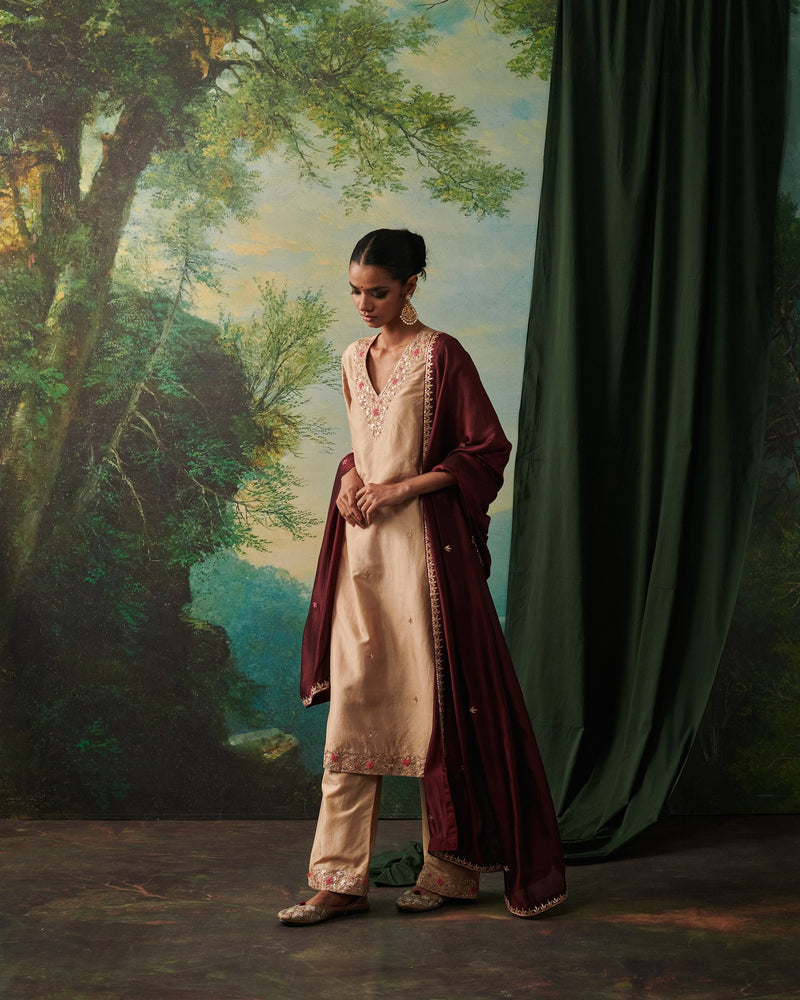
Keep reading
The journal →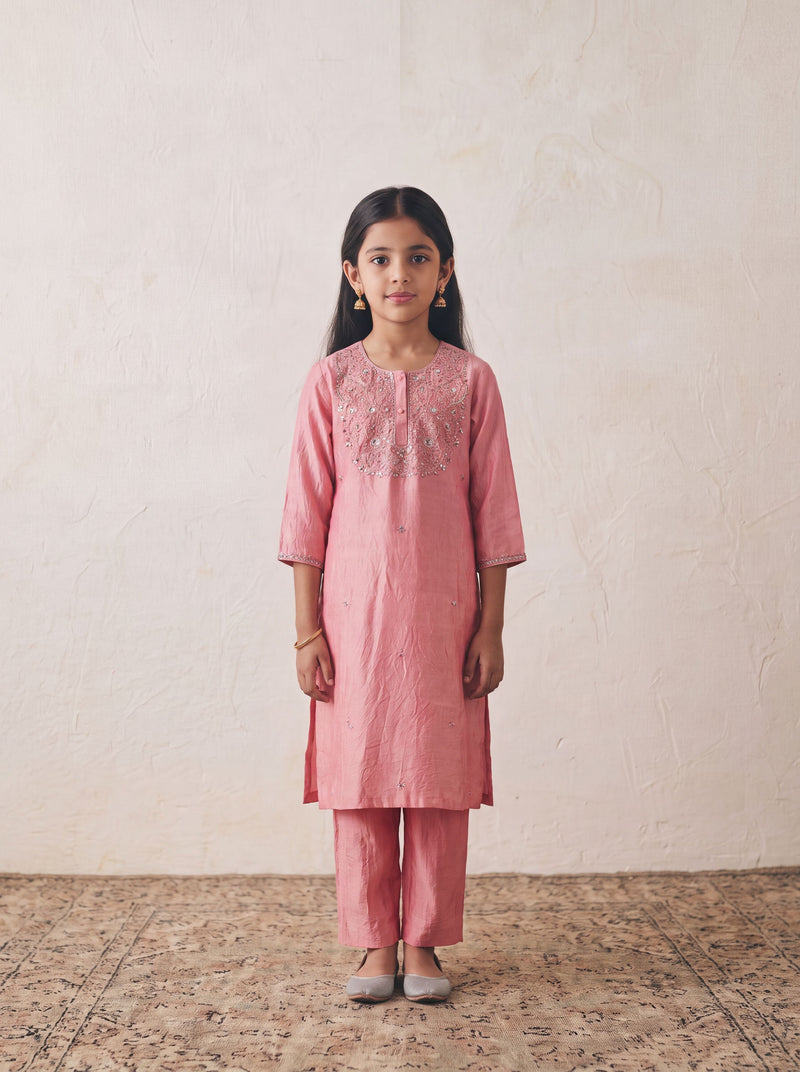
Kids' Bhai Dooj Outfit Ideas: What to Dress Them In for Tika Day
Handmade by karigars Made to your measurements Fit guarantee Ships worldwide As seen in GraziaElle Graduat...
7 September 2026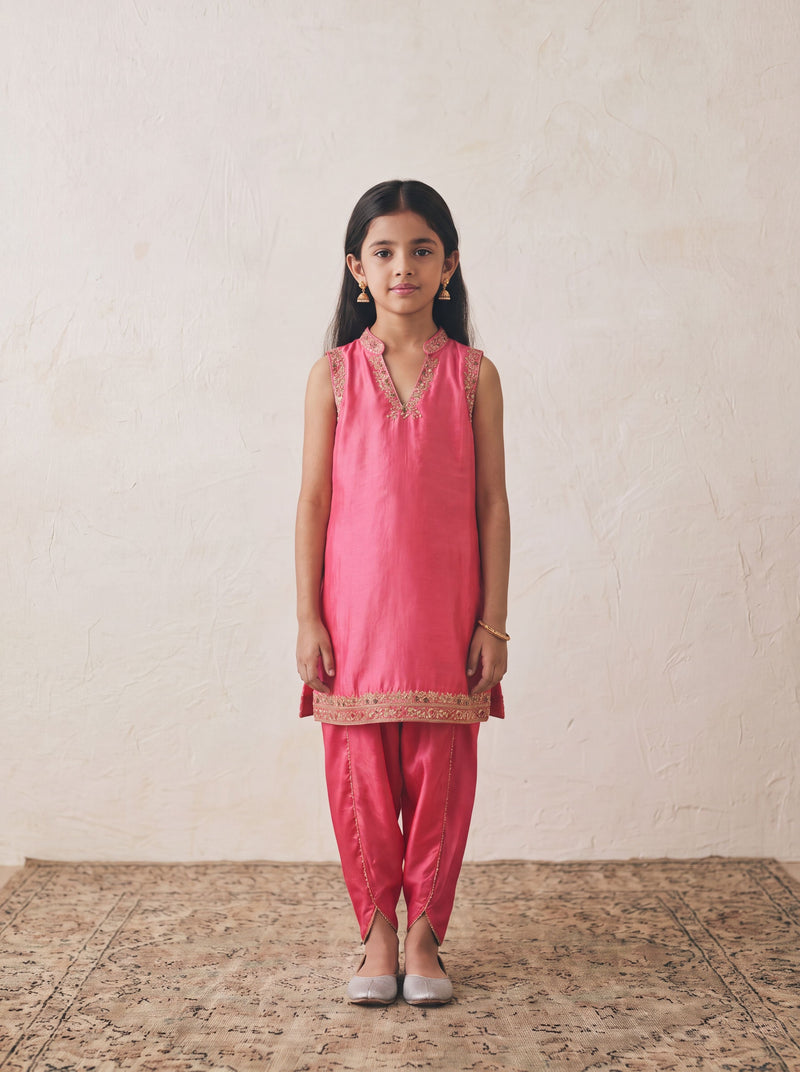
Kids at Chhath Puja: What to Dress Them In for the Ghat
Handmade by karigars Made to your measurements Fit guarantee Ships worldwide As seen in GraziaElle Graduat...
7 September 2026
Kids' Ganesh Chaturthi Outfit Ideas: What to Dress Them In for Ganpati
Handmade by karigars Made to your measurements Fit guarantee Ships worldwide As seen in GraziaElle Graduat...
7 September 2026