
Karwa Chauth Outfit Ideas: What to Wear for Karwa Chauth 2026
Karwa Chauth is one of those occasions where what you wear carries as much meaning as the fast itself. The colour you choose, the fabric you drape, the embroidery along your border — all of it becomes part of the ritual. It's a day steeped in tradition, but also deeply personal. You're dressing not just for a ceremony but for someone, and that makes the outfit selection more intentional than almost any other occasion on the Indian calendar.
Whether you lean towards a classic saree, a richly embroidered kurta set, or a layered look with a statement dupatta, the key is choosing something that feels both celebratory and authentic to you. This guide covers the best Karwa Chauth outfit ideas for 2026 — from traditional red sarees to modern kurta sets — with styling tips, jewellery pairings, and a closer look at why sindoori red remains the colour of the day.
Why Red? The Significance of Sindoori Red on Karwa Chauth
Red on Karwa Chauth isn't just a colour preference — it's a symbol. Sindoori red, the deep vermillion shade that sits between scarlet and maroon, takes its name from sindoor itself. It represents saubhagya (marital prosperity), love, and the energy of commitment. In Indian culture, red has always been the colour of beginnings — brides wear it, temples are draped in it, and tikkas are applied in it.
On Karwa Chauth specifically, wearing red connects the day to its roots. The fast, the sargi, the moon sighting — all of it ties back to devotion and partnership. Dressing in sindoori red is a way of carrying that symbolism visibly, in a colour that catches every eye in the room when you break the fast at moonrise.
That said, red isn't a rigid rule. Maroon, deep pink, wine, and even coral are all within the traditional spectrum. What matters is the intention behind the choice. But if you want to go classic — and most women do on Karwa Chauth — a deep, rich red is the strongest statement you can make. For a deeper understanding of how colour works with your skin tone, read our colour theory and skin tone guide.
Karwa Chauth Saree Ideas: The Traditional Choice
A saree on Karwa Chauth is the most traditional route, and there's a reason it endures. The drape itself — six yards of fabric wrapped with care — mirrors the occasion. It takes time, it requires attention, and the result is a silhouette that feels both timeless and intentional.
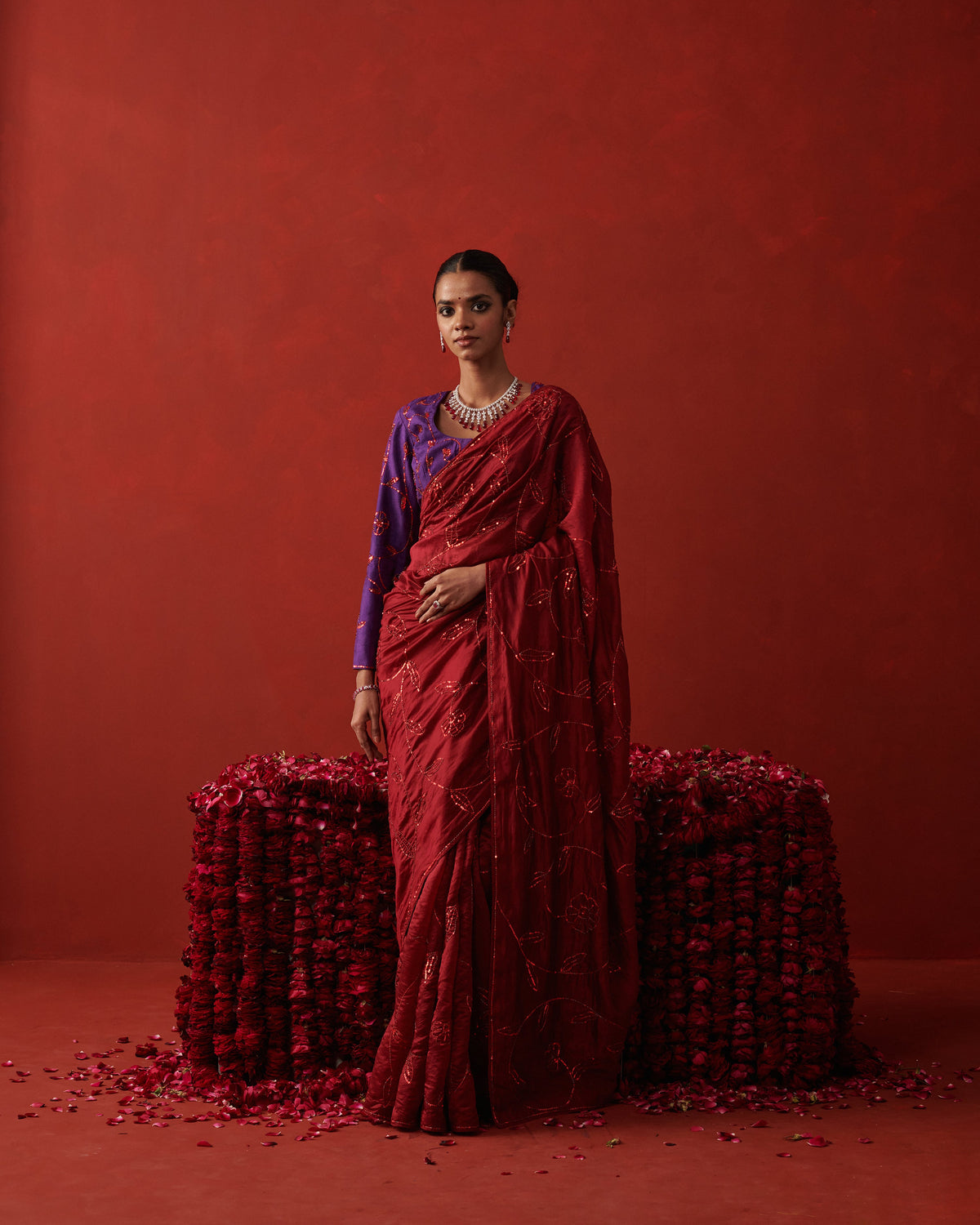
The LAAL ISHQ saree is crafted in deep vermillion organza silk with sequin vines and abstract florals embroidered across the sheer base. The embroidery trails softly along the body of the saree, capturing light and movement with every step. The colour — a true, deep vermillion — is exactly the shade that comes to mind when you think Karwa Chauth.

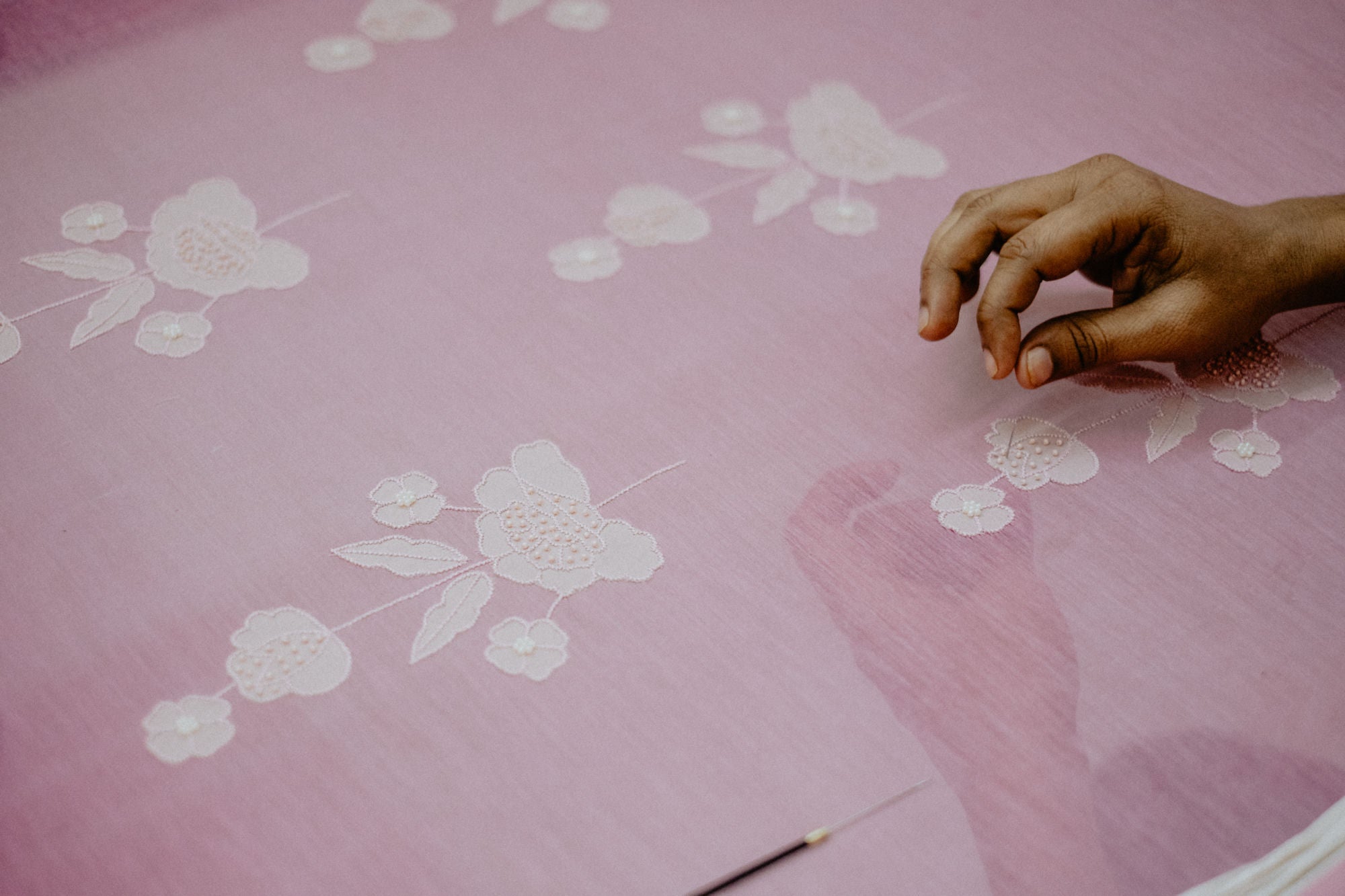
For something with more surface work, the SAKHI is a deep sindoori red organza saree hand-embroidered with sequin, cutdana, and gota work. It features floral butis across the body and a bold scalloped border that echoes traditional bridal motifs, reimagined with modern finesse. The density of the embroidery gives it presence without heaviness — organza keeps it light.

If you prefer chiffon's fluid drape over organza's structure, the MEHFIL saree is crafted in rich chiffon in a deep sindoori red. The border features hand-embroidered floral vines and trailing paisleys in sequins, cutdana, and thread work in soft gold, while the body carries delicate scattered motifs. Chiffon moves differently from organza — it clings and flows rather than holding shape — which creates a softer, more relaxed silhouette.

For more ideas on pairing your saree with the right blouse, see our guide to saree blouse designs.
Karwa Chauth Kurta Set Ideas: Modern and Comfortable
Not everyone wants to drape a saree, and Karwa Chauth doesn't require it. A well-made kurta set in the right colour, with the right embroidery, carries just as much weight as a saree. The advantage: you can move easily, sit comfortably through the evening, and still look dressed for the occasion.
The JAZABAH & SAIYAN is a deep red silk kurta set featuring tonal embroidery along the neckline, hem, and sleeves. The embroidery uses a blend of traditional gota patti, marodi, resham, and bead work, referencing heirloom festive styles from Northern India. The floral bel pattern along the borders is hand-done, with paisley-inspired motifs that carry through to the pant hem for a cohesive look. The silk has a rich, luminous quality that photographs beautifully at moonrise.

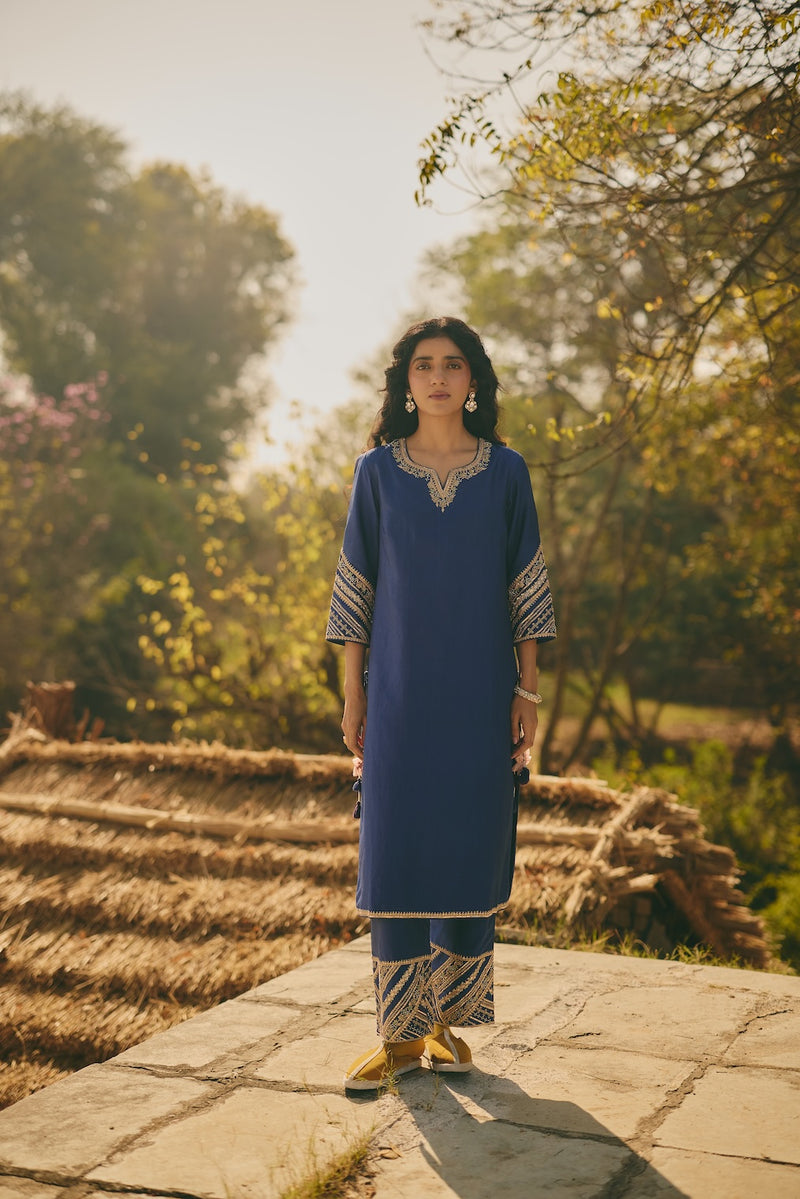
The FARIHA & NAZEERA takes a different approach. The kurta is crafted in premium Chanderi in a striking crimson red, featuring a deep V-neckline with an expansive yoke of hand-embroidery — fine Aari and Marodi work creating a dense tapestry of golden vines and floral motifs. The sleeves are finished with broad, ornate borders, and the body is sprinkled with delicate geometric floral butis. Paired with the straight-fit silhouette of the Nazeera pant, it's the kind of set that works for a Karwa Chauth dinner or pooja equally well.

Browse the full kurta sets collection for more options in red, wine, and festive colours.
Complete the Look: Blouses and Dupattas
Sometimes the most impactful Karwa Chauth outfit is built from separates rather than a single set. A statement blouse paired with a solid saree, or a richly embroidered dupatta layered over a simple kurta, can create a look that feels personal and considered rather than off-the-rack.
Free Download
Get Our Measurement Guide
Step-by-step instructions with photos for perfect custom fit.
Download Free GuideThe DUA blouse is crafted in deep red silk with all-over floral bootis hand-embroidered using sequins, cutdana, and gota work. The neckline and sleeves are finished with a delicate border, and the back features a round cut with embroidery tracing the edges. Pair it with a plain red or gold saree and let the blouse carry the outfit.

The INAAYAT is a red organza dupatta with intricate gold zari hand-embroidery and delicate circular floral motifs. The edges are highlighted with shimmering gold sequins, and the scattered floral embellishments are crafted with fine resham thread, gold beads, and sequins. Draped over a simple red or white kurta, it adds a layer of festive richness without committing to a full embroidered set. For draping inspiration, see our dupatta draping styles guide.

Jewellery and Styling Tips for Karwa Chauth
The outfit is one half of the equation. Jewellery, hair, and finishing details complete the picture. Here's what works best for Karwa Chauth:
Jewellery: Gold is the traditional choice and pairs naturally with sindoori red. A choker or close-fitting necklace works well with sarees and deep necklines, while a longer rani haar suits high-neck kurtas. Chandbalis or jhumkas are the go-to earring — they catch light and frame the face during the moon-sighting moment. Bangles are essential — either gold kadas or a stack of red and gold bangles that echo the colour of your outfit.
Bindi and sindoor: A round red bindi is classic, but a larger decorative bindi or a small gold one can add a modern touch. Sindoor is traditionally applied during the ritual — many women opt for a fresh application as part of getting ready.
Hair: A low bun with a gajra (jasmine garland) is the most traditional choice. If your outfit is heavily embroidered, keep hair simple — a clean centre parting with a bun or a loose braid lets the clothes do the talking. For lighter outfits, loose curls or waves add softness.
Footwear: Juttis in gold or red complement the colour palette. If your saree or kurta is floor-length, prioritise comfort over height — you'll be on your feet for the evening pooja and moon sighting.
Mehndi: Karwa Chauth mehndi is simpler than bridal mehndi — typically covering the palms and the back of the hands. Getting it applied a day before gives the colour time to deepen to a rich maroon that complements your outfit.
How to Choose Between a Saree and a Kurta Set
This comes down to three things: the setting, your comfort level, and how long you'll be wearing the outfit.
Choose a saree if: You're attending a larger gathering or community pooja, you want maximum visual impact for photos, or the occasion feels formal. A saree in organza or chiffon — like the LAAL ISHQ or MEHFIL — creates a silhouette that nothing else replicates.
Choose a kurta set if: You're celebrating at home or with close family, comfort through the fasting day matters, or you prefer a more understated elegance. A silk kurta set like the JAZABAH & SAIYAN carries the same richness as a saree but lets you move freely.
Mix and match if: You want something in between. A simple saree with the DUA blouse, or a plain kurta elevated with the INAAYAT dupatta, gives you flexibility and a look that feels curated rather than prescribed.
Explore the full saree collection, kurta sets, and dupattas for more options in festive reds.
Frequently Asked Questions
What is the best colour to wear on Karwa Chauth?
Red is the most traditional and widely worn colour for Karwa Chauth — specifically sindoori red or vermillion. It represents saubhagya (marital prosperity) and connects to the symbolism of sindoor. Maroon, deep pink, and wine are also appropriate. There is no strict rule, but red remains the strongest traditional choice.
Can I wear a kurta set instead of a saree on Karwa Chauth?
Absolutely. Karwa Chauth does not require a saree. A richly embroidered kurta set in red or a festive colour is entirely appropriate and increasingly popular, especially for home celebrations or intimate gatherings. What matters is the colour, the quality of the outfit, and the intention behind it — not the garment type.
What jewellery should I wear for Karwa Chauth?
Gold jewellery is the traditional pairing. A choker or statement necklace, chandbali or jhumka earrings, and red-and-gold bangles are classic choices. The key is matching the scale of your jewellery to your outfit — heavier embroidery calls for simpler jewellery, and simpler outfits can support bolder pieces.
When should I order a handmade outfit for Karwa Chauth 2026?
Handmade outfits typically require 4-5 weeks of production time, plus shipping. For Karwa Chauth 2026 (which falls in October), placing your order by late August or early September ensures your outfit arrives with time for any adjustments. Last-minute orders risk delays, especially during the festive season when artisan workshops are at peak capacity.
Is it necessary to wear new clothes on Karwa Chauth?
While wearing something new is considered auspicious and is a common tradition, it is not a strict requirement. Many women wear a cherished saree or a favourite festive outfit. The spirit of the day is about devotion and celebration, not necessarily a new purchase. That said, if you want to treat the occasion as an excuse for something special — that is entirely valid too.
What kind of saree fabric works best for Karwa Chauth?
Organza and chiffon are excellent choices — they are lightweight enough to wear through the evening comfortably, drape beautifully, and carry embroidery well without feeling heavy. Banarasi silk is also traditional but heavier. For a warm October evening, organza or chiffon in red is the sweet spot between comfort and occasion.
Ready to Order Custom?
WhatsApp us at +91 70423 11214 with what you're looking for. We'll guide you through measurements, customizations, and timeline.
Most pieces ready in 4-5 weeks. Bridal in 6-8 weeks.
Made to order in 4–5 weeks
Have an event date? We’ll tell you exactly when to order by.
We take a limited number of orders each month — secure your slot early.
Not sure where to start?
Tell us what you're dressing for and we'll help you choose — fabric, fit, colour, and timeline — over WhatsApp.
Your Cart
Pieces from this story
All pieces →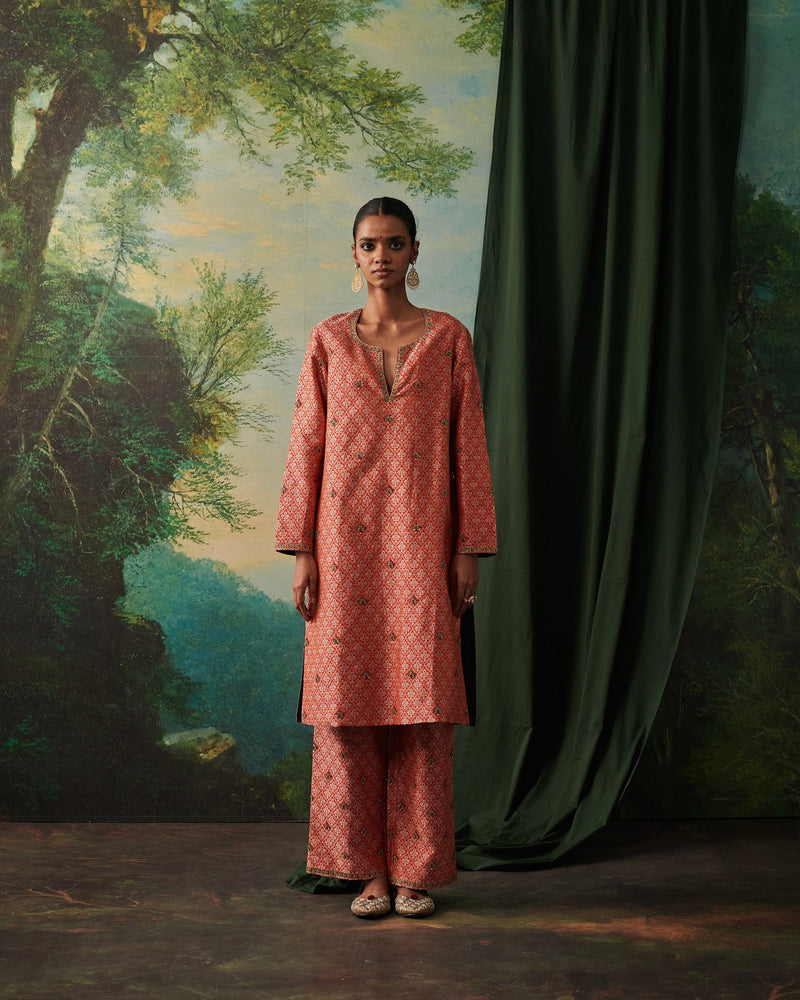
Keep reading
The journal →
Dholki Night Outfit Ideas: What to Wear to the Ladies' Dhol
Handmade by karigars Made to your measurements Fit guarantee Ships worldwide As seen in GraziaElle Graduat...
27 July 2026
Mayra & Bhaat Outfit Ideas: Dressing for the Maternal Gift Ceremony
Handmade by karigars Made to your measurements Fit guarantee Ships worldwide As seen in GraziaElle Graduat...
27 July 2026
Pag Phera Outfit Ideas: What to Wear for the Bride's Homecoming
Handmade by karigars Made to your measurements Fit guarantee Ships worldwide As seen in GraziaElle Graduat...
27 July 2026