
Chikankari Embroidery: The Timeless White-on-White Craft of Lucknow
There is an embroidery tradition in India so refined that it was once called the "embroidery of the shadows." Chikankari — Lucknow's celebrated white-on-white needlework — is among the most delicate textile arts in the world. It reveals itself slowly: in the play of light through pulled threads, in the quiet texture of stitches so fine they seem to float on the fabric surface.
At Rashika Mittal, we work with karigars who practise these same heritage embroidery traditions — techniques passed down through generations, each stitch placed entirely by hand. Here is everything you need to know about this luminous craft.
What Is Chikankari Embroidery?
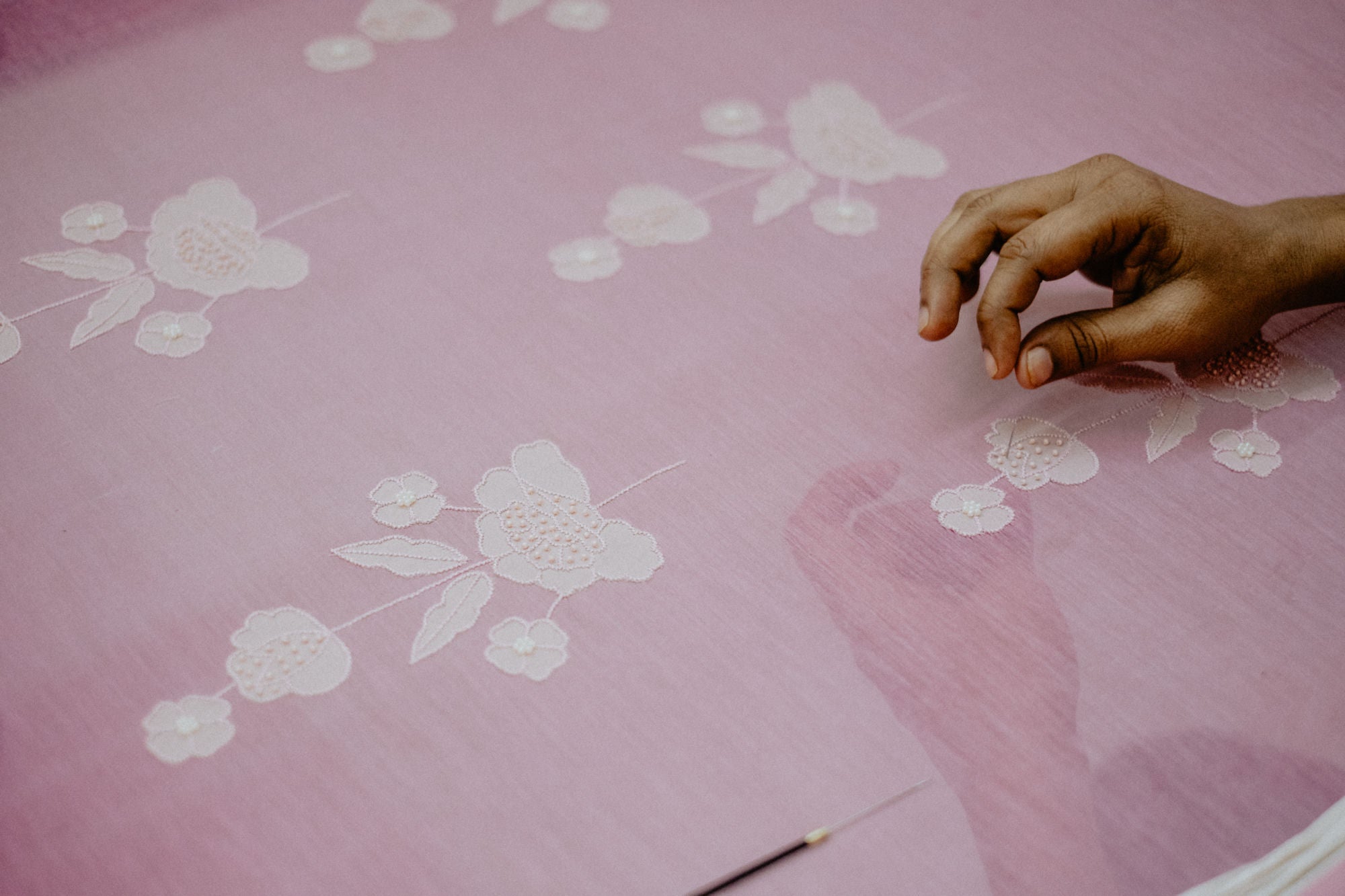
Chikankari is a traditional hand embroidery technique originating from Lucknow, Uttar Pradesh. The word is derived from the Persian chakin or chikan, meaning cloth wrought with needlework. At its essence, chikankari involves creating intricate floral and paisley patterns on fabric using white thread — though contemporary interpretations also use coloured threads and pastel palettes.
What makes chikankari unique among Indian hand embroidery traditions is its subtlety. Unlike gota patti or zardozi, which create bold, reflective surfaces, chikankari produces a tone-on-tone texture that is felt as much as seen. The embroidery is worked on the front and back of the fabric, and some stitches even involve pulling threads apart to create tiny, lace-like openwork patterns.

The History of Chikankari: From Mughal Courts to Modern India
The most widely told origin story credits Nur Jahan, the Mughal empress and wife of Emperor Jahangir, with introducing chikankari to India in the early 17th century. She is said to have been inspired by Turkish embroidery and brought the technique to the Mughal court, where it flourished under royal patronage. Lucknow, the capital of Awadh, became the epicentre of chikankari production — a status it holds to this day.
Under the Nawabs of Awadh, chikankari evolved from simple running stitches into a complex vocabulary of over 30 distinct stitch types. After independence, royal patronage disappeared, but the craft survived through the dedication of artisan families in Lucknow's old city. Today, chikankari is recognised as a Geographical Indication (GI) product of Lucknow and remains one of India's most cherished textile traditions.
Types of Chikankari Stitches
Chikankari is not a single stitch but a family of techniques — over 30 named stitches, each creating a different texture and effect. They are broadly grouped into three categories:
Flat Stitches (Worked on the Fabric Surface)
Tepchi: The most basic chikankari stitch — a simple running stitch that creates fine, dashed lines. Tepchi is used for outlining motifs and filling small areas. It is often the first stitch a karigar learns.
Bakhia: A backstitch worked from the reverse side of the fabric, creating a fine, shadow-like effect on the front. Bakhia gives chikankari its characteristic "shadow work" quality — skilled karigars work it entirely by feel, never turning the fabric over.
Hool: A small eyelet stitch created by piercing the fabric with a stiletto and working thread around the opening. Hool creates tiny, circular openings that add a lace-like delicacy to the design.
Raised Stitches (Creating Texture and Dimension)
Murri: Tiny, grain-like knots stitched closely together to create raised, textured areas — often used for flower centres and small motifs. Murri is one of the most difficult chikankari stitches, requiring precise tension to create uniform knots.
Phanda: Small, rounded knots — slightly larger than murri — used to create berry-like clusters and dotted patterns. Phanda adds a three-dimensional quality that contrasts beautifully with flat stitches.
Openwork Stitches (Creating Lace-Like Transparency)
Jali: Perhaps the most impressive chikankari technique. Jali involves pulling and twisting fabric threads apart using a needle — without cutting any threads — to create a fine, net-like pattern. The effect is like tiny windows of lace embedded within the fabric, yet every twist is done entirely by hand.
The finest chikankari garments combine all three categories — flat, raised, and openwork stitches — within a single piece, creating a rich interplay of texture, shadow, and transparency.

Fabrics Used for Chikankari
The choice of fabric profoundly affects how chikankari embroidery looks and feels:
Free Download
Get Our Measurement Guide
Step-by-step instructions with photos for perfect custom fit.
Download Free GuideCotton and Cotton Mull: The traditional base for chikankari. Fine cotton allows the pulled-thread jali work to create beautiful transparent patterns, and the matte surface of cotton showcases the texture of raised stitches like murri and phanda. Cotton chikankari is ideal for summer wear and casual elegance.
Georgette: A popular contemporary choice for chikankari. The soft drape of georgette gives chikankari garments a fluid, feminine quality. The semi-sheer fabric makes shadow work (bakhia) particularly beautiful, as the stitches create a layered, dimensional effect.
Silk: Chikankari on silk elevates the craft to bridal and formal territory. The natural sheen of silk adds a luminous quality to white-on-white work, and the fabric's weight gives structured silhouettes — kurta sets and anarkalis — a luxurious hand feel.
Organza: Sheer organza transforms chikankari into something ethereal. The transparency of the fabric means every stitch is visible, and jali work becomes especially striking as light passes through the pulled-thread openings. Organza chikankari works beautifully for dupattas and layering pieces.


How to Style Chikankari for Different Occasions
One of chikankari's greatest strengths is its versatility — few embroidery traditions transition so effortlessly from daily wear to bridal trousseaux.
Casual and everyday: A chikankari kurta set in cotton or georgette — paired with silver jhumkas and kolhapuri chappals — is effortlessly polished. Choose light tepchi and bakhia work for an understated, breathable look. The key is to let the embroidery speak: keep accessories minimal.
Festive occasions: For Eid, Diwali, or family celebrations, elevate chikankari by choosing richer fabrics — silk or tissue — with dense murri and phanda work. A chikankari anarkali with a contrast dupatta in a jewel tone creates a festive look that is elegant without being heavy. A chikankari dupatta over a solid kurta is also a smart festive option.
Weddings and formal events: For wedding functions, look for pieces that combine chikankari with mukesh (mukaish) work — the metallic shimmer of mukesh adds festive sparkle to the delicate white-on-white base. A chikankari-mukesh lehenga or saree with all-over jali work is a timeless choice for sangeet, mehndi, and intimate wedding celebrations. For more on wedding styling, see our embroidery guide and fashion glossary.

How to Care for Chikankari Garments
Chikankari is remarkably durable for such delicate-looking embroidery, but proper care will keep your pieces beautiful for years:
- Washing: Pure cotton chikankari can be gently hand-washed in cold water with mild detergent. For silk, georgette, or organza — always dry clean. Never wring or twist, as this can distort the pulled-thread (jali) work.
- Drying: Lay flat on a clean towel. Avoid hanging wet chikankari, as the weight of water can stretch delicate openwork stitches.
- Ironing: Iron on the reverse side while slightly damp, using medium heat for cotton and low heat for silk. For raised stitches (murri, phanda), place a soft cloth between the iron and the embroidery.
- Storage: Wrap in muslin or acid-free tissue paper. Avoid plastic bags, which trap moisture and cause yellowing. Store flat rather than folded to prevent stress on openwork areas.

Frequently Asked Questions
What is chikankari embroidery?
Chikankari is a traditional hand embroidery technique from Lucknow, India, involving intricate needlework — typically white thread on white or pastel fabric. It uses over 30 distinct stitch types, including flat stitches (tepchi, bakhia), raised stitches (murri, phanda), and openwork stitches (jali) to create delicate floral and paisley patterns.
What is the difference between chikankari and lucknowi embroidery?
They are essentially the same thing. "Lucknowi embroidery" is a broader term that sometimes includes mukesh (mukaish) work alongside chikankari, but chikankari is the primary embroidery tradition associated with Lucknow. When people say "Lucknowi work," they are almost always referring to chikankari or a combination of chikankari and mukesh.
How can I tell if chikankari is handmade or machine-made?
Handmade chikankari has subtle irregularities — slight variations in stitch size, spacing, and tension that are the hallmark of hand work. Check the reverse side: hand-done chikankari will show thread trails and knots on the back, while machine work appears clean on both sides. Jali (openwork) is the strongest indicator — hand-pulled jali has an organic, slightly uneven quality that machines cannot replicate.
Can chikankari be done on dark fabrics?
Traditionally, chikankari is white-on-white, but contemporary artisans also work with coloured threads on dark fabrics — sometimes called "coloured chikankari." While beautiful, the classic white-on-white (or white-on-pastel) remains the most prized form, as it best showcases the shadow work and jali techniques that define authentic chikankari.
How long does it take to make a chikankari garment?
It depends on the complexity. A simple kurta with tepchi and bakhia work might take one to two weeks, while a heavily embroidered piece with murri, phanda, and jali can take four to eight weeks or more. The most elaborate chikankari garments — with all-over dense embroidery — can require several months of work by a single karigar.
Is chikankari suitable for summer?
Absolutely. Chikankari on cotton is one of the best choices for Indian summers. The lightweight fabric breathes well, and the embroidery adds texture and visual interest without the weight of heavier techniques like zardozi or heavy zari work. Cotton chikankari kurtas are a staple of warm-weather wardrobes across India.
Ready to Order Custom?
WhatsApp us at +91 70423 11214 with what you're looking for. We'll guide you through measurements, customizations, and timeline.
Most pieces ready in 4-5 weeks. Bridal in 6-8 weeks.
Made to order in 4–5 weeks
Have an event date? We’ll tell you exactly when to order by.
We take a limited number of orders each month — secure your slot early.
WhatsApp me my order-by date + a shortlistNot sure where to start?
Tell us what you're dressing for and we'll help you choose — fabric, fit, colour, and timeline — over WhatsApp or on a video call.
Your Cart
Pieces from this story
All pieces →Not sure which piece, or need it by a date? Book a video consultation Ask us on WhatsApp



Keep reading
The journal →
A Guide to Indian Hand Embroidery: From Chikankari to Mukesh Work
Explore India's finest hand embroidery traditions — Chikankari, Mukesh work, Aari embroidery, Gota Patti & more. Lear...
2 March 2026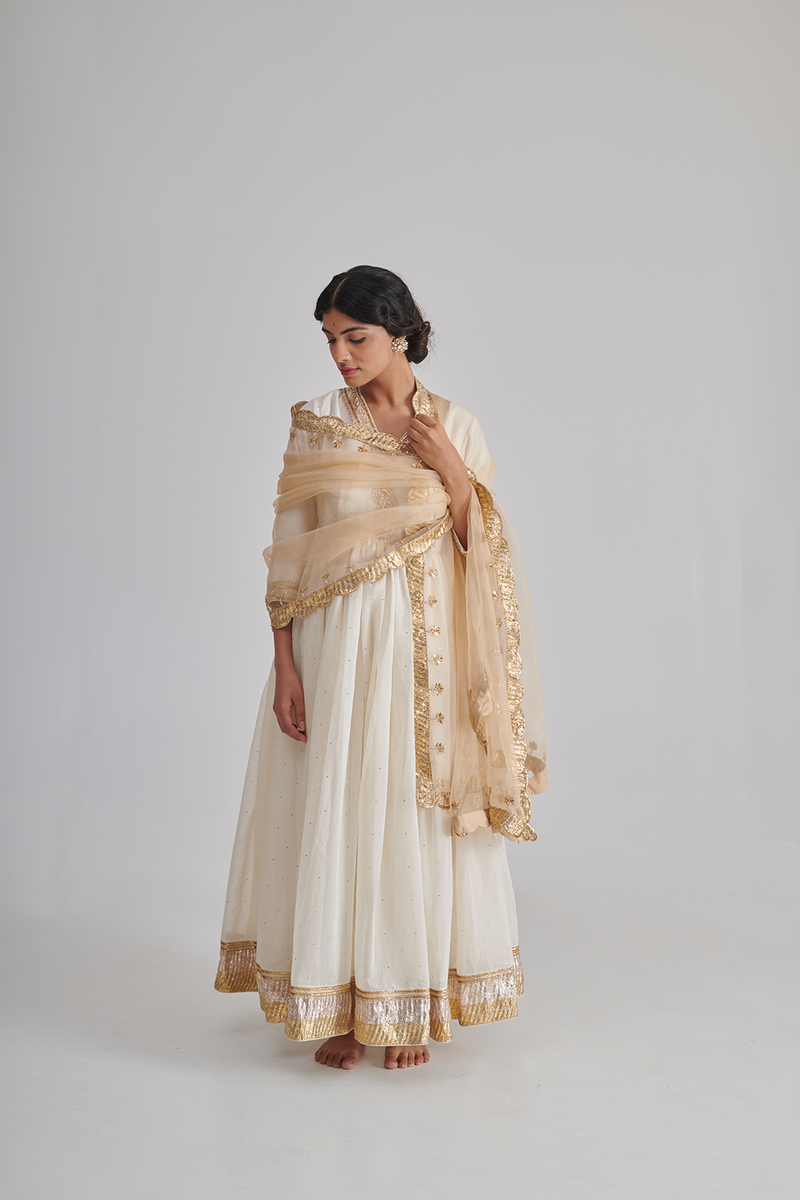
Gota Patti Work: History, Techniques & How to Style This Rajasthani Craft
Complete guide to Gota Patti embroidery - history, types (kinari, sitara, lapeta), how to identify authentic handwork...
20 May 2026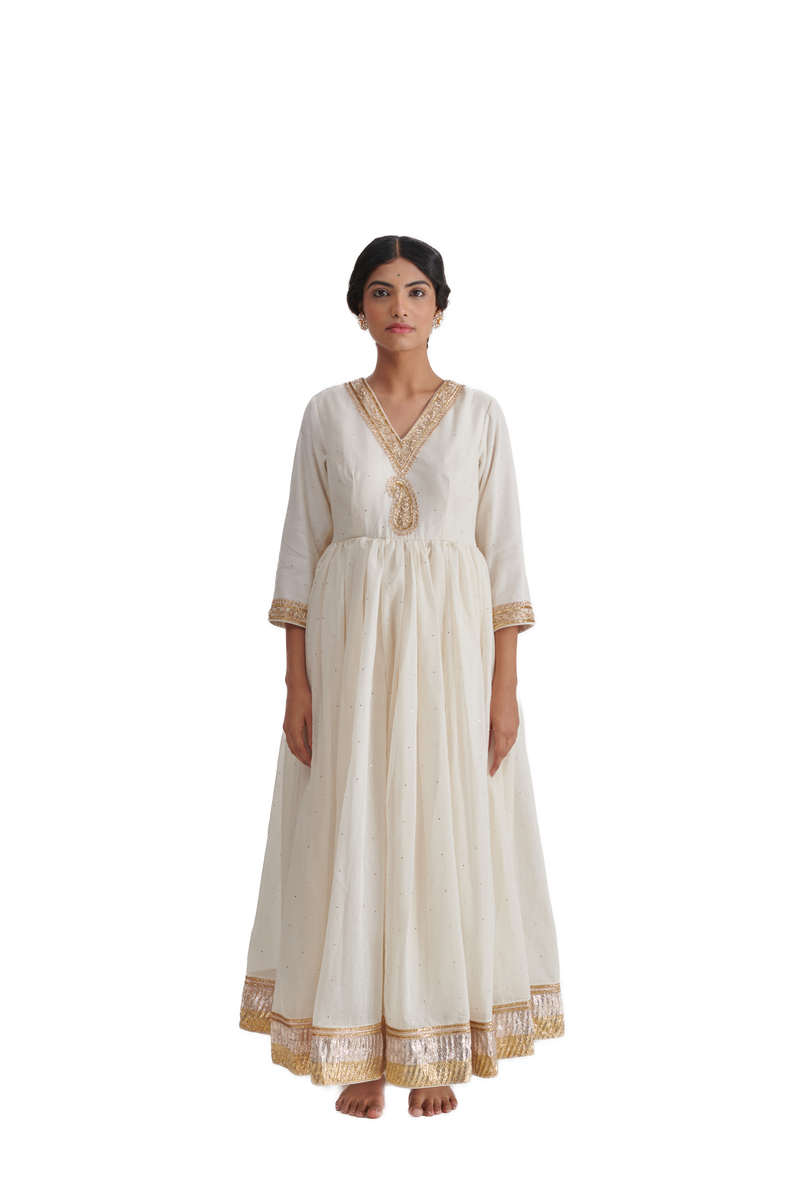
Mukesh Work: The Shimmering Embroidery Craft of Lucknow
Discover mukesh work — Lucknow's shimmering embroidery technique using tiny metallic pieces. Learn its history, how i...
4 March 2026