
How to Style a Lehenga Dupatta: 8 Draping Styles for Every Occasion
The lehenga gets all the attention — the embroidery, the flare, the colour. But it's the dupatta that completes the silhouette. A poorly draped dupatta can make a stunning lehenga look unfinished, while the right lehenga dupatta draping technique can transform the entire outfit from beautiful to breathtaking.
The challenge is that most women default to one or two draping styles they learned from their mothers or a makeup artist at a wedding. There are actually far more options — and each one changes the mood, formality, and visual weight of your look. Whether you're a bride looking for something traditional or a wedding guest who wants a modern edge, knowing how to drape dupatta with lehenga gives you control over how the outfit reads.
Here are eight lehenga dupatta styles, each suited to different occasions, body types, and dupatta fabrics. For each, we'll cover when to wear it, how the drape works, and which fabric weight suits it best.
1. The Classic Front Drape
This is the most widely used lehenga dupatta style — and for good reason. One end of the dupatta is tucked into the lehenga waistband at the front-left, the fabric is draped across the torso to the right hip, then brought over the right shoulder and pinned. The remaining length falls down the back.
When to wear it: This works everywhere — weddings, receptions, sangeets, festive dinners. It's the default because it's flattering on every body type. The diagonal drape across the torso creates a slimming line, and the fabric over the shoulder adds height.
How it works: Tuck about 30 cm of the dupatta into the lehenga at your front-left waist. Bring the fabric across your body, smoothing it flat against the torso. Take it over your right shoulder and let the tail fall naturally behind you. Pin at the shoulder with a small safety pin if needed.
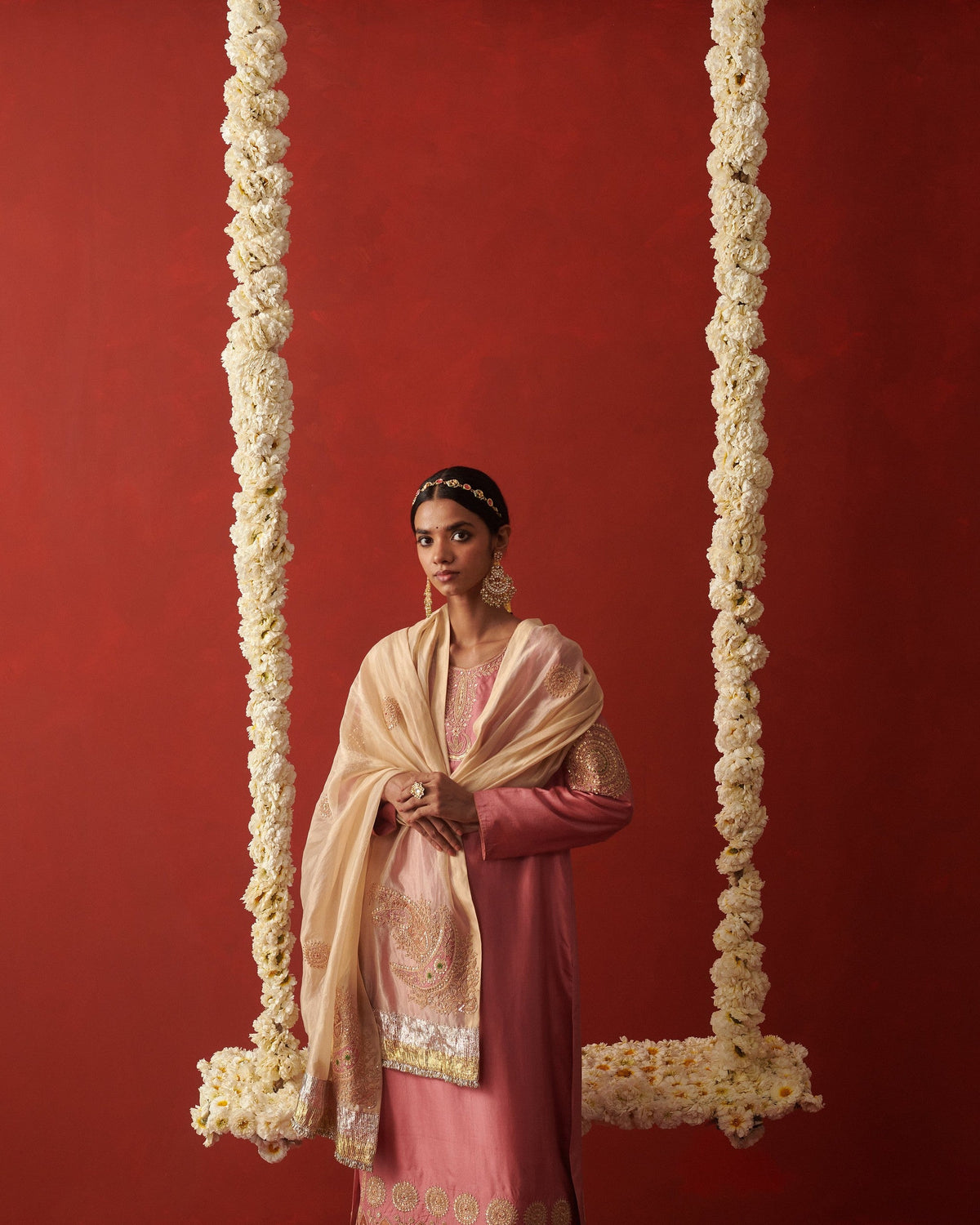
Best dupatta fabric: Medium-weight fabrics work best — tissue, silk, or embroidered organza. Very light fabrics won't hold the diagonal line; very heavy ones bunch up at the tuck point. A dupatta like the Aafira in soft tissue, with its intricate marodi, sequin, and thread embroidery in paisley motifs, has exactly the right weight for a clean front drape — the embroidery keeps it anchored while the tissue base maintains a smooth line across the body.

2. Over-the-Head Bridal Drape
The most traditional and ceremonial of all dupatta setting for lehenga styles. The dupatta is placed over the head, framing the face, with one end falling over the front shoulder and the other draped behind. This is the drape you see during the pheras, the vidaai, and in most bridal photography.
When to wear it: Wedding ceremonies, religious functions, pheras, nikah. This is specifically a bridal or highly formal drape. Wearing it to a cocktail party would be out of context.
How it works: Place the centre of the dupatta at the crown of your head. Bring one end forward over your left shoulder. Take the other end behind you, then across to your right side. Pin securely at the crown using a maang tikka or concealed pins. The key is getting the framing right — the dupatta should sit about 5 cm back from the hairline, creating a soft arch around the face.
Best dupatta fabric: You need a fabric with enough body to stay in place on the head without constantly slipping. Silk brocade is ideal for this. The Rehmat & Vasl lehenga set in Varanasi silk brocade features a matching red dupatta embellished with gold butas and a zari border — the brocade weight sits perfectly over the head, and the dense zari work catches light as you move through the ceremony. Tissue with heavy embroidery also works well.

3. One-Shoulder Cascade
A modern, relaxed drape that lets the lehenga take centre stage. The dupatta is simply draped over one shoulder and allowed to cascade down the arm and back. No tucking, no pinning across the body — just a clean vertical fall.
When to wear it: Sangeet, cocktail parties, reception as a guest, any event where you want to show off the blouse and lehenga embroidery. This drape works especially well when your blouse has statement sleeves, a detailed neckline, or back embroidery that you don't want covered.
How it works: Fold the dupatta in half lengthwise if it's very wide. Place it over your left or right shoulder, letting both ends fall — one in front, one behind. Pin at the shoulder. That's it. The simplicity is the point.
Best dupatta fabric: Lightweight, flowing fabrics. Organza is perfect here because it creates a waterfall effect as it cascades. The Shayra dupatta in lush green organza, with its hand-embroidered borders of gota, marodi, sequins, and thread work in old-rose and gold, creates a beautiful cascade — the sheer body floats while the embroidered borders provide just enough weight for a graceful fall.

4. The Belted Dupatta
One of the most contemporary lehenga dupatta draping styles. The dupatta is draped over both shoulders like a shawl, then cinched at the waist with a statement belt, kamarband, or even a coordinating fabric sash. This creates a structured, almost jacket-like silhouette.
When to wear it: Receptions, cocktail events, sangeet, and any occasion where you want a fashion-forward look. This is increasingly popular with younger brides for their reception look, and it photographs exceptionally well.
How it works: Open the dupatta to its full width and drape it symmetrically over both shoulders, like a wide scarf. Let it fall open in front. Then take a belt — metallic kamarbands work best — and cinch it at the natural waist over the dupatta. Adjust the fabric above and below the belt so it blouses slightly above and flows freely below.
Best dupatta fabric: Sheer fabrics that look good cinched — organza, fine tissue, or lightweight silk. The fabric needs to be soft enough to gather at the waist without creating bulk. The Zaira dupatta in luminous antique gold tissue is ideal for this — its soft metallic glow and hand-embroidered border of floral and vine motifs in resham, zari, sequins, and gota patti look stunning when cinched. The gold tone works naturally with metallic belts.

5. Cape-Style Open Drape
Similar to the belted drape but without the cinch. The dupatta is opened wide and draped across both shoulders, falling freely on both sides like an open cape. The arms remain free, and the dupatta moves with every step, creating drama and flow.
When to wear it: Grand entrances, sangeet performances, receptions, and outdoor events where movement matters. This drape turns the dupatta into a statement piece rather than an accessory. It also works well for destination weddings where you want a relaxed, wind-catching silhouette.
How it works: Open the dupatta fully. Place the centre across the back of your neck and shoulders. Let both ends fall forward over each arm, draping naturally. Pin at both shoulders to keep it in place. For a wider cape, push the dupatta further back on the shoulders so it sits at the upper arms.
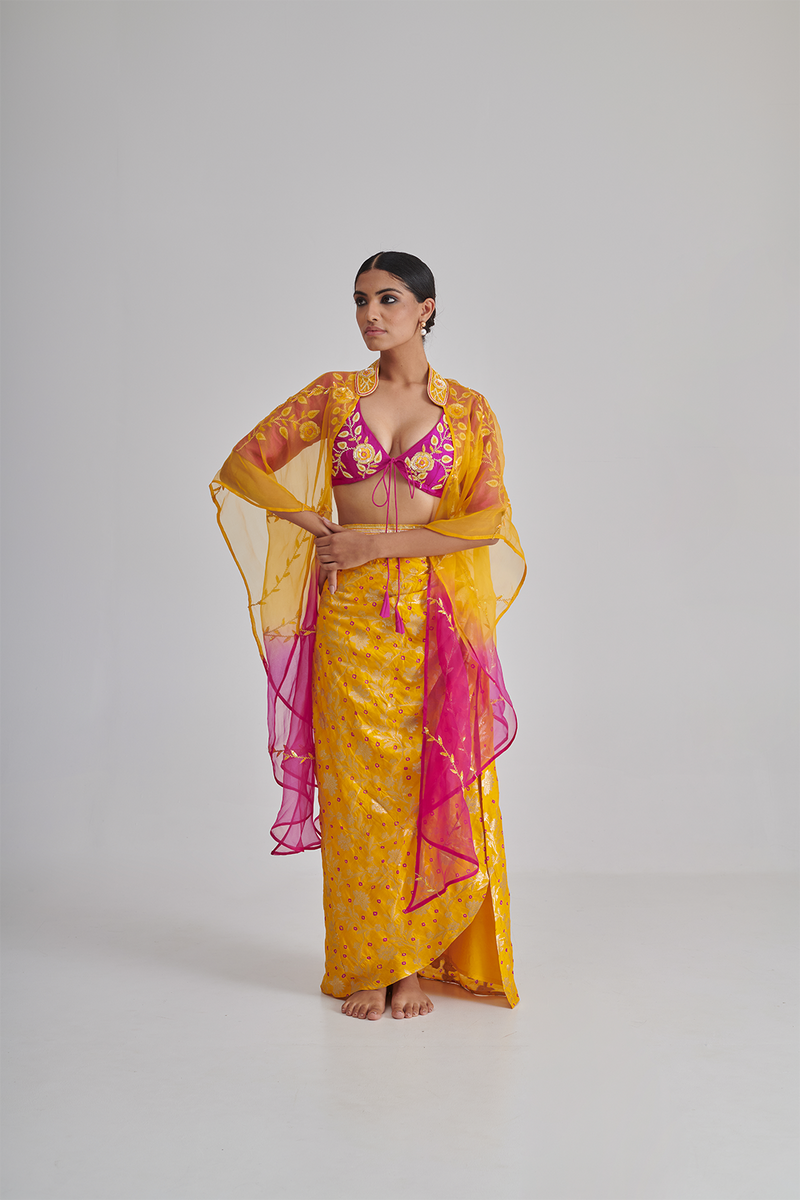
Best dupatta fabric: You want a dupatta with presence — either through fabric weight or embroidered borders that create a visible frame as it hangs open. Dual-toned or ombre fabrics shine here because the colour play is fully visible. The Phoojhari silk dupatta in rani pink and teal, with delicate floral embroidery in thread, sequins, and cutdana running in vine placements across the body, creates a stunning cape effect — the dual-toned colour shifts as the fabric catches light, and the silk has enough weight to drape cleanly without fluttering away.

6. The Double Dupatta
A bridal favourite that's become increasingly popular. Two dupattas are used — one draped over the head for tradition and one across the body for volume and visual interest. They can be matching, contrasting, or in complementary fabrics.
Free Download
Get Our Measurement Guide
Step-by-step instructions with photos for perfect custom fit.
Download Free GuideWhen to wear it: Bridal ceremonies, pheras, bridal photography. This is almost exclusively a bridal drape — it's too much fabric and formality for guest wear. Some brides also use it for their vidaai or reception entrance.
How it works: The first dupatta goes over the head and is pinned at the crown, falling behind. The second dupatta is draped in a classic front drape — tucked at the waist and brought over the opposite shoulder. The two dupattas create layers that add depth and movement. The head dupatta is usually the lighter or more sheer of the two, while the body dupatta has the heavier embroidery.
Best dupatta fabric: Mix weights intentionally. A lightweight organza over the head paired with a heavier tissue or silk across the body works well. Alternatively, match the head dupatta to the lehenga fabric and use a contrasting dupatta for the body drape. The Bano & Dilruba lehenga set in soft pistachio silk tissue, with its embroidered rose and vine border, pairs naturally with a secondary dupatta — the pistachio tone is neutral enough to complement a gold tissue or blush organza draped over the head.

7. Pinned Pleated Pallu
The most structured of all lehenga dupatta drapes. The dupatta is pre-pleated (like a saree pallu), pinned at the shoulder, and fanned out to show off the embroidery in neat, even folds. This gives a polished, tailored look that works well in photographs.
When to wear it: Wedding receptions, formal dinners, events where you'll be photographed extensively. This drape takes more setup time but stays in place all evening once pinned. It's also popular with bridesmaids and mothers of the bride who want a put-together look without constant adjusting.
How it works: Lay the dupatta on a flat surface and create 4-5 even pleats across the width (about 10-12 cm each). Pin the pleated section together temporarily. Tuck one end into the lehenga waist at the front. Bring the pleated section across the torso and over the shoulder, fanning the pleats open at the shoulder so they fall like a structured pallu. Pin at the shoulder and at the chest to keep the pleats in place.
Best dupatta fabric: Fabrics that hold pleats — tissue and silk work best. Stiff organza can work but may look rigid rather than elegant. The Kohina tissue dupatta in rich antique brown, with its sequin and cutdana embellishments in rhythmic linear placements, is excellent for a pleated pallu — the tissue holds pleats beautifully, and the linear embellishment pattern aligns naturally with the pleat lines, creating a rhythmic visual when fanned at the shoulder.

8. The No-Pin Loose Trail
The most effortless and romantic drape. The dupatta is simply held in the crook of both elbows, trailing behind the body in a wide, unstructured sweep. No pins, no tucks — just fabric and gravity. This is the drape you see in Bollywood slow-motion sequences and destination wedding photoshoots.
When to wear it: Photo sessions, grand entrances, sangeet, outdoor events with open spaces. This drape is inherently impractical for long events (you need at least one free hand), so it's best for moments rather than entire evenings. Many brides switch to this for specific photo sequences.
How it works: Hold the dupatta behind you at elbow height, with the fabric draped through the crook of both arms. Walk slowly. The dupatta trails in a wide arc behind you. For a more controlled version, you can loop it once over each forearm so it catches the wind without dragging on the ground.
Best dupatta fabric: Lightweight, wide dupattas with all-over embroidery or interesting borders that are visible in the trail. Organza and light tissue are ideal — they catch air and create that floating, ethereal quality. A sheer fabric with scattered bootis across the body, like the Zaira with its embroidered bootis across the antique gold tissue, catches light beautifully in an open trail, with the bootis twinkling as the fabric moves.
Choosing the Right Drape for Your Dupatta Fabric
The fabric of your dupatta dictates which drapes will work and which will fight you. Here's a quick reference:
Tissue dupattas (like the Aafira or Kohina) — best for: classic front drape, pinned pleated pallu, belted dupatta, loose trail. Tissue has a natural body that holds structured drapes while still flowing elegantly. The metallic sheen looks polished in any arrangement.
Organza dupattas (like the Shayra) — best for: one-shoulder cascade, cape-style open drape, loose trail. Organza is sheer and light, which creates beautiful movement but won't hold tight pleats or structured drapes without heavy embroidery to anchor it.
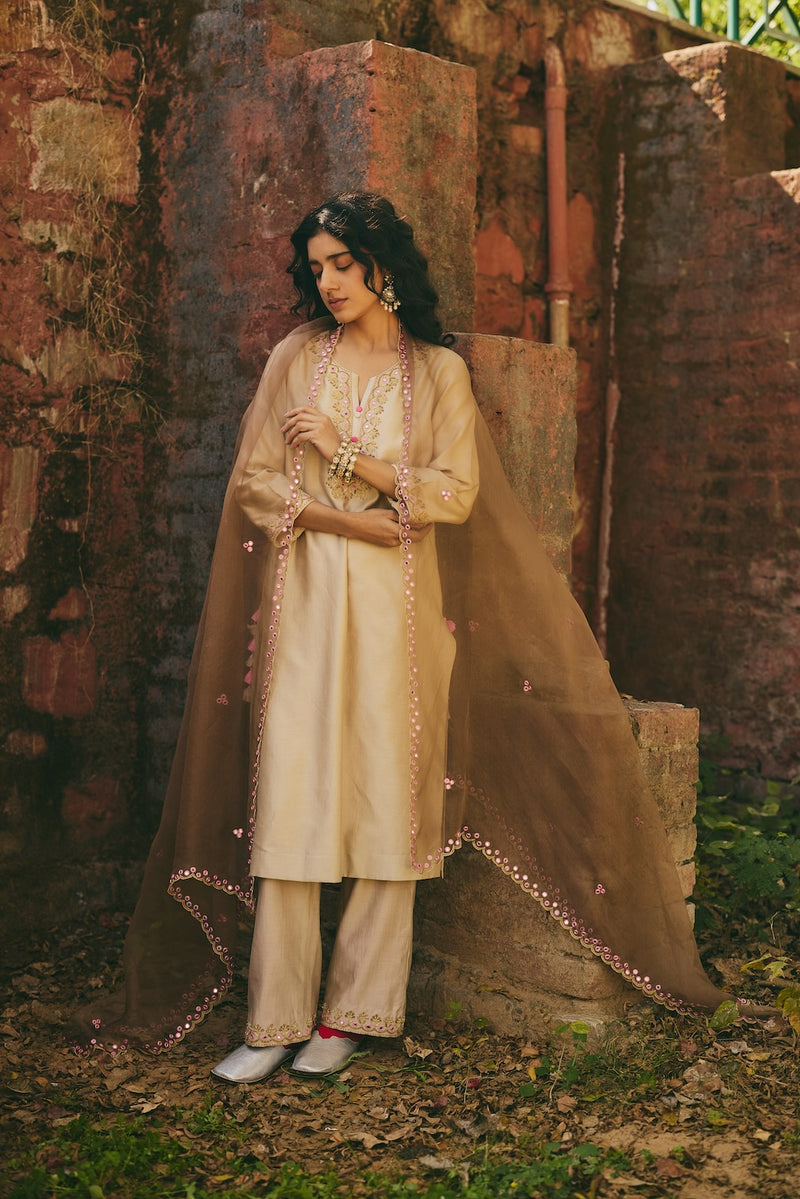
Silk dupattas (like the Phoojhari) — best for: over-the-head bridal, cape-style, classic front drape. Silk has enough weight to stay in place without pins and enough body to create clean lines. Silk brocade is the go-to for head drapes at ceremonies.
Heavily embroidered dupattas (regardless of base fabric) — best for: classic front drape, over-the-head bridal, pinned pleated pallu. The embroidery weight helps with anchoring, and the detail is most visible in structured drapes where the fabric lies flat against the body. Browse the full dupatta collection to compare embroidery weights.
Tips for a Perfect Lehenga Dupatta Drape
Steam, don't iron. A wrinkled dupatta ruins every drape. Steam your dupatta on the reverse side before the event. For tissue and silk, use the lowest steam setting. For organza, a garment steamer held 15 cm away is safest.
Pin where it won't show. Small gold safety pins are less visible than silver ones on most fabrics. Pin from the inside of the dupatta so the pin head is hidden. For over-the-head drapes, the maang tikka pin does double duty as a decorative anchor.
Match drape to activity. If you're going to dance at the sangeet, choose a cascade or cape drape that won't come undone. If you're sitting through a ceremony, the classic front drape or pinned pallu stay put. The loose trail is reserved for walking and photos only.
Practice the day before. Especially for the over-the-head and double dupatta styles, do a full dress rehearsal with pins, belt, and all accessories. It's much easier to troubleshoot at home than five minutes before the ceremony.
Consider the photographer's angle. The pinned pleated pallu and classic front drape photograph best from the front. The cape and loose trail are most dramatic from behind or in profile. Ask your photographer which shots they're planning and drape accordingly.
For more dupatta techniques beyond the lehenga, see our complete dupatta draping styles guide. And if you're still deciding on your lehenga silhouette, read our lehenga styling guide covering jewellery, blouse choices, and footwear alongside draping. Our dupatta styling guide also covers drapes for kurta sets, anarkalis, and sarees.
Frequently Asked Questions
How do I keep my lehenga dupatta from slipping during the wedding?
Use a combination of safety pins and fashion tape. Pin the dupatta at the shoulder from the inside, and use double-sided fashion tape where it touches the blouse fabric. For over-the-head drapes, secure the dupatta at the crown with 2-3 pins hidden under the maang tikka. Heavy dupattas with embroidery naturally grip fabric better than plain ones.
Can I drape a heavy dupatta with a heavily embroidered lehenga?
Yes, but balance is key. If both are heavily worked, use a structured drape (classic front or pinned pallu) that keeps the dupatta flat against the body rather than adding volume. Avoid the cape or loose trail with two heavy pieces — it can look overwhelming and feel uncomfortable.
What is the best dupatta draping style for a short bride?
The one-shoulder cascade and classic front drape both create vertical lines that add height. Avoid the cape-style and double dupatta, which can visually shorten the frame by adding width. The diagonal line of the classic front drape is especially flattering for petite figures.
How many pins do I need for a lehenga dupatta?
For most drapes, 2-3 small safety pins are enough — one at the shoulder, one at the tuck point, and one mid-body if the fabric is heavy. For the over-the-head style, add 2 more at the crown. For the pinned pleated pallu, you may need 4-5 pins to hold the pleat structure. Always use pins that match your fabric colour.
Should the dupatta match the lehenga exactly?
Not necessarily. Matching dupattas create a cohesive, traditional look. But a contrasting dupatta — say, a gold tissue dupatta over a coloured lehenga — can be more striking and contemporary. Many modern brides choose a contrasting dupatta for one of their two dupattas in a double-dupatta drape.
Which dupatta draping style is best for photography?
The loose trail and cape-style drape create the most dramatic photographs, especially in outdoor and wind-catching settings. The pinned pleated pallu photographs beautifully from the front in portrait shots. For candid photography, the one-shoulder cascade looks effortlessly elegant without requiring constant adjustment between shots.
Ready to Order Custom?
WhatsApp us at +91 70423 11214 with what you're looking for. We'll guide you through measurements, customizations, and timeline.
Most pieces ready in 4-5 weeks. Bridal in 6-8 weeks.
Made to order in 4–5 weeks
Have an event date? We’ll tell you exactly when to order by.
We take a limited number of orders each month — secure your slot early.
Not sure where to start?
Tell us what you're dressing for and we'll help you choose — fabric, fit, colour, and timeline — over WhatsApp.
Your Cart
Pieces from this story
All pieces →
Keep reading
The journal →
Dholki Night Outfit Ideas: What to Wear to the Ladies' Dhol
Handmade by karigars Made to your measurements Fit guarantee Ships worldwide As seen in GraziaElle Graduat...
27 July 2026
Mayra & Bhaat Outfit Ideas: Dressing for the Maternal Gift Ceremony
Handmade by karigars Made to your measurements Fit guarantee Ships worldwide As seen in GraziaElle Graduat...
27 July 2026
Pag Phera Outfit Ideas: What to Wear for the Bride's Homecoming
Handmade by karigars Made to your measurements Fit guarantee Ships worldwide As seen in GraziaElle Graduat...
27 July 2026