
The Complete Guide to Styling Your Lehenga: Dupatta, Jewellery & More
A lehenga is one of the most celebrated garments in Indian fashion — and one of the most complex to style. Unlike a kurta set or an anarkali, which are essentially single garments, a lehenga is a multi-piece ensemble: the skirt (lehenga), the blouse (choli), and the dupatta. Each piece requires its own styling decisions, and the way they come together determines whether the final look feels cohesive and intentional or disjointed.
This guide covers everything: dupatta draping styles for lehengas, jewellery pairing, blouse considerations, footwear, and occasion-specific styling. Whether you are wearing a lehenga to a wedding, a sangeet, or a festive celebration, these tips will help you put together a look that feels complete.
Dupatta Draping Styles for Lehengas
The dupatta is arguably the most important styling element with a lehenga. It can make the same outfit look traditional, contemporary, dramatic, or understated. Here are the six most effective ways to drape a dupatta with a lehenga.
1. The Classic Pallu Drape
The most traditional lehenga dupatta style. Tuck one end of the dupatta into the front of the lehenga waistband, bring the fabric across your front and around your back, and drape the remaining length over your left shoulder. This creates the pallu effect seen in saree draping and is the go-to for traditional wedding ceremonies and religious functions.
Best dupattas for this drape: Heavier fabrics with embroidered borders — the weight helps the pallu fall naturally. The KAINAAT dupatta in sheer organza with circular medallions of gota patti, sequins, resham, and beadwork creates a stunning pallu against a lehenga.

2. The Double Dupatta Drape
A popular choice for brides and bridesmaids. Use two dupattas — one draped as a pallu across the body and tucked at the waist, and the second draped over the head or pinned at both shoulders. This creates layers, dimension, and a fuller, more regal silhouette. Choose dupattas in complementary tones from our dupatta collection to create this layered effect.
3. The One-Shoulder Pin Drape
Pin the dupatta at one shoulder and let it fall freely to the back and front. This is the most common contemporary style — it shows off the blouse and lehenga while keeping the dupatta as an accent rather than a focal point. Use a decorative pin or brooch for a touch of elegance.
4. The Cape Drape
Open the dupatta fully and pin it at both shoulders, letting it fall behind you like a cape. This creates a dramatic, runway-worthy silhouette that is perfect for grand entrances and photographs. The fabric should be lightweight — chanderi or organza — so it flows naturally.
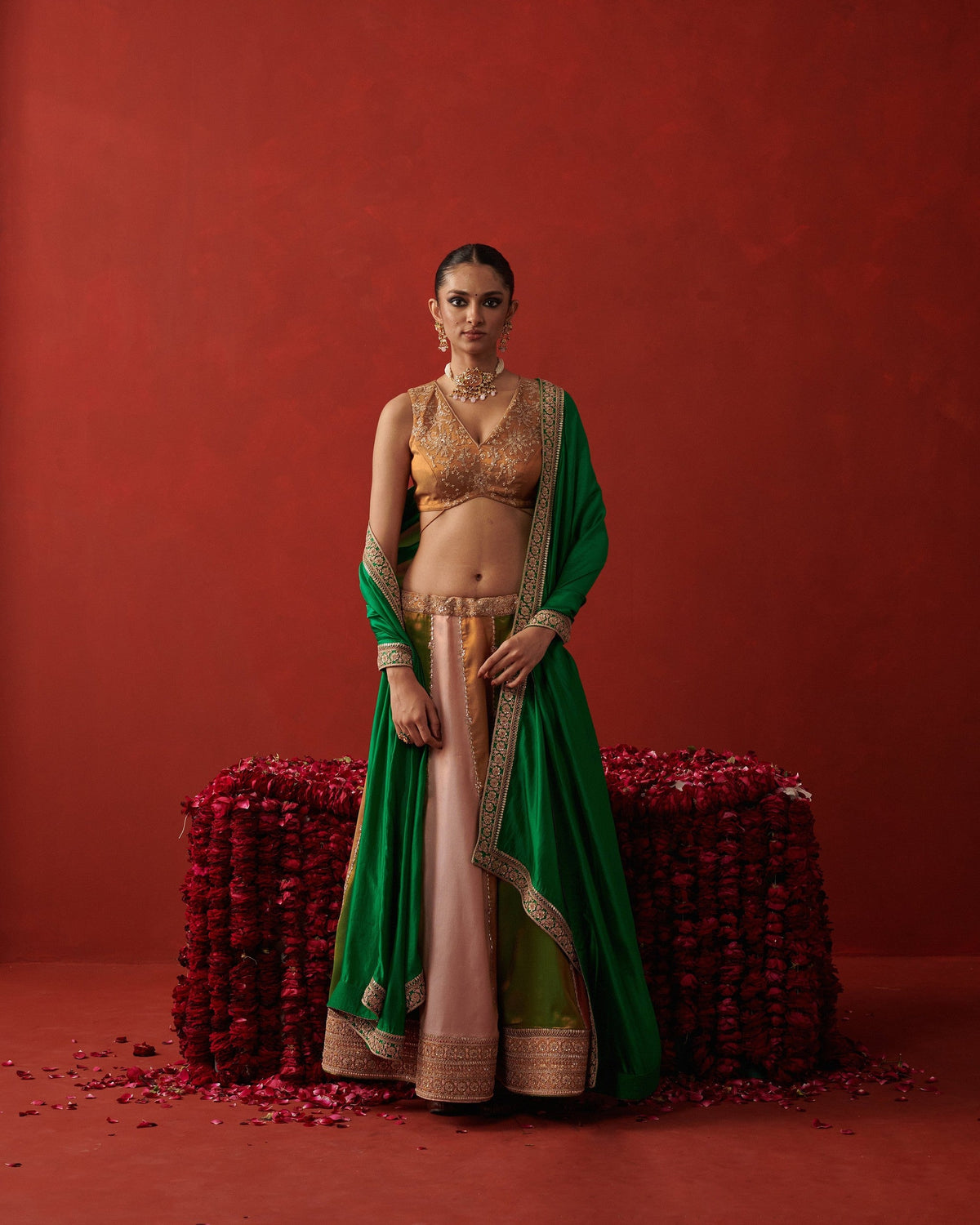
The SHAYRA dupatta in lush green organza silk, with borders hand-embroidered in gota, marodi, sequins, and thread work in an old-rose and gold palette, makes a stunning cape drape against a contrasting lehenga.

5. The Arm Drape
Drape the dupatta loosely over both forearms, letting it hang in a U-shape behind your back. This is a glamorous, relaxed style that works well at receptions and cocktail events where a traditional drape feels too formal. It also keeps the dupatta accessible for photographs without it getting in the way of dancing.
6. The Waist Tuck
Tuck the entire dupatta into the lehenga waistband at the back, letting it fall like a train. This is a bold, modern choice that creates a dramatic back view while keeping the front clean and minimal. It works best with longer, lighter dupattas.
Styling Your Lehenga Blouse
The blouse sets the tone for the entire lehenga look. Here are key considerations:
Neckline Choices
- Deep V-neck — Elongates the neck and draws the eye upward. Works beautifully with choker necklaces. The RAANISA & MAHIRA lehenga set in vibrant sindoori orange features a blouse with traditional hand embroidery on the neckline using gota, marodi, bead, and thread work.
- Sweetheart neckline — Feminine and flattering for most body types. Pairs well with pendant necklaces or layered chains.
- Round neckline — Classic and versatile. Ideal when you want the lehenga skirt to be the star.
- Square neckline — Modern and structured. Great for minimalist styling with statement earrings. Refer to our body type guide for neckline recommendations.

Sleeve Options
- Cap sleeves — Show off arm jewellery and work across all seasons
- Three-quarter sleeves — Add coverage and allow for statement sleeve embroidery
- Sleeveless / Straps — Contemporary and best for evening or reception events
- Full sleeves — Dramatic and winter-appropriate, particularly with heavy embroidery
Jewellery Pairing Guide for Lehengas
Lehenga jewellery is where many women over- or under-accessorise. The goal is to complement the garment's embroidery and colour palette, not compete with it. Visit our colour guide for palette matching advice.
For Heavily Embroidered Lehengas
When the lehenga and blouse are richly embroidered — like the ISHQ-e-GUL & INARA lehenga in soft tissue jacquard with multi-hued panels and an elaborate gota-patti and marodi border — let the garment be the star:
- Statement earrings (jhumkas or chandbalis) — one powerful pair is enough
- Skip the necklace or wear a thin chain
- A single statement ring
- Stacked bangles in one matching metal tone

For Simpler or Solid-Coloured Lehengas
With a lehenga that relies on colour and fabric rather than dense embroidery, jewellery can play a bigger role:
- A full jewellery set — necklace, earrings, and maang tikka
- Polki, kundan, or meenakari depending on the lehenga's colour palette
- A statement choker can transform a simple blouse neckline
- Arm cuffs or haath phool for added drama
For a Modern or Fusion Lehenga
For pieces like the BANO & DILRUBA lehenga set in soft pistachio-toned silk tissue — with a voluminous flare and a wide embroidered border of roses and vines in sequins and bead work — a contemporary jewellery approach works best:
- Geometric or abstract earrings in gold
- Layered delicate chains
- A cocktail ring
- Mix metals if the lehenga allows it

Footwear for Lehengas
Footwear is the most overlooked element of lehenga styling — yet it directly affects how the garment falls, your posture, and your comfort through what are often long events.
Free Download
Get Our Measurement Guide
Step-by-step instructions with photos for perfect custom fit.
Download Free Guide- Wedge heels — The most practical choice for outdoor or garden events. They provide height without sinking into grass, and the stability means you can dance.
- Block heels — Stable and stylish. The best all-round choice for most lehenga events.
- Stilettos — Only for indoor events on flat surfaces. They create the tallest silhouette but are impractical for long events.
- Embellished juttis — Perfect for shorter lehengas or when comfort is the priority. The flat sole creates a different (more relaxed) drape.
- Platform heels — Height without the instability of stilettos. A smart compromise.
Pro tip: If your lehenga is not yet hemmed, bring the shoes you plan to wear to your fitting. The hem length should be adjusted to work with your chosen footwear.
Lehenga Styling for Specific Occasions
For a Wedding as a Guest
As a wedding guest, the goal is to look elegant without upstaging the bride. Choose rich but not bridal colours — avoid red if the bride is wearing red, and steer towards jewel tones, pastels, or metallics. A lehenga like the MEHERGUL & ABROO in striking rani pink silk, with the blouse intricately hand-embroidered with sequins, cutdana, and thread work in floral vine motifs, offers wedding-level elegance without entering bridal territory.
For a Sangeet
Go bold. A sangeet is a celebration — vibrant colours, shimmer, and drama are welcome. The dupatta can be skipped or used as a cape for the entrance. Choose a lehenga with movement — lighter fabrics and more flare. Dance-friendly footwear is essential.
For a Reception
Receptions tend to be evening events with controlled lighting. Choose a lehenga with embroidery that catches light — sequins, gota, and zari work all come alive under evening lighting. The DRITI & HESYRA lehenga set in radiant yellow silk, with the blouse featuring a classic V neckline and hand-embroidered botanical and vine motifs using resham, sequins, and bead work, shimmers beautifully in low light.

Caring for Your Lehenga
A well-crafted lehenga is an investment. For detailed care instructions, visit our fabric care guide. Key points:
- Always dry clean — never machine wash or hand wash embroidered lehengas
- Store the blouse and skirt separately to avoid embroidery catching on fabric
- Hang the skirt rather than folding — a padded hanger prevents creases in the flare
- Wrap the dupatta in muslin and store flat
- Check for loose embroidery before and after each wear — small repairs are much easier than full restoration
Browse the complete lehenga collection and find the perfect dupatta to complete your ensemble. For more occasion-specific outfit guidance, explore our lookbook.
Frequently Asked Questions
How many dupattas should I wear with a lehenga?
One dupatta is standard and sufficient for most occasions. Two dupattas — one draped as a pallu and one over the head — is a bridal or very formal styling choice. For sangeets and receptions, many women skip the dupatta entirely for freedom of movement.
What colour dupatta goes with a lehenga in a different colour?
Contrasting dupattas add dimension and visual interest. Common pairings: pink lehenga with green or teal dupatta, red lehenga with gold or ivory dupatta, yellow lehenga with orange or pink dupatta. Our colour guide provides detailed pairing recommendations.
Should the blouse and lehenga always match?
Not necessarily. While matching sets like the RAANISA & MAHIRA in sindoori orange create a cohesive look, mixing blouse and lehenga colours is a popular styling choice. Contrast blouses — like a navy blouse with a gold lehenga, or a deep green blouse with a red lehenga — create modern, fashion-forward looks.
How do I prevent my lehenga from slipping at the waist?
A well-fitted lehenga should not slip, but if you are between sizes, use a drawstring tie for extra security. Tucking the dupatta at the waist also adds a layer of hold. Avoid wearing slippery fabrics underneath — a cotton or cotton-blend petticoat provides grip.
Can I mix a lehenga skirt with a different blouse from my wardrobe?
Yes, and this is one of the best ways to get more wear from your lehenga. A plain silk blouse in a complementary colour can transform the look of a heavily embroidered lehenga. Browse our blouse collection for pairing options.
Ready to Order Custom?
WhatsApp us at +91 70423 11214 with what you're looking for. We'll guide you through measurements, customizations, and timeline.
Most pieces ready in 4-5 weeks. Bridal in 6-8 weeks.
Made to order in 4–5 weeks
Have an event date? We’ll tell you exactly when to order by.
We take a limited number of orders each month — secure your slot early.
WhatsApp me my order-by date + a shortlistNot sure where to start?
Tell us what you're dressing for and we'll help you choose — fabric, fit, colour, and timeline — over WhatsApp or on a video call.
Your Cart
Pieces from this story
All pieces →Not sure which piece, or need it by a date? Book a video consultation Ask us on WhatsApp


Keep reading
The journal →
How Much Does a Bridal Lehenga Cost in India? A 2026 Price Guide
What a bridal lehenga costs in India in 2026 — price bands from ₹30,000 to ₹10 lakh+, what drives the price, the hidd...
20 September 2026
Payal & Anklet Styling Guide: The Prettiest Detail You're Forgetting
A guide to payals and anklets in Indian fashion — silver vs gold traditions, types from delicate chains to ghungroo p...
2 July 2026
Bangles, Chooda & Kaleere: The Complete Styling Guide
A guide to styling bangles, chooda and kaleere with Indian outfits — how to stack, match colours and pair them with s...
28 June 2026