
Tissue Fabric: Everything You Need to Know About India's Most Luminous Fabric
Some fabrics catch light. Tissue fabric holds it. Woven with metallic zari threads — gold, silver, or copper — into a silk or cotton base, tissue has a luminosity that no other Indian textile can quite match. It is sheer and weightless, yet the surface glows with a warmth that makes it look impossibly rich. Hold a tissue dupatta in your hands and it weighs almost nothing; drape it over your shoulder and it looks like you are wearing spun gold.
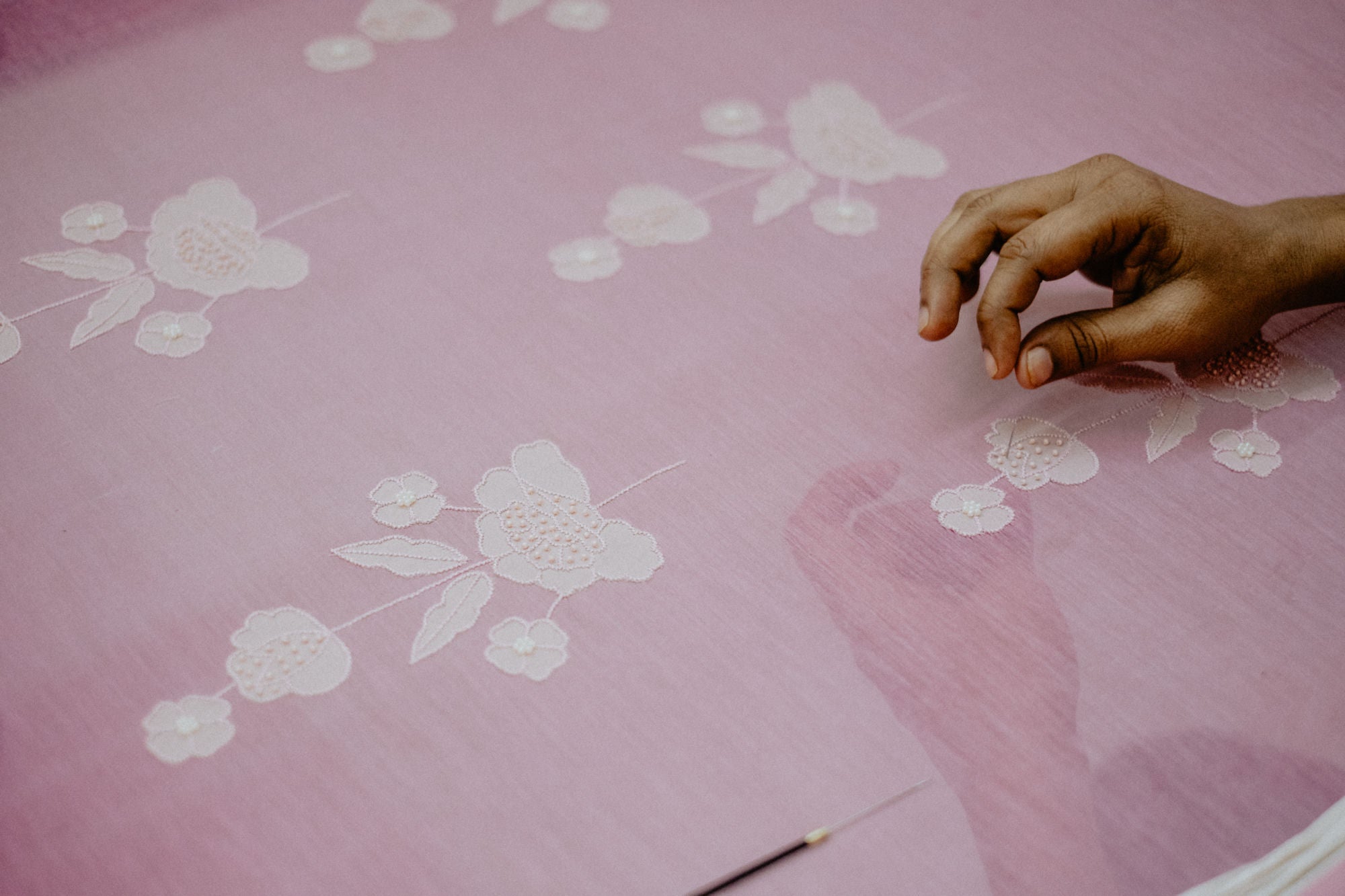
This is one of the oldest and most celebrated fabrics in Indian textile tradition — a favourite of Mughal courts, a staple of bridal trousseaux, and a fabric that has lost none of its relevance in contemporary fashion. At Rashika Mittal, our karigars in Jaipur work extensively with tissue, pairing it with hand embroidery techniques like marodi, sequin work, and zardozi to create pieces that honour the fabric's heritage while feeling entirely modern.
What Is Tissue Fabric?
Tissue fabric is a lightweight, semi-sheer textile woven with metallic zari threads interlaced with silk, cotton, or synthetic fibres. The defining characteristic of tissue is its metallic sheen — the zari threads are woven directly into the fabric structure, not embroidered onto the surface, which means the shimmer is intrinsic to the cloth itself rather than an embellishment added afterward.
The word "tissue" in this context comes from the French tissu, meaning woven cloth, though in India the term has come to refer specifically to this metallic-woven category of textiles. Unlike fabrics where shimmer is applied through sequins or metallic embroidery, tissue's luminosity is structural — it is in the weave itself, which gives the fabric a softer, more organic glow than surface-level embellishment can achieve.
What makes tissue fabric remarkable is the tension it holds between opulence and lightness. It looks heavy and rich, yet it drapes with the fluidity of chiffon. This paradox is what has made tissue a favourite for Indian occasion wear — it delivers maximum visual impact without the weight and discomfort that often comes with heavily embellished fabrics.

Types of Tissue Fabric
Not all tissue is the same. The fabric exists in several variations, each with distinct properties depending on the base fibre and the density of metallic thread used:
Pure Tissue (Gold/Silver Tissue): Woven almost entirely from metallic zari threads with a minimal silk base. This is the most luminous — and most delicate — form of tissue. Pure tissue has an almost foil-like sheen and is typically used for dupattas and drape elements rather than structured garments, as it has little body on its own.
Silk Tissue: The most popular variety for garments. Silk provides the base structure while zari threads create the shimmer. Silk tissue has a beautiful drape, a warm golden or silvery glow, and enough body to hold pleats and gathers. This is the tissue you will find in most tissue sarees and tissue kurta sets.
Tissue Organza: A combination that pairs the crispness of organza with the metallic sheen of tissue weaving. Tissue organza has more structure than pure tissue or silk tissue — it holds its shape well, making it ideal for dupattas that need volume and for layering pieces. It has a lighter, more translucent shimmer than silk tissue.
Tissue Chanderi: Woven in the Chanderi tradition but with metallic zari threads, creating a fabric that combines Chanderi's signature lightness and breathability with tissue's metallic glow. This is a particularly elegant variety — it has the understated refinement of Chanderi with added luminosity.
Why Tissue Is Perfect for Indian Occasions
There is a reason tissue fabric appears in virtually every category of Indian occasion wear — from sarees to lehengas to dupattas. The fabric has qualities that are almost tailor-made for the way Indian occasions are experienced:
It catches light beautifully: Indian celebrations often involve changing light conditions — outdoor ceremonies to indoor receptions, natural daylight to evening lamps. Tissue responds to all of them. It glows under candlelight, shimmers under chandeliers, and catches golden hour sunlight in a way that few other fabrics can.
It photographs exceptionally well: The metallic threads create a soft, diffused shimmer in photographs rather than harsh flashback. This is why tissue has become a favourite for brides and wedding guests — it looks luminous in photos without the overexposure that sequined fabrics can cause.
It is lightweight despite looking opulent: This is tissue's great advantage over other "rich-looking" fabrics. A tissue saree or tissue dupatta can be worn for hours without the heaviness of brocade, velvet, or heavily embroidered fabrics. You get the visual richness without the physical weight — a critical consideration for events that stretch across an entire day.
Tissue Sarees
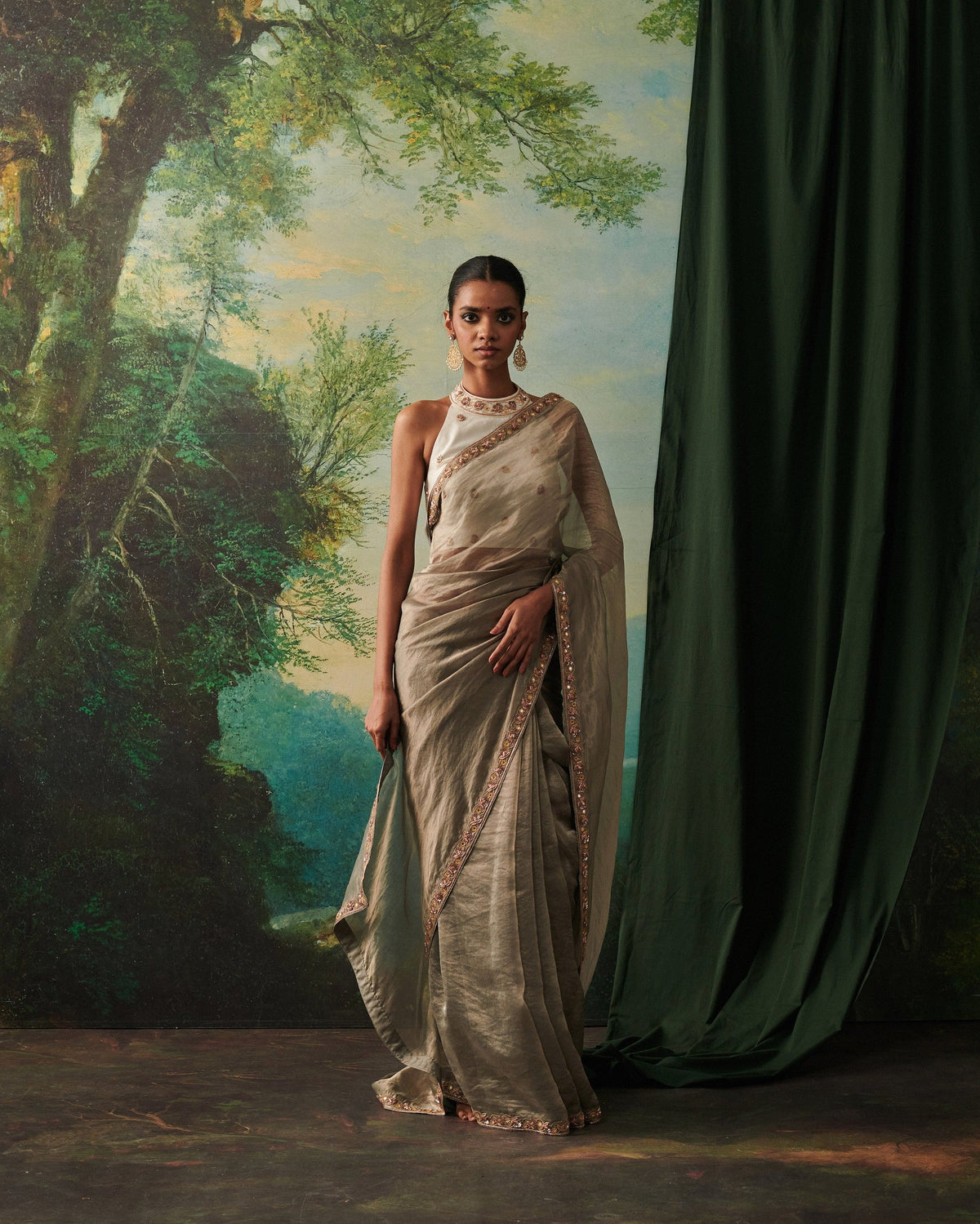
The tissue saree is perhaps the most iconic expression of this fabric. When draped, tissue creates folds that catch and release light with every movement — the pallu shimmers, the pleats glow, and the overall effect is one of quiet, unmistakable luxury.
The ZOHRA (₹35,595) is a soft tissue saree with shimmer from our Ishq collection — a piece that captures the romantic essence of tissue. It demonstrates how tissue needs very little embellishment to make an impact; the fabric itself is the statement.
The TARAANA (₹51,800) is a tissue saree in a soft antique gold hue from our Ruhaniyat collection. Antique gold is one of tissue's most flattering tones — it has warmth without being brassy, and it complements every Indian skin tone beautifully.
The TARAAZ (₹41,500), also from Ruhaniyat, is a tissue saree in radiant golden-champagne — a slightly lighter, more celebratory tone that works beautifully for daytime ceremonies and festive gatherings.


Tissue Kurta Sets
Tissue works beautifully in kurta sets — the fabric's natural shimmer elevates the silhouette from everyday wear to occasion-ready, while the lightweight drape keeps it comfortable for long hours. Tissue kurtas pair particularly well with hand embroidery, where the metallic base creates a luminous backdrop for the craftwork.
The SAAVAN & NIMRAH (₹18,340) is a sage-toned tissue kurta from our Ishq collection. The muted sage tone shows tissue's versatility — it can be soft and understated rather than overtly golden, making it suitable for smaller gatherings and intimate celebrations where subtlety is welcome.
The ARUNA & KAVYA (₹37,500) takes tissue in a bolder direction — a vibrant coral tissue kurta from Ruhaniyat. The coral against the metallic base creates a striking warmth, and the hand embroidery work adds layers of texture to the already luminous fabric.
The ROHI & ZOEY (₹23,215) is a luminous yellow kurta paired with a mint-green sharara in tissue — a colour combination that feels festive and fresh, showing how tissue can carry bright, joyful hues without losing its elegance.


Tissue Dupattas
If you are new to tissue fabric, a tissue dupatta is the most accessible way to introduce it into your wardrobe. A single tissue dupatta can transform a plain kurta set into occasion wear — the shimmer does the work for you.
Free Download
Get Our Measurement Guide
Step-by-step instructions with photos for perfect custom fit.
Download Free GuideThe AAFIRA (₹36,180) is a tissue dupatta with marodi, sequins, and thread work — a piece where the embroidery and the tissue base enhance each other, the metallic fabric amplifying the sparkle of the handwork.
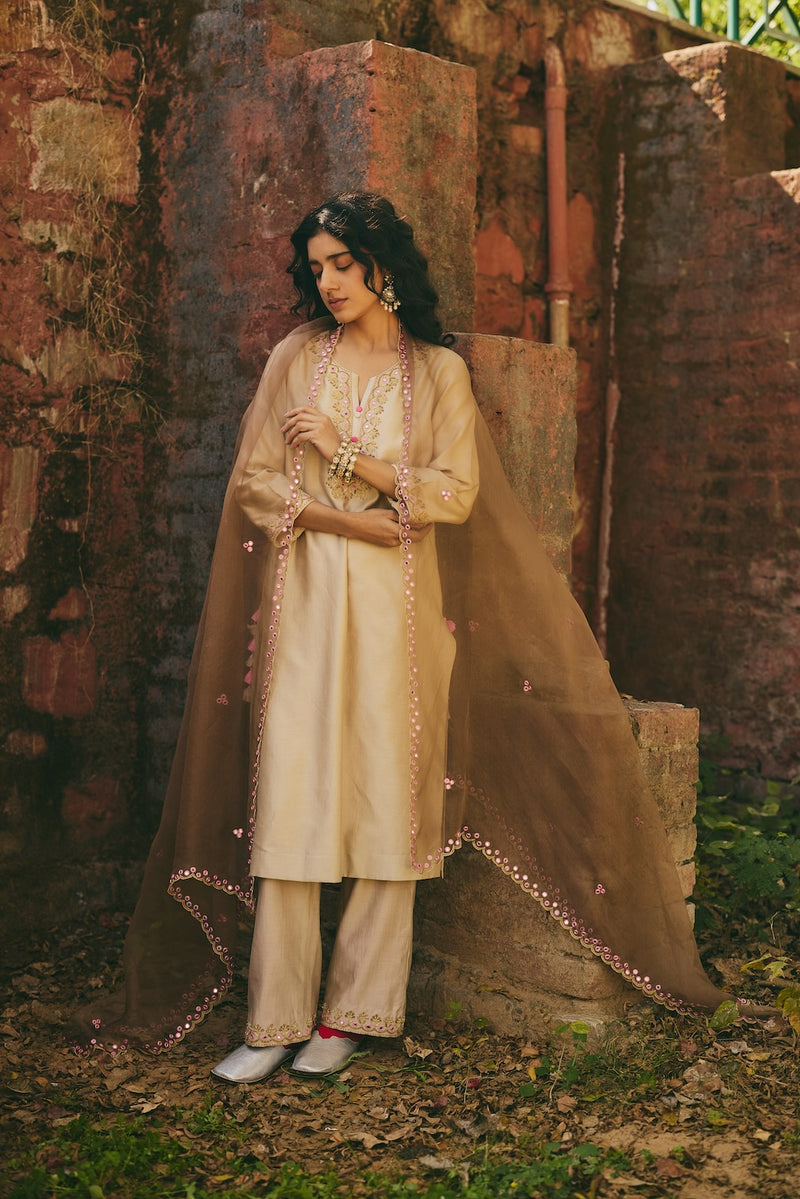
The KOHINA (₹28,100) is a tissue dupatta in antique brown from Ruhaniyat — a rich, warm tone that pairs beautifully with everything from ivory kurtas to deep jewel-toned lehengas.
For lighter options, the MIRAAL (₹15,500) is a tissue dupatta in serene sage green — soft and versatile — while the ZAIRA (₹25,000) is a tissue dupatta in antique gold, the most classic tissue colour.


Tissue Lehengas
Tissue fabric in a lehenga creates something truly spectacular — the flared skirt catches light with every turn, and the fabric's natural luminosity means even minimal embroidery makes a dramatic impact.
The NYASSA & ELINA (₹1,75,000) is our premium tissue lehenga — a bridal piece that represents the pinnacle of what tissue and handcraft can achieve together. This is tissue at its most ceremonial, designed for the woman who wants her lehenga to glow.
The BANO & DILRUBA (₹40,725) is a pistachio-toned silk tissue lehenga — a colour that has become one of the most sought-after tones in contemporary Indian bridal and festive wear. The pistachio against the metallic tissue base creates a soft, dreamy quality.
The ISHQ-e-GUL & INARA (₹40,455) is a tissue lehenga that is a celebration of colour and craft — where the richness of tissue meets expressive hand embroidery in a piece designed for women who want their outfit to tell a story.


How to Style Tissue Fabric
Tissue's inherent shimmer means it needs less accessorising than you might think. The key is balance — let the fabric be the star and keep everything else considered:
Draping a tissue saree: Tissue sarees drape best in flowing, unstructured pleats rather than crisply ironed ones. The fabric's natural fluidity is its strength — lean into it. Avoid over-pinning, which can create stiffness and diminish the way tissue moves with your body.
Jewellery: Polished gold jewellery complements tissue's warm metallic tones beautifully. Kundan and polki work are natural partners. Avoid heavy oxidised or matte silver pieces, which can clash with tissue's inherent glow. Keep it to one statement piece — the fabric provides enough visual richness that you do not need to layer jewellery.
Layering: Tissue dupattas are exceptional layering pieces. Drape a tissue dupatta over a solid-coloured kurta set or sharara to instantly add occasion-appropriate shimmer without changing the entire outfit.
Occasion matching: Use the tone of tissue to match the formality of the event. Antique gold and champagne tissue for weddings and formal events. Sage, ivory, and pastel-toned tissue for daytime celebrations, mehendi, and intimate gatherings. Bright-toned tissue (coral, yellow) for festive occasions like Diwali and Eid.

The ANANYA & TAVISHI (₹29,500) — a tissue sharara set in antique gold — is a perfect example of how tissue works across occasions. The antique gold tone and sharara silhouette make it versatile enough for sangeet, reception, or festive celebrations.
Caring for Tissue Fabric
Tissue is one of the more delicate fabrics in the Indian textile repertoire. The metallic zari threads, while beautiful, require careful handling to maintain their lustre. For detailed instructions, visit our fabric care guide.
Dry clean only: Never wash tissue fabric with water. Moisture can tarnish the metallic zari threads and cause them to lose their lustre. Always use a reputable dry cleaner experienced with embellished and metallic-thread fabrics.
Store rolled, not folded: This is critical for tissue. Folding creates sharp creases along the metallic threads, and these creases can crack or permanently damage the zari. Roll tissue garments around acid-free tissue paper and store in muslin cloth bags.
Avoid direct heat: Never iron tissue directly. If creases need to be removed, use a steamer at a distance or iron on the reverse side with a pressing cloth at the lowest setting. The metallic threads can melt or distort under direct heat.
Keep away from moisture and perfume: Humidity tarnishes metallic threads. Spray perfume before dressing — not onto the fabric. Store in a cool, dry place with silica gel sachets if you live in a humid climate.
Handle gently: Tissue is sheer and the metallic threads can snag on jewellery, nails, or rough surfaces. When draping a tissue saree or dupatta, ensure your hands are smooth and your bangles are set aside until the draping is complete.
Frequently Asked Questions
What is tissue fabric made of?
Tissue fabric is woven with metallic zari threads (gold, silver, or copper-coloured) interlaced with silk, cotton, or blended fibres. The metallic threads are part of the weave structure itself — not applied or embroidered onto the surface — which is what gives tissue its signature all-over shimmer.
Is tissue fabric heavy or lightweight?
Despite its rich, opulent appearance, tissue is remarkably lightweight. This is one of its greatest advantages — it delivers the visual impact of a heavily embellished fabric without the weight. A tissue saree or dupatta can be worn comfortably for hours, making it ideal for long wedding celebrations and festive events.
Can tissue fabric be washed at home?
No. Tissue fabric should always be dry cleaned. Water and detergents can tarnish the metallic zari threads, cause colour bleeding, and damage the delicate weave structure. Always entrust tissue garments to a professional dry cleaner experienced with metallic-thread fabrics.
What is the difference between tissue and organza?
Organza is a sheer, crisp fabric typically woven from silk or polyester — it has structure and translucency but no metallic shimmer. Tissue is woven with metallic zari threads and has an inherent glow. Tissue organza is a hybrid that combines organza's crispness with tissue's metallic sheen, offering both structure and shimmer.
Which occasions are best for tissue fabric?
Tissue is a quintessential occasion fabric. It works beautifully for weddings (as both bridal and guest wear), festive celebrations like Diwali and Eid, engagement ceremonies, receptions, and any event where you want to look luminous without being overdressed. The fabric photographs exceptionally well, making it a particularly strong choice for events where you know you will be in front of cameras.
Ready to Order Custom?
WhatsApp us at +91 70423 11214 with what you're looking for. We'll guide you through measurements, customizations, and timeline.
Most pieces ready in 4-5 weeks. Bridal in 6-8 weeks.
Made to order in 4–5 weeks
Have an event date? We’ll tell you exactly when to order by.
We take a limited number of orders each month — secure your slot early.
Not sure where to start?
Tell us what you're dressing for and we'll help you choose — fabric, fit, colour, and timeline — over WhatsApp.
Your Cart
Pieces from this story
All pieces →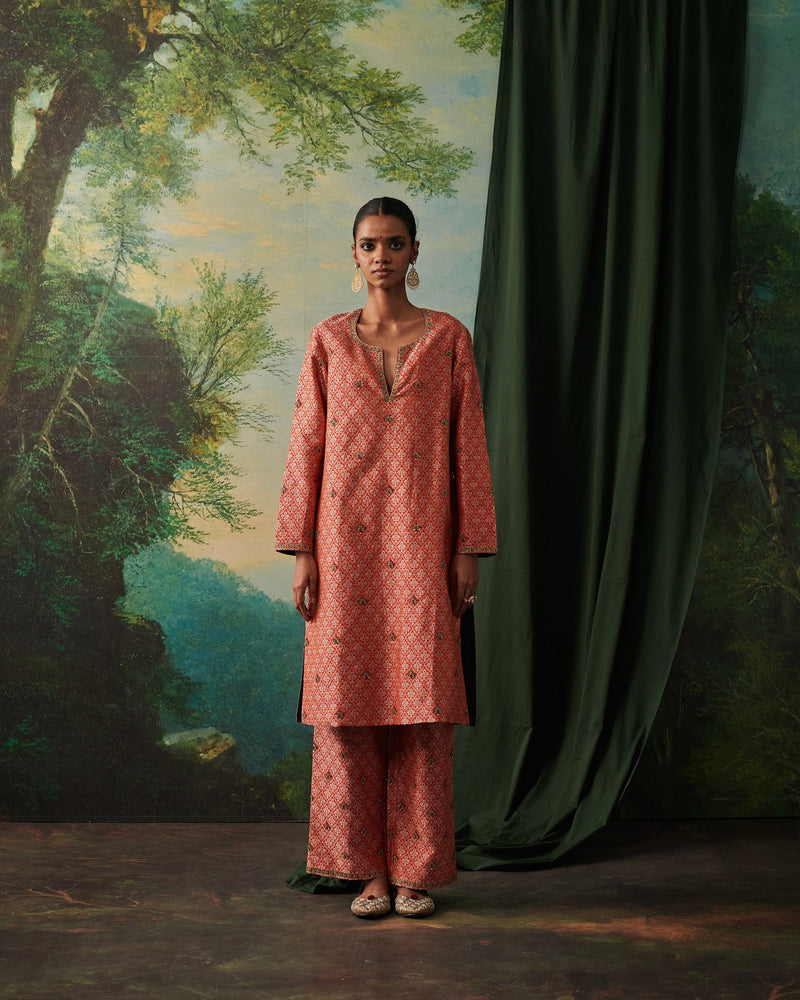
Keep reading
The journal →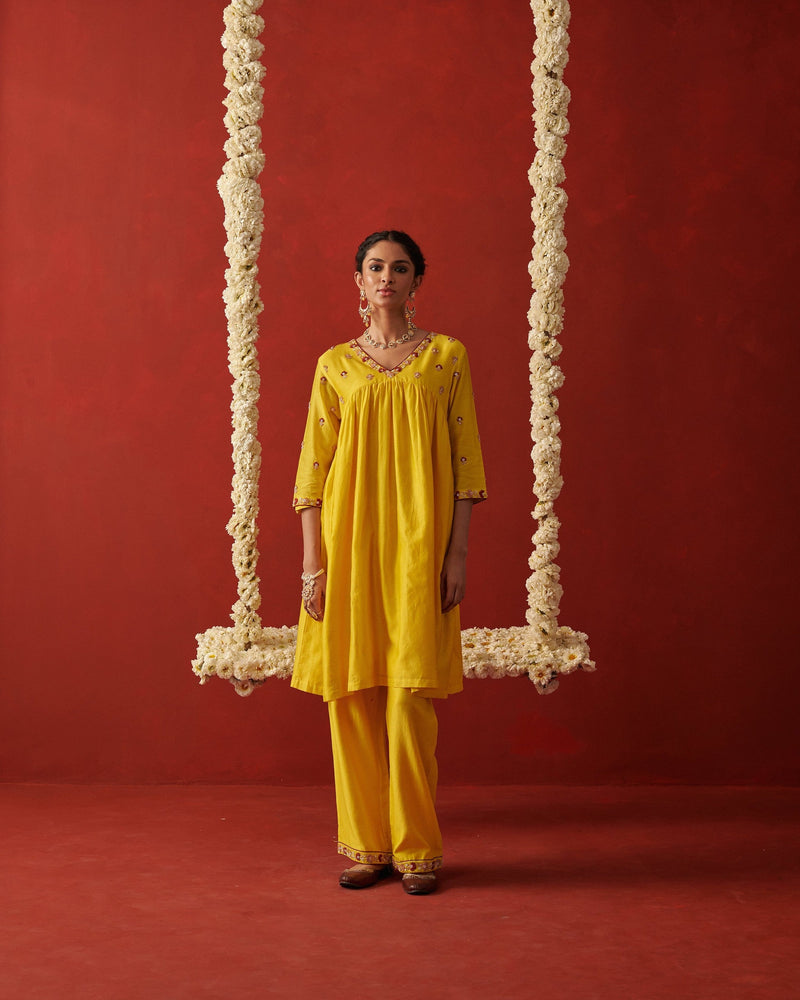
Dholki Night Outfit Ideas: What to Wear to the Ladies' Dhol
Handmade by karigars Made to your measurements Fit guarantee Ships worldwide As seen in GraziaElle Graduat...
27 July 2026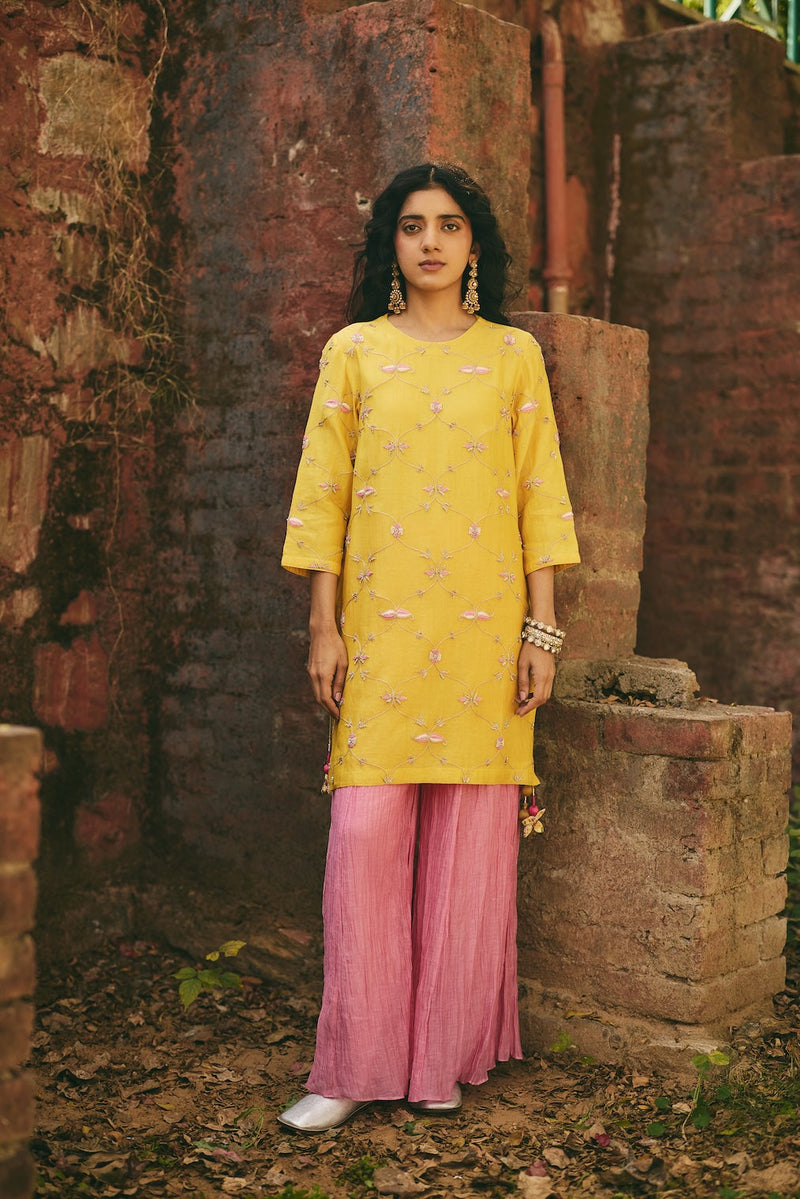
Mayra & Bhaat Outfit Ideas: Dressing for the Maternal Gift Ceremony
Handmade by karigars Made to your measurements Fit guarantee Ships worldwide As seen in GraziaElle Graduat...
27 July 2026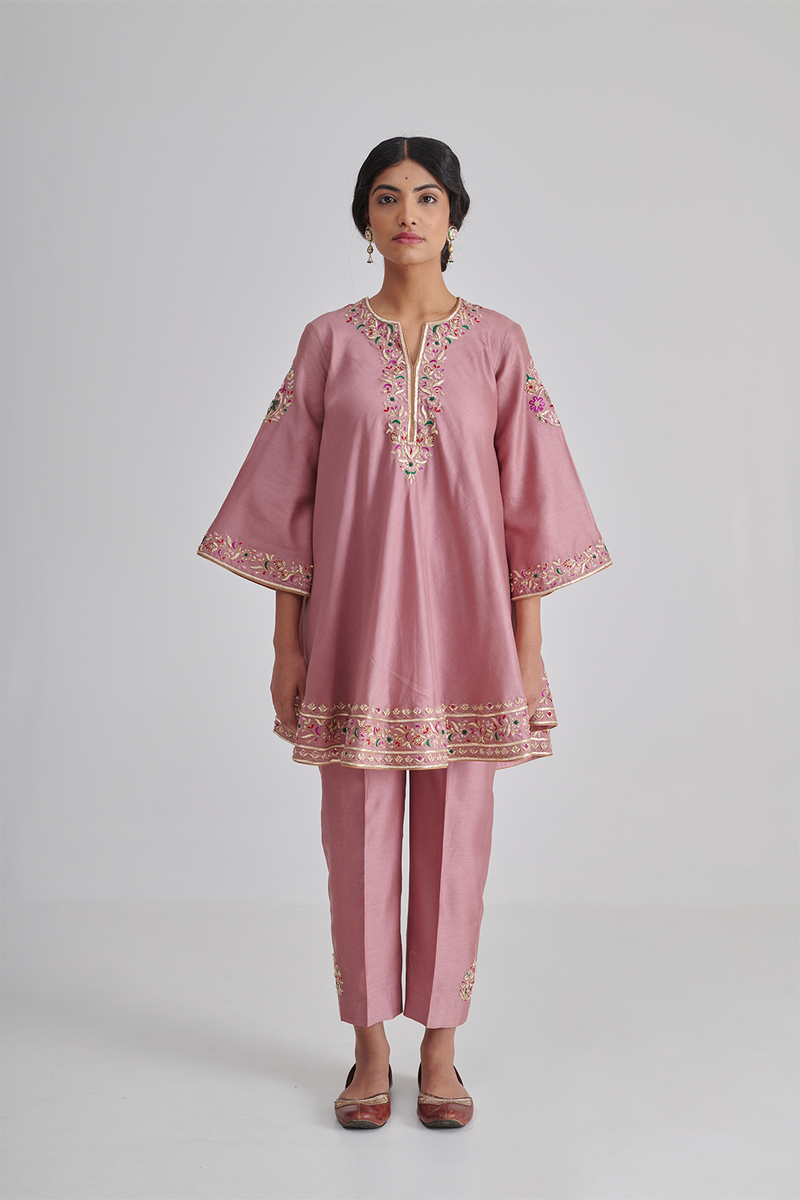
Pag Phera Outfit Ideas: What to Wear for the Bride's Homecoming
Handmade by karigars Made to your measurements Fit guarantee Ships worldwide As seen in GraziaElle Graduat...
27 July 2026