
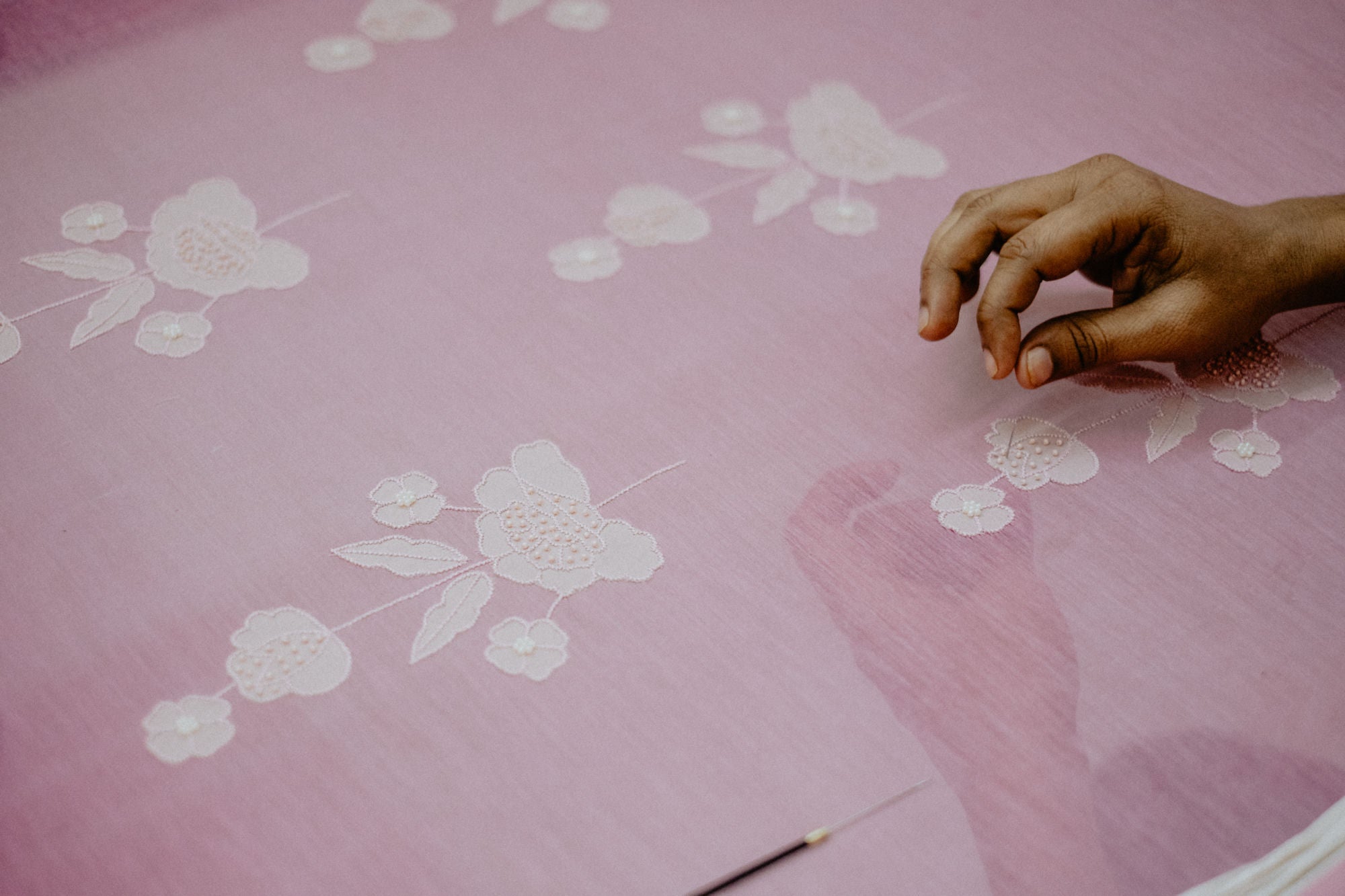
Aari Embroidery: The Ancient Chain Stitch Craft from Kashmir
Aari embroidery is one of India's most versatile and widespread techniques—a chain stitch worked with a hooked needle that creates everything from delicate paisleys to dense floral coverage. From Kashmiri shawls to Lucknowi kurtas to bridal lehengas, Aari work appears across Indian fashion. This guide explores its history, technique, regional variations, and how to identify quality Aari embroidery.
Love traditional embroidery? We work with karigars skilled in Aari and other heritage techniques. WhatsApp us →
What is Aari Embroidery?
Aari embroidery is a chain stitch technique worked with a specialized hooked needle called an "Aari" or "Ari." The needle has a hook at the end (similar to a crochet hook) that catches thread from below the fabric, pulling it through to create continuous chain stitches.
Key characteristics:
- Creates a chain stitch that looks like a series of connected loops
- Can be worked much faster than regular needle embroidery
- Allows for intricate, flowing designs
- Works on various fabrics from georgette to velvet
- Can incorporate beads, sequins, and other embellishments
History of Aari Work
Kashmiri Origins
Aari embroidery originated in Kashmir centuries ago, where it adorned the famous Kashmiri shawls prized worldwide. The technique likely arrived via Persia during Mughal times, though Kashmir made it uniquely its own.
Traditional Kashmiri Aari features:
- Intricate paisley (buta) motifs
- All-over coverage on shawls and phirans
- Fine wool or pashmina as base fabric
- Natural-dyed threads in rich colours
Spread Across India
The technique spread to other regions, each developing distinct styles:
- Lucknow: Aari combined with chikankari and zardozi
- Rajasthan/Gujarat: Aari with mirror work and bright colours
- Tamil Nadu: Aari work on silk saree blouses
- Hyderabad: Heavy Aari on bridal wear
The Aari Technique
The Tool
The Aari needle consists of:
- A wooden handle for grip
- A metal shaft
- A hooked point that catches thread
Different hook sizes create different stitch sizes—finer hooks for delicate work, larger for bold designs.
The Process
- Fabric mounting: Fabric is stretched taut on an embroidery frame (adda)
- Design transfer: Pattern is stamped or traced onto fabric
- Threading: Thread is held below the fabric, caught by the hook
- Chain formation: The hook pulls thread through, creating loops
- Continuous stitching: Each loop connects to the next, forming chains
Why It's Faster Than Regular Embroidery
Unlike needle embroidery where the needle must pass fully through the fabric for each stitch, Aari keeps the thread below while the hook works from above. This continuous motion allows skilled artisans to work significantly faster while maintaining precision.

Free Download
Get Our Measurement Guide
Step-by-step instructions with photos to measure yourself accurately for custom Indian wear.
Download Free GuideTypes of Aari Work
Basic Aari (Chain Stitch Only)
Pure chain stitch embroidery creating floral, paisley, or geometric patterns. The density and fineness of chains determines quality.
Aari with Zardozi
Aari chain stitch combined with zardozi (metallic thread work). Common in bridal and formal wear. The Aari creates outlines and fills; zardozi adds metallic highlights.
Aari with Beads & Sequins
Beads and sequins are incorporated into the chain stitch process. The hook catches both thread and bead, securing embellishments as part of the embroidery rather than added separately.
Kashmiri Aari
Traditional Kashmiri style with:
- Dense, all-over coverage
- Characteristic paisley and floral motifs
- Rich, saturated colours
- Often on wool or pashmina
Marodi Work
A variation where the chain stitch is worked in a specific twisted manner, creating a slightly different texture. Sometimes classified separately from Aari, sometimes considered a subset.


Identifying Quality Aari Embroidery
Signs of Good Craftsmanship
- Even chains: Stitches should be uniform in size throughout
- Clean lines: Outlines should be crisp, not wobbly
- Secure ends: No loose threads or unfinished chains
- Proper tension: Fabric shouldn't pucker around embroidery
- Back finishing: The reverse should be neat, not tangled
Hand vs Machine Aari
Machine chain stitch embroidery exists and can be difficult to distinguish. Look for:
- Slight irregularities: Hand work has subtle variations
- Design complexity: Very intricate, non-repeating patterns suggest handwork
- Stitch density: Hand Aari can achieve very fine, dense coverage machines struggle to match
- Price: Genuine hand Aari takes significant time and is priced accordingly
The Back Test
Check the reverse of the fabric:
- Hand Aari has visible chain loops on the back
- The pattern should be somewhat visible (reversed)
- Well-finished hand work has neat, secured ends
Aari in Contemporary Fashion
Bridal Wear
Aari is a staple of Indian bridal fashion:
- Lehenga skirts with all-over Aari
- Blouses with Aari back detailing
- Dupattas with Aari borders and motifs
Festive & Wedding Guest
For celebrations without bridal weight:
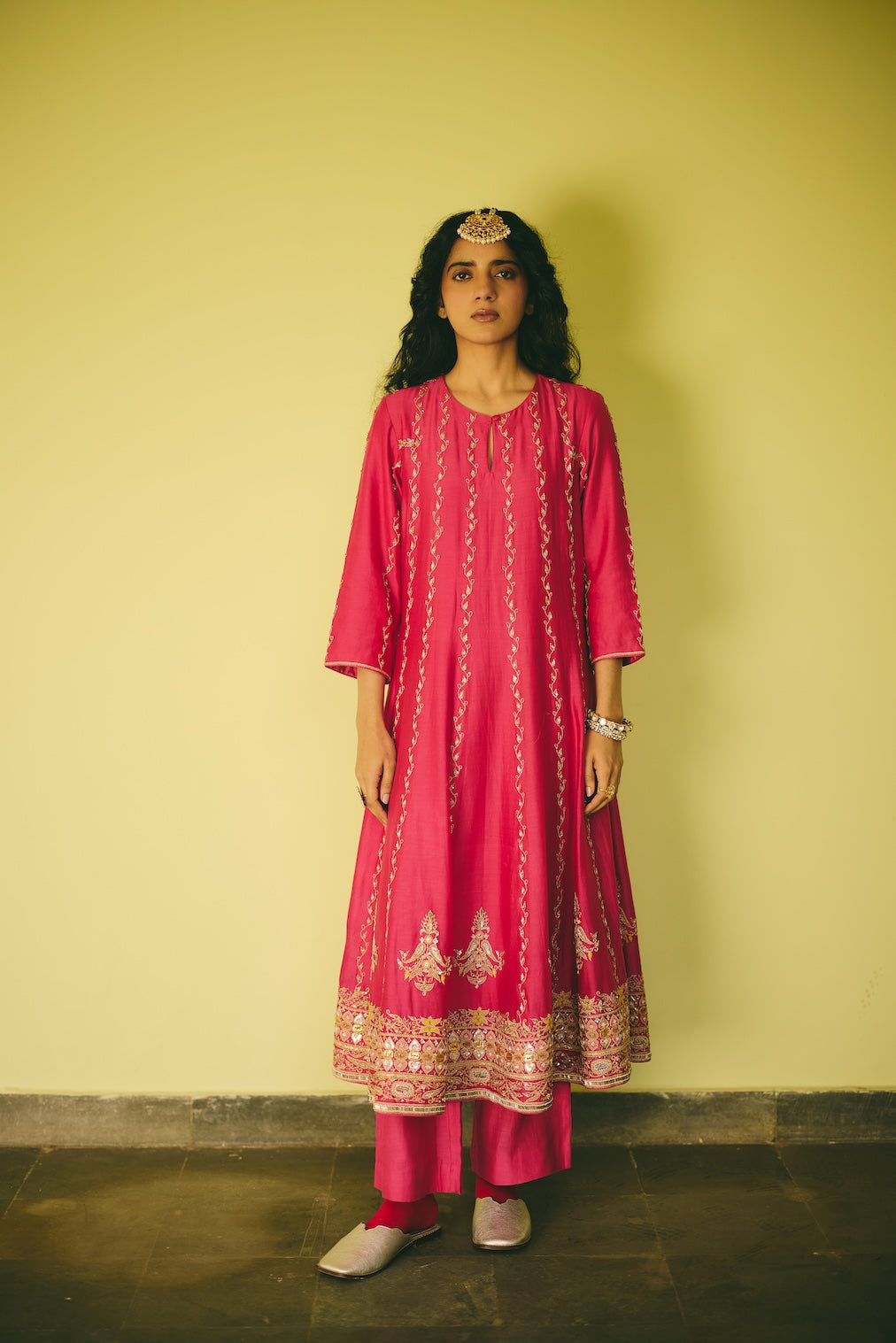
- Anarkalis with Aari yokes
- Kurta sets with embroidered dupattas
- Sarees with Aari blouses

Contemporary Applications
- Aari detailing on Indo-western gowns
- Embroidered denim jackets
- Aari work on contemporary silhouettes
- Minimalist Aari for everyday elegance
Appreciate handcrafted embroidery?
Our pieces feature Aari and other traditional techniques by skilled karigars. +91 70423 11214
Made-to-order with 4-5 weeks delivery
Caring for Aari Embroidered Pieces
Washing
- Dry clean recommended for heavy Aari work
- Light Aari on cotton can be hand washed very gently
- Never machine wash—the chains can catch and pull
- If hand washing, use cold water and mild detergent
Storage
- Store flat or rolled, never on hangers that stress embroidery
- Use muslin or cotton covers, not plastic
- Keep away from direct sunlight to prevent fading
- Add silica gel packets to prevent moisture damage
Wearing
- Be careful with jewellery that might catch on chains
- Apply perfume before dressing to avoid staining embroidery
- Avoid sitting on heavily embroidered areas when possible
Aari vs Other Embroideries
Aari vs Zardozi: Aari is the technique (chain stitch); zardozi is metallic thread work. They're often combined—Aari chains with zardozi highlights.
Aari vs Chikankari: Different stitches entirely. Chikankari uses multiple stitch types (taipchi, murri, bakhiya). Aari is specifically chain stitch.
Aari vs Crochet: Similar tools, different applications. Crochet creates fabric; Aari embellishes existing fabric.
Aari vs Tambour: Tambour is the French term for essentially the same technique. The tools and basic method are nearly identical.
Supporting the Craft
Aari artisans, particularly in Kashmir, face challenges:
- Machine embroidery competition
- Declining numbers of skilled karigars
- Younger generations moving to other professions
Buying authentic hand-embroidered pieces supports artisan communities and helps preserve this centuries-old craft.
Frequently Asked Questions
Is Aari embroidery expensive?
It depends on density and complexity. Light Aari work is affordable; heavy, all-over Kashmiri Aari on pashmina is luxury-priced. The technique is faster than some others, making it relatively accessible.
How long does Aari embroidery take?
A skilled artisan can cover significant area in a day, but complex pieces still take weeks. A heavily embroidered bridal lehenga might involve 100+ hours of work.
Can Aari be done on any fabric?
Aari works best on fabrics that can be stretched on a frame—georgette, silk, cotton, velvet. Very thick or very loose weaves are challenging.
Is Kashmiri Aari different from other Aari?
The technique is the same, but Kashmiri Aari has distinctive aesthetics—specific motifs (chinar leaves, paisleys), colour palettes, and traditional all-over coverage patterns.
How do I know if my "Kashmiri" shawl has real Aari?
Check the reverse—hand Aari shows chain loops on the back. Machine embroidery looks different on the reverse. Also, genuine Kashmiri Aari typically uses silk or high-quality threads, not synthetic.
Made to order in 4–5 weeks
Have an event date? We’ll tell you exactly when to order by.
We take a limited number of orders each month — secure your slot early.
WhatsApp me my order-by date + a shortlistNot sure where to start?
Tell us what you're dressing for and we'll help you choose — fabric, fit, colour, and timeline — over WhatsApp or on a video call.
Your Cart
Pieces from this story
All pieces →Not sure which piece, or need it by a date? Book a video consultation Ask us on WhatsApp



Keep reading
The journal →
Best Aari Work Brands in India 2026: Designers, Kashmir & Kutch Traditions, and Hand vs Machine
Where to buy aari work in India: designer labels, Kashmir and Kutch traditions and a Jaipur atelier, plus how to tell...
7 October 2026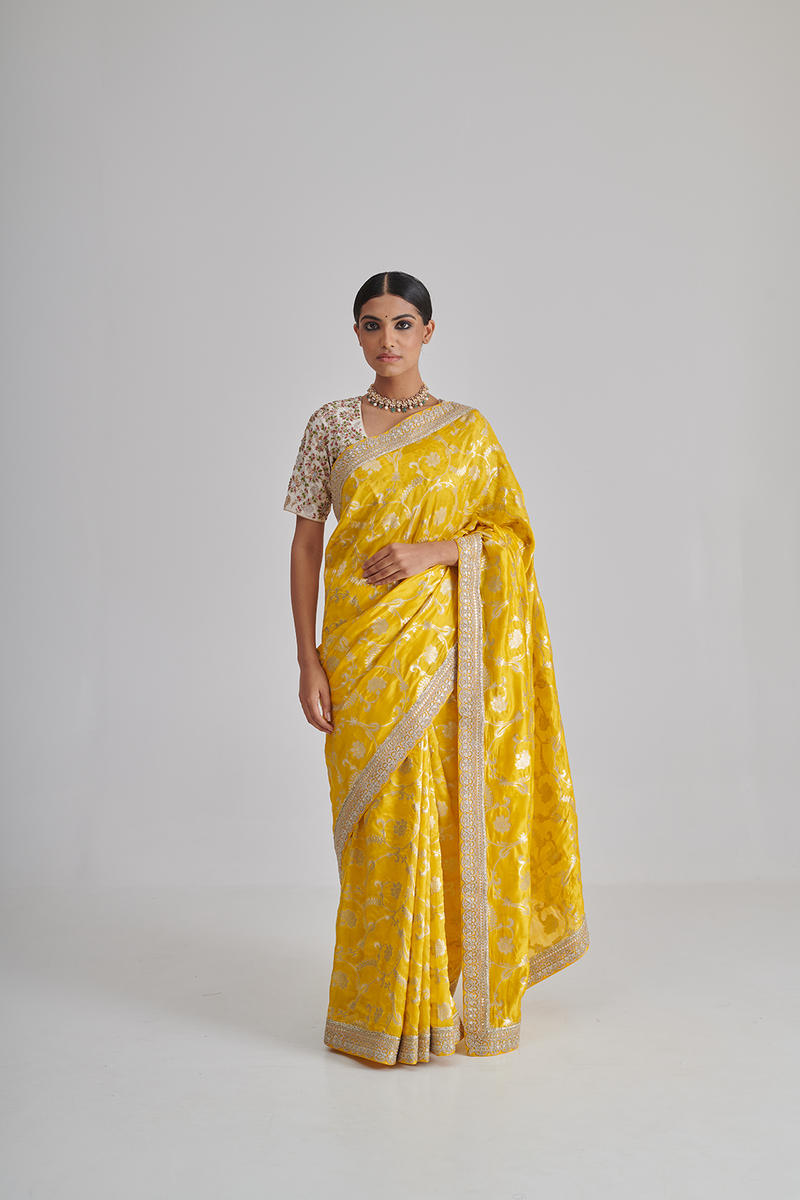
Real Zari vs Imitation: How to Tell the Difference When You Buy
How to tell real zari from imitation — the weight, sheen, thread and burn tests, what tested zari means, and why genu...
2 July 2026
How to Tell Hand Embroidery From Machine Work: A Buyer's Guide
How to tell genuine hand embroidery from machine work — what to look for in the stitches, the back of the fabric and ...
30 June 2026