
Aari, Zardozi & Resham: A Guide to Hand-Embroidery Techniques
When you read "hand-embroidered" on a garment tag, you are reading shorthand for centuries of craft. Aari, zardozi, resham — each technique has its own tools, traditions and textures. Understanding them helps you appreciate what goes into a piece, and choose the right embroidery for your occasion. Here is a guide to the techniques you will see most.
Zardozi: The Gold Standard
Zardozi (from the Persian for "gold sewing") is perhaps the most recognisable Indian embroidery. It uses metallic threads — traditionally gold or silver — along with sequins, beads and stones to create rich, raised patterns on fabric. Zardozi is heavy, opulent and unmistakably bridal or festive. You will see it on wedding lehengas, formal kurtas and statement dupattas.

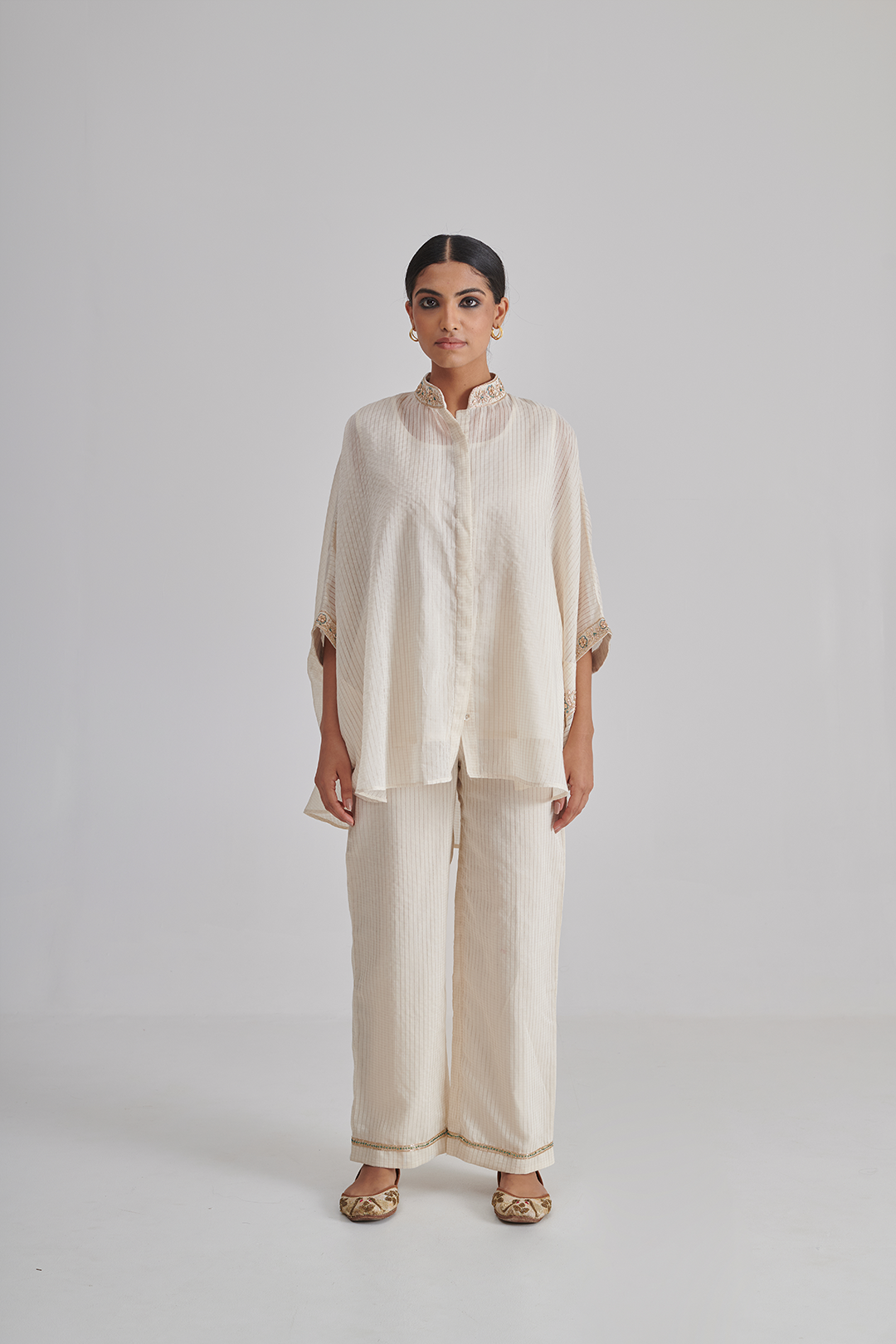
The Ira–Hoor Shirt Set shows zardozi and aari working together — a silk cotton zari-checks cape shirt with zardozi and aari embroidery in gold and silver thread along the collar and cuffs, lifted with turquoise accents.
Aari: The Chain-Stitch Craft
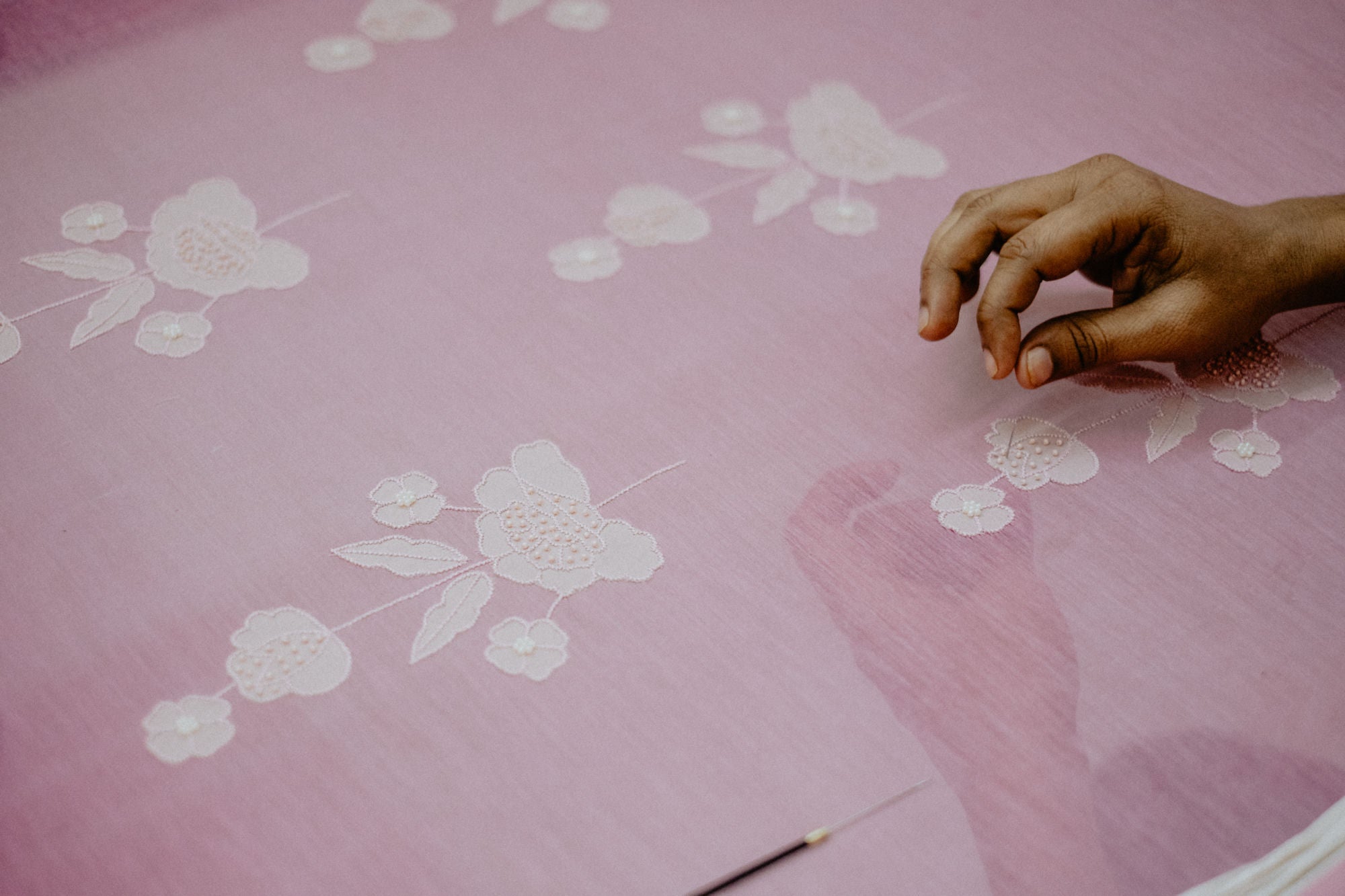
Aari embroidery uses a hooked needle (the aari) to create fine chain stitches, building floral, paisley and vine patterns in thread, often embellished with sequins and beads. It is lighter than zardozi, faster to execute, and wonderfully versatile — equally at home on a casual kurta and a festive set. Aari work originates in Kashmir and is now practised across India.


The Naveli–Ruhi Set blends aari with zardozi, sequins and thread — a dusty rose chanderi kurta with intricate floral embroidery across the neckline, sleeves, back and hem.
Want to understand the embroidery on a specific piece? WhatsApp us →
Resham: The Silk Thread
Resham (silk thread) embroidery uses coloured silk threads to create soft, textured patterns — often florals, vines and leaves. It is lighter and more muted than metallic zardozi, with a gentle, painterly quality. Resham can be used alone or combined with sequins, beads and zari for added dimension.

The Adhira Dupatta combines resham with mirror work — an ivory organza dupatta with delicate resham thread showcasing intricate craftsmanship.
How to Choose Your Technique
- For bridal and formal occasions: Zardozi's metallic richness and raised texture read most opulent.
- For festive versatility: Aari with sequins and beads offers shimmer without the weight of full zardozi.
- For soft, everyday elegance: Resham thread work brings colour and texture without heavy embellishment.
- For layered depth: The most beautiful pieces often combine techniques — aari outlines, zardozi highlights, resham fills.


The Chanbeli–Badli Sharara Set layers techniques beautifully — detailed Aari work forming vines and florals, enriched with multicolour resham threadwork, French knots, sequins and cutdana.
Want embroidery tailored to your piece?
Tell us what you love and we will help you choose the right technique for your occasion. WhatsApp us at +91 70423 11214
Each piece is made to order — standard production time is 4–5 weeks.
Frequently Asked Questions
What is the difference between aari and zardozi?
Aari uses a hooked needle to create chain stitches, often in thread with sequin accents. Zardozi uses metallic threads and raised embellishments for a heavier, more opulent effect.
Is resham embroidery less formal?
Resham is softer and more muted than metallic zardozi, so it reads lighter. But combined with sequins and beads, resham work can be beautifully festive.
How do I care for hand-embroidered pieces?
Dry-clean only. Store flat or with tissue to protect the embroidery, and avoid crushing raised zardozi work under heavy items.
Explore our hand-embroidered heritage pieces.
Browse IntizaarMade to order in 4–5 weeks
Have an event date? We’ll tell you exactly when to order by.
We take a limited number of orders each month — secure your slot early.
WhatsApp me my order-by date + a shortlistNot sure where to start?
Tell us what you're dressing for and we'll help you choose — fabric, fit, colour, and timeline — over WhatsApp or on a video call.
Your Cart
Pieces from this story
All pieces →Not sure which piece, or need it by a date? Book a video consultation Ask us on WhatsApp


Keep reading
The journal →
Dabka, Nakshi, Cutdana: A Glossary of Hand Embroidery Materials
What dabka, nakshi, cutdana, resham, marodi, gota and moti actually are — a plain-English glossary of the materials b...
22 August 2026
Best Zardozi Work Brands in India 2026: Designers, Lucknow & Bareilly Craft, and How to Judge It
Where to buy zardozi in India: couture labels, Lucknow and Bareilly craft clusters and made-to-order ateliers, plus d...
7 October 2026
Buta & Booti: The Small Motifs That Carry Indian Embroidery
What buta and booti mean in Indian textiles, how they differ from jaal, how they're woven or hand-embroidered, and ho...
14 August 2026