
Baisakhi 2026 Outfit Ideas: What to Wear for the Harvest Festival
Baisakhi marks the beginning of the harvest season — a celebration of abundance, gratitude, and new beginnings. Whether you're attending a Baisakhi mela, a family gathering, or a Gurdwara celebration, your outfit should reflect the joy and vibrancy of the occasion. Here's what to wear.
The Baisakhi Colour Palette
Baisakhi is a spring harvest festival, and the colours reflect that energy:
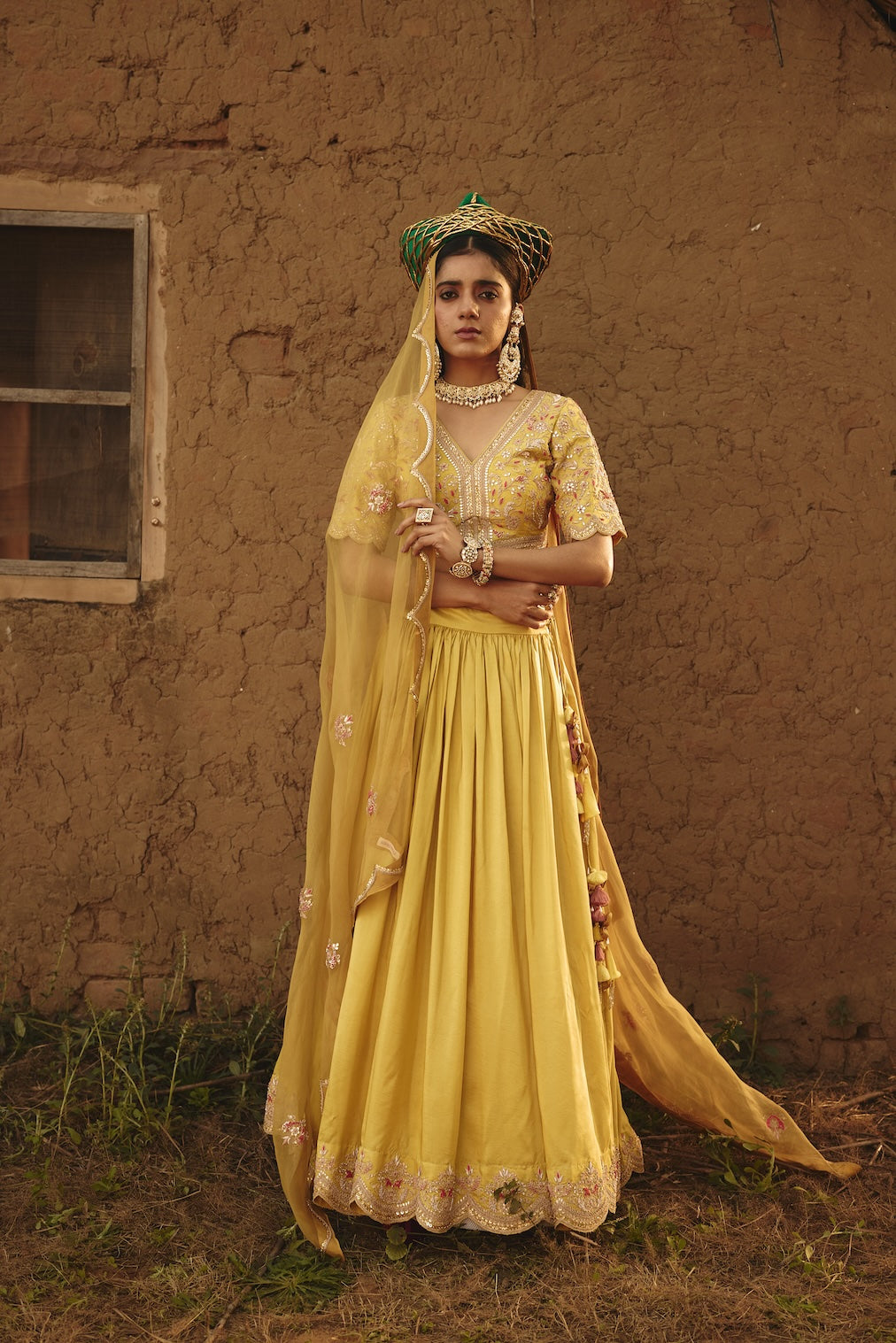
Yellow and gold — the most iconic Baisakhi colour. It represents the golden wheat fields of Punjab and the warmth of the spring sun. If you wear one colour for Baisakhi, make it yellow.
Green — representing the lush fields and new growth. Emerald, sage, pistachio — any shade of green feels inherently Baisakhi.
Orange and saffron — vibrant, festive, and connected to Sikh heritage. A bold orange is always appropriate.
Bright pink and fuchsia — the Punjabi celebration spirit distilled into colour. Think phulkari energy.
Baisakhi Outfit: The Yellow Kurta Set
Nothing says Baisakhi like a beautifully crafted yellow kurta set. It's the most natural choice — festive enough for the occasion, comfortable enough for a full day of celebration.
The Afreen & Maahi in sunshine yellow chanderi features delicate cutdana and bead embroidery. The lightness of chanderi makes it perfect for April weather — breathable, elegant, and effortlessly festive.

For a bolder take, the Sana & Ria pairs a radiant mustard yellow kurta with a contrasting deep pink pant — a colour combination that feels like Baisakhi itself.
Baisakhi Outfit: The Statement Saree
A saree for Baisakhi should feel celebratory without being heavy. Spring weather in North India calls for lightweight drapes in festive colours.
The Phalgun & Myra in yellow Banarasi silk features intricate floral motifs woven in silver thread with a rich lace border — heritage craft in the most Baisakhi colour imaginable.

For something lighter, the Taraana saree in luminous tissue fabric with a soft antique gold hue offers a subtle festive glow that catches the spring sunlight beautifully.
Baisakhi Outfit: Green & Fresh
Green is Baisakhi's second most iconic colour — it represents the fields, the new season, and the freshness of spring.


The Gia & Cyraa in vibrant lime green silk is lightweight with a natural sheen and hand-embroidered floral motifs — exactly the kind of fresh, modern festive outfit that works for Baisakhi. The Sahira & Fizza pairs a soft pistachio green silk kurta with a refreshing lime yellow pant for a two-tone combination that feels like spring.
Baisakhi Outfit: The Lehenga for Festive Events
If you're attending a larger Baisakhi celebration — a family event, a cultural programme, or a Baisakhi party — a lehenga makes a beautiful statement.
Free Download
Get Our Measurement Guide
Step-by-step instructions with photos for perfect custom fit.
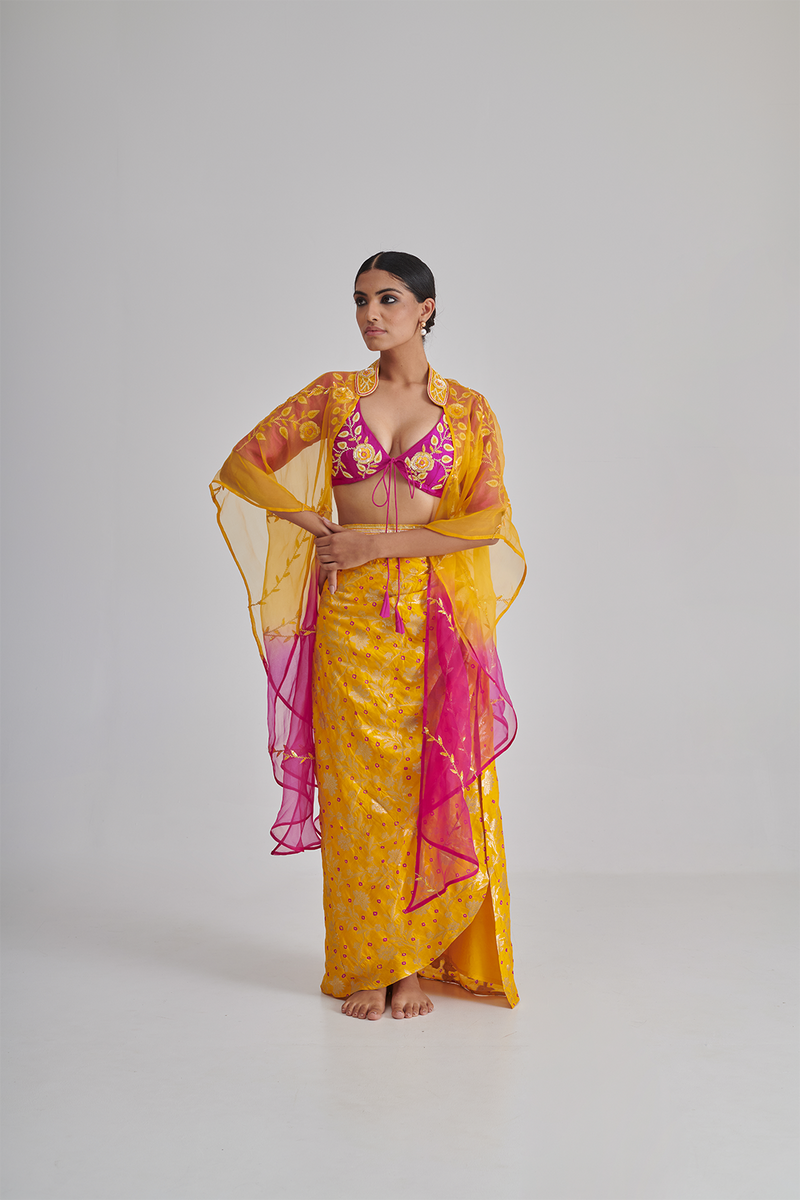
Download Free GuideThe Driti & Hesyra in radiant yellow silk evokes warmth, grace, and festive luminosity. The hand-embroidered detailing across the lehenga and blouse makes it a showstopper for Baisakhi celebrations.

For a lighter option, the Ishq-e-Gul & Inara lehenga and blouse in soft tissue jacquard offer a celebration of colour and movement — perfect for dancing at a Baisakhi mela.
The Baisakhi Dupatta
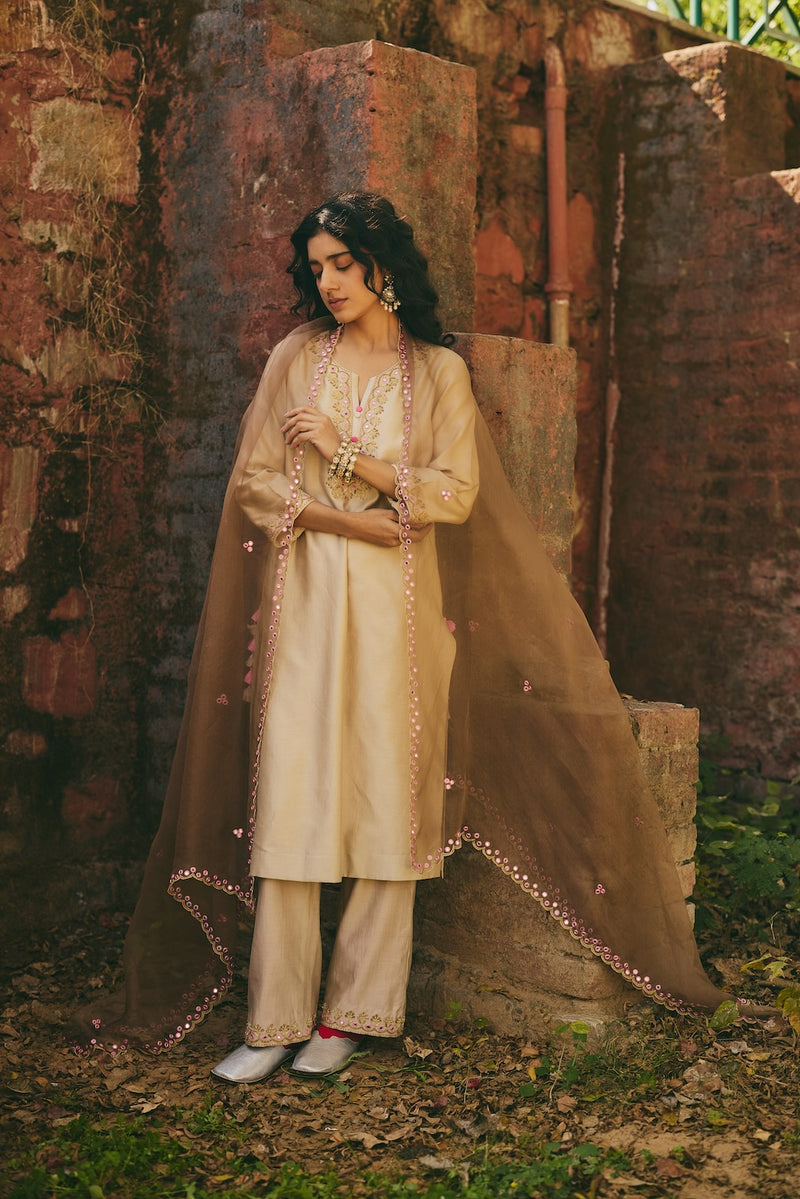
A vibrant dupatta can transform any simple outfit into a Baisakhi look. If you already own a plain kurta in a complementary colour, add one of these and you're ready.


The Nureen in radiant sunshine yellow is designed to infuse your ensemble with effortless festive grace. The Meheriya in yellow organza features delicate thread and cutdana work along the borders. And the Bageecha brings together yellow and rani pink in wide colour-blocked panels — the most Baisakhi dupatta imaginable.
Baisakhi Styling Tips
Embrace colour fearlessly. Baisakhi is not the occasion for muted tones or subtle palettes. This is a celebration of abundance — dress like it.
Choose breathable fabrics. Baisakhi falls in mid-April, when temperatures in North India are climbing. Chanderi, cotton, lightweight silk, and organza will keep you comfortable through outdoor celebrations.
Juttis over heels. Baisakhi celebrations often involve bhangra, gidda, and outdoor melas. Beautiful embroidered juttis are the traditional and practical choice.
Phulkari-inspired jewellery. If you're wearing a simpler outfit, let your accessories bring the Baisakhi energy. Multicolour bangles, chunky jhumkas, and tikka jewellery all feel deeply right.
Hair flowers. A gajra or fresh marigold flowers in your hair is one of the most beautiful Baisakhi styling choices — simple, festive, and deeply rooted in the harvest celebration spirit.
Frequently Asked Questions
What colour should I wear for Baisakhi?
Yellow is the most traditional and iconic Baisakhi colour, representing the golden wheat harvest. Green, orange, and bright pink are also perfect choices. The key is to go vibrant and celebratory.
Can I wear a saree for Baisakhi?
Absolutely. While kurta sets and lehengas are the most common choices, a saree — especially in yellow, green, or orange — is equally appropriate and elegant for Baisakhi celebrations.
Is Baisakhi only a Punjabi festival?
While Baisakhi is most prominently celebrated in Punjab and by the Sikh community, it's a harvest festival observed across North India under different names — Vishu in Kerala, Puthandu in Tamil Nadu, Bihu in Assam. The outfit principles remain the same: wear bright, festive colours that celebrate abundance.
What should I avoid wearing for Baisakhi?
There are no strict rules, but very dark or sombre colours (black, dark grey) feel out of place at a celebration of spring and harvest. Save those for other occasions and embrace the vibrancy of the season.
Ready to Order Custom?
WhatsApp us at +91 70423 11214 with what you're looking for. We'll guide you through measurements, customizations, and timeline.
Most pieces ready in 4-5 weeks. Bridal in 6-8 weeks.
Made to order in 4–5 weeks
Have an event date? We’ll tell you exactly when to order by.
We take a limited number of orders each month — secure your slot early.
Not sure where to start?
Tell us what you're dressing for and we'll help you choose — fabric, fit, colour, and timeline — over WhatsApp.
Your Cart
Pieces from this story
All pieces →
Keep reading
The journal →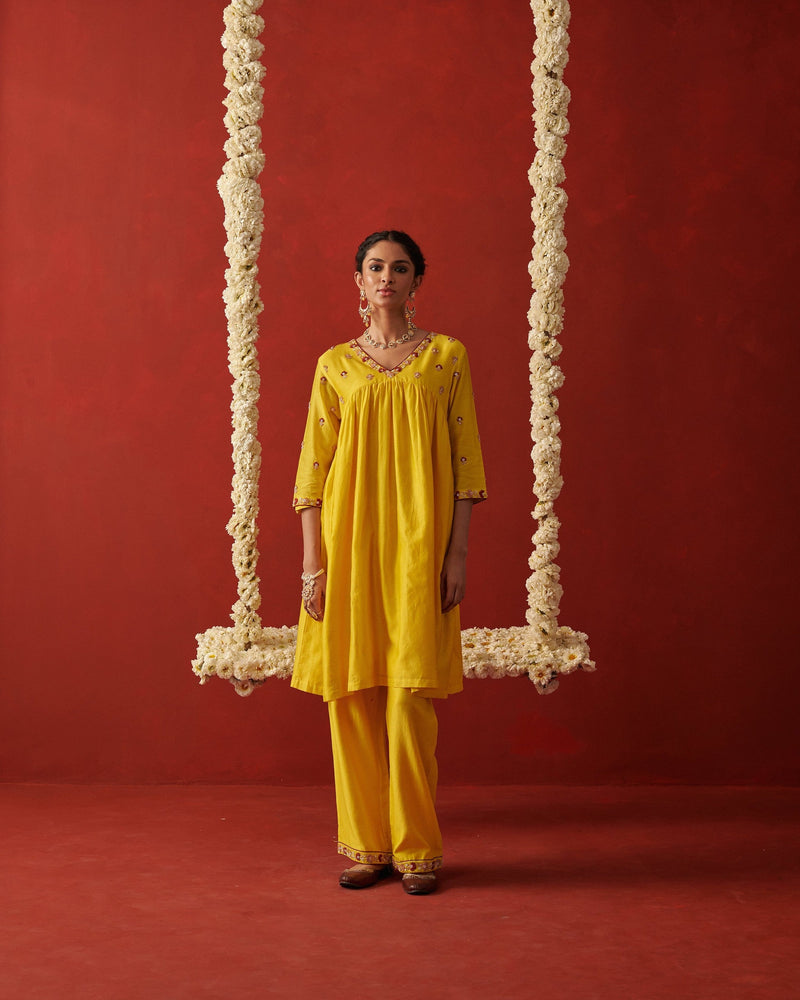
Dholki Night Outfit Ideas: What to Wear to the Ladies' Dhol
Handmade by karigars Made to your measurements Fit guarantee Ships worldwide As seen in GraziaElle Graduat...
27 July 2026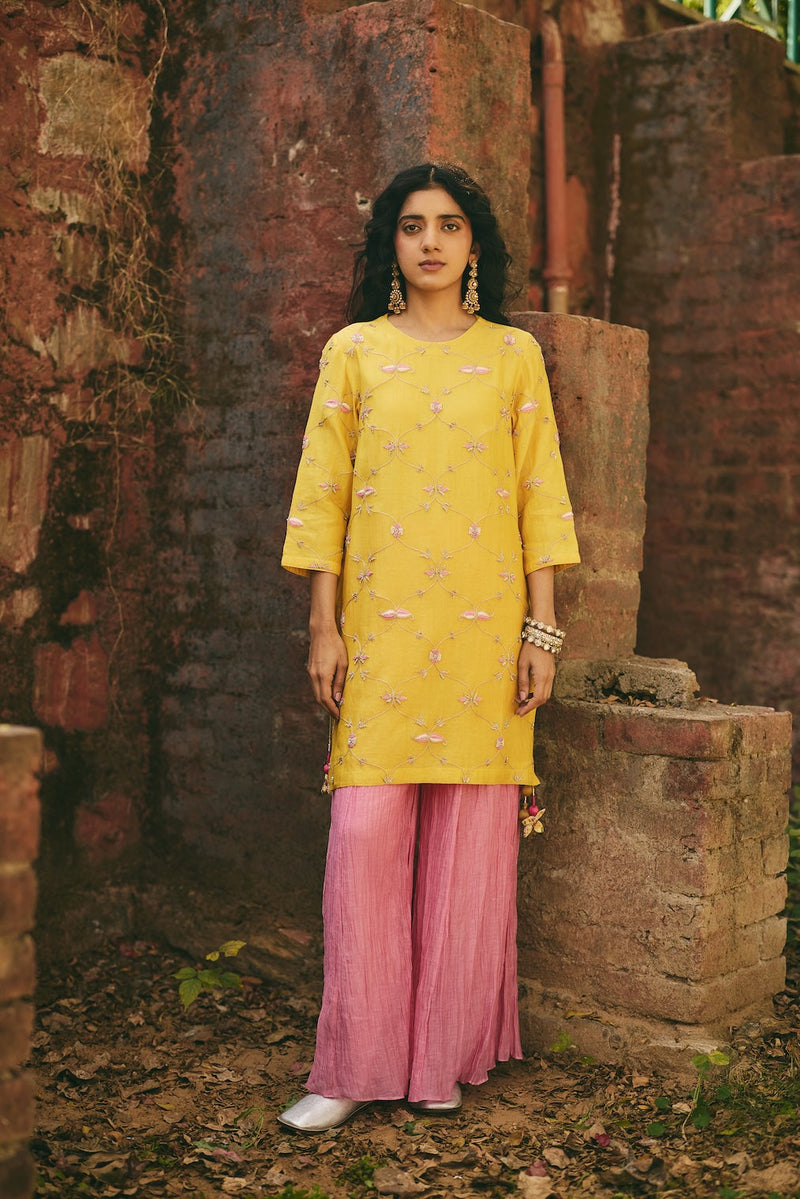
Mayra & Bhaat Outfit Ideas: Dressing for the Maternal Gift Ceremony
Handmade by karigars Made to your measurements Fit guarantee Ships worldwide As seen in GraziaElle Graduat...
27 July 2026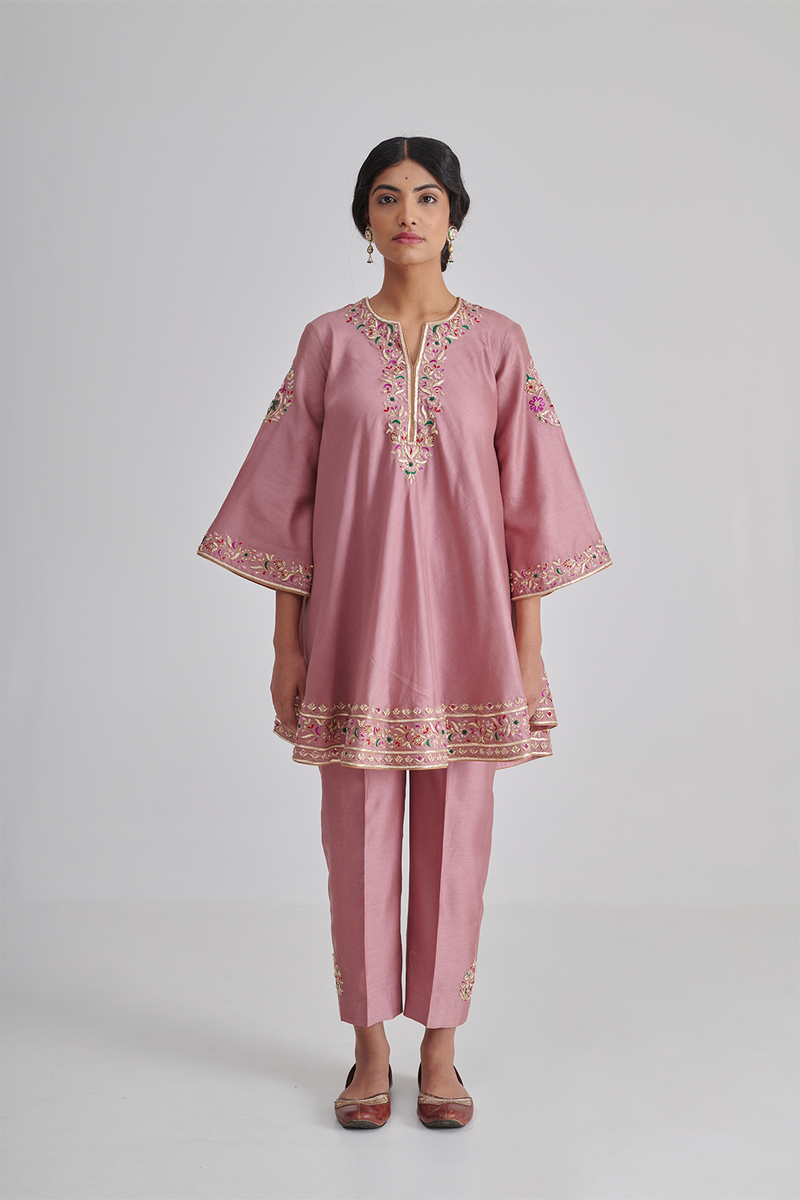
Pag Phera Outfit Ideas: What to Wear for the Bride's Homecoming
Handmade by karigars Made to your measurements Fit guarantee Ships worldwide As seen in GraziaElle Graduat...
27 July 2026