
Draped Skirts & Contemporary Silhouettes: The New Indian Occasion Wear
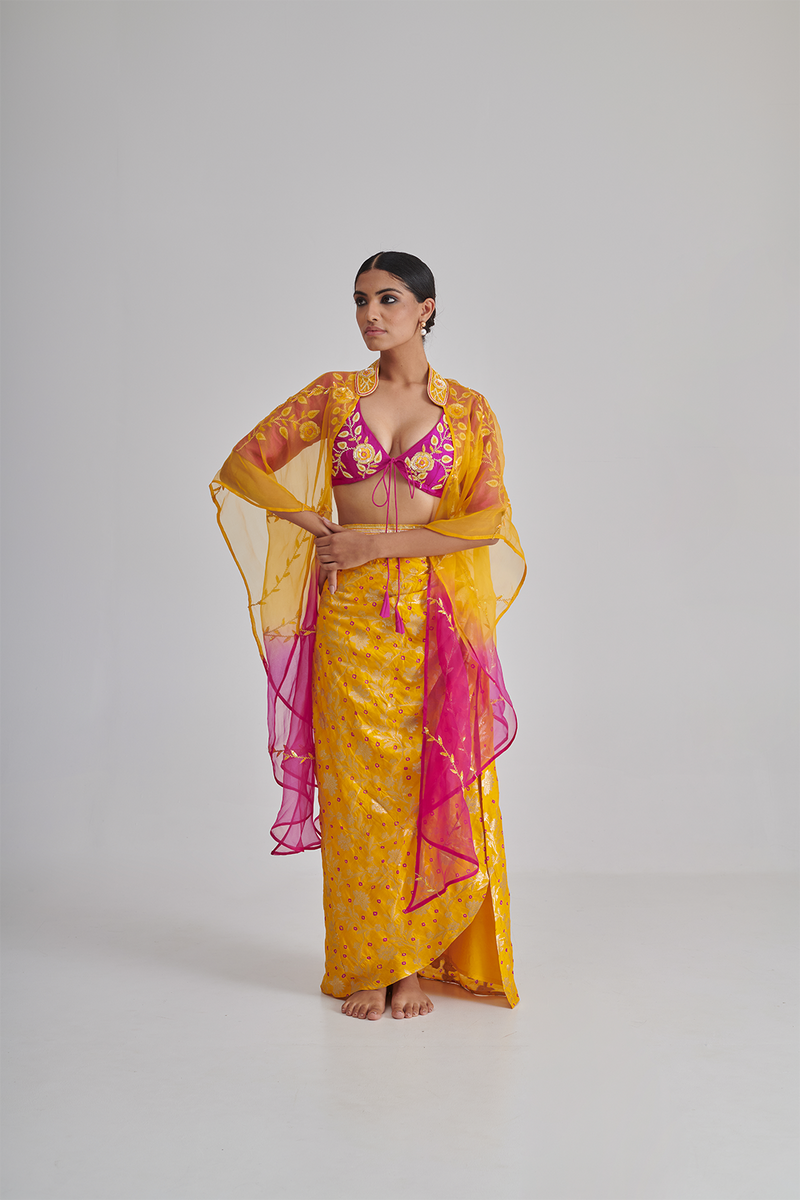
Traditional Indian wear is evolving. Alongside the lehenga, sharara and saree, a new silhouette has emerged: the draped skirt. Pre-pleated, pre-stitched and effortlessly elegant, draped skirts bring the drama of a saree drape without the six yards of fabric or the styling stress. Paired with a structured blouse or a sheer cape, they are the modern answer to occasion dressing. Here is how to wear them.
What Is a Draped Skirt?
A draped skirt is a stitched bottom that mimics the flow and fall of a saree pallu or a dhoti drape — pleated, wrapped or layered to create movement without requiring you to drape anything yourself. It is the best of both worlds: the elegance of traditional draping with the ease of putting on a skirt.

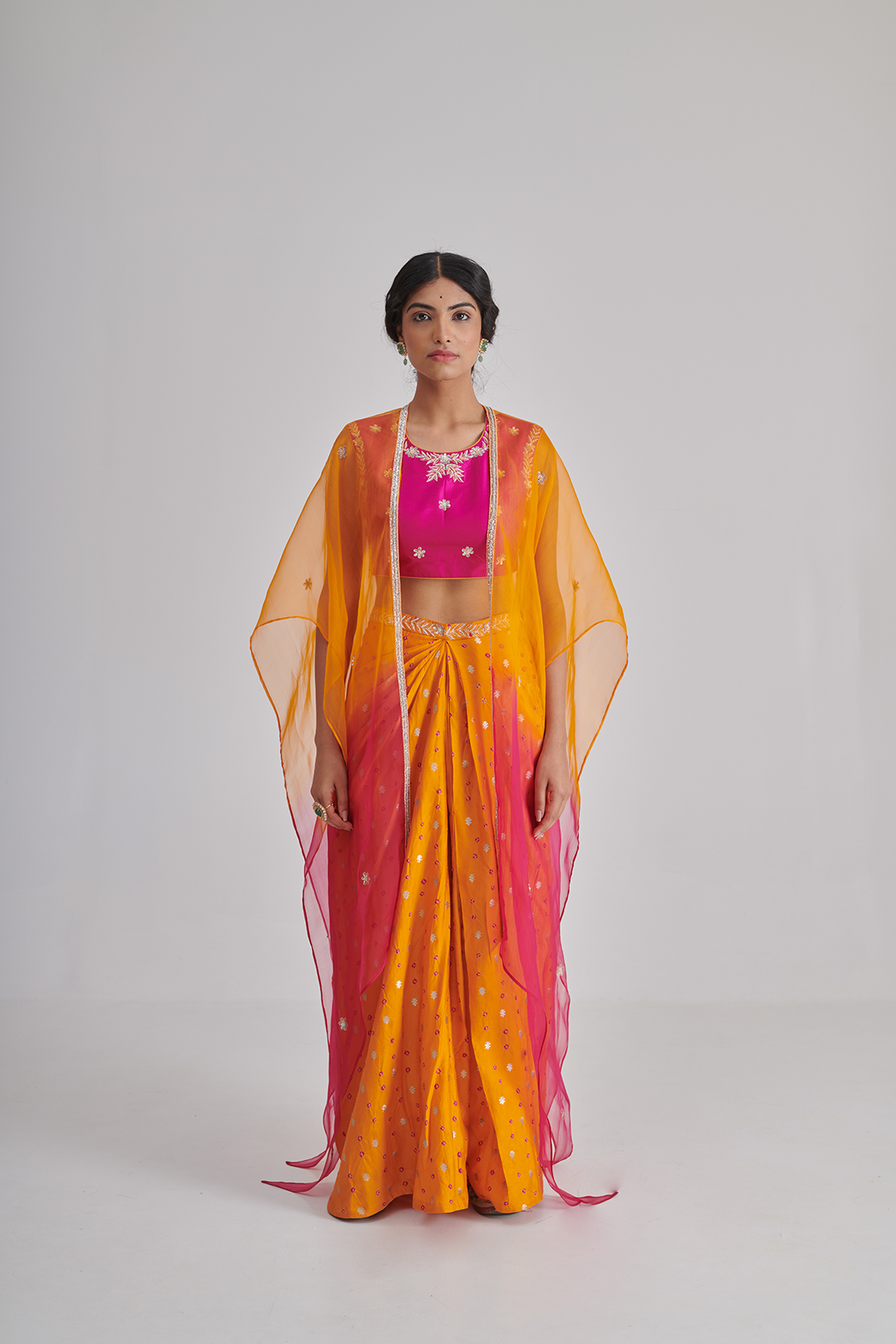
The Rumi–Akira–Vihana Lehenga is a perfect example — an orange ombre cheniya bandhani brocade silk draped skirt paired with a rani pink dupion silk blouse and an organza cape. The skirt has woven motifs all over and drapes beautifully with no styling required.
Why Draped Skirts Work
- No draping required. Just step in and go — the pleats and fall are already set.
- All the drama. The silhouette moves and photographs like a saree, without the fuss.
- Modern and easy. Paired with a structured top or cape, it reads fashion-forward and contemporary.
- Dance-floor ready. Unlike a six-yard saree, a draped skirt stays in place through a long, active celebration.
Want help styling a draped skirt look? WhatsApp us →
The Contemporary Edit
For sheer drama: the Rang–Sasha–Tasha Set layers a sheer black organza cape embroidered with multicolour floral vines over a contemporary pleated blouse and a draped skirt — all black, all elegance.


For a dhoti-inspired drape: the Faasle–Mogra Ensemble pairs an ivory silk chanderi sleeveless peplum top — with intricate golden floral embroidery — with dhoti-inspired pants that carry the same fluid, draped aesthetic.
Peplum, Dhoti & Beyond
The draped skirt is part of a broader shift toward contemporary Indian silhouettes: peplum tops, dhoti pants, structured capes replacing dupattas. These pieces borrow from traditional forms but cut and stitch them for ease. The result is a new vocabulary of occasion wear — rooted in Indian craft, designed for modern life.
How to Style Contemporary Silhouettes
- Keep the top structured. A peplum, bustier or fitted blouse balances the drape of the skirt.
- Layer with a cape. A sheer organza or embroidered cape replaces the dupatta and adds drama without bulk.
- Skip the heavy jewellery. Contemporary silhouettes call for statement earrings or a single cuff, not layered necklaces.
- Let the drape move. These pieces are made for photographs and dance floors — wear them to events where you can show them off.
Want a contemporary silhouette made for you?
Tell us the occasion and we will help you choose a draped skirt, cape or peplum set. WhatsApp us at +91 70423 11214
Each piece is made to order — standard production time is 4–5 weeks.
Frequently Asked Questions
Is a draped skirt easier to wear than a saree?
Yes — a draped skirt is stitched and pre-pleated, so you step in and go. It gives you the look of a saree drape without the styling effort.
Can I wear a draped skirt to a wedding?
Absolutely. Draped skirts and contemporary silhouettes are increasingly popular at sangeets, cocktail parties and receptions.
What top goes with a draped skirt?
A structured blouse, bustier or peplum top balances the flow of the skirt. A sheer cape adds drama without a dupatta.
Explore our contemporary occasion pieces.
Browse Cocktail / ReceptionMade to order in 4–5 weeks
Have an event date? We’ll tell you exactly when to order by.
We take a limited number of orders each month — secure your slot early.
Not sure where to start?
Tell us what you're dressing for and we'll help you choose — fabric, fit, colour, and timeline — over WhatsApp.
Your Cart
Pieces from this story
All pieces →
Keep reading
The journal →
Dholki Night Outfit Ideas: What to Wear to the Ladies' Dhol
Handmade by karigars Made to your measurements Fit guarantee Ships worldwide As seen in GraziaElle Graduat...
27 July 2026
Mayra & Bhaat Outfit Ideas: Dressing for the Maternal Gift Ceremony
Handmade by karigars Made to your measurements Fit guarantee Ships worldwide As seen in GraziaElle Graduat...
27 July 2026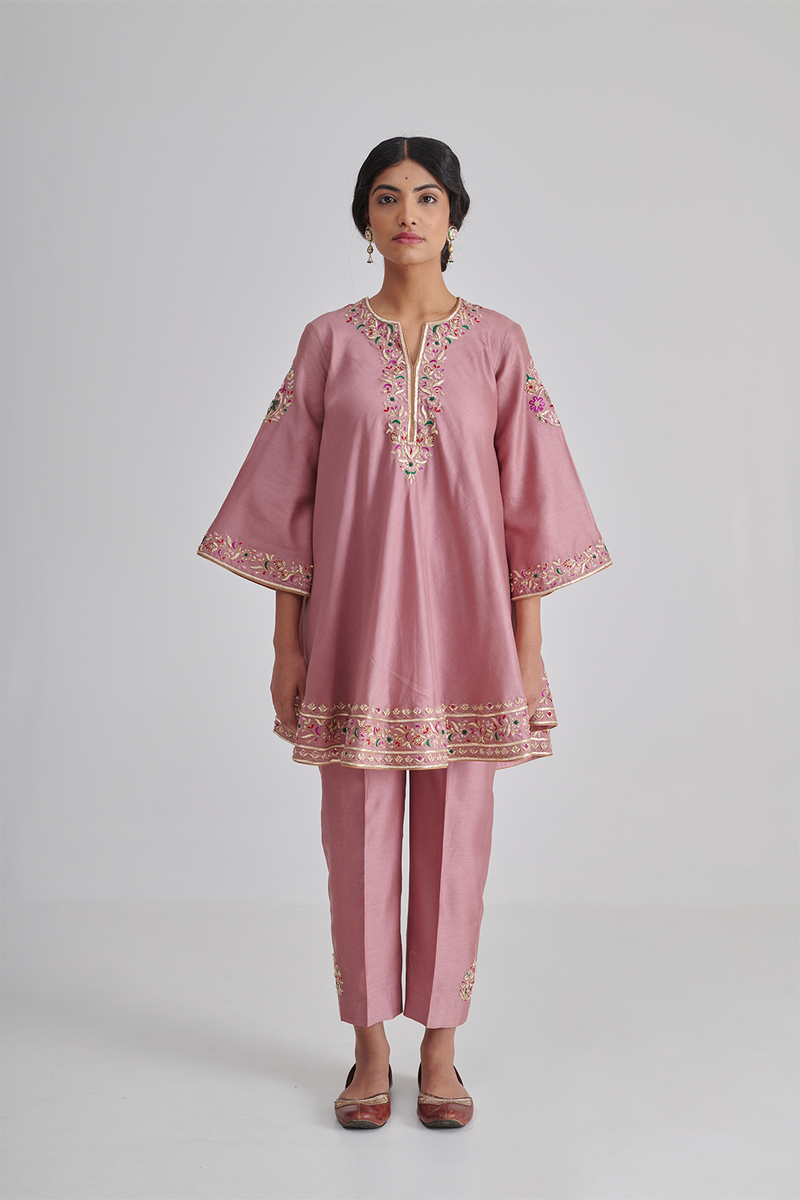
Pag Phera Outfit Ideas: What to Wear for the Bride's Homecoming
Handmade by karigars Made to your measurements Fit guarantee Ships worldwide As seen in GraziaElle Graduat...
27 July 2026