
How to Drape a Saree: A Beginner's Step-by-Step Guide
The saree is one of the most elegant garments in the world — and one of the most intimidating for beginners. Six yards of fabric, no buttons, no zippers, just draping and tucking. But here's the truth: with the right technique and a little practice, anyone can drape a saree. This guide breaks it down step by step.
What You'll Need
- Saree — 5-6 yards of fabric (most sarees are 5.5 yards)
- Petticoat — A drawstring or elastic-waist underskirt, ideally matching your saree colour
- Blouse — Fitted, usually cropped at the midriff
- Safety pins — At least 6-8 medium-sized pins
- A mirror — Full-length if possible
Before You Start
- Wear your blouse and petticoat first
- Tie the petticoat firmly at your natural waist — it shouldn't slip
- The petticoat should touch the floor or be 1 inch above (adjust based on heel height)
- Keep pins within reach
The Nivi Drape: Most Common Style
The Nivi drape (also called the modern drape) is what most people picture when they think "saree." It originated in Andhra Pradesh but is now worn across India. Here's how:
Step 1: Tuck the Plain End
Start with the non-decorative end of the saree (opposite the pallu). Tuck it into the petticoat at your right hip, about 2-3 inches deep. The saree should touch the floor.
Step 2: Wrap Around Once
Bring the saree around your back, from right to left, keeping it at floor length. Tuck as you go, creating a secure base around your waist. You should complete one full round and end up back at your right hip.
Step 3: Make the Pleats
This is the trickiest part. Take the fabric in front of you and make 5-7 pleats, each about 4-5 inches wide. The pleats should face left. Keep them even and neat.
Tip: Hold the pleats against your body as you make them to gauge the width.
Step 4: Tuck the Pleats
Tuck the pleats into your petticoat, slightly to the left of your navel. The pleats should fall straight down. Secure with a safety pin from inside the petticoat if needed.
Step 5: Wrap the Pallu
Take the remaining fabric (with the decorative pallu end) and bring it around your back, under your right arm, and across your chest to your left shoulder. The pallu should drape over your left shoulder and fall down your back.
Step 6: Secure and Adjust
Pin the pallu to your left shoulder (pin from inside the blouse so it doesn't show). Adjust the length — the pallu can be short (ending at your waist) or long (reaching your knees).
Fan out the pleats at your feet for the classic look. Adjust the neckline drape. You're done.
Common Mistakes and How to Fix Them
Pleats keep coming undone: Your petticoat is too loose, or you're not tucking deep enough. The fabric needs friction to stay in place.
Saree is too long/short: Adjust at Step 2. Tuck higher for shorter length, lower for longer.
Pallu won't stay: More pins. One at the shoulder isn't enough — add one at the chest and one at the back.
Pleats are uneven: Practice makes perfect. Iron the saree before draping — crisp fabric pleats better.
Can't walk properly: Your petticoat might be too tight, or your pleats are too narrow. Wider pleats allow more movement.
Sarees That Are Easier for Beginners
Some fabrics drape more easily than others:
Free Download
Get Our Measurement Guide
Step-by-step instructions with photos for perfect custom fit.
Download Free GuideEasier:
- Chiffon — lightweight, flows naturally
- Georgette — slightly heavier than chiffon, holds pleats well
- Crepe — has enough body to stay in place


The Teya and Sarmaya in chiffon are excellent for beginners — they're lightweight and forgiving.
More challenging:
- Silk — slippery, requires more pins
- Tissue — stiff, needs practice
- Heavy Banarasi — the weight can pull if not secured

The Taraana in tissue is stunning but requires a bit more practice to drape well.
Alternative Draping Styles
Gujarati Style
Similar to Nivi, but the pallu comes from the back, over the right shoulder, and is pinned at the front. The decorative end is displayed across the chest.
Bengali Style
No pleats in front. The saree is wrapped around and the pallu is brought over the left shoulder, then draped across and tucked at the back right. Creates an elegant, flowing look.
Maharashtrian/Nauvari
A 9-yard saree draped like dhoti-pants. Very different from the standard drape, traditional for Maharashtrian ceremonies.
Pre-Draped Sarees: The Easy Alternative
If draping feels overwhelming, pre-draped sarees exist. The pleats are stitched in place, and you essentially step into it and pin. It's not traditional, but it's practical for beginners or anyone short on time.
Practice Tips
- Practice with an old saree or a bedsheet first
- Watch YouTube tutorials while draping — visual guidance helps
- Give yourself 30+ minutes the first few times
- Practice the same saree multiple times before your event
- If all else fails, find a local aunty or go to a salon for help
Frequently Asked Questions
How long does it take to drape a saree?
Beginners: 20-30 minutes. With practice: 5-10 minutes. Experts: 3-5 minutes.
Can I drape a saree without a petticoat?
Technically yes (with a long skirt), but a proper petticoat makes draping much easier and more secure.
How many pins do I need?
For beginners, 6-8 pins. With experience, you might use only 2-3.
Which shoulder does the pallu go on?
Left shoulder for most styles (Nivi, Bengali). Right shoulder for Gujarati style.
Explore: Sarees | Blouses | Shop All
Ready to Order Custom?
WhatsApp us at +91 70423 11214 with what you're looking for. We'll guide you through measurements, customizations, and timeline.
Most pieces ready in 4-5 weeks. Bridal in 6-8 weeks.
Made to order in 4–5 weeks
Have an event date? We’ll tell you exactly when to order by.
We take a limited number of orders each month — secure your slot early.
WhatsApp me my order-by date + a shortlistNot sure where to start?
Tell us what you're dressing for and we'll help you choose — fabric, fit, colour, and timeline — over WhatsApp or on a video call.
Your Cart
Pieces from this story
All pieces →Not sure which piece, or need it by a date? Book a video consultation Ask us on WhatsApp


Keep reading
The journal →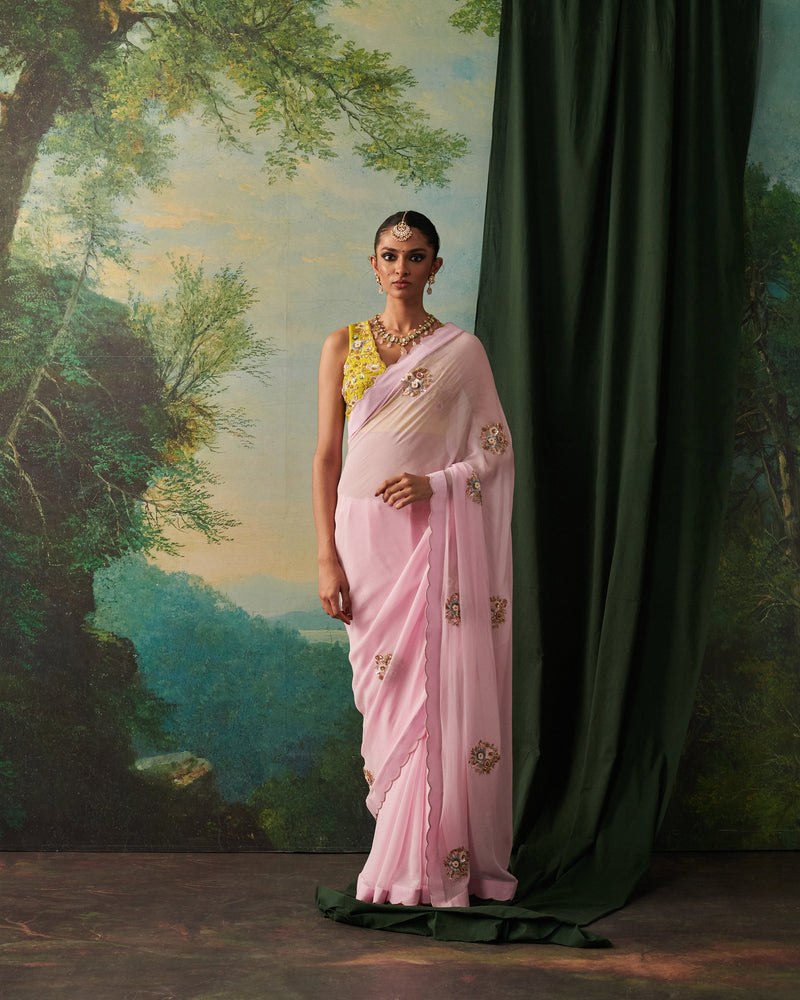
A Beginner's Guide to Wearing a Saree, Step by Step
A beginner's step-by-step guide to wearing a saree for the first time — what you need, how to pleat and drape it, and...
30 July 2026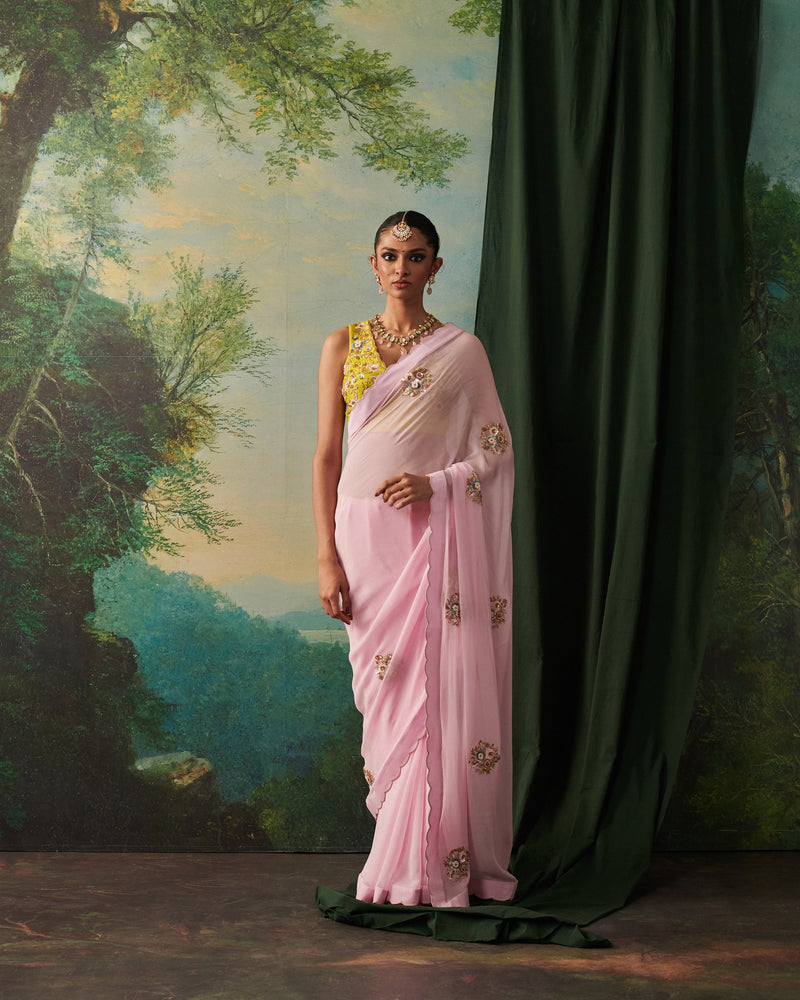
Saree Draping Styles Guide: 8 Ways to Drape a Saree
A guide to eight beautiful saree draping styles — Nivi, Bengali, Gujarati, butterfly, lehenga drape and more — with t...
24 June 2026
Kids' Ethnic Wear Under ₹20,000: 18 Hand-Embroidered Sets by Price and Occasion
18 hand-embroidered kids' kurta sets, a sharara and a lehenga from ₹12,500 to ₹19,500, by price band and occasion. Si...
7 October 2026