
How to Photograph Your Indian Outfits: A Guide to Looking Your Best
You've invested in a beautiful handmade outfit. The embroidery is exquisite, the fabric catches light perfectly, and you feel incredible wearing it. Then you see the photos, and something's off. The colours look flat, the details don't show, and you wonder why it doesn't translate. Here's how to fix that.
Lighting Is Everything
Most indoor photos fail because of lighting. Flash flattens embroidery, overhead lights cast shadows, and tungsten bulbs turn gold tones orange.
The golden rule: Natural light, ideally during golden hour (the hour after sunrise or before sunset). This is when photographers shoot campaigns for a reason — the warm, diffused light makes fabrics glow and embroidery sparkle.
Indoor alternatives:
- Stand near a large window, facing the light (not with it behind you)
- Avoid direct midday sun, which creates harsh shadows
- Turn off artificial lights to avoid colour mixing
- A sheer curtain diffuses harsh window light beautifully
Background Matters
Your outfit should be the star. Busy backgrounds compete for attention and make photos feel chaotic.
Best backgrounds:
- Plain walls (white, cream, or muted colours)
- Architectural elements (arches, columns, simple doorways)
- Greenery (but not too busy — think hedges, not jungle)
- Simple interiors (clean spaces, minimal furniture)
Avoid: Cluttered rooms, patterned wallpaper, busy street scenes, other people's outfits competing in frame.
Angles That Flatter Indian Silhouettes
Different silhouettes photograph differently. Here's what works:
For Lehengas and Shararas
These silhouettes have volume — show it off.
- Slight twirl shots capture movement and flare
- Three-quarter angle (body turned 45 degrees) shows dimension
- Full-length shots from slightly below eye level elongate
- Detail shots of embroidery — zoom into the work

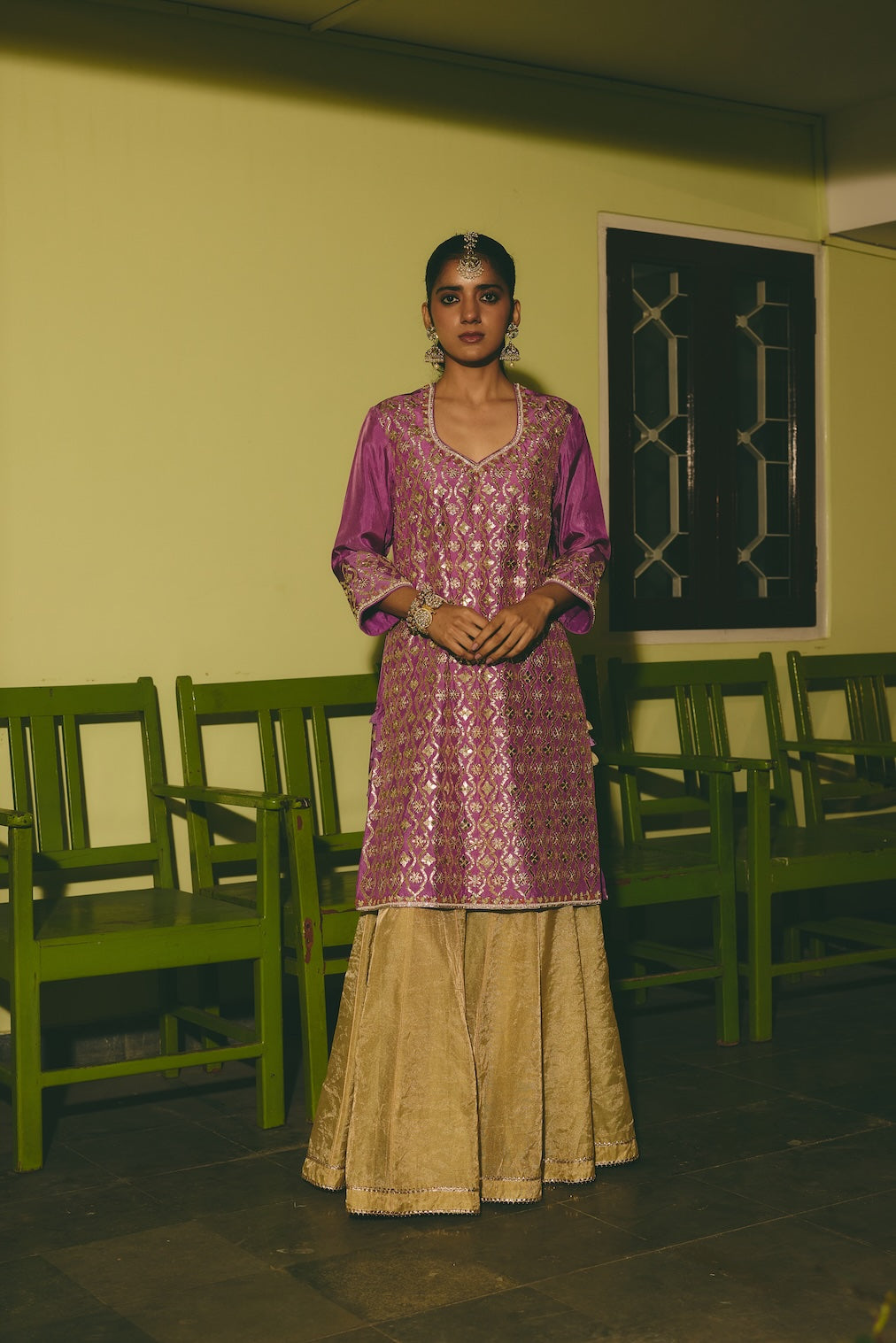
A piece like the Zehan & Aabha sharara deserves both full-length shots showing the silhouette and close-ups capturing the dense embroidery.
For Sarees
The drape is everything. Photograph it properly.
- Show the pallu — don't let it hide behind you
- Capture pleats from an angle that shows their crispness
- Seated poses often work better than standing for sarees
- Walking shots create elegant movement


Shimmer fabrics like the Taraana need side lighting to catch their glow. Flowing fabrics like the Teya look best with some movement.
For Kurta Sets
These are the most versatile to photograph.
- Casual, relaxed poses work well
- Show the dupatta styling — different drapes create different looks
- Sitting, standing, walking all work
- Close-ups of neckline embroidery


Capturing Embroidery Details
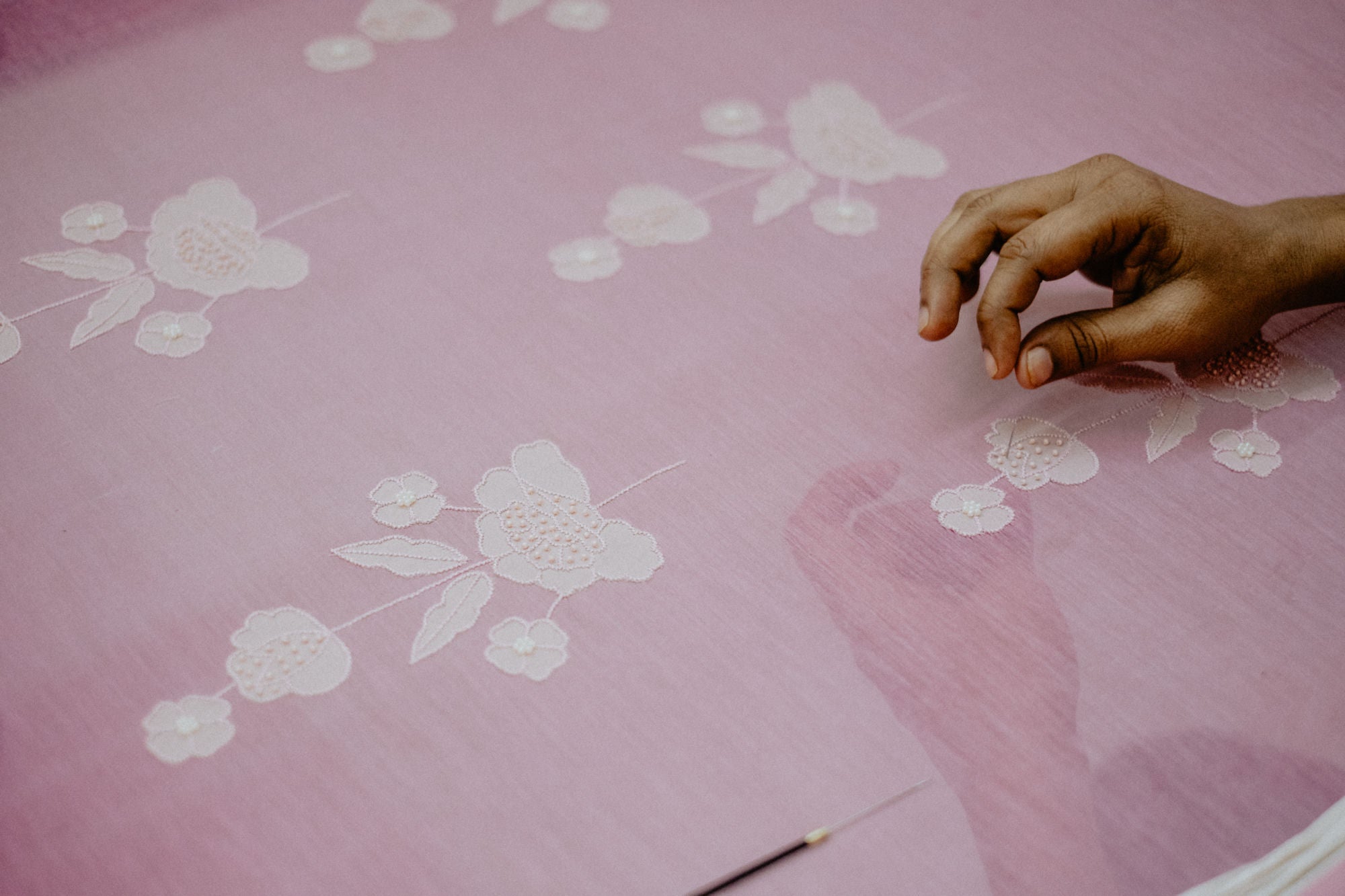
Half the beauty of handmade pieces is in the details. Don't skip the close-ups.
Free Download
Get Our Measurement Guide
Step-by-step instructions with photos for perfect custom fit.
Download Free Guide- Use portrait mode on your phone — the blur background (bokeh) makes embroidery pop
- Get close — fill the frame with detail work
- Side lighting shows texture and dimension in raised embroidery
- Avoid flash — it flattens everything
Phone vs Camera: What You Actually Need
You don't need a professional camera. Modern smartphones in good lighting produce beautiful results. What matters more:
- Clean your lens (seriously — fingerprints ruin photos)
- Use the back camera, not the selfie camera
- Avoid digital zoom — move closer instead
- Tap to focus on your face or the area you want sharp
- Shoot in highest quality setting
The Edit: Less Is More
Over-editing is the enemy of beautiful fabric. Excessive filters change colours and make embroidery look artificial.
Safe edits:
- Slight brightness increase
- Minor contrast adjustment
- Gentle warmth for golden tones
- Sharpening for embroidery details
Avoid:
- Heavy saturation (makes colours unnatural)
- Strong filters that change colour tones
- Over-smoothing skin (it affects fabric texture too)
Quick Pre-Event Checklist
- Steam or press your outfit the night before
- Clean your phone lens
- Scout photo spots at the venue early
- Take photos before you eat or drink (pristine outfit)
- Get someone to hold a dupatta or use a reflector if lighting is tricky
The goal isn't Instagram perfection — it's capturing how you actually felt in that moment, in that outfit. Good technique just removes the barriers between the experience and the image.
Explore: Shop All | Kurta Sets | Sarees
Ready to Order Custom?
WhatsApp us at +91 70423 11214 with what you're looking for. We'll guide you through measurements, customizations, and timeline.
Most pieces ready in 4-5 weeks. Bridal in 6-8 weeks.
Made to order in 4–5 weeks
Have an event date? We’ll tell you exactly when to order by.
We take a limited number of orders each month — secure your slot early.
WhatsApp me my order-by date + a shortlistNot sure where to start?
Tell us what you're dressing for and we'll help you choose — fabric, fit, colour, and timeline — over WhatsApp or on a video call.
Your Cart
Pieces from this story
All pieces →Not sure which piece, or need it by a date? Book a video consultation Ask us on WhatsApp


Keep reading
The journal →
Hill Station Wedding Outfit Ideas: What to Wear in the Mountains
What to wear to a mountain or hill station wedding — layering that photographs well, altitude, and the thirty-degree ...
12 September 2026
Goa & Beach Wedding Outfit Ideas: What to Wear on Sand
What to wear to a beach wedding in Goa — humidity, sand, sea breeze and a sunset ceremony, with fabrics that survive ...
12 September 2026
What to Wear to a Palace Wedding in Udaipur or Jaipur
What to wear to a palace wedding in Udaipur or Jaipur — courtyards, boat transfers, marble stairs and a dress code th...
12 September 2026