
How to Style a Heavy Lehenga: Blouse, Dupatta, Jewellery & Comfort Tips
A heavy lehenga is a work of art—embroidered, embellished, and designed to make a statement. But styling it well requires more than just putting it on. From choosing the right blouse to draping the dupatta to selecting jewellery that enhances without overwhelming, this guide covers everything you need to style your heavy lehenga perfectly.
Looking for a statement lehenga? We create made-to-order pieces with hand embroidery. WhatsApp us →
The Heavy Lehenga Challenge
Heavy lehengas present unique styling challenges:
- Weight: Can be 5-10+ kilos, affecting comfort and posture
- Visual intensity: All-over embroidery can be overwhelming
- Proportion: Heavy skirt needs balanced top and accessories
- Movement: Needs to be managed for walking, sitting, dancing
The goal is to let your lehenga shine while looking effortlessly elegant, not weighed down or overdone.
Choosing Your Blouse Style
When the Lehenga is Very Heavy
Balance heavy embroidery with a simpler blouse:
- Minimal embroidery: Let the skirt do the talking
- Solid colour: Matching or complementary to lehenga base
- Interesting cut: Statement through silhouette, not embellishment
- Quality fabric: Raw silk, velvet, or structured material
When You Want a Statement Blouse
If you prefer a heavy blouse, consider:
- Blouse embroidery that matches the lehenga pattern
- Concentrating embellishment on the back for photo moments
- Ensuring overall look isn't visually competing

Blouse Silhouettes That Work
Sweetheart neckline: Elegant, elongates the neck, works with most embroidery
Deep back: Creates a statement moment without competing with front embroidery
Full sleeves: Regal look, balances very heavy skirts
Off-shoulder: Modern, works if lehenga embroidery doesn't continue to the waist
Cape blouse: Contemporary, adds drama without weight
Dupatta Draping Styles
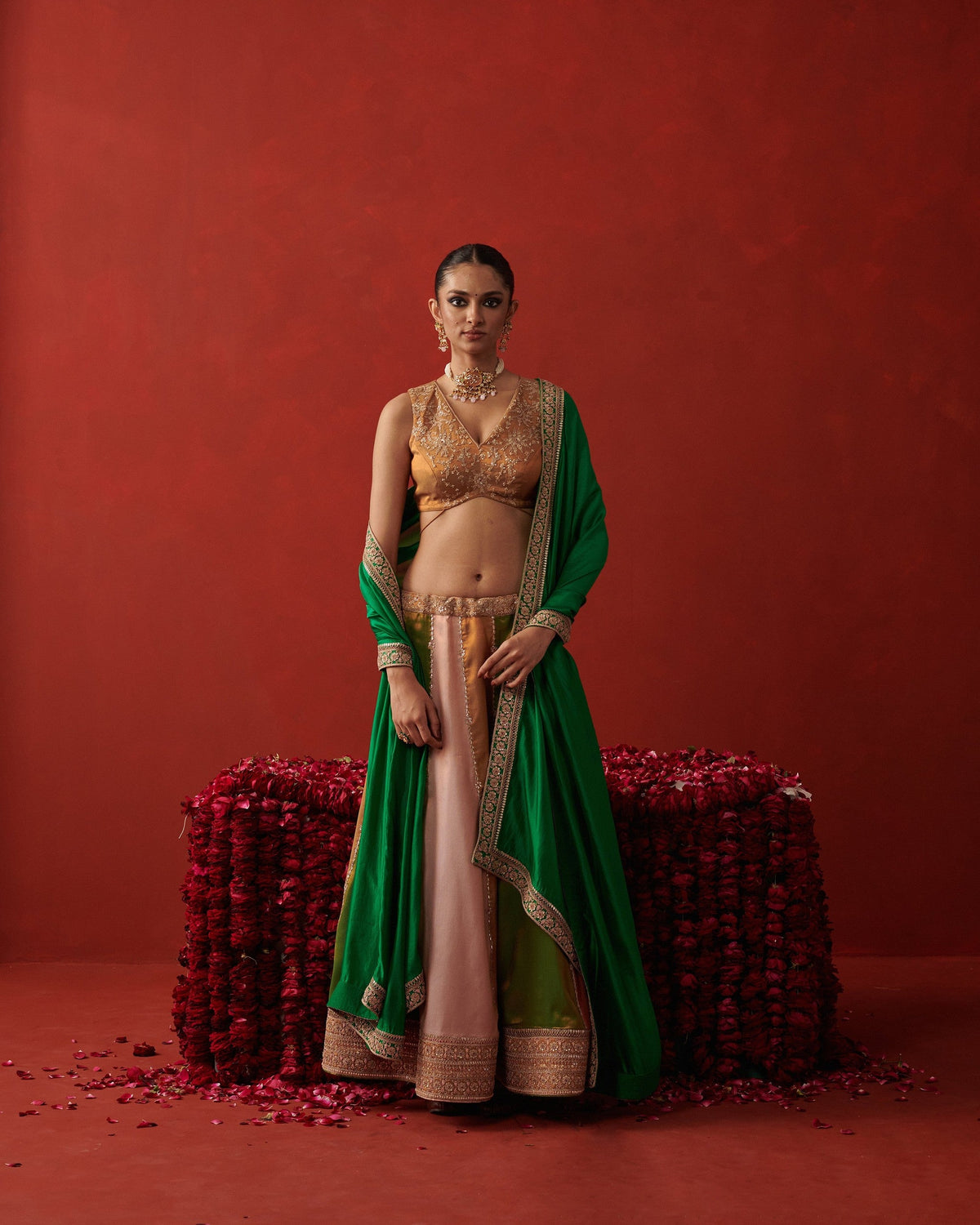
Classic Single Shoulder Drape
The most common style. The dupatta drapes over one shoulder, with the decorated end falling down the front or back.
- Best for: Showing off lehenga embroidery
- Pin at: Shoulder and waist for security
- Pro tip: Keep the pallu portion visible, not bunched
Double Dupatta Style
Two dupattas—one over the head, one at the shoulder. Traditional and regal.
- Best for: Traditional ceremonies, pheras
- Practical tip: The head dupatta should be lighter
- Pin generously: This style needs security
Front Pleat Drape
Dupatta pleated at the waist front, then taken over the shoulder. Shows off blouse while adding dupatta drama.
- Best for: Statement blouses, modern styling
- Works with: Heavily embroidered dupattas
Dupatta as Cape
Draped across both shoulders from behind, creating a cape effect. Contemporary and glamorous.
- Best for: Reception, sangeet, photo moments
- Choose: A dupatta with all-over pattern, not just border


Free Download
Get Our Measurement Guide
Step-by-step instructions with photos to measure yourself accurately for custom Indian wear.
Download Free GuideJewellery Selection
The Golden Rule
With heavy lehengas, jewellery should enhance, not compete. If your lehenga has high neckline embroidery, skip the heavy necklace. If it has a clean neckline, a statement necklace works.
Necklace Choices
Heavy lehenga + clean neckline: Statement choker or layered necklace
Heavy lehenga + embroidered neckline: Delicate chain or skip entirely
Very heavy all-over: Just a maang tikka and earrings may be enough
Earrings
Earrings are almost always welcome. Consider:
- Chandbalis: Classic with lehengas, creates elegant silhouette
- Jhumkas: Traditional, works with most styles
- Long drops: Modern, elongates the face
Maang Tikka & Mathapatti
- Simple maang tikka: Works with almost any look
- Mathapatti (forehead piece): Only if outfit isn't too heavy already
- Side tikka/passa: Alternative that adds interest without overwhelming
Hands & Arms
- Bangles: Classic, but consider just one wrist if lehenga sleeves are heavy
- Haath phool: Beautiful for bridal looks
- Rings: Keep it elegant, especially for ring exchange photos
Comfort Considerations
Managing the Weight
- Proper petticoat: Well-fitted with drawstring that won't slip
- Weight distribution: Ensure waist tie is snug but not cutting
- Practice: Walk around at home before the event
- Comfortable footwear: Block heels or wedges, not stilettos
Sitting Gracefully
- Spread the lehenga in a circle before sitting
- Don't sit on the embroidered portions if possible
- Have someone arrange the fabric for photos
Dancing & Movement
- Hold a small portion of the lehenga while dancing
- Practice your signature moves in the outfit
- Keep safety pins handy for dupatta emergencies
- Consider a lighter lehenga for sangeet performances
Weather Considerations
Summer weddings:
- Choose lightweight fabrics where possible (organza, georgette)
- Ensure venue has AC
- Keep blotting papers handy
Winter weddings:
- Heavy velvet works beautifully
- Consider a matching shawl for outdoor portions
Looking for your perfect lehenga?
Our made-to-order pieces ensure perfect fit and manageable weight. +91 70423 11214
Custom sizing, 4-5 weeks delivery
Hair & Makeup Coordination
Hair Styles
With maang tikka: Centre-parted styles work best
With heavy earrings: Updos or side-swept styles show them off
With backless blouse: Hair up or to one side
With high-neck blouse: Hair down can create beautiful contrast
Makeup Balance
- Heavy lehenga + bold makeup: Can work if outfit is single-toned
- Multi-coloured lehenga: Keep makeup more neutral
- Deep-coloured lehenga: Bold lips can work beautifully
- Pastel lehenga: Fresh, dewy makeup complements well
Photo Styling Tips
Standing Poses
- Stand slightly sideways to show lehenga silhouette
- Hold dupatta with one hand for graceful movement shots
- Ensure lehenga isn't bunched or caught
Sitting Poses
- Arrange the lehenga flare before sitting
- Show the embroidery in the frame
- Cross ankles rather than legs for elegant silhouette
Detail Shots
- Close-ups of embroidery on skirt hem
- Blouse back details
- Jewellery against fabric
- Dupatta draping
Common Styling Mistakes
Overdoing Everything
Heavy lehenga + heavy blouse + heavy dupatta + heavy jewellery + heavy makeup = visual chaos. Choose your statement pieces and let others be supporting players.
Ignoring Proportions
A very voluminous lehenga needs a fitted blouse. A fitted mermaid-style lehenga can handle a looser blouse. Balance is key.
Wrong Dupatta Draping
A heavy dupatta needs secure pinning. Nothing ruins a look faster than constantly adjusting a slipping dupatta.
Uncomfortable Choices
Prioritising looks over comfort means you'll look uncomfortable in photos. A slightly less elaborate outfit worn with confidence photographs better than a stunning outfit worn with visible discomfort.
Frequently Asked Questions
Should I buy matching jewellery or use what I have?
You don't need perfectly matching sets. Gold jewellery works with most lehengas. The key is colour metal consistency (all gold or all silver-toned) and appropriate scale.
Can I skip the dupatta?
For some modern events (cocktail reception, sangeet), yes. For traditional ceremonies, the dupatta is expected. Check with your family about expectations.
How do I prevent embroidery from scratching?
A slip or body suit under the blouse helps. For sequins and zardozi, some brides use fabric softener in final rinse to soften scratchy elements.
My lehenga is too heavy to dance. What do I do?
Have someone gather and pin the excess fabric at your waist for dancing. Or change into a lighter outfit for the sangeet performance if needed.
Should blouse and skirt embroidery match exactly?
Not necessarily. They should coordinate—same colour palette, complementary patterns—but matching exactly isn't required and can look overdone.
Made to order in 4–5 weeks
Have an event date? We’ll tell you exactly when to order by.
We take a limited number of orders each month — secure your slot early.
WhatsApp me my order-by date + a shortlistNot sure where to start?
Tell us what you're dressing for and we'll help you choose — fabric, fit, colour, and timeline — over WhatsApp or on a video call.
Your Cart
Pieces from this story
All pieces →Not sure which piece, or need it by a date? Book a video consultation Ask us on WhatsApp



Keep reading
The journal →
The Outfit Trial Checklist: How to Run a Fitting for a Lehenga, Blouse, Sharara or Anarkali
How to run a trial of a made-to-measure lehenga, blouse, sharara or anarkali: when to schedule it, what to wear and b...
7 October 2026
How Much Does a Bridal Lehenga Cost in India? A 2026 Price Guide
What a bridal lehenga costs in India in 2026 — price bands from ₹30,000 to ₹10 lakh+, what drives the price, the hidd...
20 September 2026
Rent or Buy? The Real Maths Behind an Indian Wedding Outfit
Should you rent or buy your Indian wedding outfit? An honest look at cost per wear, fit, timing and resale — and when...
21 August 2026