
Indian Embroidery Types Compared: Gota Patti vs Zardozi vs Aari vs Mukesh
You're shopping for a special outfit and the product description says "hand-embroidered with zardozi and aari work." But what does that actually mean? How is it different from gota patti? Is Mukesh work the same as sequin work? And why does hand embroidery cost so much more than machine work?
This guide breaks down the most important Indian embroidery techniques — what they look like, how they're made, when to wear them, and how to tell real handwork from machine imitation.
The Quick Comparison
| Technique | Origin | Look | Weight | Best For |
|---|---|---|---|---|
| Gota Patti | Rajasthan | Gold metallic appliqué, reflective | Medium | Festive, bridal, ceremonies |
| Zardozi | Persia → Lucknow | Raised metallic thread, 3D texture | Heavy | Bridal, formal ceremony |
| Aari | Kashmir → Jaipur | Fine chain stitch, intricate florals | Light–Medium | Versatile — casual to festive |
| Mukesh | Lucknow | Tiny metallic pieces, subtle shimmer | Light | Elegant, understated festive |
| Marodi | Rajasthan | Raised chain stitch, textured patterns | Medium | Festive, wedding functions |
Gota Patti: The Rajasthani Gold
Gota Patti is appliqué work using small pieces of gold or silver zari ribbon, stitched onto fabric to create patterns — usually floral motifs, paisley, or geometric designs. It originated in Rajasthan and has been a part of Rajput and Marwari bridal traditions for centuries.
How it's made: Thin strips of metallic ribbon are cut into shapes (petals, leaves, circles) and hand-stitched onto the fabric. The edges are folded under for a clean finish. Each piece is individually attached — there's no shortcut.
How to identify real gota patti:
- Each piece is slightly different in size and placement — handwork is never perfectly uniform
- The metallic ribbon has a soft, fabric-like feel — not hard plastic
- Turn the garment inside out — you'll see individual stitches for each piece


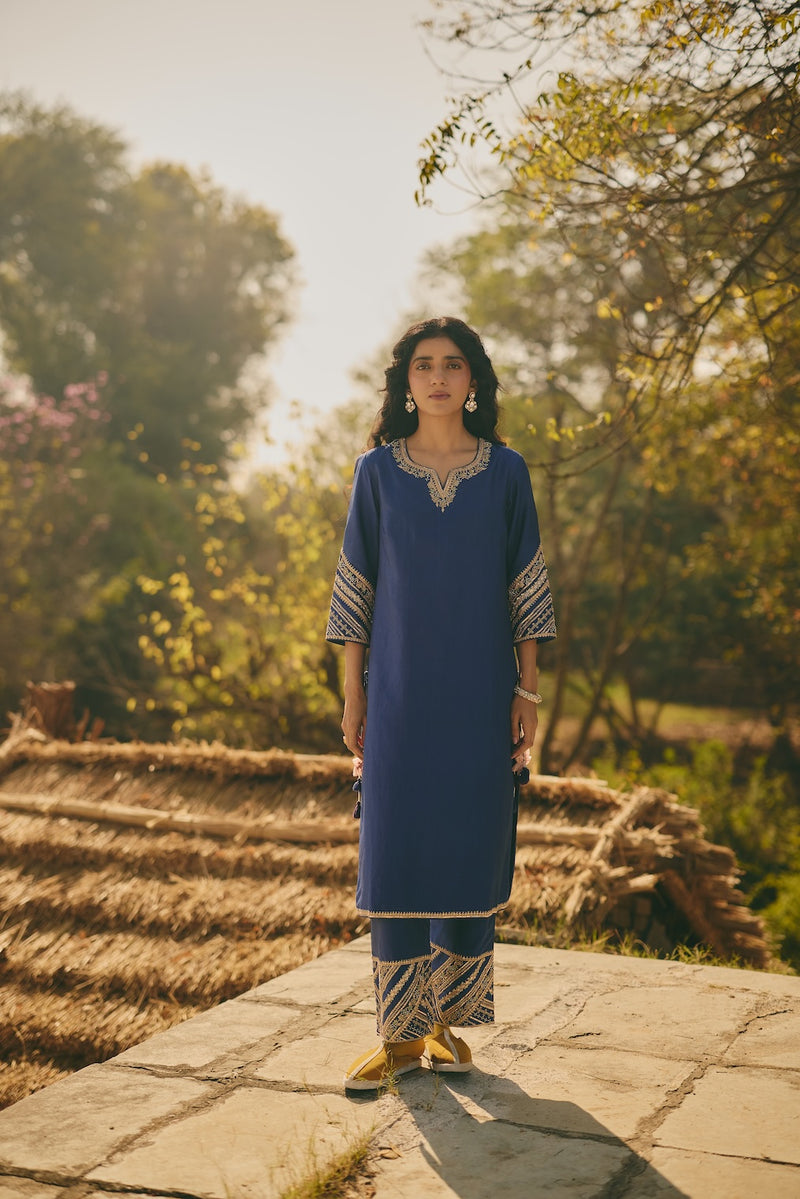
The Sakhi saree features gota work alongside sequin and cutdana on deep sindoori red organza — a masterclass in layered embroidery. The Dua blouse has all-over gota patti bootis that create a rich, reflective surface. And the Kainaat dupatta features circular gota patti medallions hand-embroidered with sequins and beadwork.
Zardozi: The Royal Thread
Zardozi — literally "gold sewing" in Persian — is embroidery using metallic threads, often wrapped around a core thread. It creates raised, three-dimensional patterns that have a regal, heavy quality. It was the embroidery of Mughal courts and remains the most prestigious Indian embroidery technique.
How it's made: Gold or silver metallic threads (called "kora" and "dabka") are couched onto fabric using a needle. The thread sits on top of the fabric, creating a raised effect. Sequins, beads, and stones are often incorporated.
How to identify real zardozi:
- The embroidery is raised — run your finger over it and you'll feel the height
- The metallic threads have a soft, pliable quality — cheap imitation zardozi uses stiff plastic threads
- The work has weight — a zardozi piece feels heavier than it looks


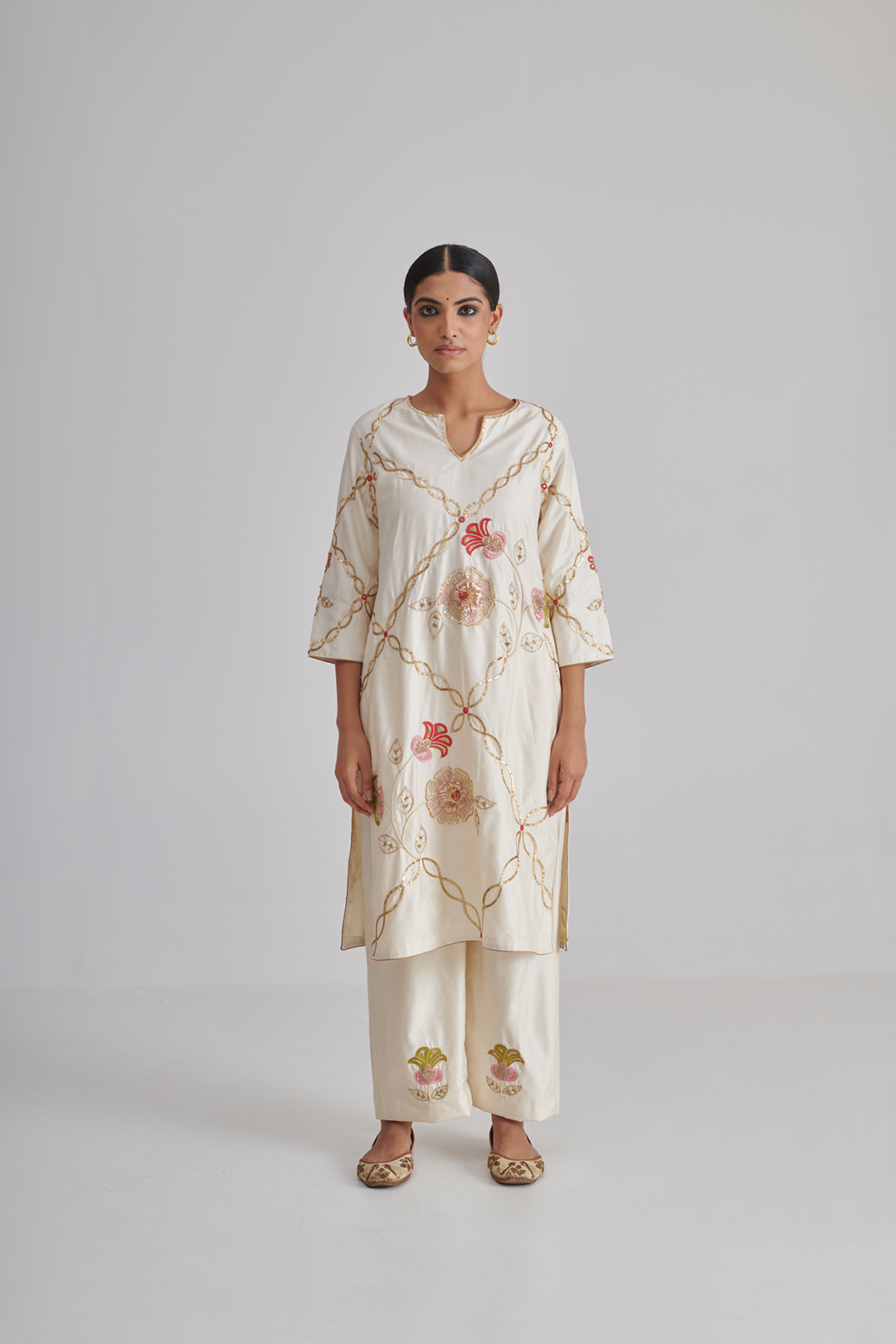
The Mirza & Raina features delicate gold and pink zardozi embroidery on ivory silk — you can see and feel the raised metallic threadwork. The Iraaday & Raya woven shirt combines zardozi with aari techniques in gold and silver. And the Noori & Nagma uses zardozi florals on silk moonga checks — traditional technique on a contemporary canvas.
Aari: The Fine Artist
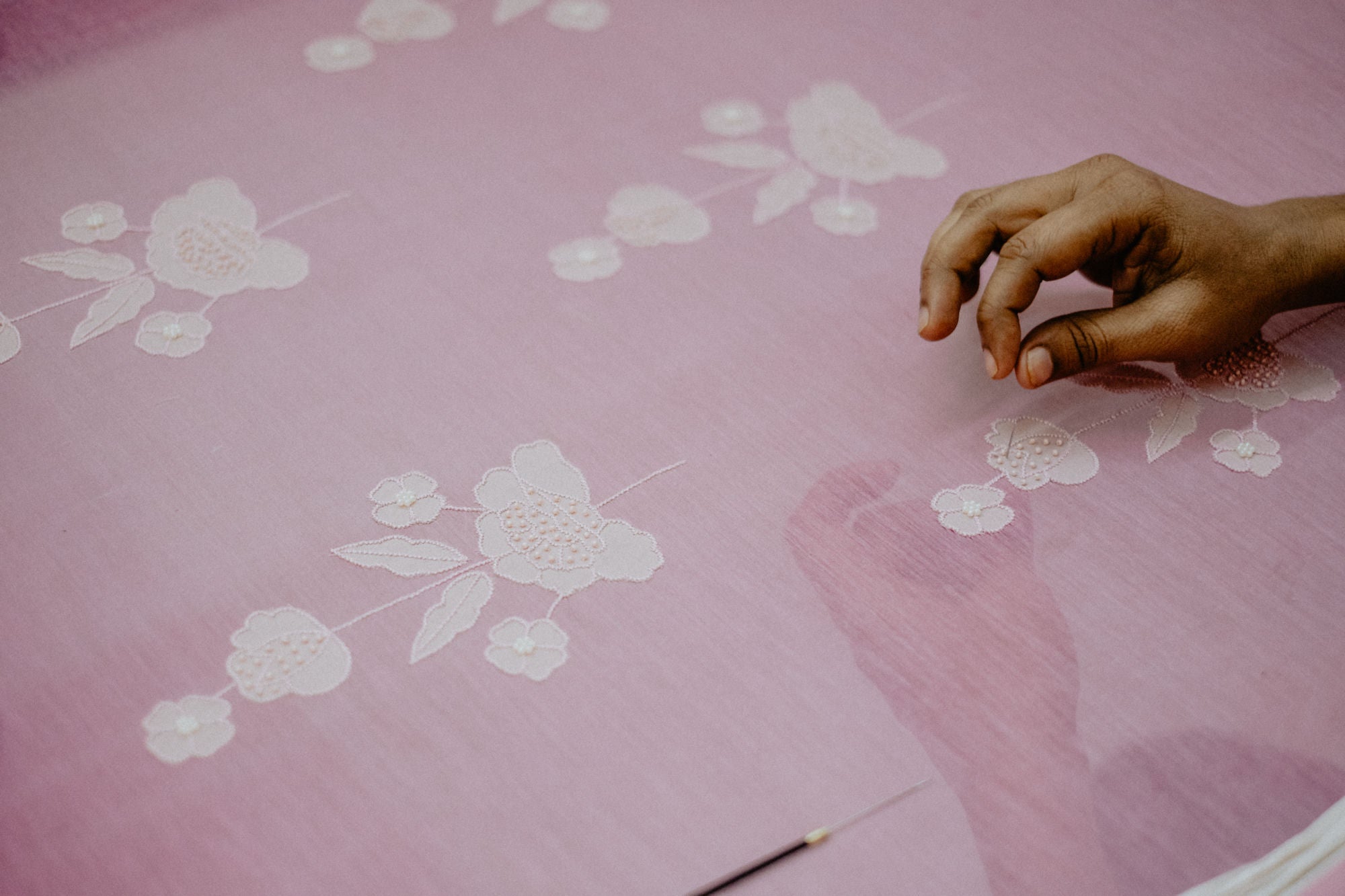
Aari embroidery uses a hooked needle (the "aari") to create fine chain stitches from below the fabric. The result is detailed, flowing patterns — intricate florals, vines, and paisleys that look almost painted. Originally from Kashmir, the technique flourished in Rajasthan and is now one of the most widely used hand-embroidery techniques in Indian fashion.
How it's made: The fabric is stretched on a frame. The karigar works from below, pushing the hooked needle up through the fabric, catching the thread, and pulling it back down to create a chain stitch. The speed and precision required takes years to master.
How to identify real aari:
- The stitch pattern is a continuous chain — zoom in and you'll see interlocking loops
- The back of the fabric shows clean, even chain stitches — machine embroidery looks messy on the back
- The lines have a slight organic irregularity — not the rigid perfection of machine work


The Roop blouse is a perfect example of aari at its most refined — pastel floral embroidery on deep black silk, every petal defined by precise chain stitches. The Shailee & Amira combines aari work with marodi and sequins for a layered embroidery effect. And the Jazabah & Saiyan shows tonal aari embroidery — the same technique in a subtler, more contemporary application.
Mukesh: The Quiet Shimmer
Mukesh work uses tiny pieces of flattened metal wire, twisted and attached to fabric to create a subtle, reflective pattern. Unlike gota patti's broad shimmer or zardozi's dramatic raise, Mukesh creates a quiet, elegant sparkle — like light catching on water.
Free Download
Get Our Measurement Guide
Step-by-step instructions with photos for perfect custom fit.
Download Free GuideHow it's made: Fine metal wires are flattened, cut into tiny pieces, and individually twisted onto the fabric using a needle. Each piece catches light from a slightly different angle, creating a shimmering, organic effect.


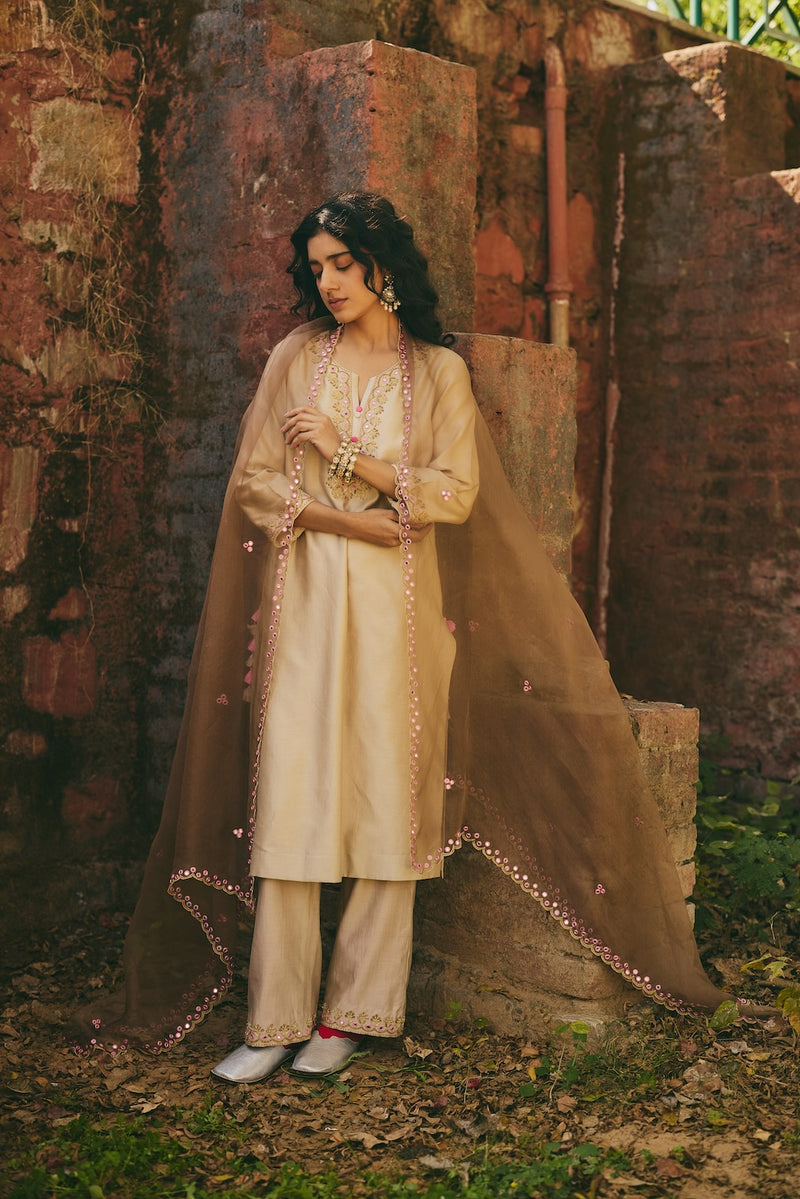
The Bhayli & Ahana ivory anarkali with Mukesh work is the technique at its most beautiful — each tiny metal piece creates a constellation of light across the fabric. The Noor & Ahana uses the same Mukesh technique for a result that's festive without being loud.
When to Wear Each Embroidery
| Occasion | Best Embroidery | Why |
|---|---|---|
| Wedding ceremony | Zardozi, Gota Patti | Maximum formality, photographs beautifully |
| Sangeet | Aari + sequin, Gota Patti | Catches stage lighting, allows movement |
| Reception | Mukesh, Aari | Elegant without being heavy |
| Festive gathering | Aari, light Gota | Festive but not overwhelming |
| Office/everyday | Minimal Aari, thread work | Subtle detail without sparkle |
Hand Embroidery vs Machine Embroidery: How to Tell
This is the most important distinction in Indian fashion — and the one most commonly misunderstood. Here's how to tell:
- Check the back: Hand embroidery shows clean, intentional stitches on the reverse. Machine embroidery looks chaotic, with threads running in every direction.
- Look for irregularity: Handwork has slight organic variations — no two motifs are exactly identical. Machine work is perfectly uniform.
- Feel the weight: Hand-embroidered pieces have a different drape — the embroidery integrates with the fabric rather than sitting stiffly on top.
- Check the price: Genuine hand embroidery takes hours (sometimes hundreds of hours per piece). A heavily "hand-embroidered" outfit at ₹3,000 is almost certainly machine-made.
Why Hand Embroidery Costs More — And Why It's Worth It
A single zardozi motif can take 30 minutes to complete. An all-over gota patti border might take 40-50 hours. A heavily embroidered bridal piece can represent 200+ hours of a skilled karigar's time.
When you buy hand-embroidered Indian fashion, you're not just buying a garment — you're supporting an art form that's been passed down through generations. The karigars (artisans) who do this work have trained for years, often learning from their parents and grandparents. Every stitch carries that heritage.
Frequently Asked Questions
Which embroidery is the heaviest?
Zardozi is the heaviest due to its metallic threads and raised construction. Gota Patti is medium-weight. Aari and Mukesh are the lightest. If you want festive impact without weight, choose aari with sequin highlights over heavy zardozi.
Can different embroidery types be combined?
Yes — and the best pieces often do. Aari + zardozi is a common combination (fine detailing with metallic accents). Gota + sequin + marodi creates layered, rich textures. The combination adds depth that a single technique can't achieve alone.
How do I care for embroidered pieces?
Always dry clean. Store flat, not hung — the weight of embroidery can stretch fabric over time. Keep away from direct sunlight to prevent metallic threads from tarnishing. Read our fabric care guide for detailed care instructions.
Explore: Ruhaniyat · Ishq · Intizaar · blouses · shop all
Ready to Order Custom?
WhatsApp us at +91 70423 11214 with what you're looking for. We'll guide you through measurements, customizations, and timeline.
Most pieces ready in 4-5 weeks. Bridal in 6-8 weeks.
Made to order in 4–5 weeks
Have an event date? We’ll tell you exactly when to order by.
We take a limited number of orders each month — secure your slot early.
Not sure where to start?
Tell us what you're dressing for and we'll help you choose — fabric, fit, colour, and timeline — over WhatsApp.
Your Cart
Pieces from this story
All pieces →
Keep reading
The journal →
Best Plus-Size Ethnic Wear Brands in India 2026: Where to Actually Find Your Size
Handmade by karigars Made to your measurements Fit guarantee Ships worldwide As seen in GraziaElle Graduat...
17 September 2026
Kurta Sets for Girls: A Parent's Buying Guide to Kids' Kurta Sets
Handmade by karigars Made to your measurements Fit guarantee Ships worldwide As seen in GraziaElle Graduat...
17 September 2026
Gifts for Your Mother-in-Law: Indian Outfits That Don't Feel Like a Formality
Handmade by karigars Made to your measurements Fit guarantee Ships worldwide As seen in GraziaElle Graduat...
17 September 2026