
The 2026 Indian Wedding Season in Numbers: Dates, Spending and What the Data Actually Says
As of 27 October 2026, the Confederation of All India Traders (CAIT) has not yet published its estimate for this year's November–December wedding season. Its most recent figure, released on 30 October 2025, projected 46 lakh weddings and ₹6.5 lakh crore of business between 1 November and 14 December 2025, with apparel and sarees taking 10% of that spend and jewellery 15%. For 2026, the season opens later than last year: Dev Uthani Ekadashi falls on Friday 20 November, Drik Panchang lists eleven vivah muhurat dates between 21 November and 12 December, and Kharmas begins on 16 December.
Every big number you will read about Indian weddings this winter comes from a handful of sources. Each one measures something slightly different. Below we set out what each source actually says and when it said it, and what it does not tell you. Then we explain what the numbers mean in practice if you are a bride, or a guest with a wardrobe to plan.
The Headline Number: Not Out Yet for 2026
The figure most widely quoted each autumn comes from CAIT's research arm, the CAIT Research & Trade Development Society. Its 2025 study was conducted between 15 and 25 October 2025 across 75 cities, and published in a press release dated 30 October 2025. IANS carried it the same day. In 2024 the equivalent estimate was reported by IANS on 5 November. So a 2026 figure may well appear in the next week or two. Until it does, any "2026 wedding season" total you see online is either last year's number or someone's guess. We will not guess.
Here is what CAIT has published for the last four seasons, as restated in its October 2025 release:
| Season | Weddings (CAIT estimate) | Business (CAIT estimate) |
|---|---|---|
| 2022 | 32 lakh | ₹3.75 lakh crore |
| 2023 | 38 lakh | ₹4.74 lakh crore |
| 2024 (12 Nov–16 Dec) | 48 lakh | ₹5.90 lakh crore |
| 2025 (1 Nov–14 Dec) | 46 lakh | ₹6.50 lakh crore |
Two cautions before you quote these. First, the windows change every year with the calendar, so seasons are not like-for-like. Second, CAIT's own figures for past years shift between releases. Its November 2024 release, as reported by IANS, put the previous season at 35 lakh weddings and ₹4.25 lakh crore. The October 2025 release puts 2023 at 38 lakh and ₹4.74 lakh crore. These are trader-survey estimates, not a census of marriages, and are best read as a direction of travel. That direction is clear, though: fewer weddings in 2025 than in 2024 by CAIT's count, but more money. CAIT's Secretary General, Praveen Khandelwal, attributed the rise in spending per wedding to "higher disposable incomes, inflation in precious metals, and rising consumer confidence".
Where the Money Goes
CAIT's 2025 release splits the ₹6.5 lakh crore by category. On the goods side: jewellery 15%, apparel and sarees 10%, electronics 5%, dry fruit and sweets 5%, grocery and vegetables 5%, gifts 4% and other goods 6%. On the services side: catering 10%, event management 5%, floral decoration 4%, travel and hospitality 3%, music 3%, light and sound 3%, photography and videography 2% and other services 3%. The 2024 release, as reported by IANS, gave the same 15% for jewellery and 10% for clothing.
So by CAIT's reckoning, what people wear is one of the three biggest single lines in a wedding, level with catering. Jewellery is the biggest of all. A separate source points the same way. In a report covered by The Week on 25 June 2024, Jefferies sized the whole Indian wedding market at about $130 billion (roughly ₹10 lakh crore) a year, across 8–10 million weddings. On that measure weddings ranked second only to food and grocery as a consumption category. Jefferies put average spend at around ₹12 lakh per wedding, and estimated that almost 11% of India's $84 billion apparel retail market is wedding and celebration wear. Jefferies counts a whole year and CAIT counts one season, so do not add the two together or compare them directly.
CAIT's 2024 release also estimated how the weddings were spread by budget. It put 10 lakh weddings each at about ₹3 lakh, ₹6 lakh, ₹10 lakh and ₹15 lakh. It put 7 lakh at about ₹25 lakh, 50,000 at ₹50 lakh and another 50,000 at ₹1 crore or more. Most weddings in India, in other words, are nowhere near the figures you see on Instagram.
The 2026 Calendar: A Shorter Window
For Hindu weddings, the season reopens when Chaturmas ends. In 2026 Devutthana (Dev Uthani) Ekadashi falls on Friday 20 November, according to Drik Panchang. Vaishnava calendars observe it on Saturday 21 November. Drik Panchang's list of marriage dates for New Delhi then runs:
- November 2026: 21, 24, 25 and 26
- December 2026: 2, 3, 4, 5, 6, 11 and 12
Dhanu Sankranti falls on Wednesday 16 December 2026, which begins Kharmas, when many families do not hold weddings. Drik Panchang gives Makar Sankranti, which ends it, as Friday 15 January 2027. Panchangs and family pandits do differ, so always check with yours. Our month-by-month muhurat and outfit guide has dressing ideas for each part of the year.
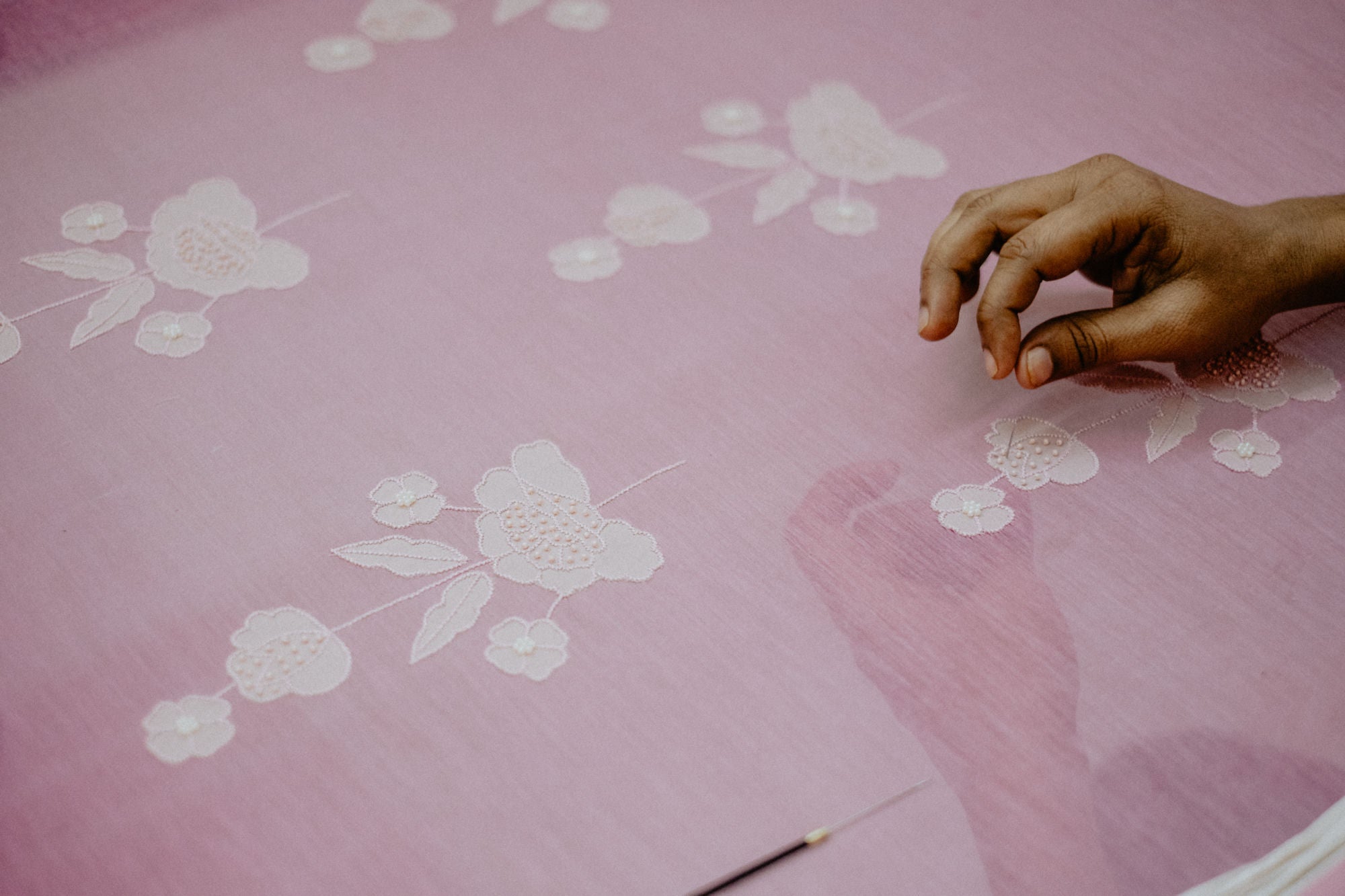
That gives roughly three weeks of Hindu wedding dates this year, from 21 November to 12 December. CAIT's 2025 window ran from 1 November to 14 December. A shorter window does not automatically mean fewer weddings, because dates simply get more crowded. CAIT's own 2026 estimate will be the number to watch. What it does mean is pressure: on venues, on caterers, on make-up artists, and on the karigars who embroider the clothes. All of them have the same eleven dates to serve.
Destination Weddings and the Jaipur Effect
The best recent data on destination weddings comes from WedMeGood's fifth annual wedding report, published in early December 2025. It surveyed more than 2,000 couples with weddings between April 2025 and March 2026, plus over 500 wedding professionals. Its findings:
- One in four weddings in its sample was a destination wedding, and nearly 90% of those were held within India.
- Destination weddings averaged ₹58 lakh, up from ₹51.1 lakh in its 2024 report.
- More than 60% of weddings budgeted above ₹1 crore were destination weddings.
- The average wedding budget overall was ₹39.5 lakh, up 8% on the year. Jaipur had the highest city average, at ₹73 lakh.
- Destination weddings averaged 280 guests, against 420 for weddings at home.
WedMeGood's averages are far above Jefferies' ₹12 lakh because its respondents are couples planning through a wedding platform, who skew urban and higher-budget. It is a good guide to that segment, not to India as a whole. CAIT's 2025 release also noted a "surge in luxury and destination weddings" in Rajasthan and Gujarat, and said families increasingly prefer Indian destinations to international ones. If you are dressing for one, our destination wedding outfit guide covers fabric, climate and packing.
On NRI weddings, we could not find a reliable published count. Figures circulating online rarely name a methodology, so we have left them out. What we can say from our own side is practical: if you are ordering from abroad, our international custom orders guide explains how measurements and shipping work.
What the Numbers Mean for What You Wear
Put the data together and three things stand out for anyone shopping now.
1. Clothing is a big line, so buy pieces that earn it. If apparel is a tenth of the spend, the sensible response is fewer, better pieces you will wear again. That is the thinking behind our piece on repeatable bridal outfits. A bride who wants a classic winter lehenga could look at Rehmat & Vasl (₹42,500). It is a rich red lehenga and choli in Varanasi silk brocade, with floral motifs drawn from the inlay designs of Rajputana and Mughal architecture, and gold zari all over. The lehenga has a broad gold border at the hem. The brocade is handwoven; we do not weave it ourselves, but buy the cloth and work on it in our Jaipur atelier. For what a bridal piece costs across the market, see our bridal lehenga price guide.

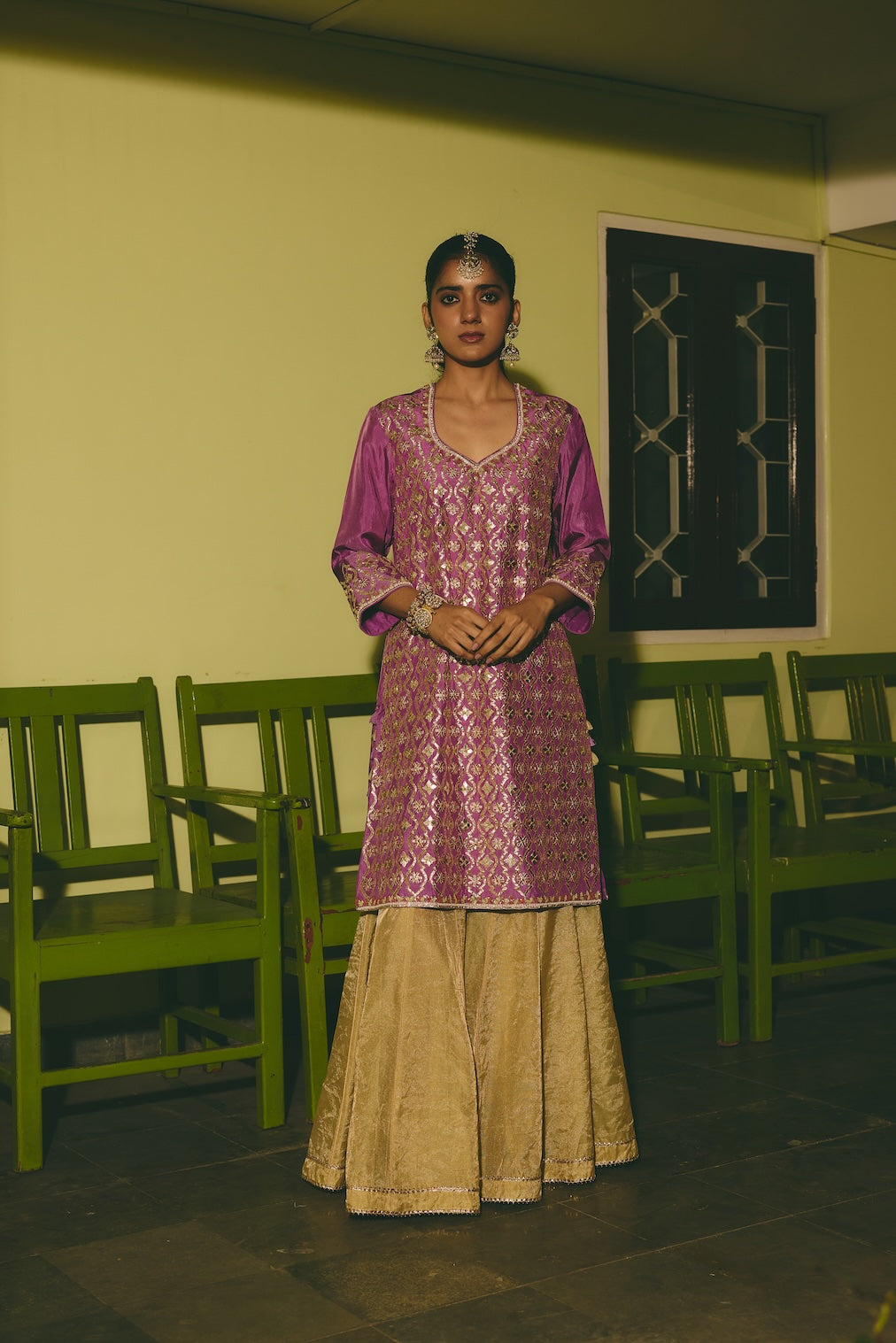
For a sangeet or reception, Laalsa & Ravaya (₹73,450) is a vermilion red silk jacket over a matching silk sharara. The jacket is covered in floral jaal in marodi, zari, resham, sequins, cutdana, beads and aari, with gold and silver gota cutwork appliquéd into petals and leaves. Zehan & Aabha (₹62,250) pairs a purple silk kurta, worked in a trellis of hand-done gota appliqué with sequins, resham and moti, with a gold tissue sharara.


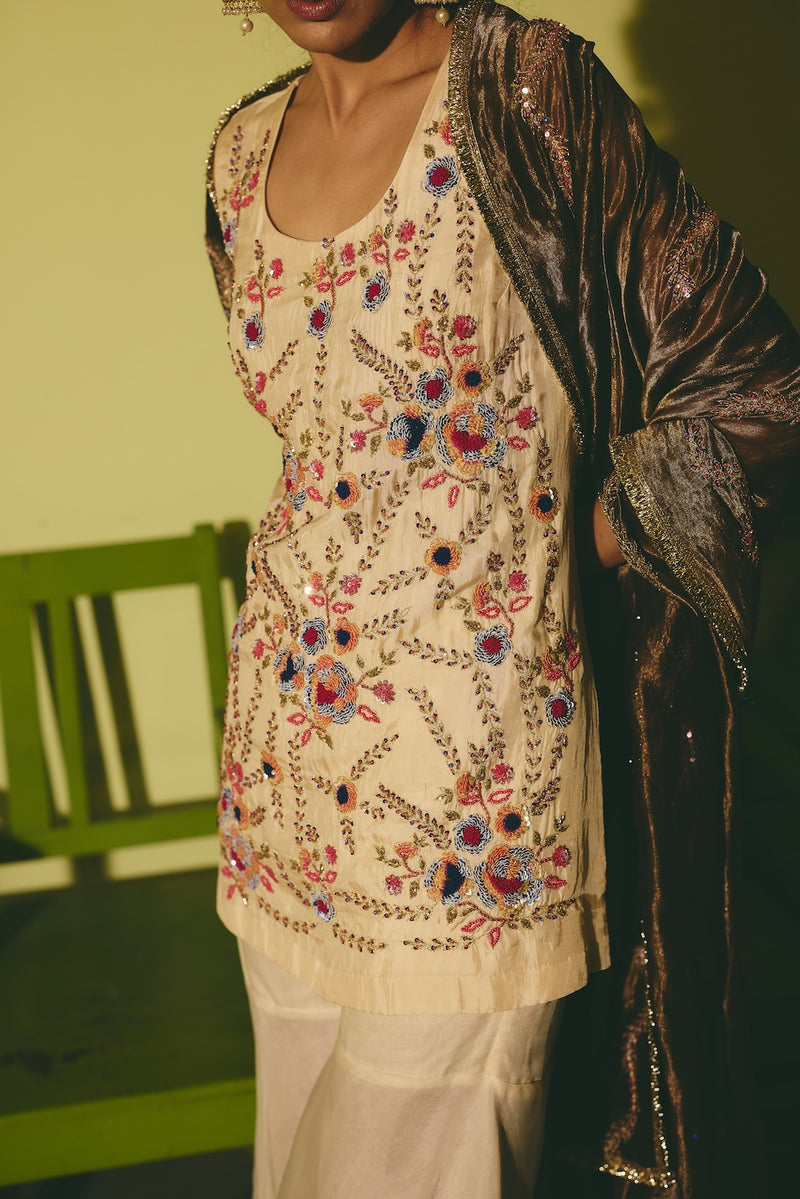
2. Guests are spending too, so set a budget first. Our guide to how much to spend on a wedding guest outfit works through it honestly. Across a range of budgets: Raanisa & Mahira (₹35,500) is a sindoori orange lehenga in woven booti silk, with gota, marodi, bead and thread work along the hem. Zohra (₹39,550) is a soft tissue saree whose borders are hand-embroidered in mirror work, cutdana, sequins and zardozi; the blouse is sold separately. Nazma & Ahana (₹45,100) is a soft blue silk kurta with a honey-gold silk pant, its neckline, sleeves and hem worked in gota patti and sequins. Faiza & Rida (₹19,500) is a soft gold silk kurta with three-quarter sleeves and gota and thread work in rose and coral. Browse more in our lehengas and sharara sets.


3. Jewellery is the biggest line, and we do not make it. Jewellery is the largest category in CAIT's breakdown, and CAIT links rising spend partly to the price of precious metals. If you are leaning on family jewellery or an heirloom lehenga this year, a new dupatta can change the whole look for far less than a new outfit. Kohina (₹28,100) is an antique brown tissue dupatta with sequin and cutdana worked in rhythmic lines, inspired by heirloom textiles.

The Honest Timing Note
When eleven dates carry a whole season, karigars' calendars fill at the same time as the venues. Every piece we make is made to order in 4–5 weeks, plus 3–7 days for shipping. An order placed today, 27 October, reaches you around the first week of December at the earliest. That means we cannot reach you in time for the November muhurats, and the early-December dates are very tight. For an 11 or 12 December wedding, message us before ordering and we will tell you honestly whether it can be done. Express making is sometimes possible, depending on the piece and the month. Weddings from mid-January 2027, after Kharmas, are comfortably in range. Our order-early guide has a fuller planning timeline.
Every adult piece is cut to your measurements at no extra charge. Design changes such as sleeves or necklines are a separate question, so ask us on WhatsApp what is possible on the design you like. We make lehengas, sarees, sharara sets, kurta sets, blouses and dupattas. We do not make jewellery, menswear or velvet.
Planning for a Winter Wedding?
Every piece is hand-embroidered to order in our Jaipur atelier in 4–5 weeks, plus 3–7 days for shipping, and cut to your measurements at no extra charge. An order placed today will reach you around the first week of December at the earliest, which is too late for the November muhurats. A wedding from mid-January onwards is comfortably in range. Express making is sometimes possible, depending on the piece and the month. Shipping is free on domestic orders above ₹30,000. Message us on WhatsApp with your date and we will tell you honestly what can reach you in time.
Browse the CollectionMore planning guides: Order early · Muhurat dates 2026 · Guest outfit budget · Bridal lehenga cost · Destination weddings
Frequently Asked Questions
How many weddings will take place in the 2026 wedding season?
As of 27 October 2026, CAIT has not published its estimate for the November–December 2026 season. Its latest figure, from 30 October 2025, was 46 lakh weddings between 1 November and 14 December 2025, against 48 lakh in its 2024 estimate.
How much is spent on clothes during the Indian wedding season?
CAIT's 2025 estimate put apparel and sarees at 10% of the season's ₹6.5 lakh crore spend, and jewellery at 15%. Separately, Jefferies, as reported in June 2024, estimated that almost 11% of India's apparel retail market is wedding and celebration wear.
When does the 2026 wedding season start?
For Hindu weddings it reopens after Dev Uthani Ekadashi on 20 November 2026 (21 November in Vaishnava calendars). Drik Panchang lists marriage dates on 21, 24, 25 and 26 November and 2, 3, 4, 5, 6, 11 and 12 December, before Kharmas begins on 16 December. Check dates with your own pandit.
How common are destination weddings in India?
In WedMeGood's 2025 report, a survey of more than 2,000 couples published in December 2025, one in four weddings was a destination wedding, nearly 90% of them within India, at an average budget of ₹58 lakh. Its sample skews towards higher-budget, urban couples.
Can I still order a made-to-order outfit for a December wedding?
Our pieces take 4–5 weeks to make plus 3–7 days to ship, so an order placed in late October arrives around the first week of December at the earliest. Mid-December is tight, so message us on WhatsApp before ordering. Weddings from mid-January 2027 are comfortably in range.
Made to order in 4–5 weeks
Have an event date? We’ll tell you exactly when to order by.
We take a limited number of orders each month — secure your slot early.
WhatsApp me my order-by date + a shortlistNot sure where to start?
Tell us what you're dressing for and we'll help you choose — fabric, fit, colour, and timeline — over WhatsApp or on a video call.
Your Cart
Pieces from this story
All pieces →Not sure which piece, or need it by a date? Book a video consultation Ask us on WhatsApp


Keep reading
The journal →
Wedding Muhurat Dates 2026: Complete Calendar + What to Wear Each Month
Complete Hindu wedding muhurat dates for 2026 — month by month with auspicious dates, best fabrics by season, and out...
19 March 2026
Custom Outfits for Destination Weddings: Fabric, Packing & Climate Guide
Planning outfits for a destination wedding? Guide to choosing fabrics for different climates, packing embroidered pie...
11 May 2026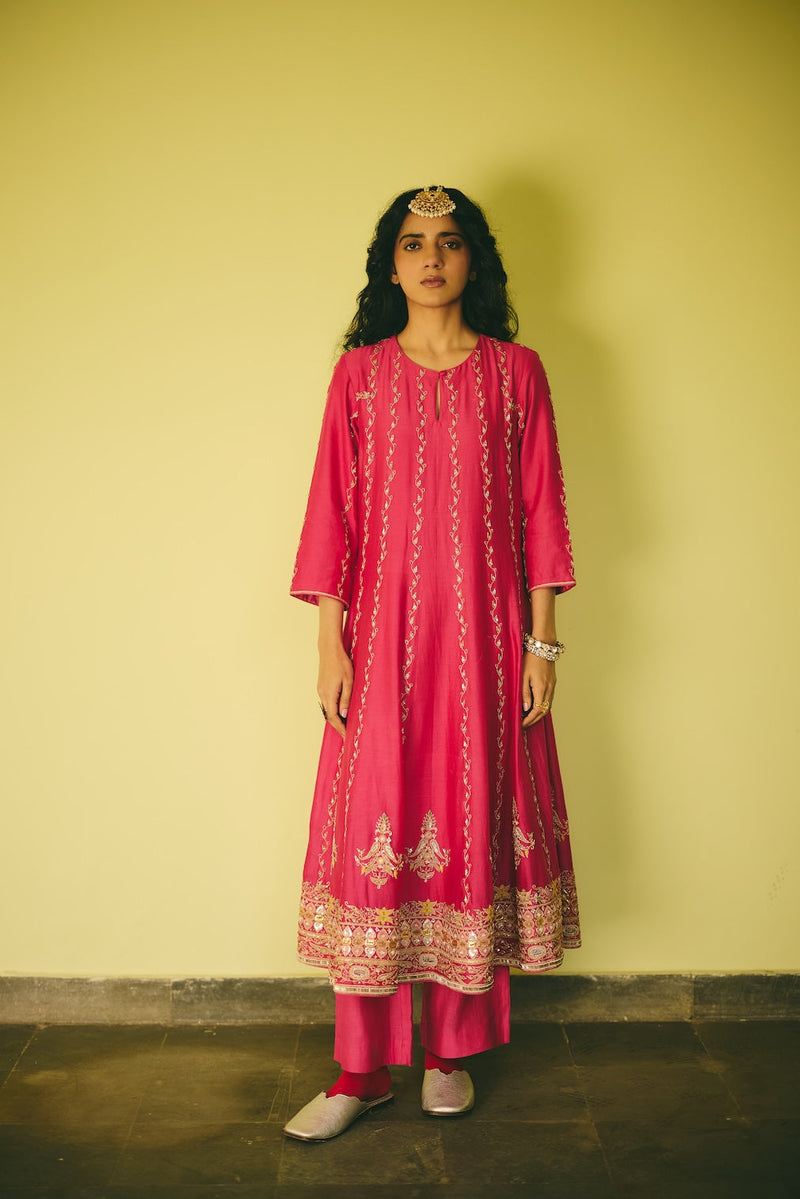
NRI & International Custom Orders: Getting Indian Wear Made From Abroad
Order custom Indian outfits from anywhere in the world. Complete guide for NRIs in USA, UK, Canada, Australia orderin...
6 May 2026