
The Hands Behind the Craft: How Karigars Keep Indian Embroidery Alive
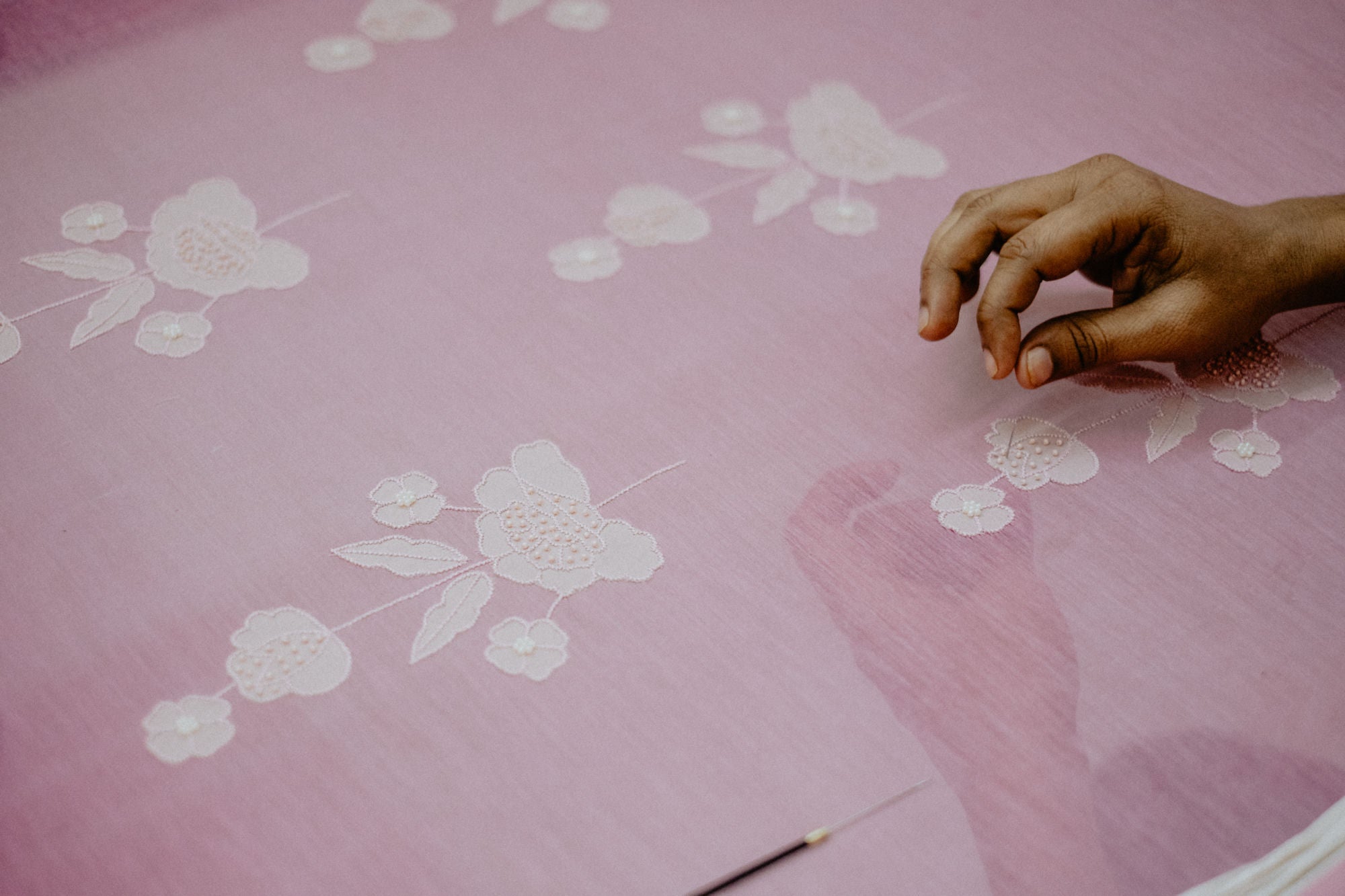
Every hand-embroidered garment carries an invisible signature — the karigar who made it. In the age of machine embroidery and fast fashion, the master artisans who still work by hand are the keepers of techniques that have been passed down for centuries. This is their story, and why it matters.
What Is a Karigar?
The word "karigar" comes from the Persian, meaning skilled worker or craftsperson. In Indian fashion, it refers specifically to the artisans who execute embroidery, beadwork, zari, and other hand techniques. They're not designers — they're makers. And their work is what separates true handcraft from machine imitation.
Karigars typically specialise in one technique: a zardozi master won't necessarily do chikankari; a gota patti expert won't touch aari work. This specialisation takes years to develop. Most karigars learned from their parents and grandparents, starting as children and apprenticing for decades before mastering their craft.
The Techniques They Guard
Zardozi: The Gold Thread Masters
Zardozi uses gold and silver metallic threads, often wound around a silk core, to create raised, sculptural embroidery. It's the most labour-intensive of all Indian embroidery techniques — a single motif can take hours, and a heavily embroidered garment can take weeks.

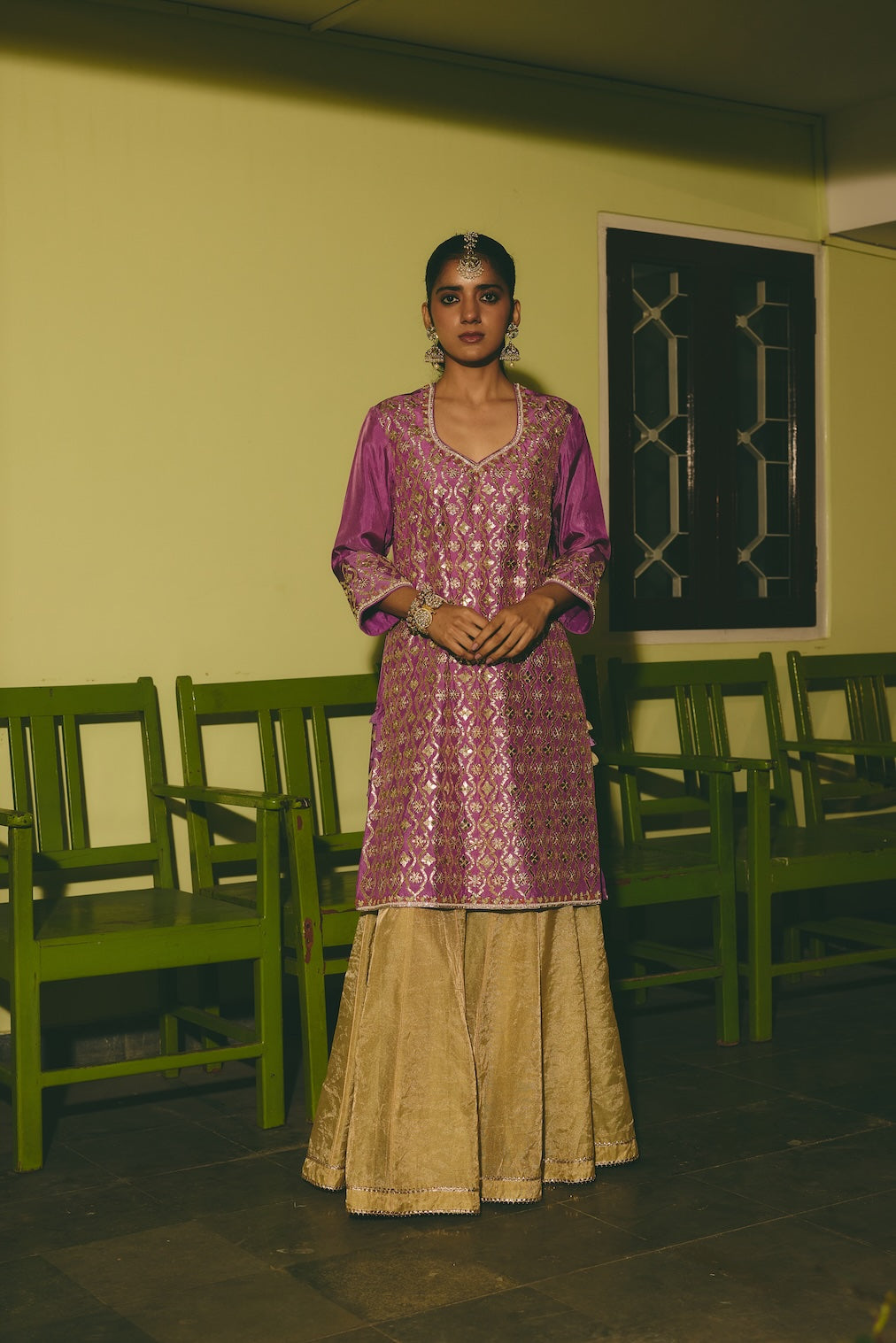
Pieces like the Zehan & Aabha sharara represent hundreds of hours of zardozi work. The density of embroidery, the precision of the motifs, the weight of the metallic thread — none of this can be replicated by machine.
Gota Patti: The Ribbon Appliqué Artists
Gota patti uses small pieces of gold or silver ribbon, cut into shapes and appliquéd onto fabric. It's distinctly Rajasthani, traditionally used for bridal trousseaus and festival wear. The technique requires both cutting precision and stitching skill.


Aari: The Chain Stitch Specialists
Aari embroidery uses a hooked needle to create chain stitches, building intricate patterns that flow across fabric. It's faster than zardozi but still entirely hand-executed, and the best aari work has a rhythm and regularity that machines can't match.
Resham: The Silk Thread Weavers
Resham work uses silk threads to create colourful, often floral patterns. It's particularly associated with Lucknow and Kashmir, where families have been doing this work for generations.


The Economics of Handcraft
Why does handmade cost more? The math is simple: time. A machine-embroidered kurta can be produced in hours. A hand-embroidered piece takes weeks. A heavily worked lehenga might require multiple karigars working together for a month or more.
Free Download
Get Our Measurement Guide
Step-by-step instructions with photos for perfect custom fit.
Download Free GuideWhen you buy handmade, you're paying for that time — and you're supporting the craftsperson directly. In a world where artisan traditions are disappearing because they can't compete economically with mass production, every purchase of handcraft is a vote for keeping these skills alive.
Why It Matters
There's something that happens when a garment is made by hand. The karigar's attention infuses the piece. Small variations — a stitch slightly longer here, a bead placed with intuition rather than algorithm — create character that machines cannot replicate.
More than aesthetics, there's a human connection. Somewhere in Jaipur, a person spent weeks creating the piece you're wearing. Their skill, their patience, their artistry lives in your closet. That's not just clothing — that's heritage in wearable form.

Collections like Ruhaniyat exist because karigars exist. Pieces like the Ferozaan & Gulraaz represent the collaboration between designer vision and artisan execution. Neither could exist without the other.
Frequently Asked Questions
How can I tell if embroidery is truly handmade?
Look at the back of the fabric — hand embroidery has visible threads and slight irregularities. Machine embroidery is perfectly uniform with a backing. Also check the price: genuine hand embroidery cannot be cheap.
Why does handmade embroidery take so long?
Each stitch is placed individually by hand. A single piece might contain thousands of stitches, beads, and sequins — all applied one at a time. There are no shortcuts.
What happens to karigars when people buy machine-made?
Many have already left the craft for more stable work. The remaining artisans depend on customers who value handwork enough to pay for it and wait for it. Every handmade purchase helps sustain these traditions.
Explore: Handmade Collection | Ruhaniyat | Ishq
Ready to Order Custom?
WhatsApp us at +91 70423 11214 with what you're looking for. We'll guide you through measurements, customizations, and timeline.
Most pieces ready in 4-5 weeks. Bridal in 6-8 weeks.
Made to order in 4–5 weeks
Have an event date? We’ll tell you exactly when to order by.
We take a limited number of orders each month — secure your slot early.
WhatsApp me my order-by date + a shortlistNot sure where to start?
Tell us what you're dressing for and we'll help you choose — fabric, fit, colour, and timeline — over WhatsApp or on a video call.
Your Cart
Pieces from this story
All pieces →Not sure which piece, or need it by a date? Book a video consultation Ask us on WhatsApp


Keep reading
The journal →
Best Zardozi Work Brands in India 2026: Designers, Lucknow & Bareilly Craft, and How to Judge It
Where to buy zardozi in India: couture labels, Lucknow and Bareilly craft clusters and made-to-order ateliers, plus d...
7 October 2026
Best Gota Patti Brands in India 2026: Where to Buy Real Rajasthani Gota Work
Where to buy gota patti outfits in India: designer labels, Jaipur's old bazaars and made-to-order ateliers, plus how ...
1 October 2026
What to Wear to a Rajasthani Wedding: A Guest's Guide
What to wear to a Rajasthani wedding — pithi, mahira, baraat, toran and pheras, with outfit ideas for each function a...
7 September 2026