
Khadi & Handloom: The Quiet Beauty of Slow-Made Fabric
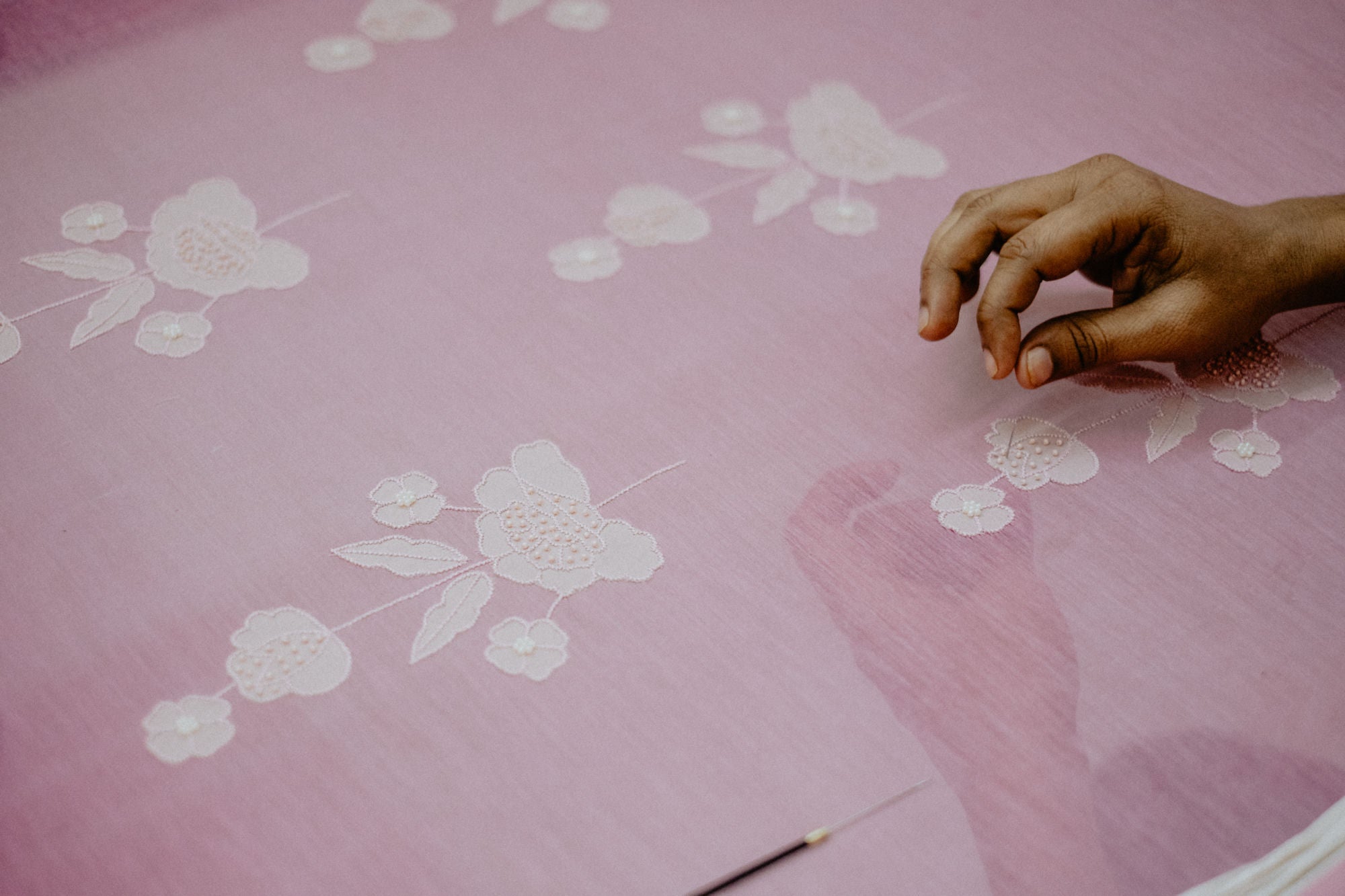
Before fast fashion, all fabric was slow. Spun by hand, woven on village looms, each length of cloth carried the small irregularities that machines erase — and that the eye reads, even now, as warmth. Khadi and handloom fabrics keep that tradition alive. They breathe better, age better and feel better than their machine-made cousins, and they support the artisan economy that keeps Indian craft traditions going. Here is why handwoven deserves a place in your wardrobe.
What Makes Khadi Special
Khadi is hand-spun, hand-woven cloth — most often cotton — with a soft, breathable, slightly textured character. Because both the yarn and the weave are made by hand, no two lengths are identical. The fabric carries a quiet, lived-in charm from the first wear, gets softer with every wash, and keeps you cooler than most mill-made cotton in the heat.

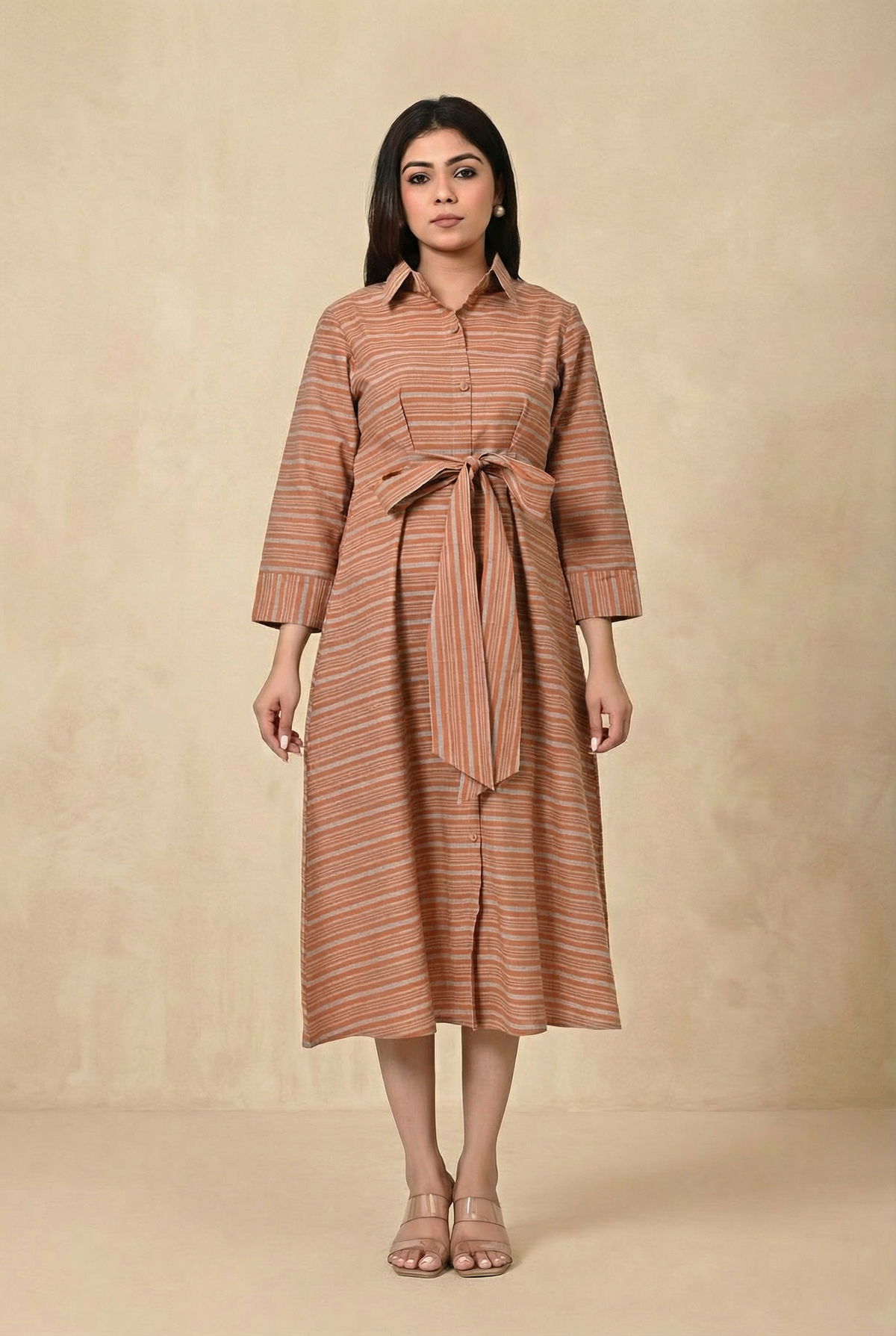
The Maati Dress — named for the Hindi word for earth — is khadi at its most honest: an earthy-toned khadi cotton with subtle grey and burnt ochre stripes, the handwoven fabric reflecting the quiet charm of village looms and slow-made fashion.
The Handwoven Edit
For minimal elegance: the Pariza Dress is a graceful celebration of minimalism — a soft blush-pink handwoven dress with delicate blue thread butis, cut in a classic shirt-dress silhouette with a collared neckline and fabric-covered buttons.


For soft colour: the Elaaya Dress is a soothing pistachio-green chanderi cotton shirt-style midi dress with a collared neckline, wooden button placket and minimal triangle motifs woven throughout.
Want help choosing a handwoven piece? WhatsApp us →
Why Handwoven Is Worth It
- It breathes. Hand-spun yarn is loftier than machine-spun, so khadi keeps you cooler in summer and warmer in winter.
- It ages beautifully. Each wash softens the fabric; a khadi piece at five years is better than at five days.
- It supports artisans. Every handwoven metre keeps a loom — and a livelihood — running.
- It is genuinely unique. The small variations in a handwoven fabric mean no one else owns exactly your piece.
Variations Are the Point
Across our pieces you will see the same note: natural variations in colour and weave are part of the textile, as it is handwoven. That is not a disclaimer — it is the signature. A slub here, a shade-shift there: these are the marks of a human hand at the loom, the very thing that separates a crafted garment from a manufactured one.
Caring for Khadi & Handloom
Hand-wash or machine-wash gentle in cold water, dry in the shade, and iron while slightly damp. Khadi loves washing — it only gets softer — but harsh detergents and hot sun fade its natural character. Store folded, and let it breathe between wears.
Want to start with handwoven?
Tell us your size and the colours you love — we will help you choose. WhatsApp us at +91 70423 11214
Each piece is made to order — standard production time is 4–5 weeks.
Frequently Asked Questions
What is the difference between khadi and handloom?
Khadi is both hand-spun and hand-woven — the yarn itself is made by hand. Handloom fabric is hand-woven but may use mill-spun yarn. Khadi is the slower, more artisanal of the two.
Is khadi only for casual wear?
No — khadi and handloom fabrics range from everyday dresses to fine occasion wear. Their texture pairs beautifully with delicate embroidery and minimal silhouettes.
Does khadi shrink?
Like all natural cotton, khadi can shrink slightly on first wash. Wash cold and gentle, and the fabric will settle and soften beautifully.
Browse our breathable handwoven and cotton pieces.
Browse Summer EssentialsMade to order in 4–5 weeks
Have an event date? We’ll tell you exactly when to order by.
We take a limited number of orders each month — secure your slot early.
Not sure where to start?
Tell us what you're dressing for and we'll help you choose — fabric, fit, colour, and timeline — over WhatsApp.
Your Cart
Pieces from this story
All pieces →
Keep reading
The journal →
Best Banarasi Saree Brands in India 2026: Where to Buy an Authentic Banarasi
Handmade by karigars Made to your measurements Fit guarantee Ships worldwide As seen in GraziaElle Graduat...
14 September 2026
Gifts for Your Wife She'll Actually Wear: Indian Outfits for Karva Chauth, Diwali & Anniversaries
Handmade by karigars Made to your measurements Fit guarantee Ships worldwide As seen in GraziaElle Graduat...
14 September 2026
Designer Lehenga for Girls: A Parent's Buying Guide to Kids' Lehengas
Handmade by karigars Made to your measurements Fit guarantee Ships worldwide As seen in GraziaElle Graduat...
14 September 2026