
Minimal Embroidery Indian Outfits: Why Less Is More in 2026
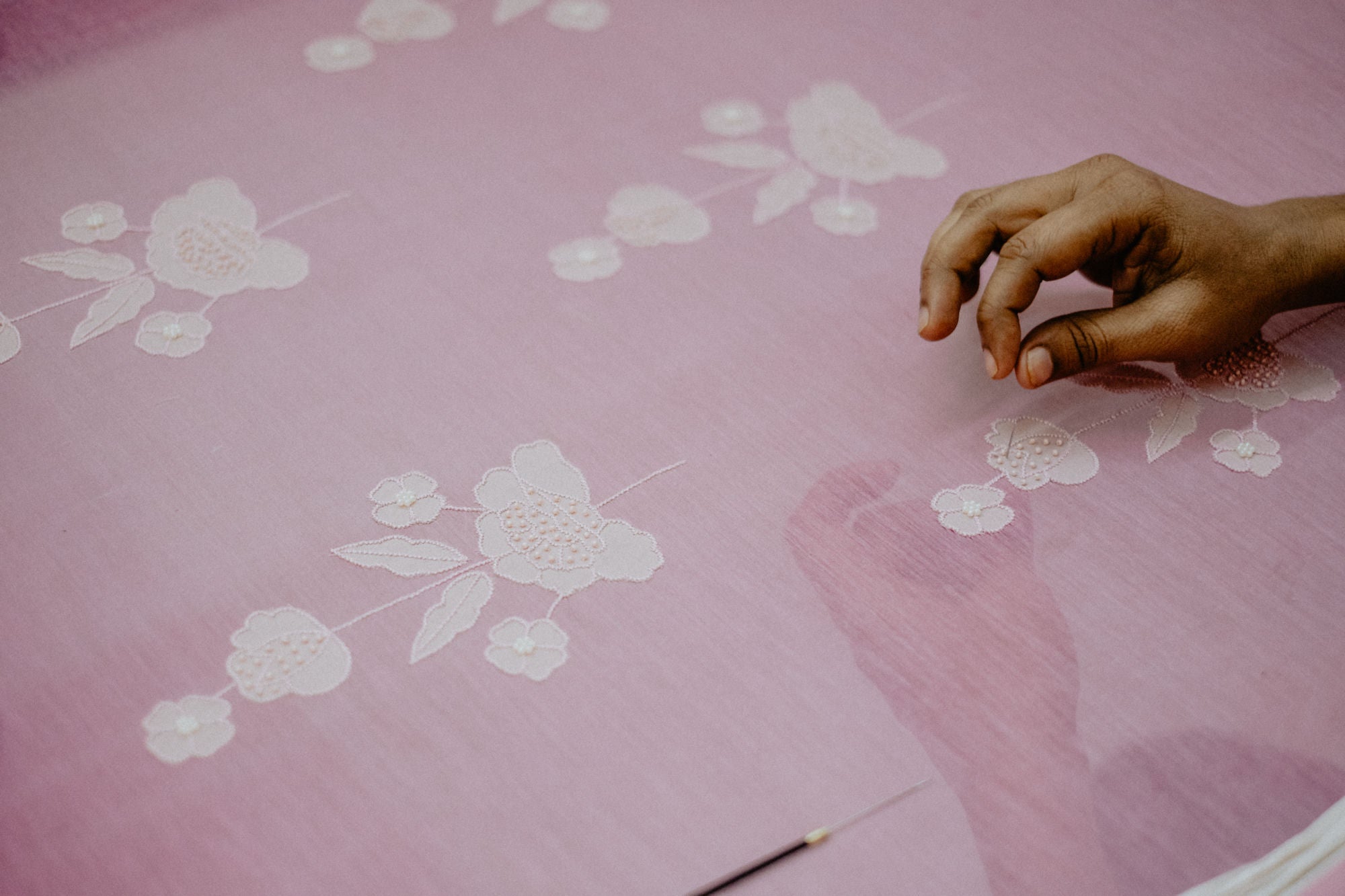
There's a shift happening in Indian fashion. After years of maximalist embroidery — every inch covered in zardozi, every border heavy with sequins — more women are gravitating towards pieces where the embroidery is intentional, not overwhelming. A single embroidered motif on a bodice. Tonal threadwork that you only notice up close. A scalloped border and nothing else.
This isn't about choosing plain over decorated. It's about choosing craft over clutter.
What Minimal Embroidery Actually Looks Like
Minimal embroidery doesn't mean no embroidery. It means:
- Placement over coverage — embroidery on the neckline, cuffs, or hem instead of all-over
- Tonal work — thread that matches the fabric colour, creating texture instead of contrast
- Single technique — just mirror work, or just gota patti, not everything layered together
- Negative space — letting the fabric breathe between motifs
The result is an outfit that feels luxurious to wear, photographs beautifully, and ages better than heavily embroidered pieces.
Embroidered Shirts: The Poster Child of Minimal Craft
The embroidered shirt category practically invented the less-is-more approach. These pieces use hand-embroidery as an accent, not a blanket.

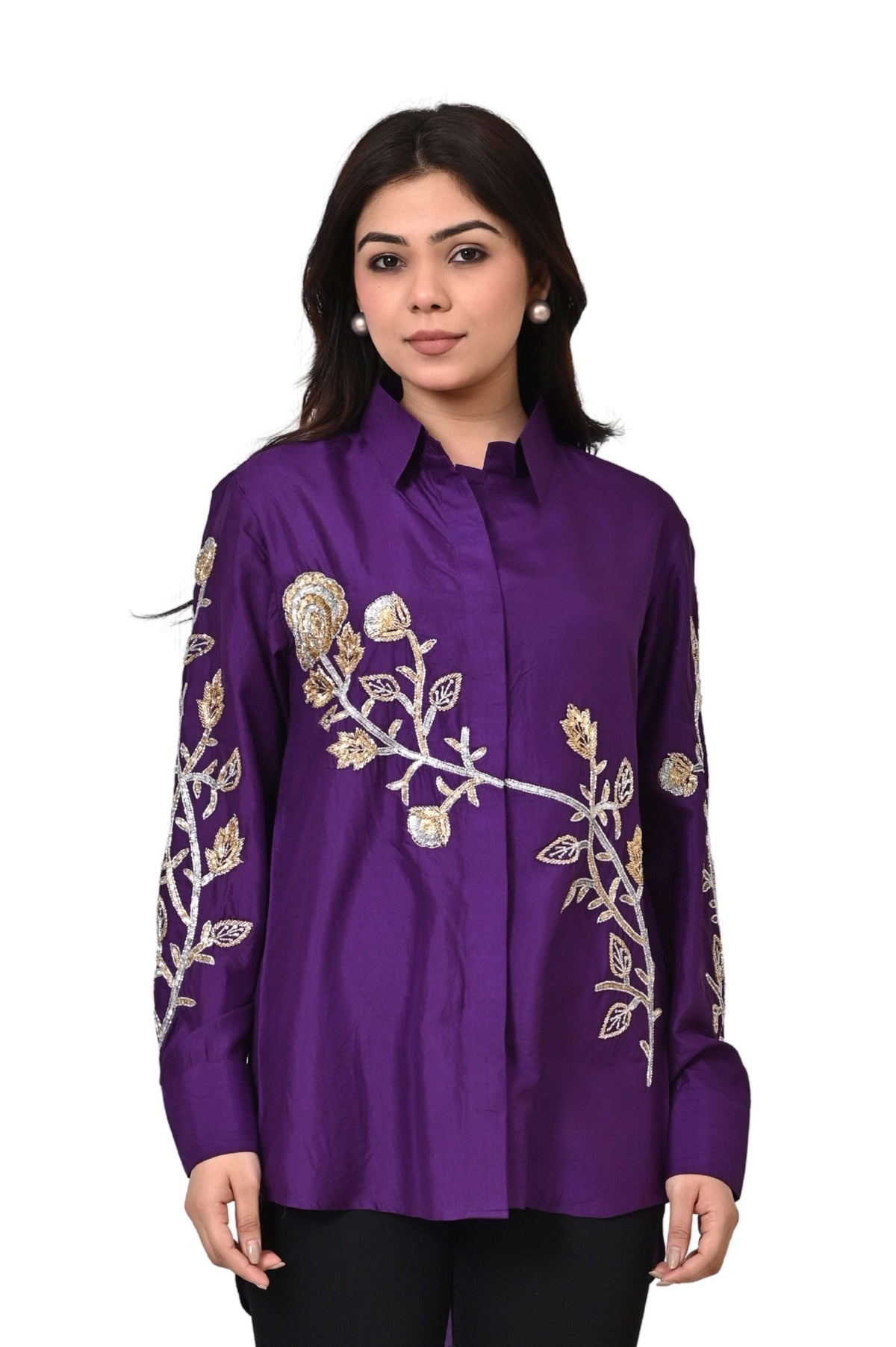
Savera — modal satin shirt with scattered pearl, sequin, and zari floral bootis

Parinda — dupion silk shirt with tonal floral vine embroidery

Phool — dupion silk shirt with sequinned rosette embroidery on upper bodice
The Savera is the perfect example — scattered floral bootis in pearl, sequin, and zari across modal satin. The embroidery doesn't dominate; it punctuates. The Parinda takes it further with tonal floral vines in metallic sequins and beads — you feel the texture before you see the pattern. And the Phool concentrates its sequinned rosettes on the upper bodice and sleeves only, leaving the rest clean.
Chanderi and Tissue: When the Fabric Does the Work
Sometimes the most minimal approach is choosing a fabric so beautiful that embroidery becomes secondary. Chanderi's natural sheen, tissue's metallic shimmer — these fabrics speak for themselves.

Poetry — lightweight Chanderi kurta and pant set with floral print

Varnika — Chanderi kurta set in soft elegant tones
The Poetry Kurta Set and the Varnika Kurta Set in Chanderi use the fabric's inherent luminosity as the main design element. The print and silhouette do the talking. No heavy borders, no dense embroidery — just beautiful fabric, well cut.
Border-Only Embroidery: The Elegant Middle Ground
If you want the presence of handwork without the weight, look for pieces where the embroidery is concentrated on the borders — hemline, neckline, sleeve edges — leaving the body of the garment clean.

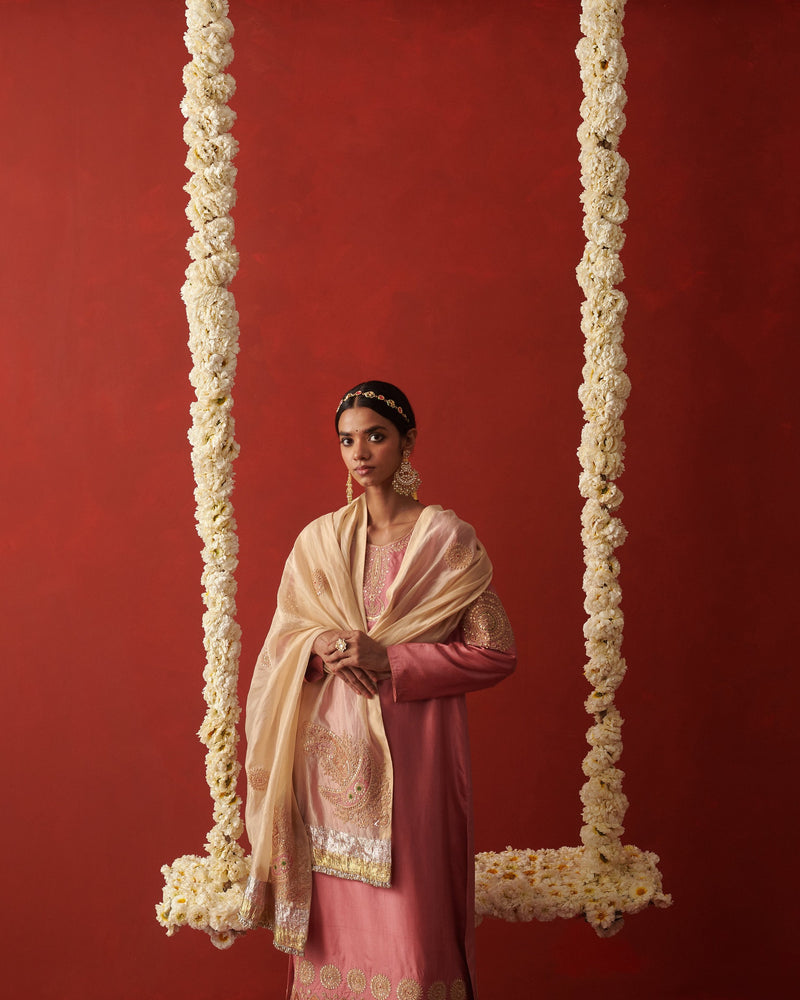
The Raanisa & Mahira in sindoori orange woven booti silk uses the fabric's woven pattern as the primary texture, with gota, marodi, bead, and thread work concentrated along the hem. The effect is rich but not busy — the kind of piece that looks more beautiful the longer you look at it.
Cotton with Details: Everyday Minimalism
For everyday wear, minimal craft shows up as pintucks, subtle prints, and considered silhouettes rather than embroidery.
Free Download
Get Our Measurement Guide
Step-by-step instructions with photos for perfect custom fit.
Download Free Guide
Golden Hour — pintucks cotton kurta and pant set

Blush — pintucked cotton kurta and mulmul pant set

Laalima — pintucks cotton kurta set
The Golden Hour, Blush, and Laalima kurta sets all use pintucked cotton — a technique that creates texture and visual interest through fabric manipulation rather than added embellishment. It's craft in its purest form.
Why Minimal Embroidery Costs What It Does
This is important to understand: minimal doesn't mean cheap. A single perfectly placed hand-embroidered motif requires the same (sometimes more) skill as dense coverage. The karigar has no room for error — every stitch is visible, every placement is deliberate. You're paying for precision, not weight.
How to Style Minimal Embroidery Pieces
- Let the piece be the statement. Don't compete with heavy jewellery — choose one accent piece.
- Rich fabrics, simple embroidery. When the embroidery is minimal, the fabric quality matters more. Silk, Chanderi, tissue — they carry the outfit.
- Contrast with a heavy dupatta. A plain kurta with a heavily embroidered dupatta creates the perfect balance.
- Invest in fit. With minimal embroidery, the silhouette is everything. Get it tailored to your measurements.
Looking for something minimal but beautifully made?
WhatsApp us at +91 70423 11214 — tell us what you're looking for and we'll suggest pieces that match the less-is-more aesthetic. All pieces made to your measurements.
Visit our Jaipur atelier to see the difference that fabric quality and precise embroidery make in person.
Address: Plot No. 27, Vaishali Nagar, Near Jain Mandir, Nemi Sagar Colony, Jaipur 302021
Hours: Monday–Saturday, 11 AM–7 PM IST
Frequently Asked Questions
Can I wear minimal embroidery to a wedding?
As a guest, absolutely. For your own wedding, it depends on your aesthetic — many modern brides are choosing minimal, high-quality embroidery over heavily decorated lehengas. It's a personal choice.
Is minimal embroidery less durable?
Actually, it's often more durable. Dense embroidery adds weight that can stress fabric over time. Lighter embroidery with quality materials ages beautifully and holds up better with proper care.
What's the best minimal piece for someone new to Indian fashion?
An embroidered shirt like the Savera. It's approachable, versatile, and introduces you to hand-embroidery without overwhelming your wardrobe.
Explore: shirts · kurta sets · summer essentials · sarees · shop all
Ready to Order Custom?
WhatsApp us at +91 70423 11214 with what you're looking for. We'll guide you through measurements, customizations, and timeline.
Most pieces ready in 4-5 weeks. Bridal in 6-8 weeks.
Made to order in 4–5 weeks
Have an event date? We’ll tell you exactly when to order by.
We take a limited number of orders each month — secure your slot early.
WhatsApp me my order-by date + a shortlistNot sure where to start?
Tell us what you're dressing for and we'll help you choose — fabric, fit, colour, and timeline — over WhatsApp or on a video call.
Your Cart
Pieces from this story
All pieces →Not sure which piece, or need it by a date? Book a video consultation Ask us on WhatsApp



Keep reading
The journal →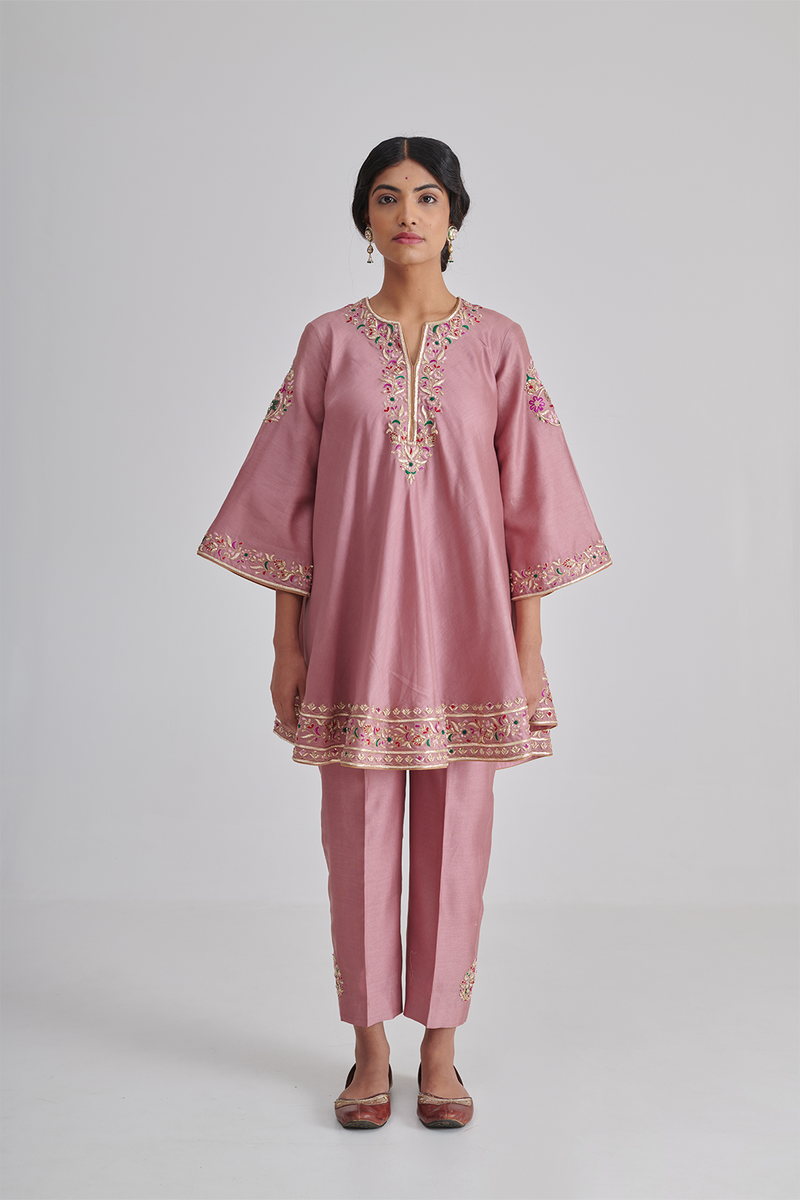
Best Chanderi Brands in India 2026: Suits, Dupattas & Where to Buy the Real Weave
The best Chanderi brands in India 2026 — handloom cooperatives, designer labels and made-to-order picks, plus how to ...
17 September 2026
A Guide to Indian Fabrics: 14 Weaves and Textiles, Explained
What Banarasi, Chanderi, tissue, organza, brocade, chiffon and the rest actually are — how each one drapes, what it s...
5 September 2026
Kids' Ethnic Wear Fabric Guide: What's Actually Comfortable
Which fabrics work for children's ethnic wear and which cause a meltdown — cotton, Chanderi, silk, tissue and satin c...
26 August 2026