
What to Wear in Monsoon: An Indian Outfit & Fabric-Care Guide (2026)
The Indian monsoon is its own kind of beautiful — but it is unforgiving on the wrong wardrobe. Heavy silks cling, pale hems splash, and delicate zari sulks in the humidity. Dressing well through the rains is less about avoiding traditional wear and more about choosing the right weights, weaves and colours. Here is how to stay elegant from the first showers of June through the grey skies of August.
The Best Fabrics for Monsoon Dressing
The golden rule of the rains: go light, go breathable, and avoid anything that holds water or shows it. A cotton-linen blend is the quiet hero of the season — it breathes in the mugginess, dries quickly, and resists the limp, sticky feeling that pure synthetics give in high humidity.
The Jamuni Kurta Set is a good example: a vibrant plum-hued kurta and pant in a breathable cotton-linen blend, with roomy patch pockets and elbow-length sleeves that keep you cool and covered on a damp afternoon.

Jamuni plum cotton-linen kurta set — breathable monsoon-friendly everyday wear
₹3,750 View ProductOther monsoon-smart choices from our racks:
- Cotton & cotton-linen — breathable, quick-drying, forgiving of humidity.
- Chanderi — lightweight and airy, with a soft sheen that still reads festive.
- Organza — sheer and fluid; it skims the body instead of clinging.
Not sure which fabric suits your plans this season? WhatsApp us →
Colours That Work With Grey Skies
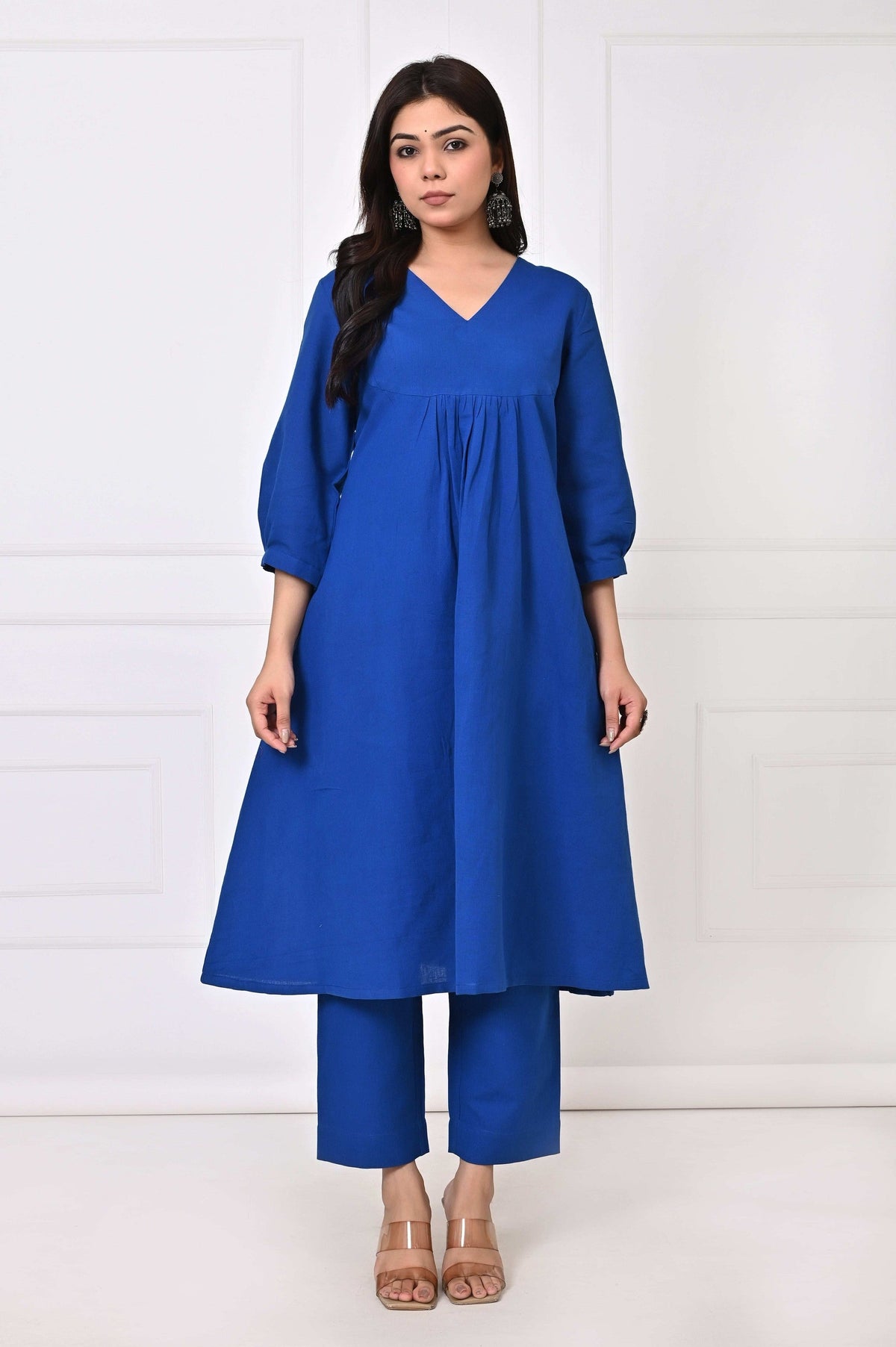
Monsoon light is flat and silvery, which is exactly why deep, saturated colours look so good against it. Think cobalt, plum, deep rose and emerald rather than chalky pastels that can look washed-out (and show water marks). The Neelima Kurta Set, in a rich cobalt blue cotton-linen, is built for exactly this — serene, saturated, and easy to wear when the weather is doing its worst.

Neelima cobalt blue cotton-linen kurta set
₹3,750 Shop Now
Gulnaar deep rose pink cotton-linen kurta set
₹3,750 Shop NowThe Gulnaar Kurta Set, a deep rose pink in the same soft cotton-linen blend, is another easy, versatile pick that hides the odd splash far better than ivory ever could.
Silhouettes Built for the Rain
Floor-grazing hems and the monsoon are not friends. Lean toward shorter or cropped lengths, straight-cut kurtas, and pants over voluminous skirts. A relaxed kurta-pant set keeps you mobile through puddles and crowded, damp streets, and dries fast if it does catch a shower. Save the heavily worked lehengas for indoor evenings.
How to Care for Festive Fabrics in Humidity
If you are wearing something special to a monsoon-season wedding or pooja, a little care goes a long way:
Air everything out. Humidity is the enemy of zari and silk. After wearing, hang the outfit in an airy spot (never a sealed plastic cover) before storing.
Use breathable storage. Wrap zari and embroidered pieces in soft muslin, not plastic — trapped moisture tarnishes metallic thread and can leave damp spots.
Keep silica gel in your wardrobe. A few sachets tucked among your finer pieces draw out the damp that causes mustiness and mildew during a long monsoon.
Spot-dry, don't wring. If a hem gets wet, blot it and let it air-dry flat. Wringing distorts the weave and can crack delicate embroidery.
Planning a monsoon-season event?
Tell us the occasion and we will help you pick a fabric and silhouette that stays beautiful through the rain. WhatsApp us at +91 70423 11214
Made to order, with a standard production time of 4–5 weeks — so plan ahead for the season.
Frequently Asked Questions
Can I wear silk in the monsoon?
Yes, but choose lighter silks like chanderi or organza over heavy raw silk, and be mindful of where you sit and walk. For unpredictable days, a cotton-linen set is the safer, more comfortable choice.
What colours hide water marks best?
Deeper, saturated tones — cobalt, plum, emerald, deep rose — disguise splashes far better than ivory, white or chalky pastels.
How do I stop my zari from tarnishing in the rains?
Store embroidered and zari pieces in breathable muslin (never plastic), air them out after each wear, and keep silica-gel sachets in your wardrobe to control humidity.
Looking for easy, breathable pieces to carry you through the season?
Browse Everyday EssentialsMade to order in 4–5 weeks
Have an event date? We’ll tell you exactly when to order by.
We take a limited number of orders each month — secure your slot early.
WhatsApp me my order-by date + a shortlistNot sure where to start?
Tell us what you're dressing for and we'll help you choose — fabric, fit, colour, and timeline — over WhatsApp or on a video call.
Your Cart
Pieces from this story
All pieces →Not sure which piece, or need it by a date? Book a video consultation Ask us on WhatsApp



Keep reading
The journal →
Goa & Beach Wedding Outfit Ideas: What to Wear on Sand
What to wear to a beach wedding in Goa — humidity, sand, sea breeze and a sunset ceremony, with fabrics that survive ...
12 September 2026
How to Remove Stains From Indian Clothes Without Ruining the Embroidery
A practical guide to removing haldi, oil, makeup, sweat and wine stains from silk, Chanderi and hand-embroidered Indi...
14 August 2026
Sawan 2026 Outfit Ideas: The Green Edit for Shravan
Sawan outfit ideas for 2026 — why green rules Shravan, the best monsoon-friendly fabrics, and handcrafted green kurta...
4 July 2026