
Resham Thread Work: The Art of Silk Embroidery in Indian Fashion
Before there was sequin work, before there was Swarovski, there was resham — silk thread embroidery that has adorned Indian textiles for centuries. The word itself comes from Persian, meaning "silk," and the craft involves creating intricate designs using coloured silk threads on fabric. Unlike heavier metallic embroideries, resham work offers a softness and subtlety that feels both timeless and deeply artisanal.
Here's what makes resham special — and how to identify and style pieces that feature this beautiful craft.
What Is Resham Thread Work?
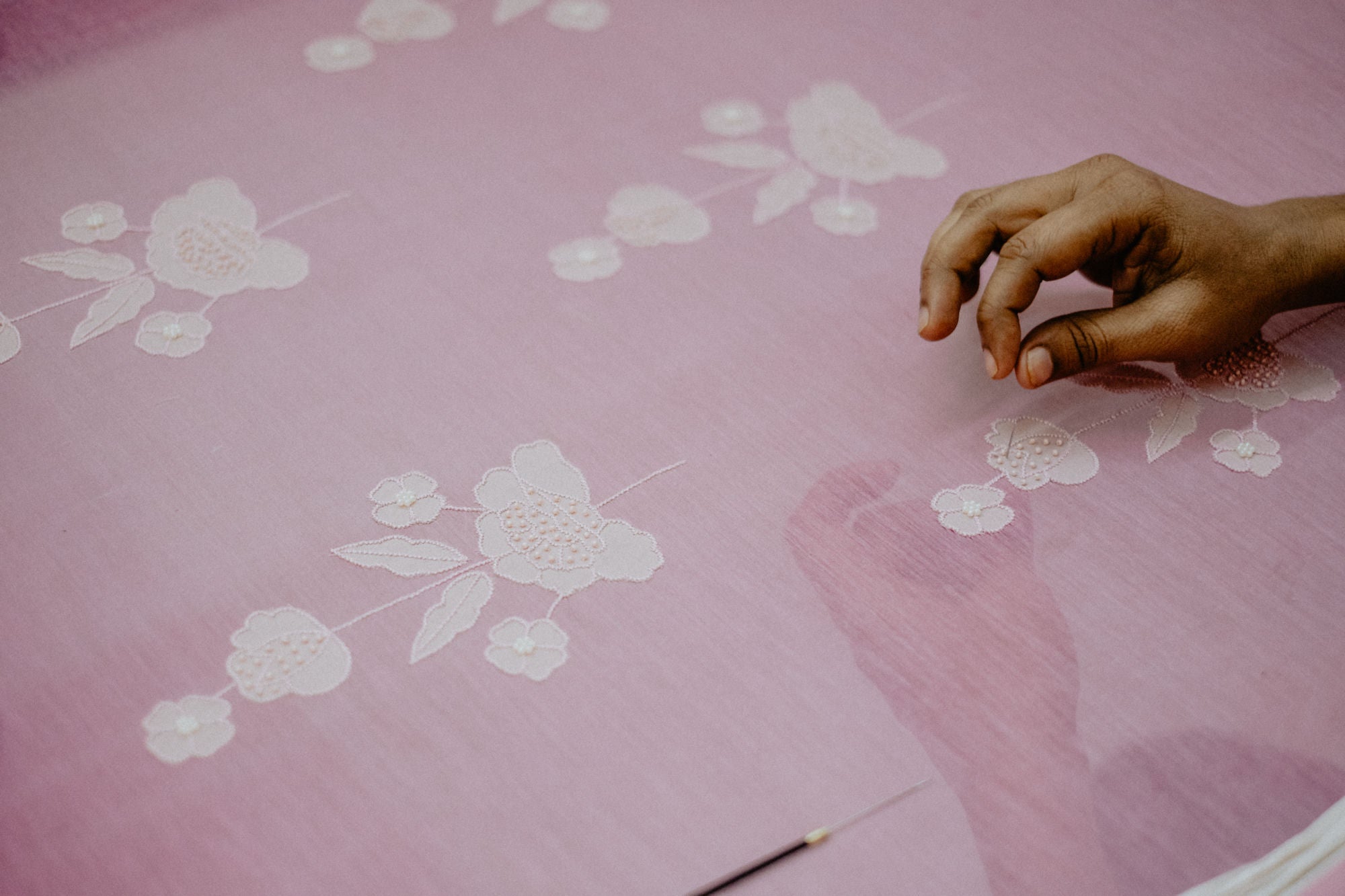
Resham embroidery uses silk threads (though cotton threads are sometimes used as a more affordable alternative) to create patterns on fabric. The technique can be traced back to ancient Persia and has been refined in India over centuries, particularly in regions like Lucknow (where it combines with chikankari), Kashmir, and Gujarat.
The key characteristics of resham work:
- Material: Pure silk threads in single or multiple colours
- Texture: Smooth, slightly raised surface that catches light gently
- Motifs: Typically floral — paisleys, vines, leaves, and blooms
- Application: Can be used alone or combined with other techniques like zari, gota, or mirror work
Resham Combined with Other Techniques
While pure resham work exists, you'll often find it combined with other embroidery styles to create depth and visual interest.

The Suki Blouse demonstrates how resham combines with other techniques — here, gota and marodi work join silk threadwork along the neckline, hem, and back straps. The traditional Rajasthani bandhej base meets a modern cut, creating something both timeless and contemporary.

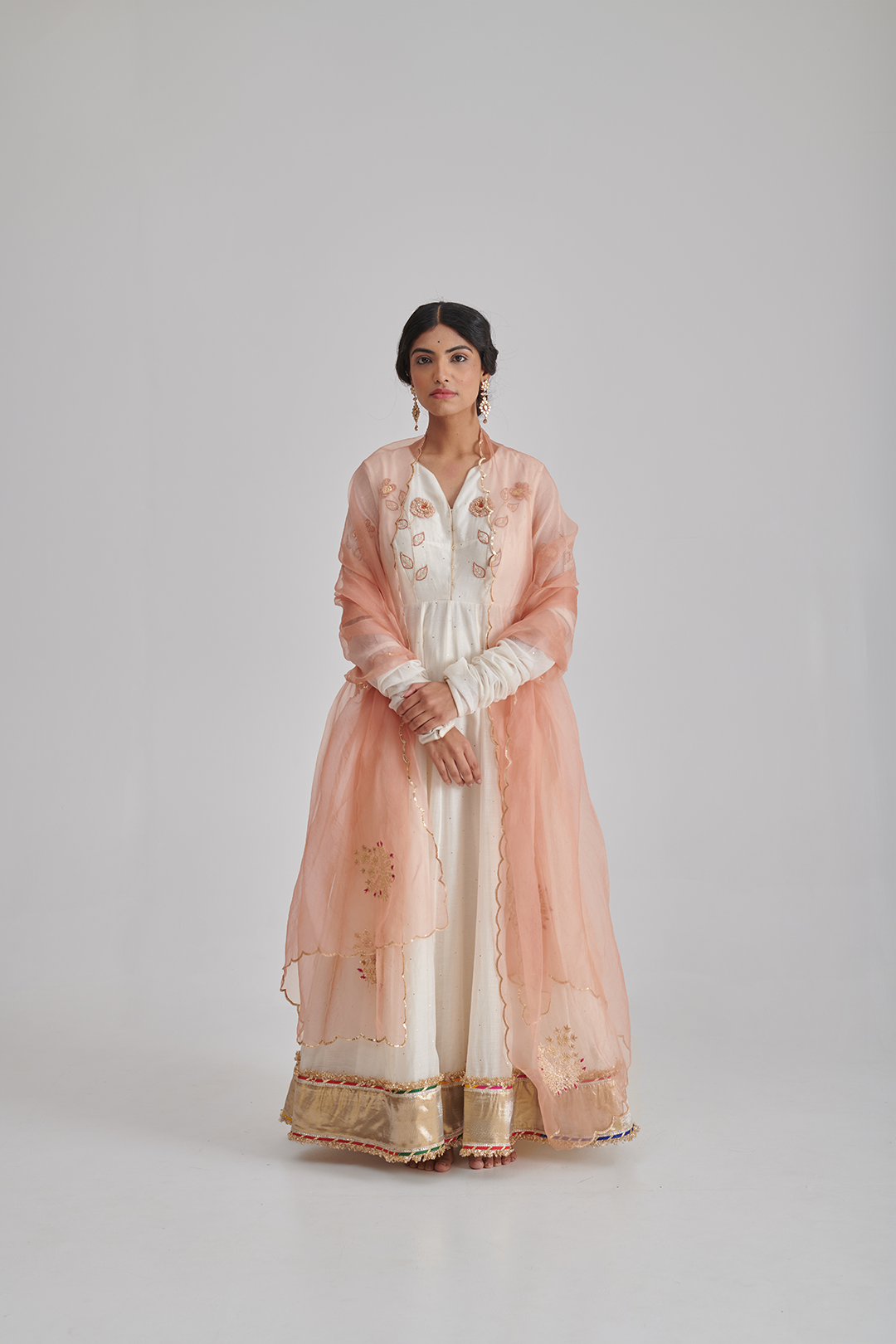
The Naisha Dupatta in peach organza features floral embellishments crafted with fine resham thread in pink alongside gold beads. The edges are highlighted with sequins and scalloped borders — a beautiful example of how resham adds softness to more ornate pieces.
Resham in Dupattas and Scarves
Dupattas are perhaps the most versatile way to incorporate resham work into your wardrobe. A beautifully embroidered dupatta can elevate a simple kurta or add dimension to a plain saree.


The Adhira Dupatta in ivory organza combines mirror work with delicate resham thread work — showcasing intricate craftsmanship on a light, feminine base. The Inaayat Dupatta uses resham thread alongside gold beads and sequins for circular floral motifs that scatter beautifully across the fabric.

The Mornii Dupatta showcases what happens when resham threadwork takes centre stage — delicate, detailed, and designed to be noticed.
Resham in Kurta Sets
For everyday elegance, resham-embellished kurta sets offer the perfect balance — handcrafted detail without the weight or formality of heavy occasion wear.


The Leela & Sifat Kurta Set and Jazabah & Saiyan Set demonstrate how resham embroidery elevates everyday pieces. The silk thread adds dimension and colour without overwhelming the silhouette.
Resham in Festive Pieces
For weddings and celebrations, resham often combines with heavier techniques — zardozi, gota patti, and metallic threads — to create pieces of true artisanal luxury.
Free Download
Get Our Measurement Guide
Step-by-step instructions with photos for perfect custom fit.
Download Free Guide
The Ishq-e-Gul Lehenga demonstrates the festive application of thread work — here, marodi (a coiled thread technique) combines with gota patti for elaborate borders that catch the light as you move.
How to Identify Quality Resham Work
Thread quality: Pure silk threads have a natural sheen that synthetic alternatives can't replicate. The thread should feel smooth, not scratchy.
Stitch evenness: Handwork will have slight variations, but the overall effect should be consistent. Extremely uniform stitching often indicates machine work.
Back of the fabric: Hand embroidery typically shows a different pattern on the reverse. Perfectly mirrored back-and-front often suggests machine production.
Thread security: Quality work has threads properly secured so they don't pull or snag easily.
Caring for Resham Embroidery
Storage: Keep resham pieces in breathable cotton bags, not plastic. Fold with tissue paper between layers to prevent thread damage.
Cleaning: Dry clean only for best results. Never soak resham embroidery or use harsh detergents.
Ironing: Iron on the reverse side only, using low heat. Never iron directly over embroidered areas — the threads can flatten or melt.
Wearing: Be mindful of jewellery that might snag the threads. Remove rings when adjusting embroidered necklines.
Resham vs. Other Thread Embroideries
Resham vs. Cotton thread: Resham has a natural sheen; cotton is matte. Resham is more expensive but drapes more beautifully.
Resham vs. Zari: Zari uses metallic (gold or silver) threads; resham uses coloured silk. Zari is shinier and more formal; resham is softer and more versatile.
Resham vs. Chikankari: Chikankari is a specific technique from Lucknow, traditionally done in white thread on white fabric. Resham can be any colour and uses different stitches.
Frequently Asked Questions
Is resham work expensive?
Quality resham work requires skilled artisans and hours of hand labour, so yes — it tends to be priced higher than printed or machine-embroidered alternatives. However, pieces that combine resham with other techniques are often more affordable than pure resham work.
How do I know if resham is real silk?
Real silk thread burns like hair and leaves ash. Synthetic threads melt and form a hard bead. However, the burn test damages the thread — better to buy from trusted sources who guarantee authenticity.
Can resham work be repaired?
Yes, skilled embroiderers can repair damaged resham work. Keep loose threads rather than cutting them, and take pieces to specialists rather than regular tailors.
Ready to Order Custom?
WhatsApp us at +91 70423 11214 with what you're looking for. We'll guide you through measurements, customizations, and timeline.
Most pieces ready in 4-5 weeks. Bridal in 6-8 weeks.
Made to order in 4–5 weeks
Have an event date? We’ll tell you exactly when to order by.
We take a limited number of orders each month — secure your slot early.
WhatsApp me my order-by date + a shortlistNot sure where to start?
Tell us what you're dressing for and we'll help you choose — fabric, fit, colour, and timeline — over WhatsApp or on a video call.
Your Cart
Pieces from this story
All pieces →Not sure which piece, or need it by a date? Book a video consultation Ask us on WhatsApp


Keep reading
The journal →
Dabka, Nakshi, Cutdana: A Glossary of Hand Embroidery Materials
What dabka, nakshi, cutdana, resham, marodi, gota and moti actually are — a plain-English glossary of the materials b...
22 August 2026
The Paisley Guide: The Story of the Keri Motif
A guide to the paisley — the keri or ambi motif in Indian textiles. Its mango-and-vine origins, its meaning, and how ...
30 July 2026
Real Zari vs Imitation: How to Tell the Difference When You Buy
How to tell real zari from imitation — the weight, sheen, thread and burn tests, what tested zari means, and why genu...
2 July 2026