
Sequin Embroidery: How to Wear Shimmer Without Overdoing It
Sequins have a reputation problem. Mention them and people picture disco balls and over-the-top glitter. But sequin embroidery in Indian fashion is something else entirely — delicate, hand-stitched, and used as one element among many. When a kaarigar places individual sequins alongside cutdana, beadwork and thread, the effect is subtle shimmer, not shine. Here is how sequin embroidery works, and how to wear it well.
What Is Sequin Embroidery?
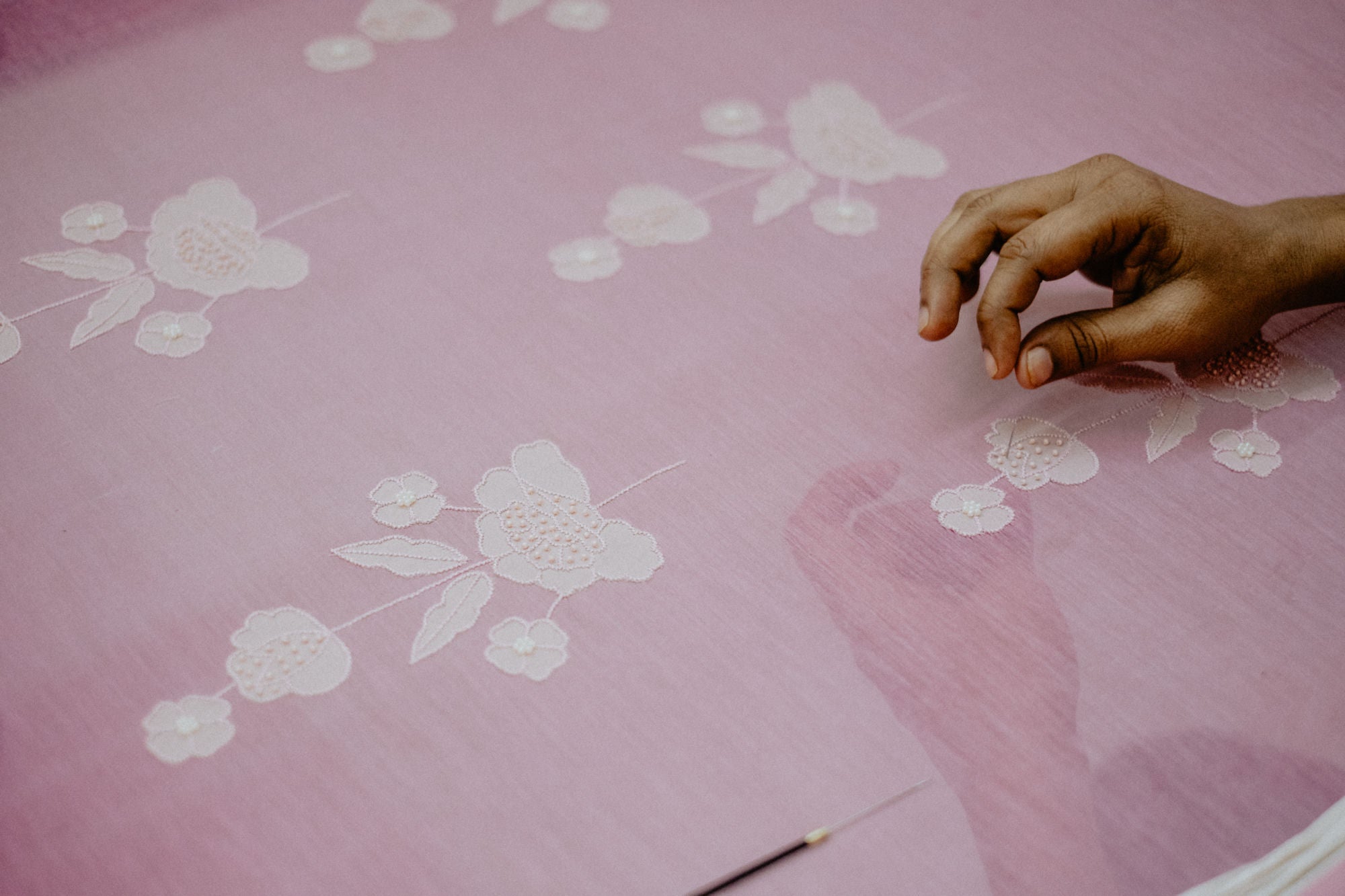
In hand-embroidery, sequins are small, flat discs stitched individually onto fabric — often as part of a larger design that includes thread work, beads, cutdana (tube beads) and zari. Each sequin is anchored by a tiny stitch or bead at its centre, and the placement is deliberate: scattered across a motif, lined along a border, or clustered to catch light at key points. The result is a quiet glow, not a glare.

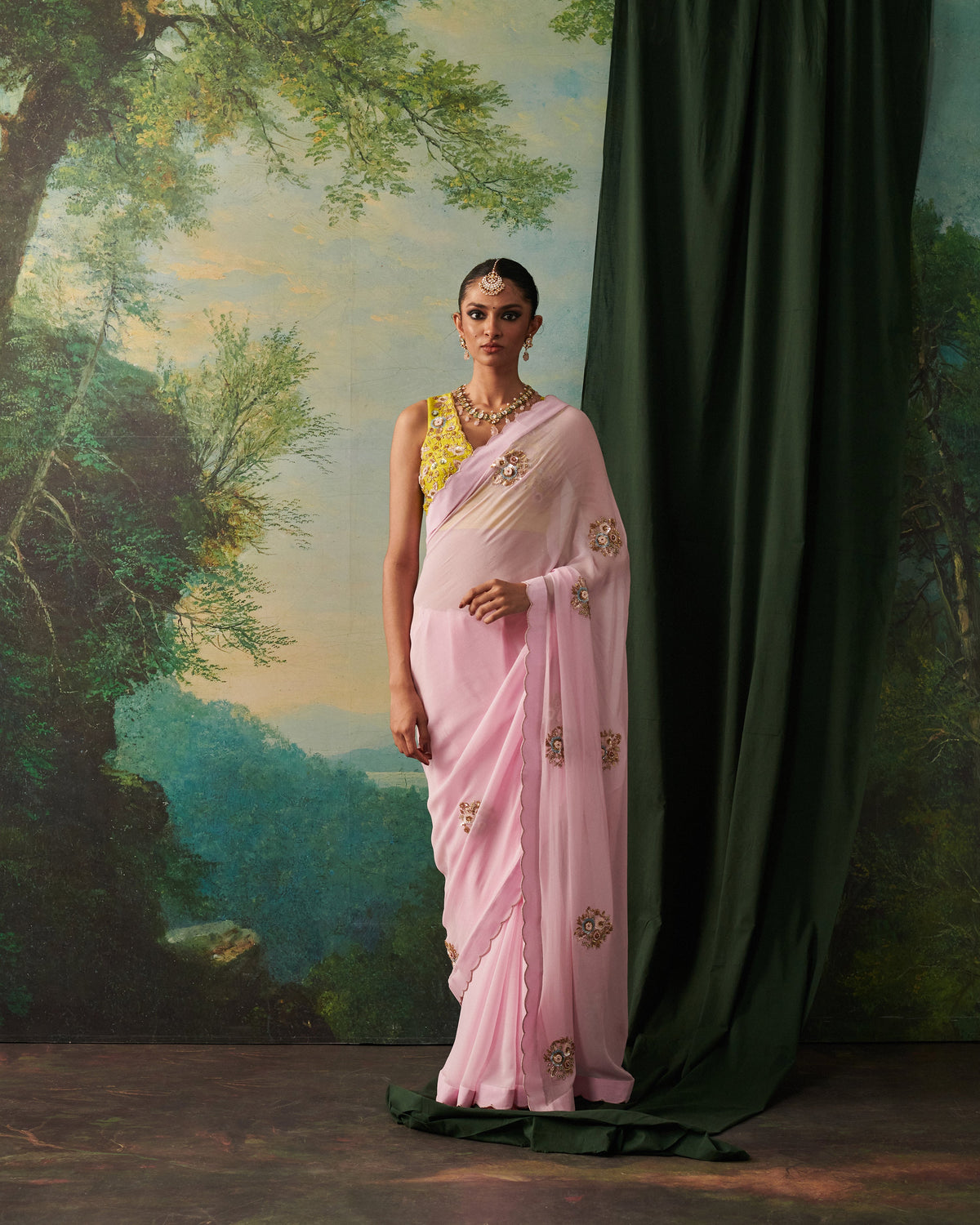
The Sajni Saree shows sequin embroidery at its most delicate — a blush-pink chiffon scattered with hand-embroidered floral clusters, each crafted with sequins, cutdana and beadwork, finished with a scalloped border.
How Sequins Work With Other Techniques
Sequins rarely appear alone. They are almost always combined with other hand-embroidery elements:
- Sequins + cutdana: tube beads add dimension and structure alongside the flat shimmer of sequins.
- Sequins + thread/resham: thread work outlines and fills, while sequins add highlights.
- Sequins + beads: tiny beads anchor sequins at the centre or fill in between them.
- Sequins + zari: gold or silver thread provides the base; sequins add sparkle.


The Chandni Saree uses vertical lines of sequins and cutdana along the border of a deep black chiffon. The Rangrez Saree scatters sequin-and-bead floral bootis across a deep red chiffon in tones of ivory, saffron, plum and rose.
Want to see sequin embroidery up close? WhatsApp us →
How to Wear Sequins Without Overdoing It
Choose placement over coverage. The most elegant sequin pieces use shimmer sparingly — along a border, scattered across the body, or clustered at the neckline and hem. All-over sequin coverage can overwhelm.
Balance with matte. A sequin-detailed piece looks best against a matte base — chiffon, chanderi, cotton — so the shimmer reads as an accent, not a costume.
Let lighting do the work. Sequins are designed for movement and light. In candlelight or golden hour, even subtle sequin work glows beautifully.
The Naveli–Ruhi Set balances sequins perfectly — a dusty rose chanderi kurta with intricate floral embroidery in aari, zardozi, sequins and thread, the shimmer woven into a larger design rather than taking over.
Sequins for Day vs Evening
- Daytime: Choose scattered bootis or border-only sequins on a light fabric. The shimmer will catch sun without being too much.
- Evening: Denser sequin work — along borders, across the pallu, in floral clusters — glows beautifully in low light.
Want a sequin piece made for you?
Tell us the occasion and we will help you find the right level of shimmer. WhatsApp us at +91 70423 11214
Each piece is made to order — standard production time is 4–5 weeks.
Frequently Asked Questions
Are sequins appropriate for daytime events?
Yes — choose pieces with scattered or border sequins rather than all-over coverage. In daylight, subtle sequin work catches sun without overwhelming.
How do I care for sequin-embroidered pieces?
Dry-clean only. Store flat or rolled with tissue to protect the embroidery, and avoid crushing the sequins under heavy items.
Do sequins make an outfit too dressy?
Not when used sparingly. Hand-embroidered sequins as part of a larger design — alongside thread, beads and zari — read elegant rather than flashy.
Explore our hand-embroidered sarees with sequin detailing.
Browse SareesMade to order in 4–5 weeks
Have an event date? We’ll tell you exactly when to order by.
We take a limited number of orders each month — secure your slot early.
WhatsApp me my order-by date + a shortlistNot sure where to start?
Tell us what you're dressing for and we'll help you choose — fabric, fit, colour, and timeline — over WhatsApp or on a video call.
Your Cart
Pieces from this story
All pieces →Not sure which piece, or need it by a date? Book a video consultation Ask us on WhatsApp


Keep reading
The journal →
Dabka, Nakshi, Cutdana: A Glossary of Hand Embroidery Materials
What dabka, nakshi, cutdana, resham, marodi, gota and moti actually are — a plain-English glossary of the materials b...
22 August 2026
Buta & Booti: The Small Motifs That Carry Indian Embroidery
What buta and booti mean in Indian textiles, how they differ from jaal, how they're woven or hand-embroidered, and ho...
14 August 2026
Hand Embroidery on Children's Clothes: Why We Bother
A reasonable person might ask why anyone would hand-embroider clothes for someone who will outgrow them by next summe...
31 July 2026