
Sequin & Mirror Work in Indian Fashion: A Complete Guide
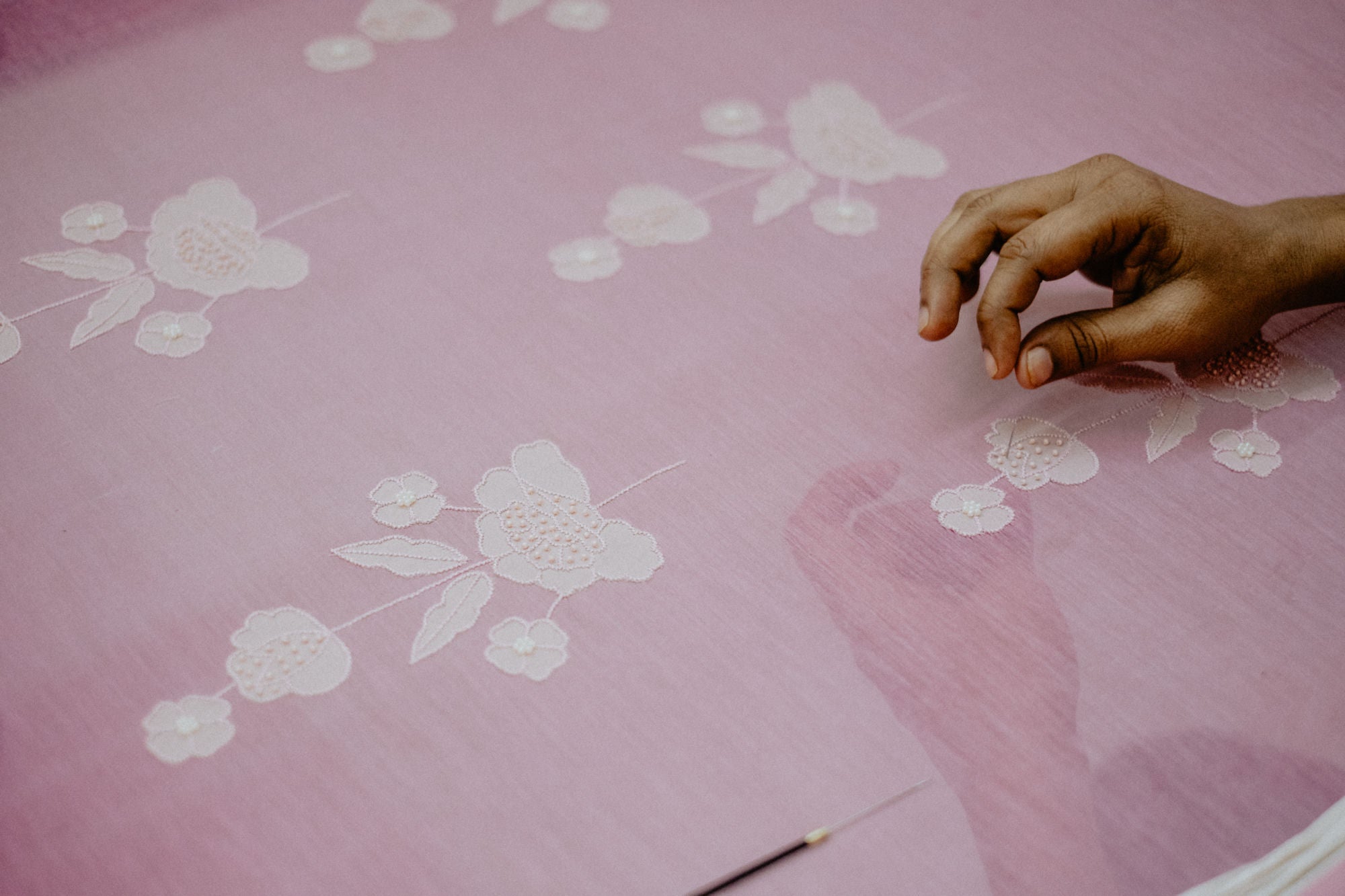
Sequins and mirror work are among the most recognisable embellishments in Indian fashion — they catch light, create movement, and add instant glamour to any piece. But there's a world of difference between mass-produced shine and the handcrafted sparkle of traditional Indian embellishment techniques. Understanding these techniques helps you appreciate the craftsmanship and style your pieces with intention.
Types of Sequin Work in Indian Fashion
Mukaish work: Tiny metal pieces hammered flat and stitched onto fabric, creating subtle, elegant shimmer. Mukaish is particularly associated with Lucknowi craft and chikankari. The effect is refined rather than flashy — think moonlight rather than disco.
Badla work: Fine metallic threads or strips woven or couched onto fabric. Creates a more textured, dimensional sparkle than flat sequins.
Sitara work: Flat sequins (sitara means "star") stitched in patterns. This is the sequin work most people recognise — flat, shiny discs creating all-over or accent sparkle.
Cutdana work: Tube-shaped beads (often glass or acrylic) that catch light from multiple angles. More dimensional than flat sequins, cutdana creates rich texture.
Mirror Work (Shisha) Traditions
Mirror work — called shisha or abhla — involves small pieces of mirror stitched into fabric, surrounded by embroidery that holds them in place. The technique originated in 17th century Persia and flourished in Gujarat and Rajasthan.
Gujarati shisha: Bold, geometric patterns with larger mirrors. Often combined with kutchi embroidery in bright colours. The effect is vibrant and folk-inspired.
Rajasthani abhla: Smaller mirrors in more intricate patterns, often combined with gota patti and resham thread work. Tends to be more refined than the Gujarati style.
Contemporary mirror work: Modern designers use mirror work in minimalist ways — a single line of tiny mirrors along a border, or scattered mirrors as accents rather than all-over coverage.

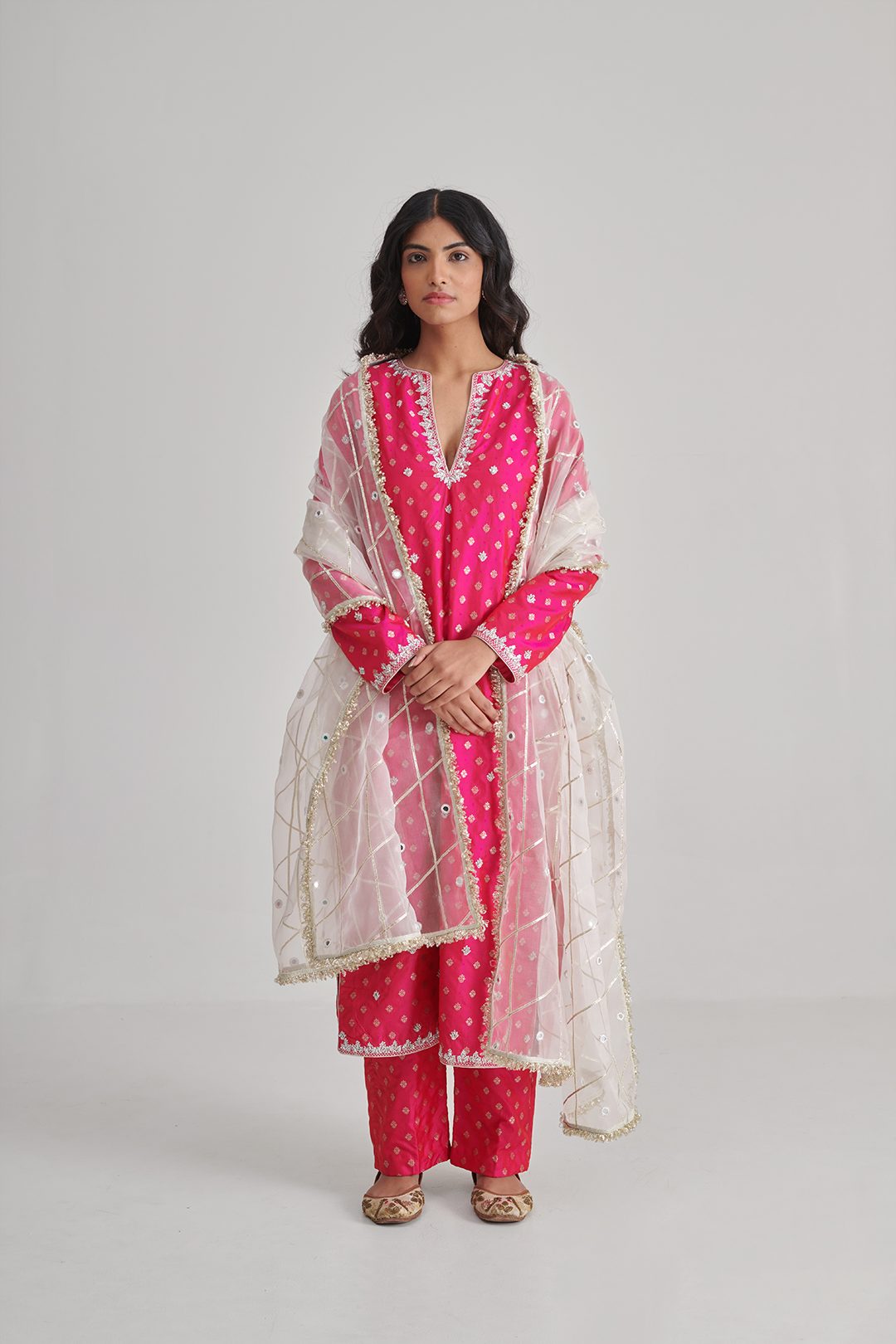
The Adhira Dupatta showcases mirror work at its most refined — delicate pieces set into ivory organza, surrounded by intricate resham thread work. The mirrors catch light without overwhelming, creating subtle sparkle appropriate for elegant occasions.
When to Wear Sequin & Mirror Work
Evening events: Sequins and mirrors are designed to catch artificial light. They come alive under evening lighting — parties, receptions, dinners.
Weddings and festivities: These techniques have always been associated with celebration. Sangeet nights, cocktail parties, Diwali gatherings — all perfect occasions for sparkle.
Daytime occasions (with restraint): Subtle sequin work or minimal mirror accents can work in daylight. The key is restraint — a touch of shimmer rather than disco-ball coverage.
Styling Sequin Pieces
Let the embellishment shine: If your outfit has significant sequin or mirror work, keep everything else minimal. Simple jewellery, understated makeup, neutral accessories. The sparkle is your statement.
Balance with matte textures: A sequinned dupatta pairs beautifully with a matte silk or cotton base. The contrast makes both elements more interesting.
Consider the lighting: What looks perfect in your bedroom mirror might be overwhelming under party lights. If possible, test your outfit in similar lighting to where you'll wear it.


Dupattas like the Naisha with its gold sequin embellishment and scalloped borders, or the Inaayat with scattered sequin-adorned circular motifs, add celebration to simple kurta sets without requiring head-to-toe sparkle.
Sequins at Different Price Points
Not all sequin work is created equal:
Free Download
Get Our Measurement Guide
Step-by-step instructions with photos for perfect custom fit.
Download Free GuideMachine-applied plastic sequins: The most common and affordable. Sequins are stitched by machine in rows. Effective for temporary sparkle but can feel cheap up close and may not survive multiple washes.
Hand-stitched sequins: Each sequin individually placed and secured. More durable, more refined, and the placement can follow design intentions rather than machine constraints.
Mixed media: Sequins combined with zari, resham, or other hand embroidery. This is where sequin work becomes truly artisanal — the sequins are part of a larger handcrafted composition.
When investing in sequined pieces, look for: secure stitching that holds sequins flat, thoughtful placement that enhances the design, and quality base fabric that won't pill around the embellishment.
Caring for Sequin & Mirror Work
Storage:
- Always fold with embellishment facing inward, or roll loosely
- Use muslin or cotton cloth between layers to prevent snagging
- For mirror work, ensure no pressure is placed on the mirrors (they can crack)
Cleaning:
- Dry clean whenever possible
- If hand washing, turn inside out and use cold water with gentle detergent
- Never wring — the pressure can dislodge sequins
- Dry flat, away from direct sunlight
Repairs:
- Save any loose sequins that fall off — a tailor can reattach them
- Address loose threads immediately before they unravel further
- Mirror work repairs are specialized — seek a craftsperson familiar with the technique
Pairing Bases with Sparkle
If you have a sequinned dupatta or cape, here are kurta sets that provide the perfect canvas:


Simple, elegant bases like the Sunheri & Sahana, Haniya & Mithila, or Nazma & Ahana let your sequinned or mirror-work dupatta take centre stage.
Modern Takes on Traditional Sparkle
Contemporary Indian designers are reimagining sequin and mirror work:
- Minimal placement: Instead of all-over coverage, strategic sequins at the neckline, cuffs, or border
- Tone-on-tone: Sequins in the same colour as the base fabric for texture without contrast
- Geometric patterns: Sequins arranged in modern geometric designs rather than traditional motifs
- Mixed with minimal embroidery: A few mirrors as accents within an otherwise understated piece
These modern interpretations make sequin and mirror work appropriate for a wider range of occasions — from evening workwear to upscale casual.
Frequently Asked Questions
Can I wear sequins to a daytime wedding?
Yes, but choose carefully. Subtle mukaish work, minimal mirror accents, or tone-on-tone sequins work for daytime. Avoid all-over disco-level sparkle, which photographs better and feels more appropriate in evening light.
Are sequins appropriate for religious occasions?
Light sequin or mirror work is fine for poojas and temple visits. Avoid very heavy, party-style sparkle — the modesty and reverence of the occasion should guide your choice.
How do I know if sequin work is good quality?
Look at the attachment. Are sequins lying flat? Is the stitching secure? Do the sequins have a consistent size and shape? High-quality work uses better materials and more careful placement than mass-produced pieces.
Will my sequins fall off?
Some sequin loss is normal over time, especially on well-worn pieces. Quality construction minimises this. To reduce loss, handle gently, store properly, and avoid catching sequins on jewellery or bags.
Explore: dupattas · sarees · kurta sets · shop all
Ready to Order Custom?
WhatsApp us at +91 70423 11214 with what you're looking for. We'll guide you through measurements, customizations, and timeline.
Most pieces ready in 4-5 weeks. Bridal in 6-8 weeks.
Made to order in 4–5 weeks
Have an event date? We’ll tell you exactly when to order by.
We take a limited number of orders each month — secure your slot early.
WhatsApp me my order-by date + a shortlistNot sure where to start?
Tell us what you're dressing for and we'll help you choose — fabric, fit, colour, and timeline — over WhatsApp or on a video call.
Your Cart
Pieces from this story
All pieces →Not sure which piece, or need it by a date? Book a video consultation Ask us on WhatsApp


Keep reading
The journal →
Best Mirror Work Ethnic Wear Brands in India 2026: Designers, Kutch Craft & How to Judge Shisha
Where to buy mirror work (shisha) ethnic wear in India: designer labels, Kutch craft collectives and Jaipur ateliers,...
1 October 2026
The Paisley Guide: The Story of the Keri Motif
A guide to the paisley — the keri or ambi motif in Indian textiles. Its mango-and-vine origins, its meaning, and how ...
30 July 2026
The Diwali Gift Guide: Handcrafted Pieces She'll Keep Forever
A Diwali gift guide for the women in your life — hand-embroidered dupattas, statement blouses, festive kurta sets and...
9 July 2026