
Sister of the Bride & Groom: Indian Wedding Outfit Ideas for 2026
At an Indian wedding, the bride's sister occupies one of the most visible — and most scrutinised — positions in the room. You are in nearly every photograph. You are greeting guests alongside your parents, managing last-minute crises backstage, and standing next to the bride during every ritual from the chooda ceremony to the vidaai. The groom's sister has a parallel spotlight — central to the baraat, involved in every welcoming ritual, and often the one doing the aarti and holding the thaal.
Yet unlike the bride, who has a dedicated designer and months of planning, the sister's outfit often becomes an afterthought. You are told to "coordinate" without matching, look festive without outshining, and somehow find five to six distinct outfits for a multi-day celebration — all while helping plan the wedding itself.
This guide breaks down exactly what works for the bride's and groom's sister at every wedding function, with specific colour strategy, silhouette advice, and outfit ideas that solve the real problem: looking like you belong at the centre of this celebration without competing with the person it is actually about.
The Sister's Styling Dilemma: Coordinating Without Matching
The fundamental rule for the bride's or groom's sister is this: you should complement the bride, not echo her. Wearing the same colour family in a different shade works beautifully — if the bride is in deep red, you might wear coral or rust. If she is in pink, you could lean into plum or magenta. The idea is that when you stand side by side in photographs, your outfits create a cohesive visual story without looking like a uniform.
What you want to avoid: wearing an outfit so similar to the bride's that guests do a double-take, or swinging so far in the opposite direction that you look like you belong at a different event entirely. A simple conversation with the bride about her colour palette — not just the lehenga colour, but the overall tone she is going for — saves weeks of guesswork.
The groom's sister has slightly more freedom. You are on the opposite side of the mandap, so matching the groom's family palette (which is usually coordinated by the mothers) is more relevant than worrying about the bride's exact shade. Bold jewel tones — emerald, royal purple, deep teal — tend to work exceptionally well here, creating a rich contrast in photographs.
For a deeper look at how family members can coordinate, read our mother of the bride and groom outfit guide — many of the same colour principles apply.
Mehendi: Playful, Bright, and Movement-Friendly
The Mehendi is the most relaxed function of the wedding — and for the sister, it is the one event where you can truly have fun with your outfit. Held during the day, usually outdoors, the Mehendi is dominated by yellows, greens, and bright pastels. You will be sitting cross-legged while your henna dries, up on your feet dancing minutes later, and posing for dozens of candid photographs in between.
This is where a sharara set earns its place. The wide-legged silhouette lets you sit comfortably on the floor, looks effortlessly graceful when you stand, and the flare catches movement beautifully during dance sequences. For the Mehendi, choose lightweight fabrics — silk or organza — in a colour that reads cheerful without veering into bridal territory.
The MASTANI, LEYLA & NALINI is a strong Mehendi pick if your wedding leans contemporary. This emerald cheniya bandhani jacquard silk three-piece set features a one-shoulder cape, a strap bustier, and a sharara. The hand-embroidered floral motifs and sequin work on the cape border add festive shimmer, while the emerald silk reads fresh and vibrant under daylight. The three-piece structure also gives you styling flexibility — wear the cape for the ceremony, remove it for dancing.

For more Mehendi-specific ideas, see our sangeet and Mehendi outfit guide.
Sangeet Night: The Sister's Star Moment
The sangeet is arguably the function where the bride's sister gets the most attention. You are choreographing performances, MC-ing the evening, and almost certainly dancing a solo or group number dedicated to the bride. Your outfit needs to do two things simultaneously: look stunning under stage lights and camera flashes, and allow unrestricted movement for an hour of dancing.
Purple and gold is one of the most photogenic colour combinations for a sangeet — it catches light without blinding, photographs well against both dark and lit backdrops, and carries a regal weight that suits the evening's celebratory energy.
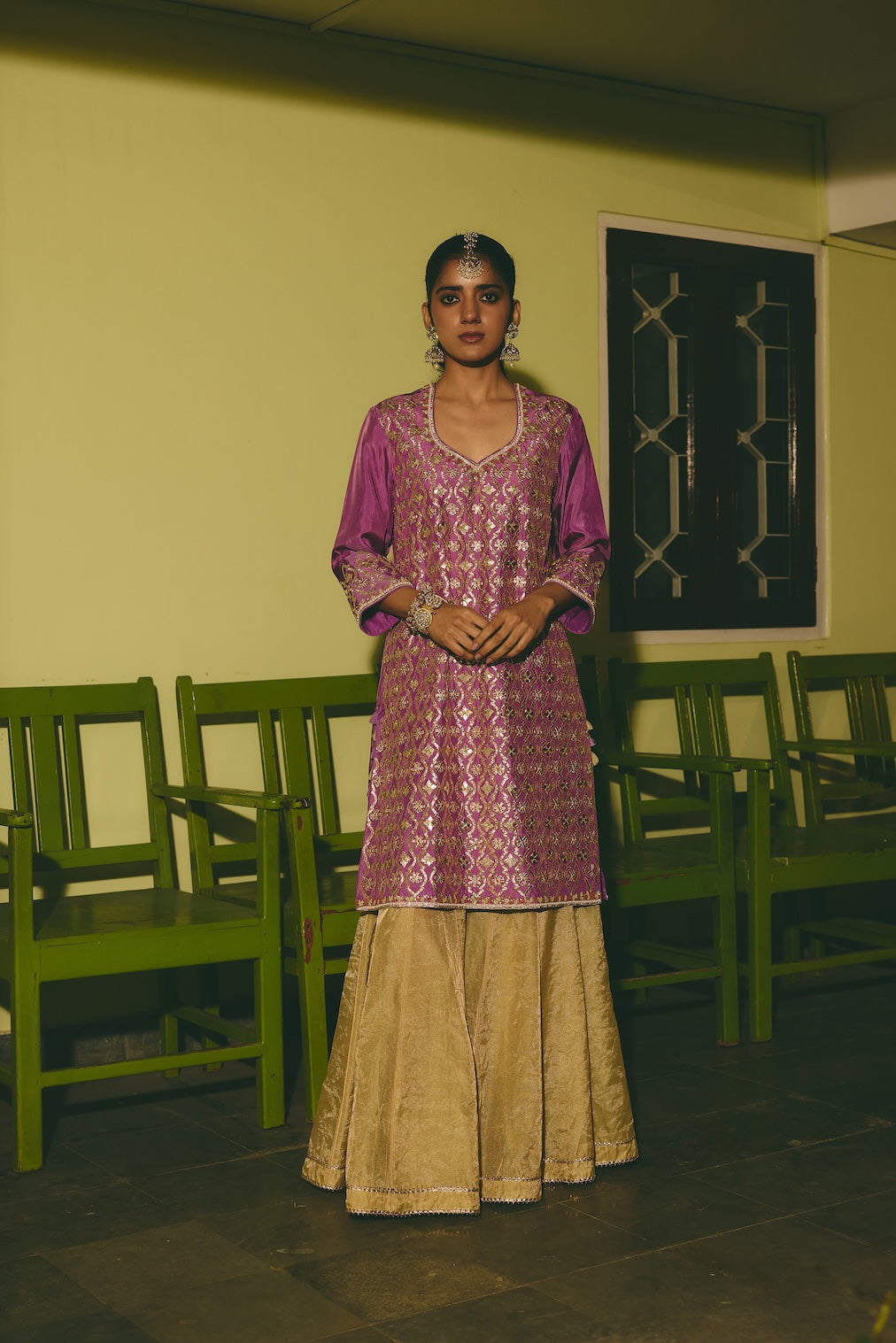
The ZEHAN & AABHA is the kind of set that stops conversations at a sangeet. The Zehan kurta in majestic purple silk features a dense landscape of hand-done Gota applique, with each metallic ribbon meticulously folded and stitched into precise rhombus and floral shapes, layered with sequins for shimmer, resham thread work for depth, and delicate moti (pearl work) along the borders. The Aabha sharara in contrasting gold tissue fabric creates a striking two-tone effect that looks spectacular on a dance floor.

The sharara silhouette is ideal for sangeet performances — the wide flare gives you full freedom of movement while creating a dramatic visual every time you spin or step. And the gold tissue catches stage lighting in a way that few other fabrics can match.
Wedding Day: Elevated but Not Bridal
The wedding ceremony is where the "coordinate without matching" principle matters most. You will be standing next to the bride for extended periods — during the pheras, at the mandap, through the jaimala. Every wide-angle photograph will include you. Your outfit needs to look intentionally paired with the bride's without looking like a bridesmaid costume.
For the bride's sister: The safest approach is to stay within the bride's colour family but shift one or two shades. If the bride is in classic red, sindoori orange is a stunning adjacent choice — it reads festive and traditional without creating a "who is the bride?" moment in photographs.
The RAANISA & MAHIRA lehenga in vibrant sindoori orange is crafted in woven booti silk, finished with delicate gota, marodi, bead, and thread work along the hem. The matching Raanisa blouse features traditional hand embroidery on the neckline, sleeves, and waist. A pleated lining under the lehenga adds volume and movement — making it ceremony-worthy without tipping into bridal territory. This is the kind of lehenga that photographs beautifully next to a red bride.

For the groom's sister: You have more colour freedom on the wedding day. Rich magenta, deep blue, or emerald green all read appropriately formal without any risk of matching the bride. The ANAHITA & AMIRA kurta in rich magenta silk, hand-embroidered with sequins and beads around the neckline, cuffs, and back collar, carries floral motifs in vibrant hues of pink, blue, and ivory. Paired with the Amira pant in burnt orange silk with matching embroidered hem, this set is celebratory and distinct — you will look festive in every photograph without any question about who the bride is.

For more on styling lehengas with the right dupatta and jewellery, read our lehenga styling tips guide.
Reception: Evening Glamour, Your Rules
The reception is where you finally get to dress on your own terms. The formal rituals are over, the coordination conversations are done, and the evening belongs to cocktails, dinner, and celebration. This is the function where the sister can go bold — a dramatic silhouette, a statement fabric, or a colour that is entirely her own.
Black at a reception is one of the most powerful styling moves a sister can make. It creates instant contrast in a room full of colour, photographs strikingly against any decor, and carries a sophistication that reads "I know exactly what I am doing."
The SAADGI, ARZOO & NAAZ is reception-ready from head to hem. The Saadgi cape in sheer black organza features delicate scalloped edges, hand-embroidered with sequins and beadwork that catches every flicker of evening light. It layers over the Naaz blouse in gathered georgette with a halter neckline, paired with the voluminous Arzoo sharara. The all-black silhouette carries quiet confidence — timeless, effortless, and full of grace.

If an all-black outfit feels too bold for your family context, a simple swap works: wear a richly embroidered kurta set in a jewel tone and layer a statement dupatta over it. The SHAYRA dupatta in lush green organza silk — with borders hand-embroidered in gota, marodi, sequins, and thread work in an old-rose and gold palette — transforms any neutral outfit into a reception-worthy look.

Explore the full dupatta collection for more layering options.
Colour Strategy: A Function-by-Function Palette
Planning your colours across all wedding functions in advance prevents last-minute panic and ensures you never accidentally clash with the bride. Here is a practical colour map:
Free Download
Get Our Measurement Guide
Step-by-step instructions with photos for perfect custom fit.
Download Free GuideMehendi: Greens, yellows, corals, turquoise. Fresh, daytime-appropriate colours that photograph well outdoors.
Sangeet: Purple and gold, deep teal, electric blue, wine. Evening colours with enough depth to hold up under stage lighting.
Haldi: Yellow and ivory are traditional. Keep it simple — the turmeric will stain anything expensive.
Wedding Day: Adjacent to the bride's colour (consult her first). Sindoori orange next to red, plum next to pink, champagne next to ivory. Avoid wearing the bride's exact shade.
Reception: Black, champagne gold, emerald, deep rose. Your choice — this is where you dress for yourself.
Colours to avoid across all functions: The bride's exact lehenga shade (ask her), pure white on its own (reads too stark in Indian wedding photos), and neon shades (they dominate group photos and distort under flash photography).
Younger Sister vs Older Sister: Styling Differences
The bride's younger sister and older sister occupy different roles at a wedding, and the styling should reflect that.
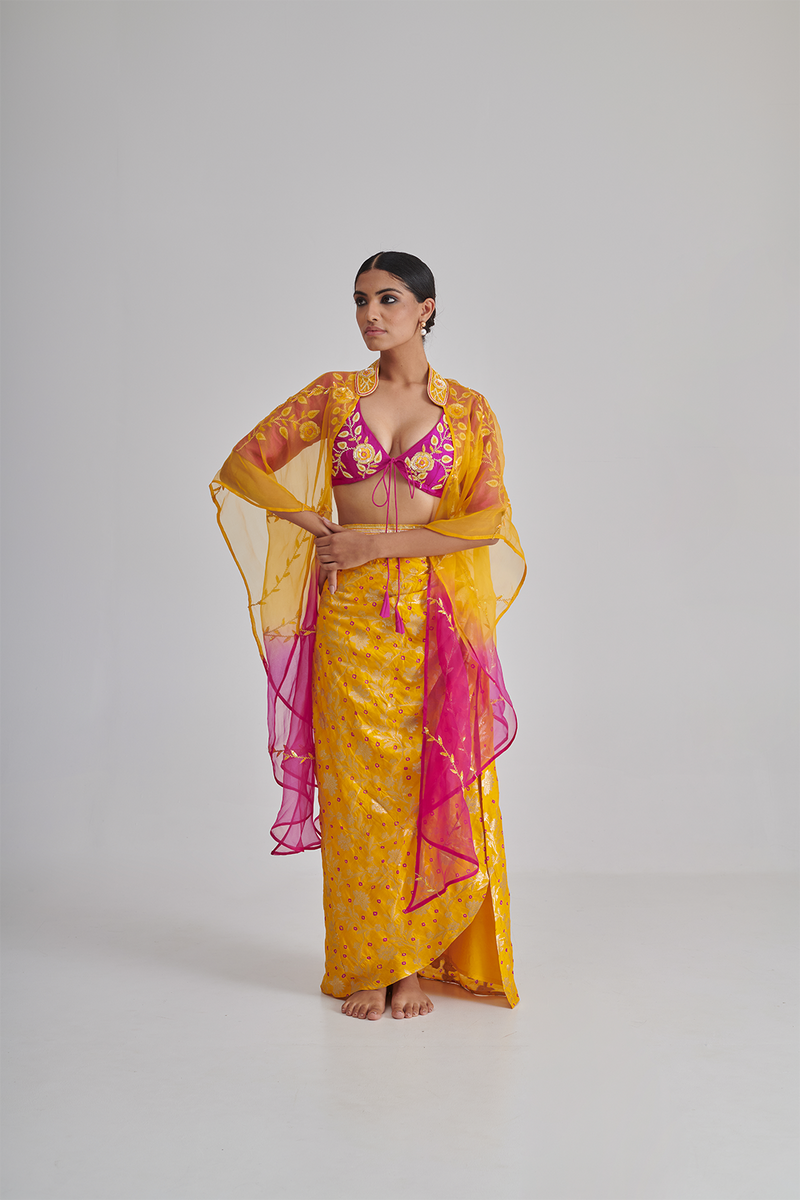
Younger sister: You have permission to be playful. Contemporary silhouettes — crop top and sharara, cape sets, one-shoulder blouses — work well. Bolder colours and statement pieces suit the energy of someone who is genuinely having fun at the celebration. The MASTANI, LEYLA & NALINI three-piece set with its one-shoulder cape is a perfect example — fashion-forward without being inappropriate.
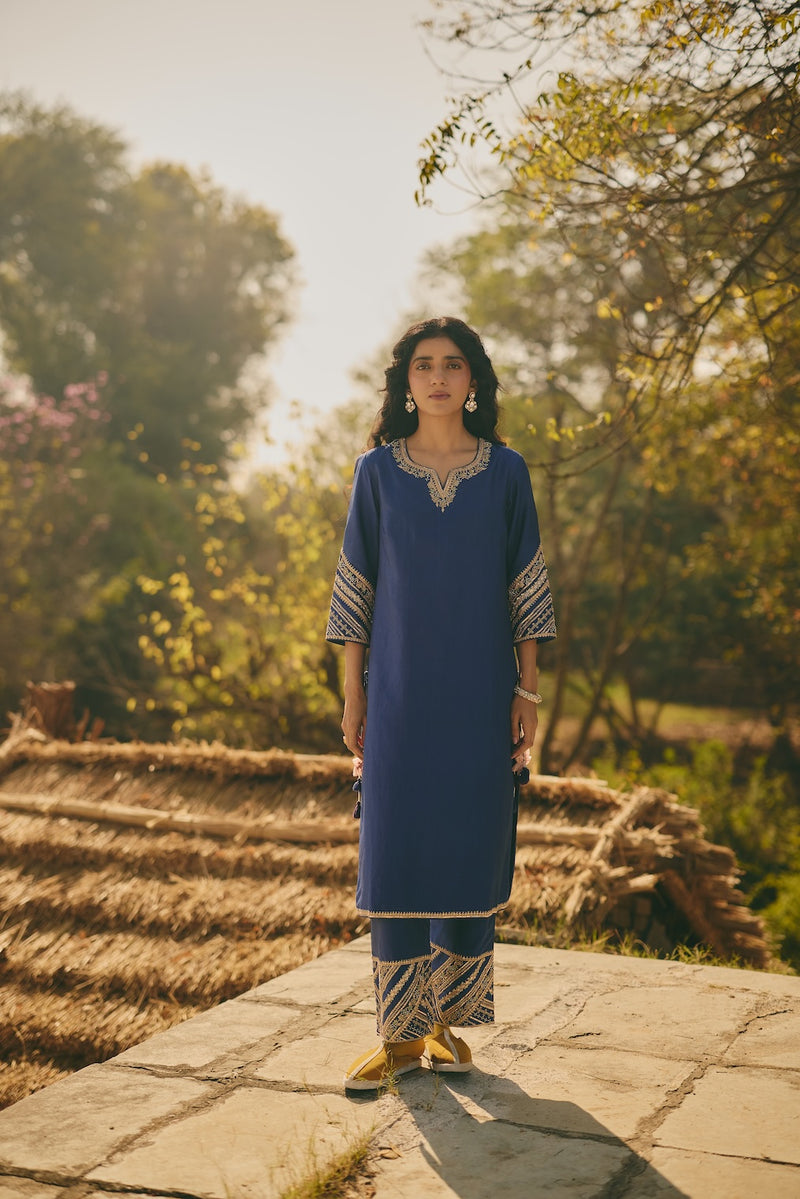
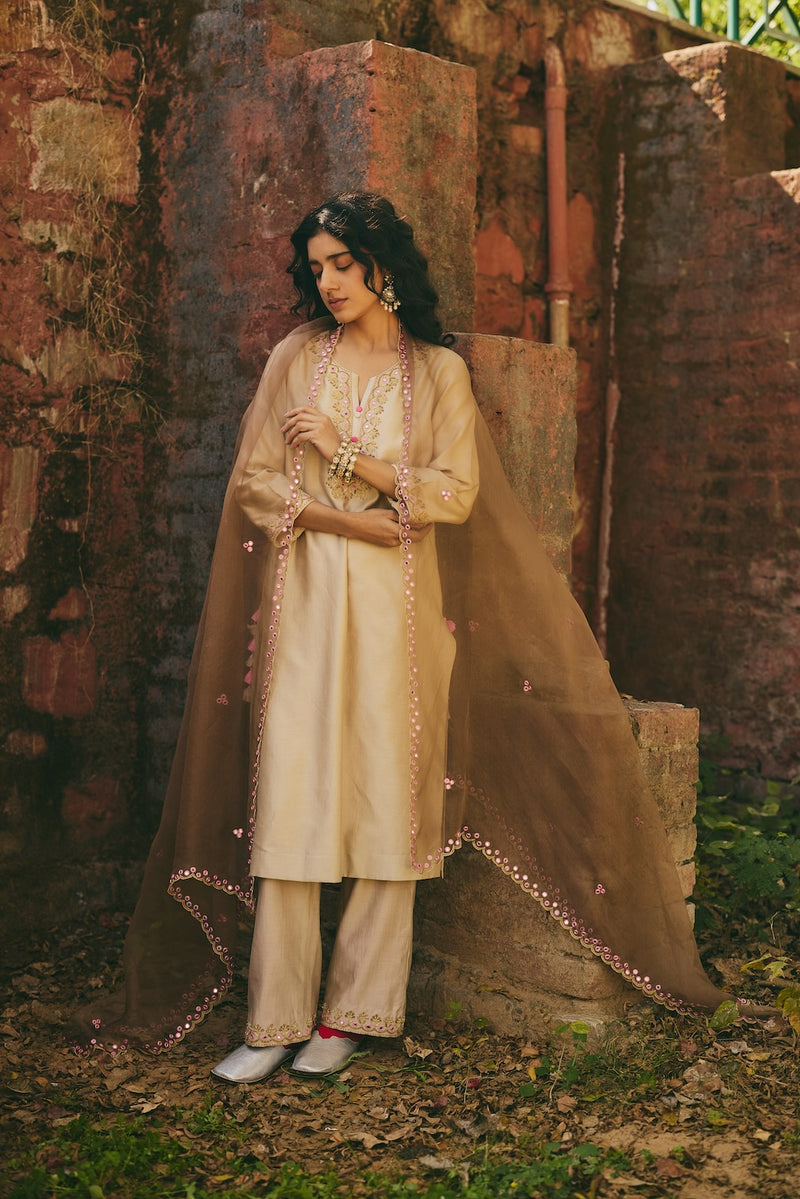
Older sister: You often take on a semi-maternal role at the wedding — greeting guests, managing logistics, standing in family photographs with an air of composure. Slightly more structured silhouettes work here. A refined kurta set like the SHAILEE & AMIRA — a silk kurta with intricate hand embroidery using marodi, sequins, and thread work, with architectural triangular motifs and floral clusters in soft pinks, gold, and greens — carries that balance of festive and poised. Paired with muted gold Amira pants with matching embroidery at the hem, it reads composed and celebratory.

That said, these are guidelines, not rules. If you are the older sister and want to wear the cape set, wear the cape set. The point is that your outfit should feel right for the role you are playing at the wedding — whether that is the life of the party or the calm, elegant presence holding everything together.
The Groom's Sister: Special Considerations
The groom's sister has a distinct role at an Indian wedding. You are central to the baraat, you perform aarti rituals, and in many traditions you are involved in welcoming the bride into the family. This role calls for a specific kind of outfit: celebratory and formal, but clearly positioned as a family member rather than a bridal figure.
Key considerations for the groom's sister:
- Avoid the bride's colour: Since you may not be closely coordinating with the bride's family, check what the bride is wearing for each function so you do not accidentally match.
- Lean into jewel tones: Deep purple, emerald, royal blue, and burgundy work universally well. They read festive, photograph beautifully, and never risk looking bridal.
- Plan for rituals: You may be bending for aarti or standing for extended periods during the baraat. Choose silhouettes that allow movement and a dupatta that stays draped without constant adjustment.
- Coordinate with your mother: The groom's mother and sister often appear in photographs together — a quick conversation about colour families ensures you complement each other without clashing.
Practical Tips for the Sister's Wedding Wardrobe
Order early. Handcrafted, made-to-order pieces require 4-5 weeks of production time. With five or more functions to dress for, start planning at least two to three months before the wedding. This gives you time for production, shipping, and any necessary adjustments.
Rewear strategically. You do not need a brand-new outfit for every single function. A versatile kurta set styled with different dupattas and jewellery can serve double duty at smaller functions like the Mehendi and Haldi. Save your statement pieces for the sangeet, wedding day, and reception.
Invest in dupattas. A single handcrafted dupatta can transform a simple outfit into something wedding-worthy. Two or three beautiful dupattas — in different colour families — give you far more versatility than two or three complete outfits. Browse the dupatta collection for options.
Comfort is non-negotiable. As the sister, you are on your feet for 12-14 hours. You are dancing at the sangeet, managing logistics at the ceremony, and posing for photos at the reception. Lightweight silk and organza hold up through long days far better than heavy velvet or stiff brocade.
Footwear strategy: Embellished flats or block heels for daytime functions, and keep a comfortable backup pair for the sangeet. Stilettos look stunning in posed photos but are impractical for the baraat and outdoor ceremonies.
Frequently Asked Questions
Can the bride's sister wear red to the wedding?
In most North Indian weddings, bright red is traditionally reserved for the bride. Shades adjacent to red — sindoori orange, rust, wine, deep coral — work beautifully for the sister and create a complementary look in photographs. Always check with the bride about her colour palette before finalising.
Should the bride's sister match the bridesmaids?
Not necessarily. If the bride has a coordinated bridesmaid group (increasingly common at Indian weddings), the sister can either match the group or stand slightly apart as a distinct family member. Many brides now ask their sister to wear a complementary shade rather than the exact bridesmaid colour — creating visual distinction while staying cohesive.
What should the groom's sister wear to the baraat?
Something celebratory, comfortable for dancing, and sturdy enough for an outdoor procession. A sharara set or a lehenga in a rich jewel tone works perfectly. Avoid anything too delicate or heavily draped — the baraat involves a lot of movement and you want to dance without worrying about your outfit.
How many outfits does the bride's sister need?
For a typical multi-day Indian wedding: a minimum of three distinct looks (sangeet, wedding day, reception) and two lighter outfits for Mehendi and Haldi. With strategic dupatta swaps and jewellery changes, you can comfortably cover five to six functions with four outfits.
Is black appropriate for a wedding function?
Black works beautifully at a reception or cocktail evening — it reads sophisticated and fashion-forward. For the wedding ceremony itself and traditional rituals, most families prefer festive colours. Use your judgement based on your family's sensibilities.
Should I coordinate my outfit with the bride?
Yes — a brief conversation about her colour palette for each function is essential. You are not matching her; you are ensuring your outfit complements hers in photographs. Ask about her lehenga colour, the general family palette for the ceremony, and whether she has a preference for what you wear at the sangeet (especially if you are performing).
Ready to Order Custom?
WhatsApp us at +91 70423 11214 with what you're looking for. We'll guide you through measurements, customizations, and timeline.
Most pieces ready in 4-5 weeks. Bridal in 6-8 weeks.
Made to order in 4–5 weeks
Have an event date? We’ll tell you exactly when to order by.
We take a limited number of orders each month — secure your slot early.
Not sure where to start?
Tell us what you're dressing for and we'll help you choose — fabric, fit, colour, and timeline — over WhatsApp.
Your Cart
Pieces from this story
All pieces →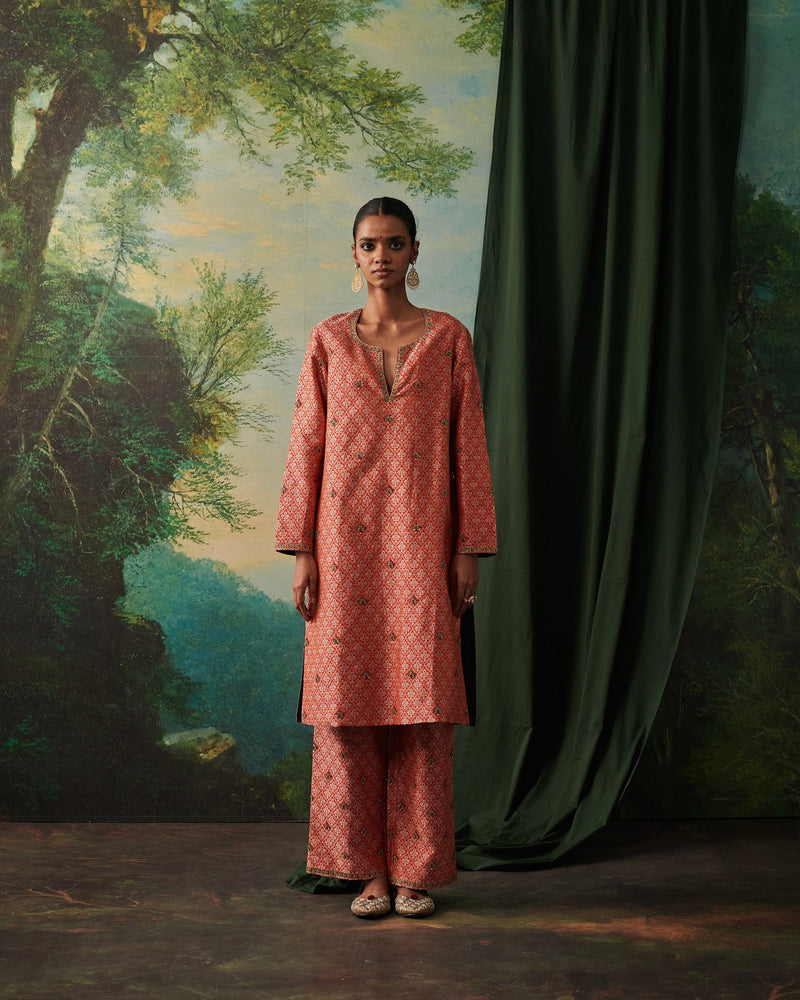
Keep reading
The journal →
Dholki Night Outfit Ideas: What to Wear to the Ladies' Dhol
Handmade by karigars Made to your measurements Fit guarantee Ships worldwide As seen in GraziaElle Graduat...
27 July 2026
Mayra & Bhaat Outfit Ideas: Dressing for the Maternal Gift Ceremony
Handmade by karigars Made to your measurements Fit guarantee Ships worldwide As seen in GraziaElle Graduat...
27 July 2026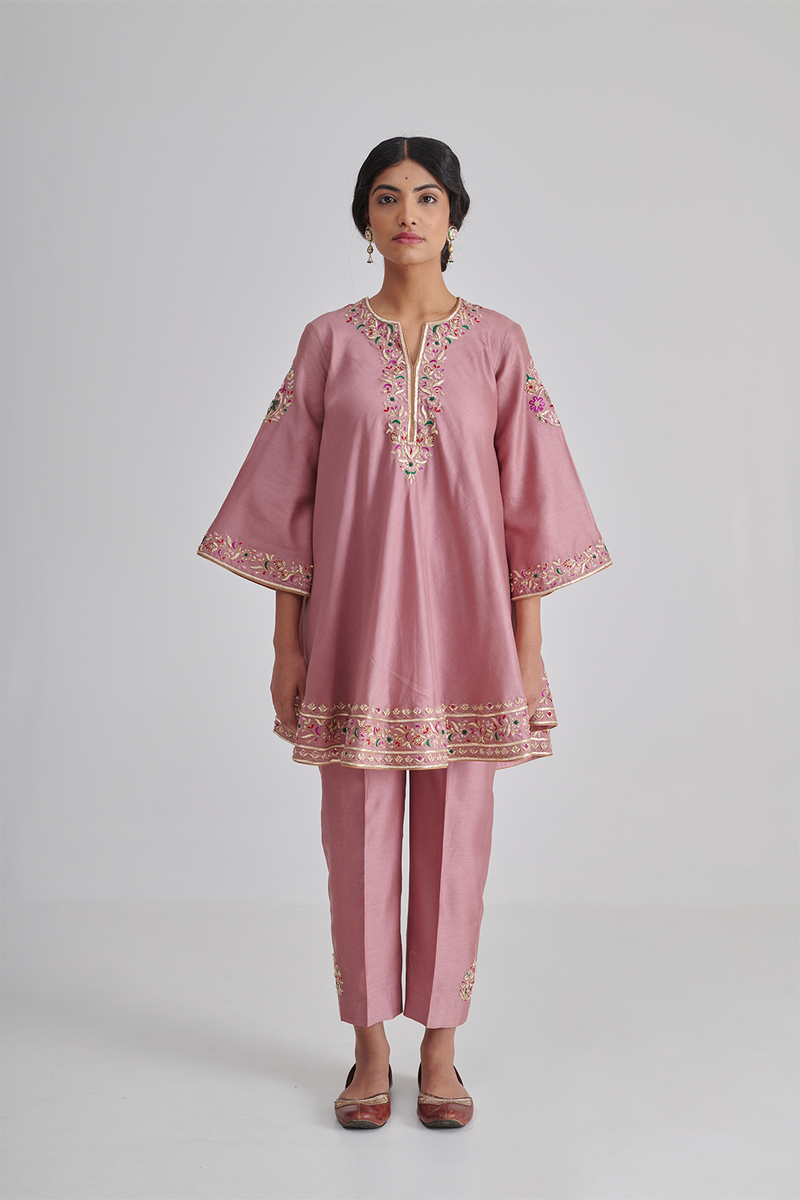
Pag Phera Outfit Ideas: What to Wear for the Bride's Homecoming
Handmade by karigars Made to your measurements Fit guarantee Ships worldwide As seen in GraziaElle Graduat...
27 July 2026