
Teej Outfit Ideas 2026: What to Wear for Hariyali Teej and Kajari Teej
Teej is one of the most beautiful festivals in the North Indian calendar — a celebration of the monsoon, of Goddess Parvati, and of the bond between married couples. Whether you are celebrating Hariyali Teej (Shravana), Kajari Teej, or Hartalika Teej, the festival calls for traditional elegance, vibrant colours, and the full glory of Indian festive dressing.
This guide covers Teej outfit ideas for 2026, from traditional sarees to contemporary interpretations, with specific styling guidance for each type of Teej celebration.
Teej Colours and Their Significance
Colour is central to Teej — each shade carries meaning:
Green (Hariyali) — The primary colour of Teej, representing the monsoon, fertility, new beginnings, and Goddess Parvati. Green is worn especially for Hariyali Teej (the "green Teej").
Red — The colour of married life, sindoor, and saubhagya (marital bliss). Red is traditional for all Teej celebrations and essential for married women.
Yellow — Associated with turmeric, prosperity, and happiness. Yellow is especially popular for Hariyali Teej morning pujas.
Pink and Magenta — Festive alternatives that pair beautifully with Teej jewellery. Traditional leheriya often features these shades.
Orange — Auspicious and vibrant, perfect for the monsoon festival atmosphere.
Traditional Teej Sarees
The saree remains the most traditional choice for Teej — draped with all the ornaments and rituals that make this festival special.
Leheriya and Bandhani Sarees
Leheriya (wave pattern tie-dye) and bandhani are quintessentially Rajasthani and deeply connected to Teej tradition. These hand-tied techniques in green, yellow, and pink are the authentic Teej aesthetic.
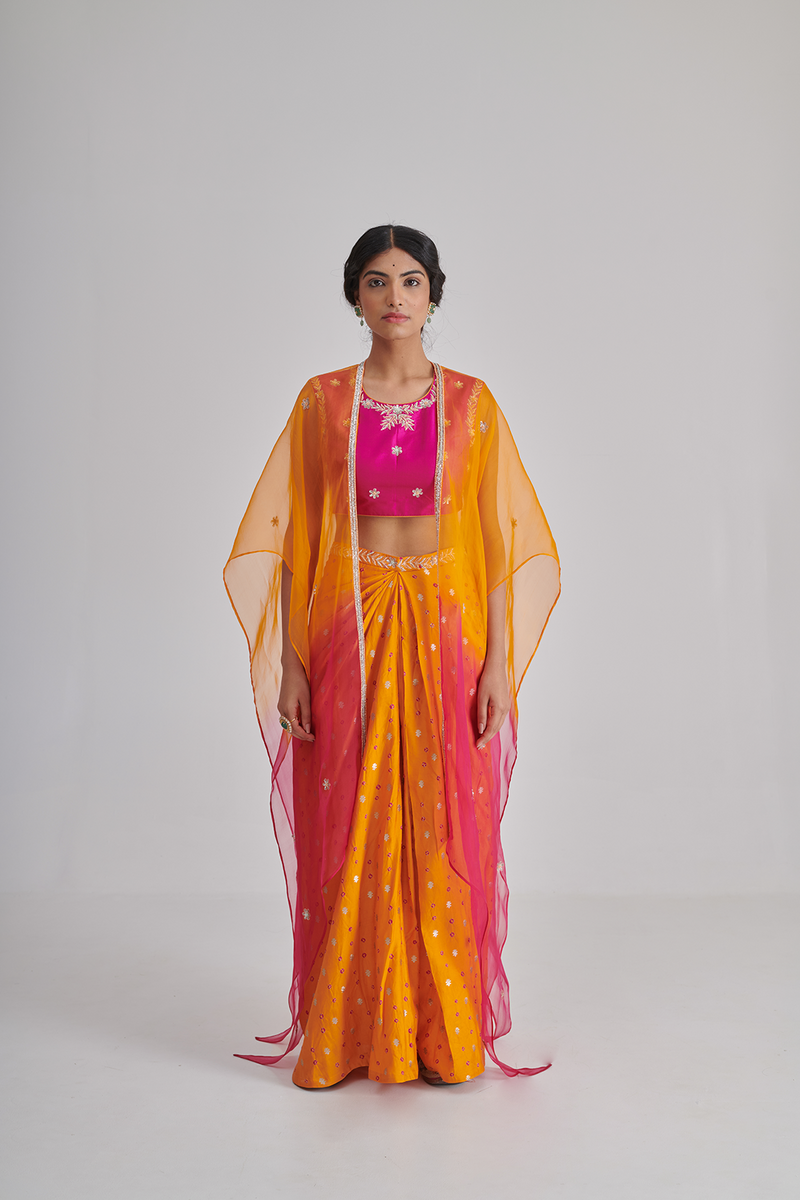
The RUMI, AKIRA & VIHANA ensemble features ombre bandhani — the traditional tie-dye technique in festive colours that captures the Teej spirit perfectly.

Silk and Brocade Sarees
For a more formal Teej celebration, Banarasi silk or brocade sarees in green or red offer timeless elegance.
Embroidered Sarees
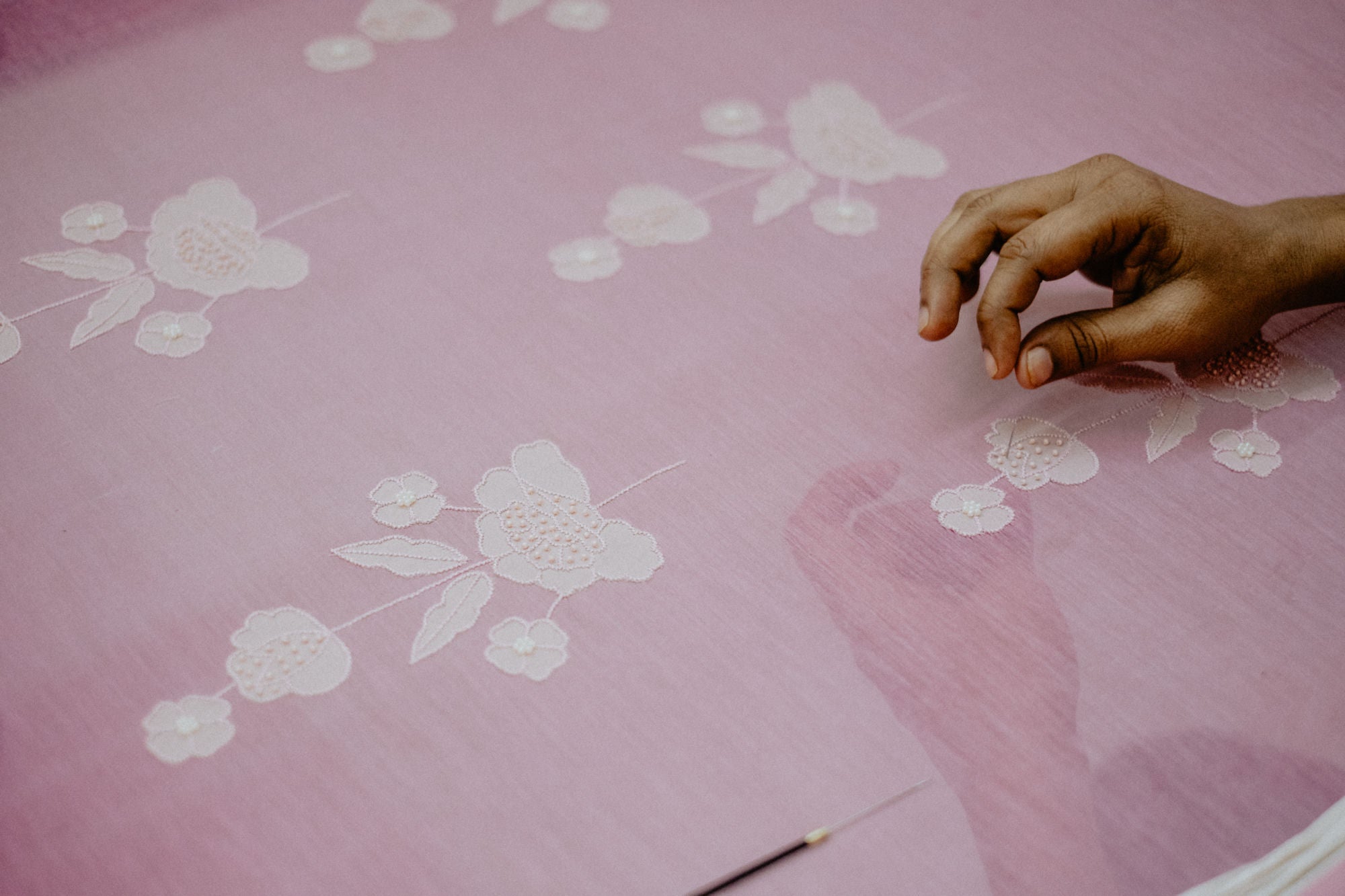
Hand-embroidered sarees with gota patti, zardozi, or mirror work add the festive sparkle Teej deserves.
The ZOHRA saree with mirror work and zardozi embroidery is perfect for married women celebrating Teej — the mirror work is traditionally auspicious, and the craftsmanship honours the occasion.

Teej Lehengas
For those who prefer lehengas over sarees, Teej is a beautiful occasion to wear traditional silhouettes in festive colours.
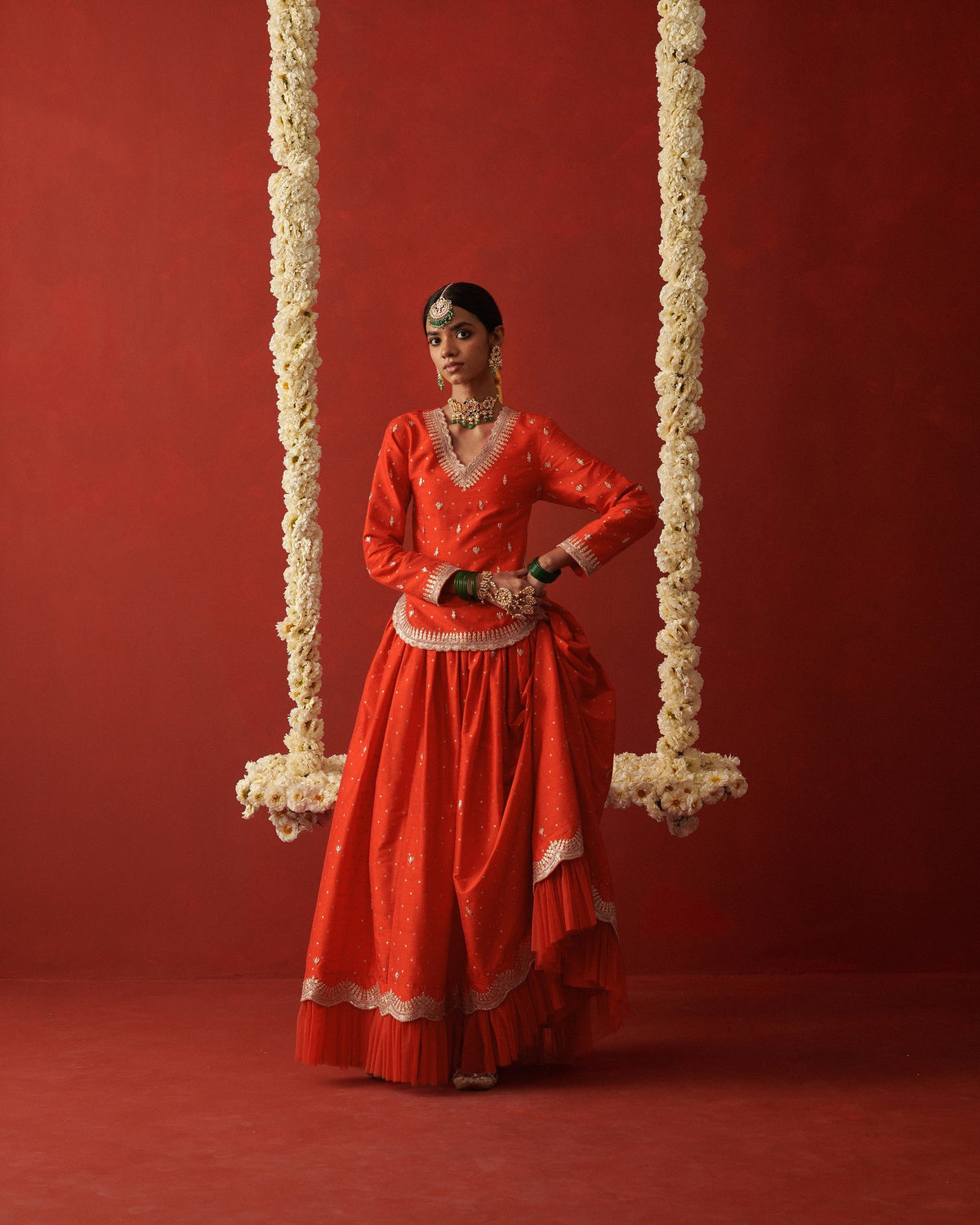
The RAANISA & MAHIRA lehenga in vibrant sindoori orange with gota, marodi, bead, and thread work embodies Teej energy — the colour is perfectly festive, and the traditional embroidery techniques connect to Rajasthani craft heritage.

For green options (Hariyali Teej), look for emerald, mint, or sage lehengas with gold embroidery — the combination is quintessentially Teej.
Kurta Sets for Teej
For more casual Teej celebrations or when comfort matters, an elegant kurta set in festive colours works beautifully.
The NAVELI & RUHI kurta set in dusty rose chanderi with hand embroidery offers festive elegance that is practical for a full day of celebration.

For Hariyali Teej specifically, look for kurta sets in shades of green — from mint to emerald — to honour the festival's name.
Outfit Ideas by Teej Type
Hariyali Teej
The "green Teej" specifically calls for green outfits. Wear your most beautiful green saree, lehenga, or kurta. Married women traditionally wear new green clothes, mehndi, and full shringar (adornment).
Best colours: All shades of green — emerald, mint, bottle green, sage, parrot green
Kajari Teej
Celebrated with songs and swings, Kajari Teej has a playful energy. Leheriya and bandhani in pink, yellow, and green are traditional. Red is also appropriate as this Teej celebrates marital bonds.
Best colours: Green, red, pink, yellow, and traditional leheriya combinations
Hartalika Teej
Dedicated to Goddess Parvati, this Teej involves fasting and puja. Outfits should be elegant and traditional — red and green sarees are most appropriate.
Best colours: Red (for married women) and green (for Parvati)
Traditional Teej Styling Elements
Teej is about more than just the outfit — the complete look includes traditional elements:
Free Download
Get Our Measurement Guide
Step-by-step instructions with photos for perfect custom fit.
Download Free GuideMehndi
Teej mehndi is essential. Apply it a day before the festival for the deepest colour. Traditional Teej mehndi often includes the husband's name or initials.
Solah Shringar
Married women traditionally complete the 16 adornments:
- Bindi — Red is most traditional for Teej
- Sindoor — In the parting of hair
- Mangalsutra — Essential for married women
- Toe rings (bichiya)
- Bangles — Green and red glass bangles are traditional
- Anklets (payal)
- Earrings — Jhumkas or traditional chandbalis
- Nose ring (nath)
- Maang tikka
- Hair flowers — Gajra or hair ornaments
Teej Jewellery
Traditional Rajasthani jewellery is most appropriate — borla (maang tikka), hansli (choker), and lac bangles in green and red. Gold and polki work beautifully with Teej colours.
Teej Outfit Ideas by Age
Young Women and New Brides
Go all out! Heavy lehengas, full shringar, elaborate mehndi. Teej is especially significant for newly married women celebrating their first festivals.
Middle-Aged Women
Elegant silk sarees, sophisticated kurta sets, or comfortable lehengas. Focus on quality fabrics and beautiful embroidery over heavy embellishment.
Older Women
Traditional silk sarees in dark green or maroon, comfortable cotton with good embroidery. Emphasis on grace and tradition over trendiness.
Teej in Different Regions
Rajasthan
The heartland of Teej. Leheriya and bandhani are essential. Heavy jewellery, borla, and full traditional dress. Women often return to their parental home (peehar) for celebrations.
Uttar Pradesh and Bihar
Strong emphasis on Kajari Teej with folk songs. Traditional sarees in red and green, less focus on the specific Rajasthani patterns.
Punjab and Haryana
Green is paramount for Hariyali Teej. Phulkari dupattas, Patiala suits, and traditional Punjabi jewellery add regional flavour.
Urban Celebrations
Contemporary interpretations are welcome — fusion outfits, modern silhouettes in traditional colours, or Indo-Western pieces that honour the festival spirit.
Teej Shopping Checklist
- Green saree or outfit for Hariyali Teej
- Red outfit option for Kajari/Hartalika Teej
- Green and red glass bangles (lac bangles if available)
- Traditional jewellery — jhumkas, maang tikka, nose ring
- Mehndi booking or mehndi cones for home application
- Hair accessories — gajra, flowers, or traditional ornaments
- Red bindi and sindoor
Frequently Asked Questions
What colour should I wear for Teej?
Green is most traditional, especially for Hariyali Teej. Red is essential for married women. Yellow, pink, and orange are also appropriate. Avoid black, white, and neutral colours.
Can unmarried girls wear red for Teej?
Yes, unmarried girls can wear any festive colour including red. The specific associations with sindoor and mangalsutra are for married women, but the colour itself is fine for everyone.
Is lehenga appropriate for Teej?
Yes, lehengas are perfectly appropriate. In fact, many young women prefer lehengas over sarees for the festive look without the draping challenge.
What should I wear if I cannot wear green?
Red, pink, yellow, and orange are all appropriate alternatives. You can also wear green accessories (bangles, dupatta, jewellery) with other coloured outfits.
Is Teej only for married women?
Hartalika Teej is traditionally observed by unmarried girls praying for a good husband. Hariyali and Kajari Teej are celebrated by everyone, though the fasting elements are typically for married women.
Find your perfect Teej outfit at Shop All.
Ready to Order Custom?
WhatsApp us at +91 70423 11214 with what you're looking for. We'll guide you through measurements, customizations, and timeline.
Most pieces ready in 4-5 weeks. Bridal in 6-8 weeks.
Made to order in 4–5 weeks
Have an event date? We’ll tell you exactly when to order by.
We take a limited number of orders each month — secure your slot early.
WhatsApp me my order-by date + a shortlistNot sure where to start?
Tell us what you're dressing for and we'll help you choose — fabric, fit, colour, and timeline — over WhatsApp or on a video call.
Your Cart
Pieces from this story
All pieces →Not sure which piece, or need it by a date? Book a video consultation Ask us on WhatsApp


Keep reading
The journal →
Kids' Ethnic Wear Under ₹20,000: 18 Hand-Embroidered Sets by Price and Occasion
18 hand-embroidered kids' kurta sets, a sharara and a lehenga from ₹12,500 to ₹19,500, by price band and occasion. Si...
7 October 2026
The Outfit Trial Checklist: How to Run a Fitting for a Lehenga, Blouse, Sharara or Anarkali
How to run a trial of a made-to-measure lehenga, blouse, sharara or anarkali: when to schedule it, what to wear and b...
7 October 2026
Wedding Guest Outfits Under ₹50,000: Lehengas, Sarees, Shararas & Anarkalis by Function
The best wedding guest outfits under ₹50,000: lehengas, sarees, shararas, anarkalis and kurta sets by budget and by f...
7 October 2026