
Zardozi Embroidery: Complete Guide to India's Royal Embroidery Art
The word zardozi comes from two Persian words — zar meaning gold and dozi meaning embroidery. Gold embroidery. It is perhaps the most aptly named craft in India's textile heritage, because zardozi is, at its heart, the art of stitching with metal. Heavy metallic threads, coiled bullion wire, and gleaming embellishments are worked onto fabric using a needle and a wooden frame, creating surfaces so richly textured they resemble sculpted relief more than embroidery.
This is the embroidery of emperors. For over five centuries, zardozi has adorned the garments of Mughal royalty, the canopies of thrones, and the trousseaux of brides. At Rashika Mittal, our karigars in Jaipur continue this tradition — applying zardozi embroidery entirely by hand, one metallic thread at a time. Here is a complete guide to understanding this extraordinary craft.
What Is Zardozi Embroidery?
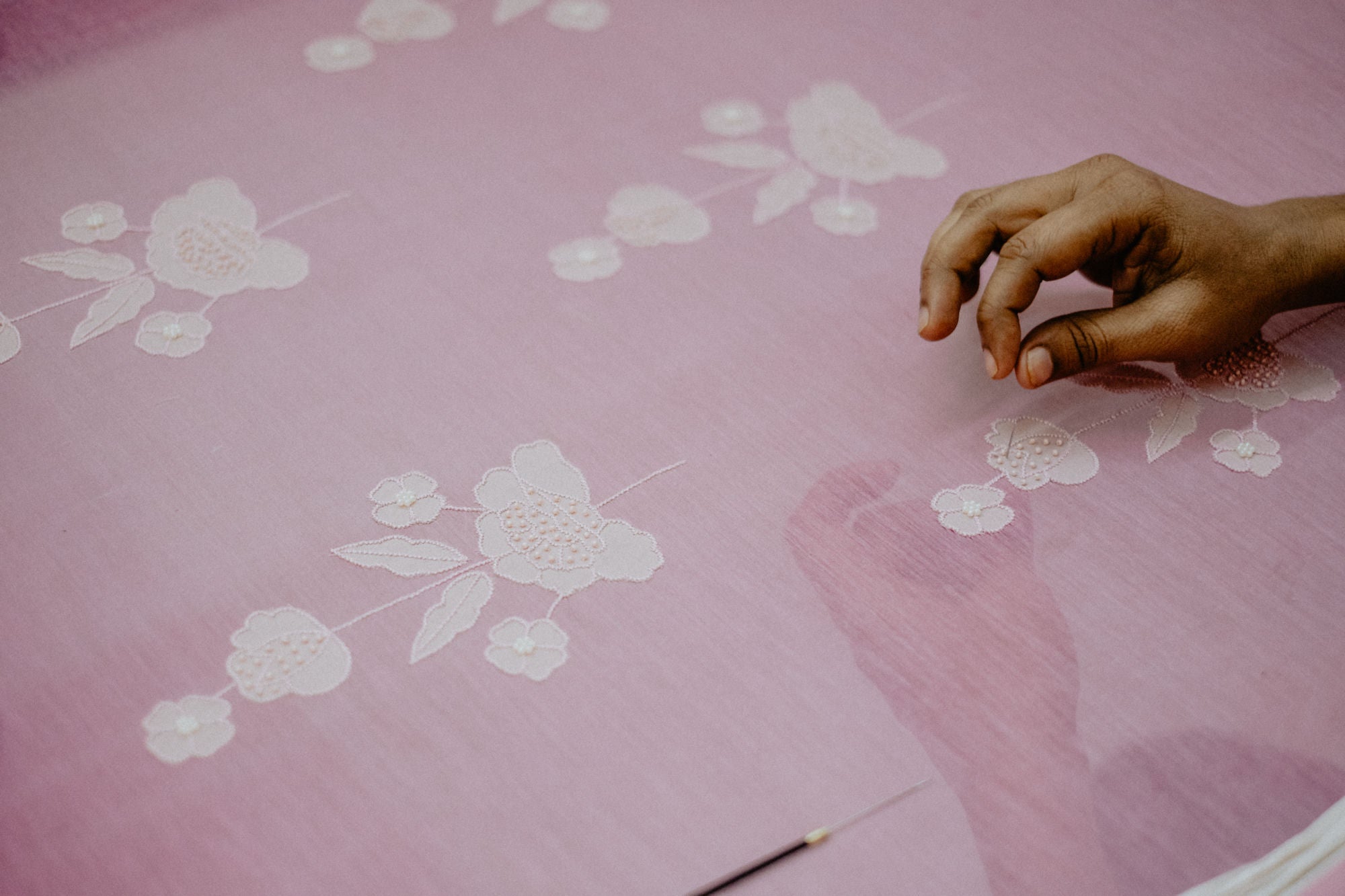
Zardozi is a form of heavy hand embroidery that uses metallic threads, bullion wire, sequins, beads, and sometimes semi-precious stones to create raised, three-dimensional patterns on fabric. The embroidery is worked on a wooden frame called an adda, with the fabric stretched taut while karigars sit around it and stitch the metallic elements in place using a hooked needle called an ari.
What sets zardozi apart from lighter metallic techniques is its weight and dimensionality. Unlike flat embroidery that lies flush with the fabric, zardozi work is built up — layers of metallic thread are coiled, stacked, and stitched to create patterns that physically rise from the surface. The effect is bold, sculptural, and unmistakably regal.

The History of Zardozi: From Persia to the Mughal Courts
Zardozi embroidery is believed to have originated in Persia, where it was practised as early as the 3rd century BCE. The craft entered the Indian subcontinent with the Mughal invasion in the 16th century, and it was under Mughal patronage — particularly during the reigns of Akbar and Aurangzeb — that zardozi reached its pinnacle.
In the Mughal courts, zardozi was not limited to clothing. It adorned wall hangings, tent canopies, horse saddles, scabbards, and even elephant howdahs. The finest zardozi was worked with real gold and silver thread — kalabattu — making these pieces extraordinarily valuable. Artisans who practised zardozi held a privileged position in the royal workshop, and the craft was considered among the highest artistic achievements of the court.
After the decline of the Mughal Empire, zardozi lost its royal patronage and nearly disappeared. But artisan communities in Lucknow, Bhopal, and other centres preserved the techniques across generations. Today, zardozi has experienced a revival through India's bridal and couture fashion industry — though the materials have evolved from pure gold thread to more accessible copper and synthetic metallic alternatives.
How Zardozi Embroidery Is Done
Zardozi embroidery begins with a design being traced or block-printed onto the fabric. The fabric is then stretched tightly across a large wooden frame (the adda), and one or more karigars sit around the frame to work the embroidery.
The primary tool is the ari — a hooked needle that is pushed through the fabric from above, catches the metallic thread held beneath, and pulls it up to the surface. This allows the karigar to work from the top side while the thread is fed from below. The key materials and techniques include:
Dabka (Bullion Wire): Fine metallic wire coiled into a spring-like tube. Sections of dabka are cut to length, threaded onto the needle, and stitched down to create lines, borders, and filled areas. Dabka can be smooth (creating clean, gleaming lines) or textured (twisted or kinked for a matte, rustic effect).
Salma: A flattened, coiled wire — like a tiny metallic spring that has been pressed flat. Salma is couched onto the fabric surface to create outlines and flowing patterns. It has a distinctive ridged texture that catches light differently from smooth dabka.
Sitara: Small, flat metallic sequins or stars. These are stitched individually into the design to create points of bright reflective light amidst the textured metallic thread work.
Moti and Stones: Pearls, beads, and semi-precious stones are often incorporated into zardozi designs, stitched onto the fabric using the same ari needle technique. These add colour and contrast to the metallic palette.
A single zardozi motif might combine all of these elements — dabka filling the body of a flower, salma outlining its petals, sitara creating dewdrop accents, and a pearl at the centre. The layering is what gives zardozi its extraordinary depth and richness.


Types of Zardozi Work
The term "zardozi" is often used broadly, but it actually encompasses several distinct sub-types, each with a different weight, technique, and visual effect:
Karchobi Zardozi (Heavy Raised Work): The most traditional and labour-intensive form. Karchobi involves building up layers of cotton padding beneath the metallic embroidery, creating highly raised, almost sculptural motifs. This was the zardozi of Mughal emperors — heavy, opulent, and unmistakable. Karchobi work is still used on bridal lehengas and ceremonial garments where maximum impact is desired.
Zardozi (Flat Metallic Work): The standard form most people recognise — metallic threads, dabka, salma, and sitara worked directly onto the fabric surface without padding. It creates a rich, textured surface that is lighter than karchobi but still substantial. This is the most versatile form of zardozi, suitable for kurtas, shirts, and dupattas.
Kamdani (Lighter Zardozi): A finer, lighter variation where smaller metallic elements — thin wire, tiny sequins — are used to create delicate, less weighty patterns. Kamdani sits between zardozi and mukesh work in terms of weight and visual impact. It is ideal for garments that need metallic embellishment without the heaviness of full zardozi.
Where Zardozi Originates in India
While zardozi is practised across India today, several cities are historically associated with the craft and remain important production centres:
Free Download
Get Our Measurement Guide
Step-by-step instructions with photos for perfect custom fit.
Download Free GuideLucknow: Considered the epicentre of zardozi in India. Lucknow's artisan communities have practised zardozi for centuries, often alongside the city's other famous embroidery traditions — chikankari and mukesh work. Lucknowi zardozi is known for its finesse and precision.
Bhopal: Another major zardozi centre, particularly known for heavy bridal work. Bhopal's zardozi traditions are closely linked to the city's Nawabi heritage.
Hyderabad: The Nizam courts of Hyderabad developed their own distinctive zardozi style — often incorporating pearls (Hyderabad being the pearl capital of India) and creating designs influenced by Deccani aesthetics.
Jaipur: Rajasthan's capital has a strong zardozi tradition, where the craft often appears alongside other Rajasthani embroidery techniques like gota patti. Our karigars at Rashika Mittal work from Jaipur, combining zardozi with other hand embroidery traditions to create pieces that honour multiple craft lineages.
Agra: Known historically for zardozi on leather goods and footwear, as well as garments. Agra's zardozi artisans benefited from the city's proximity to the Mughal capital at Delhi and Fatehpur Sikri.


How to Identify Real Zardozi vs Machine Embroidery
With the proliferation of machine-made imitations, knowing how to distinguish authentic hand-done zardozi from machine work is increasingly important. For more on understanding embroidery techniques, see our dedicated guide. Here are the key indicators:
Weight: Authentic zardozi is noticeably heavy. The metallic threads, wire, and embellishments add significant weight to the fabric. If a "zardozi" garment feels light, the embroidery is likely machine-made or uses synthetic substitutes.
Thread Texture: Real zardozi uses actual metallic wire and thread that has a distinct tactile quality — slightly rough, dimensional, with visible coils in the dabka. Machine embroidery uses flat metallic thread that lacks this three-dimensional character.
The Back of the Fabric: Turn the garment inside out. Hand-done zardozi will show thread trails, knots, and the anchor points where each element was individually secured. Machine work produces a much cleaner reverse side with uniform, repetitive stitch patterns.
Irregularity: This is the hallmark of all hand embroidery. In authentic zardozi, look for slight variations in the size, spacing, and angle of motifs. No two hand-embroidered flowers will be perfectly identical. Machine-made zardozi is flawlessly uniform — which, paradoxically, is how you know it is not the real thing.
Price: Genuine hand-done zardozi is labour-intensive — a single piece can take weeks of work by skilled karigars. If the price seems too low for the density of metallic embroidery, it is almost certainly machine-made.
Our Zardozi Collection
At Rashika Mittal, zardozi is one of the embroidery traditions our karigars practise with particular devotion. Each piece is entirely handmade — every coil of dabka cut and stitched individually, every sitara placed by hand. Here are some of our zardozi designs:
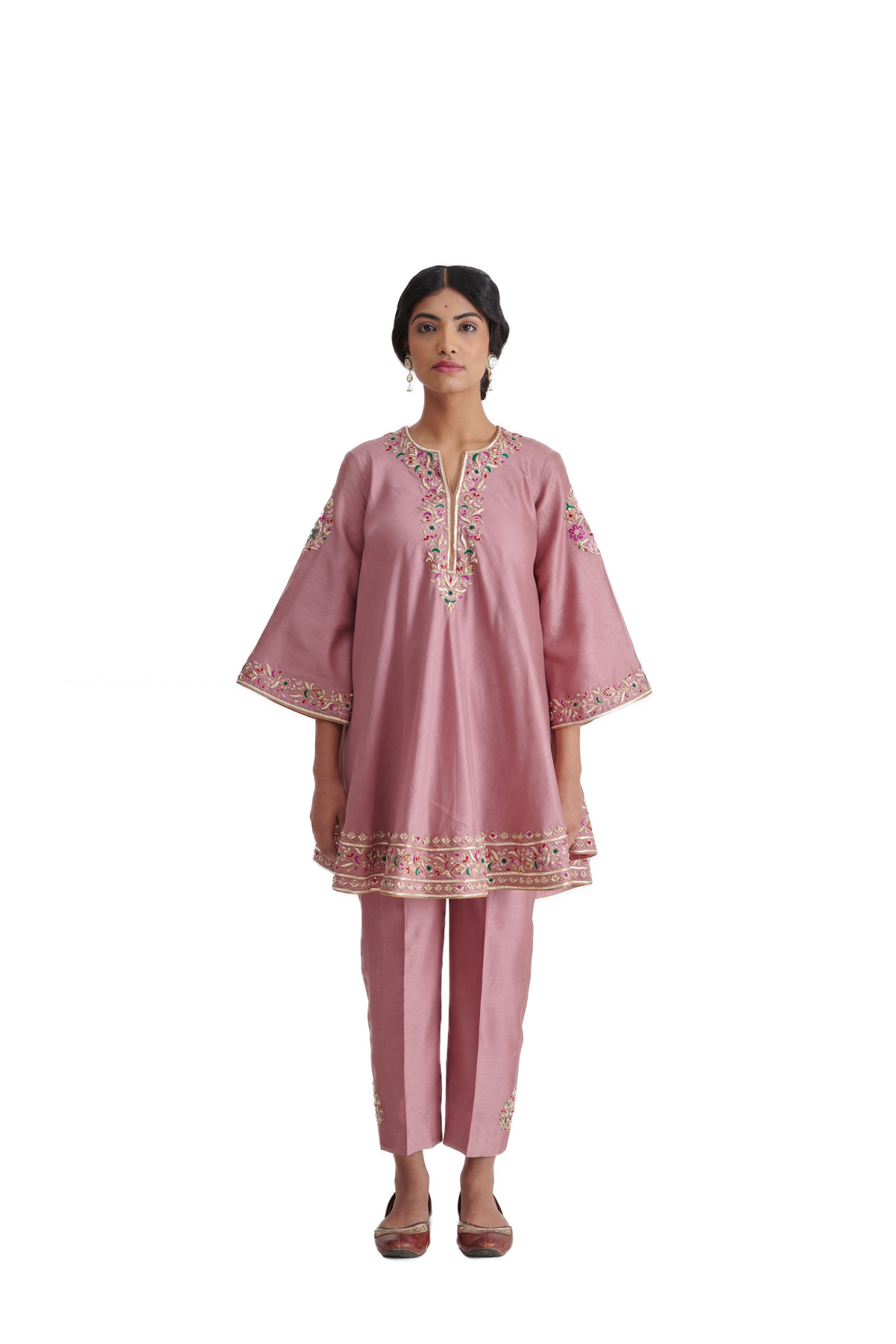
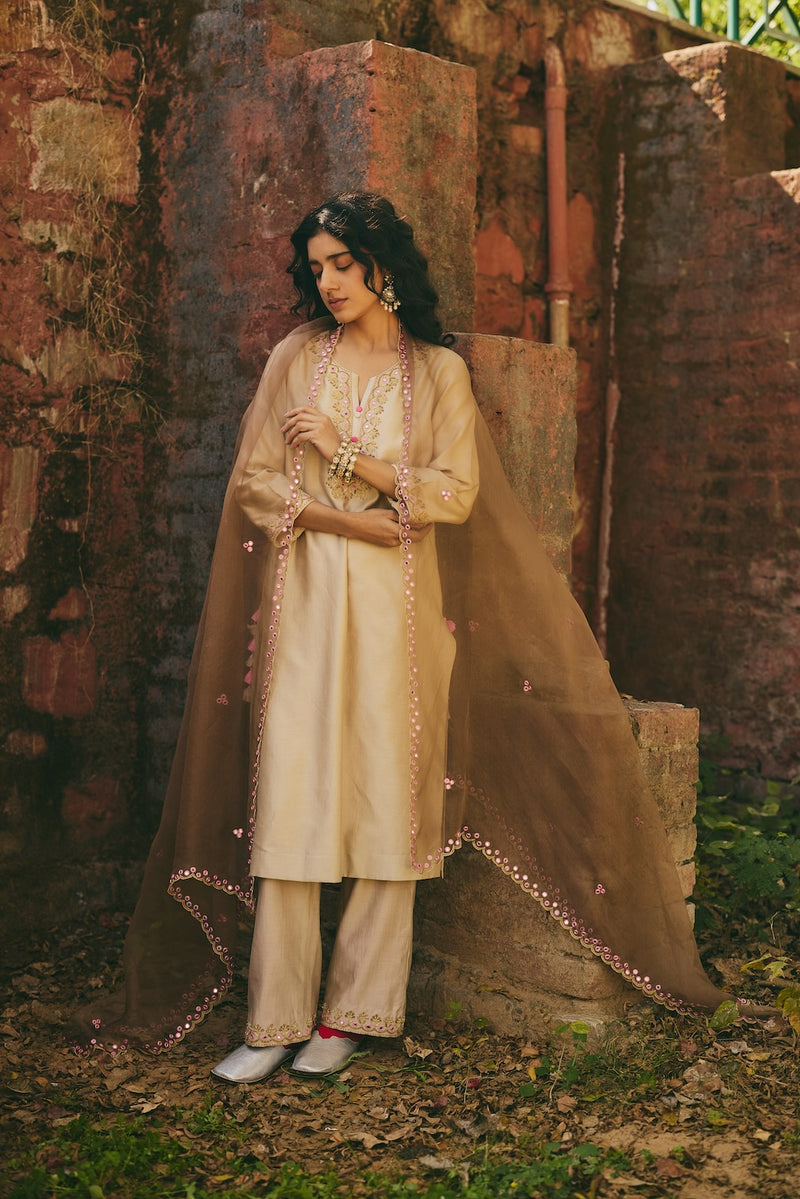
The NAVELI & RUHI is a dusty rose chanderi kurta set with delicate floral zardozi work (₹34,650). The softness of chanderi fabric paired with the richness of zardozi creates a beautiful tension — luxurious but not heavy.
The RUHANI & NILOFER is a soft pink silk kurta with zardozi embroidery (₹24,885). Silk provides an ideal base for zardozi, its natural sheen complementing the metallic threads.
For those drawn to structured silhouettes, the IRA & HOOR is a silk cotton zari checks cape shirt with zardozi (₹20,250), and the IRAADAY & RAYA is a woven shirt with zardozi embroidery (₹22,950). Both demonstrate how zardozi elevates even tailored, everyday-adjacent shirts into something special.
The NOORI & NAGMA features floral zardozi on a silk moonga check shirt (₹22,950), while the HEERIYE & AVIKA pairs silk zari stripes with zardozi detailing in a cape shirt format (₹22,950).
For layering and accessorising, the GULNAAZ is a bandhani silk dupatta with zardozi work (₹11,408), and the QURBAAN is an organza dupatta with zardozi (₹15,745) — both from our dupattas collection.


Caring for Zardozi Embroidery
Zardozi is durable embroidery — the metallic elements are securely stitched and built to last — but proper care ensures your pieces remain beautiful for generations:
- Dry clean only: Never wash zardozi garments with water. The metallic threads can tarnish, and moisture can weaken the attachment points. Always use a reputable dry cleaner experienced with embroidered garments.
- Store flat: Never hang zardozi pieces for extended periods — the weight of the embroidery can stretch and distort the fabric over time. Store flat in a cool, dry place.
- Wrap in muslin: Avoid plastic bags or covers, which trap moisture and can cause tarnishing. Wrap zardozi garments in clean muslin cloth or acid-free tissue paper.
- Avoid moisture: Humidity is the enemy of metallic embroidery. Store in a dry environment and add silica gel sachets if you live in a humid climate.
- Handle with care: Avoid snagging the raised embroidery on jewellery, bag clasps, or rough surfaces. When wearing zardozi, be mindful of bracelets and rings that could catch on the metallic threads.
Frequently Asked Questions
What is zardozi embroidery?
Zardozi is a traditional hand embroidery technique that uses metallic threads, bullion wire (dabka), coiled wire (salma), sequins (sitara), and sometimes beads or stones to create raised, three-dimensional patterns on fabric. The word comes from Persian — zar (gold) and dozi (embroidery). It originated in Persia and flourished in India under Mughal patronage from the 16th century onward.
What is the difference between zardozi and zari work?
Zari refers to metallic thread used in weaving — it is woven into the fabric on a loom to create patterns (as in Banarasi sarees). Zardozi is an embroidery technique where metallic threads and embellishments are stitched onto the surface of already-woven fabric by hand. Zari is woven; zardozi is embroidered.
How long does it take to make a zardozi garment?
It depends on the density and complexity of the design. A garment with scattered zardozi motifs might take one to two weeks. A heavily embroidered piece with dense, all-over zardozi — the kind seen on bridal lehengas — can take four to eight weeks or more. All Rashika Mittal pieces are made to order with a production time of four to five weeks.
Can zardozi be done on any fabric?
Zardozi works best on fabrics with enough body to support the weight of metallic embroidery — silk, velvet, raw silk, chanderi, and heavier cotton blends are ideal. Very sheer or lightweight fabrics like chiffon are not suitable for heavy zardozi, though lighter kamdani-style work can be done on organza and similar fabrics.
How do I know if zardozi is hand-done or machine-made?
Check three things: the back of the fabric (hand work shows thread trails and knots; machine work is clean), the weight (hand zardozi is heavy due to real metallic elements), and the uniformity (hand work has subtle irregularities in spacing and angle; machine work is perfectly uniform). See our embroidery guide for more on identifying authentic handcraft.
Ready to Order Custom?
WhatsApp us at +91 70423 11214 with what you're looking for. We'll guide you through measurements, customizations, and timeline.
Most pieces ready in 4-5 weeks. Bridal in 6-8 weeks.
Made to order in 4–5 weeks
Have an event date? We’ll tell you exactly when to order by.
We take a limited number of orders each month — secure your slot early.
Not sure where to start?
Tell us what you're dressing for and we'll help you choose — fabric, fit, colour, and timeline — over WhatsApp.
Your Cart
Pieces from this story
All pieces →
Keep reading
The journal →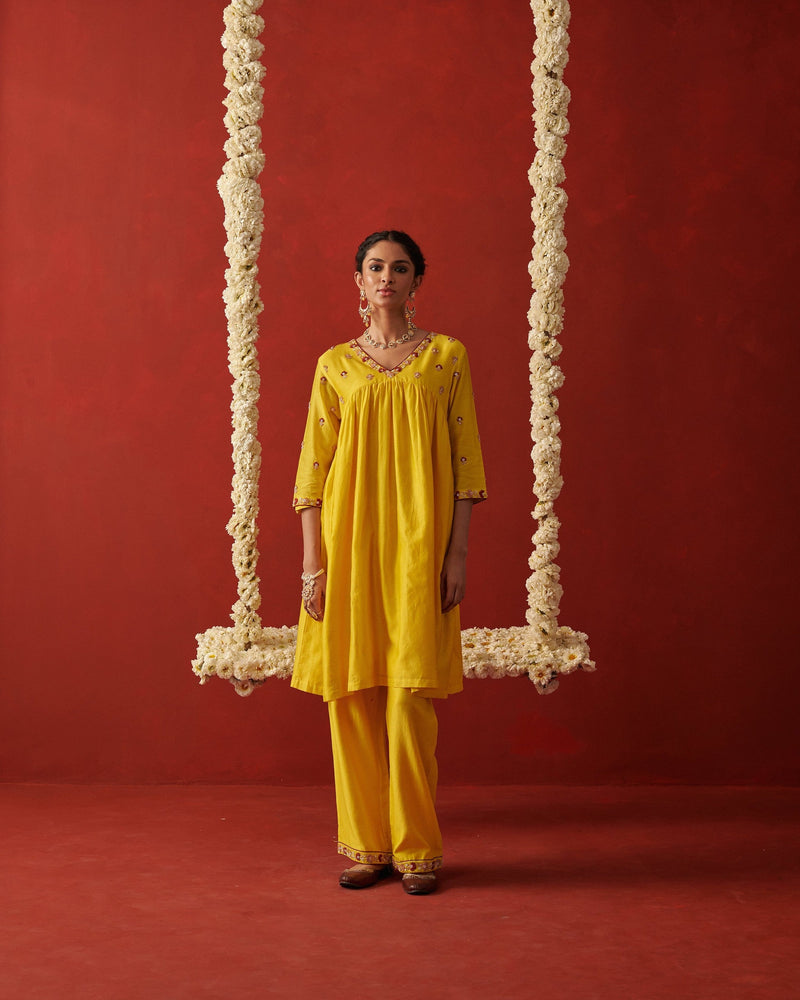
Dholki Night Outfit Ideas: What to Wear to the Ladies' Dhol
Handmade by karigars Made to your measurements Fit guarantee Ships worldwide As seen in GraziaElle Graduat...
27 July 2026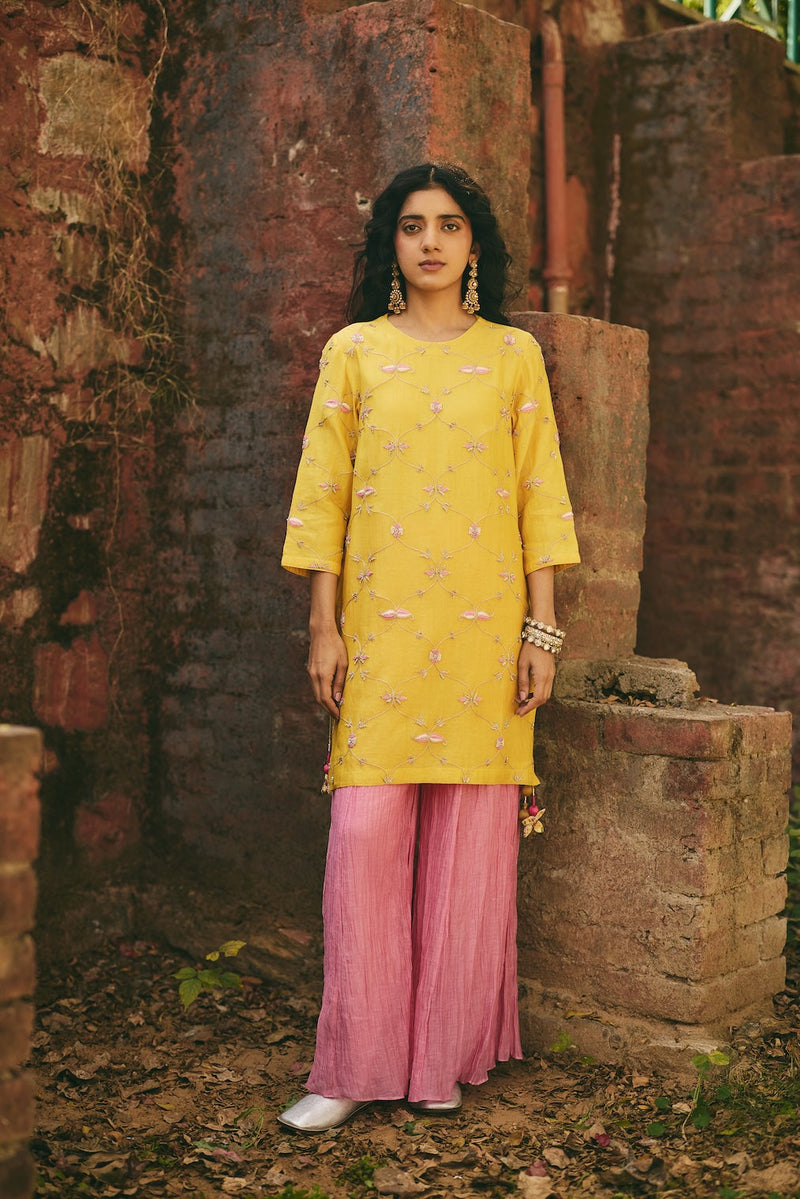
Mayra & Bhaat Outfit Ideas: Dressing for the Maternal Gift Ceremony
Handmade by karigars Made to your measurements Fit guarantee Ships worldwide As seen in GraziaElle Graduat...
27 July 2026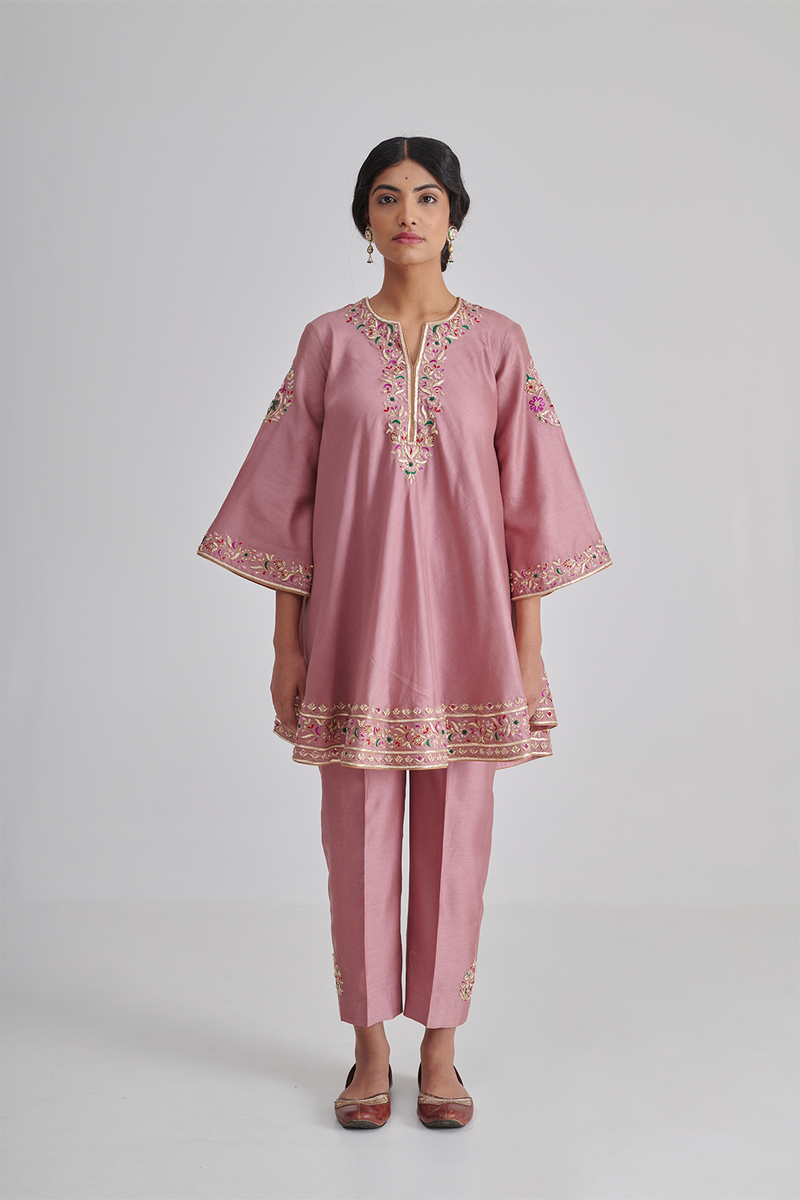
Pag Phera Outfit Ideas: What to Wear for the Bride's Homecoming
Handmade by karigars Made to your measurements Fit guarantee Ships worldwide As seen in GraziaElle Graduat...
27 July 2026