
Earth Day 2026: Why Handmade Fashion Is the Most Sustainable Choice
Earth Day falls on April 22 this year, and the conversation around sustainable fashion has never been louder. But amid all the talk of recycled polyester and carbon offsets, there's a simpler truth that often gets overlooked: the most sustainable garment is one that's made by hand, made to last, and made only when someone actually wants to wear it.
The Problem with Fast Fashion Sustainability Claims
Fast fashion brands have gotten very good at greenwashing. "Conscious collections" made from recycled bottles. Carbon neutral shipping. Take-back programmes that encourage you to buy more. But the fundamental model hasn't changed: produce millions of garments, hope some sell, dump the rest.
In 2025 alone, an estimated 92 million tonnes of textile waste ended up in landfills globally. Most "sustainable" fast fashion still contributes to this cycle because the business model depends on volume and disposability.
The Handmade Alternative
Traditional handmade fashion operates on entirely different principles:
- Made to order. Nothing is produced until someone wants it. No unsold inventory. No end-of-season waste.
- Built to last. When a garment takes weeks to make, it's designed to be worn for years, not seasons.
- Natural materials. Silk, cotton, wool — fabrics that biodegrade, unlike synthetic alternatives.
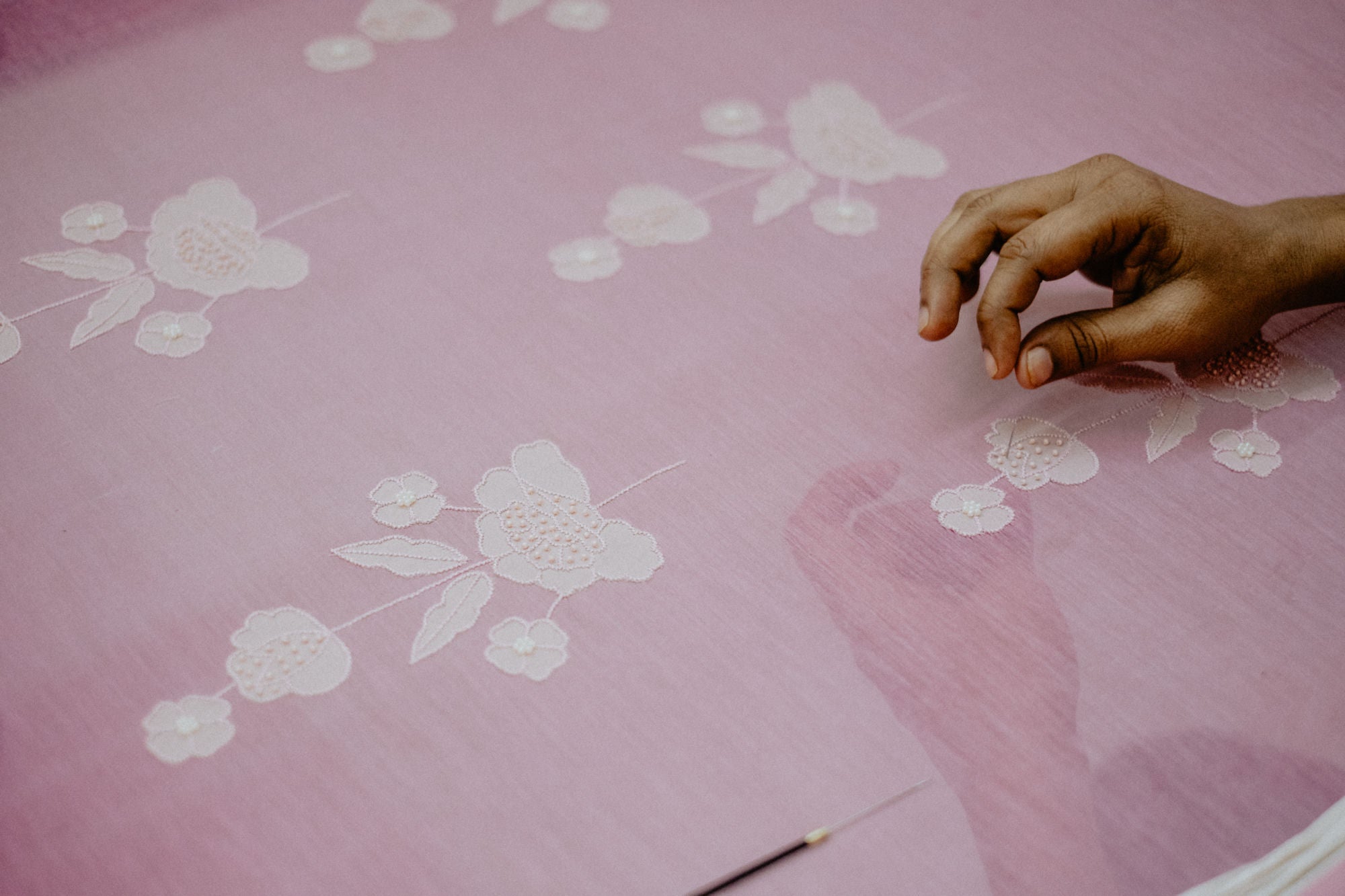
- Human-powered. Hand embroidery requires no electricity. The carbon footprint of a karigar's needle is essentially zero.

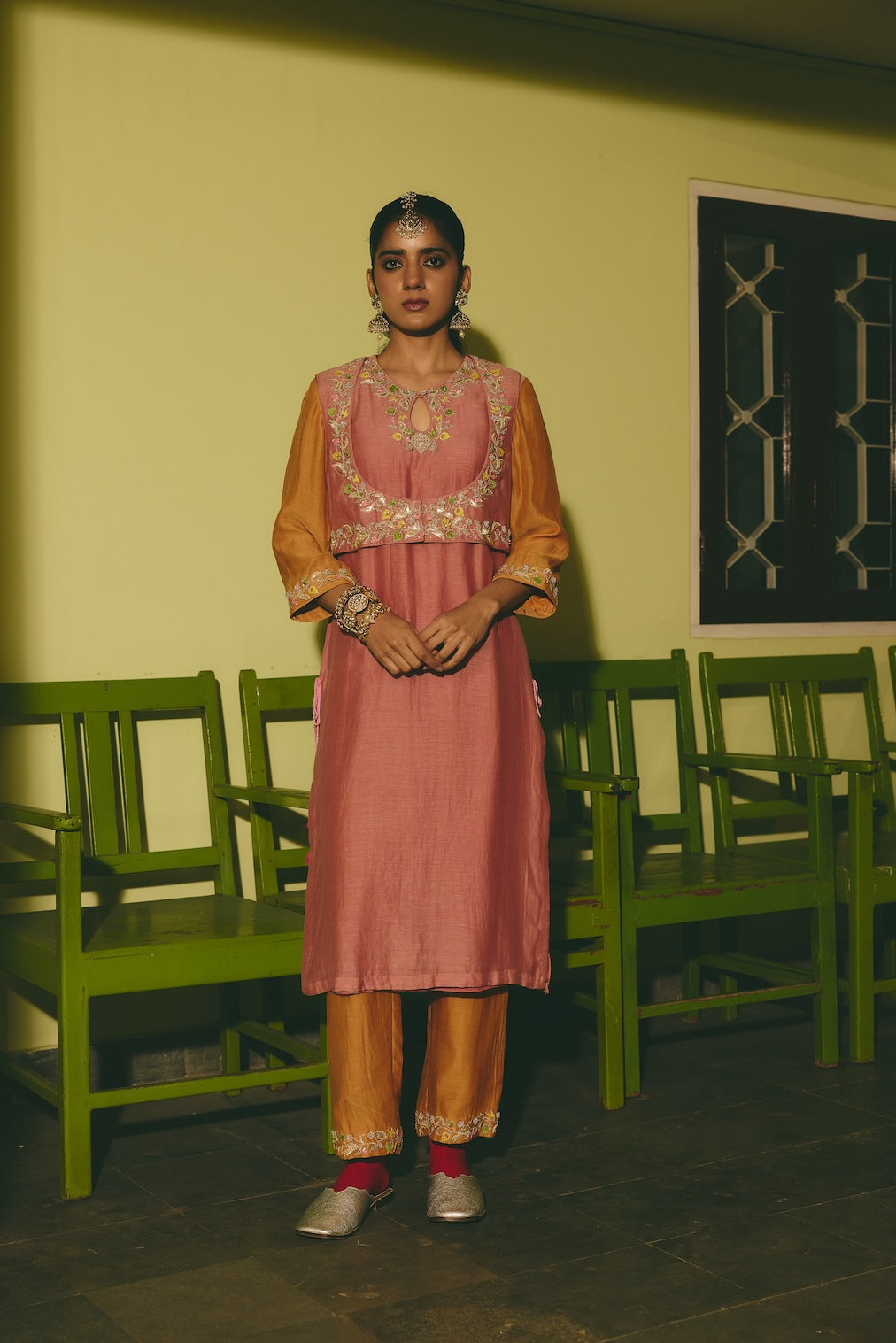
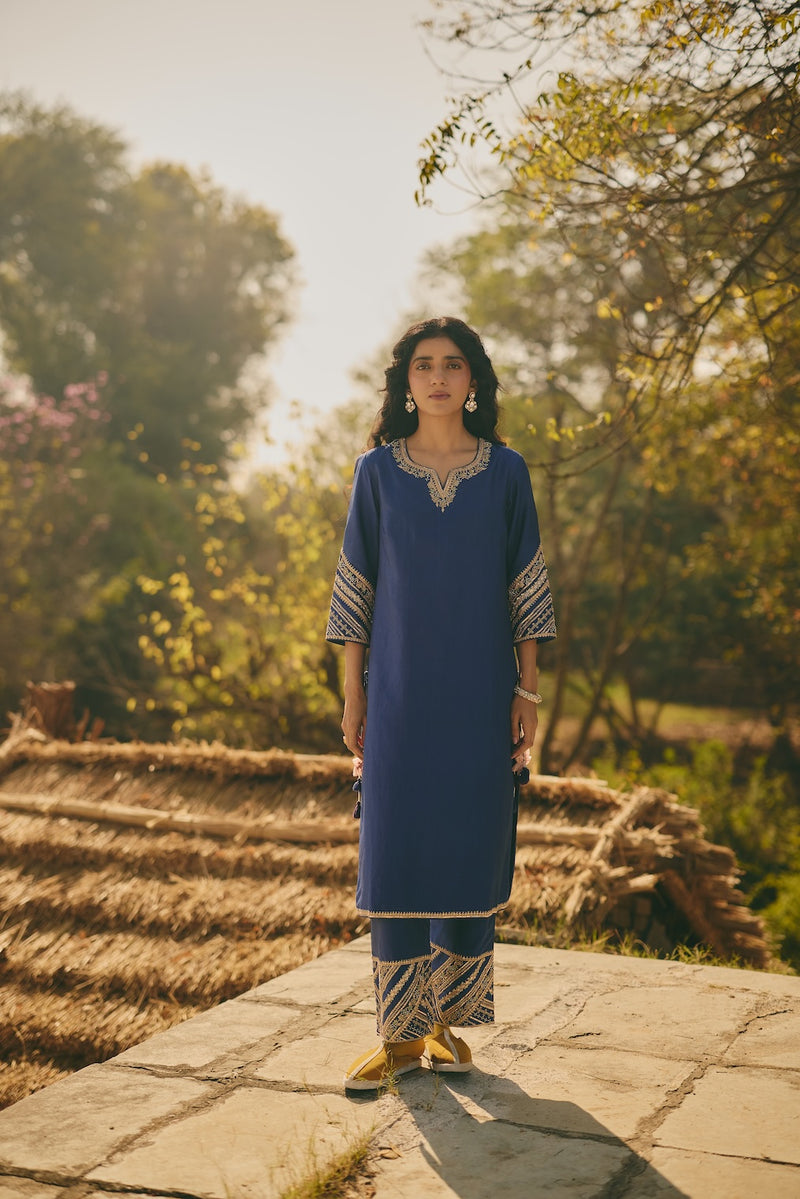
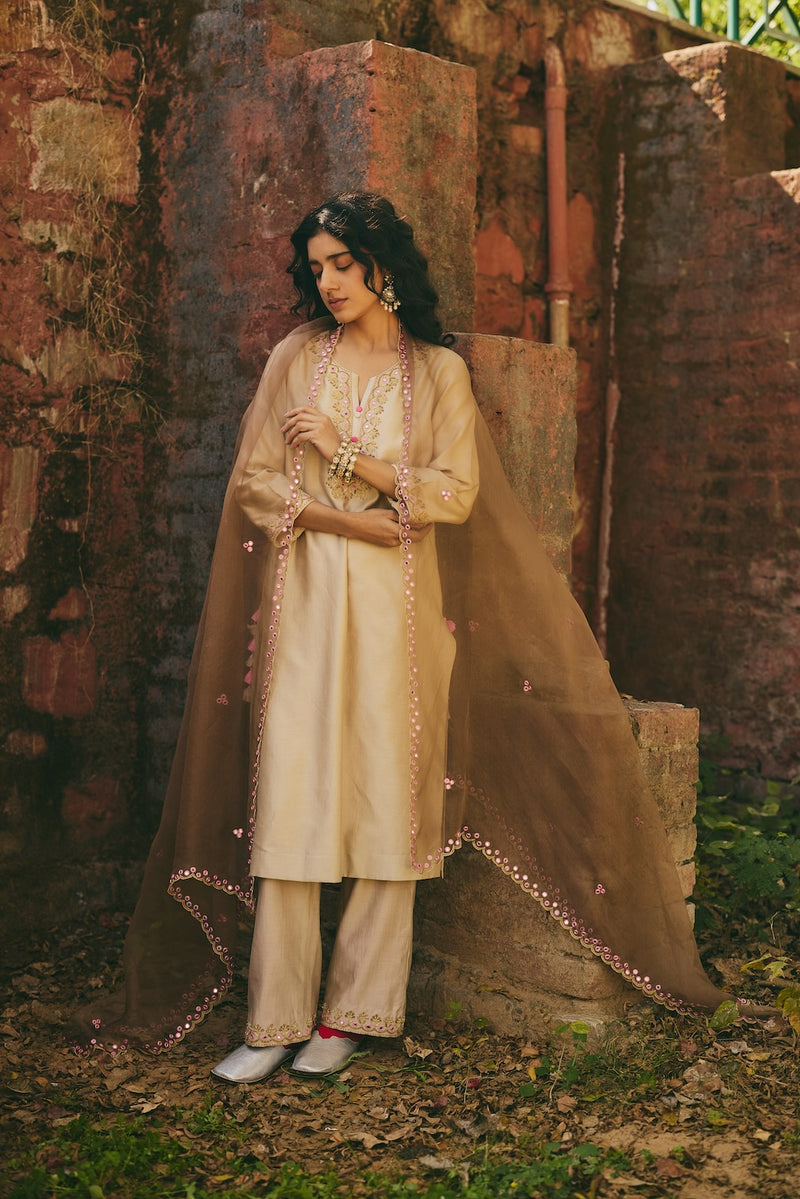
A piece like the Ruhaniyat & Amber kurta set represents this philosophy. Made to order in silk with hand embroidery, it exists because someone chose it — not because a factory needed to fill a container.
The Carbon Cost of Handmade vs Machine
Consider the supply chain of a typical fast fashion garment: synthetic fabric woven in one country, cut in another, sewn in a third, shipped across oceans, trucked to distribution centres, displayed under bright lights, and often discounted and eventually discarded unsold.
Now consider a handmade garment: silk woven locally, embroidered by artisans working in natural light, shipped directly to the customer who ordered it. The footprint comparison isn't even close.
Quality as Sustainability
The most sustainable garment is one you never throw away. When something is beautifully made, you keep it. You repair it. You pass it down. This is how clothing worked for most of human history — and how it still works in handmade fashion.
Free Download
Get Our Measurement Guide
Step-by-step instructions with photos for perfect custom fit.
Download Free Guide

Pieces like the Zehan & Aabha sharara and the Nyassa & Elina lehenga are investments — not just financially, but environmentally. They're designed to be worn at multiple weddings over multiple decades.
Supporting Artisan Livelihoods
Sustainability isn't just about the environment — it's about people. When you buy handmade, you support skilled artisans who would otherwise be forced into factory work or out of the craft entirely. You help preserve techniques that have been passed down for centuries.
This is sustainability in its fullest sense: environmental, economic, and cultural.
How to Shop More Sustainably
This Earth Day, consider these principles:
- Buy less, choose better. One handmade piece you'll wear for years beats ten cheap pieces you'll discard.
- Ask how it's made. If a brand can't tell you who made your clothes and how, that's a red flag.
- Wait for made-to-order. If something is worth having, it's worth waiting for.
- Choose natural fibres. Silk, cotton, linen, wool — fabrics that come from the earth and can return to it.
- Invest in versatility. Pieces you can wear to multiple occasions are more sustainable than single-purpose outfits.


The Ameera & Hoorain works for pujas, family dinners, and casual celebrations. The Taraana saree transitions from weddings to festivals. The Sarmaya in black works for virtually any evening occasion. Versatility is sustainability.
The Real Luxury
In a world drowning in disposable clothing, the real luxury isn't having more — it's having enough. Enough pieces that you love, that fit beautifully, that were made with care. That's what handmade fashion offers, and that's what the planet actually needs.
Explore: Shop All | Kurta Sets | Sarees
Ready to Order Custom?
WhatsApp us at +91 70423 11214 with what you're looking for. We'll guide you through measurements, customizations, and timeline.
Most pieces ready in 4-5 weeks. Bridal in 6-8 weeks.
Made to order in 4–5 weeks
Have an event date? We’ll tell you exactly when to order by.
We take a limited number of orders each month — secure your slot early.
Not sure where to start?
Tell us what you're dressing for and we'll help you choose — fabric, fit, colour, and timeline — over WhatsApp.
Your Cart
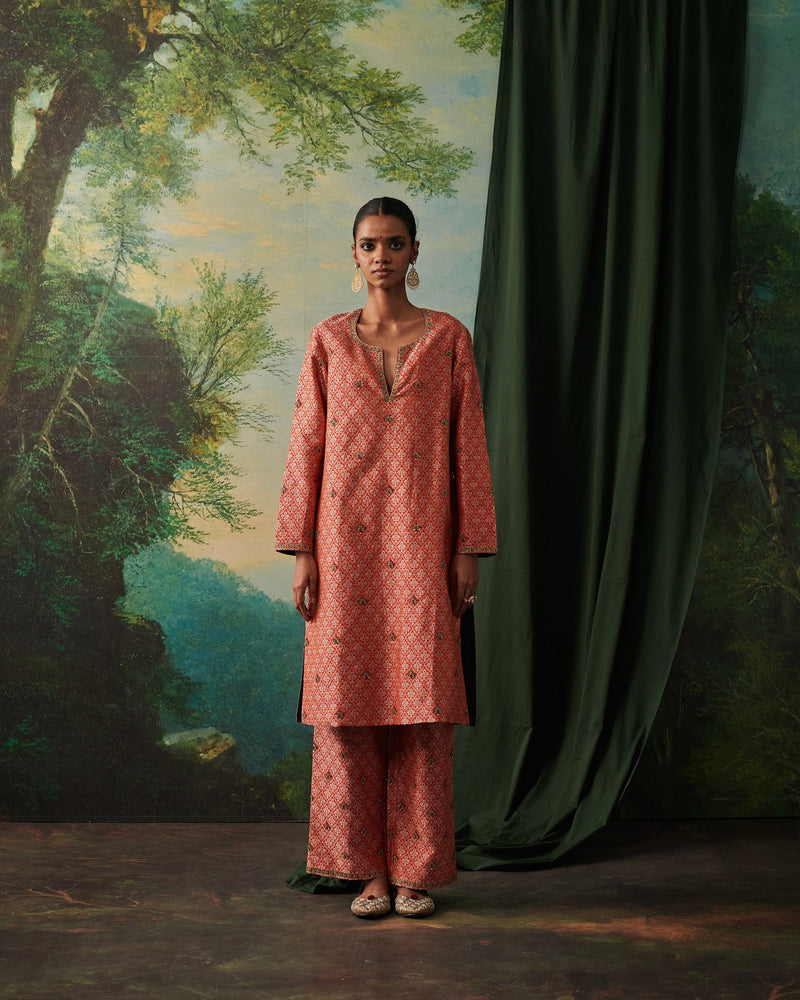
Pieces from this story
All pieces →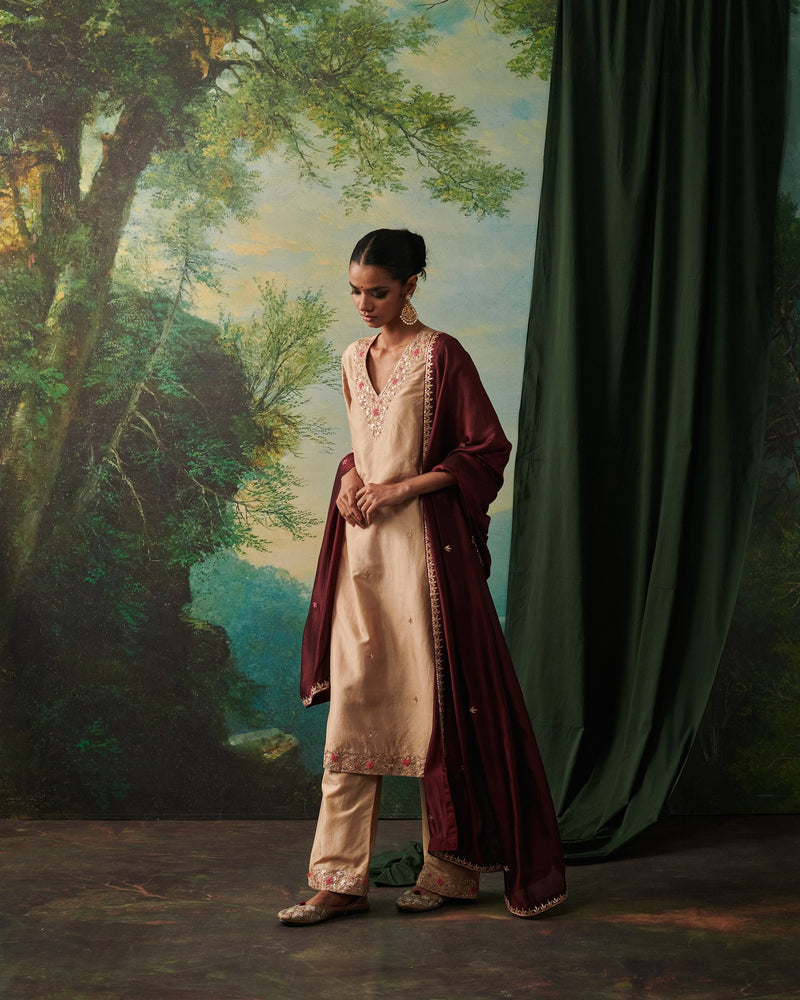
Keep reading
The journal →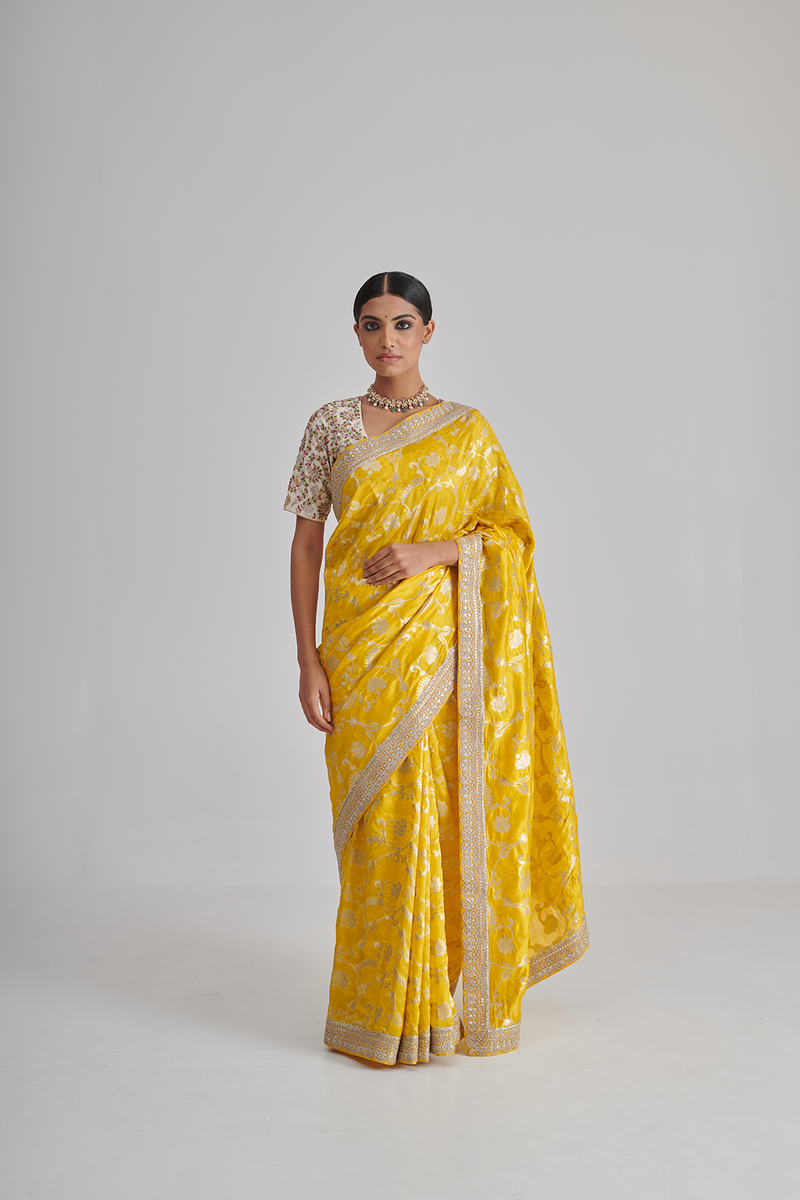
Best Banarasi Saree Brands in India 2026: Where to Buy an Authentic Banarasi
Handmade by karigars Made to your measurements Fit guarantee Ships worldwide As seen in GraziaElle Graduat...
14 September 2026
Gifts for Your Wife She'll Actually Wear: Indian Outfits for Karva Chauth, Diwali & Anniversaries
Handmade by karigars Made to your measurements Fit guarantee Ships worldwide As seen in GraziaElle Graduat...
14 September 2026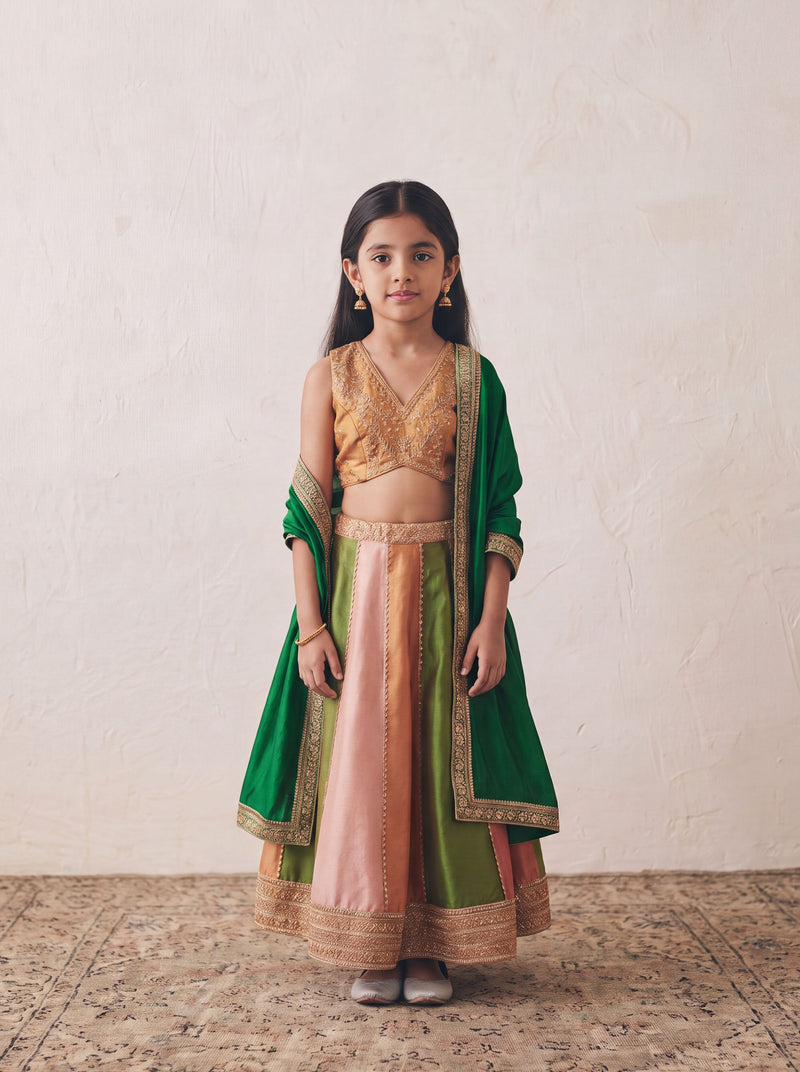
Designer Lehenga for Girls: A Parent's Buying Guide to Kids' Lehengas
Handmade by karigars Made to your measurements Fit guarantee Ships worldwide As seen in GraziaElle Graduat...
14 September 2026