
Hand Embroidery on Children's Clothes: Why We Bother
A reasonable person might ask why anyone would hand-embroider clothes for someone who will outgrow them by next summer. It is a fair question, and we asked it ourselves before starting the kidswear line, because every piece we make for a child passes through the same Jaipur atelier, the same wooden frames, and the same karigars' hands as our women's line. It takes the same weeks. It costs what that costs.
This is our answer: what changes when embroidery is made at a child's scale, what refuses to change, how each craft behaves on a small garment, and the honest economics of putting handwork on clothes for a growing child.
Children notice more than we think
A child who wears a hand-embroidered kurta learns something without being told: what made things feel like. The slight irregularity of a hand-folded gota flower, the particular weight of real work, the difference between cloth that breathes and cloth that does not. None of that is explained to them and all of it registers.
These are also the clothes that survive into the next generation's photographs. Nobody remembers the polyester lehenga bought in a hurry the week before a wedding. Everybody remembers the one that was made — usually because it was worn by a younger cousin afterwards, and then by somebody else.
The work is adjusted, not reduced
Embroidering for children is its own discipline and it is not a simplification. Four things change when a design is cut down.
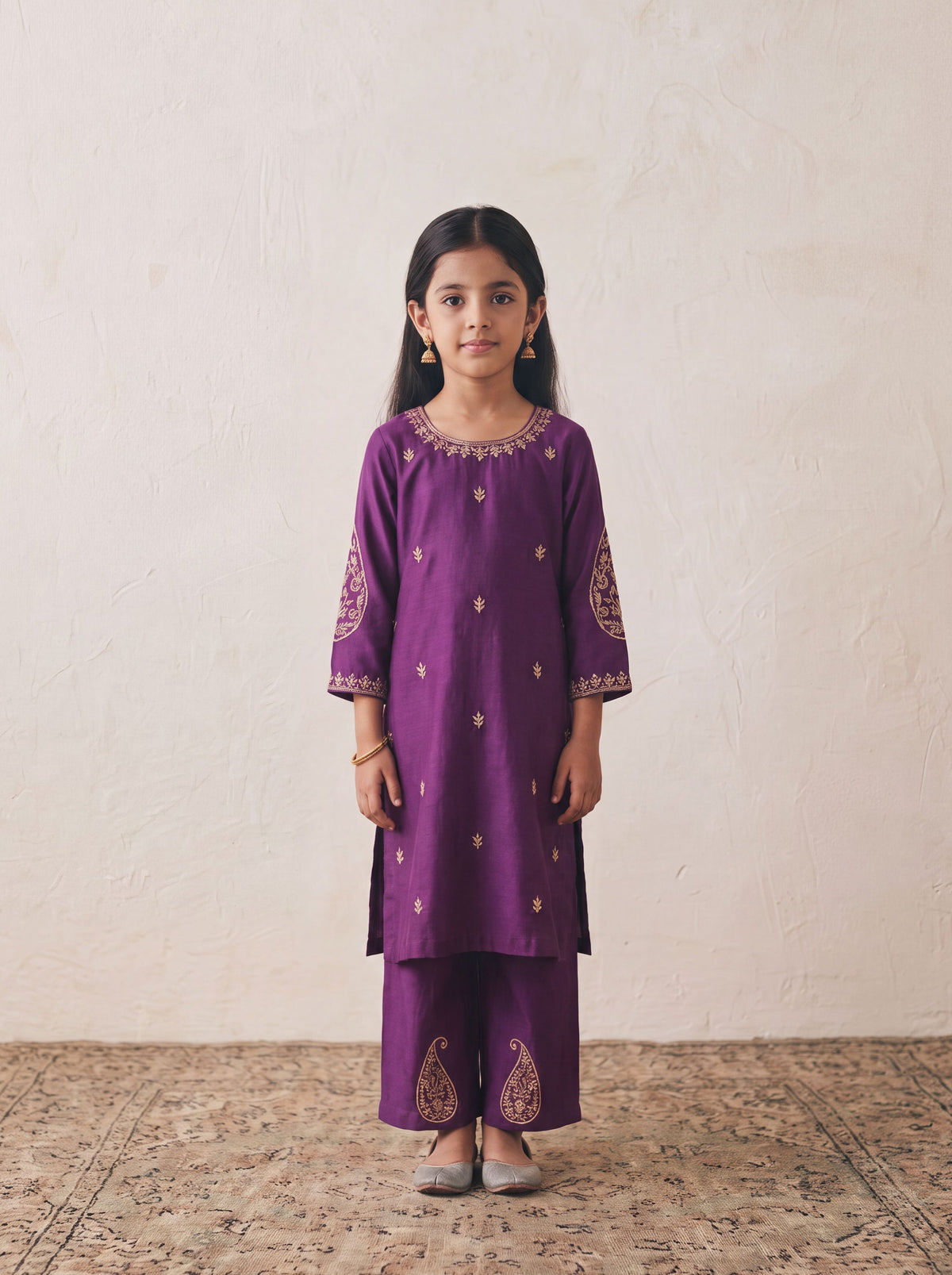
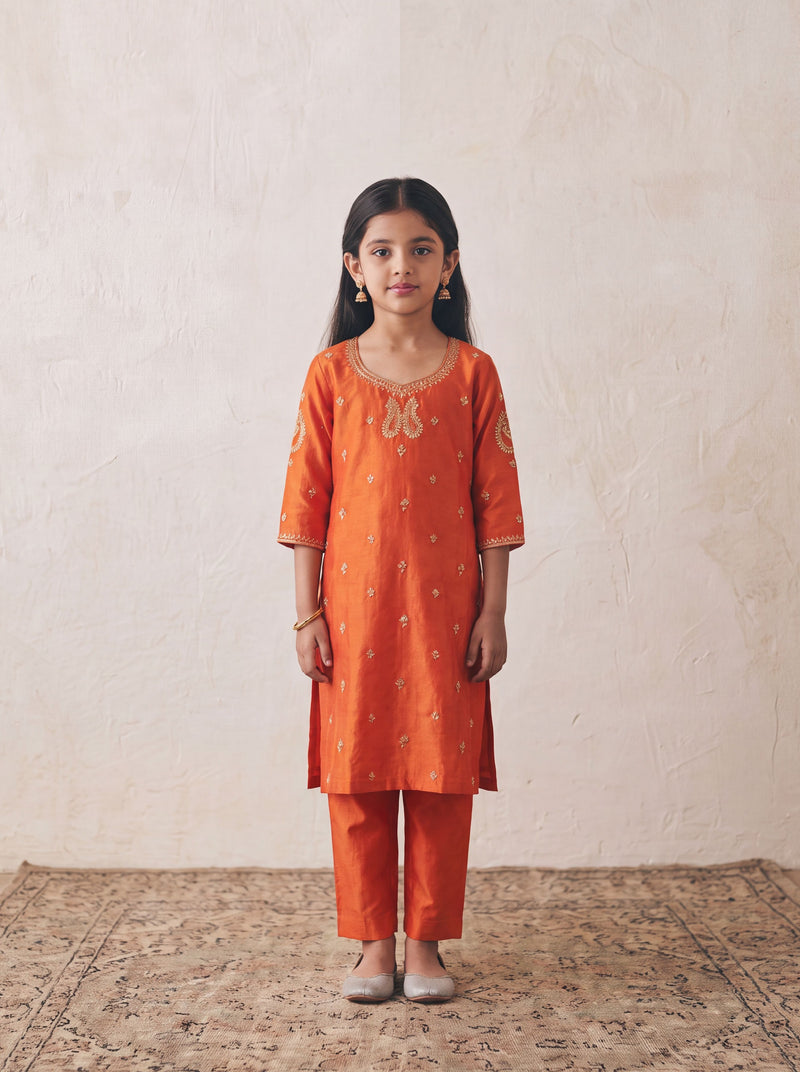
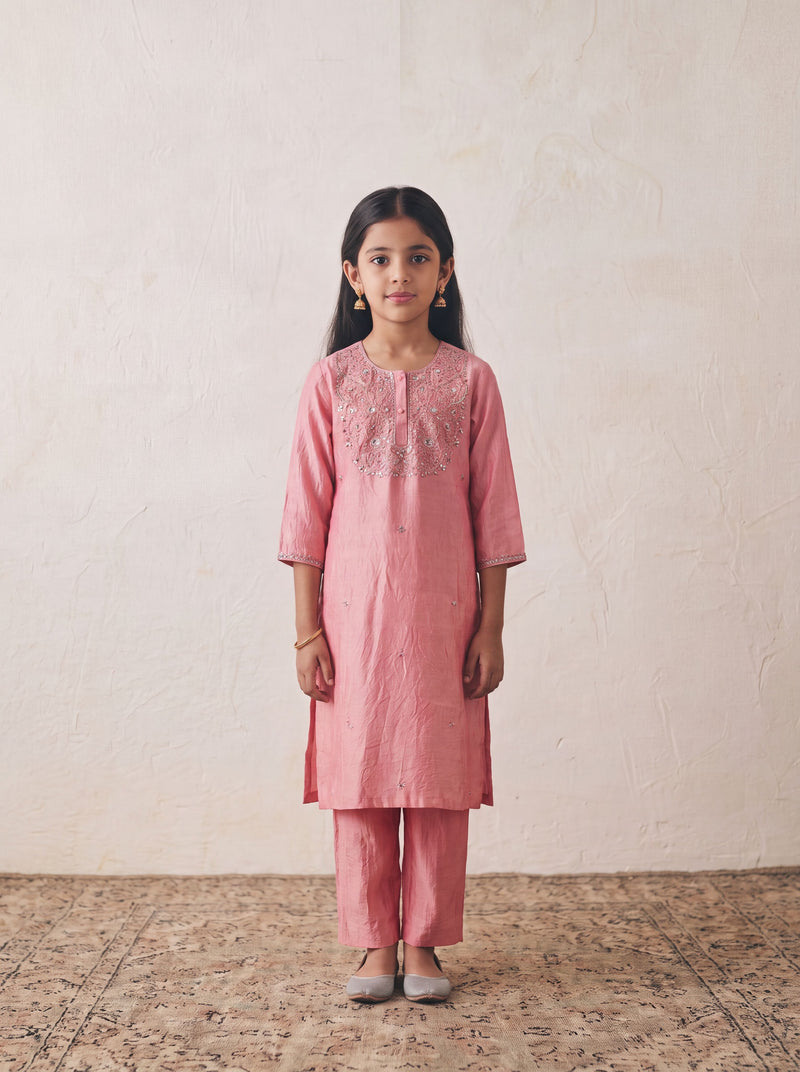
The motifs are redrawn rather than shrunk. A paisley reduced photographically looks wrong on a small panel — the internal spacing collapses and the outline thickens. Redrawn at scale, with fewer internal elements and a cleaner outline, the same paisley looks inevitable. The density comes down, because weight that an adult carries easily will tire a child within an hour. The heavier techniques migrate to where a child will never press against them: the neckline, the cuffs, the hem, the lower border of a skirt. And every knot is finished flat, on the reverse, before the lining goes in.
NAZAKAT & SAANWLI in purple Chanderi carries zardozi paisleys and scattered bootis placed precisely where a child cannot feel them. AYESHA & MEHR in black shows the other half of the argument — marodi jaali borders and a back medallion, serious design holding almost no weight.


The crafts, at a child's scale
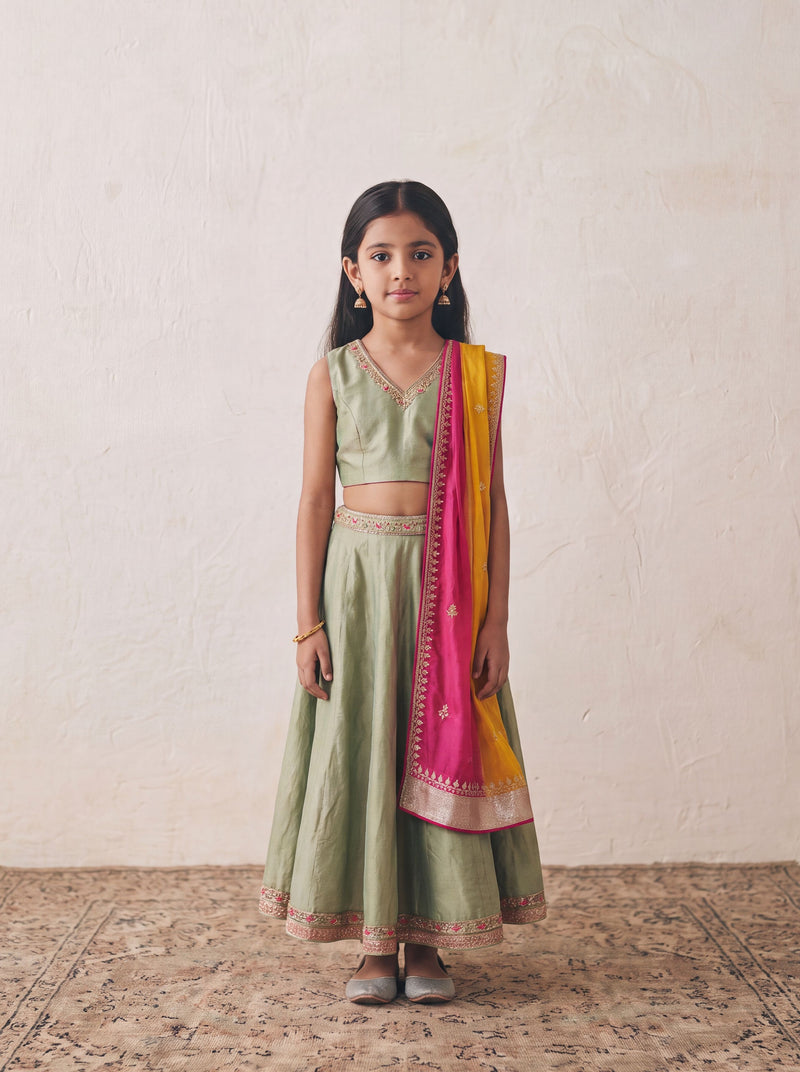
Gota patti is folded ribbon work, and it is the most natural fit for children's clothes because it is light by nature — the weight lives in the ribbon rather than in dense thread, so a whole border costs a child almost nothing to carry. Aari is chain stitch worked with a hooked needle; it moves fast and flexes with the cloth, which makes it right for vines and trellises on a garment that will be sat in. Sequins and cutdana supply catch-light without bulk, which is why they turn up on our evening pieces for children. Zardozi is the heaviest of the four and is used where the structure of the garment can hold it — borders, yokes, a medallion — never spread across a bodice.
What we do not use on children's clothes: heavy stone-setting, any embellishment with a sharp edge, and any technique that needs a stiff backing to survive. If a design requires stiffening to hold its shape, it does not become a kids' piece. You can read more about each of these crafts on our craft pages.
The lining rule
Every piece is lined in mulmul or soft Shantone — mulmul being the same soft muslin tradition that newborns are wrapped in. Hand embroidery has a working back, always, however neatly it is finished, and a child should never meet it. If a piece cannot be lined softly, we do not make it in the kids' line at all.
This is also our advice for judging anybody's children's occasion wear, ours included: turn the garment inside out before you look at the front. You will learn more in five seconds than the product photograph will tell you in five minutes.
Ask us before you order
Want to know exactly which crafts are on a particular piece, and how heavy it will feel on a small child? Ask us — we will tell you, honestly, including when something is too much.
Made when you order, like everything we make
There is no kids' warehouse. Each piece is cut when a parent orders it, in any of eighteen sizes from 0–3 months to 15–16 years or to a child's own measurements, and then spends its four to five weeks on the frame exactly as an adult piece does. The karigars are the same people; the kids' line is not outsourced to a faster workshop, which is the usual industry answer to this problem.
Made-to-order construction is also why these clothes survive being handed down. The seams are cut for the garment rather than approximated. The embroidery can be repaired by hand because it was applied by hand. The cloth was chosen to be cleaned repeatedly over years rather than to look good on a rack for one season.


What it costs, and why
Hand-embroidered kidswear costs more than the alternative, for exactly the same reason our women's line does: weeks of skilled hands go into it, and those hands are paid for their skill. There is no version of this where the price comes down without somebody being paid less or the work being done by a machine.
What the price buys is the real thing rather than "handcrafted-style" machine work — the same crafts, the same karigars, at a child's scale. Whether that is worth it for a growing child is a genuinely personal judgment, and we would not argue with a parent who decided otherwise. Our observation, after a year of making these: the families who buy one good piece use it across more functions than the families who buy four fast ones, and then a younger cousin wears it after that.
Looking after it
Dry clean, and tell the cleaner it is hand embroidery. Store it folded with the worked face inward, wrapped in muslin rather than plastic. Keep heavily worked pieces flat rather than hanging, because months on a hanger pull the embroidery's weight through the shoulder seam. If a thread pulls, photograph it and send it to us before anybody cuts anything — most pulls are fixable in an afternoon by somebody who knows the stitch.
How long a piece actually takes
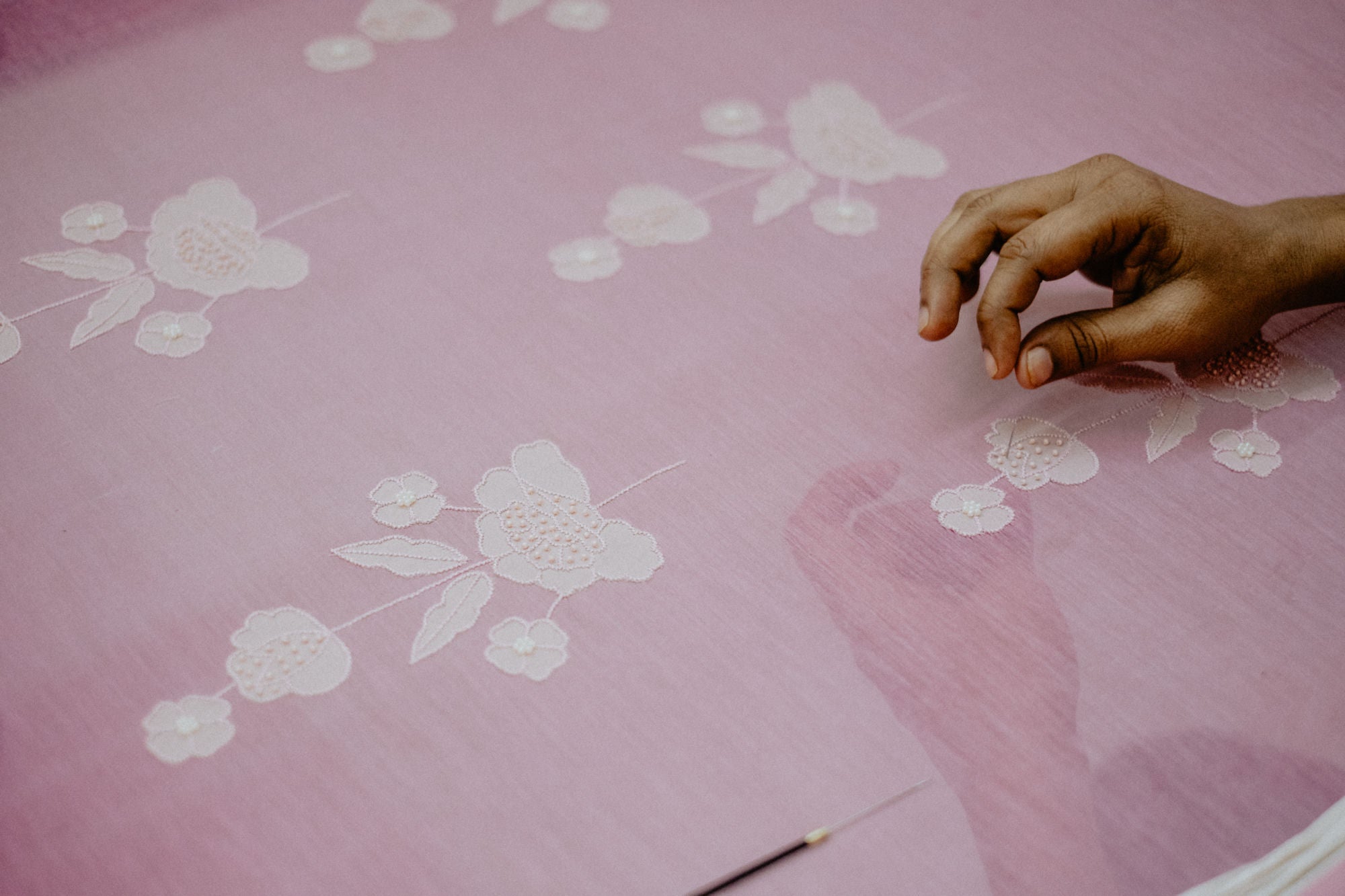
Four to five weeks is the number we quote, and it is worth explaining where it goes. The design is first traced onto the cloth from a perforated sheet — the same method used for the women's pieces, redrawn at the smaller scale. The cloth is then stretched on a wooden frame, which is the step that determines whether the embroidery sits flat afterwards. The work itself is the longest part: a lightly worked child's kurta might take a karigar a week, a densely worked lehenga panel considerably more, and dense pieces are worked by more than one person at the same frame.
After that the piece is washed, the panels are cut and assembled, the lining goes in by hand, and it is finished and checked. Nothing in that sequence can be usefully hurried, which is why a fast version of this does not exist — the fast version is a different product made by a machine.


How to tell hand embroidery from machine work
This is a useful skill whether or not you buy from us, and it takes about ten seconds. Turn the garment inside out. Hand embroidery has a legible reverse — you can see individual stitches, thread ends, the path the needle took. Machine embroidery has a uniform backing, usually a fused sheet, and the reverse looks printed rather than worked.
On the front, look for irregularity. Hand-folded gota flowers are never identical to each other; machine-applied ones are. Hand-worked motifs vary slightly in density across a panel because a person made them. And press the embroidered area gently between your fingers: handwork has give, because it is thread on cloth, while fused work has a stiff card-like resistance. That stiffness is also what makes machine work uncomfortable against a child.
Why we started making these at all
The kidswear line began because customers kept asking. A woman would order a piece for a wedding and then write to ask whether we could make a small version for her daughter, and after enough of those requests it stopped being an exception and became a line. That origin shaped it: the pieces are the same designs, from the same atelier, because that is exactly what was being asked for. It also means the range grows in the direction customers push it, which is why the collection changes each season and why it is worth asking about a design you cannot see listed.
Frequently asked questions
Is hand embroidery safe against a child's skin?
Ours never touches it. Every piece is fully lined in mulmul or soft Shantone, and any piece that cannot be lined that way does not enter the kids' line.
Can the embroidery be repaired if a thread pulls?
Yes, and that is the practical advantage of handwork over fused machine embroidery. Send us a photograph and we will guide the repair.
Do the same karigars make the kids' and women's pieces?
The same atelier, the same frames, the same hands. Nothing about the kids' line is outsourced.
Which crafts are lightest for a small child?
Gota patti and aari. Both carry a lot of visual presence for very little weight, which is why they appear most often on our smallest sizes.
Will the piece survive being handed down?
If it is stored properly, yes — that is what made-to-order construction and natural fabrics are for. The quieter colours tend to be handed down most, because they never look like a particular season.
Not sure where to start?
Ask us anything about the crafts, the weight, or the making — and we will help you choose a piece that suits both the function and the child.
Pieces from this story
All pieces →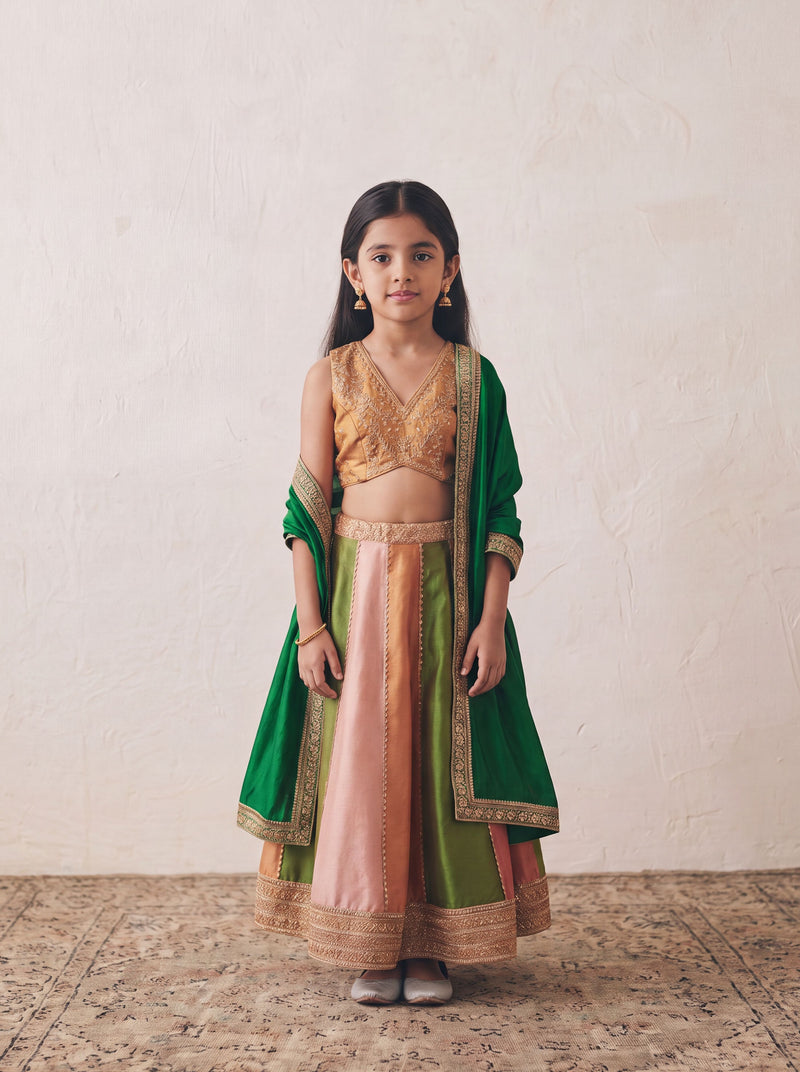
Keep reading
The journal →
Best Banarasi Saree Brands in India 2026: Where to Buy an Authentic Banarasi
Handmade by karigars Made to your measurements Fit guarantee Ships worldwide As seen in GraziaElle Graduat...
14 September 2026
Gifts for Your Wife She'll Actually Wear: Indian Outfits for Karva Chauth, Diwali & Anniversaries
Handmade by karigars Made to your measurements Fit guarantee Ships worldwide As seen in GraziaElle Graduat...
14 September 2026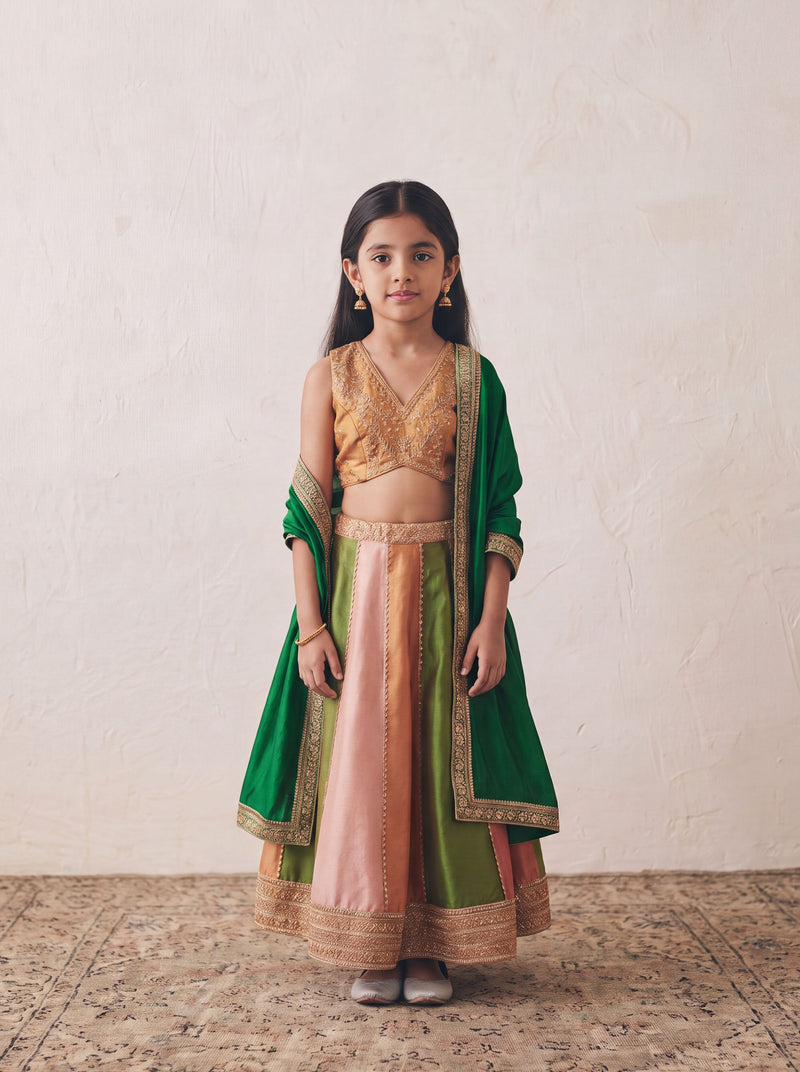
Designer Lehenga for Girls: A Parent's Buying Guide to Kids' Lehengas
Handmade by karigars Made to your measurements Fit guarantee Ships worldwide As seen in GraziaElle Graduat...
14 September 2026