
How to Drape a Dupatta Over Your Head: A Styling Guide
There are moments when a dupatta belongs over the head, not just around the shoulders — a pooja at home, a gurudwara, a temple, a nikah, or simply a bridal look that calls for the veil. Done well, a head-draped dupatta is one of the most graceful things in Indian dressing; done badly, it slips, bunches, and gets tugged at all evening. The difference is entirely in the drape and the pinning. Here's how to do it properly, and which dupattas make it easy.
Start With the Right Dupatta
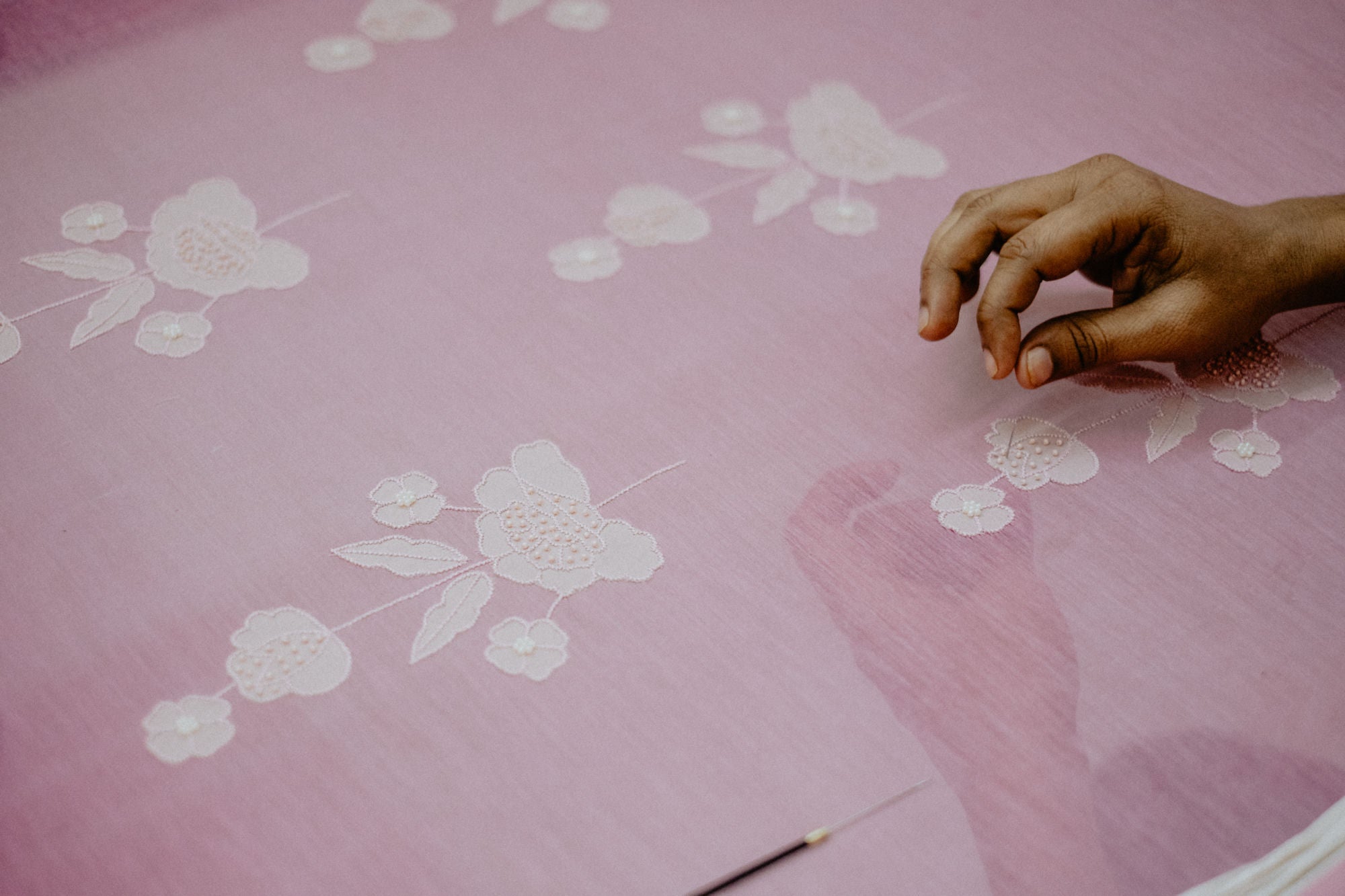
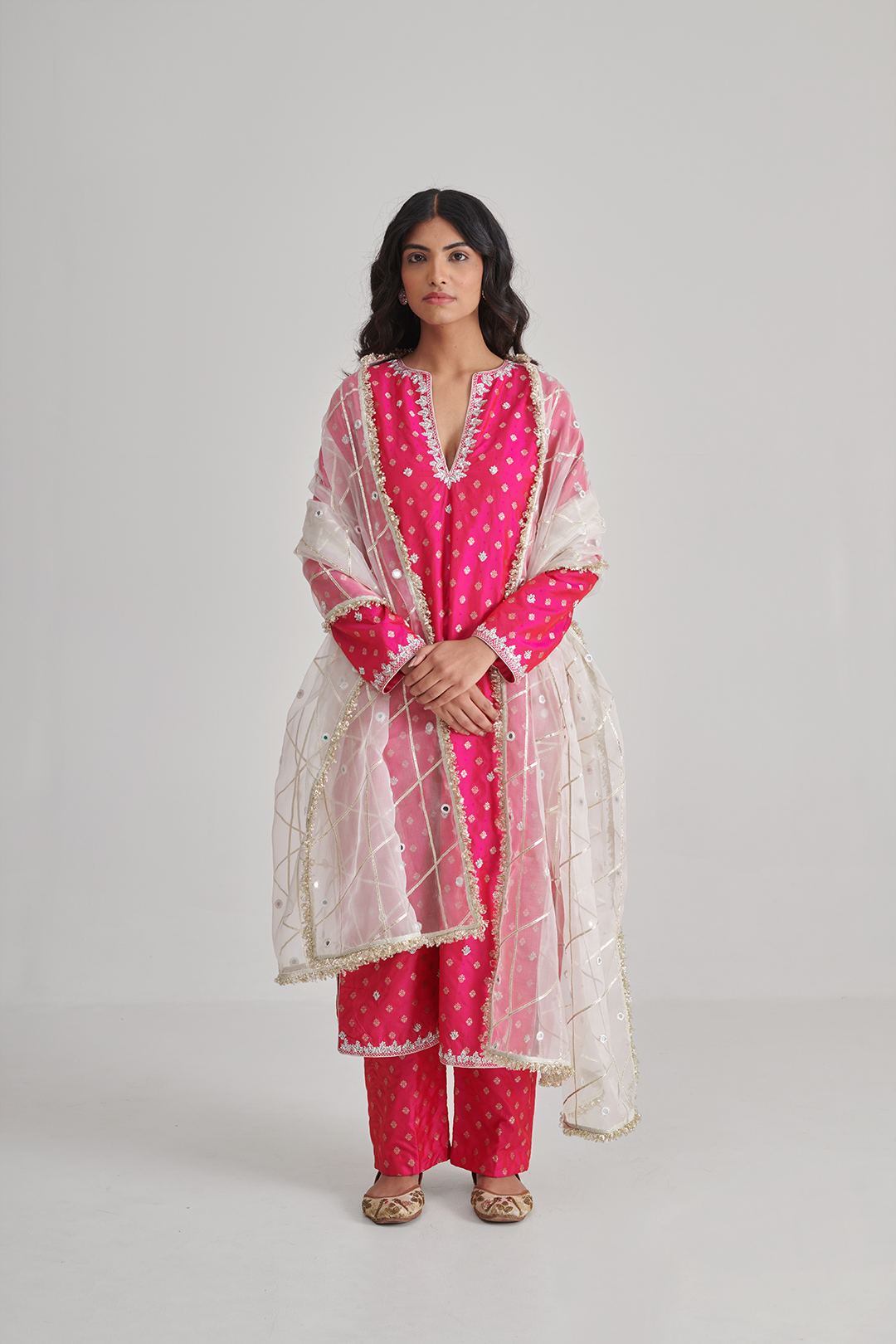
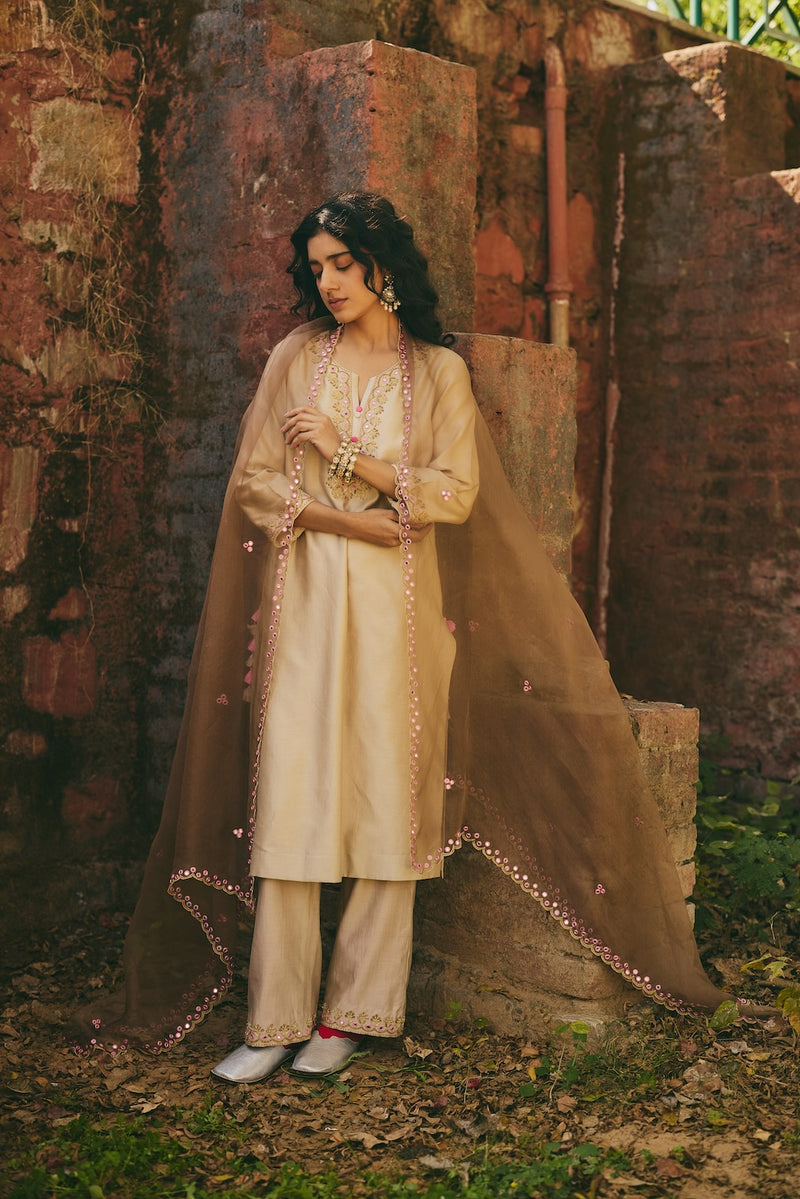
A head drape sits best on a dupatta with a little structure and a defined border — the border gives you a clean line to frame the face, and a slight body keeps the fabric from collapsing flat. A Chanderi dupatta like the Noorejhan, with hand-done marodi embroidery and a vine-motif border, is ideal: lightweight yet statement-making, so it holds a fold over the head without weighing you down. Organza also drapes beautifully for a bridal or festive veil — the Adhira dupatta in ivory organza, with mirror and resham work, catches the light as it falls.

The Classic Centre Drape (Pooja & Temple)
The simplest and most versatile style. Hold the dupatta open and find its centre. Lay the middle of one long edge across the crown of your head, so an equal length falls down each side. Take one end over the opposite shoulder to secure the balance, or let both ends fall to the front. For a pooja or temple, this soft, symmetrical drape covers the head modestly while framing the face — pin it discreetly at the crown so it stays through the aarti without slipping back.
The Gurudwara Drape (Secure & Simple)
Inside a gurudwara your head stays covered throughout, so security matters most. Drape the dupatta over the head as above, then bring both ends forward and cross or loop them loosely at the chest, or take one end firmly across to the opposite shoulder and pin it. The goal is a covering that won't need re-adjusting while you sit and rise for the kirtan. Choose a dupatta wide enough to cover comfortably and a fabric that grips rather than slides — Chanderi and cotton-silk behave far better than slippery pure silk here.
The Bridal Veil Drape
For a bride, the head dupatta becomes the veil — often a second, lighter dupatta worn over the head while the heavier one sits at the waist or shoulder. Set it forward so the embroidered border frames the face, and pin it into the hair on both sides so it holds through the ceremony and photographs cleanly. A luminous organza or a finely-bordered dupatta reads best on camera, catching light around the face without hiding the jewellery.
Pinning: The Part Everyone Skips
- Use small, matching bobby pins — anchor the dupatta into a firm section of hair at the crown and just above each ear.
- Pin to your hair, not just the outfit — securing to a bun or braid holds far better than pinning fabric to fabric.
- Set your hairstyle first — a low bun, braid, or half-up style gives the drape a stable base.
- Check it seated — sit, look down, and rise before you leave; that's the real test of whether it will stay.
- Match fabric to occasion — grippy Chanderi and cotton-silk for long ceremonies, luminous organza for a bridal veil.
Dupattas Made to Drape Beautifully
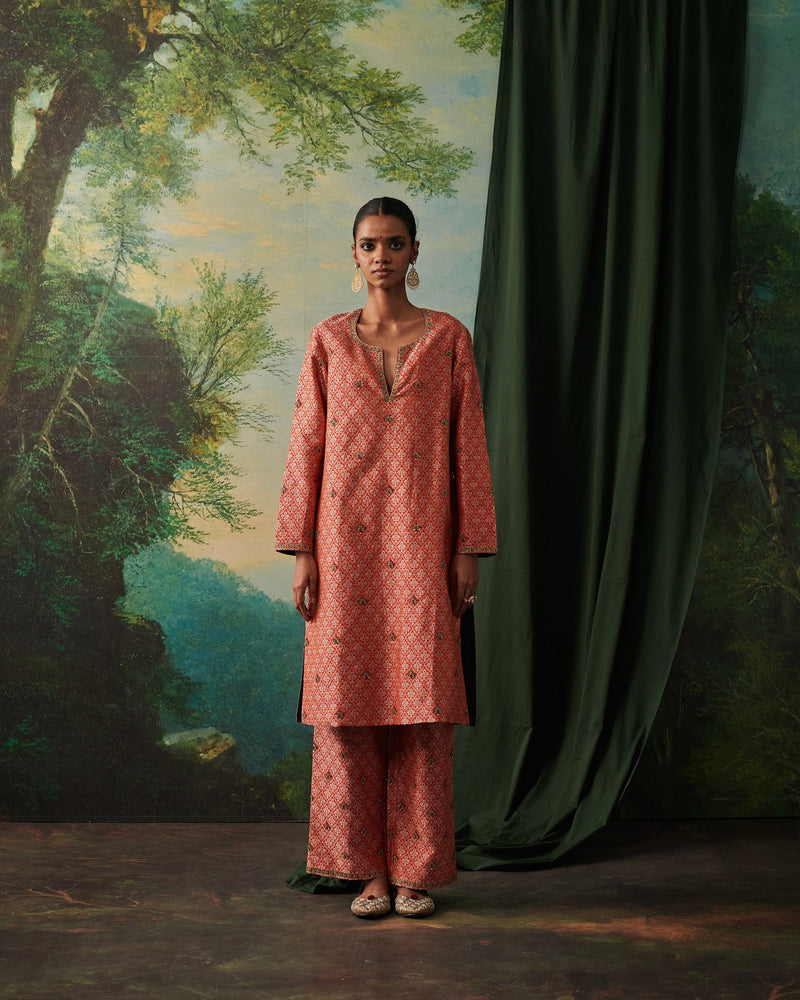
Every dupatta is hand-embroidered in Jaipur with borders designed to frame the face — and each is made to order over 4–5 weeks. Explore our dupattas and kurta sets.
Shop DupattasFrequently Asked Questions
How do I keep a dupatta from slipping off my head?
Pin the dupatta into your hair, not just the outfit — anchor small bobby pins into a firm section of hair at the crown and just above each ear, ideally to a bun or braid. Setting your hairstyle first gives a stable base, and choosing a grippier fabric like Chanderi or cotton-silk over slippery pure silk helps it stay put.
Which dupatta fabric is best for covering the head?
For a pooja or gurudwara, a dupatta with a little structure and a defined border works best — Chanderi and cotton-silk grip well and hold a fold without slipping. For a bridal veil, organza drapes beautifully and catches the light around the face, while a defined embroidered border helps frame the face cleanly.
How do I drape a dupatta over my head for a pooja?
Find the centre of the dupatta, lay the middle of one long edge across the crown of your head so equal length falls each side, and take one end over the opposite shoulder to balance it. Pin it discreetly at the crown so this soft, symmetrical drape covers your head modestly and stays in place through the aarti.
Made to order in 4–5 weeks
Have an event date? We’ll tell you exactly when to order by.
We take a limited number of orders each month — secure your slot early.
Not sure where to start?
Tell us what you're dressing for and we'll help you choose — fabric, fit, colour, and timeline — over WhatsApp.
Your Cart
Pieces from this story
All pieces →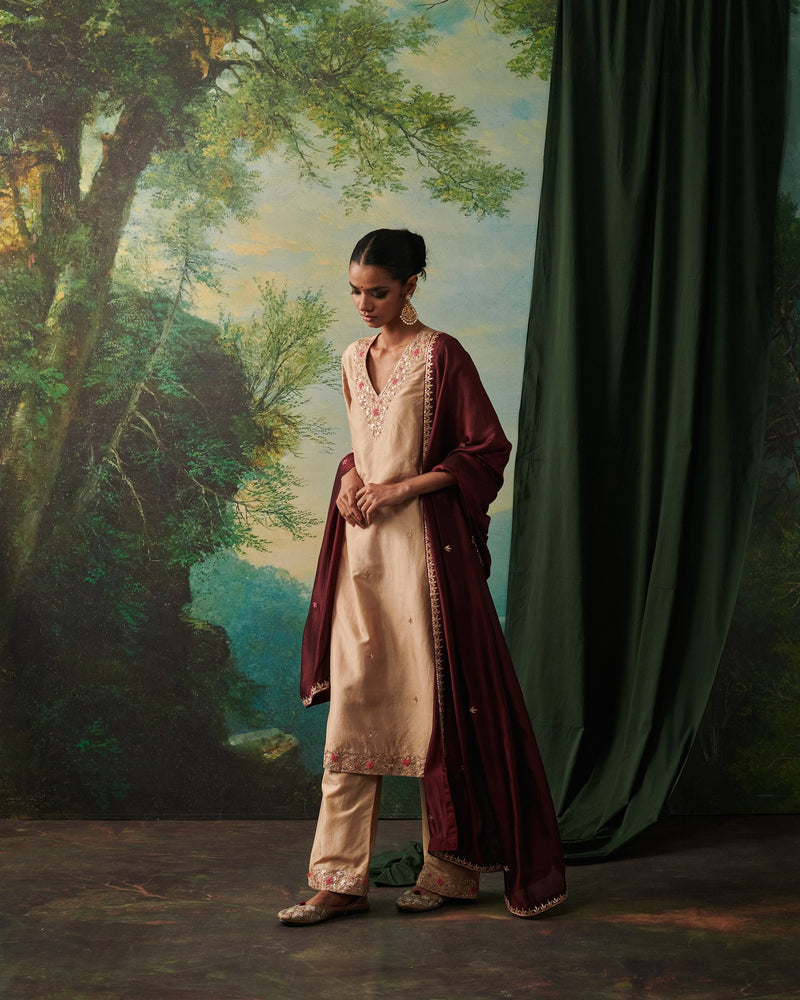
Keep reading
The journal →
Best Banarasi Saree Brands in India 2026: Where to Buy an Authentic Banarasi
Handmade by karigars Made to your measurements Fit guarantee Ships worldwide As seen in GraziaElle Graduat...
14 September 2026
Gifts for Your Wife She'll Actually Wear: Indian Outfits for Karva Chauth, Diwali & Anniversaries
Handmade by karigars Made to your measurements Fit guarantee Ships worldwide As seen in GraziaElle Graduat...
14 September 2026
Designer Lehenga for Girls: A Parent's Buying Guide to Kids' Lehengas
Handmade by karigars Made to your measurements Fit guarantee Ships worldwide As seen in GraziaElle Graduat...
14 September 2026